Tskhinvali
Tskhinvali, South Ossetia
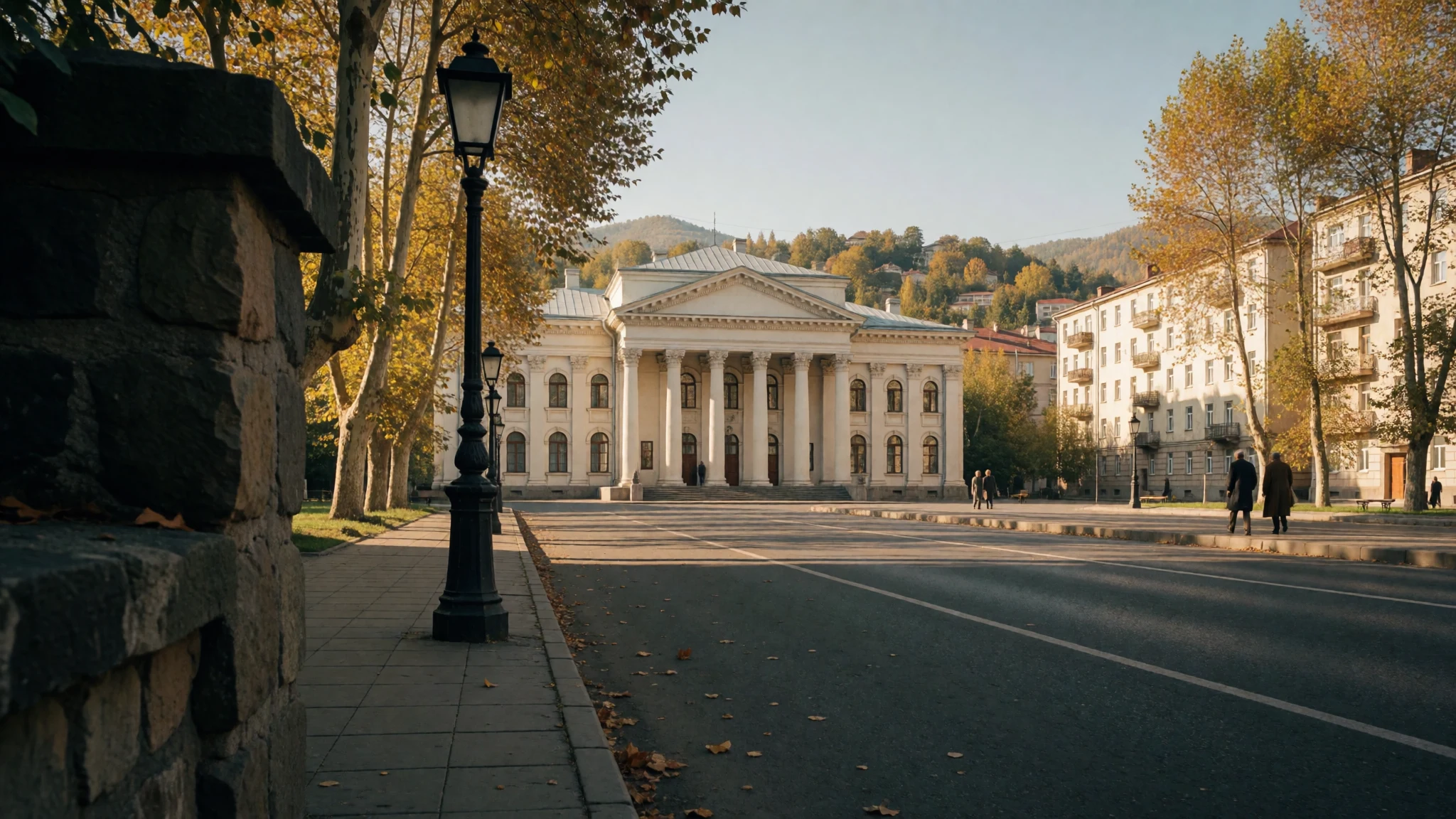
Tskhinvali is a small, quiet Caucasus town and the capital of a disputed territory, worth understanding for its layered history rather than for sightseeing.
The place
Tskhinvali sits at 860 metres in the Caucasus foothills, on the Great Liakhvi River, about 100 km northwest of Tbilisi. It is the capital of South Ossetia, a territory that Georgia and most of the world regard as part of Georgia, while Russia and a few other states recognise it as independent. Even the name carries the split: Georgians say Tskhinvali, Ossetians drop the final vowel and say Tskhinval, and in casual Ossetian the town is sometimes called Chreba. Roughly 33,000 people live here. The scale is small, with wide Soviet-era streets, low apartment blocks, shaded courtyards and a few grander public buildings around Theatre Square. The climate is humid continental. Summers are mild rather than hot, winters are cold with snow, and rain, about 805 millimetres a year, falls through the seasons. Green hills sit close at hand, higher mountains lie beyond, and the town has the hush of a place that sees few outside visitors. Cafes are modest, proper restaurants are few, and kiosks selling hot pies appear on many corners. Years of conflict have left their mark on infrastructure, and medical supplies and plumbing can be unreliable. The border with the rest of Georgia is closed, so the town faces north towards Vladikavkaz and Russia rather than south to its natural neighbour. Tskhinvali is not a conventional destination. It suits people who want to understand a contested corner of the Caucasus through its streets, memorials and everyday routines, rather than to tick off sights.
Its story
Tskhinvali enters the written record in 1398, when Georgian chronicles mention it as a village in Kartli, in central Georgia. Archaeology reaches much further back. Bronze Age settlements nearby show traces of both eastern Georgian (Iberian) and western Georgian (Colchian) cultures, with possible Sarmatian influence. A later tradition credits an early Georgian king with founding a fortress here, though accounts differ. By the early eighteenth century it was a small royal town whose people were mostly serfs attached to monasteries. The Russian Empire annexed it along with the rest of eastern Georgia, and the town grew on a trade route linking the North Caucasus with Tbilisi and Gori. By the early twentieth century it was a mixed commercial place of Georgian Jews, Georgians, Armenians and Ossetians, with Georgian Jews the largest group among its households. Violence flared between Georgian forces and pro-Bolshevik Ossetian peasants while Georgia was briefly independent. The Red Army arrived in March 1921, and in 1922 Tskhinvali became capital of the South Ossetian Autonomous Oblast inside Soviet Georgia. Soviet urbanisation and nationality policy drew many Ossetians in from surrounding villages, and the town became largely Ossetian. Later wars, including the 2008 conflict, sit on top of this layered past, and Georgians and Ossetians tell the story differently. Visitors will meet the Ossetian account first, since the town lies on the Russian-facing side of the line.
What to see
- The government building — Central Tskhinvali, near Theatre Square
Tskhinvali's chief landmark is a large neoclassical building in an Italianate style, now home to the de facto government. It was built for the Soviet-era regional administration and dominates the central square. Admire it from outside and ask locally before photographing, as official buildings can be sensitive.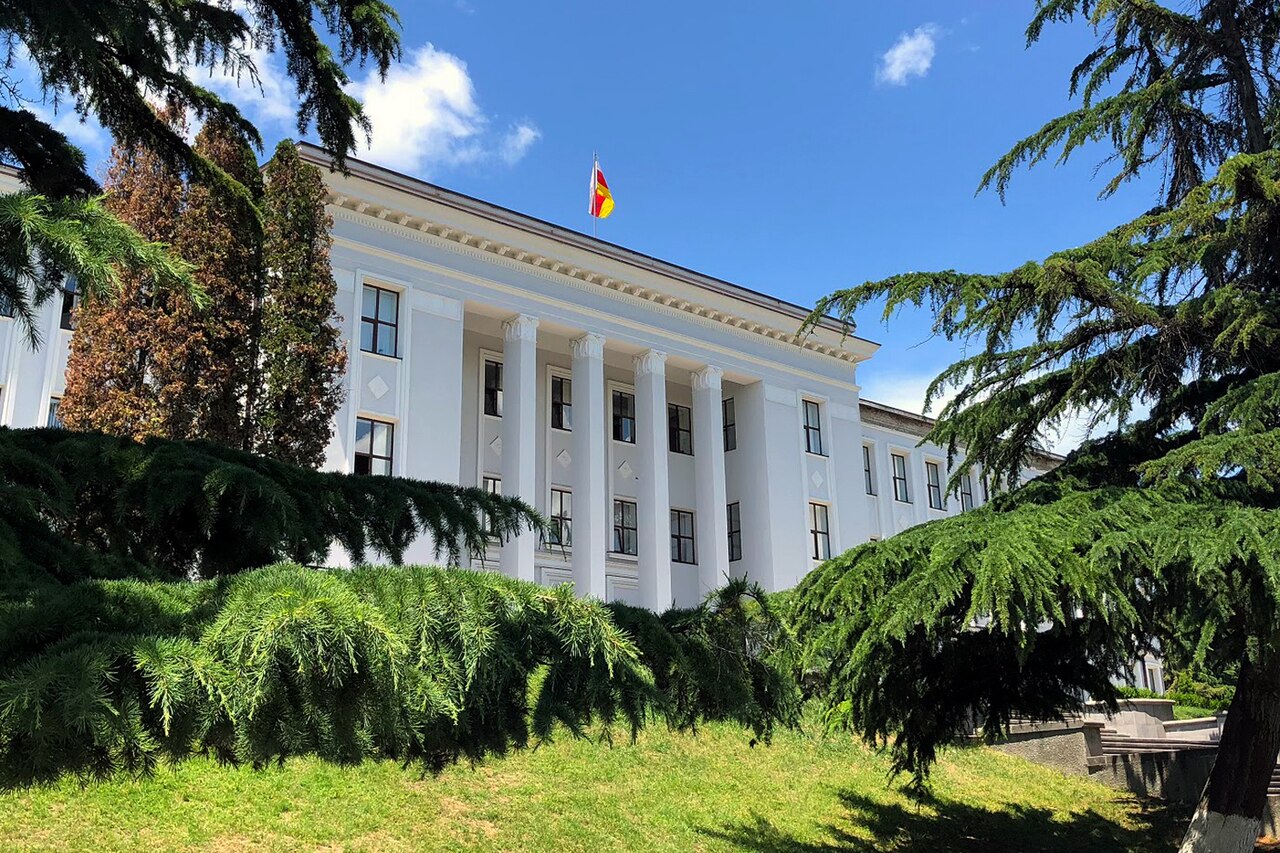
- Monument to the victims of the Georgian-Ossetian conflict — Central Tskhinvali
This memorial honours people killed in the conflicts of recent decades and is a place where residents come to remember. Visitors can pause quietly. The monument shows how the town frames its own history, so it helps to read it as one side of a disputed story. - Statue of Kosta Khetagurov (Khetagkaty Kostaiy) — Central Tskhinvali
A statue honours the poet and painter regarded as a founder of modern Ossetian literature. Ossetian-language verse is a point of local pride, and the monument is a natural stop for anyone curious about how the town sees its cultural heritage beyond politics. - Statue of Vasily Abaev (Abaity Vasoiy) — Central Tskhinvali
This monument commemorates the linguist who studied the Ossetian language and its Iranian roots. It is a small, quiet stop, best combined with a walk through the central streets. It also gives a sense of how scholarship and language underpin Ossetian identity. - Kavti Church of St George — Surroundings of Tskhinvali
Kavti is the oldest of the medieval Georgian churches around the town, dating from the eighth to tenth centuries. Its stone architecture shows the Georgian layer of the area's history. Check locally before going, as access and condition can vary, and a guide helps with context.
Culture
Tskhinvali's everyday culture is Ossetian, with Georgian and Armenian traces from its mixed past. Ossetian, an Iranian language, is heard alongside Russian, and Orthodox Christianity sits beside older customs. Hospitality is central. Meals are long, toasts follow a set order, and traditional feasts feature round pies, often three on the table at once. Theatre, music and poetry carry weight here. The town's theatre and concert tradition drew international performers even in the aftermath of the 2008 war, and statues of poets and scholars show how seriously language and letters are taken. Memory is also visible in public space, in memorials and in the way residents talk about the conflicts. Many people are friendly and curious about foreign visitors precisely because there are so few, but politics is not small talk. Locals have lived through violence, and opinions are strong and personal. A listening, unhurried approach goes further than debate, and it is courteous to accept offered tea, pies or a toast, even if only a small taste. Churches are working places of worship, and services deserve quiet respect. Be sparing with photographs of soldiers, checkpoints and official buildings, and ask permission before photographing people, and keep opinions on the territory's status to yourself unless a host raises the subject.
What to wear
Traditional Ossetian dress belongs to the wider Caucasus mountain tradition. Men's formal wear is a long fitted wool coat with a row of cartridge pockets across the chest, worn with a sheepskin hat and, historically, a felt cloak against rain and cold. Women's dress was a long gown with embroidered edges and a decorated belt, often with a headdress and fine needlework in metallic thread. These costumes appear today at weddings, folk festivals, concerts and school or civic celebrations rather than on ordinary days. Everyday clothing in Tskhinvali is plain and practical, much as in other Russian-influenced towns of the region: jeans, jackets, knitwear and sturdy shoes for people who walk on uneven pavements, with smarter outfits for church, theatre and family occasions. Younger residents follow general European and Russian trends. Visitors should dress for a mountain-edge climate with mild summers and cold, snowy winters, so layers and a waterproof layer are useful in any season, and warm boots and a proper coat in winter. Comfortable walking shoes suit the town's worn pavements. Modest clothing is wise for churches: covered shoulders and knees, and a scarf for women. Neat, understated clothes also help at official buildings and memorials, where conspicuous or military-style outfits would draw unwanted attention.
What to eat
- Khinkali — Small eateries near the town centre
Meat dumplings twisted at the top, eaten by hand while still hot, with broth inside. They are shared across the Caucasus. A small khinkali eatery near the centre is the usual recommendation, and locals will show how to hold and bite one. - Fydzhyn (meat pie) — Pie kiosks around the centre
The classic Ossetian pie is a round, thin-dough pie filled with spiced minced meat, served hot and cut into wedges. It makes a filling, cheap snack in cold weather and is central to family feasts. - Ualibakh (cheese pie) — Pie kiosks and small cafes in the centre
A round pie stuffed with salty, stretchy Ossetian cheese, sometimes brushed with butter after baking. It is simple and warming, and often the first thing locals suggest to a visitor who asks what to try. - Kartofdzhin (potato pie) — Pie kiosks and home-style cafes
A round pie filled with mashed potato, often with cheese. Plain and hearty, it is typical home cooking and usually the easiest option for vegetarians, though it is worth asking what else goes in.
Plan it
Best time. May–June and September–October, when the mild humid continental climate is most comfortable. Winters are cold with snow, which can make the mountain road from Vladikavkaz slow.
How long. 1–2
Getting there. Fly to Vladikavkaz in Russia, the nearest airport, then take a marshrutka (minibus) or taxi south along the Transcaucasian highway. Foreign visitors can enter only from the Russian side; the border with the rest of Georgia is closed in both directions.
Budget. low
Tips
- Check your government's travel advice (FCDO in the UK, the Ministry of External Affairs in India) before planning anything, as entering from the Russian side may breach Georgian law and can lead to refusal of entry to Georgia later.
- Confirm entry rules and any permits well ahead of travel; the official regional page is https://www.ganakhleba.ge/ka/region/10, and you should check other sources too.
- Carry cash and a spare means of payment, since cards issued abroad may not work.
- Bring your own basic medicines, as medical supplies and plumbing can be unreliable.
- Allow slack in the schedule for bus and road delays, especially in winter.
Etiquette
- Ask before photographing people, soldiers or official buildings
- Avoid pressing political opinions, especially on the territory's status
- Dress modestly when entering a church
Nearby
Sources
- Wikidata Q79863 (CC0)
- Wikipedia: Tskhinvali (rev 1382727294) (CC BY-SA 4.0)
- Wikivoyage: Tskhinvali (rev 5127681) (CC BY-SA 4.0)
- Photo: Цхинвал с высоты птичьего полета, Игорь Чочиты (CC BY-SA 4.0)
- Photo: Tskhinvali, South Ossetia, Juliet Kozaeva @ Cominf.org (CC BY 3.0)
- Photo: Parliament of South Ossetia in Tskhinvali, Labrang (CC BY-SA 4.0)
- Photo: Valery Gergiev in Tskhinval, 21 August 2008, ИА ОСинформ (CC BY 3.0)
- Photo: 7 ноября в Цхинвале, Alkhimov Maxim (CC BY 3.0)
- Photo: A rally in Tskhinvali after the war, ИА ОСинформ (CC BY 3.0)
- Photo: Concert in Tskhinvali, OSInform (CC BY 3.0)
- Photo: The City of Tskhinvali, Estonian Foreign Ministry (CC BY 2.5)


