Tongli
Tongli, People's Republic of China
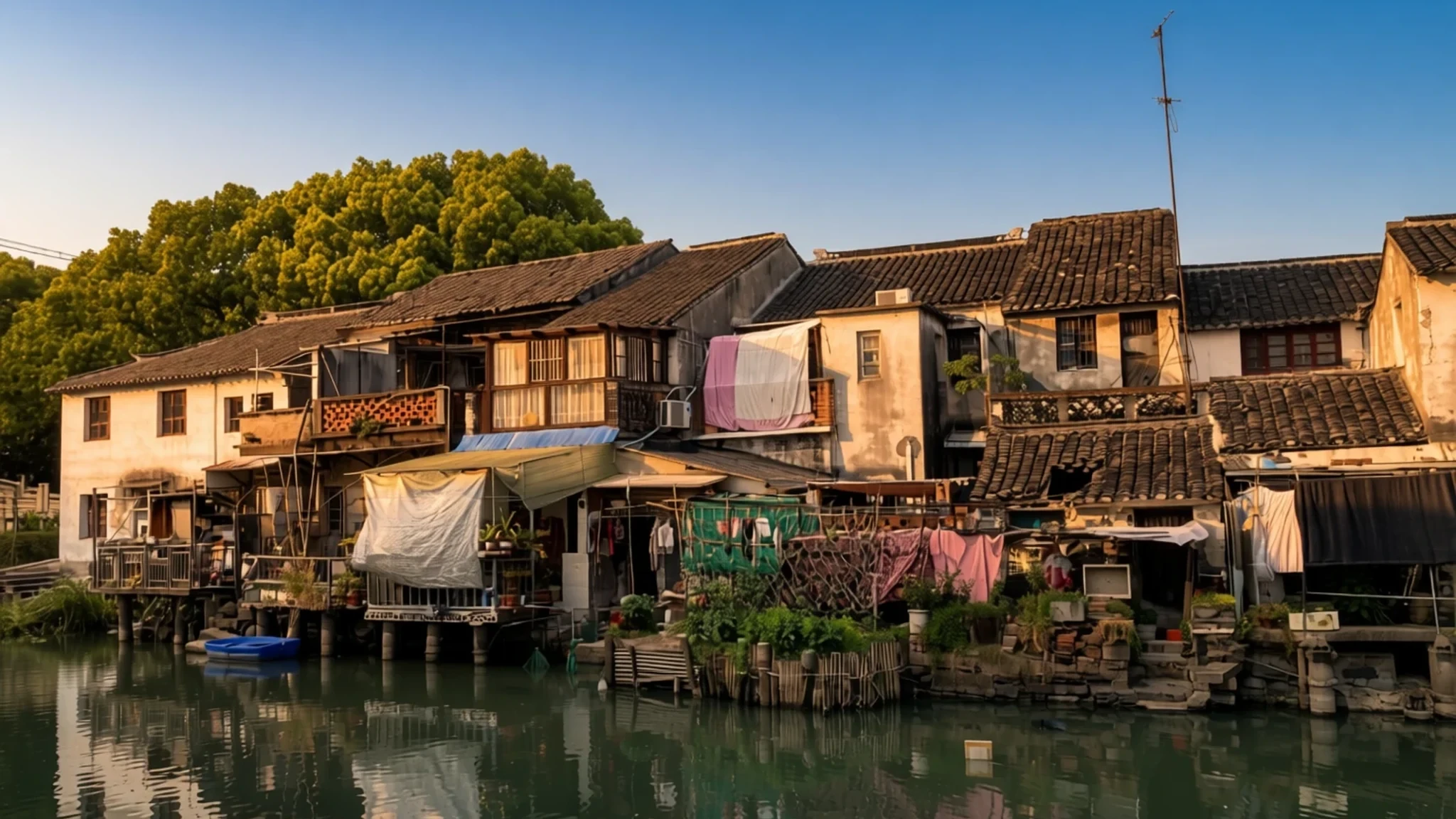
Come for the canals, stone bridges and old market-town streets of a Jiangnan water town that is close enough to Suzhou and Shanghai for a day or an overnight stay.
The place
Tongli is a town in Wujiang district on the edge of Suzhou, in Jiangsu province. Its reputation rests on the canals that run through it, crossed by a great many stone bridges, and it is often called the Venice of the East, a nickname that says more about the water than the buildings. The town keeps many features of an old Wu provincial town. Lanes run alongside the waterways, and small temples, halls and gardens sit tucked between the houses and shopfronts. Its layout is still easy to read on foot. Tongli is a short ride from Suzhou city, and the Suzhou Metro line that serves Wujiang reaches the town, so getting in is straightforward. Proximity to both Suzhou and Shanghai means that weekends, public holidays and organised day tours bring large crowds, and the central bridges can feel packed by late morning. Arriving early or staying overnight makes a real difference to the atmosphere. Shops sell silk, embroidery, snacks and tea, and canal boats offer a slower way to see the water. Wujiang as a whole mixes modern industry with the traditional silk trade, so the old town sits within a working district rather than apart from it.
Its story
For much of its history Tongli was a market centre serving the farmland around it. Farmers, silk producers and traders brought goods along the canals, and the town grew around the landings where boats tied up. The houses that survive along the waterfront reflect that commercial past, with ground floors once given over to trade and upper rooms for living. Over time the town became known for its scholars and cultivated households, and its gardens and halls reflect the taste of local families who could afford to build them. The silk tradition, which still shapes the wider district, gave the area its wealth and its networks of merchants. In the modern era the old town faced the same pressures as many Chinese historic towns, with rapid growth on its edges and the risk that its waterways would be lost to new roads. Restoration and careful preservation brought the canals and principal buildings back into use. Today the town's working life has changed. Many residents still live in the old houses, and families run small shops, teahouses and food stalls along the lanes. Visitors arrive in large numbers, many of them from Suzhou and Shanghai, who come to escape the pace of the city for a day. The town's story is therefore one of continuity through change: the canals still carry boats, the bridges still carry people, and the trade that built the town has become a mix of commerce and tourism.
What to see
- Wujiang Museum — Wujiang district
The Wujiang Museum gives the wider district its historical context, covering local history, the silk tradition and the cultural heritage of the Jiangnan water towns. It is a useful stop before you walk the canals, because the displays explain why these towns grew where they did. Allow a relaxed hour or so, and check the official site for current opening arrangements before you go.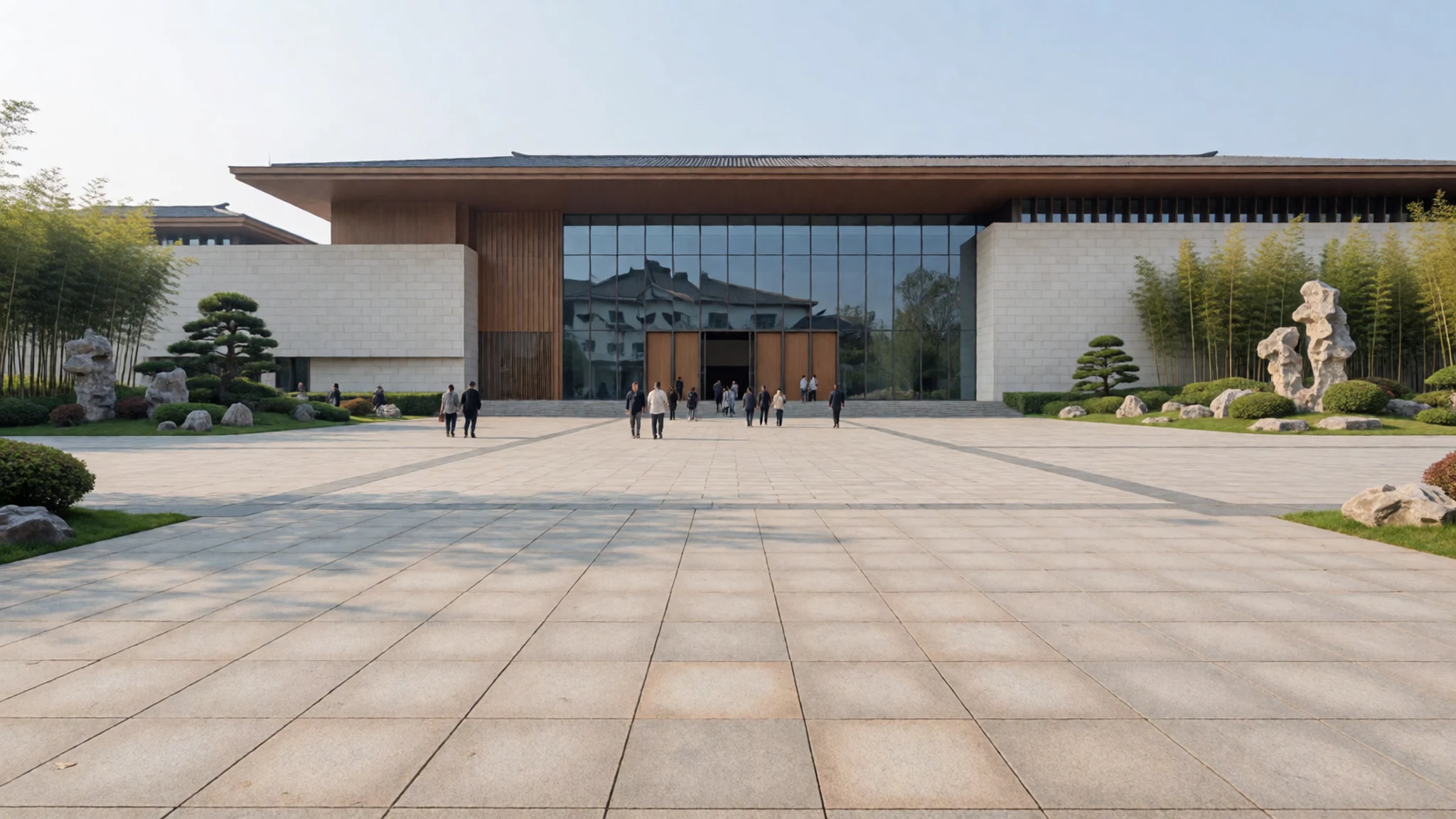
- Retreat and Reflection Garden — Tongli, Suzhou classical garden
This classical garden is one of the Suzhou classical gardens and stands outside the historic centre of Suzhou. Its pavilions, pools and carefully framed views show the scholarly garden style, in which rocks, water and buildings are arranged to be seen from many angles. Walk slowly and pause at the windows, where the planting frames the water.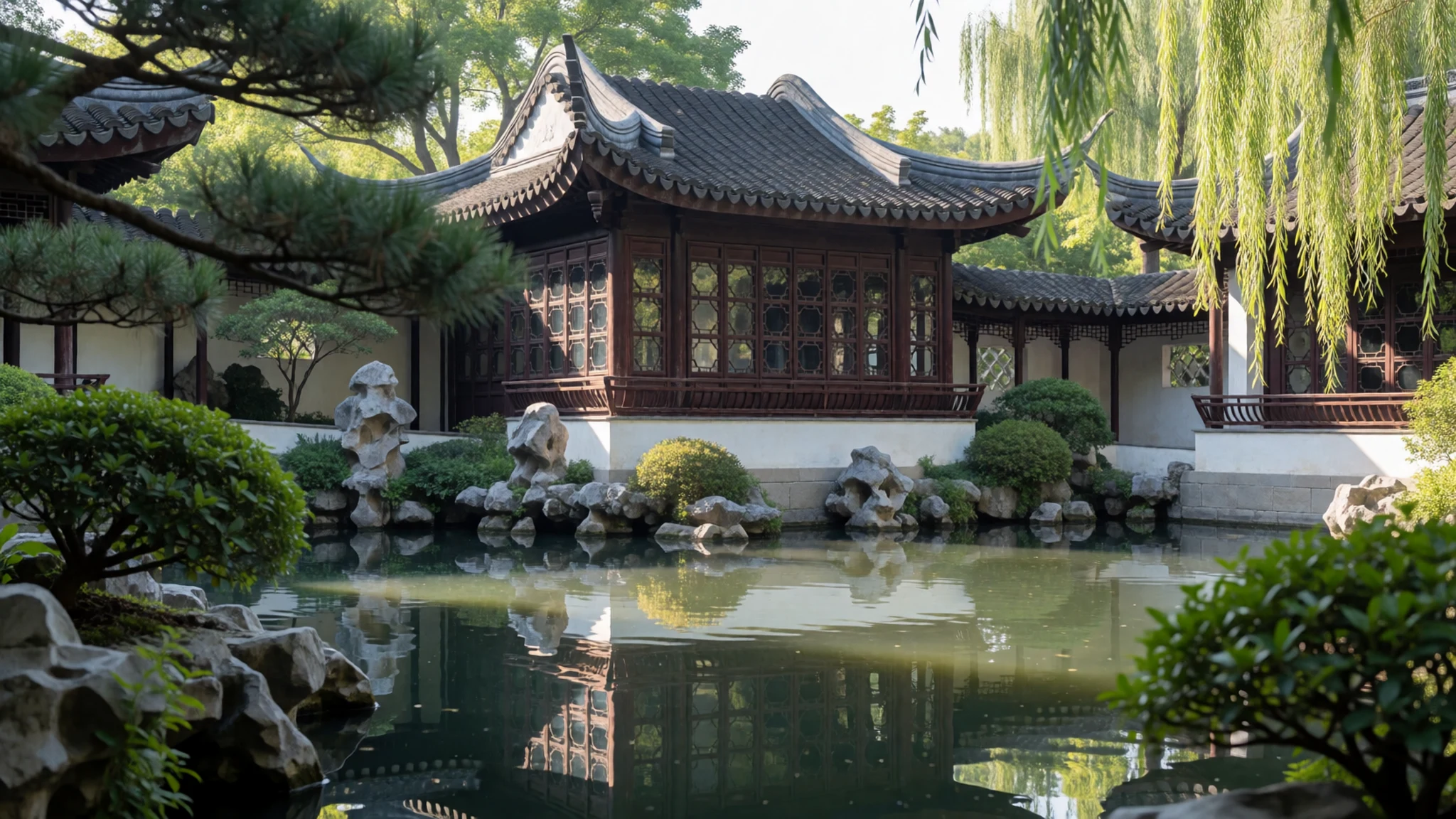
- Canals and stone bridges of the old town — Old town, along the main waterways
The canal network is the heart of Tongli. Walk along the quays in the early morning, when boats are still tied up and the light falls across the water. Cross the bridges for different views of the rooftops, and watch how residents use the landings to wash, trade and chat. The best photographs usually come before the tour groups arrive.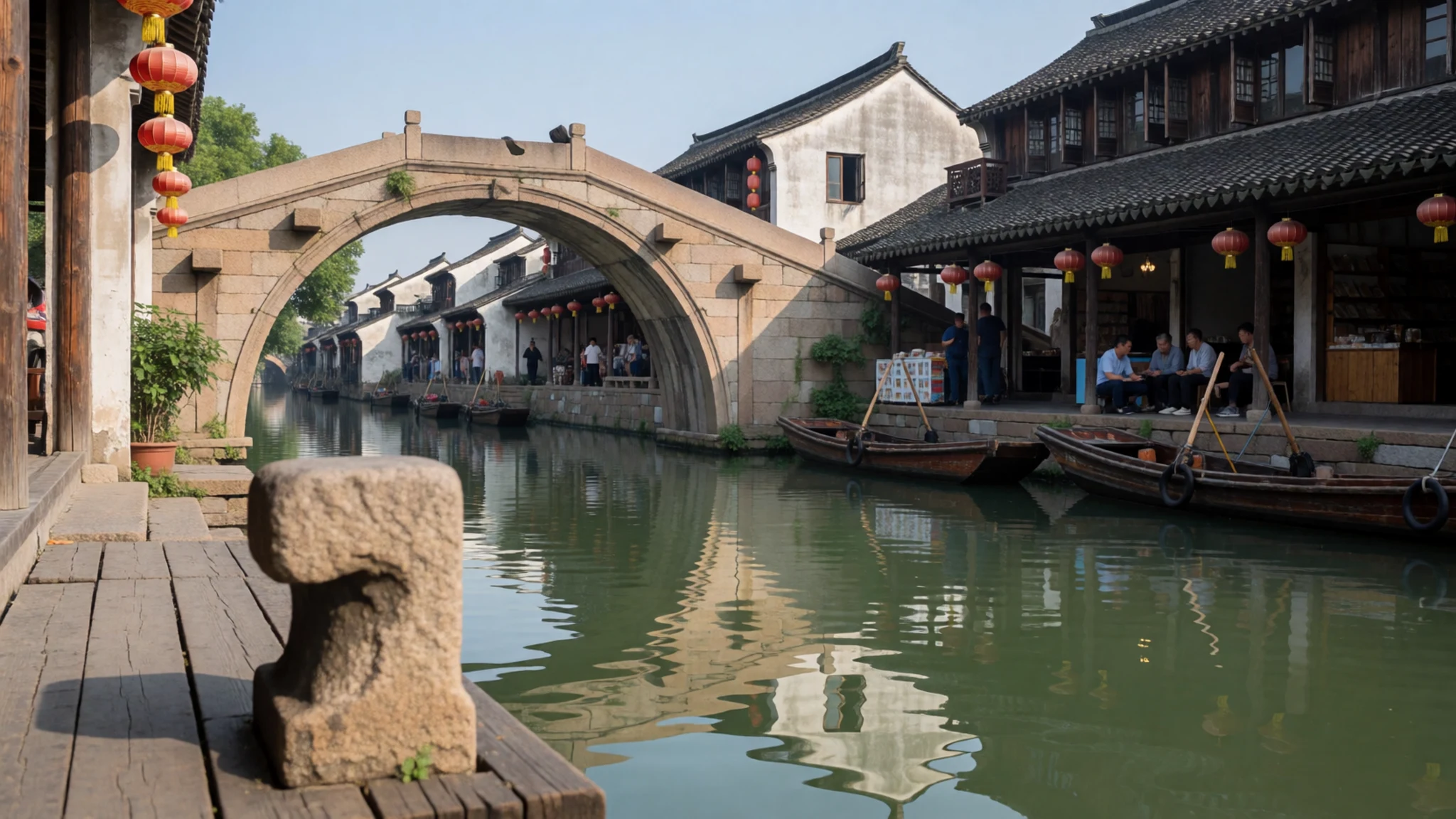
- Traditional teahouses by the water — Waterfront lanes of the old town
Teahouses line several waterfront stretches and offer a seat with a view of the canal. Order a pot of green tea and something small to eat, and stay for a while. Teahouses are good places to watch the town at a slower pace, and the proprietors are used to visitors lingering over a single pot.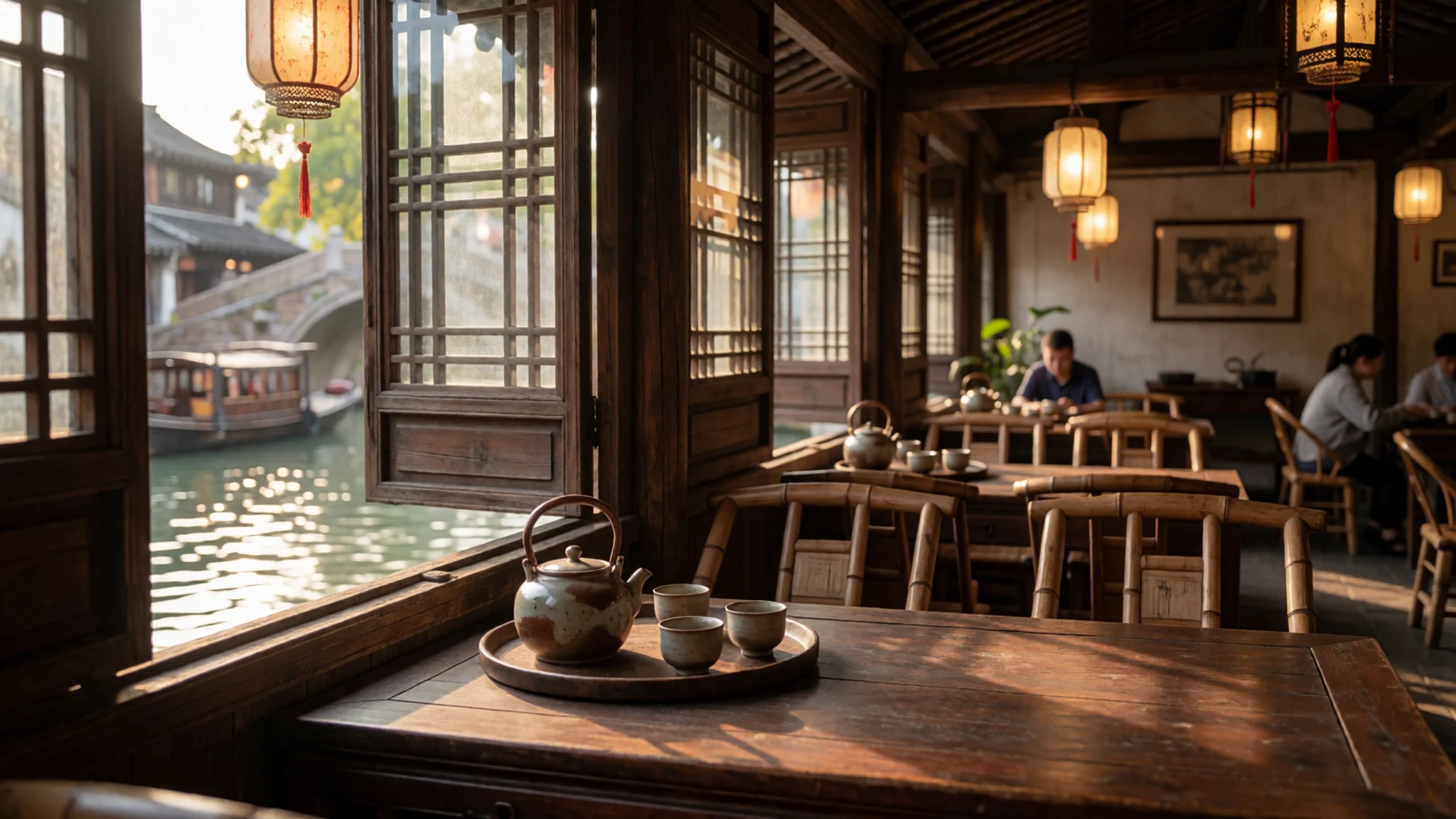
- Zhen Ze, the neighbouring water town — Wujiang district, a separate water town
Zhen Ze is another Wujiang water town, with a river running through its centre and old houses that are still lived in. Its main sights include a pagoda and temple, several stone bridges and a small museum linked to an astronomer. The walk from one end of town to the other takes around an hour, so it suits a half-day visit.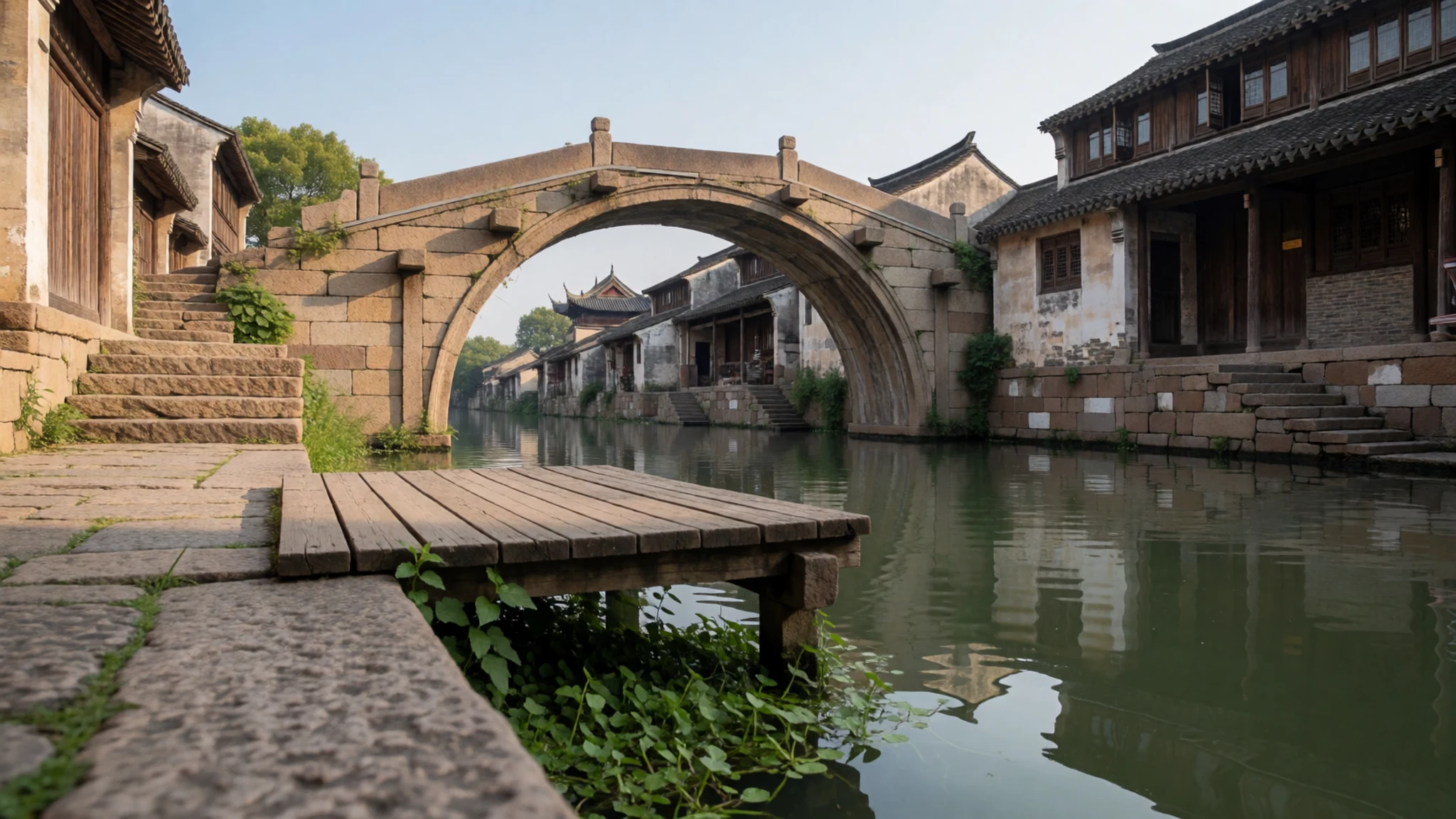
Culture
Tongli's culture is shaped by its life as a market and farming town, and it still feels practical rather than theatrical. Residents go about daily routines in the same lanes that visitors walk, so the town works best when treated as a place where people live, shop and work. Teahouses are social spaces where people talk and read the papers, and the tea is usually served in a relaxed way. Market stalls sell fresh produce, tofu, pickles and household goods, and vendors are used to being photographed from a distance but may object to close-up shots taken without a word. Religious and small temple halls are active places of worship, where quiet behaviour is expected and signs about photography should be followed. Many older residents are happy to talk if approached politely, but some prefer not to be filmed. When you enter a temple hall or garden pavilion, keep your voice low, follow the signs about photography, and ask before taking a close picture of anyone at work.
What to wear
Traditional dress in the Jiangnan region is linked to the silk tradition that has long defined the area. Silk and cotton were the principal textiles, and the cloth and embroidery produced here were traded through the same canals that still run through Tongli. The formal clothing of earlier centuries, often called hanfu in its broader sense, was worn for ceremonies and festivals, and its patterns and colours reflected rank and occasion. Today the town's residents dress much as people do in any Chinese city. Everyday clothing is simple and practical: jeans, t-shirts, light jackets and comfortable shoes are common, and older residents often wear loose cotton clothing. Traditional dress appears mainly at weddings, festivals and performances. For a visitor, the climate matters most. Spring and autumn are mild, but the region is humid and rain is frequent, so pack a light waterproof and layers. Shoes should have good grip for stone steps, slippery bridges and wet cobbles. Dress modestly when entering temples or temple halls, with covered shoulders and knees, and avoid bare beachwear in the old town.
What to eat
- Freshwater fish and river shrimp — A canalside eatery on the main waterfront
The canals supply freshwater fish and shrimp, which appear in many local dishes. Cooks tend to keep flavours light, steaming or braising the fish with ginger and spring onion. Choose a canalside eatery that displays the day's catch, and ask what came in that morning.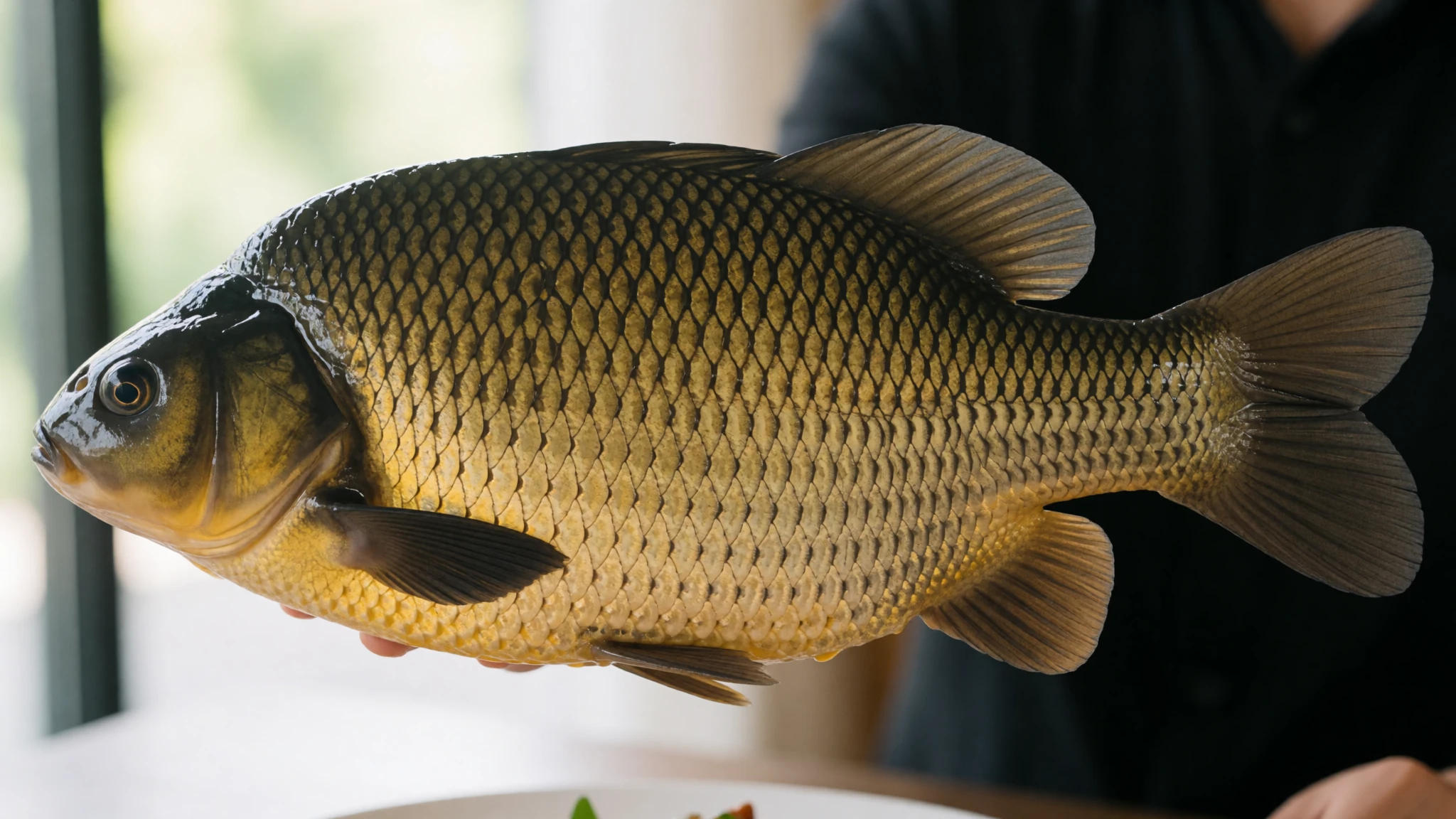
- Tofu and bean curd snacks — The morning market and tofu stalls on the main street
Tofu is central to the local diet, and small sellers prepare it fresh each morning. Look for soft bean curd served warm or stewed with soy, and dried bean curd sheets sold by weight. Snacks like these are cheap and easy to eat while walking.
- Teahouse snacks with green tea — Any teahouse on the waterfront lanes
Teahouses serve small plates of pastries, sweet dumplings and steamed buns alongside tea. The snacks are meant to be shared at a slow pace, and many have a sweet bean or sesame filling. They are a good way to take a break between canal walks.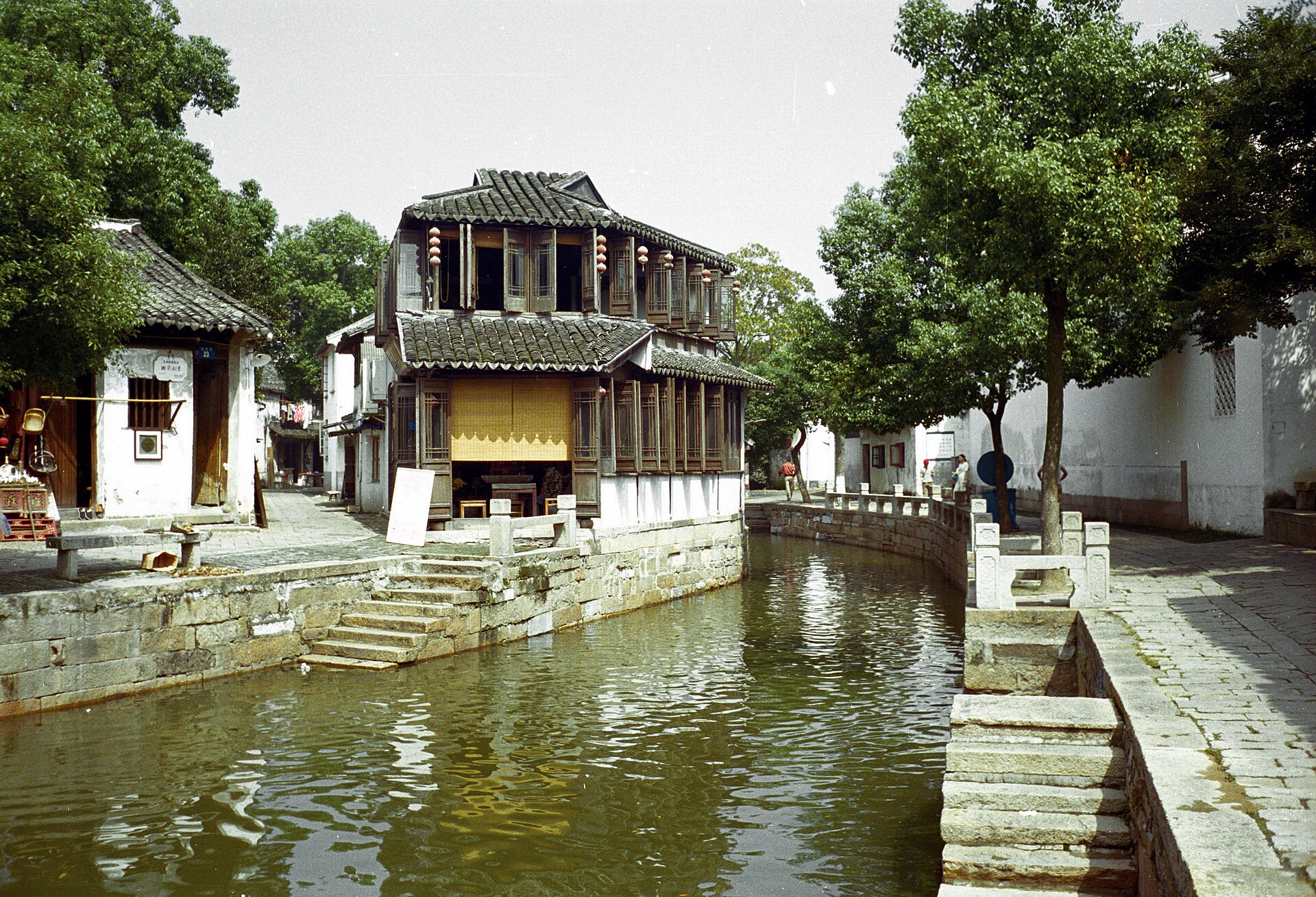
- Pickles and vegetable dishes — The morning market by the canal
Pickled and salted vegetables are a staple of the region's home cooking, served as side dishes with rice. They reflect the farming life that shaped the town, and small family-run stalls often sell them by the jar. Buy a small portion to taste, as flavours are often strong. - Sweet glutinous rice cakes — Street stalls along the main market lane
Glutinous rice is steamed, pounded and wrapped with sweet fillings for festivals and everyday snacks. Vendors sell them from baskets and small counters, usually in the mornings. They are dense and filling, and make a good carry-on snack for the walk to the bus or station.
Plan it
Best time. Spring and autumn are the most favourable seasons, with mild weather for walking the canals. The climate is subtropical monsoon, with distinct seasons; summer brings heat and rain, and winter is cool and damp.
How long. 2–3
Getting there. Take the Suzhou Metro line that serves Wujiang, using the branch that terminates at Tongli Station. A bus from Shanghai takes about two hours, and the town is also reached by road from Suzhou city.
Budget. low
Tips
- Arrive before late morning to see the canals before the day tour groups
- Stay overnight if you want the quieter evening and early-morning atmosphere
- Carry cash for small stalls, teahouses and temple entry fees
- Buy a combined ticket at the tourist desk at Tongli Station if you plan to visit several sites
- Bring water and a light rain jacket, as humidity and showers are common
Etiquette
- Ask before photographing market vendors at close range
- Keep voices low in temple halls and the garden
- Do not block the bridges or the quay landings while taking photos
Nearby
Sources
- Wikidata Q1026454 (CC0)
- Wikipedia: Tongli (CC BY-SA 4.0)
- Wikivoyage: Wujiang (CC BY-SA 4.0)
- Photo: Tongli town canal and quay (Jakub Hałun) (CC BY-SA 2.0)
- Photo: Tongli town (Jakub Hałun) (CC BY-SA 2.0)
- Photo: Tongli teahouse (Gisling) (CC BY-SA 2.5)
- Photo: Retreat garden (Lamassu Design Gurdjieff) (CC BY 3.0)
- Photo: Cat at a market stall (Jakub Hałun) (CC BY-SA 4.0)
- Photo: Elderly man pouring hot water (Jakub Hałun) (CC BY-SA 4.0)
- Photo: Tofu seller in Tongli Town (Jakub Hałun) (CC BY 3.0)
- Photo: Shop on a street of Tongli Town (Jakub Hałun) (CC BY 3.0)


