Tofino
Tofino, Canada
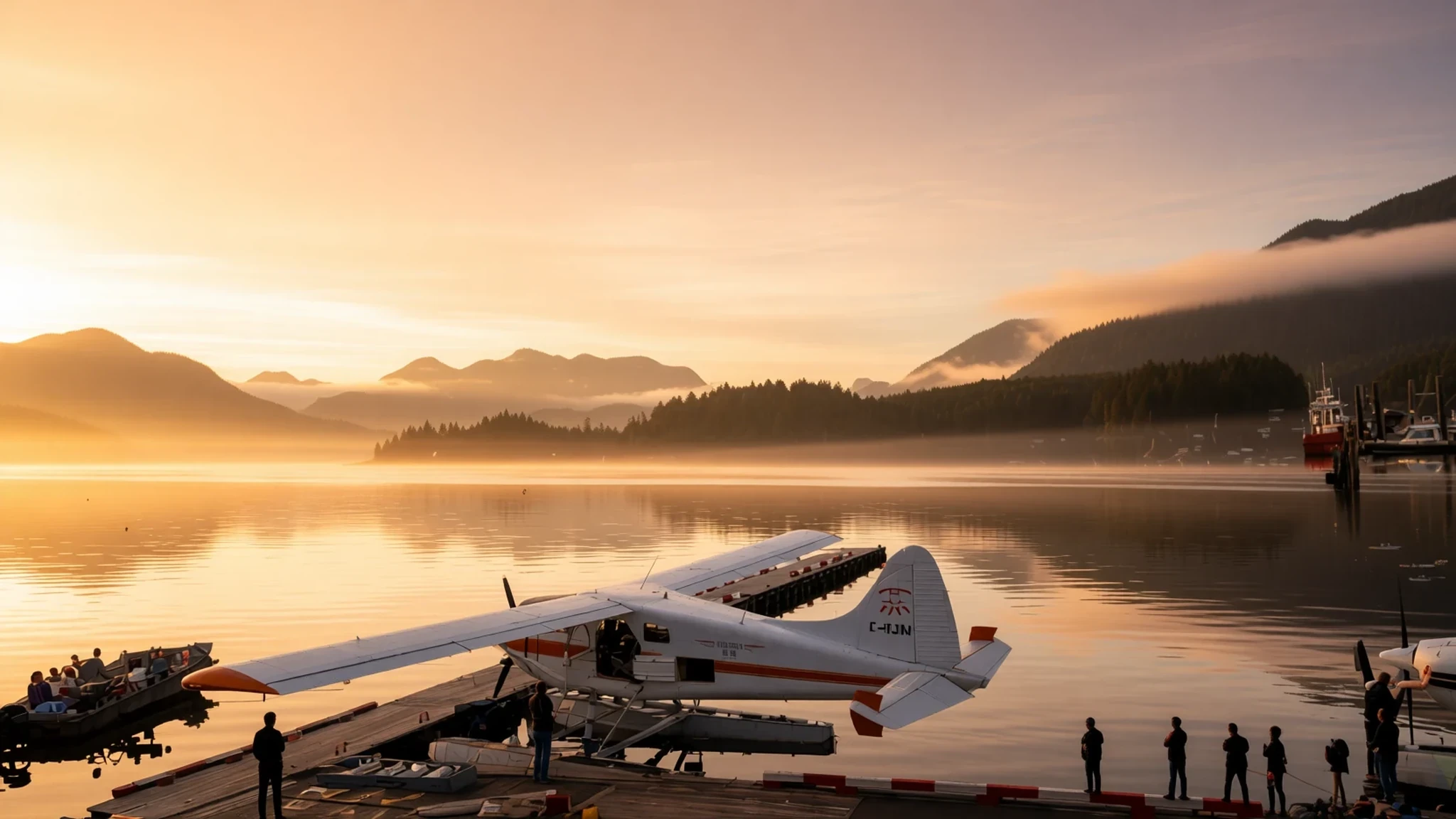
Go for the wild Pacific coast, the big surf and the storm-watching, and come prepared for rain for much of the year.
The place
Tofino is a small town of roughly 2,516 people on the west coast of Vancouver Island in British Columbia, Canada. It sits on the tip of the Esowista Peninsula at the southern edge of Clayoquot Sound, where the road from the east runs out at the sea. The town stands in the traditional territory of the Tla-o-qui-aht First Nations, and that history frames everything else about the place.
The population swells far beyond its winter size in summer, when surfers, hikers, campers, bird watchers, whale watchers and anglers arrive in numbers that can make the main streets busy. Winter is quieter. Many people still come then, on purpose, to watch Pacific storms break over the headlands and the outer beaches.
The village is compact, so cafes, bakeries, surf shops and the waterfront are mostly within walking distance. For a settlement this size the food scene is unusually strong, because a number of chefs and culinary professionals have settled here and restaurants and specialty shops have followed. Booking ahead is sensible in July and August.
The beaches are the main draw. Long Beach, inside Pacific Rim National Park Reserve, is a long run of sand that stays popular all year, and other coves and headlands are reached by short drives or walks. The weather is the constant companion: mild, damp and changeable, with rain sitting over the forest for much of the year. Packing for it makes sense, and a grey day is the normal state of things rather than a disappointment.
Its story
The land around Tofino has been home to the Tla-o-qui-aht people for thousands of years. They developed from a number of smaller bands that previously lived near Kennedy Lake, and their lands eventually extended to include Tofino Inlet, the Esowista Peninsula and Meares Island. Their principal village, Opitsaht, lies across the harbour from the present town and has been lived in for a very long time, while Indigenous life on Clayoquot Sound stretches back far further than any written record.
The peninsula's name is tied to a past conquest, when the Tla-o-qui-aht overcame the Esowistaht people who had once held the land. The word used for it carries a blunt, violent meaning that local memory still preserves.
From the late eighteenth century, sea otter pelts drew European and American ships to this coast, and trade with the Nuu-chah-nulth reshaped life along the shore. The British trader John Meares described visiting a chief at Echachis and found a great crowd of people gathered in one communal house, a sign of how populous the coastal villages were before settlement.
Permanent non-Indigenous settlement began in the 1890s. The community took its present name from the nearby inlet, and a post office opened in 1909. Tofino received municipal status in 1932, and in 1982 it was designated a district. Logging, fishing and, later, tourism shaped the town's economy, and the surfing, whale watching and storm-watching that draw visitors today are the newest chapter in a coast that has been used for a very long time.
What to see
- Pacific Rim National Park Reserve — Long Beach area, south of Tofino
Rocky headlands, long beaches and wild surf, all set against temperate rain forest on the edge of Vancouver Island. Long Beach is the best-known stretch and is popular year-round, though its walks and campgrounds have their own fees and rules, so check the official site before you go. Expect crowds on sunny summer weekends and plan parking early.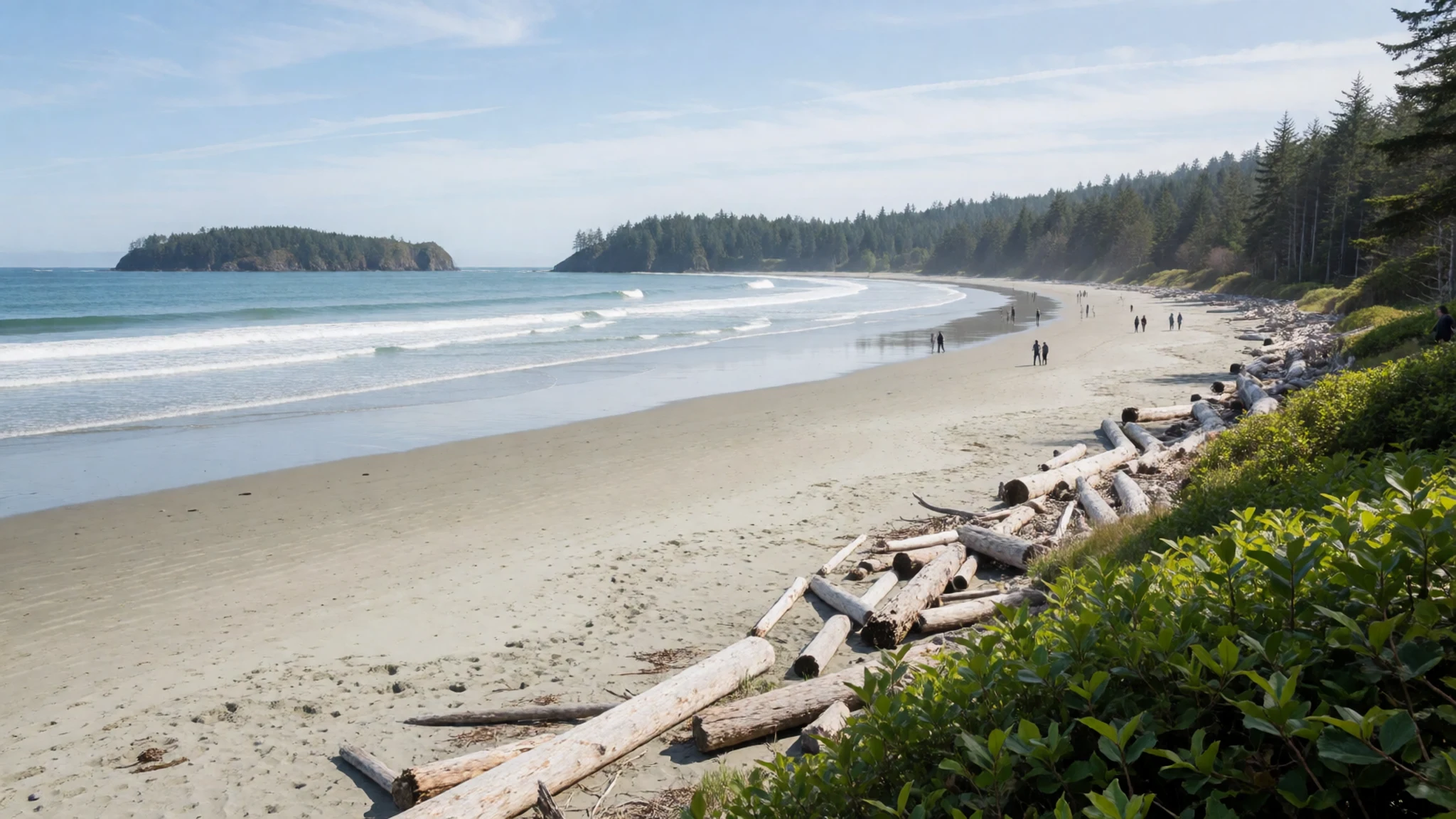
- Naa'Waya'Sum Gardens — Tofino, near the harbour
A garden of about twelve acres that blends forest, shoreline and cultivated planting, with plenty of educational exhibits for families and curious adults alike. It has a cafe and a gift shop, which makes it a relaxed stop on a wet day. Visit in the morning if you want quiet paths, and check the official site for current opening times.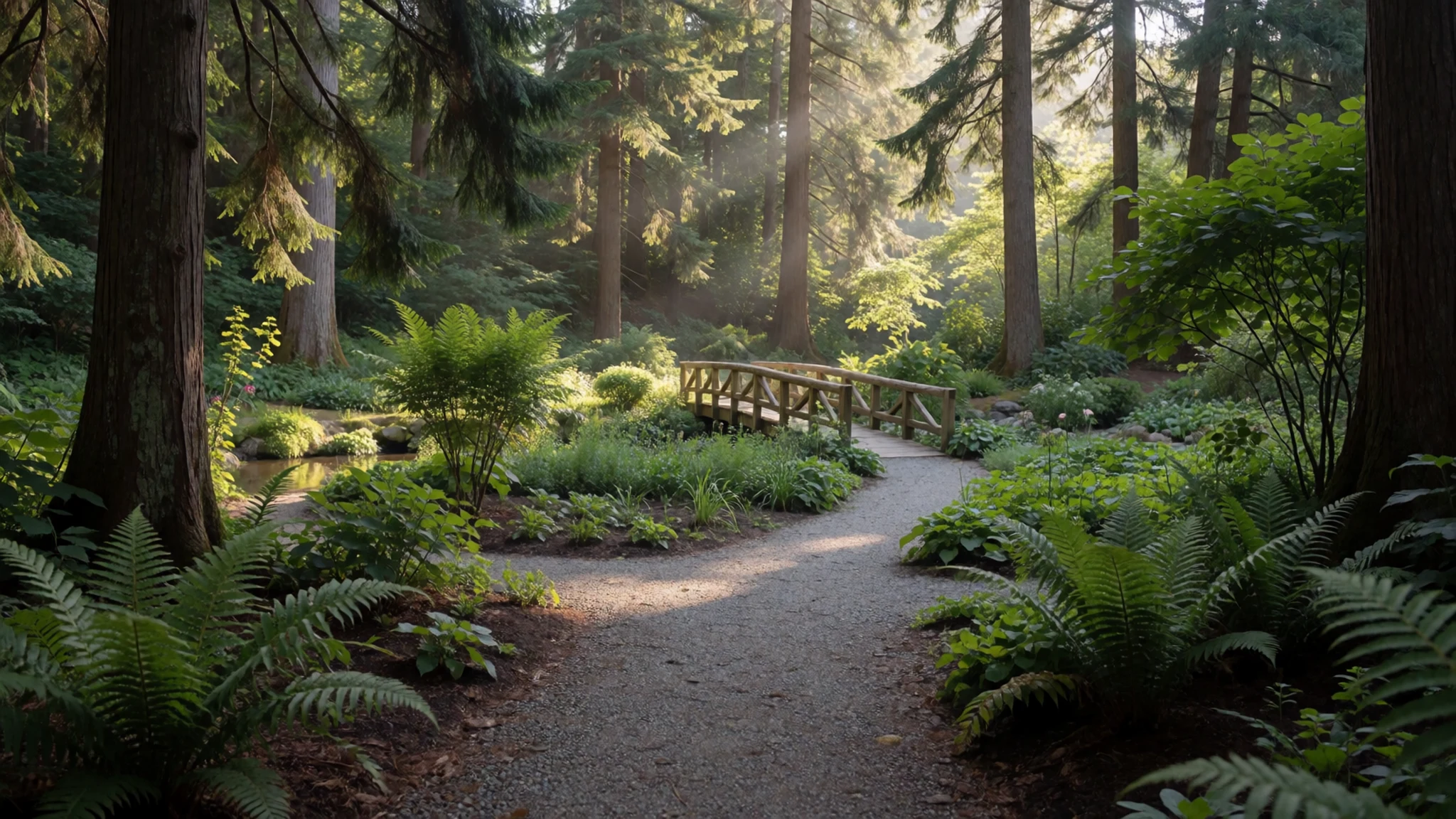
- Flightseeing over the coast — Tofino airstrip and harbour
Small aircraft tours run out over the outer coast, the inlets and the mountain glaciers, and whales and other wildlife are often visible from the air. Prices are set per charter rather than per seat, so groups can share the cost. Flights depend on weather, so keep a flexible day in your plans and ask operators about cancellations before you book.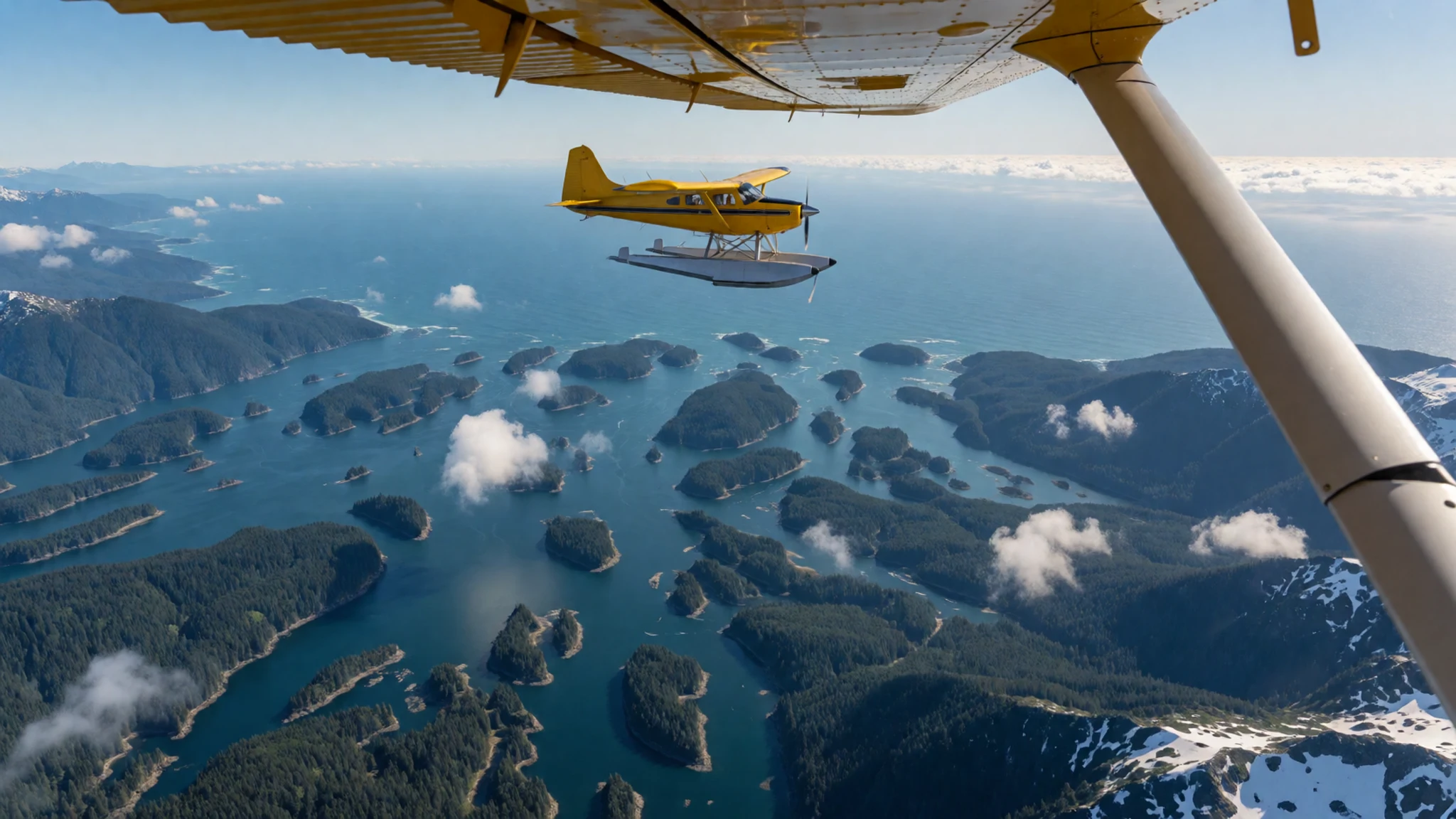
- The Tofino Legion — Tofino town centre
The Royal Canadian Legion hall is a veterans' membership club, but in summer it hosts so many community events that it often feels like the town's main music venue. Concerts of several kinds take place most weeks through the season. It is a good place to see how local people spend their evenings, and it is a welcoming room for visitors who arrive as guests.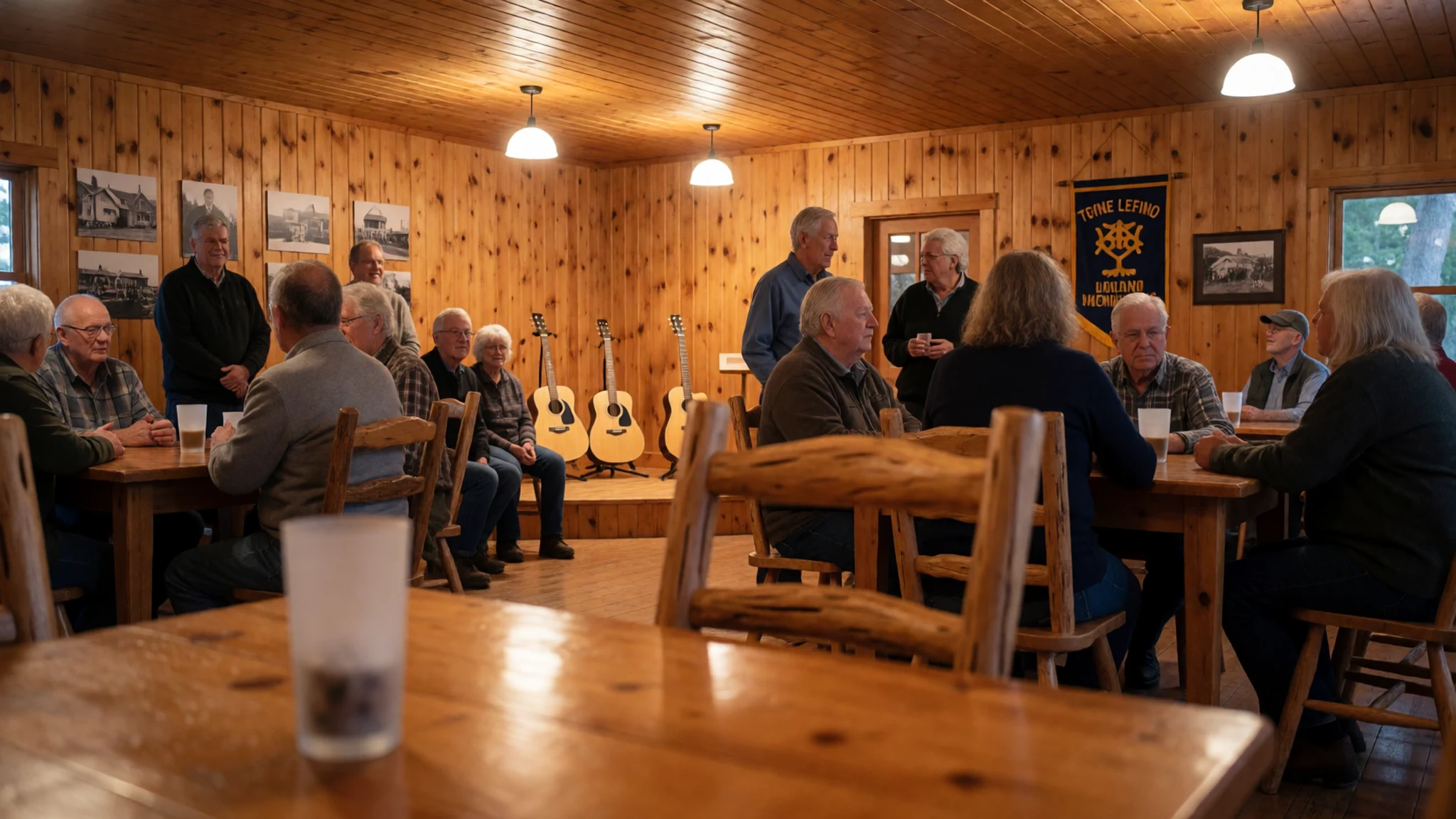
Culture
Tofino's cultural life is rooted in the Tla-o-qui-aht First Nations and the wider Nuu-chah-nulth peoples, whose territory this is, and visitors encounter that history in place names, in the gardens and galleries, and in the community's pride in its coast. Several events mark the seasons. Each March the grey whale migration is celebrated with the Pacific Rim Whale Festival, which brings art, films and tours across Tofino and Ucluelet. The last weekend of April was once given over to the Tofino Shorebird Festival. In the past, the first weekend of June brought a festival centred on regional vintages from British Columbia and the dishes of Tofino's chefs. Every Saturday from the Victoria Day long weekend until early October, the Tofino Market sets up on the Village Green. Early September brings a week-long fishing tournament, and the Queen of the Peak women's surf championship usually takes place late in the month. Festival dates change, so check local listings before you plan around one. When visiting Indigenous sites, cultural centres or community events, follow posted instructions and ask before photographing people or ceremonies.
What to wear
Traditional dress on this coast is built around the materials of the forest and the sea. Among the Nuu-chah-nulth peoples, cedar bark was woven into capes, hats and clothing, and the skill of working cedar was passed between generations. Woven cedar hats and capes are still made today, and they appear at ceremonies and public events, usually alongside regalia made from wool, cloth and carved or painted elements. Many local people now wear everyday clothing much like anyone else on the West Coast, with a strong emphasis on practicality. Rain jackets, waterproof boots, fleece and wool layers are the common sight in town, and surfers and fishing crews wear thick wetsuits and oilskins. Visitors should dress for a damp, cool coast in layers that can be stripped off or added to: a waterproof outer shell, a warm mid-layer and quick-drying clothes underneath. Sturdy waterproof footwear suits the beach, the boardwalk and the muddy trails of the rain forest. Carry a warm hat and gloves for winter storm-watching, and avoid heavy cotton, which stays wet and cold. Modesty is not a formal concern here, but tidy, weather-ready clothing is appreciated at community events and at any Indigenous cultural site.
What to eat
- Seafood from the ocean — waterfront restaurants along the harbour
Fresh Pacific fish and shellfish appear on menus across the town, often prepared with local herbs and seaweed. Waterfront restaurants with patios are the natural place to eat them on a clear day, when the view is as good as the plate. Ask what came in that morning, since the catch changes with the season and the weather.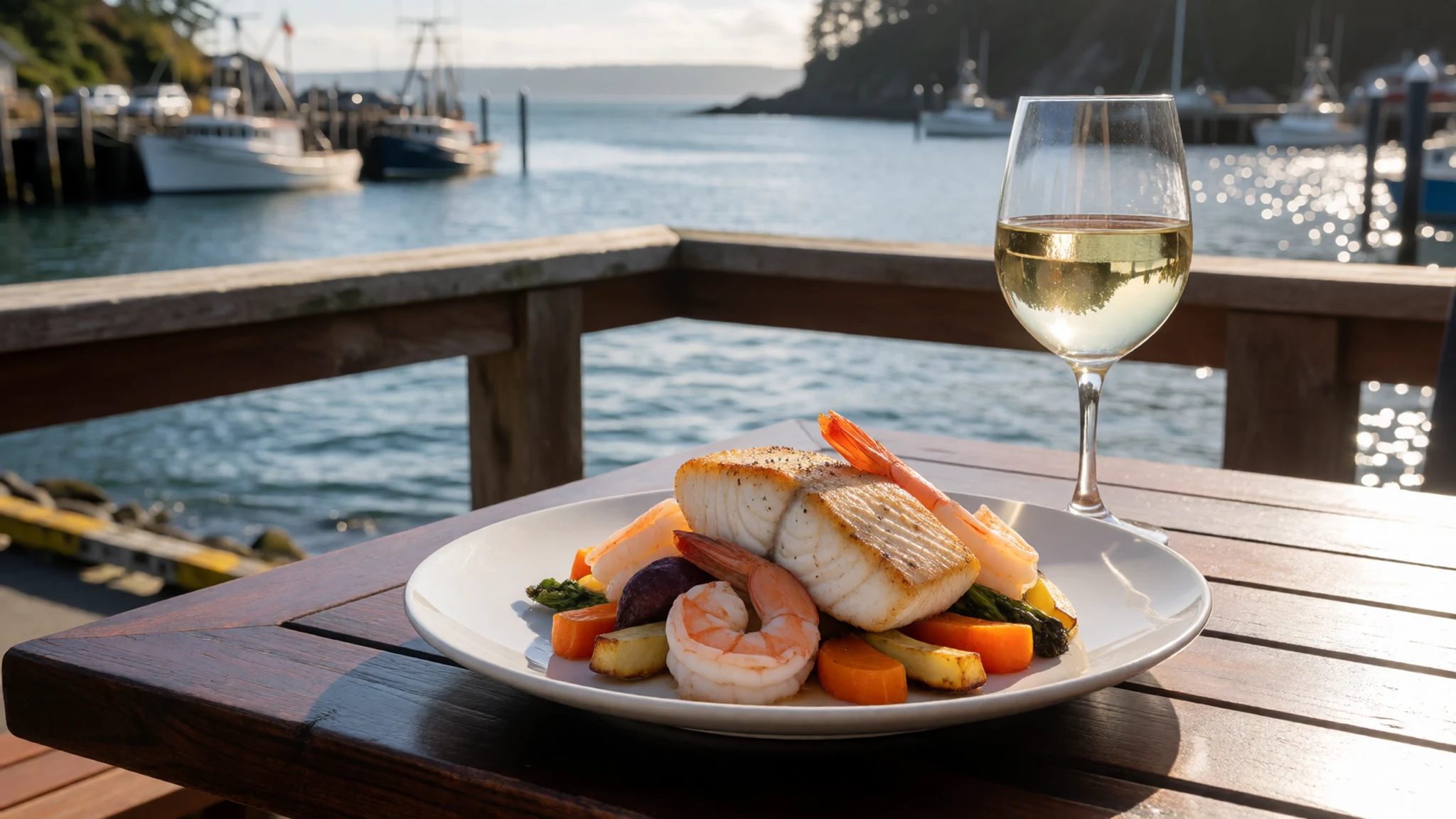
- Foraged greens and shoreline plants — chef-led restaurants in the village centre
Several kitchens in town build their menus around ingredients gathered from the forest, the shoreline and the ocean, including wild greens and sea plants. This kind of cooking is seasonal and small in scale, so dishes change often. It is a good way to taste the place as chefs themselves see it.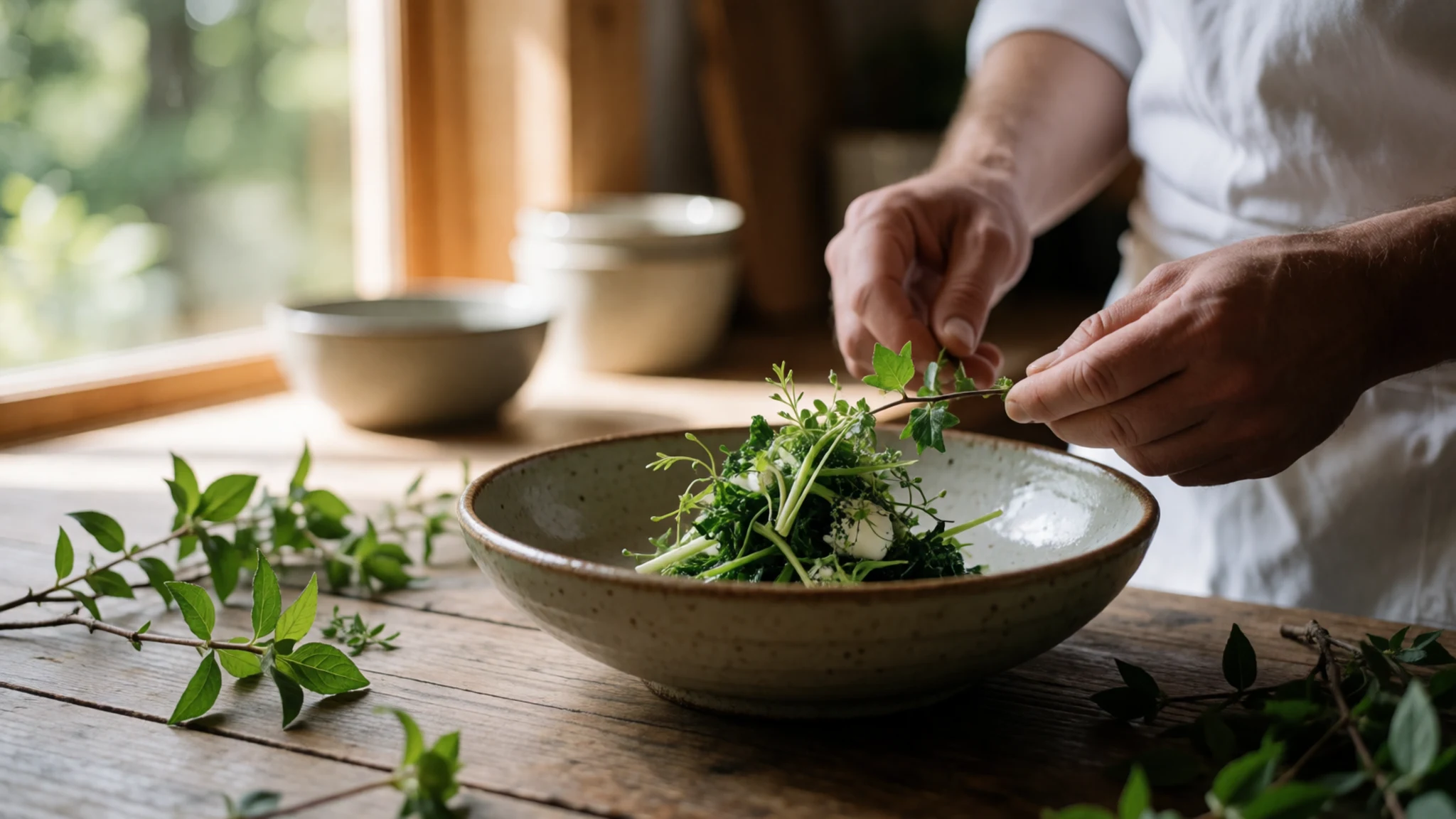
- Fresh bread, scones and pastries — the village bake shop near the centre
Tofino has a long-running whole foods bake shop that has been baking for decades, and its counter is a good breakfast or lunch stop. Breads, scones and baked goods sell out early on busy summer mornings. Go early, and take something to eat on the walk to the beach. - Handmade chocolate and ice cream — the village shops near the harbour
A small chocolate maker in town produces truffles, bars and homemade gelato that locals visit often. The ice cream is a popular after-beach treat, especially for families. Queues form in the afternoons during summer, so a late-morning visit is easier. - Coastal Pacific Northwest cooking — dining rooms across the village
Restaurants serving Pacific Northwest cuisine use local seafood, berries and herbs in dishes that suit a damp, cool climate. Many of these places are sit-down dinners, so booking helps in peak season. Dinner tends to be the strongest meal of the day here.
Plan it
Best time. Late spring to early autumn gives the mildest and driest weather, with cool summers and comfortable days for beaches and trails. Winter is wet and stormy, which suits storm-watchers but makes the beaches and trails harder going. Summer is the busiest and most expensive season, so mid-week and shoulder-season trips are calmer.
How long. 2–3
Getting there. Fly into Vancouver or Victoria, then take a long drive or a ferry-and-drive route across Vancouver Island to the western coast; this is the usual way for most visitors. A small airstrip nearby serves light aircraft and seaplanes for shorter, pricier trips.
Budget. high
Tips
- Book accommodation and tours well ahead for July and August, when the town fills up
- Check the official site for park fees, camping rules and parking before you arrive
- Carry cash as well as cards for small shops, markets and the Village Green
- Pack waterproof layers and footwear even in summer; the weather changes quickly
- Start beach walks early on busy days to find parking and quiet sand
Etiquette
- Stay on marked trails and boardwalks in the rain forest to protect fragile ground
- Leave shells, driftwood and rocks where you find them, and keep dogs under control
- Ask before photographing people or ceremonies, especially at Indigenous cultural sites
Nearby
Sources
- Wikidata Q462564 (CC0)
- Wikipedia, Tofino (rev 1381701702) (CC BY-SA 4.0)
- Wikivoyage, Tofino (rev 5360883) (CC BY-SA 4.0)
- Tofino.Vue vers l'île de Meares (photo) (CC BY-SA 2.0)
- Sand dollars on Tofino beaches (photo) (CC BY 3.0)
- Looking back over Long Beach (photo) (CC BY 2.5)
- Tofino Panorama 02 (photo) (CC BY-SA 4.0)
- Arctic cold front over Cox Bay (photo) (CC BY 3.0)
- Long Beach from Incinerator Rock (photo) (CC0 1.0)
- Attention (photo) (CC BY 2.5)
- Best Western Hotel, Tofino (photo) (CC BY 4.0)


