Tōdai-ji
Tōdai-ji, Japan
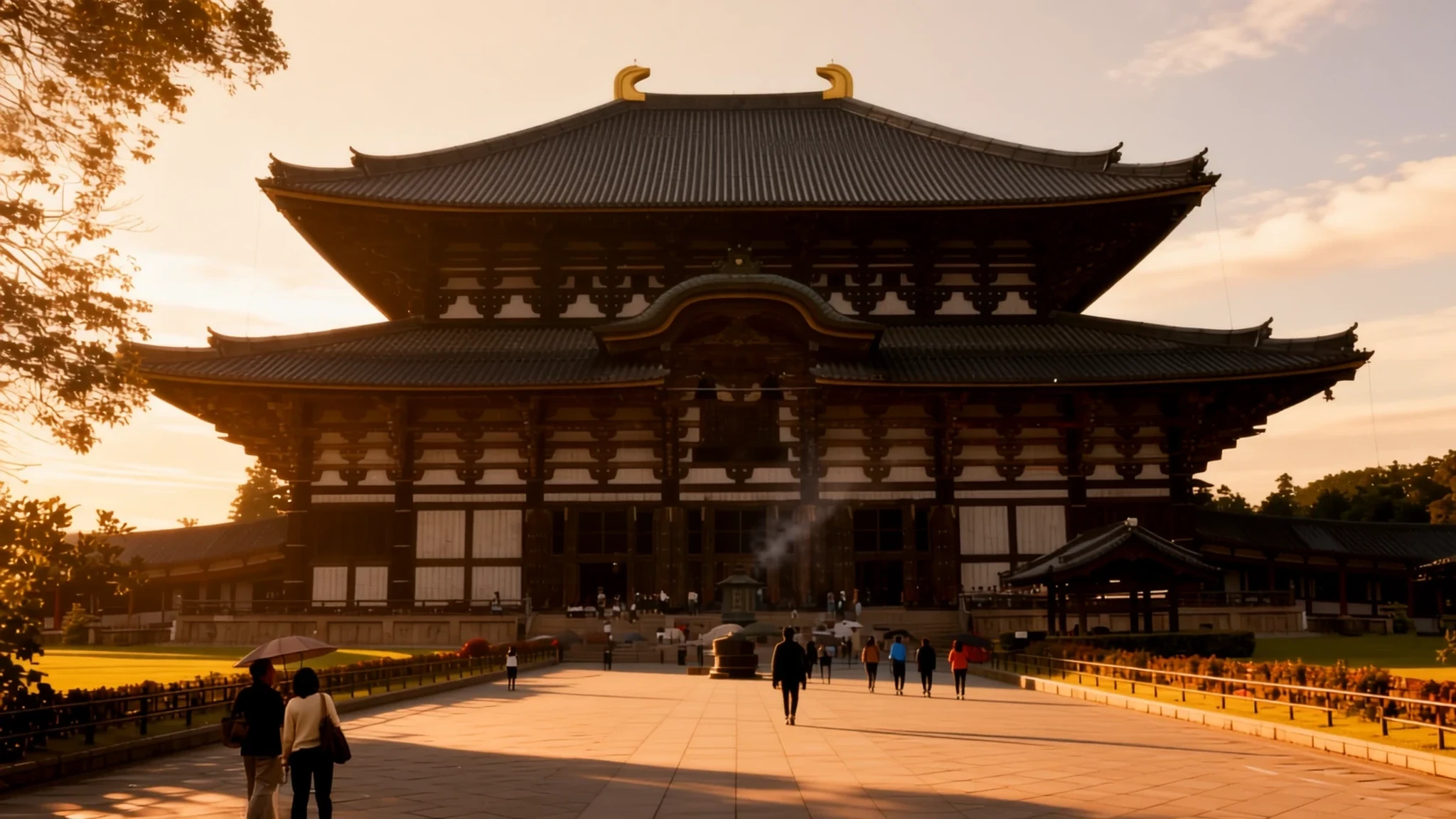
Go for the giant bronze Buddha in its vast wooden hall, then walk the park where deer wander between the temples.
The place
Tōdai-ji (東大寺, 'Eastern Great Temple') is a Buddhist temple complex in the city of Nara, in western Japan. At one time it ranked among the influential Seven Great Temples of the early state. Its layout was meant to echo the Chinese monasteries of the Tang dynasty, which the court admired, so the complex was planned on an ambitious scale from the start. The first foundation dates to 738, but the temple was not formally opened until 752, the year recorded in its facts.
Most of what stands today belongs to later rebuilds rather than to the original buildings. The site sits at the edge of Nara Park, so the approach is a walk over open grass, with deer moving among the visitors and the gates. The Great Buddha Hall, Daibutsuden, is the centrepiece. It is broad and high, with a heavy, sweeping roof, and the statue inside seems to fill the space without crowding it. This bronze image is Vairocana Buddha, which Japanese speakers call Daibutsu, and it is the largest bronze Buddha figure in the world.
The temple remains a working religious centre and the headquarters of the Kegon tradition in Japan, so the hall is used for ceremonies as well as sightseeing. Mornings are calmer, weekdays are quieter than weekends and school-trip days, and summer afternoons are hot and humid. The open paths offer little shade, so the middle of the day is best spent indoors or in the museums nearby.
Its story
Tōdai-ji began in a period of hardship. Japan was hit by a run of disasters and epidemics during the Tenpyō era, and in 741 Emperor Shōmu issued an edict to build provincial temples across the country. Tōdai-ji, still known as Kinshōsen-ji at that time, was made the chief provincial temple of Yamato Province. In 743 the emperor commissioned the great Buddha. The years were unsettled: the court moved the capital several times, and rebellions and a smallpox outbreak unsettled the realm.
Later centuries brought both damage and rebuilding. In 1181 Minamoto Yoritomo sponsored a reconstruction led by the monk Chōgen, who brought existing buildings into a common design and made the exposed pillars sturdier. The Buddha was repaired after serious damage in 1692, and the Great Buddha Hall was rebuilt in 1709. By the late 19th century the hall was close to collapse under the weight of its roof. A first restoration between 1904 and 1913 saved it, and steel framing completed the present appearance between 1974 and 1980.
A legend from the early period tells of the monk Gyōki travelling to Ise Grand Shrine to reconcile Shinto with Buddhism. The story shows how closely the two traditions were tied together in early Japan, and it helps explain why the temple and the shrines of Nara grew up side by side.
What to see
- Tōdai-ji Daibutsu-den — Tōdai-ji, Nara Park
The Great Buddha Hall houses the Daibutsu, the bronze Vairocana Buddha, which is regarded as the largest bronze figure of the Buddha in the world. Give yourself time to walk around the hall slowly, looking up at the seated figure and the scale of the surrounding columns. The hall is busiest from late morning into the afternoon, so an early arrival gives a calmer view.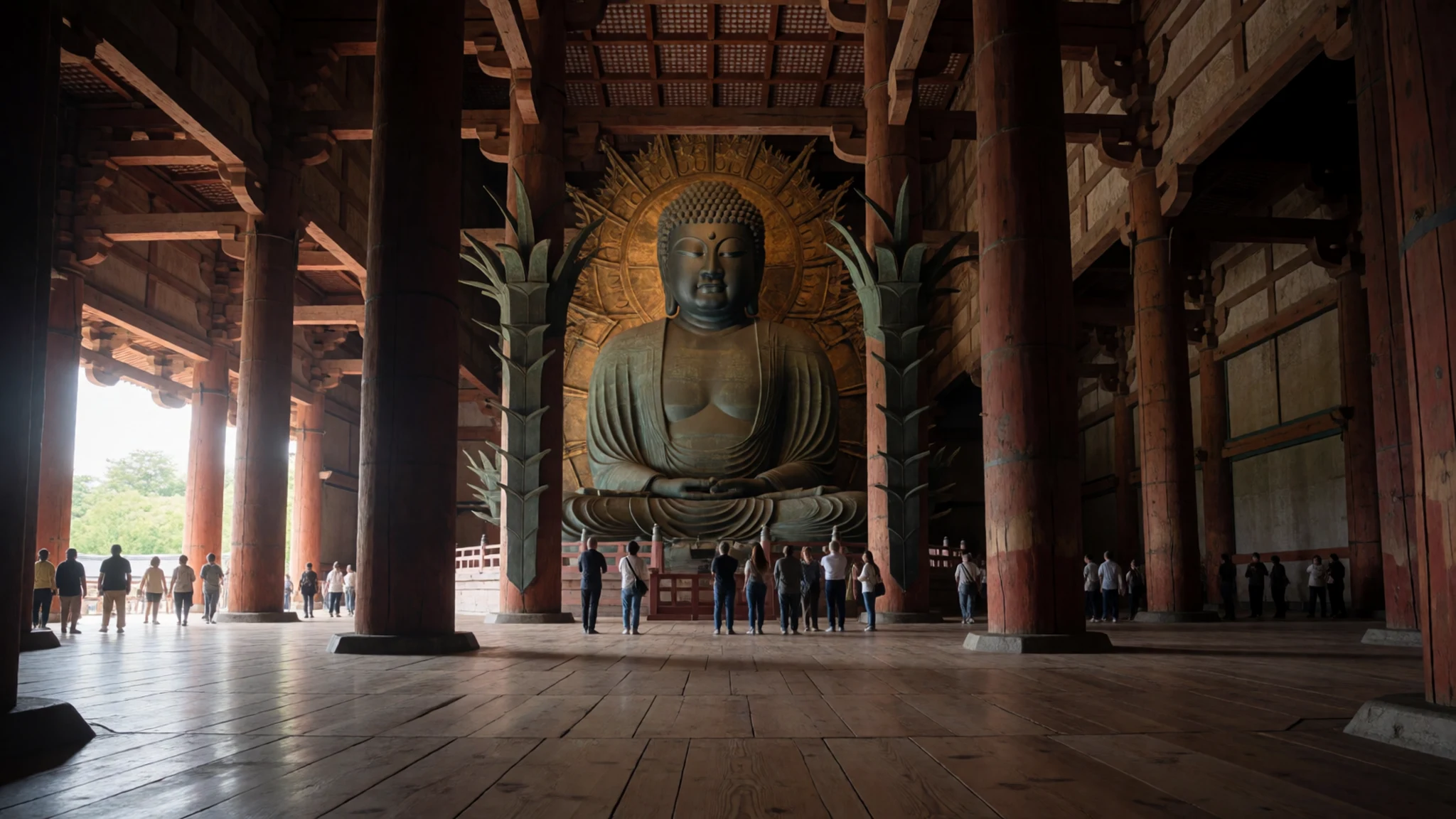
- Kōfuku-ji — Nara Park, west of Tōdai-ji
Kōfuku-ji is a temple with a three-storey and a five-storey pagoda that stand out against the trees. The taller five-storey pagoda has historically competed with a Kyoto rival for the national height record. The site is quieter than Tōdai-ji and makes a good place to photograph the pagodas from the park paths.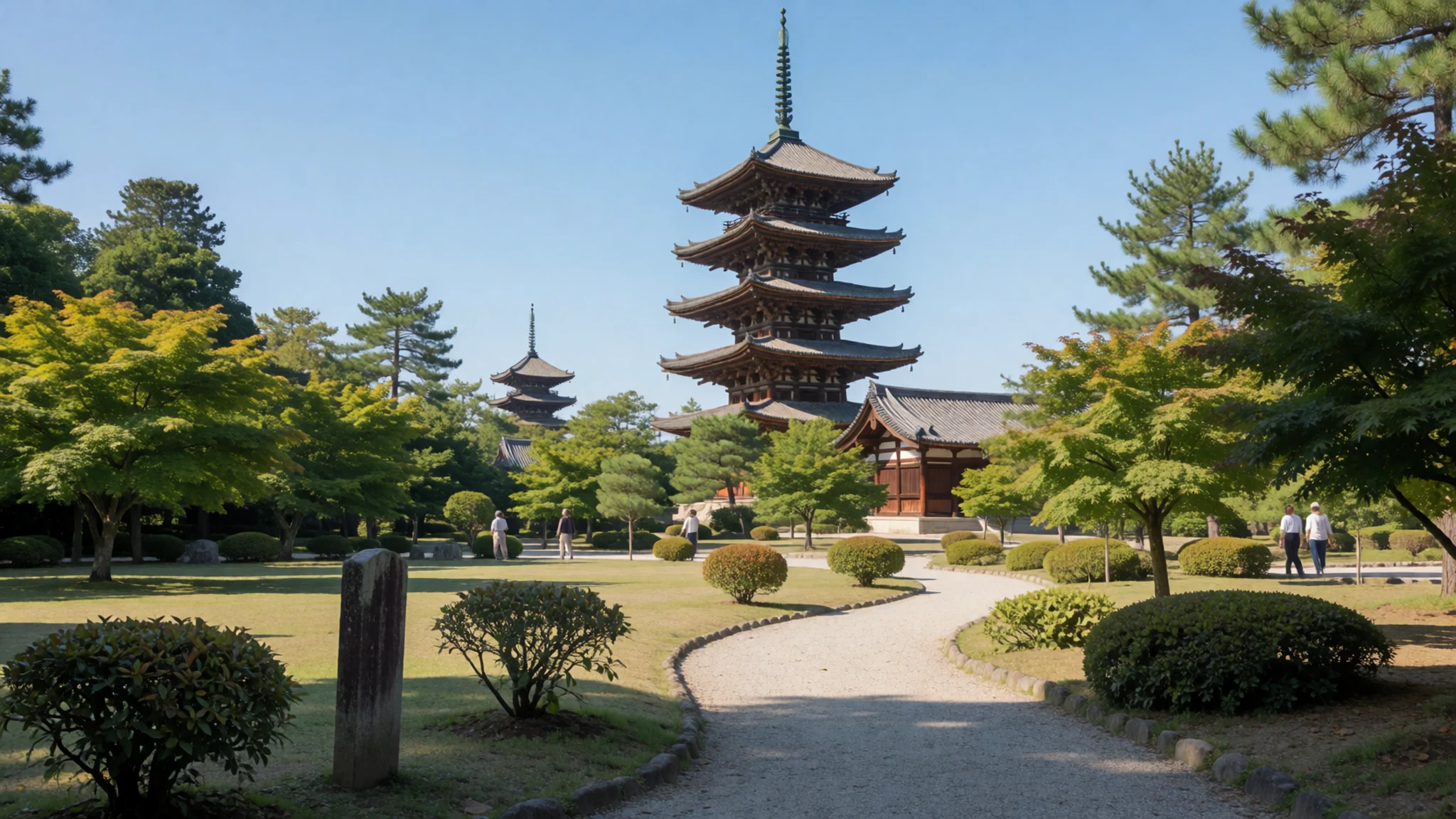
- Nara National Museum — Nara Park, near the Kōfuku-ji side
The museum is known for its Buddhist art, with statues and temple treasures from across the region. Its National Treasure Hall holds an impressive group of sculptures. The changing exhibitions rotate, so check the official listings for current displays before planning the visit around a particular piece.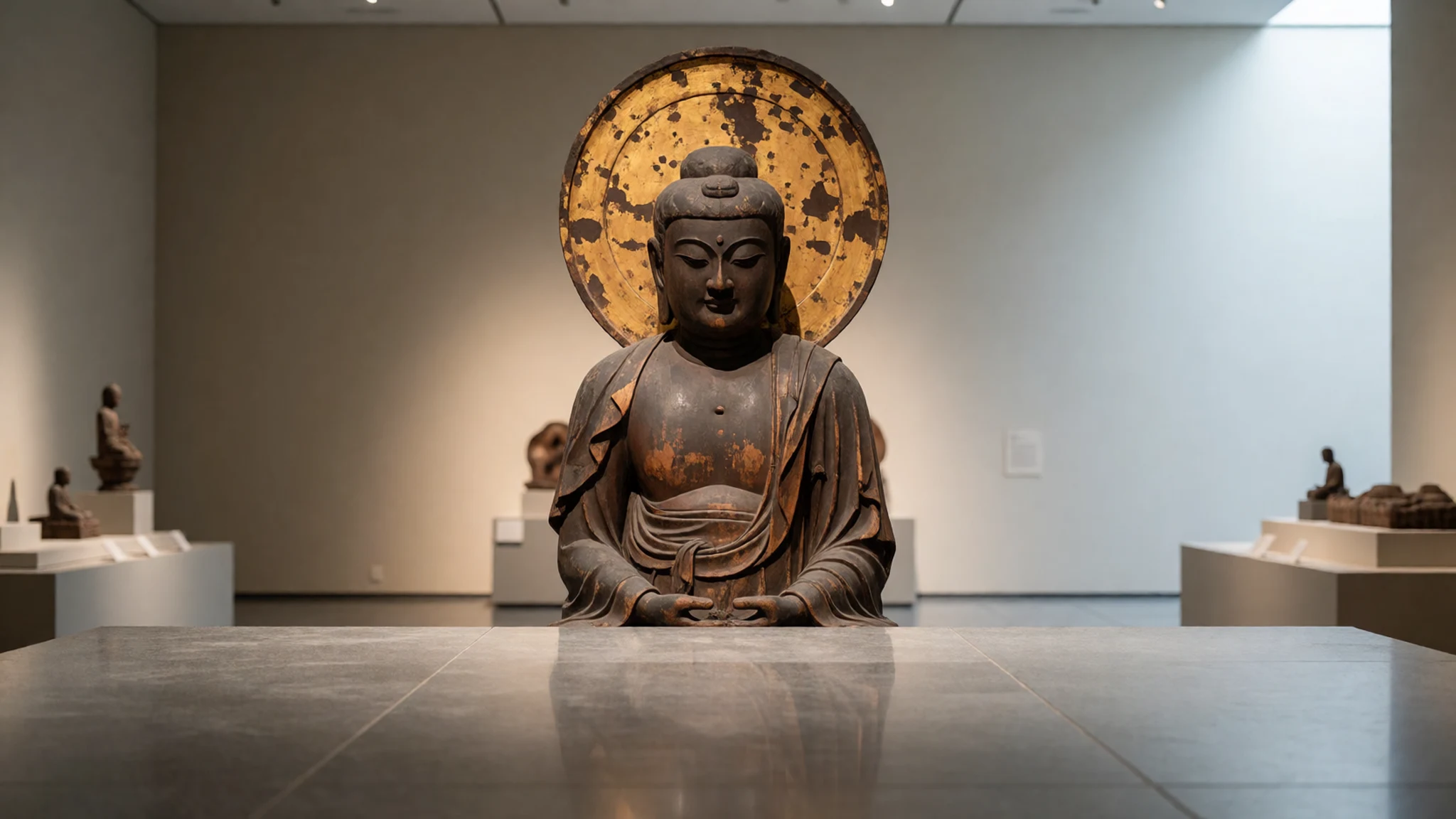
- Kasuga Taisha — Kasuga-yama, east of the park
Kasuga Taisha is a shrine remembered as much for its approach as for its buildings. The route runs through the Kasuga-yama Primeval Forest, with old trees and lantern-lined paths. Deer are linked with the shrine in local tradition, so they often appear along the way and are part of the walk.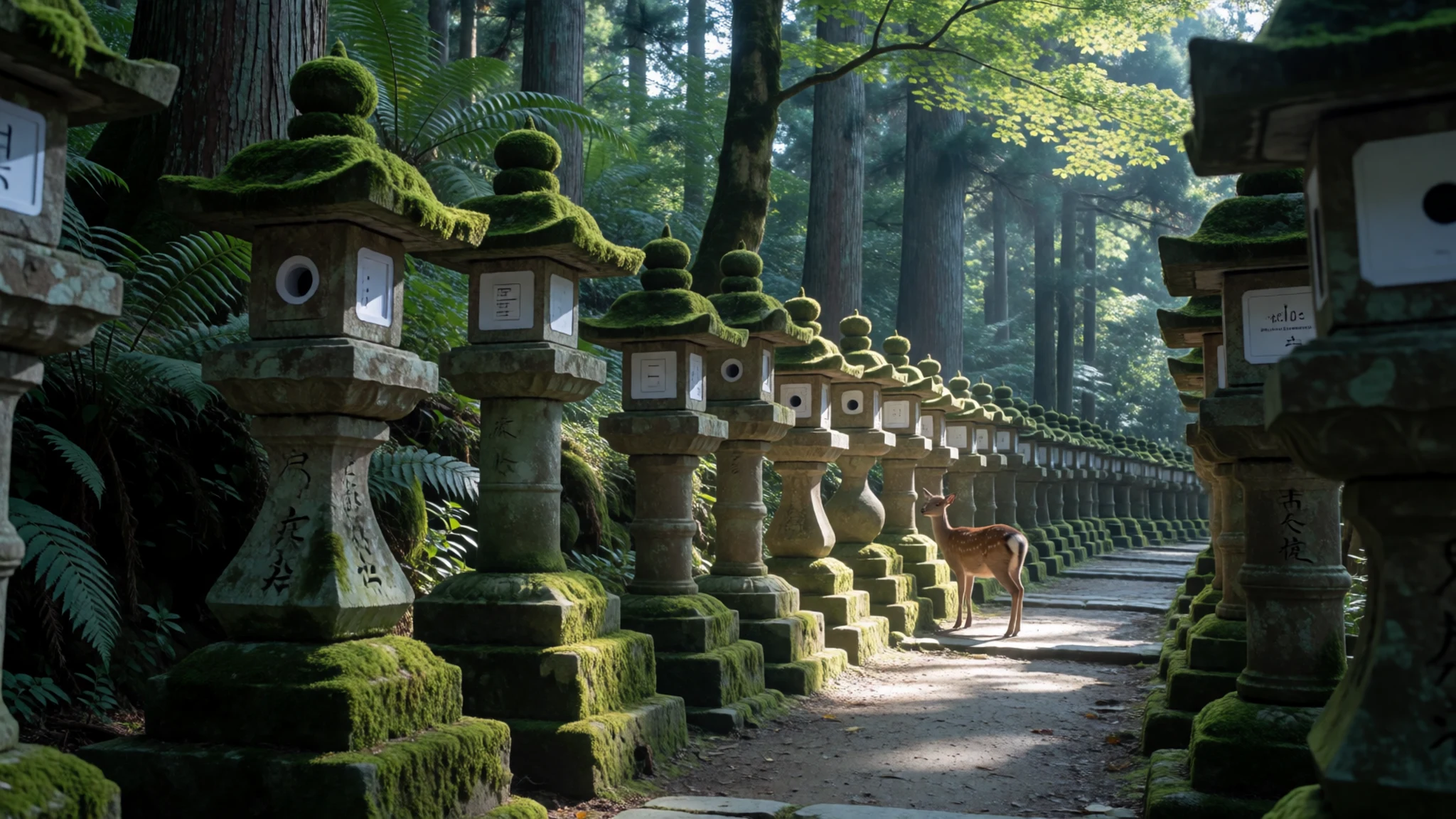
- Sarusawa Pond — Eastern end of Sanjō-dōri
Sarusawa Pond is a small pond at the eastern end of Sanjō-dōri, with Nara Park behind it and the old Naramachi streets to the south. It is a popular spot for looking across the water towards Kōfuku-ji, especially in the early morning when the surface is still. It makes an easy, relaxed stop between the temples.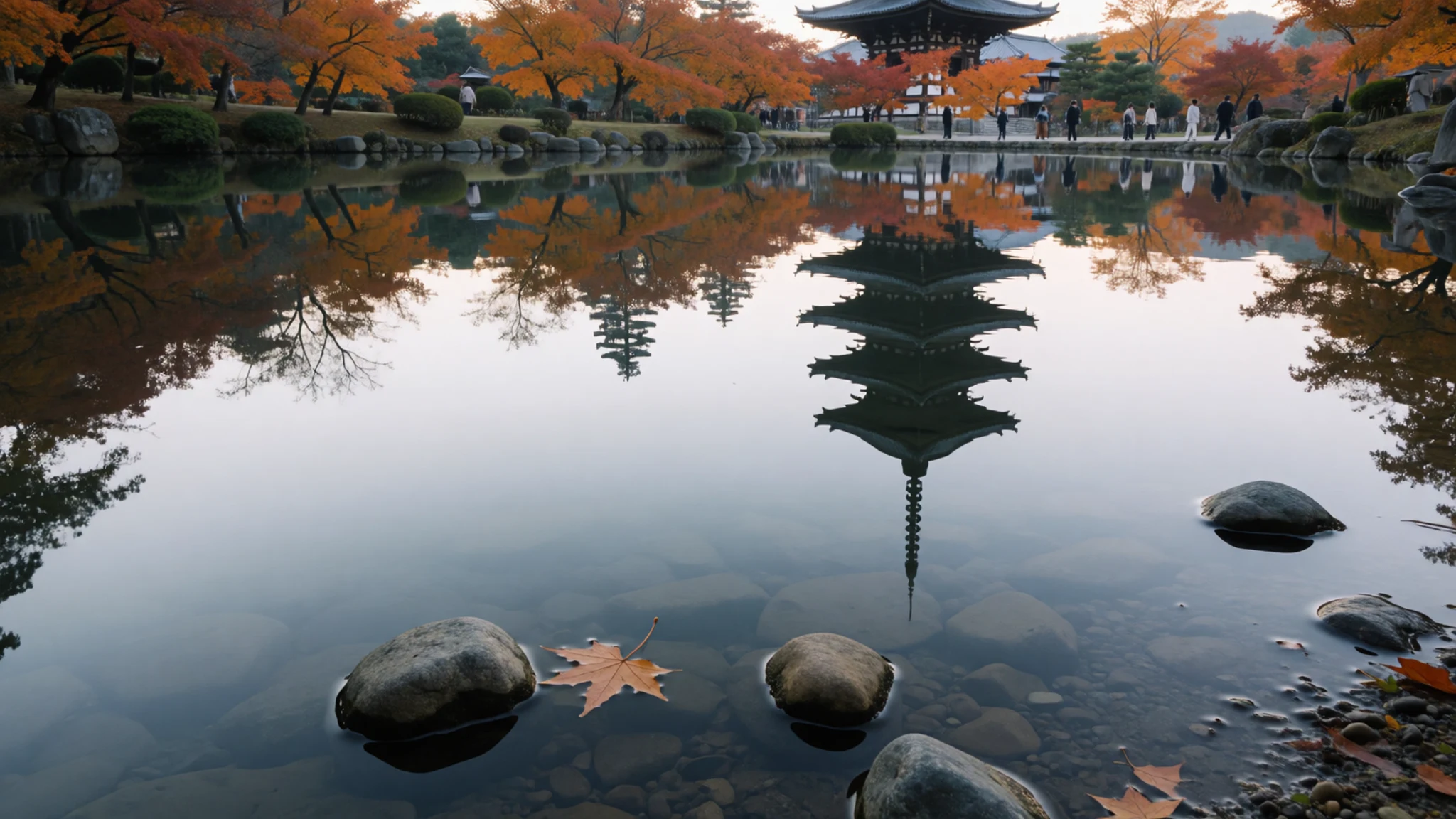
Culture
Tōdai-ji is a working temple as well as a major attraction, so the Great Buddha Hall is a place of worship first. Monks and lay worshippers pray in front of the statue, and ceremonies can take place during the day. Visitors arrive in a steady stream, which keeps the floor moving, so pausing in the middle of the room to take pictures slows everyone down. In local tradition the deer of Nara Park are linked to Kasuga Taisha, where they are treated as messengers of the gods. They approach people hoping for food, so keep bags closed and avoid chasing or grabbing them. Photography rules inside some halls are set by the temple and posted near the entrance, so check them before raising a camera. Keep voices low inside the buildings and step aside for people who are praying. Remove your shoes wherever a raised step and a slipper rack show that footwear should come off.
What to wear
Tōdai-ji sits in a city where traditional dress has long meant the kimono, usually made from silk or cotton with woven or dyed patterns. Monks wear robes in plain, muted tones, and formal ceremonies bring out layered silk garments in carefully chosen colours. In summer, many people wear the lighter cotton yukata, which is simpler to put on and easier to walk in.
What people wear now is mostly practical and ordinary: jeans, trainers, layered jackets in cooler months, and school uniforms on group trips. Most locals dress neatly rather than formally, and dark or subdued colours are common in the city.
For a visit, dress for walking. The park is large, the paths mix gravel and stone, and the approach to the hall is long. Choose comfortable shoes that slip on and off easily, because you may need to remove them at some buildings. In summer, pick light breathable fabric, a hat and a bottle of water, since the open paths offer little shade. In winter, layers and a windproof jacket help in the open park. Modest, simple clothing suits a temple, and shoulders and knees are best covered inside the halls.
What to eat
- Mugi tororo — an old house restaurant in Naramachi, the streets south of Sanjō-dōri
A plain, traditional Nara dish of rice with grated yam poured over it, eaten slowly. The menu is short and the setting does much of the work. Try it in an old merchant house in Naramachi, where the garden and the quiet rooms are part of the meal.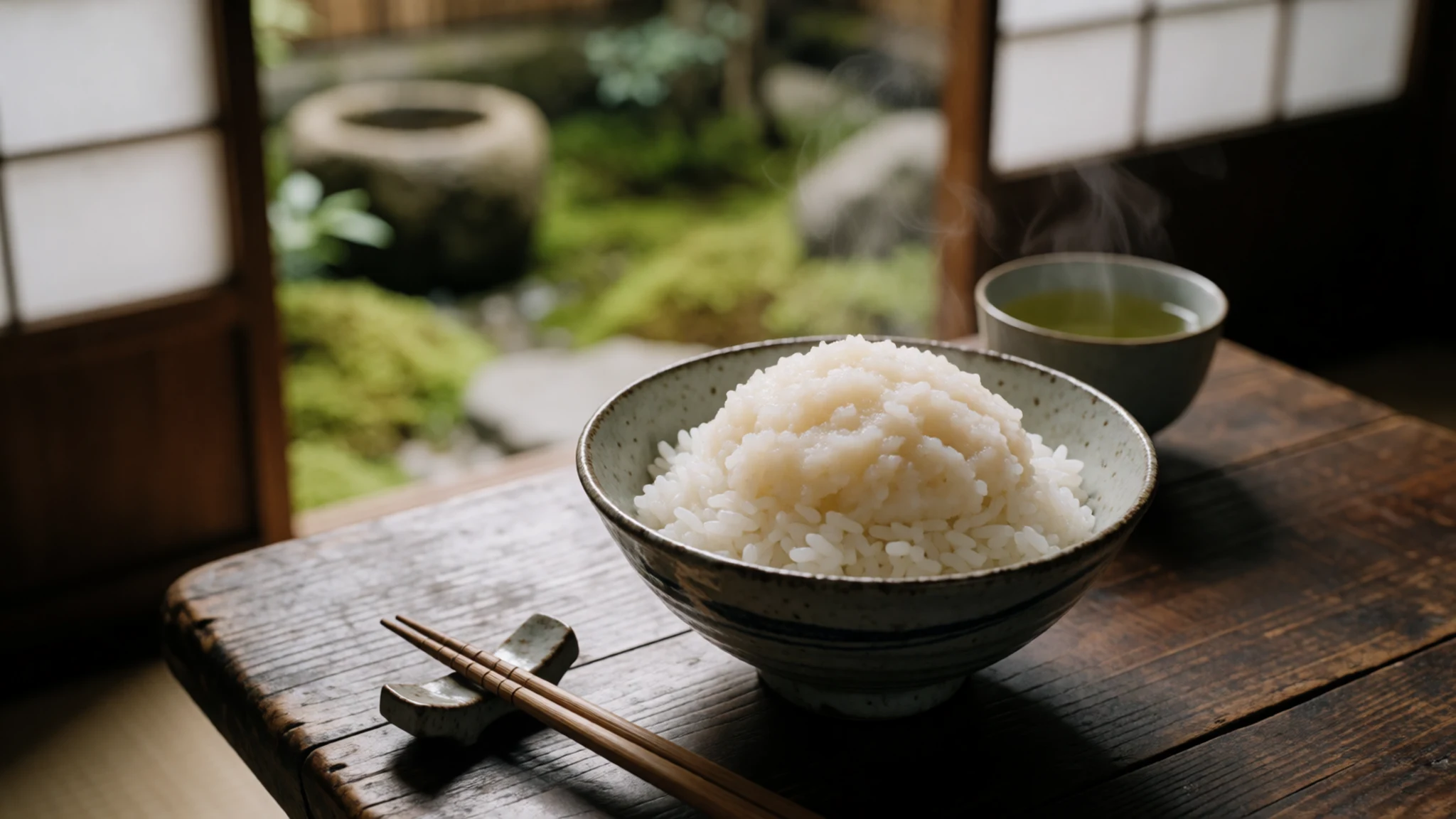
- Kakinohazushi — traditional restaurants on the streets near Naramachi
Pressed sushi wrapped in persimmon leaves, a local speciality of the Nara area. The leaves add a faint, woody scent. Ask for a set that includes it, often served in a small dinner tray. Find it at a traditional restaurant on the streets near Naramachi.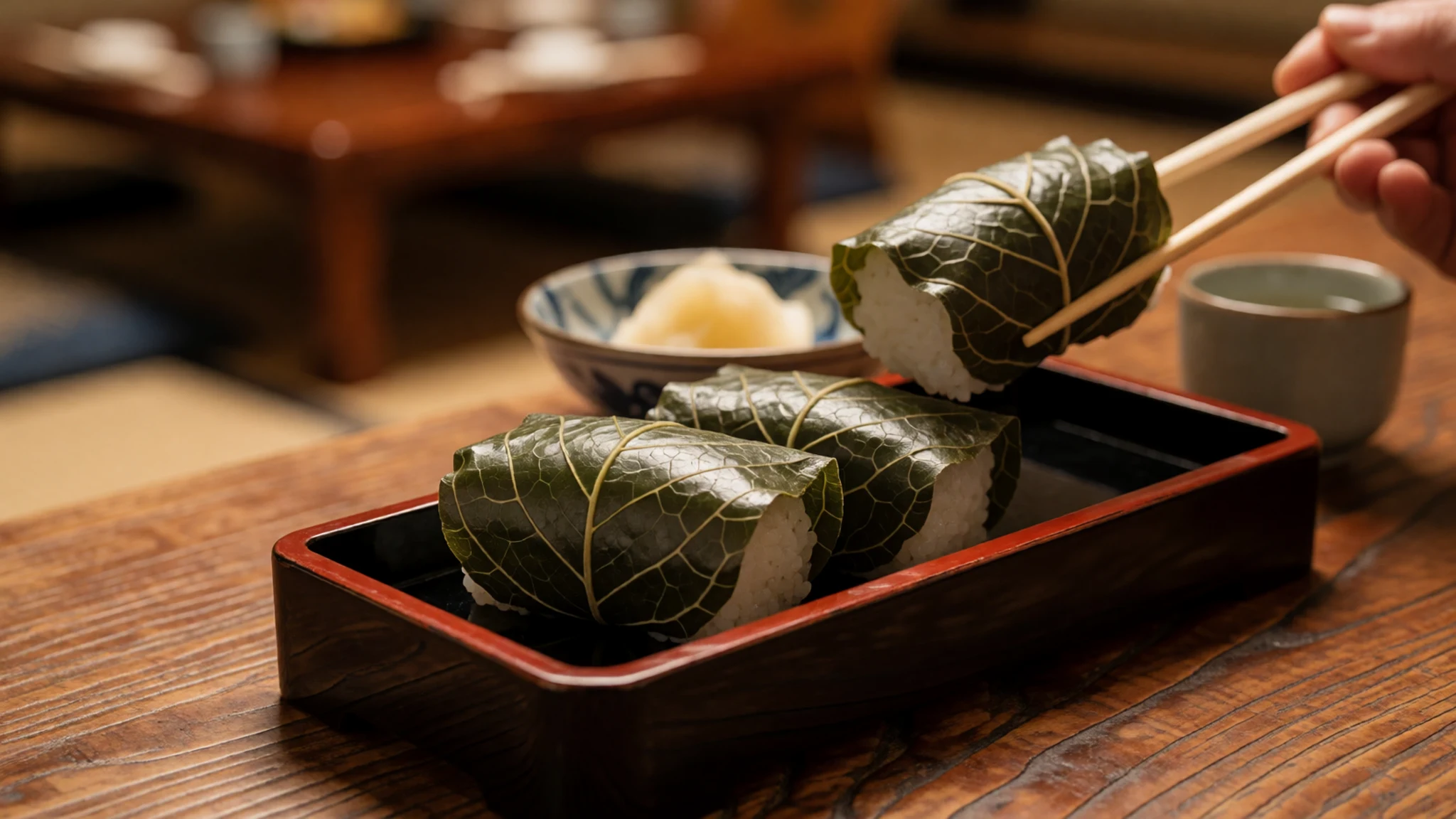
- Chagayu — the old town streets near Sanjō-dōri
Chagayu is rice cooked soft in tea, a thin gruel that tastes better than it sounds. It appears in local dinner sets alongside pressed sushi, and it is a gentle way to end a long walk. Look for it in traditional restaurants around the old town streets near Sanjō-dōri. - Okonomiyaki — counters in the streets around Sanjō-dōri
A pan-fried cabbage pancake with meat, cooked on a griddle. Many counters near the old town specialise in it, and the portions are generous. Eat it hot, straight from the griddle, with sweet brown sauce and a little mayonnaise. Busy counters can mean a short wait. - Conveyor-belt sushi — a conveyor-belt counter in the central streets of Nara
Conveyor-belt sushi is an easy, modest-priced lunch, with handmade pieces circling past the counter. Plate colours usually signal the price, so check the key before starting. Fish is prepared fresh, and the relaxed pace suits solo travellers and families alike. - Tuna — a tiny counter tucked into the town centre's side streets
A tiny hole-in-the-wall place specialising in tuna, the sort of counter that rewards a short wait. Tuna is served in simple cuts and bowls, and the chef's suggestions are worth trusting. Go off-peak for a seat at the counter.
Plan it
Best time. Spring (March–April) brings blossom in and around Nara Park, and autumn (October–November) brings crisp weather and autumn colour. June is the rainy season, and July and August are hot and humid.
How long. 1–2
Getting there. Fly into Kansai International Airport, then take the Airport Limousine bus or the rail link to Nara. From Kyoto, the Kintetsu line to Kintetsu Nara station is the quickest route, and the main sights are a walk away from there.
Budget. low
Tips
- Arrive early, before the tour groups reach the Great Buddha Hall.
- Check the official site at https://www.todaiji.or.jp/ for current opening times and any fees before you go.
- Walk between the sights in the park, since they are close enough for it.
- Carry cash for small snack counters and offering boxes, as small places may not take cards.
- Pack water for summer visits, and walk the Kasuga-yama forest path on the way to Kasuga Taisha.
Etiquette
- Remove your shoes wherever a step up and a slipper rack show that you should.
- Do not chase or grab the deer, and buy the special crackers only from the official sellers.
- Keep voices low inside the halls and step aside for people who are praying.
Nearby
Sources
- Wikidata Q460367 (CC0)
- Wikipedia, Tōdai-ji (rev 1382800204) (CC BY-SA 4.0)
- Wikivoyage, Nara (rev 5385550) (CC BY-SA 4.0)
- Photo: Daibutsu-den in Todaiji, Nara (663highland) (CC BY 3.0)
- Photo: Tōdai-ji Kon-dō (Wiiii) (CC BY-SA 2.0)
- Photo: Model of the garan of Todaiji (名古屋太郎) (CC0 1.0)
- Photo: Model of Todaiji Kondo of its foundation (名古屋太郎) (CC BY-SA 2.0)
- Photo: Todaiji in Nara (663highland) (CC BY 3.0)
- Photo: Todaiji shoro (CC BY 3.0)
- Photo: Miniature model of the Tōdai-ji (Gryffindor) (CC BY-SA 4.0)
- Photo: NaraTodaijiDaibutsu0212 (Public domain)


