Tiwanaku
Tiwanaku, Bolivia
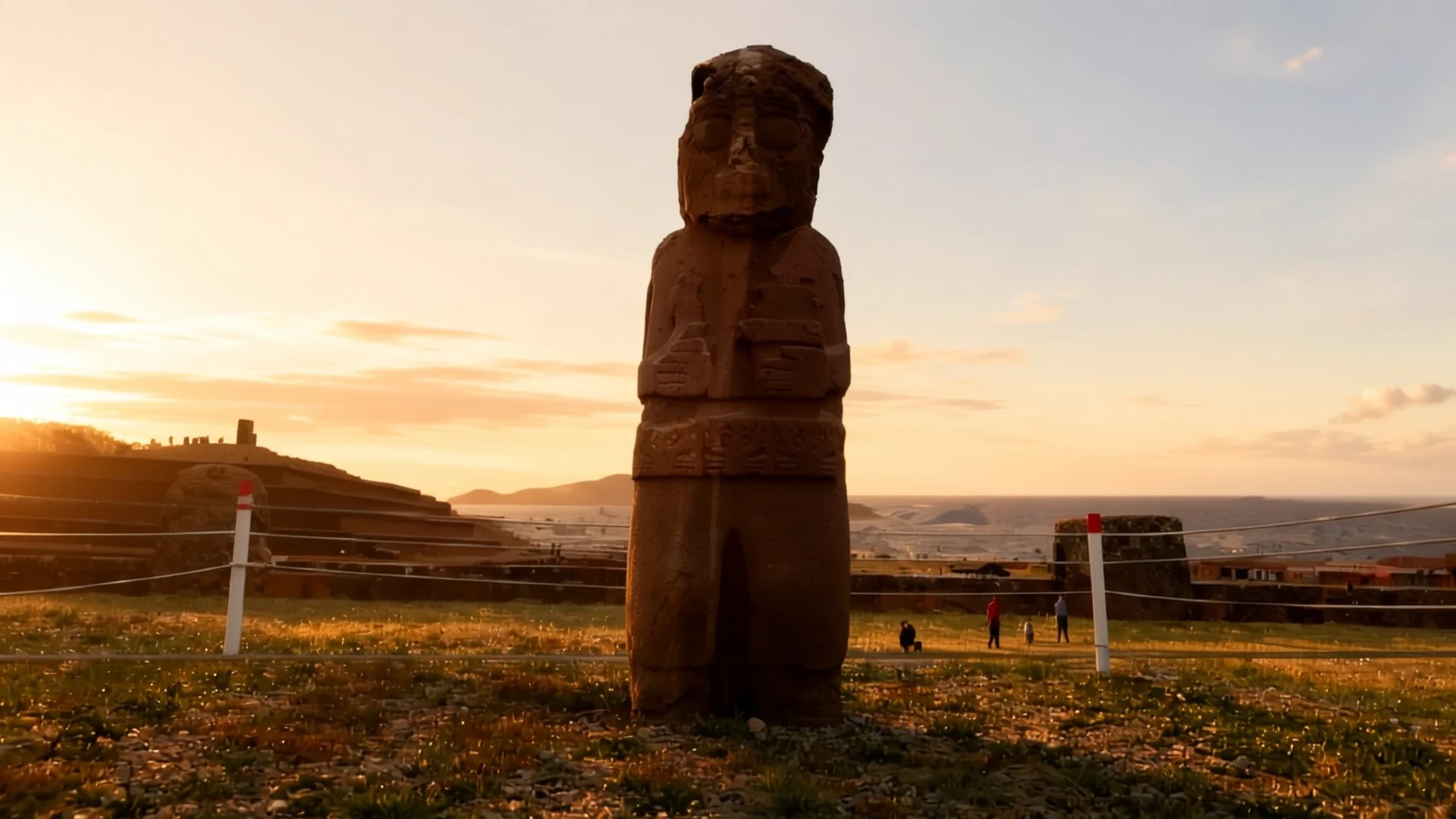
A carved-stone ancient city on the Bolivian high plateau, about 70 kilometres from La Paz and well worth a day trip.
The place
Tiwanaku sits on the high plateau of western Bolivia, roughly 70 kilometres from La Paz and not far from the shore of Lake Titicaca, although the lake itself is hidden from the ruins by surrounding hills. It is a Pre-Columbian archaeological site, and its surface remains spread across about 4 square kilometres. What survives is a mix of monumental stone structures, megalithic blocks and fragments of decorated pottery. Much of the city is still buried, and excavation and research continue, so parts of the site look unfinished rather than neatly restored.
The people who built the city left no writing, so the name they used for it has been lost. The Jesuit chronicler Bernabé Cobo recorded an Aymara name, taypiqala, meaning something like 'stone in the centre', which points to a belief that the site lay at the middle of the world. Linguists have suggested that Puquina was the most likely language spoken there, though that remains a proposal rather than settled fact.
The ruins are bigger than photographs suggest. The stone blocks are heavy and were quarried from rock not found on the flat plain, which is why the site is often compared to Stonehenge. The plateau is open with few trees, so sun and wind are strong, and the walk between the main structures takes longer than it looks. Half a day is a sensible allowance.
Its story
The story of Tiwanaku is partly built from stone and partly from informed guesswork, and the gaps are part of its appeal. The first written record of the site comes from the Spanish conquistador Pedro Cieza de León, who noted it in 1549 while searching for the southern Inca capital of Qullasuyu. By then the stonework was already a puzzle to outsiders.
Later writers built theories around the monuments, some of them otherworldly, that modern archaeology has set aside. Current research treats the city as the work of a society whose own records have disappeared. Its old name reflects the belief that the place was the centre of the world, a sense of cosmic importance that still shapes how local people speak about it.
The Inca and then the Spanish both reused the site's stone. Blocks were taken to pave streets and to build in the surrounding towns, which explains why many carefully cut stones have gone missing. Large parts of the complex still survive, and some structures have been partly reconstructed. Specialists continue to argue about how much reconstruction is justified.
Today the site is a UNESCO World Heritage property and the most important archaeological draw in Bolivia. Much of the city remains underground, so its story keeps shifting as digging continues. Some families in the village still keep monoliths, pottery and old finds in their own yards, a reminder that the past here is not only kept in museums.
What to see
- The Gateway of the Sun — The central archaeological zone
The Gateway of the Sun is a carved stone gateway at the heart of the site, its surface covered with incised figures and a central face. The carving is best seen close up, in low side light that brings out the lines. Explanatory signs are thin, so reading about the site before you arrive is worth the effort.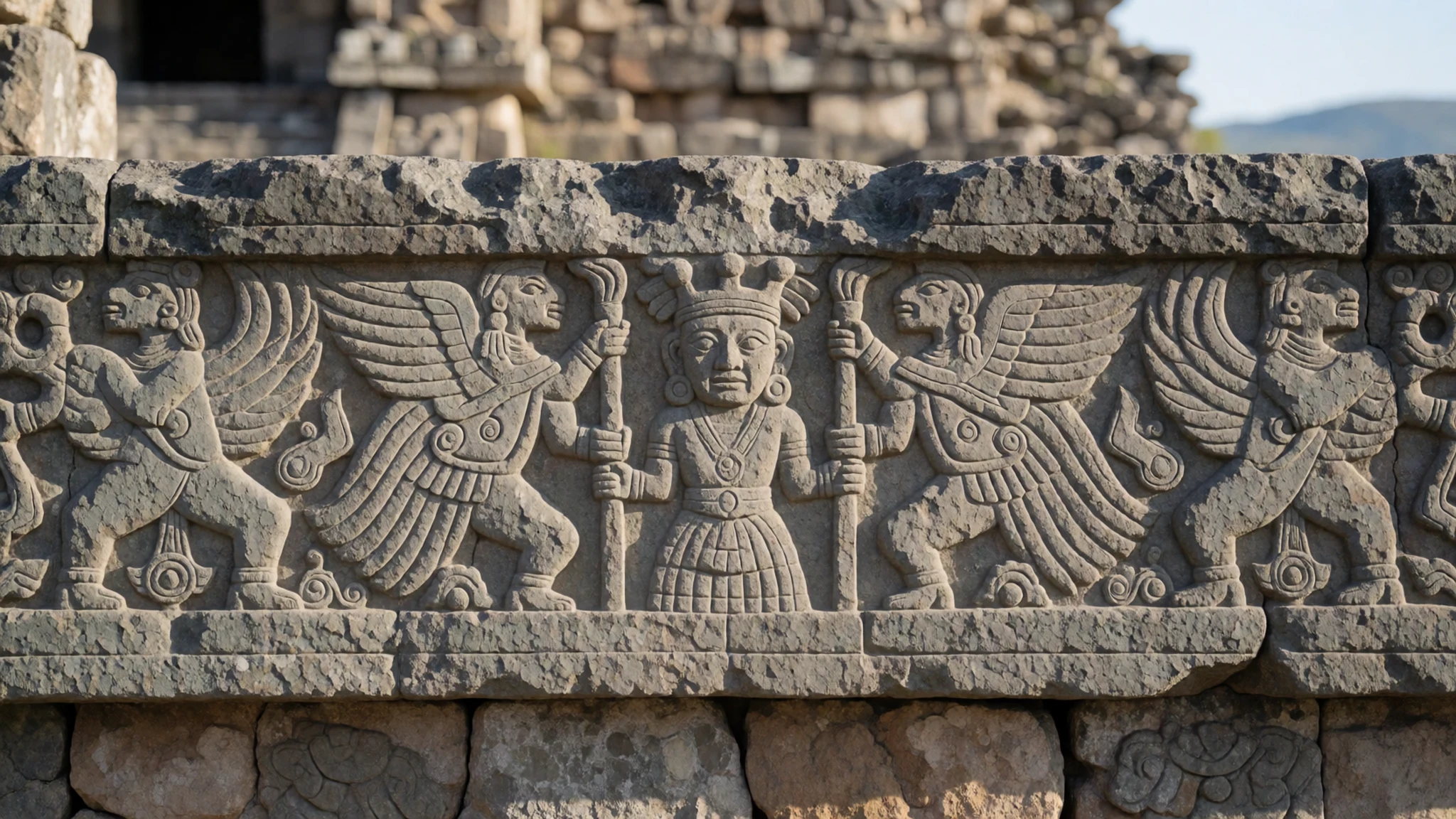
- The Semi-subterranean Temple — The central archaeological zone
A sunken, walled courtyard set below the level of the surrounding plain, with carved detail built into its masonry. The blocks fit closely together, and the wall surfaces show a level of finish that is easy to miss from a distance. Sitting below ground level, the courtyard offers some shelter from the wind.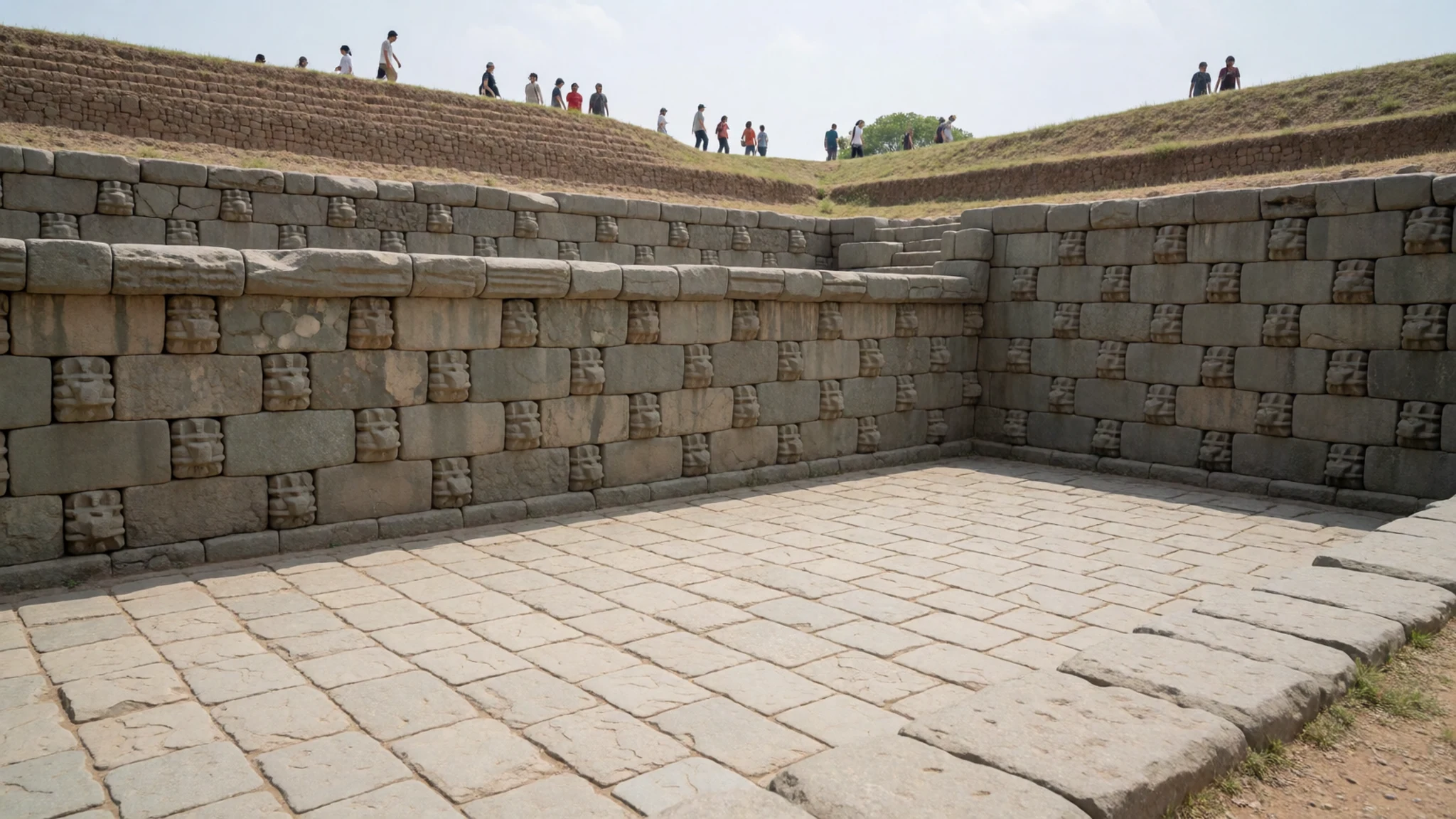
- The Gateway of the Moon — The archaeological zone
The Gateway of the Moon is a carved stone doorway among the ruins, cut from heavy stone that was brought to the plateau from elsewhere. Its carved frame rewards a slow look. Being quarried from rock not found on the flat plain, the stone is a reminder of how much labour went into building the site.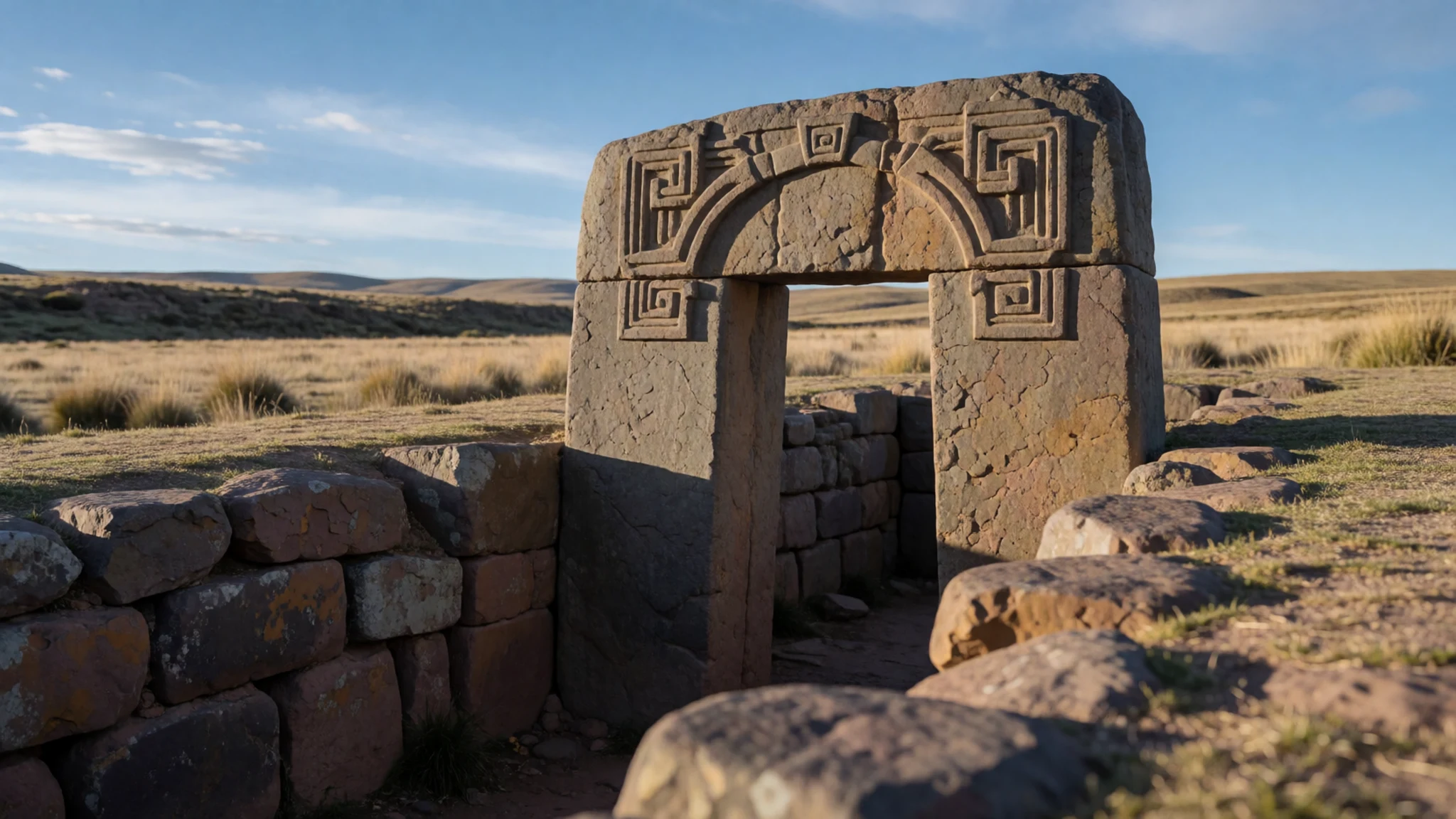
- The Monolito Fraile — The archaeological zone
A tall carved stone figure, one of the upright monoliths for which the site is known. Its form and worn carving show how the stone was shaped and set in place. Step back to take in its full height, and read any posters nearby, which explain how such figures were used.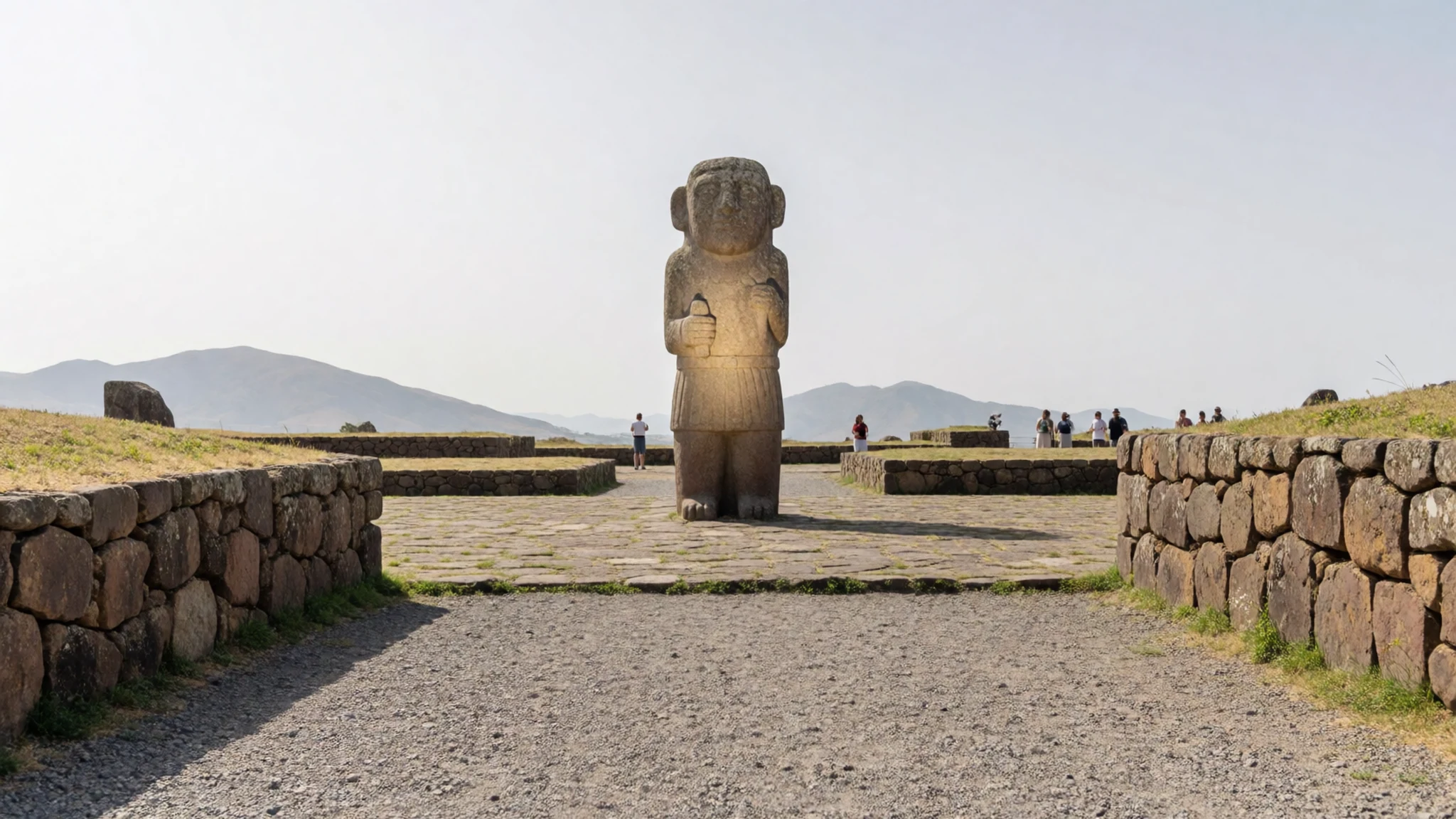
- The main plaza and village church — The village beside the ruins
The village beside the ruins has a main plaza with sculptures and a colonial church from the Spanish period. Some families here have kept monoliths and pottery in their yards and may be willing to show them. Ask politely before going in, and do not expect a formal tour.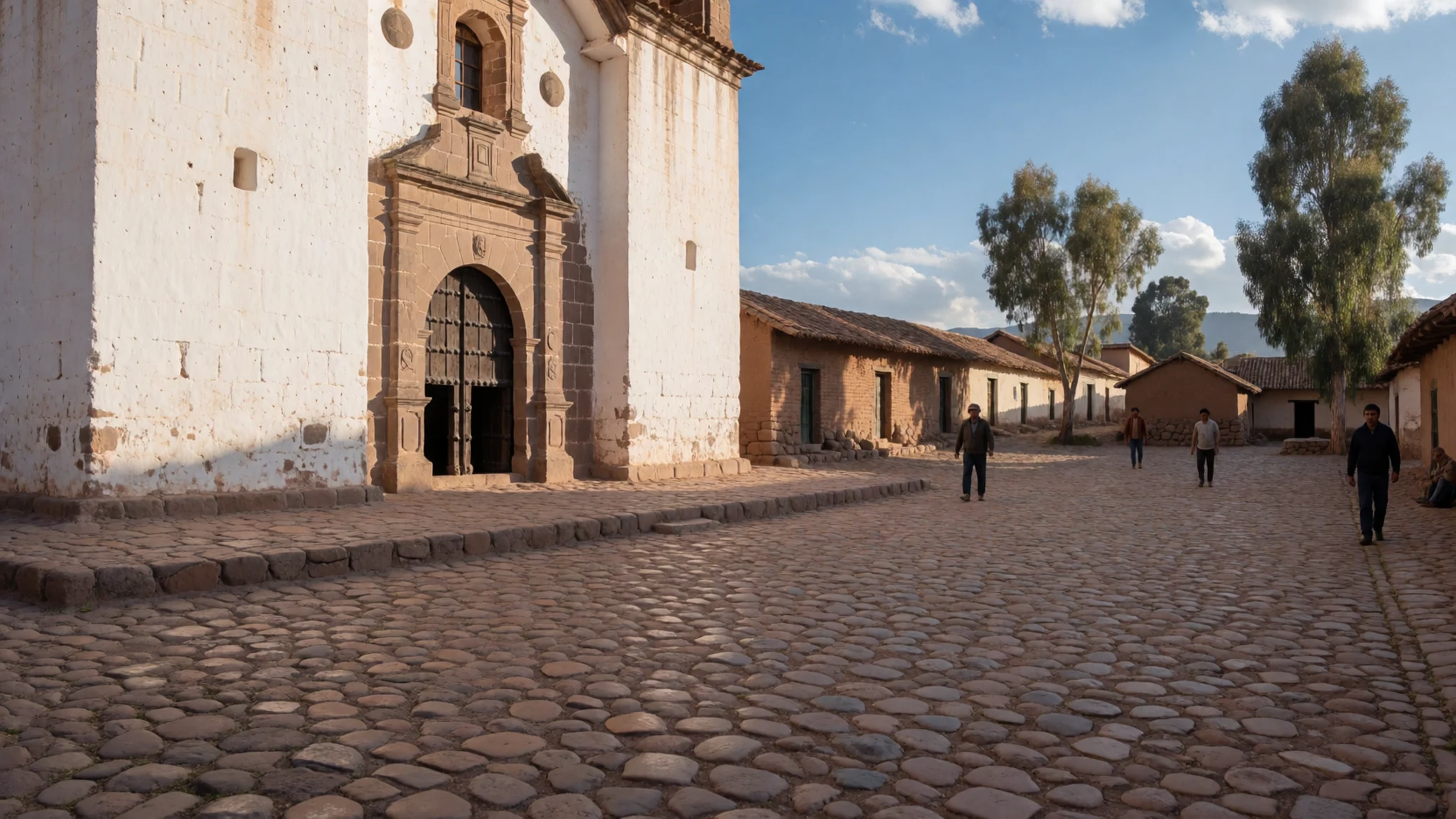
Culture
Tiwanaku is a working archaeological site as well as a national symbol, and visitors are expected to treat it that way. Much of the ground is still under excavation, and the signs and fenced areas mark where digging and conservation are under way. Crossing signs or fences is the quickest way to upset the security guards, who can ask you to leave the grounds.
Local life runs alongside the ruins. The village near the site has a colonial church and a main plaza, and families there have long kept monoliths, mummies and pottery in their own yards. Many are glad to show them, but ask first before photographing people or family objects, and accept a polite refusal without argument.
The museums hold most of the finds, including pottery, handicrafts and human remains, and photography inside is not permitted even though some visitors take pictures anyway. Keep your voice low in the galleries and in the church, where services may be taking place.
Aymara is widely spoken in the region, so a simple greeting in Spanish or Aymara goes a long way in village shops and minibuses. Stay behind signs and fences, and ask before photographing anyone's family monolith, pottery or home.
What to wear
Tiwanaku's ancient builders left no record of their clothing, so the dress you see around the site today comes from the Aymara communities of the high plateau. Many Aymara women wear the pollera, a gathered, layered skirt, with a shawl and a bowler hat, and older women in the villages and in La Paz's markets still wear this combination. Men traditionally wear woollen ponchos and knitted or felt hats.
The key textile is the aguayo, a brightly woven cloth often made from wool and used to carry goods, produce and babies on the back. It appears at markets, fiestas and everyday village life. Younger people in the area now mostly wear jeans, jackets and sports shoes, with traditional dress kept for festivals, church and market days.
For a visit, dress in layers. Days on the plateau can be bright and warm, but temperatures drop sharply in the evening and the wind is strong. A sun hat, sunglasses and sunscreen are essential, and closed shoes with good grip suit the uneven stone and dusty paths. Light long sleeves and trousers feel right around the village church.
What to eat
- Laja bread — Bakeries in the town of Laja, on the road from La Paz
A dense, tasty local bread from the town of Laja, which lies on the road between La Paz and Tiwanaku. Many travellers buy a loaf on the way out as a snack for the journey. It tastes best eaten the same day, so buy it close to your trip rather than days ahead.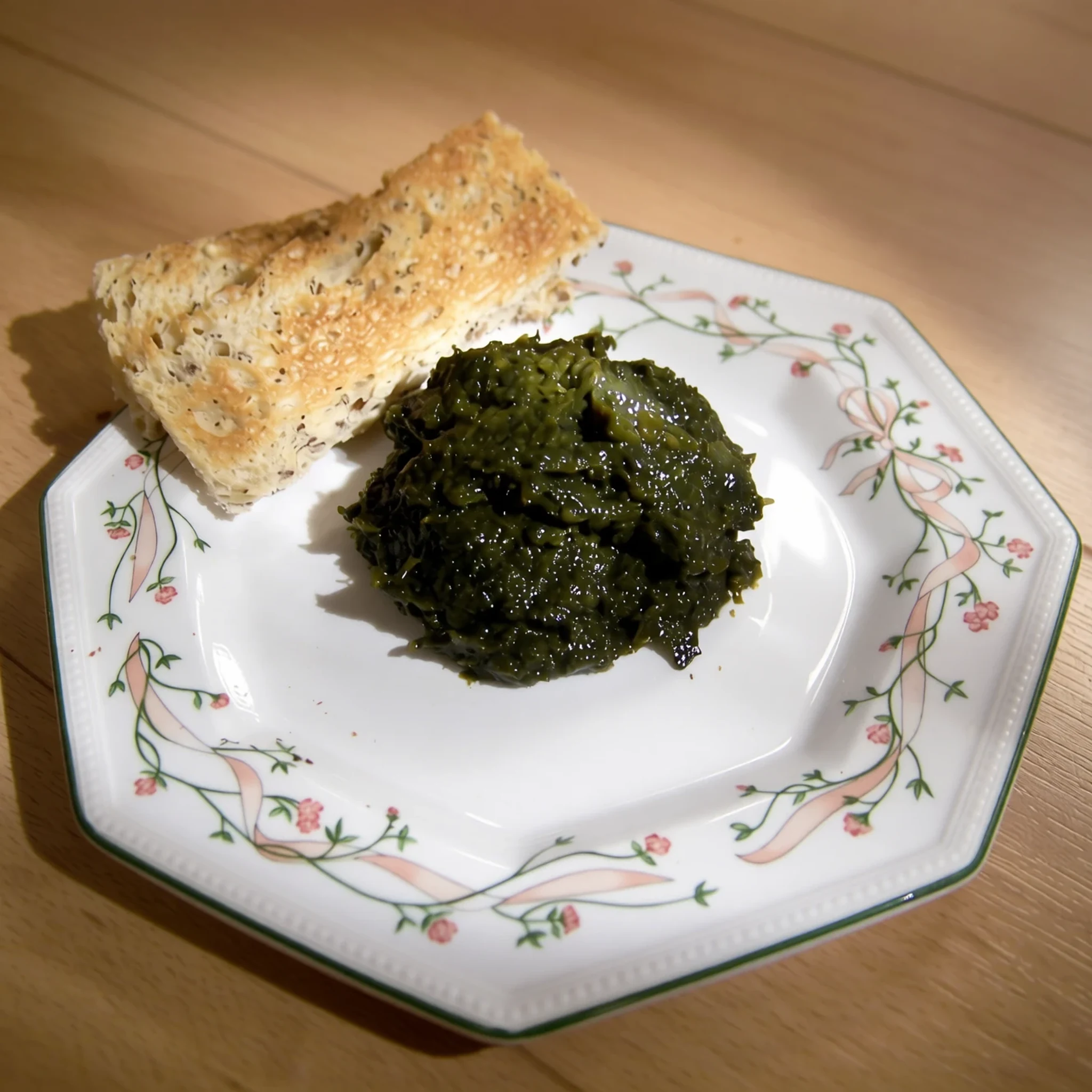
- Salteñas — Morning bakeries and street stalls in La Paz
A baked pastry filled with a juicy stew of meat, potato and egg, eaten warm and often with a spoon to catch the sauce. It is a common morning snack and a good way to start a day out. Eat it carefully, as the filling is hot inside.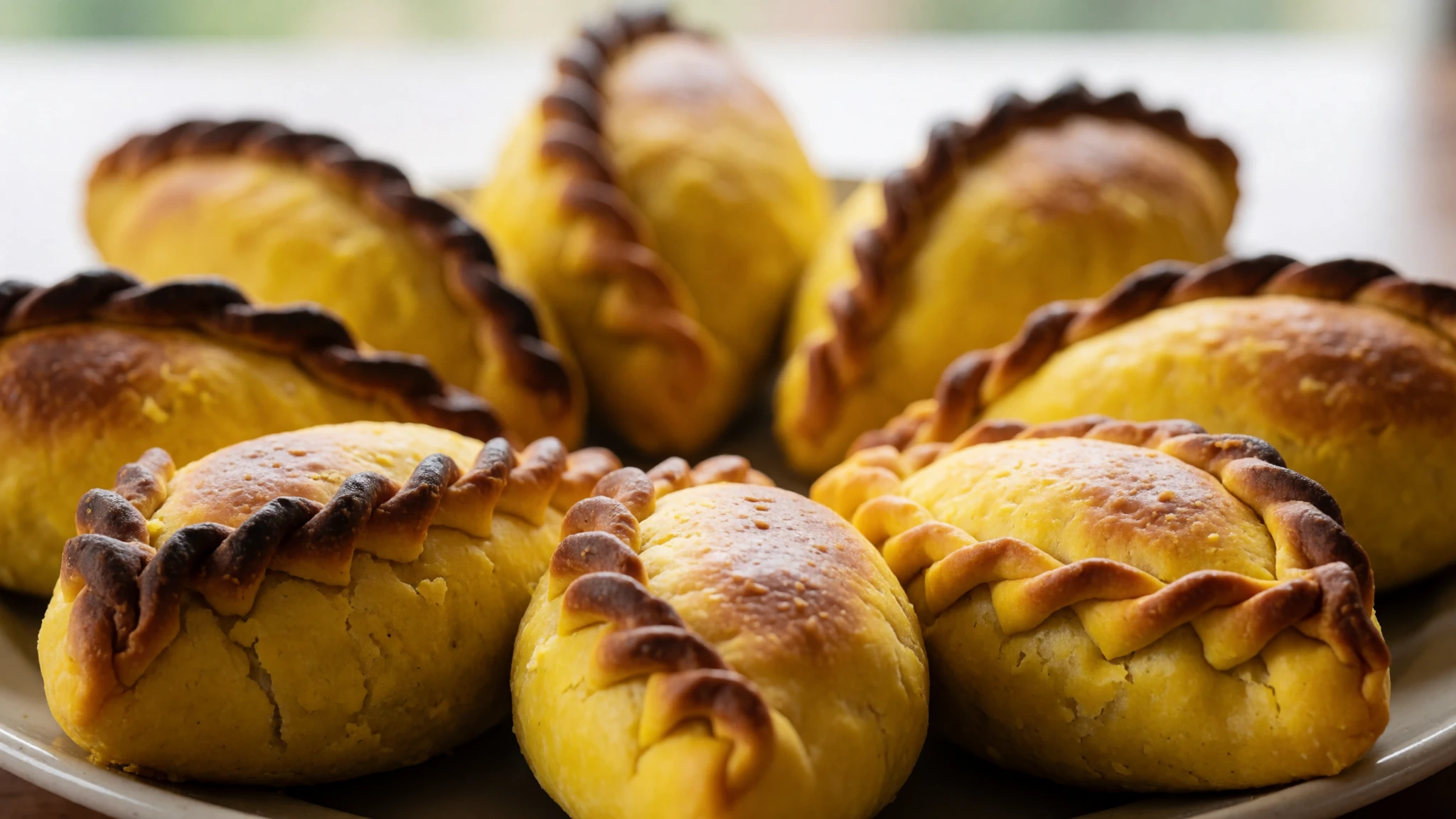
- Api and pastries — Street stalls near the minibus stop by the Cementerio in La Paz
Api is a warm, spiced drink made from purple maize, served in cups at street stalls and often paired with a pastry. It is sweet, thick and warming in the cold early hours. Stalls near the minibus departure point make a convenient stop before the journey. - Lake trout — Lakeside eateries on Lake Titicaca
Trout from Lake Titicaca is a regional favourite, served grilled or fried in lakeside villages. Fish and seafood should be well cooked, so ask for it thoroughly done. This dish suits a separate outing to the lake rather than a quick stop at the site. - Quinoa soup — Simple family eateries, known locally as comedores, in the village near the ruins
A hearty soup built on quinoa, potato and vegetables, the kind of simple, filling meal served across the highlands. It is a good choice after a morning of walking in the wind. Simple family eateries near the village serve it at lunchtime.
Plan it
Best time. The dry months, roughly May to September, bring clearer skies and easier walking on the plateau, while the rainy season from about December to March makes paths muddy and views cloudy. Dry-season nights are cold, so pack warm layers.
How long. 1–2
Getting there. Minibuses leave from the Cementerio area in La Paz and take about 90 minutes to reach Tiwanaku. A tour operator in La Paz is the other option, though most tours are in Spanish only.
Budget. mid
Tips
- Go early in the day, when the light is clearer and the site is quieter.
- Carry small notes and coins for minibus fares, snacks and any small charges.
- Bring water and sun protection, since there is little shade on the plain.
- The two museums are small and poorly signed, so treat them as a bonus and check opening times on the official site or with your operator.
- Pariti Island on Lake Titicaca has more unfenced ruins and is an all-day extra.
Etiquette
- Stay on the paths and behind the signs and fences.
- Ask before photographing people, family monoliths or homes, and do not photograph inside the museums.
- Take your rubbish away with you and keep food away from the stonework.
Nearby
Sources
- Wikidata Q61750 (CC0)
- Wikipedia: Tiwanaku (rev 1383136978) (CC BY-SA 4.0)
- Wikivoyage: Tiwanaku (rev 5314263) (CC BY-SA 4.0)
- Photo: The Gateway of the Sun (Mhwater) (Public domain)
- Photo: Sitio arqueológico Ruinas de Tiahuanacu (CLAUDIOLD) (CC BY-SA 4.0)
- Photo: Figura 11, Posnansky (Arthur Posnansky) (Public domain)
- Photo: Monolito Fraile (Sasha India) (CC BY 2.5)
- Photo: Tiwanaku - Puerta de la Luna (Pavel Špindler) (CC BY 3.0)
- Photo: Tiwanaku 06, Semi-subterranean Temple (LBM1948) (CC BY-SA 4.0)
- Photo: Figura 15, Posnansky (Arthur Posnansky) (Public domain)
- Photo: Figura 10, Posnansky (Arthur Posnansky) (Public domain)


