Timișoara
Timișoara, Romania
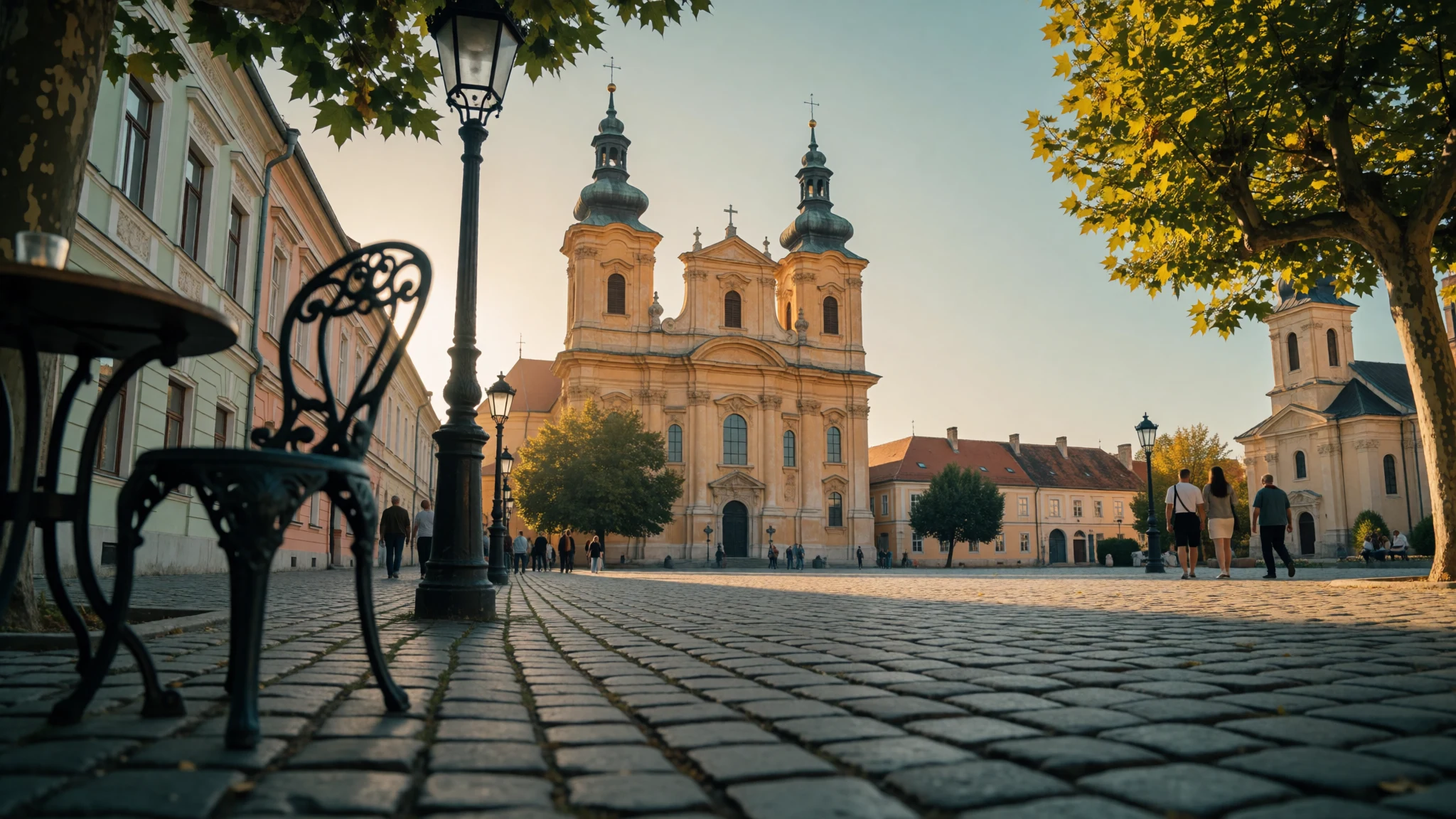
Timișoara is a flat, green Banat city of pastel Habsburg squares, riverside parks and café terraces, where several cultures still share the same streets.
The place
Timișoara sits on the flat plain of western Romania, 94 m above sea level, on the banks of the Bega River. It is the seat of Timiș County and the main economic, cultural and university centre of the west of the country, and many people treat it as the informal capital of the historical Banat region. About a quarter of a million people live in the city itself, with a considerably larger urban area around it, and neighbouring Arad is close enough that the two cities work almost as one economy. The centre is built around a chain of squares, each with its own character: Victory Square is broad and ceremonial, Union Square is café-lined and Baroque, and Liberty Square is smaller and quieter. Between and around them, former fortress ground has become parkland, and the river corridor is green and easy to walk. The population has long been mixed. Swabian Germans, Jews, Hungarians, Serbs and Romanians have all left marks in the street names, the churches, the theatres and the kitchens. Distances are short and the terrain is flat, so the core can be covered on foot in a day. The mood is relaxed rather than monumental, closer to a Central European university town than to a capital. Summers are hot, winters can be grey and cold, and crowds stay modest outside festival weekends.
Its story
Timișoara's recorded story begins with a fortress, and the facts date its founding to 1266. Farmers and later Dacian communities had worked the fertile plain of the Banat long before any walls went up, but it was the fortified town that gave the place its importance. Control passed between several powers: the Hungarian crown, a short-lived eastern Hungarian kingdom, and then the Ottomans, who held the town from 1552 until the Austrians captured it in 1716. That last change shaped the city more than any other. Habsburg engineers planned a star-shaped fortress and a regular street grid, and the settlement grew outward from the defences and from the older districts beside them. When the walls were no longer needed, the open ground became boulevards, squares and parks lined with Baroque and Secession buildings. For a time in the nineteenth century the city was the seat of a Serbian province, before returning to Hungarian administration within Austria-Hungary. After the First World War the Banat was divided between neighbouring states, and Timișoara became part of the Kingdom of Romania. Under communist rule the city gained factories and housing blocks. In December 1989 protests here helped set off the revolution that ended that rule across the country, and memorials around Victory Square still keep that memory visible.
What to see
- Victory Square — City centre
Victory Square is the city's civic stage and the symbol of the 1989 uprising. A long pedestrian promenade runs between the Orthodox Metropolitan Cathedral at one end and the opera house at the other, with the Philharmonic, the Banat museum and late nineteenth-century palaces along the sides. Come at dusk, when the façades are lit and the cafés fill.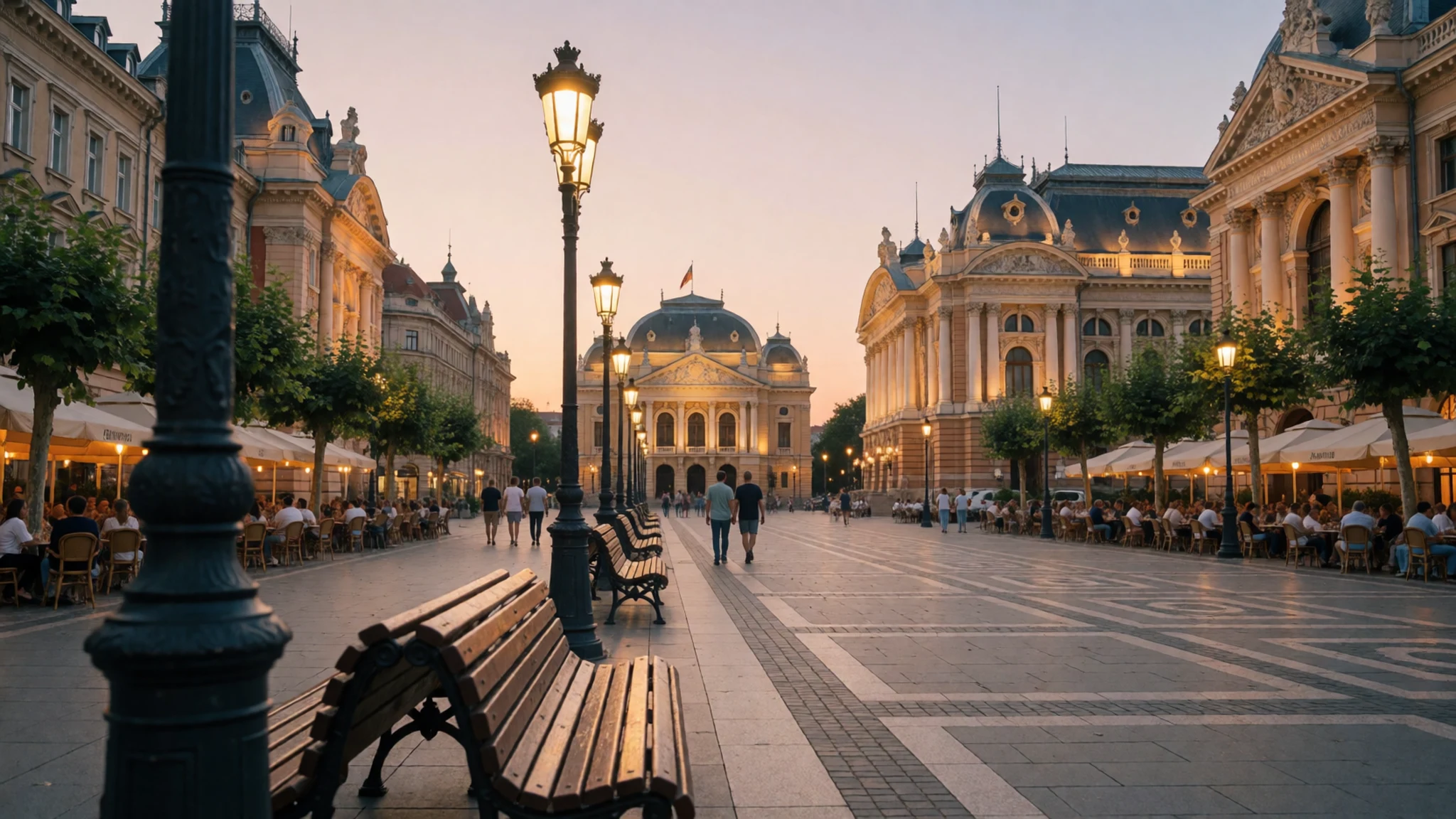
- Union Square — Old town
Union Square is the old centre, a wide cobbled space ringed by pastel Baroque and Secession façades with café terraces beneath them. The Roman Catholic cathedral known as the Dome stands on one side, with the Serbian Orthodox church and the Baroque Palace, now an art gallery, close by. It is lively in the evenings and calm early in the morning.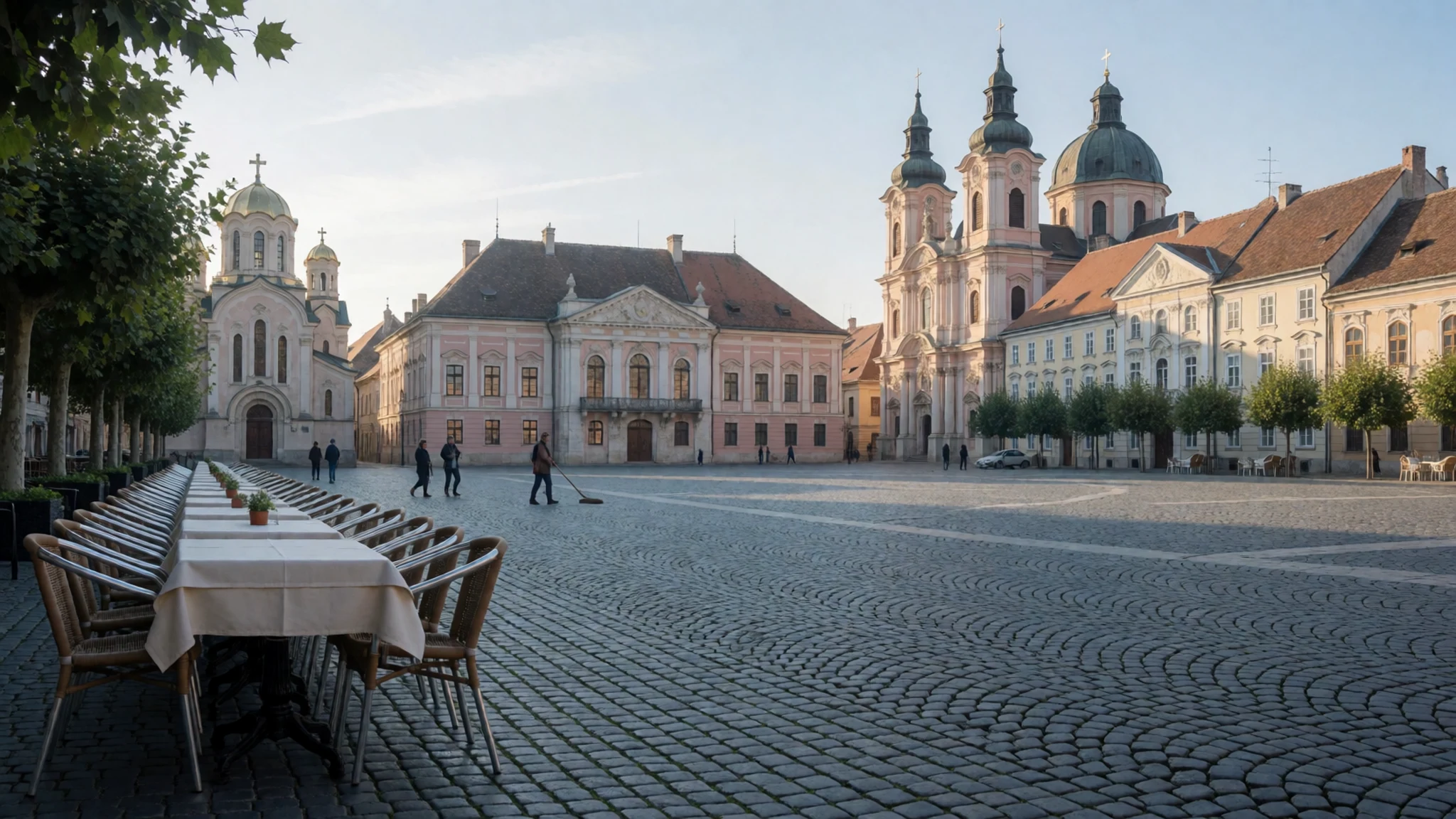
- Liberty Square — Old town
Liberty Square is a small, calmer space with older buildings, among them the former city hall. It suits a short pause between the larger squares: a coffee at the edge, a look at the faded plasterwork and the uneven rooflines, and a sense of the scale the old town had before the grand boulevards were laid out.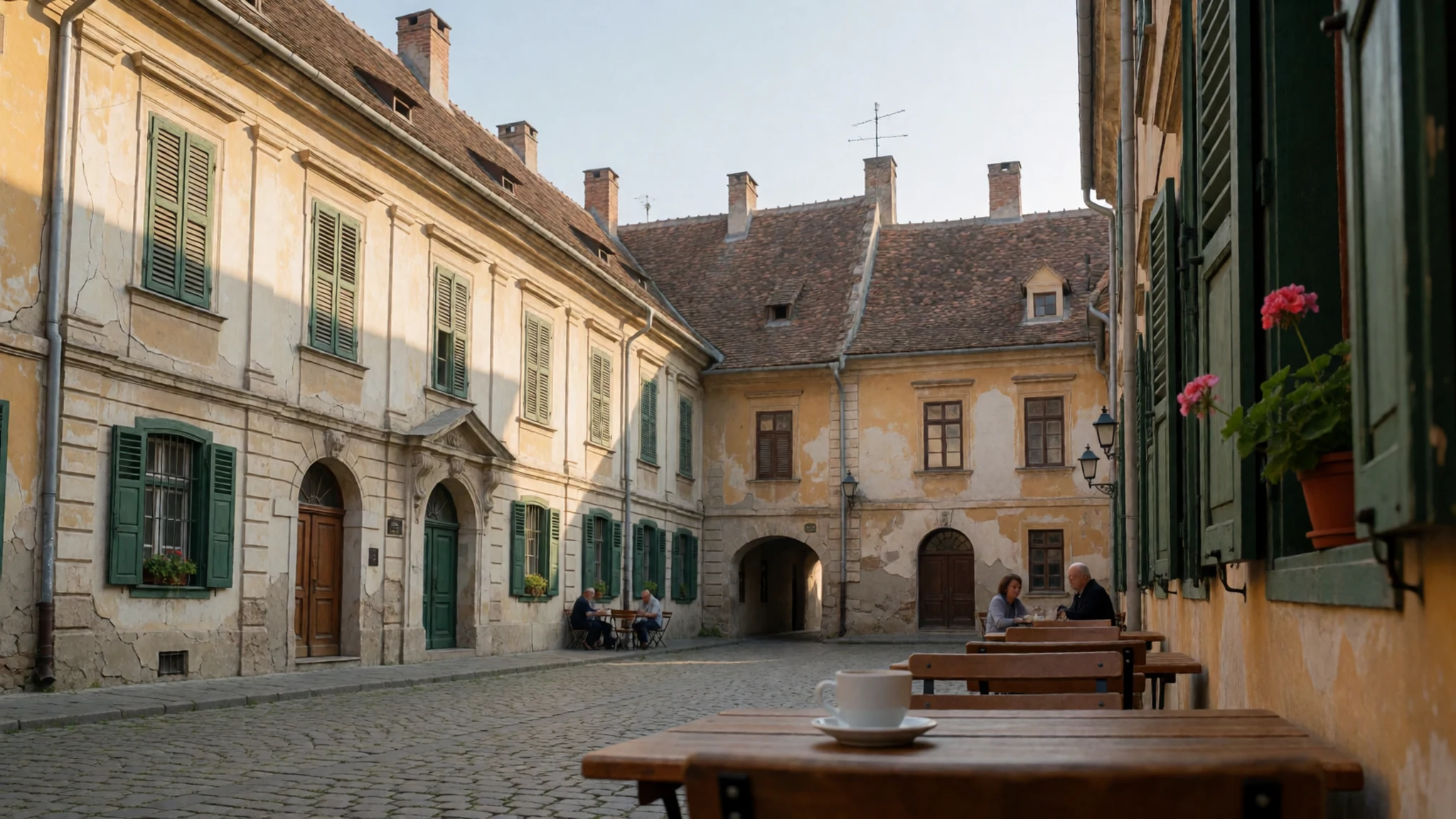
- Rose Park — South of the centre, near the Bega
Rose Park is a short walk from the centre, a formal garden of rose beds, clipped paths and benches, at its best in late spring and early summer. Locals use it for lunch breaks, strolls and photographs. Central Park and the Children's Park are close, so several green spaces can be linked in one slow, flat walk.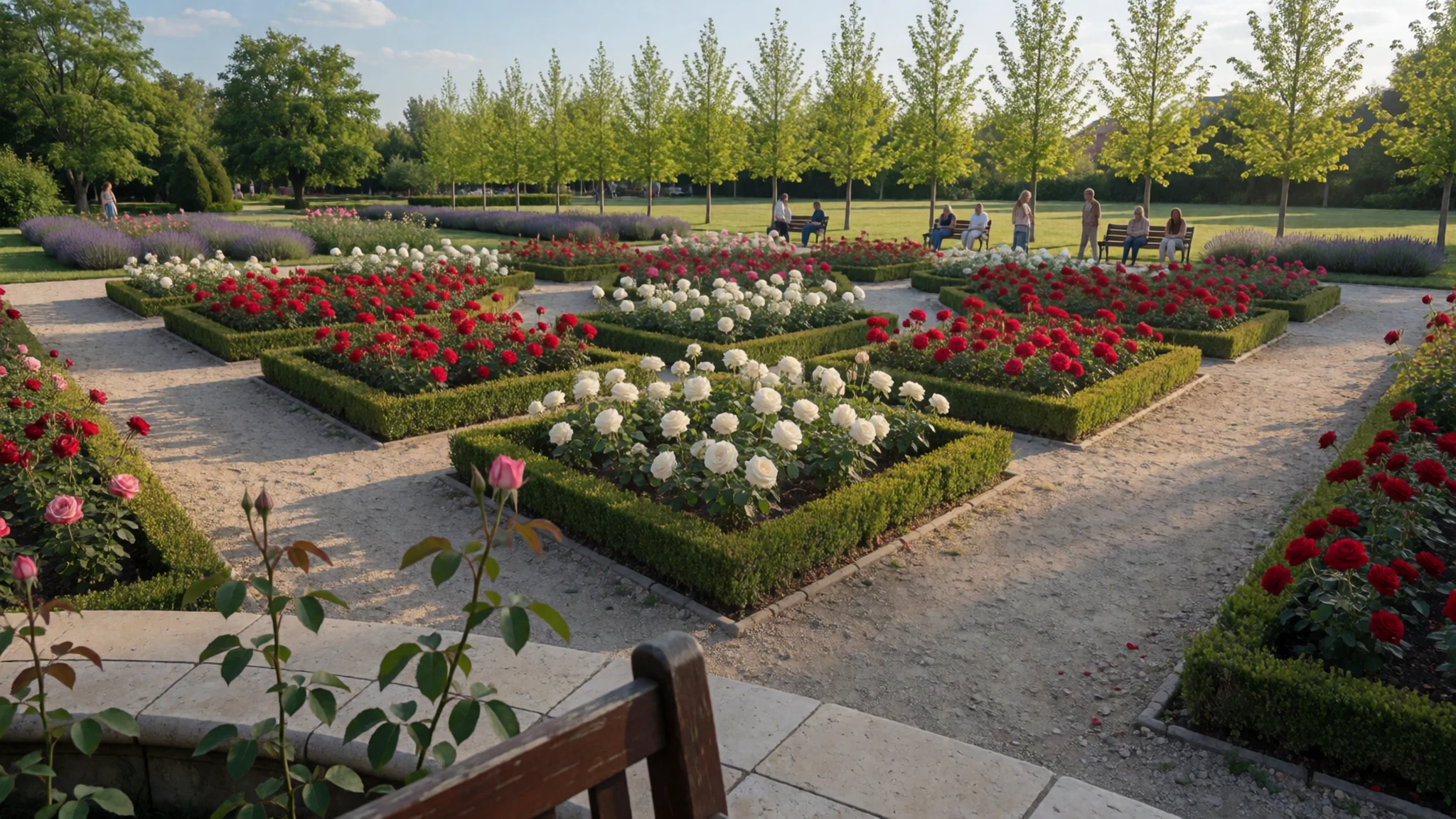
- Botanical Park — Near the Bega embankment
The Botanical Park is a green pocket close to the river, with mature trees and shaded paths. It works as a cool break in summer heat and shows how much of the old fortress belt has become public greenery. There is little to do except wander, so bring water and treat it as a rest between squares.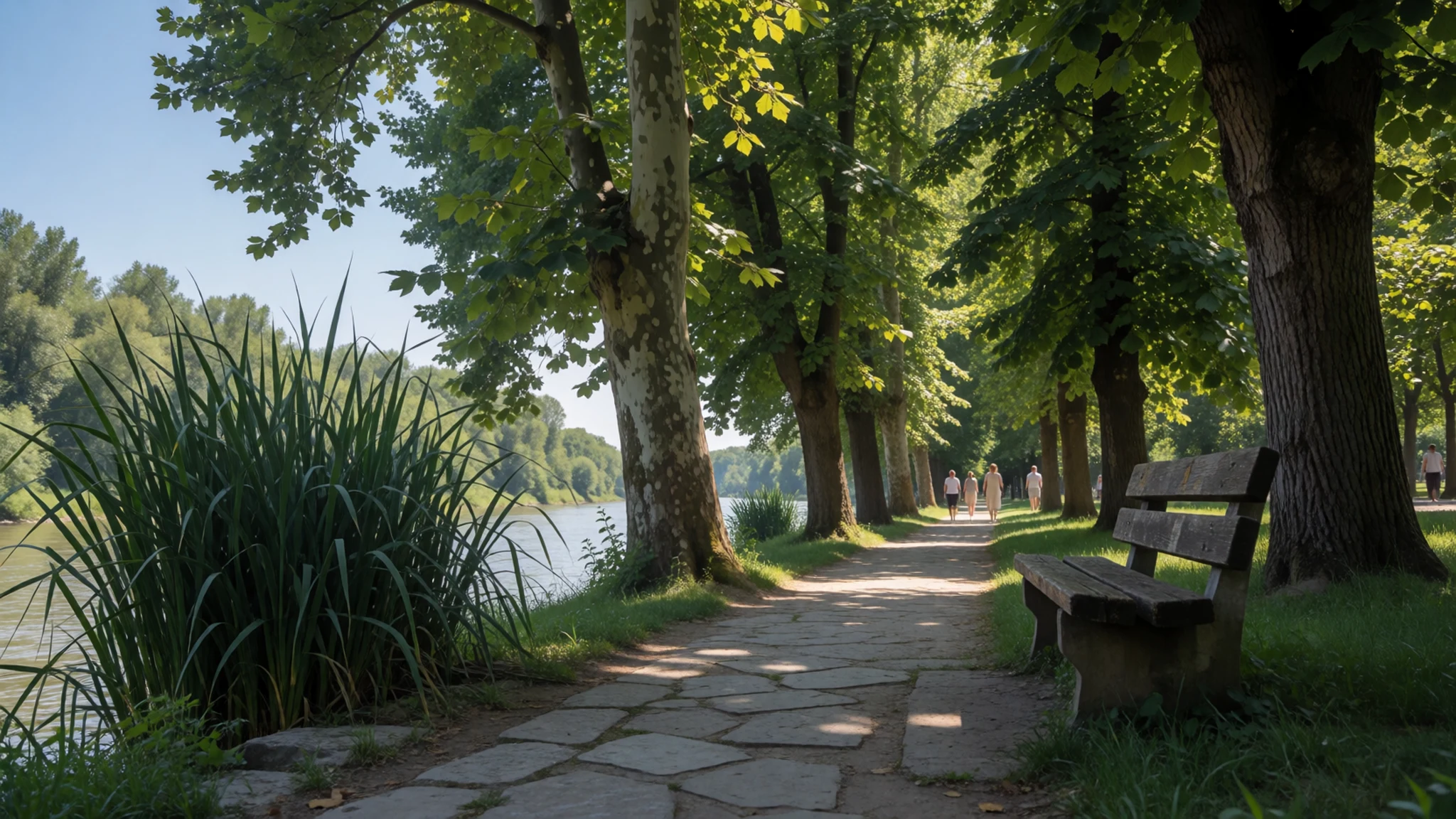
Culture
Timișoara's culture grew from the habit of living alongside neighbours who spoke different languages. Romanian, German and Hungarian each have their own state theatre here, which is unusual, and the opera and the Philharmonic sit on Victory Square. Several contemporary art galleries, some run by the city, the art museum and the university, give younger artists room to show work. Religious life is just as mixed: Orthodox, Catholic, Serbian Orthodox, Protestant and Jewish communities all have buildings in or near the centre, and cathedral bells and chanting are part of the everyday soundscape. Coffee is a serious pastime, and a single drink can fill an hour on a terrace in the squares. The city is proud of its part in the 1989 revolution but says so quietly, through memorials and exhibitions rather than loud promotion. Students keep the evenings busy from autumn to early summer, and open-air events fill the warmer months. Conversation tends to be unhurried, and people are generally happy to switch to English with visitors. Dress, manners and pace are closer to Central Europe than to the Balkans, with polite greetings in shops and a tendency to arrive a little late for social meetings. When entering an Orthodox church, cover shoulders and knees, men should take off hats, and photographing worshippers without asking is considered rude.
What to wear
Around Timișoara and the wider Banat, traditional dress reflects the region's mix of peoples. Romanian women's festive costume centres on the ie, an embroidered blouse of linen or cotton, worn with a wrapped skirt and a woven apron, while men wear white shirts with embroidered trim and sheepskin or felt waistcoats. Swabian, Serbian and Hungarian communities each keep their own versions, with different colours, patterns and headwear. These costumes appear mainly at folk festivals, weddings, church holidays and community dances rather than on ordinary streets. Everyday dress now is smart-casual and European: dark jeans, trainers, light jackets, and some effort for evenings out in the squares. Office wear is neat, and students dress down. For a visitor, comfortable flat shoes matter most, because the cobbles of the old squares are uneven and nearly everything is done on foot. Summer is hot, so breathable cotton and a hat help; winter needs a proper coat, hat and gloves. For churches, a light scarf or shawl and covered shoulders and knees avoid awkwardness. Smart-casual is fine for the opera and for better restaurants, and no formal dress is expected.
What to eat
- Sarmale — Traditional Romanian restaurants and family-run eateries
Sarmale are cabbage rolls filled with minced pork and rice, simmered slowly in soured cabbage leaves. They usually arrive with polenta (mămăligă) and a spoon of sour cream. A hearty, filling plate that suits cold months, and a good first taste of Banat home cooking.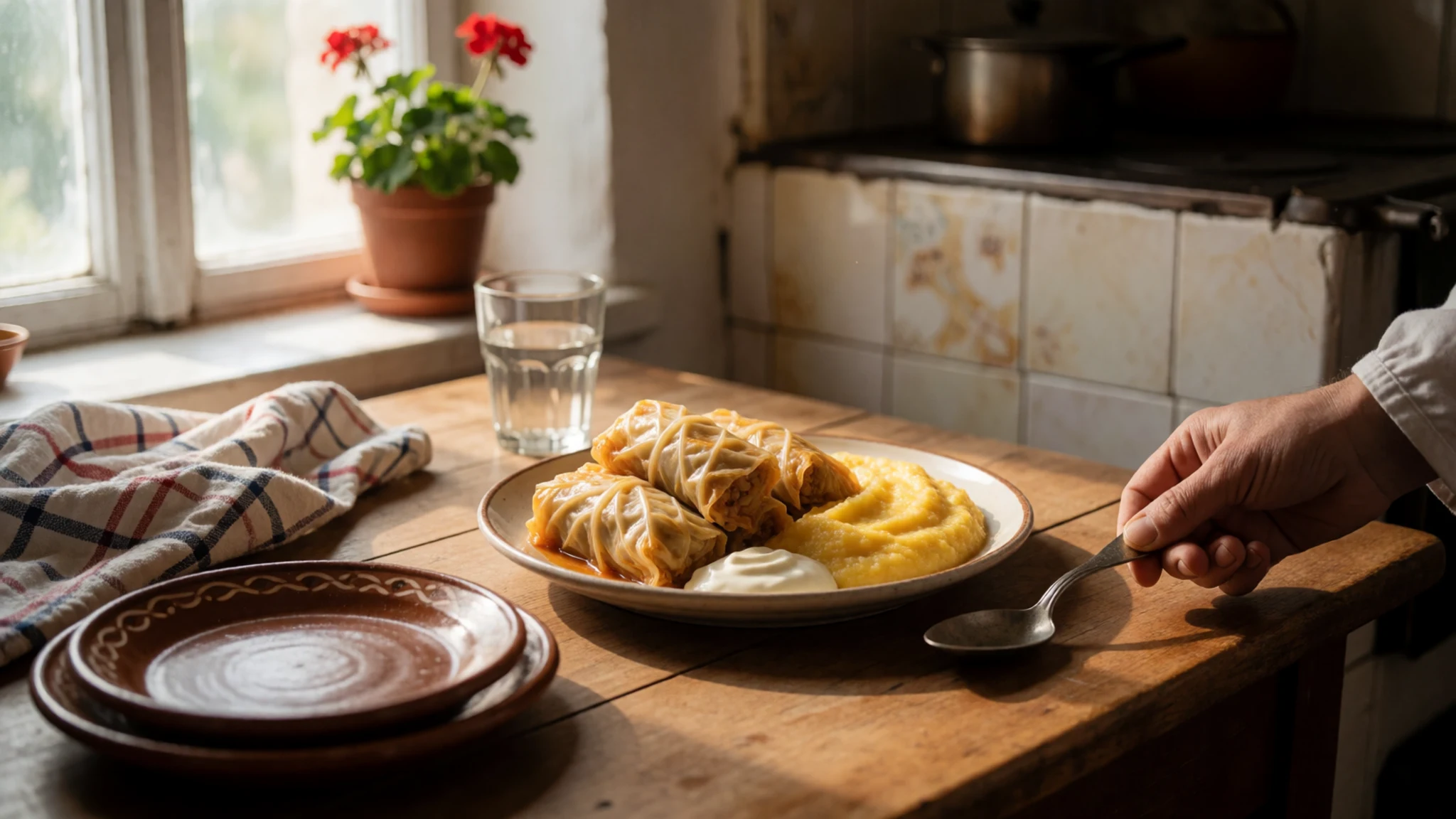
- Schnitzel — Beer halls and central restaurants
The breaded cutlet shows the city's Habsburg and Swabian side. It is typically pork or chicken, fried until crisp and served with potato salad or fried potatoes. Portions are generous, and it pairs naturally with a cold local lager.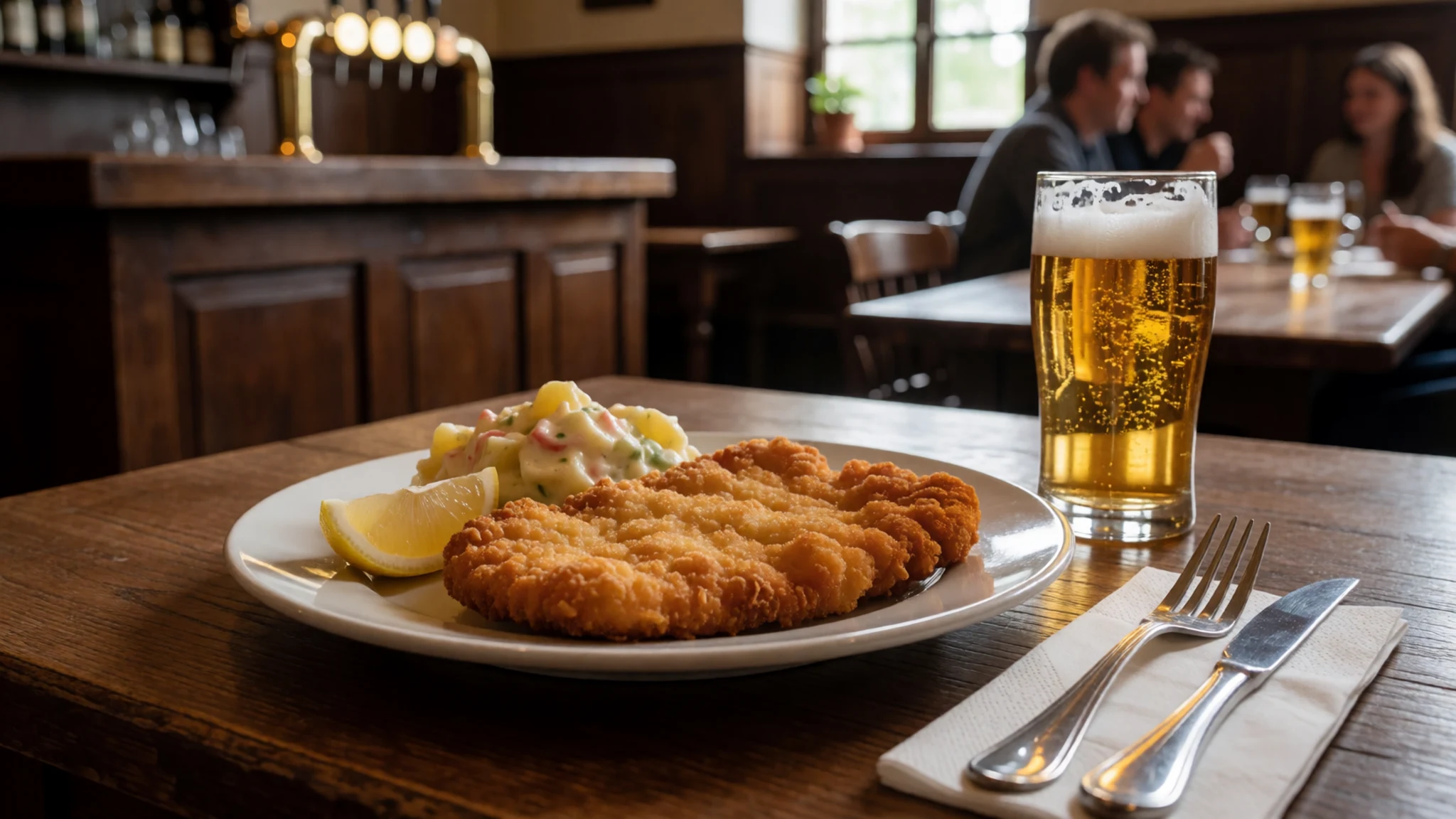
- Mici and ćevapi — Barbecue gardens and grill houses
Grilled rolls of seasoned minced meat, Romanian mici and their Serbian cousins ćevapi, come off the coals with bread, mustard and raw onion. They are best eaten outdoors in warm weather, with a cold beer from the local brewery. - Papanași — Traditional restaurants, as dessert
Papanași are fried or boiled cheese doughnuts, shaped like a ring with a smaller ball on top, and piled with sour cream and berry jam. Rich and sweet, they are usually shared. Order one after a light main course. - Kebab and falafel — Small takeaway counters near the centre and the university
The city's cosmopolitan streak shows in its casual food. Turkish and Arabic influences appear in kebab and falafel wraps sold at small counters, cheap, quick and popular with students late in the evening. Vegan and vegetarian cafés are also easy to find.
Plan it
Best time. May–June and September are the most comfortable: warm days, green parks and open café terraces. July and August can be hot, while winter is cold and often grey, with fewer terrace evenings.
How long. 2–3
Getting there. Timișoara has its own airport, and direct trains run daily from Budapest and Vienna, with Budapest the shorter journey; Bucharest and most Romanian towns have frequent services too. Timișoara North station sits west of the centre and the bus terminal is a short walk south of it. From either, taxis, trams or a walk across the river reach the old squares.
Budget. low
Tips
- Walk the squares early in the morning, before the terraces fill and the heat builds
- Book opera and theatre seats ahead through the official venue sites, and check the city website, https://www.primariatm.ro/, for festival dates
- Carry some cash for small cafés and market stalls, though cards are widely accepted
- Wear sturdy flat shoes for the cobbles and bring water in summer
- Combine the centre with an easy riverside and parks walk, since everything is flat and close
Etiquette
- Cover shoulders and knees in churches and keep voices low during services
- Ask before photographing people, especially worshippers
- Greet staff politely when entering shops and cafés
Nearby
Sources
- Wikidata Q83404 (CC0)
- Wikipedia: Timișoara (rev 1384943688) (CC BY-SA 4.0)
- Wikivoyage: Timișoara (rev 5420176) (CC BY-SA 4.0)
- Photo: Collage of places in Timișoara (CC BY-SA 4.0)
- Photo: Victory Square, Timișoara (Marius Catalin Boldeanu) (CC BY-SA 4.0)
- Photo: Festival of Hearths, Timișoara (Corneliu Adrian) (CC BY-SA 4.0)
- Photo: Timișoara Roman Catholic Dome (Miomir Magdevski) (CC BY-SA 4.0)
- Photo: Romanian National Opera, Timișoara (Chainwit.) (CC BY-SA 4.0)
- Photo: Liberty Square, Timișoara (Marius Catalin Boldeanu) (CC BY-SA 4.0)
- Photo: Unirii Square, Timișoara (Chainwit.) (CC BY 4.0)
- Photo: Coat of arms of Timișoara (Public domain)


