Teshik-Tash
Teshik-Tash, Uzbekistan
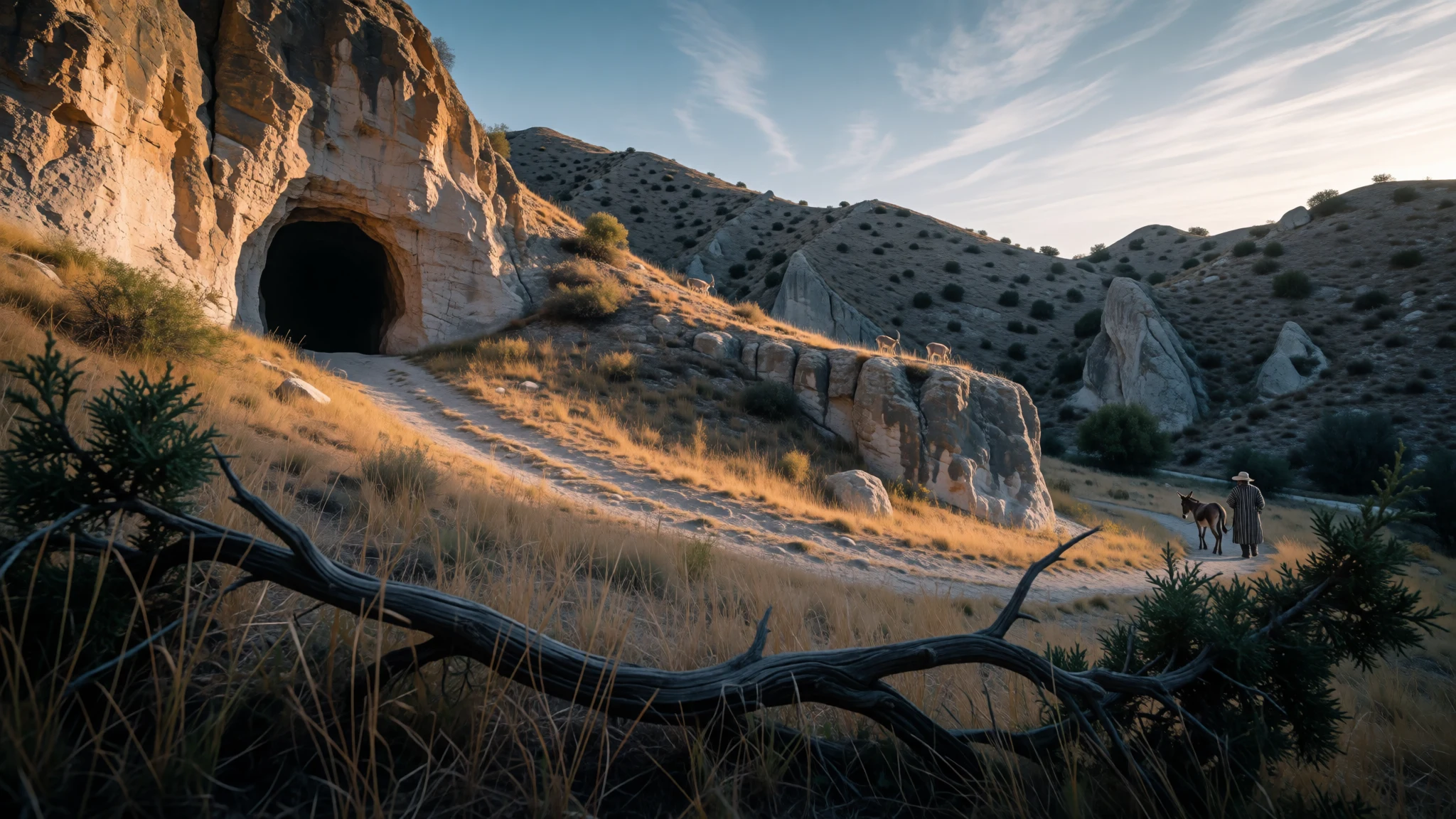
Teshik-Tash is a quiet cave in the Bajsuntau mountains where a Neanderthal child was found, and a window onto deep Central Asian prehistory.
The place
Teshik-Tash is a cave in the Bajsuntau mountains of southern Uzbekistan, and its importance lies in what was found inside rather than in anything built around it. In 1938 the archaeologist A. P. Okladnikov excavated here and recovered the skeleton of a Neanderthal child, now known to researchers as Teshik-Tash 1. Study of the teeth suggested a child of eight to eleven years. Wikidata classes the place as an archaeological site, a cave and a necropolis, which fits a shelter that people returned to over a long span of time. The diggers divided the deposit into five cultural layers, all containing stone tools of the Mousterian type, the flaked-flint toolkit linked with Neanderthals from Europe to western Asia. Those layers are the real draw for specialists: they show that Neanderthal groups lived in the dry mountains of Central Asia, far from the western European caves where the popular image of these people was first formed. For an ordinary traveller the picture is quieter. This is a research site in rough hill country, not a developed attraction, and the skull is kept in collections rather than in the cave. The surroundings are arid foothills, the kind of terrain where ibex lived, and Uzbekistan's better-known sights, such as Samarkand and Bukhara, belong to a far later chapter. Teshik-Tash suits a day of landscape and context, and it is sensible to confirm locally whether access is possible before setting out.
Its story
Teshik-Tash entered the scientific record in 1938, when A. P. Okladnikov found a child's remains in a shallow pit inside the cave. Around the skull stood the horn cores of Siberian ibex, five pairs of them, set along the edge of the grave. To many researchers the arrangement looked deliberate, and the find became a favourite example of Neanderthals burying their dead with ceremony, perhaps even a hint of ritual belief. The argument has not stayed settled. The excavation was never published in the detail later scholars wanted, and the cave deposits held a very large number of ibex bones, 761 in all, which made a ring of horns less striking than it first sounded. Paul Mellars doubted the ritual reading and suggested the bones might simply have ended up there without anyone placing them. Others, Gargett among them, went further and argued that there was no burial at all. So the child sits at the centre of an unresolved debate about how Neanderthals treated death, what counts as evidence of ceremony, and how much a single old excavation can be asked to carry. The fair summary is that the bones are real, the child's age is reasonably well supported by the teeth, and the meaning of the horns remains contested. That uncertainty is part of the site's appeal for anyone who likes archaeology with its arguments left in.
What to see
- Teshik-Tash Cave — Bajsuntau mountains, southern Uzbekistan
The cave itself, set in the Bajsuntau range, is the reason for the journey. Expect a modest rock opening and a wide, dry landscape rather than displays or signs. The five layers of Mousterian tools and the child's grave were dug here in 1938. Confirm access first, and go with someone who knows the track. - The skull of the Teshik-Tash child — Held in collections, not at the cave
The photograph that accompanies this reading shows the child's skull, the find that made the cave known. The original is held in a collection, not on the hillside, so images and museum catalogues are the practical way to see it. Reading it alongside the dental findings helps make sense of the age estimate.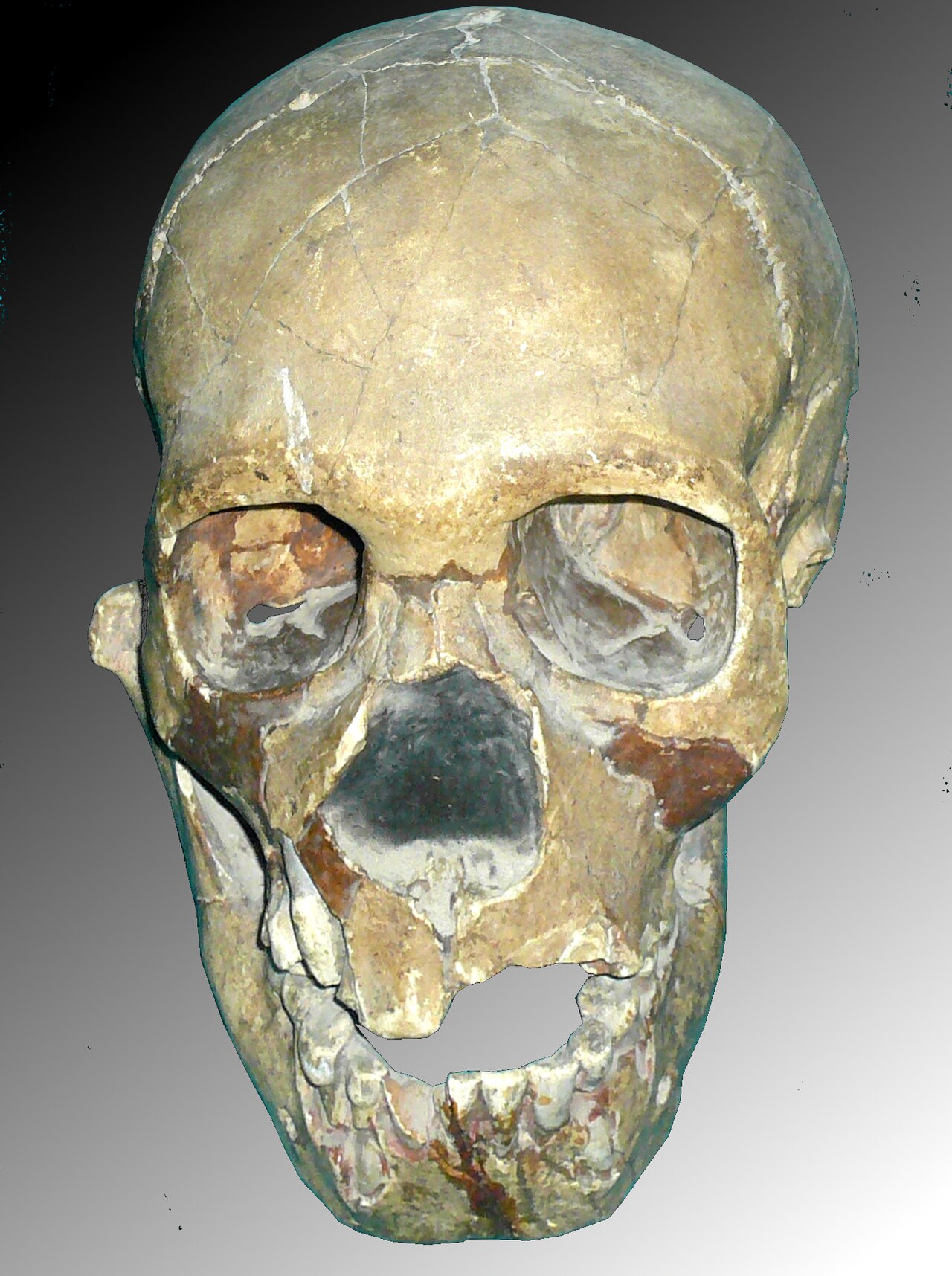
- Kitab State Geological Reserve — Central Uzbekistan
Kitab State Geological Reserve is protected for its geology, which suits a trip built around deep time: rock to go with the bones. It lies in a different part of the country from the cave, so ask a regional guide what can be visited and whether any permission is needed. - Jeyran Ecological Centre — Near Bukhara, western Uzbekistan
The jeyran, or Central Asian gazelle, was hunted in the last century by men in jeeps and even helicopters. Today the Uzbek population is listed in the Red Book of Endangered Species, and this centre is where the animal's survival is the focus. A useful stop for anyone interested in wildlife. - Kyzylkum Tugai and Sand Reserve — Amu Darya valley, north-western Uzbekistan
Founded in 1971, this reserve protects two contrasting habitats side by side: the flood-lands of the Amu Darya river, with their riverside woodland and thickets, and the sand-dune desert nearby. It is a long way from Teshik-Tash, so it belongs on a wider Uzbekistan itinerary. - Nuratau-Kyzylkum Biospheric Reserve — Central Uzbekistan
This biosphere reserve is run as a project of the Uzbek government with international partners, and it is a base for the kind of slow travel that Uzbekistan offers: camel trekking, bird watching and walking between mountains and desert. It lies far from Teshik-Tash, so allow separate days.
Culture
Teshik-Tash lies in a part of Uzbekistan where Uzbek and Tajik speakers live side by side, and many families are mixed, so language and identity can differ from one village to the next. Across Central Asia, elders carry great weight: they are greeted first, listened to, and deferred to in almost every setting. Courtesy towards women is expected as well, and open flirting is unwelcome; where a question could go to either a man or a woman, men travelling alone do better to ask another man. Same-sex relationships are criminalised, so discretion is wise. Bread, called non, is treated as close to sacred. Rounds of it arrive with every meal, nobody expects a plate to be finished, but wasting it in view of others earns hard looks. Tea is the everyday drink of hospitality, black in winter and green in summer, and a host who pours a cup back into the pot three times is following old custom, not making a mistake. Guests invited into a home are usually fed generously, and refusing everything outright can disappoint. Never throw bread away or leave it lying where others can see it, and accept the tea when it is offered.
What to wear
Around Teshik-Tash, as across Uzbekistan, traditional dress is now mostly kept for weddings, festivals and holidays. Men wear the chapan, a long quilted robe in striped cotton or silk tied with a sash, and the doppi, a four-sided embroidered skullcap. Women wear dresses cut from ikat silk, where threads are tie-dyed before weaving to give blurred, feathery patterns; adras and atlas are the best-known cloths. Suzani, bold embroidery on cotton, decorates wall hangings and bridal gifts. Day to day, people mostly wear ordinary modern clothes: shirts and jackets for men, and in towns jeans and dresses for younger women. Older rural women often choose bright long dresses with trousers beneath and a headscarf. A visitor heading to the cave needs practical clothes for sun and stony ground. Wear sturdy closed shoes with grip, a hat, sunglasses and light long sleeves and trousers that cover the skin. Spring and autumn nights in the hills can be cool, so pack a warm layer. In villages and at any mosque, keep shoulders and knees covered, and carry a scarf for visiting women.
What to eat
- Shurpa — Family-run eateries and tea houses in towns near the hills
A soup of mutton, sometimes beef, with vegetables, served hot and filling after a day on hill tracks. Bread comes alongside for dipping. It is one of the easiest dishes to find and a safe first order. - Lagman — Local eateries and bazaar food stalls
A thick soup of meat, potatoes, spices, vegetables and noodles. Tradition says a proper one should carry a huge list of ingredients, so every cook has a version. Eat it with a spoon and a piece of bread. - Chuchvara — Home-style restaurants and bazaar canteens
Small dumplings stuffed with mutton and onions, close to ravioli and known as pelmeni in Russian. They are usually served in broth. A comforting dish and a good test of a kitchen. - Mastava — Neighbourhood eateries and tea houses
A rice soup with onion, carrot, tomato and peas, occasionally with wild plums for a slight sourness. Lighter than the meat-heavy dishes around it, it suits hot afternoons and travellers who want something simple. - Obi-non — Bazaar bread stalls and bakeries in any town
Round bread baked in a clay oven, a speciality of Samarkand but eaten everywhere in Uzbekistan. It is best when freshly baked and still warm. Bread comes with every meal and makes a good snack on its own.
Plan it
Best time. April–May and late September–October, when the hill country is comfortable for walking; summers are hot and dry in the south of Uzbekistan and winters are cold.
How long. 1–2
Getting there. Fly to Tashkent, then take a domestic flight or train south to Termez, the usual gateway for the region. The last leg is by road into the Bajsuntau hills, best with a hired local driver or guide who knows the route.
Budget. mid
Tips
- Check your government's current travel advice before booking: many governments warn against travel to areas of Uzbekistan bordering Afghanistan, and the south is close to that border.
- Confirm in advance, through a local guide or driver, whether the cave can be reached and visited, as it is a research site rather than a managed attraction.
- Carry water, snacks, sun protection and some cash, because services in the hills are thin.
- In restaurants, ask for the menu or prices first, since some less popular places overcharge visitors.
- Citizens of most western countries can enter without a visa, and others may use an e-visa, so check the official government site for your passport.
Etiquette
- Treat bread with respect and never throw it away where others can see.
- Greet and defer to elders first, and ask before photographing people.
- Dress modestly in villages and at religious sites, covering shoulders and knees.
Nearby
Sources
- Wikidata Q1679526 (CC0)
- Wikipedia: Teshik-Tash 1 (CC BY-SA 4.0)
- Wikivoyage: Uzbekistan (CC BY-SA 4.0)
- Skull of Teshik-Tash Boy, Stanislav Kozlovskiy (CC BY 3.0)
