Tarangire National Park
Tarangire National Park, Tanzania
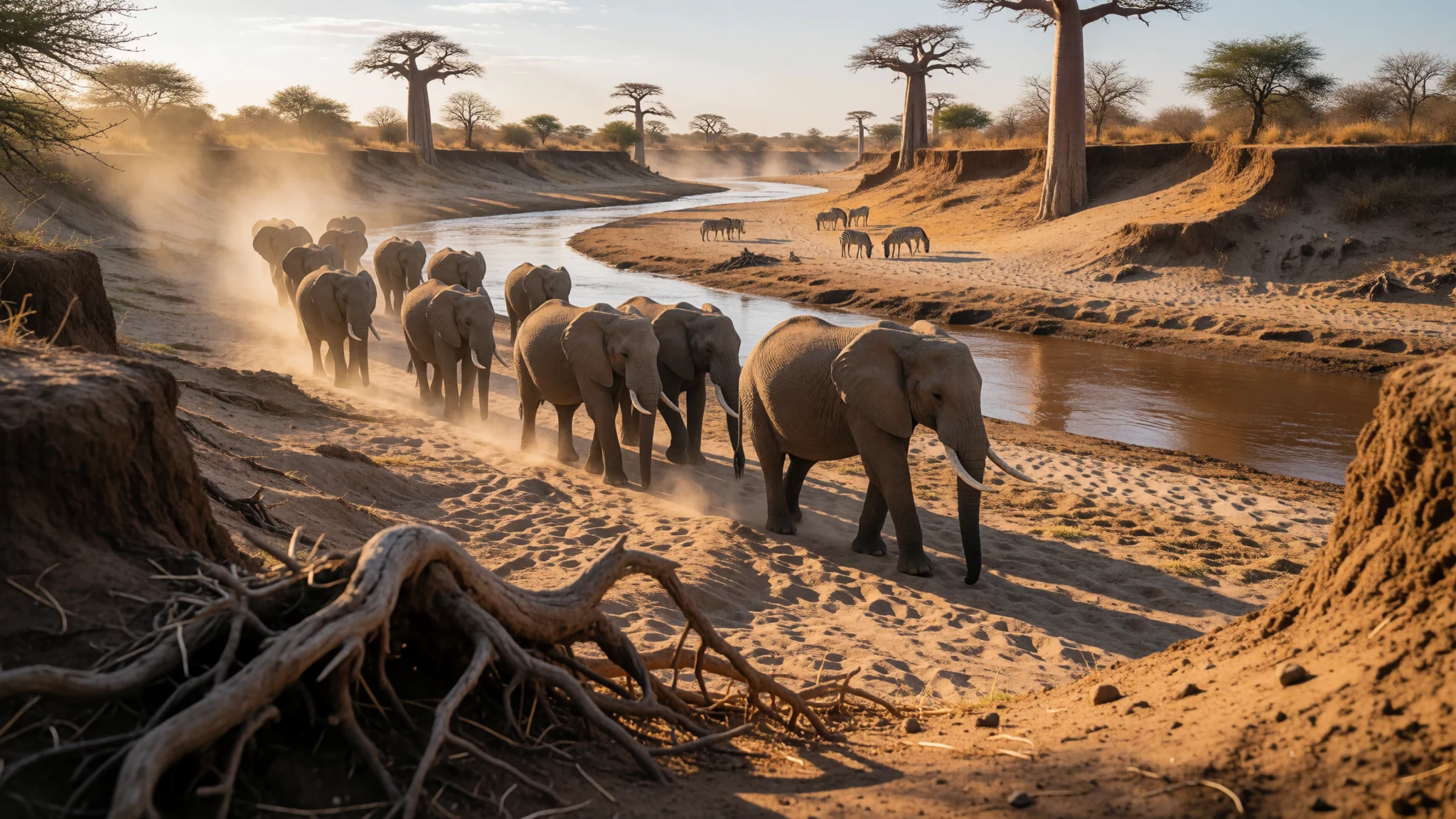
Tarangire National Park is where northern Tanzania's elephants and migrant herds gather on a river that still runs in the dry months.
The place
Tarangire National Park occupies a wedge of northern Tanzania in the Manyara Region, named for the river that runs through it. Once the rains fail, that river is what the wider ecosystem drinks from, and animals that had scattered to graze and calve outside the boundary move back in. The country itself is broken: granite ridges, a valley cut by the river, and swampy hollows that keep water after the channel shrinks. Acacia and Combretum woodland open into grassland that floods in some seasons, with baobabs spaced widely enough that the eye travels a long way. Set out on a map, the boundary encloses about 2,850 square kilometres (1,100 square miles). In the drier months the valley fills with animals — thousands of them — elephants with calves along the banks, wildebeest and zebra on their seasonal circuit, buffalo, giraffe, impala, eland and hartebeest. Lion, leopard, cheetah and hyena hunt the same ground. After the rains the grass greens and those herds drift outward again, so the park can look quieter just when the grass is highest. Birds do not leave with the herds. The bird list stands above 500 species, taking in rollers, hornbills, lovebirds, kori bustards, raptors and herons at the waterholes. Arusha, the northern safari town, is a drive of less than two hours on a paved road. The lake park at Manyara lies 70 kilometres (43 miles) further on by road.
Its story
Tarangire National Park's boundary is a recent line across an old pastoralist country. Maasai herders, with other cattle-keeping families, have moved stock through these valleys on a seasonal round for longer than any park has existed, coming to the river when the surrounding grass failed. People and wildlife were using the same water long before anyone drew a map of a reserve. In the first decades of the twentieth century, hunters and travellers from Europe came through, talking most about elephants. In 1957 the colonial state gazetted the hunting country as a reserve, the first legal protection on these valleys. National-park status came in 1970, and from that point cattle and villages were meant to stay outside a line that elephants and wildebeest kept crossing anyway. They still cross it. Wildebeest and zebra spend the wet months well beyond the gate, on calving grounds, and fall back towards the river only when the land dries. Elephants keep circuits of their own, so a camp sitting just outside the boundary can lie on a path the herds have not abandoned. The Maasai Steppe beyond the fence is part of the same system. The awkwardness now is daily. Tracks and camps occupy ground that elephants, buffalo and lions also use, while households on the edge still live from livestock. Some lodges arrange a visit to a Maasai or Barabaig home. Check the park website for how entry and community visits are run.
What to see
- Tarangire River — River valley
Tarangire National Park's river is the place the dry season gathers around. From June through October, elephants come to the banks to drink and to scrape the bed for seepage, cows and calves moving together, with buffalo and plains game on the same water. Guides hold the vehicles on the tracks and choose the gap. A patient distance matters.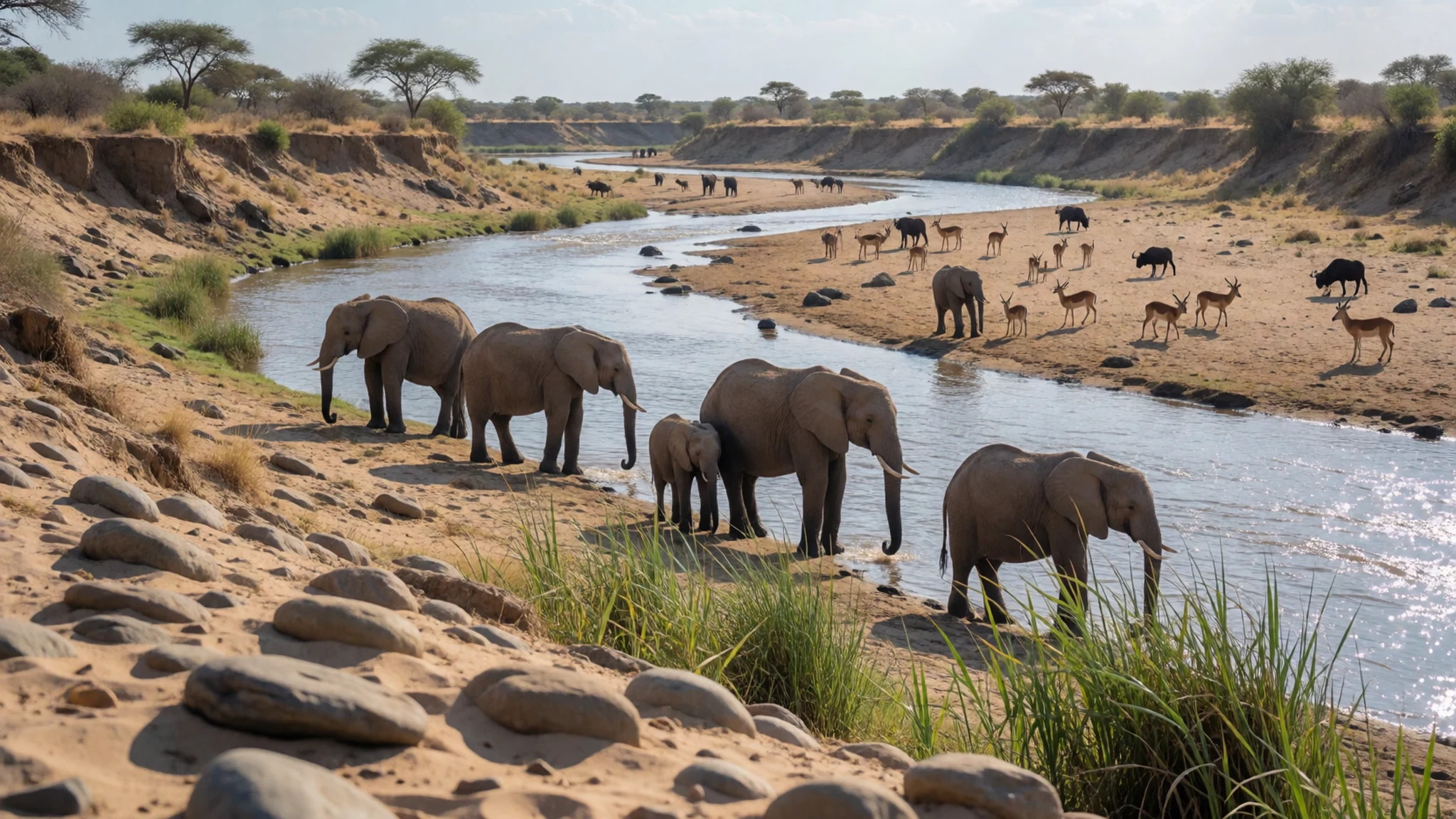
- Baobab woodland — Open woodland and ridges
Tarangire National Park's baobabs, the Adansonia trees of this savannah, stand as landmarks in open woodland and along the ridges. Trunks are broad and widely spaced, and late in the day their outlines stack above the river valley, which is why crews pause there as the light goes. Hyphaene palms grow among them, a thinner shape against the same sky.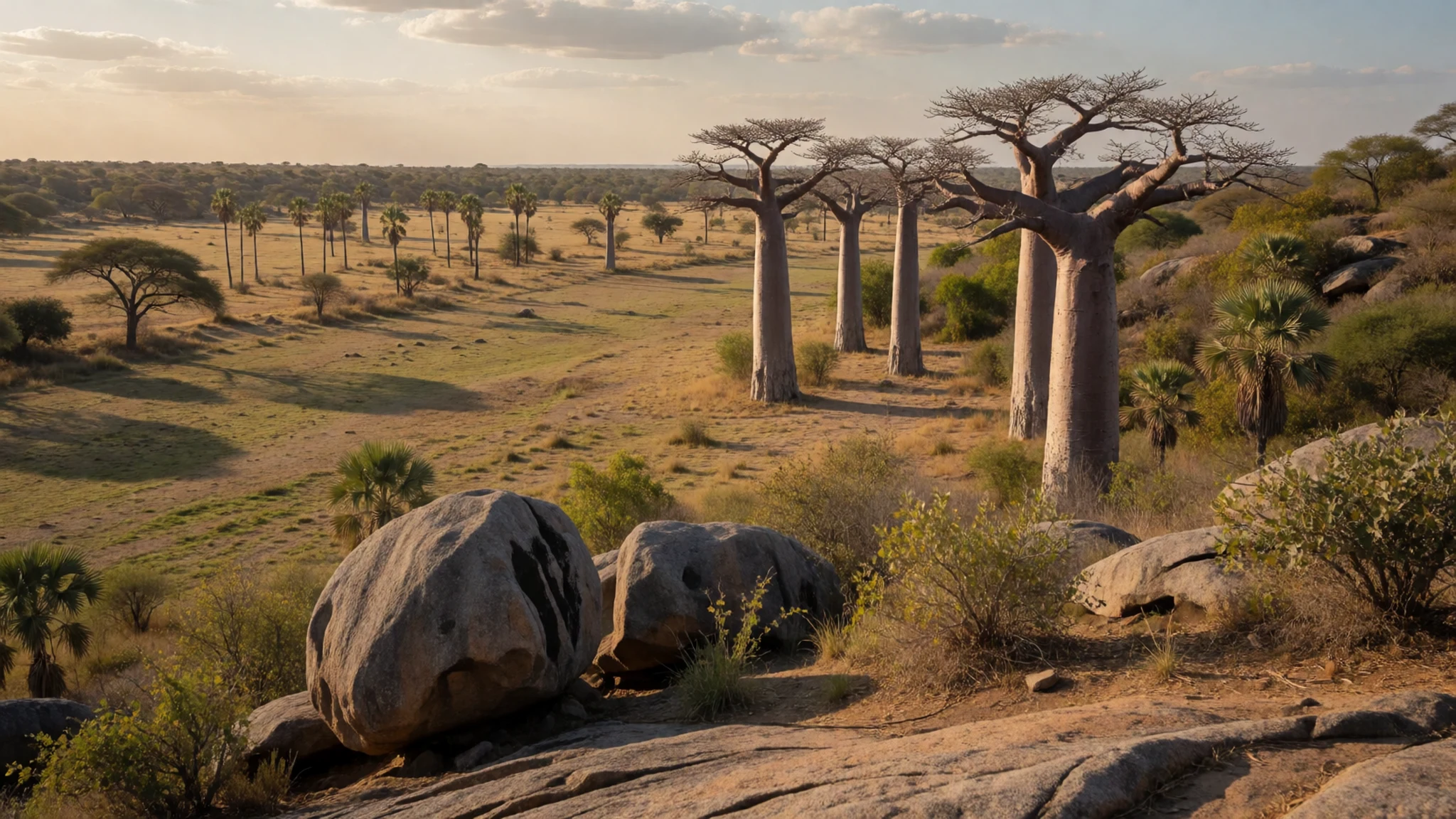
- Swamps and waterholes — Seasonal swamps, including Silale
Tarangire National Park's swamps, Silale among them, hold a different assembly from the ridges. Herons and other waterbirds work the shallows, and the grass around these hollows stays green deeper into the dry months than the open bush. From November to April, with the rains spread out, the big herds are less bunched and these wetlands sit inside a greener park.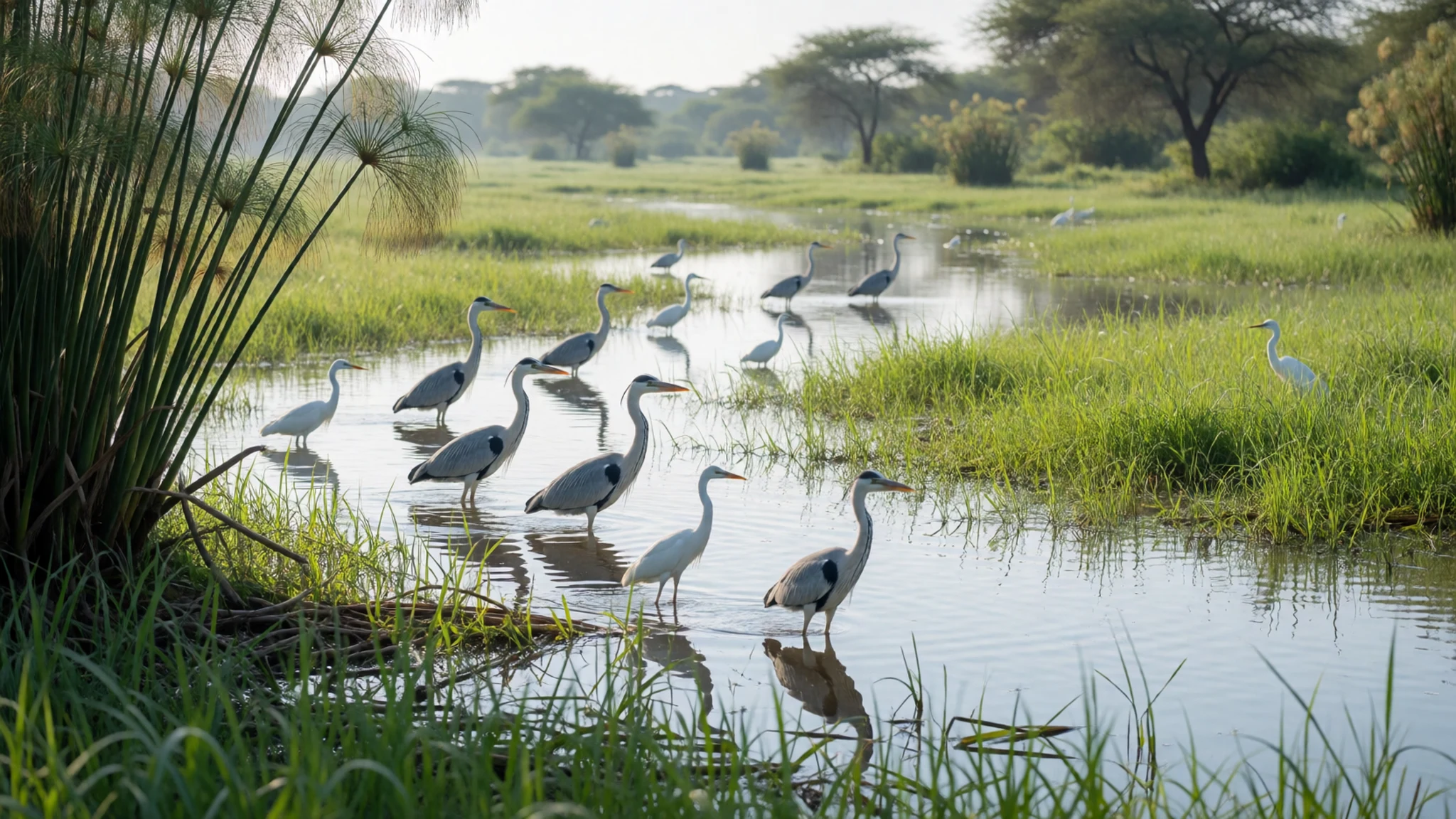
- Plains game — Open plains and woodland tracks
Tarangire National Park's open bush holds zebra, wildebeest, impala, eland, hartebeest, giraffe and large buffalo herds, and the cats and hyenas that follow them. Dry months draw this mix towards the river; in the rains the same animals spread, and a circuit can feel thin. The hours that repay a drive are just after dawn and again before dusk.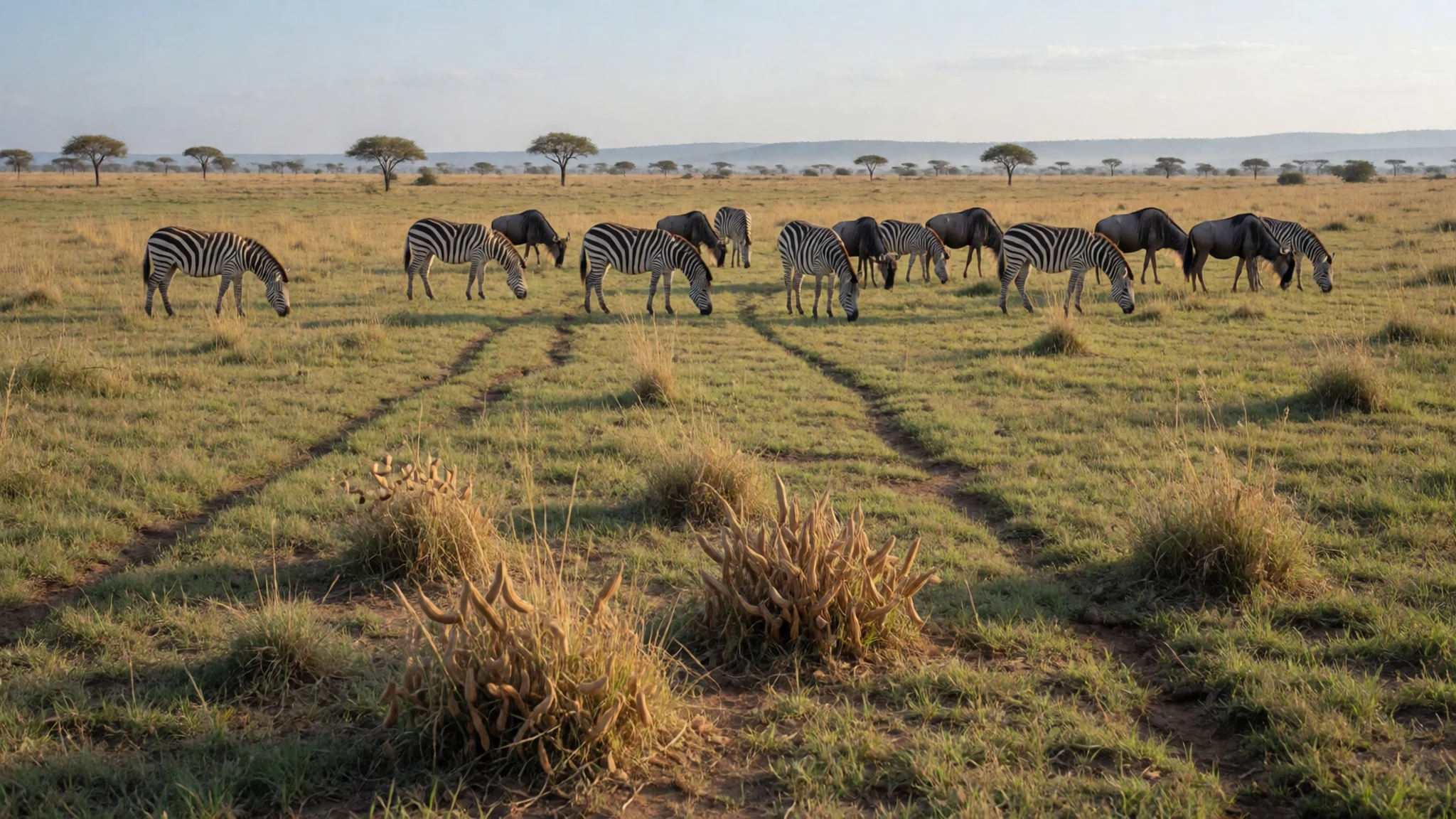
- Birds — Woodland, plains and swamp edges
Tarangire National Park will fill a bird list without a special excursion. The count sits above 500 species. Yellow-collared lovebirds and hornbills use the open woodland, lilac-breasted rollers perch there too, and kori bustards walk the grass. Raptors patrol the ridges, and the swamps add herons and other waterbirds. The tracks driven for elephants double as birding tracks, for a newcomer and for a practised watcher alike.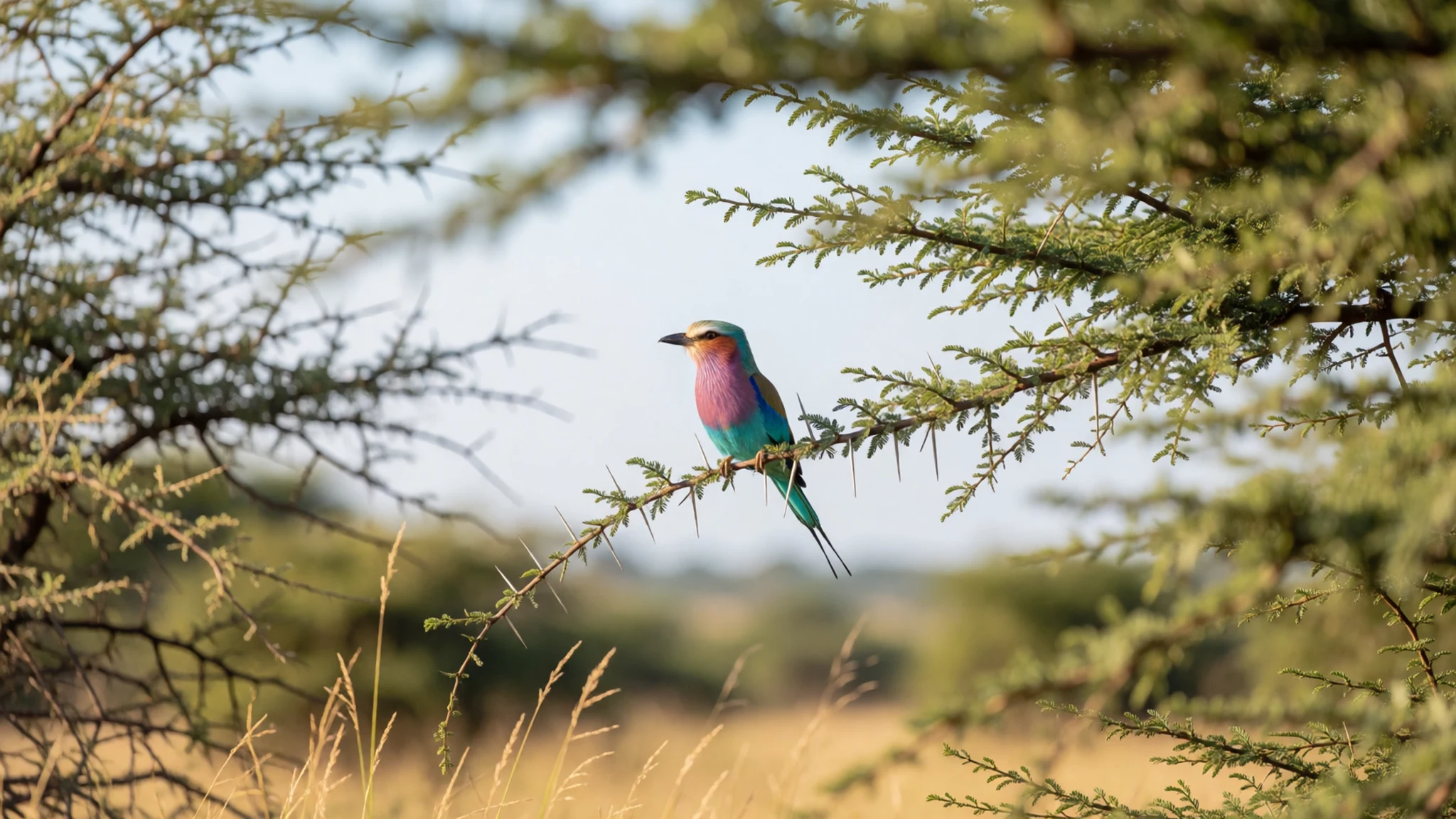
Culture
Tarangire National Park sits inside a pastoralist landscape, and the gate does not make the land empty of people. Maasai communities, and Barabaig communities within reach of the same ecosystem, have herded here longer than the park has had a name. Their year still bends around rain, grass and the river. When the country dries, water becomes a shared pressure for cattle and for elephants, and a mapped boundary is only one line among several that a herder has to think about. Camp life runs on a different clock: guides and kitchen crews, most of them Tanzanian, moving guests from breakfast onto an afternoon drive and back again for a meal. Some lodges also arrange time in a Maasai or Barabaig household. That is a visit to herders in the middle of a working day, not a performance laid on for its own sake. What may be photographed, and who speaks for the home, is decided by the household and the lodge. Europeans hunted here early in the twentieth century; a game reserve followed in 1957 and the national park in 1970. Ask before you photograph anyone, and take the household's lead on whether a camera comes out at all.
What to wear
Tarangire National Park's neighbouring herding communities still keep a formal cloth for ceremony and for the grazing day. Among Maasai people that cloth is the shuka, a cotton wrap, often red or checked red, wound around the body and sometimes across one shoulder. Beadwork — collars, belts, earrings — belongs with it; pattern and colour can mark age-set and occasion inside the community, and it is not a costume staged for guests. Barabaig dress is a separate tradition, and it is a mistake to read every wrap as Maasai. In Arusha, in Mto wa Mbu and around the lodges, the same families also wear everyday clothes: T-shirts, trousers, a football shirt, something against the dust. Guides tend to wear khaki or olive and closed boots, because the work is sun, thorn and hours on an open vehicle. Visitors are most comfortable in that same practical range. Sand, khaki, olive and brown hide dust better than bright white. Light long sleeves and long trousers help against sun, mosquitoes and tsetse flies. Add a hat and sunscreen; cover is thin. Closed shoes handle rocky tracks and camp paths after dark better than sandals. Dressy clothes belong in town, not in the vehicle.
What to eat
- Chapati — Lodge dining rooms, and local eateries in Mto wa Mbu
Chapati, the East African flatbread, turns up at Tarangire National Park camps beside stews and soups, at breakfast or with the evening meal. Camps are the only kitchens inside the boundary, so chapati here means the lodge table. Local eateries in Mto wa Mbu, just outside, serve it too.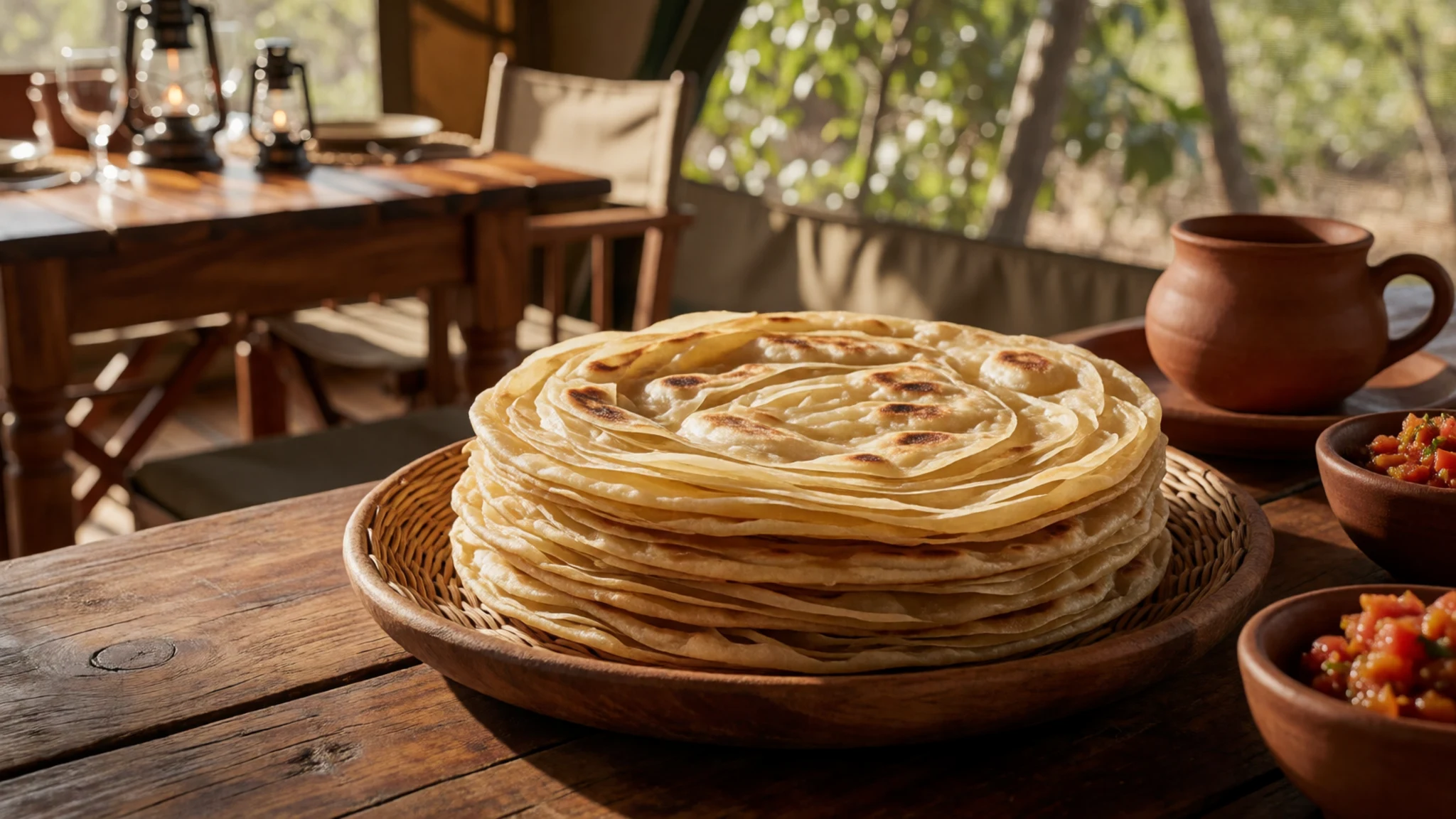
- Grilled meat — Lodge and tented-camp dining rooms
Grilled meat is a usual main at Tarangire National Park lodges, either plated or laid on a buffet with vegetables. Full-board stays include it at the main meals; at midday the same kitchen often sends meat out in the packed box instead.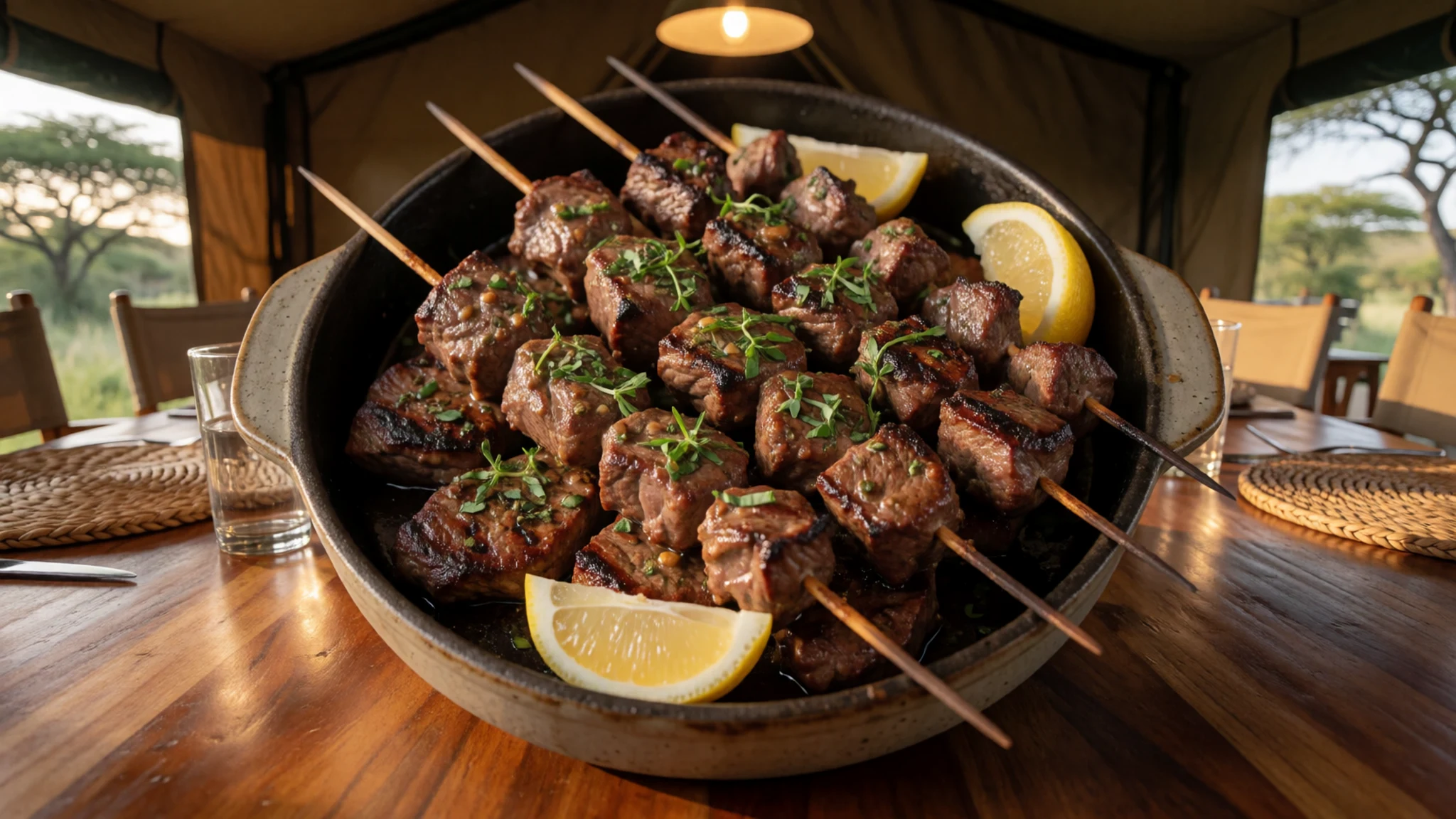
- Stew with rice — Camp dining rooms
Stew with rice is the other steady Tarangire National Park camp plate: a meat or vegetable stew, rice beside it, sometimes chapati as well. Kitchens here mix Tanzanian dishes with international ones, so one camp's stew will not match the next. There is no park canteen. - Packed lunch — Sent from the camp and eaten on a game drive
Packed lunches feed Tarangire National Park visitors between the morning and afternoon drives. Camps send sandwiches, chicken, fruit, juice and a pastry, eaten in the vehicle. Bottled or filtered water belongs in the box too — at least one to two litres — and taps are for washing, not drinking. - Passion fruit, mango and pineapple juice — Lodge bars and gate shops
Passion fruit, mango and pineapple juices are poured at Tarangire National Park lodges with meals and from the bar, next to bottled water and soft drinks. Gate shops sell bottles on the way in, which helps on a hot drive. - Chai, coffee and a sundowner — Lodge dining rooms, and sunset stops by a baobab or the river
Tanzanian chai and locally roasted coffee come with breakfast and after dinner at Tarangire National Park lodges. Sundowners pair juice or a beer — Serengeti, Kilimanjaro, Safari Lager, Tusker — with a baobab or a river view. Wine and basic spirits stay on the lodge bar.
Plan it
Best time. Tarangire National Park's dry season runs from June to October, when animals gather along the river. Days are hot and the tracks dusty. November to April brings rain, green grass and herds that have spread out, so the park is quieter and takes more patience. Check the park website for the year's rains.
How long. 2–3
Getting there. Arusha is the northern hub for Tarangire National Park. A paved road runs south from town and the drive takes less than two hours. Lake Manyara National Park lies 70 kilometres (43 miles) further by road. Check https://www.tanzaniaparks.com/tarangire-national-park/ for the road and for entry arrangements.
Budget. high
Tips
- Reserve a lodge or camp early for June to October, when animals and vehicles both crowd the river.
- Take drives just after dawn and again before dusk, when animals are easier to see. The middle of the day is hot.
- Carry at least one to two litres of water each, plus a hat and sunscreen. Shade on a drive is scarce, and dust in the dry months is heavy.
- Use repellent by day and sleep under a net. Mosquitoes and tsetse flies are around in every season.
- Meals come from the camp, since the park has no public restaurant. Buy supplies in Arusha, Mto wa Mbu or Karatu, and confirm fees on the park website.
- Stay on organised drives. Walking is only with a ranger who carries a rifle, from lodges in concessions outside the main park.
Etiquette
- Remain in the vehicle on a game drive unless the guide says it is safe to step out.
- Give elephants a wide gap. They pass close to roads and camps and may charge if they feel pressed.
- After dark, cross between tents only with a staff escort. Lion, hyena and buffalo do enter camps.
- Treat tap water as washing water. Drink what the lodge has bottled or filtered.
- On a Maasai or Barabaig visit, ask before any photograph of a person, and accept a refusal.
Nearby
Sources
- Wikidata Q1432744 (CC0)
- Wikipedia (rev 1362940279) (CC BY-SA 4.0)
- Wikivoyage (rev 5402123) (CC BY-SA 4.0)
- Photo photos/01-tarangire-natpark800600.jpg — ProfessorX, via Wikimedia Commons (Public domain)
- Photo photos/02-tarangine-62.jpg — xorge, via Wikimedia Commons (CC BY-SA 2.0)
- Photo photos/03-animal-skulls-the-entrance-to-tarangire-national-park.jpg — AngstyHippo, via Wikimedia Commons (CC BY-SA 4.0)
- Photo photos/04-1973-12-28-tarangire-park-hyphaena-palm.jpg — Guus Gorter, via Wikimedia Commons (CC BY-SA 4.0)
- Photo photos/05-2024-06-05-tarangire-landscape-0591.jpg — Bärbel Miemietz, via Wikimedia Commons (CC BY-SA 4.0)
- Photo photos/06-2024-06-05-tarangire-pond-0413.jpg — Bärbel Miemietz, via Wikimedia Commons (CC BY-SA 4.0)
- Photo photos/07-2024-06-05-tarangire-pond-0453.jpg — Bärbel Miemietz, via Wikimedia Commons (CC BY-SA 4.0)
- Photo photos/08-2024-06-05-tarangire-trees-0518.jpg — Bärbel Miemietz, via Wikimedia Commons (CC BY-SA 4.0)


