Tahiti
Tahiti, France
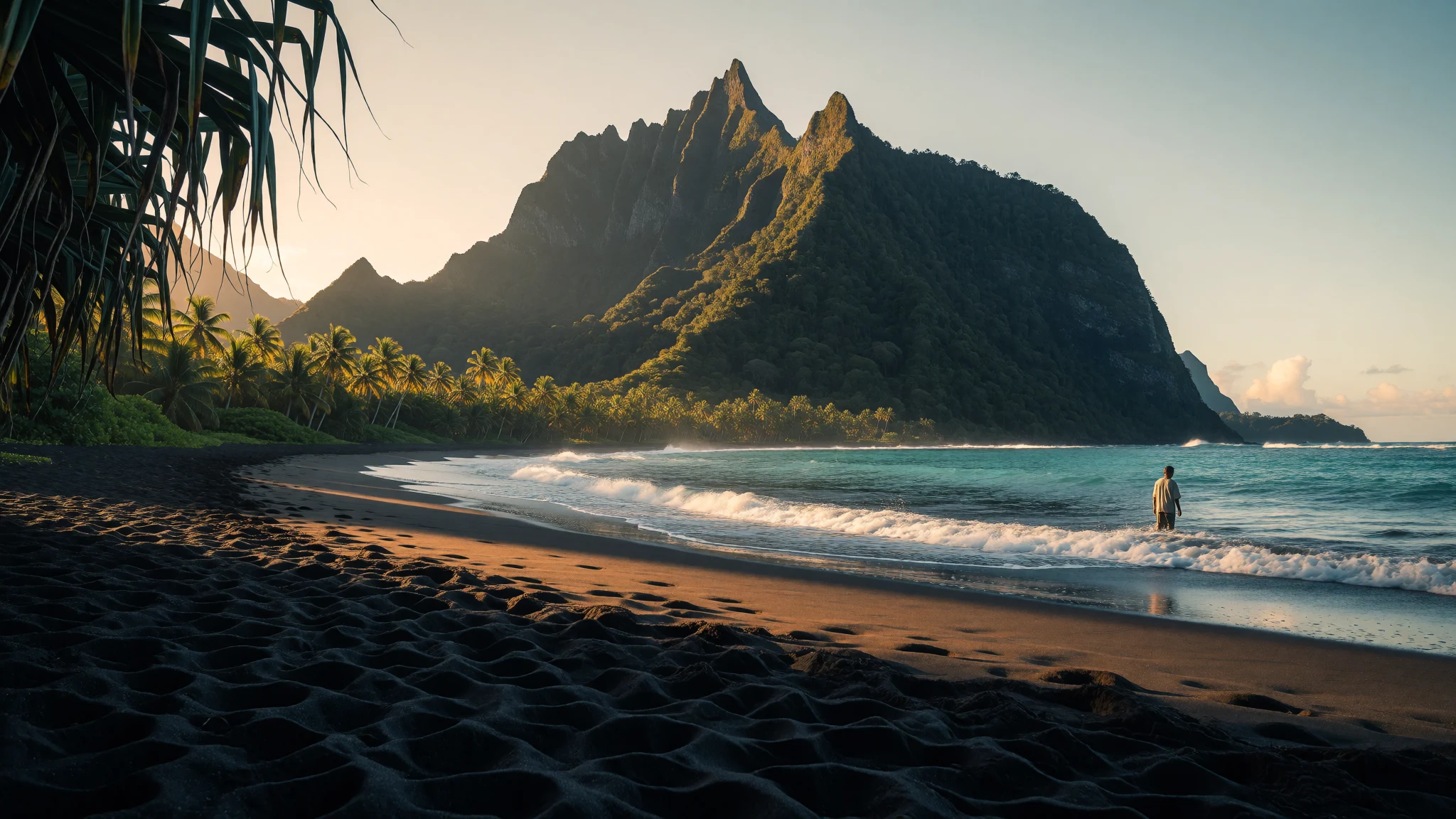
Tahiti is the working heart of French Polynesia: volcanic peaks, black-sand coves, waterfalls and a lively waterfront, all reachable on one island road.
The place
Tahiti is the largest island of the Windward group in the Society Islands, part of French Polynesia, an overseas collectivity of France. It sits in the central Pacific and is really two rounded landmasses, Tahiti Nui and the smaller Tahiti Iti, joined by a narrow isthmus. Each is the worn-down remnant of an extinct shield volcano, which explains the steep, green, deeply creased interior that climbs to 2,241 m. Reef and beach edge most of the coast, and that fringe supports the fishing and tourism economy.
About 178,000 people live on the island, mostly on the coastal strip. Papeʻete, the capital of French Polynesia, sits on the northwest coast, and Tahiti serves as the economic, cultural and political heart of the territory. It therefore feels busier and more ordinary than the postcard atolls: traffic builds up around the capital, the waterfront is a working harbour, and the best scenery needs a car, scooter or tour to reach.
Faʻaʻā International Airport, beside Papeʻete, is the only international airport in the territory, so nearly every visitor lands here, and many only change planes. That is a pity, because a loop of the coast road shows everyday island life well: black-sand beaches, roadside fruit stalls, white churches, surf breaks and waterfalls tumbling from the hills. About 70% of residents are of Polynesian heritage, and the rest are of European, Chinese or mixed background. Tahitian and French are heard side by side. The climate is hot and humid all year, with heavier rain in the warmer months and short, sharp showers at any time.
Its story
Tahiti was settled by Polynesian voyagers who sailed from the west, probably from the Samoa and Tonga region, roughly a thousand years ago. Their double-hulled and outrigger canoes were long enough to carry whole families together with the plants and animals needed to start a new life. Navigation by stars, swells and birds, and a rich oral tradition of gods such as ʻOro, came with them.
Before Europeans appeared, the island was a patchwork of clan territories. Two closely related groups, the Teva of the interior and the Teva of the sea, held a large share of the south. Each clan answered to a high chief, with nobles and lesser chiefs beneath. The nobles were also religious leaders, honoured for the spiritual power, mana, they inherited from divine ancestors, and they wore belts of red feathers as a mark of rank. Ceremonial platforms called marae, some of them the setting for sacrifice, stood at the centre of religious life.
European ships began calling at Matavai Bay, and the island entered the logbooks and paintings of Wallis, Cook and their artists. Visitors recorded the breadfruit that fed the island, and in time the tree was shipped away to feed enslaved workers in other colonies. Chiefly power later gathered around the Pōmare family, whose last ruler, Pōmare V, is remembered as the only king of Tahiti. France then established control, and the island remains French territory today, with its Polynesian identity and languages still strongly alive.
What to see
- Papeʻete market (Le Marché) — Papeʻete, northwest coast
The two-storey covered market in central Papeʻete is the best first stop for a sense of town life. Stalls sell fruit, fish, flowers, crafts and printed cloth, and upstairs there is more handiwork. Scented coconut oil, monoi, is a classic local buy. Go in the morning, before the heat builds. - Pointe Vénus and Matavai Bay — Mahina, north coast
A lighthouse stands on this low headland on the north coast, beside a black-sand beach and a fishing reef. Local families swim and picnic here at weekends. The bay beyond is where European ships anchored in the eighteenth century, so the view links the present-day shoreline to the old paintings.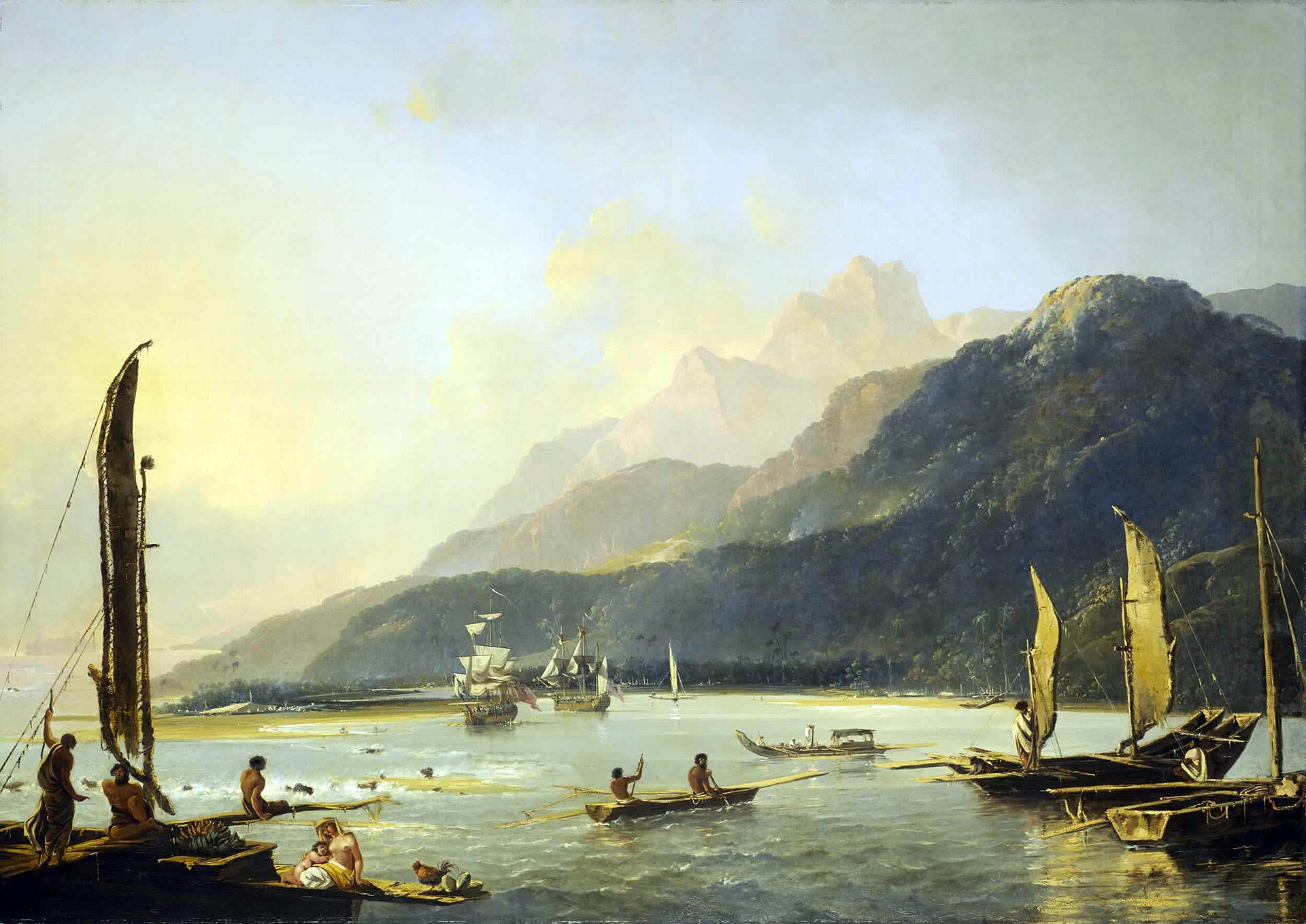
- Arahoho blowhole — North coast of Tahiti Nui
On the north side of Tahiti Nui, waves have punched a hole through the shoreline rock beside the road. Surf surges into a cave and bursts out in spray. It is a quick roadside stop, best at a rising swell, and the wet rocks are slippery, so keep a safe distance. - The three waterfalls — Faarumai valley, northeast coast
Close to the blowhole, a short walk leads into a green valley where waterfalls drop down the cliffs in a series of three. After rain they run strongly and the paths turn muddy. Wear shoes with a grip, and check local conditions before setting out, since flash flooding can occur. - Tomb of Pōmare V — Arue, near Papeʻete
This memorial at Arue marks the burial place of Pōmare V, the last ruler of the Tahitian monarchy. It is a quiet, short stop on the way east out of Papeʻete, and helps explain how the island passed from royal rule to French administration. - Botanical garden at Papeari — Papeari, southwest coast
On the southwest coast, a garden laid out by Harrison Smith offers shade, tropical trees and a calm break from the road. A museum devoted to the painter Gauguin stands alongside, but it has been reported closed, so check current status before planning a visit around it.
Culture
Tahiti's culture rests on a Polynesian base shaped by two centuries of French, Chinese and wider Pacific influence. Its older beliefs centre on gods such as ʻOro and on a rich oral tradition of myth, genealogy and navigation. Tattooing is among the most visible inheritances: patterns once marked rank, lineage and life events, and many islanders today wear modern designs that draw on them.
Breadfruit has long been a staple. Early European visitors recorded how ripe fruit was buried in leaf-lined pits, weighted down and left to ferment into a sour paste called mahie. The tree still stands in many gardens, and its place in the island's story is a reminder of how closely food, voyaging and colonial history are tied.
Daily life mixes church, family and the sea. Sunday services draw many residents, often with fine choral singing, and dance and drumming remain a proud expression of identity, from village rehearsals to island-wide festivals. Pace is relaxed, and greetings matter. A friendly word of French or Tahitian goes a long way, and so does patience at shops and offices, which tend to close for lunch and shut early. Tipping is not customary, though some larger restaurants are starting to see it.
When visiting a village, church or private beach, ask before photographing people or stepping onto land that looks like someone's property, and do not tip unless the service was exceptional.
What to wear
The classic Tahitian garment is the pareu, a length of brightly printed cotton wrapped around the waist or chest and worn by men and women. Formal and festival dress is more elaborate: dancers wear skirts of plant fibre, woven pandanus, shell ornaments and tall headdresses, and flower crowns (hei) are put together from tiare blossom and leaves. Tifaifai, appliquéd and patchwork quilts with bold botanical designs, are a textile tradition made for gifts and weddings. Black pearls from the wider territory appear in much of the jewellery.
On an ordinary day in Papeʻete, people dress for the heat: light shirts, shorts, sundresses, flip-flops, and often a flower tucked behind the ear. Office wear is relaxed but neat. Churchgoers on Sunday dress up, with women often in white and wearing hats, and the sight is memorable.
Visitors will do best in breathable cotton or linen, a sun hat, sunglasses and high-factor reef-safe sunscreen. Pack a light rain jacket, as showers are quick and warm. Swimwear belongs on the beach and boat, so cover up with a shirt or wrap when walking through town, entering shops or visiting a church. Sandals suit the coast, but waterfall paths and ridge walks need shoes with a proper grip, and reef shoes help in rocky shallows.
What to eat
- Poisson cru — Papeʻete market, lunch counters and roadside snack stalls
The island's signature dish: fresh raw fish, usually tuna, marinated in lime juice and finished with coconut milk, cucumber, tomato and onion. It is cool, sharp and creamy together. Order it where the catch is clearly fresh. - Roulotte dinners — Place Vaiete, Papeʻete waterfront, at dusk
Roulottes are food trucks that set up around the Papeʻete waterfront in the evening, especially lively on Fridays. Menus range from steak and chips to grilled fish and Chinese-style plates, served at shared tables in a cheerful crowd. - Chow mein — Roulottes and small family eateries in Papeʻete
Fried noodles with vegetables and meat, a legacy of the island's Chinese community, and a very common takeaway and roulotte order. It is filling, cheap by island standards and often eaten with a splash of soy. - Breadfruit (uru) and mahie — Village feasts, home-style restaurants and the municipal market
Roasted or fried breadfruit is a starchy side with a chestnut-like taste. The traditional fermented paste, mahie, has a sour tang and is more of a cultural curiosity. Ask locals where to taste it prepared the old way. - Crêpes and French pastry — Roulottes in the evening; neighbourhood bakeries in the morning
French influence shows at the roulottes, where crêpes come sweet or savoury, and in bakeries selling baguettes and pastries at dawn. Pair a warm baguette with fresh tropical fruit for a simple breakfast.
Plan it
Best time. May to October is generally the drier, slightly cooler season, with less rain for walking and boat trips. November to April is hotter, more humid and wetter, with heavier showers and a higher chance of storms. The island is warm throughout the year.
How long. 3–5
Getting there. Fly into Faʻaʻā International Airport (PPT), close to Papeʻete, which is the territory's only international airport. Direct services come from a few Pacific and long-haul hubs, and Air Tahiti flies on to the other islands. From the airport, take a taxi or pre-booked transfer into town; a hire car is the easiest way to circle the island.
Budget. high
Tips
- Book accommodation for the arrival night, as early check-in is rarely offered and late arrivals may find restaurants shut.
- Visit the Papeʻete market early, before the heat and the crowds.
- Hire a car or scooter for the coast road and start early, as traffic around Papeʻete slows by mid-morning.
- Carry some cash for market stalls, roulottes and small shops.
- Check weather and path conditions before waterfall walks, and take drinking water and sun protection.
Etiquette
- Greet people with a friendly bonjour or ia ora na before asking for anything.
- Tipping is not expected, so a warm thank you is enough.
- Ask before photographing people and avoid walking onto private land or family graves.
Nearby
Sources
- Wikidata Q42000 (CC0)
- Wikipedia: Tahiti (rev 1381377785) (CC BY-SA 4.0)
- Wikivoyage: Tahiti (rev 5273741) (CC BY-SA 4.0)
- NASA astronaut image of Tahiti, Society Islands, French Polynesia (Public domain)
- Society Islands (preliminary map), Keith Pickering (CC BY 3.0)
- Map of Tahiti and nearby islands, Kelisi (CC BY-SA 4.0)
- Representation of a human sacrifice in a morai at Otaheite, John Webber (Public domain)
- Captain Wallis on his arrival at O'Taheite, John Hall (Public domain)
- Resolution and Adventure in Matavai Bay, William Hodges (Public domain)
- Transplanting of the bread-fruit trees from Otaheite, Thomas Gosse (Public domain)
- TahitiDupetitThouars.jpg, Louis Le Breton (Public domain)


