Stingray City
Stingray City, Cayman Islands
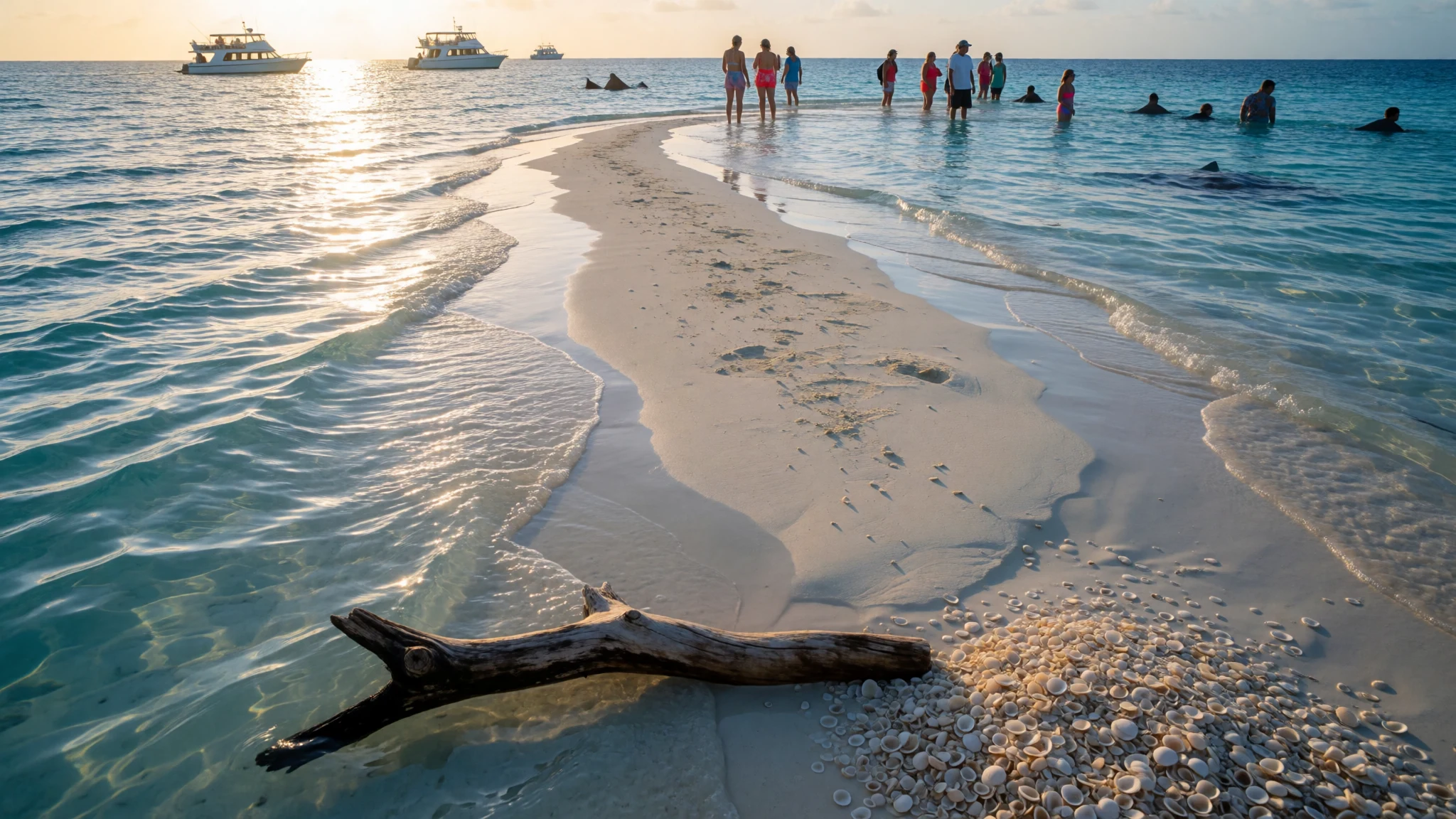
Stingray City is a shallow sandbar where southern stingrays gather, and visitors can safely interact in the water.
The place
Stingray City sits in the North Sound of Grand Cayman, in the Cayman Islands, where a set of shallow sandbars lie just inside a natural channel that runs through the barrier reef. The appeal is simple: this is one of the places in the Caribbean where southern stingrays are found in noticeable abundance, and where people can get in the water and interact rather than just watch.
The sandbar setup matters. There are two main areas used by operators: one is in the shallows for snorkelling-style visits, while a deeper sandbar can suit diving. In practice, that means most trips are built around time on the water and the chance to stand chest-high (or float and snorkel) as stingrays circulate nearby.
Crowd levels tend to rise and fall with boat arrivals. On many days, it can feel like a floating village: tour and excursion craft converge, groups gather, and the water becomes a shared feeding-and-watching zone. If the water is calm and the visibility is decent, the experience is easy to enjoy; if conditions shift or the bar is busier than expected, time can feel slower and the water fuller.
Stingray City is also a place to be mindful. The rays have a long association with the routine of boats and feeding, which is part of why they come close. At the same time, there are growing concerns about how supplemental feeding may affect behaviour and ecology compared with rays that don’t receive it.
Its story
Stingray City’s reputation is often explained with a story of fishermen and timing. The idea is that stingrays began gathering here decades ago when boats returned from an excursion and went behind the reef into the sound, then cleaned their catch in the calm shallows. Fish scraps and squid were thrown overboard, and the stingrays would naturally come in to feed.
As that pattern repeated, the rays apparently started linking the sound of a boat engine with a food source. Over time, divers and visitors learned that the animals could be drawn close, and the relationship moved from accidental scavenging to a hands-on interaction that tour boats now facilitate.
Today, boats gather at Stingray City in large numbers. Passengers enter the water—often standing where depth allows interaction—and staff bring pails of chunked-up squid meat to dispense by hand. The result is a feeding spot that attracts dozens of stingrays, turning the sandbar into a lively underwater meeting place.
The interaction is part spectacle, part animal behaviour in action. Rays tend to pass near people, and the water depth makes it feel surprisingly accessible. Yet the very thing that makes the experience reliable—consistent provisioning—also raises questions. Observers note concerns about changes in feeding patterns and general ecology when stingrays receive supplemental nutrition compared with rays not exposed to it.
What to see
- Stingray City Sandbar (shallows) — North Sound (Grand Cayman)
The main interaction zone in Grand Cayman’s North Sound, where southern stingrays gather close enough for visitors to enter the water and interact with them. It’s the classic ‘stand and watch’ set-up run by excursion boats.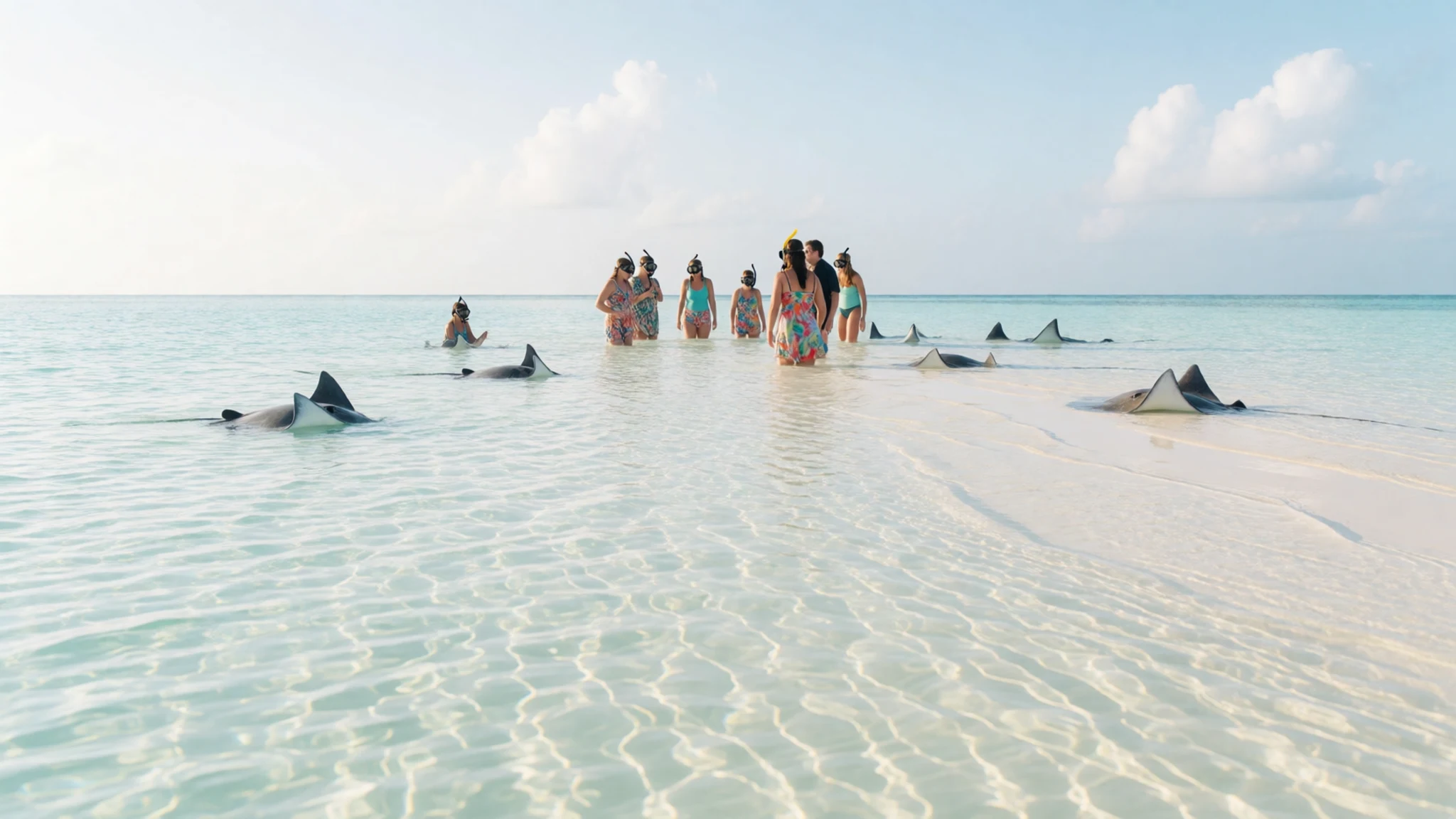
- Deeper sandbar area (for diving) — North Sound (Grand Cayman)
A second sandbar used by operators that sits deeper than the shallows, making it more suited to diving with stingrays rather than just standing. The same idea—rays come to the sandbar—just with a different water depth.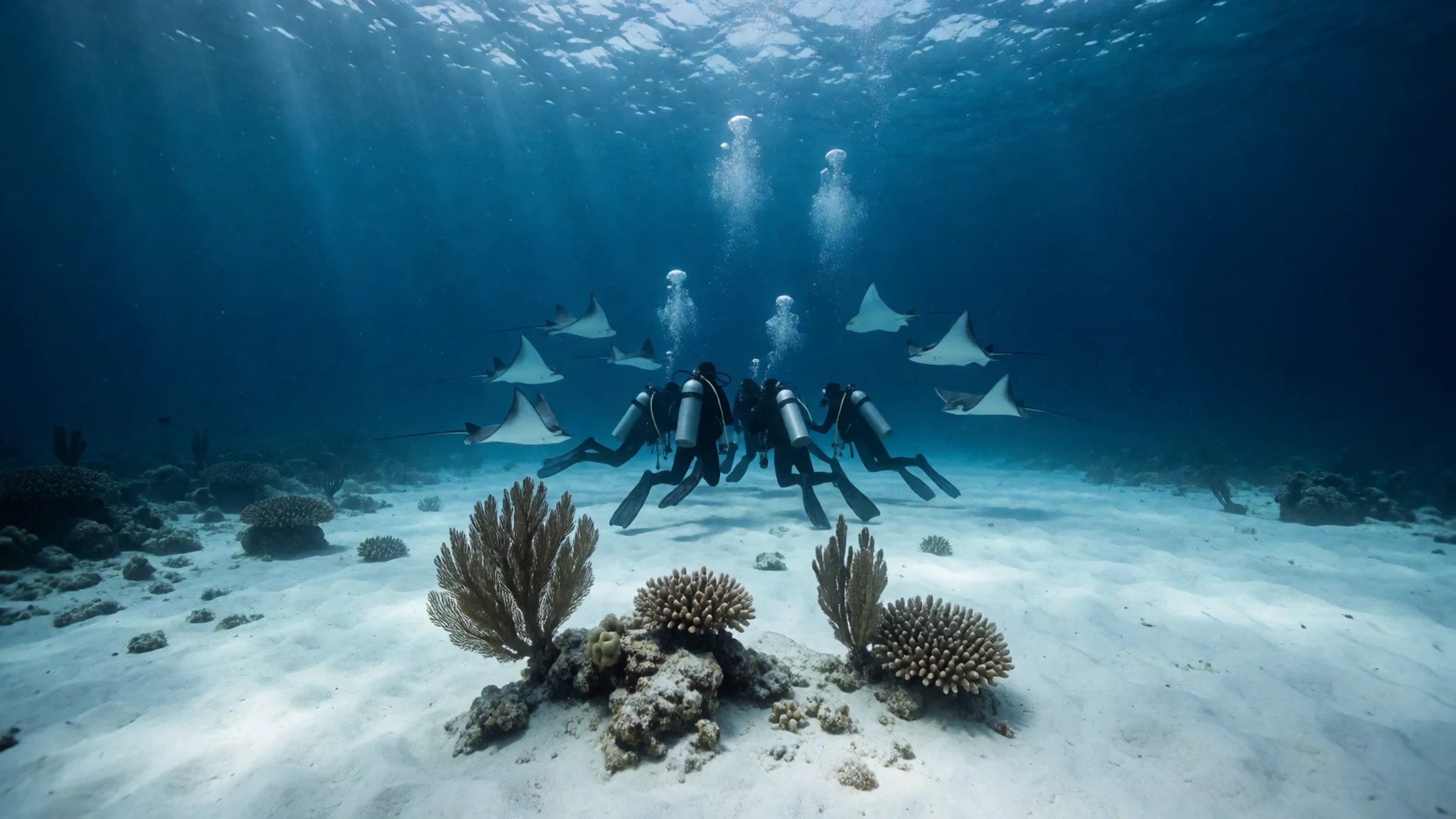
- Boat engine → feeding behaviour — Approach area near the sandbars
Part of what people notice at Stingray City is how quickly rays react to the routine of boats gathering. Feeding helps concentrate them, so the ‘waiting’ phase is often brief and the water can become busy as groups arrive and prepare.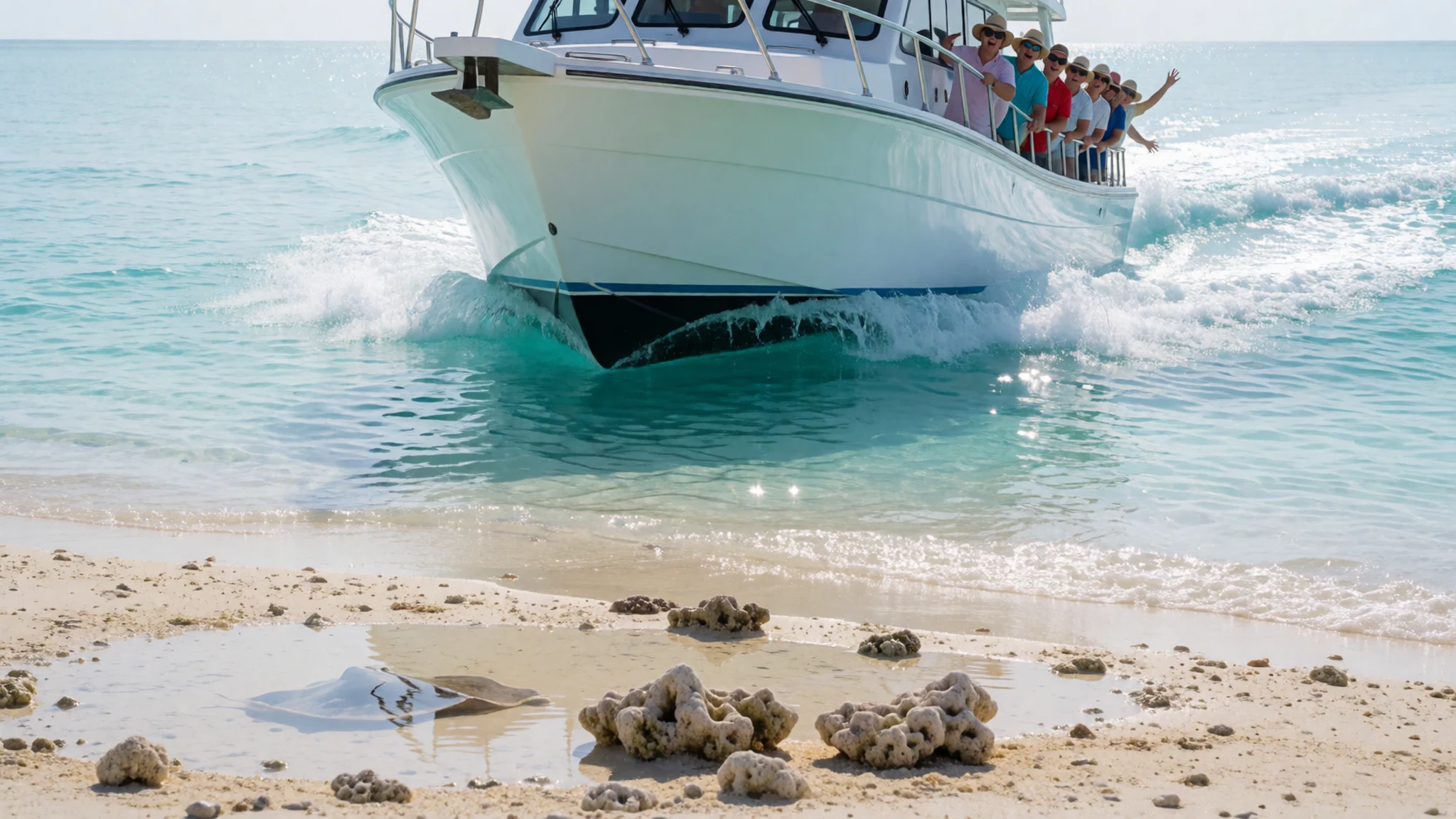
- Southern stingrays in motion — Feeding spot over the sandbar
Watching rays pass each other around the feeding spot is the moment most people come for. Southern stingrays circulate close to the sandbar, and it can look like they’re weaving through a moving crowd—visitors and divers included.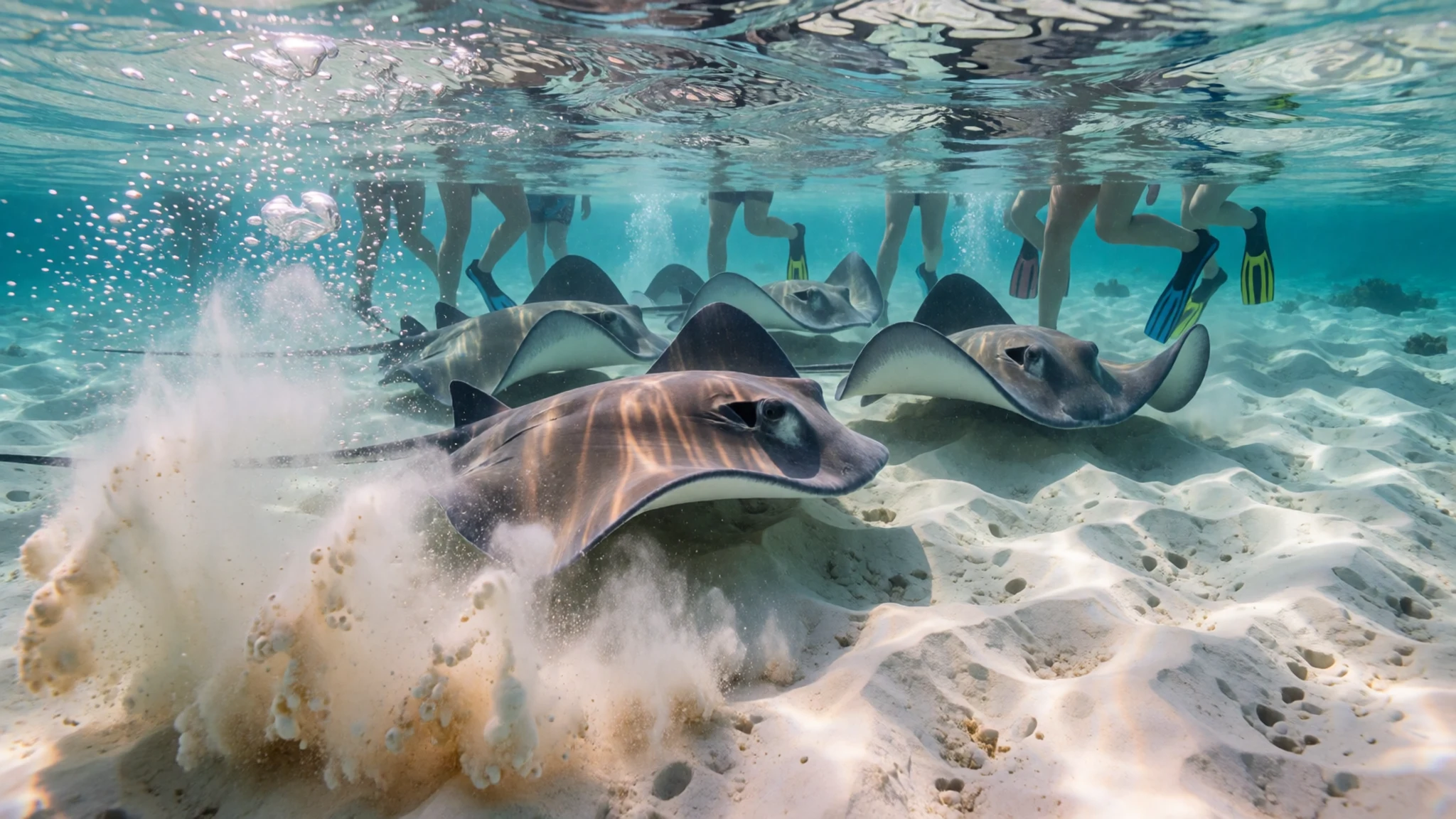
Culture
Stingray City is in the Cayman Islands, and the island’s wider visitor experience is shaped by Caymanian social habits. Caymanians are described as respectful, with greetings and polite pleasantries treated as normal even when you’re stepping into a shop. That matters because many interactions on the islands—from quick questions at a local store to meeting staff for tours—run on friendly acknowledgement rather than formality.
Titles of respect are also common. When people address one another, they may use Mr or Miss followed by a given or first name. It’s a small detail, but it signals how communication tends to work: friendly, courteous, and not overly stiff.
For a water-based attraction like Stingray City, the same vibe shows up in the way crews brief groups and manage time on the sandbar. Staff usually want everyone calm and organised because the setting gets busy with multiple boats and groups. A little patience—standing where the crew directs, listening to safety instructions, and keeping movements steady—goes a long way to keeping the experience smooth for everyone sharing the water.
Visitor etiquette: listen to your crew, keep a relaxed pace in the water, and avoid chasing or startling stingrays while groups are feeding.
What to wear
At Stingray City, clothing is mostly about functioning in warm sea water and staying comfortable between swim sessions. Traditional dress isn’t really part of the day’s practical toolkit here, because the main activity is getting in and out of the water around the sandbar.
What people typically wear now is straightforward: swimwear (or swim shorts with a rash guard if preferred), plus an easy layer for boat ride time and a change of clothes for after. Reef-friendly footwear or sandals help with the transition zones on and off boats, because surfaces can be slippery when wet.
For visitors, the smart packing combo is: a swimsuit you’re happy to get wet, a lightweight cover-up for waiting or boarding, and something to dry off with. If conditions feel breezy, a thin windbreaker is handy. If reef contact or slippery edges are a concern, choose footwear that’s secure and comfortable rather than something flimsy.
Modesty norms are generally about behaving appropriately around others—especially at meeting points and on boats—so it helps to keep cover-ups on when you’re not in the water. Basic sun protection (hat and sunscreen) matters too, because time on open water adds up quickly.
What to eat
- Seafood dishes (Cayman-style) — George Town and local eateries
Cayman cuisine leans hard into local seafood, which is often easier to source locally than imported ingredients. Look for seafood plates at casual eateries and on menus around George Town and other tourist areas.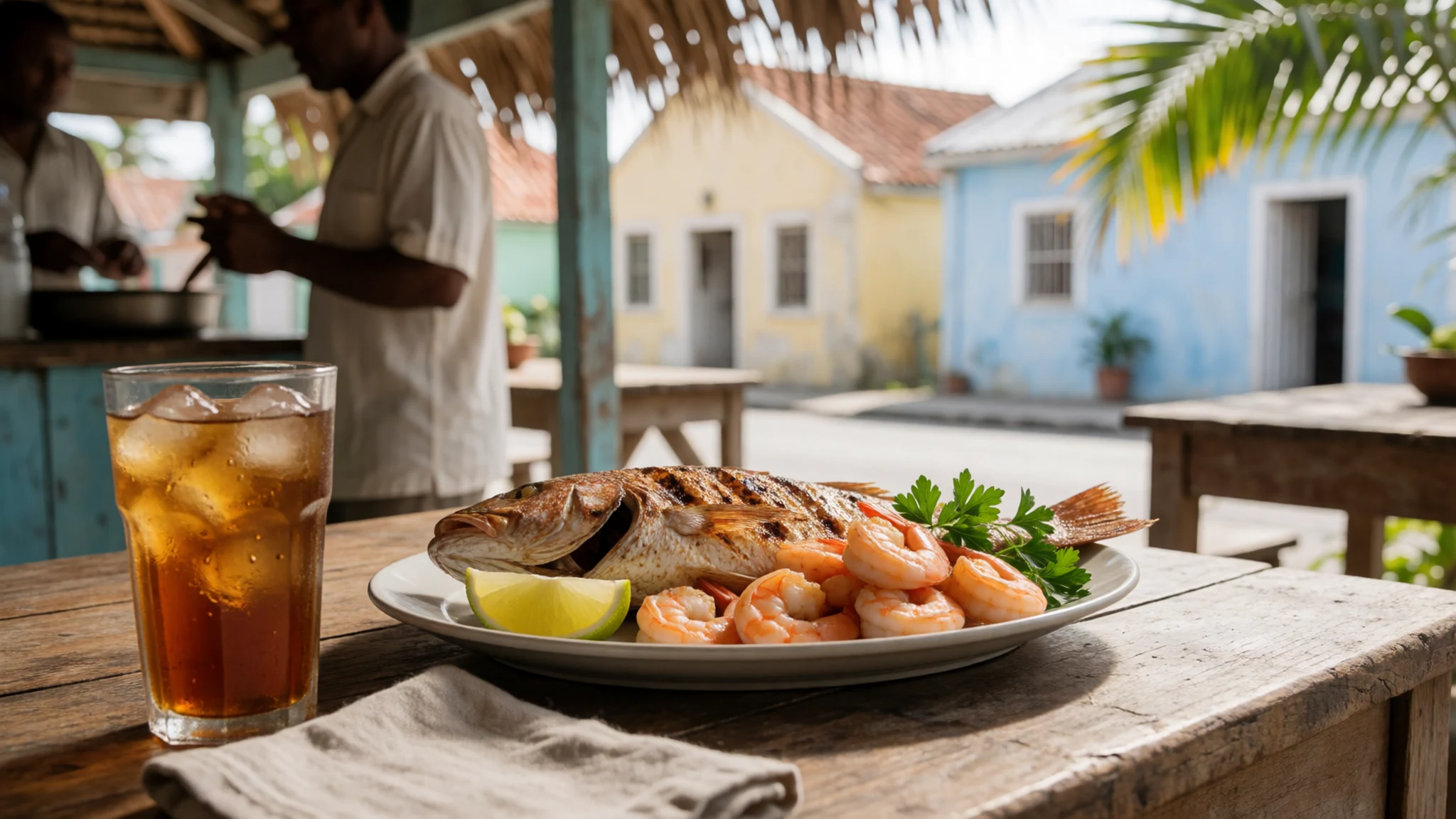
- Conch — Local restaurants and Caribbean-led menus
Conch is listed among local specialties, showing up in Caribbean-style dishes. It’s the kind of item more likely to appear on menus of restaurants that focus on island food rather than generic hotel fare.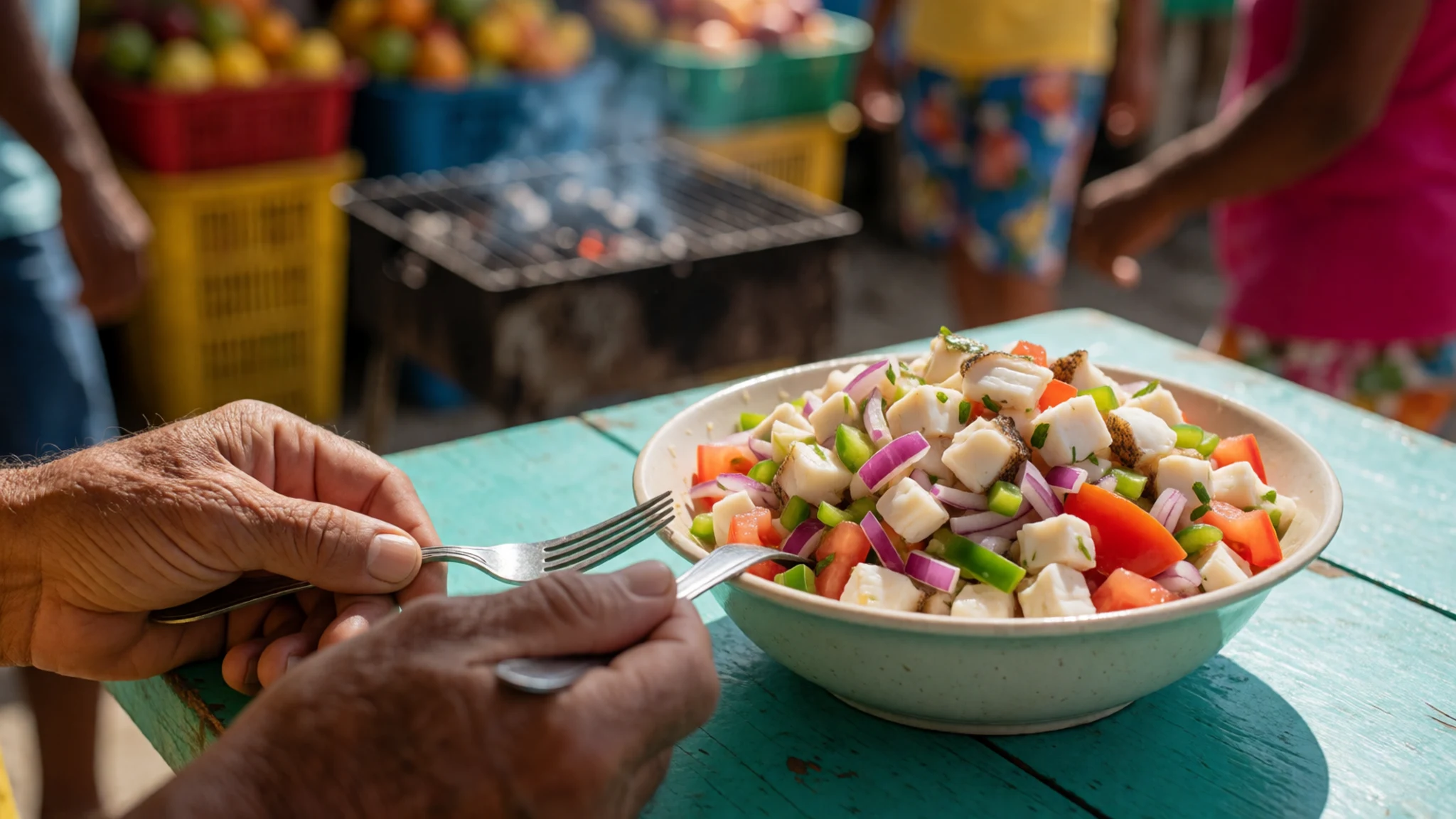
- Jerk-style options — Street food stands (ask locally for the best jerk)
For a flavour hit, the local advice is to ask about a favourite jerk stand. You can usually find jerk preparations at street-style spots and small venues where locals point visitors toward what’s popular that day. - Caribbean and Thai-influenced meals — Mixed-cuisine restaurants across the island
Cayman eating options blend Caribbean cooking with other influences such as Thai, alongside more international styles. This makes it easy to find something familiar after a long day on the water. - Restaurant and themed dinner cruises — Harbour-based cruises and organised events
Beyond standard dining, dinner cruises and themed events are part of the food-and-leisure scene on Grand Cayman. It’s a relaxed way to combine dinner with time out at sea without building a full itinerary around restaurants.
Plan it
Best time. March–April and October–November for more comfortable swimming weather; June can be rainy and August tends to be hot and humid.
How long. 2–3
Getting there. Fly into Grand Cayman and then take the short road transfer to George Town area for the boat departure; the final leg is the boat ride out to the sandbar in the North Sound.
Budget. mid
Tips
- Aim for an early slot to reduce the chance of the water feeling packed with multiple boat groups.
- Choose a tour type that matches the depth you want: shallows for standing interaction or deeper water for diving.
- Bring water-friendly footwear for getting on and off boats safely.
- Have some cash for small purchases in town if you plan to buy snacks or drinks before the tour.
- Bring sun protection and a change of clothes so the post-water wait feels easy.
Etiquette
- Follow the crew’s instructions on where to stand and when to move.
- Keep calm movements around the feeding spot; don’t chase or grab rays.
- Be mindful that provisioning brings crowds—respect other groups’ space in the water.
Nearby
Sources
- Wikidata Q281265 (CC0)
- Wikipedia (rev 1269409441) (CC BY-SA 4.0)
- Wikivoyage (rev 5418952) (CC BY-SA 4.0)
- Photo photos/01-stingray-city-in-grand-cayman.jpg (CC BY 3.0)
- Photo photos/02-stingray-sandbar-1001.jpg (CC BY-SA 4.0)
- Photo photos/03-southern-stingrays-at-stingray-city-grand-cayman.jpg (CC BY 3.0)
- Photo photos/04-southern-stingrays-at-stingray-city.jpg (CC BY 2.5)
- Photo photos/05-sting-ray-at-sting-ray-city-in-april-2009-2-panoramio.jpg (CC BY 3.0)
- Photo photos/06-sting-ray-at-sting-ray-city-in-april-2009-panoramio.jpg (CC BY 3.0)
- Photo photos/07-stingray-city-cayman-islands.jpg (CC BY 2.5)
- Photo photos/08-stingray-city-grand-cayman-54289289499.jpg (CC BY 2.5)


