Stavronikita Monastery
Stavronikita Monastery, Greece
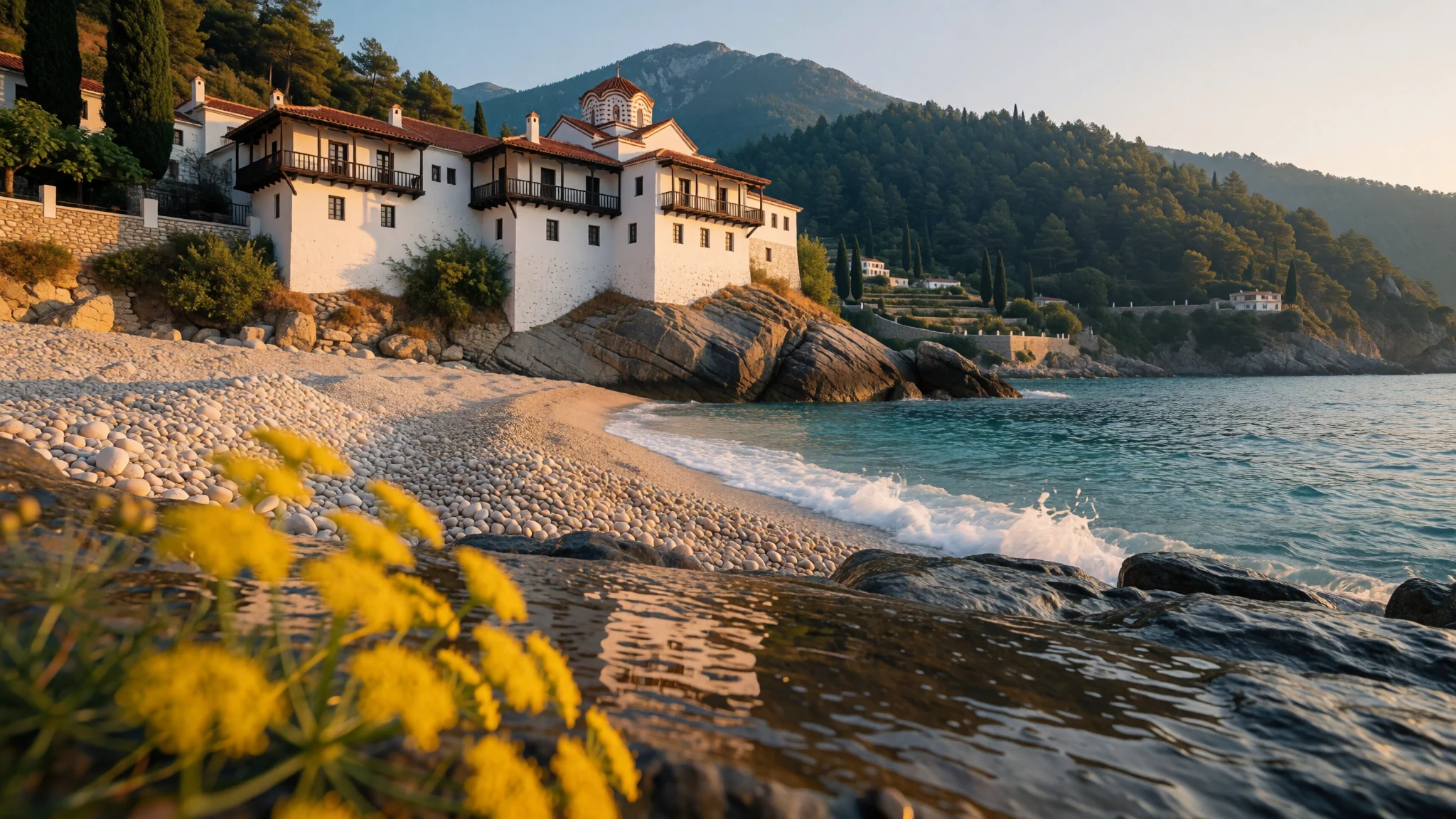
Stavronikita is a small Athonite monastery on a sea-facing rock, where frescoes, an aqueduct and the peak of Athos share one view.
The place
Stavronikita Monastery stands on a rock beside the sea on the eastern shore of the Athos peninsula, inside the self-governing monastic state of Mount Athos in northern Greece. It lies roughly midway along that coast, between the neighbouring monasteries of Iviron and Pantokratoros, and is dedicated to Saint Nicholas. Seen from a boat, its buildings seem fixed to the stone, with wooded slopes rising behind and the peak of Athos beyond. The community is small by the standards of the peninsula, with between 30 and 40 monks, and it ranks fifteenth in the formal order of Athonite houses. A visit here is unlike a normal trip in Greece. Mount Athos is a place of prayer first and a destination second: entry is by permit only, only men are admitted, and the day is arranged around early services, shared meals and long stretches of quiet. Because the monastery occupies a rock, space is tight. Buildings climb and press together, an aqueduct reaches the entrance, and from the interior the summit of Athos shows over the roofs. The coast has a Mediterranean climate, with hot, dry summers and cooler, wetter winters, and a sea breeze takes some of the edge off the heat. Getting around the peninsula is by boat, on foot or on a few rough roads, and the pace is set by the monks rather than by the visitor. A stay usually means a bed in the guesthouse, a plain meal and a service in a candle-lit church, and for many pilgrims that is the whole point.
Its story
The history of Stavronikita Monastery begins in fog. Several tales explain its name, none can be proved, and that says something about how thin the early record is. The firmest clues are two documents from the early eleventh century. In one, dated 1012 and linked to the Protos Nikiforos, a monk signs himself Nikiforos of Stravonikita; in another, from 1016, the same man writes the name as Stavronikita. Those signatures show that a monastery of that name already existed. The archaeologist Sotiris Kadas reads this as evidence that it belonged to the first generation of organised monastic life on Athos, which fits the founding date of around the year 1000 given in the facts. Monks had in fact been using the site since the tenth century. That first chapter ended around the first half of the thirteenth century. Pirates had raided the coast again and again, and the Fourth Crusade shook the whole Byzantine world, so the community left. The empty rock did not vanish from the map. It passed first to the Protos, the head of the Athonite administration, then to Koutloumousiou monastery and later to Philotheou, and in those centuries it worked as a skete, a smaller dependent settlement. The monastery returned as a house in its own right and was officially consecrated in 1536, the last on Athos to be recognised in that way. Within a decade the painter Theophanes the Cretan had decorated its church, in 1545–6, and his fresco of Saint Nestor survives as the best-known trace of that revival.
What to see
- The sea-facing rock — Eastern coast of the Athos peninsula
Stavronikita Monastery is best understood from the water, where it appears as a block of buildings fixed to a rock above the shore. Boats along the east coast pass close enough to show how the walls follow the stone and how the green slopes of Athos fall away behind. The south-east angle gives the whole profile.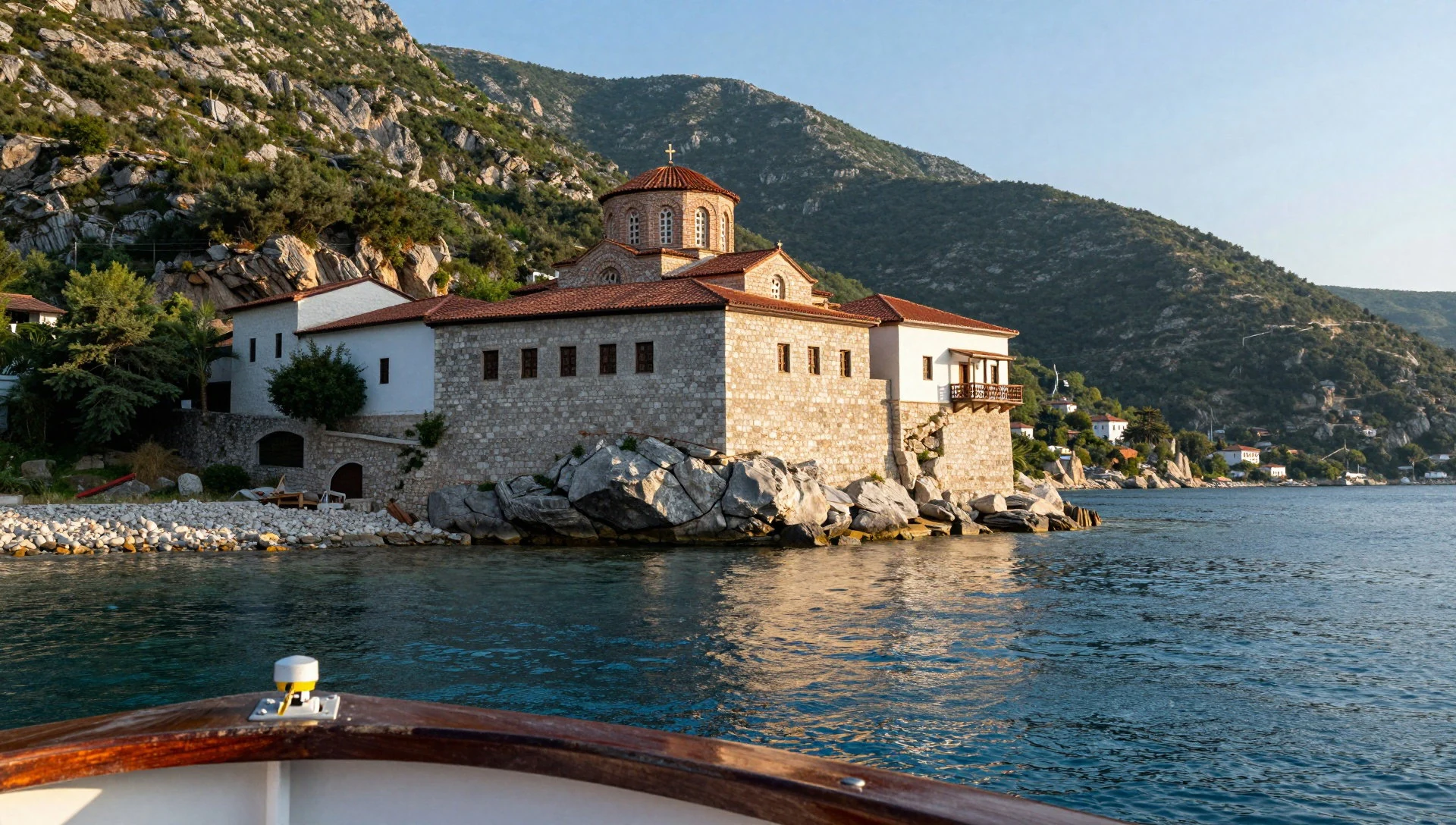
- Entrance and aqueduct — Monastery gate
The approach to Stavronikita Monastery is marked by an aqueduct beside the entrance, a reminder that a house built on a rock depends on carried water. Pilgrims arrive here, are received and are directed onwards. The gateway is practical rather than grand, and the masonry rewards a few quiet minutes before the day's routine begins.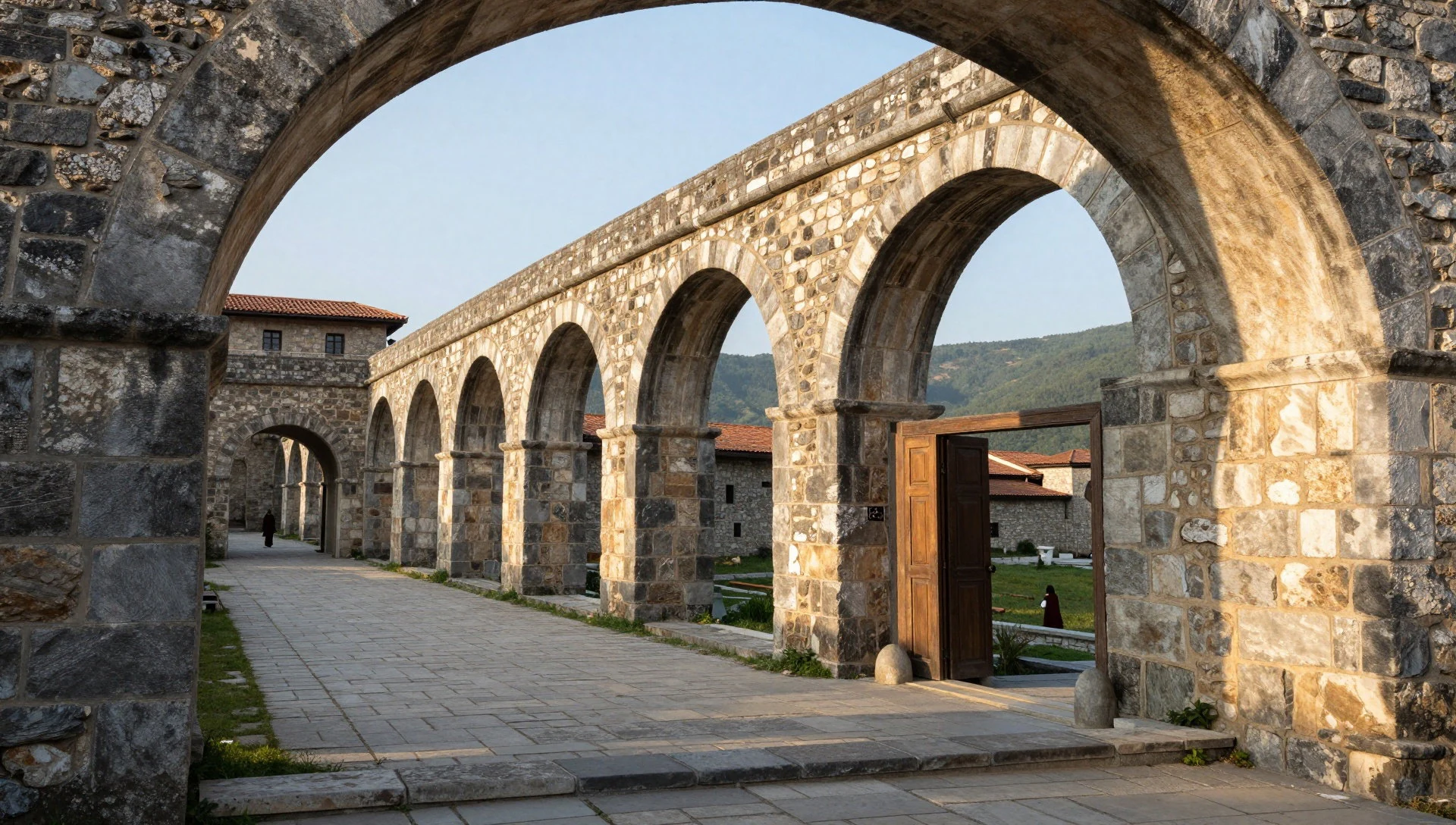
- Chapel of Saint Demetrius — Within the monastery grounds
One of the chapels of Stavronikita Monastery is dedicated to Saint Demetrius. Chapels on Athos exist for prayer, not display, so access follows the guidance of the monks, and a visitor is usually shown in rather than left to wander. It is worth asking at the guesthouse whether and when it can be seen.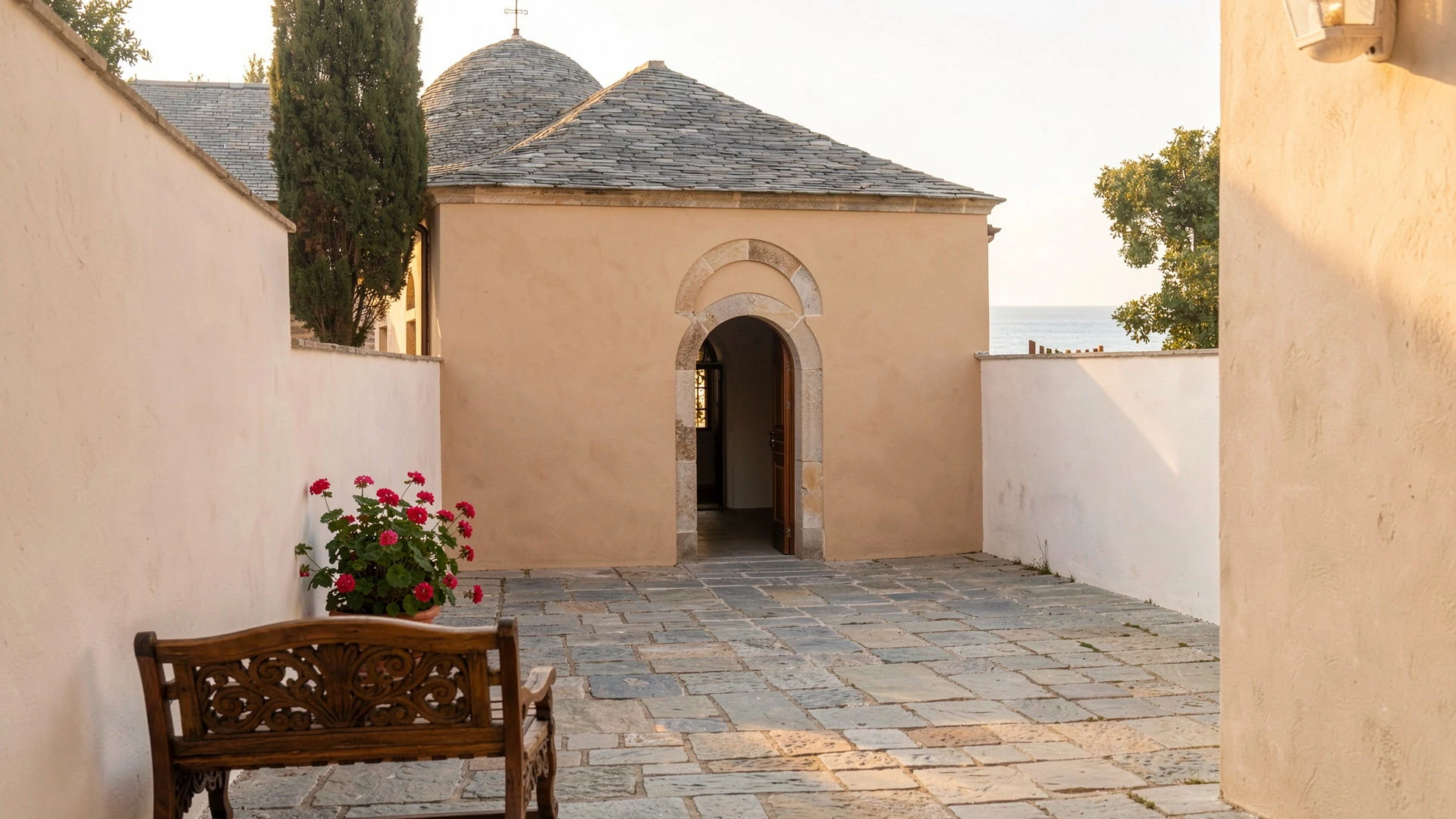
- Frescoes by Theophanes the Cretan — Monastery church
The church of Stavronikita Monastery carries wall paintings by Theophanes the Cretan, dated 1545–6, among them a standing figure of Saint Nestor. They come from the Cretan manner of painting that shaped many Athonite churches. The church is entered during services or with a monk's guidance, and photography needs permission.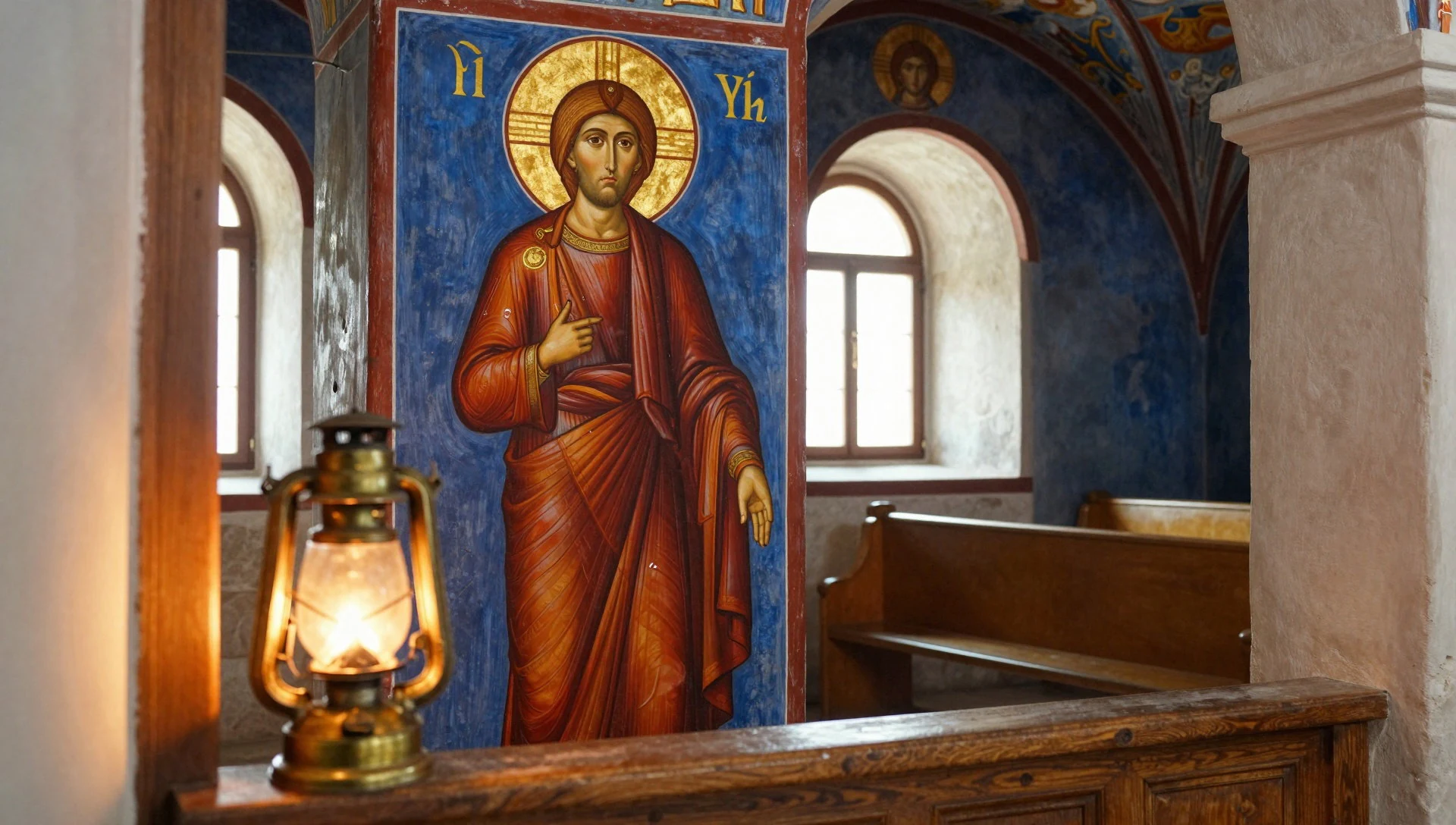
- Courtyard and the peak of Athos — Central courtyard
Inside Stavronikita Monastery the courtyard opens upwards, and the summit of Athos rises above the rooflines. The contrast between close stone and distant mountain gives the clearest sense of the peninsula's scale. Evening, when the working day quiets, is a good time to stand here without hurrying.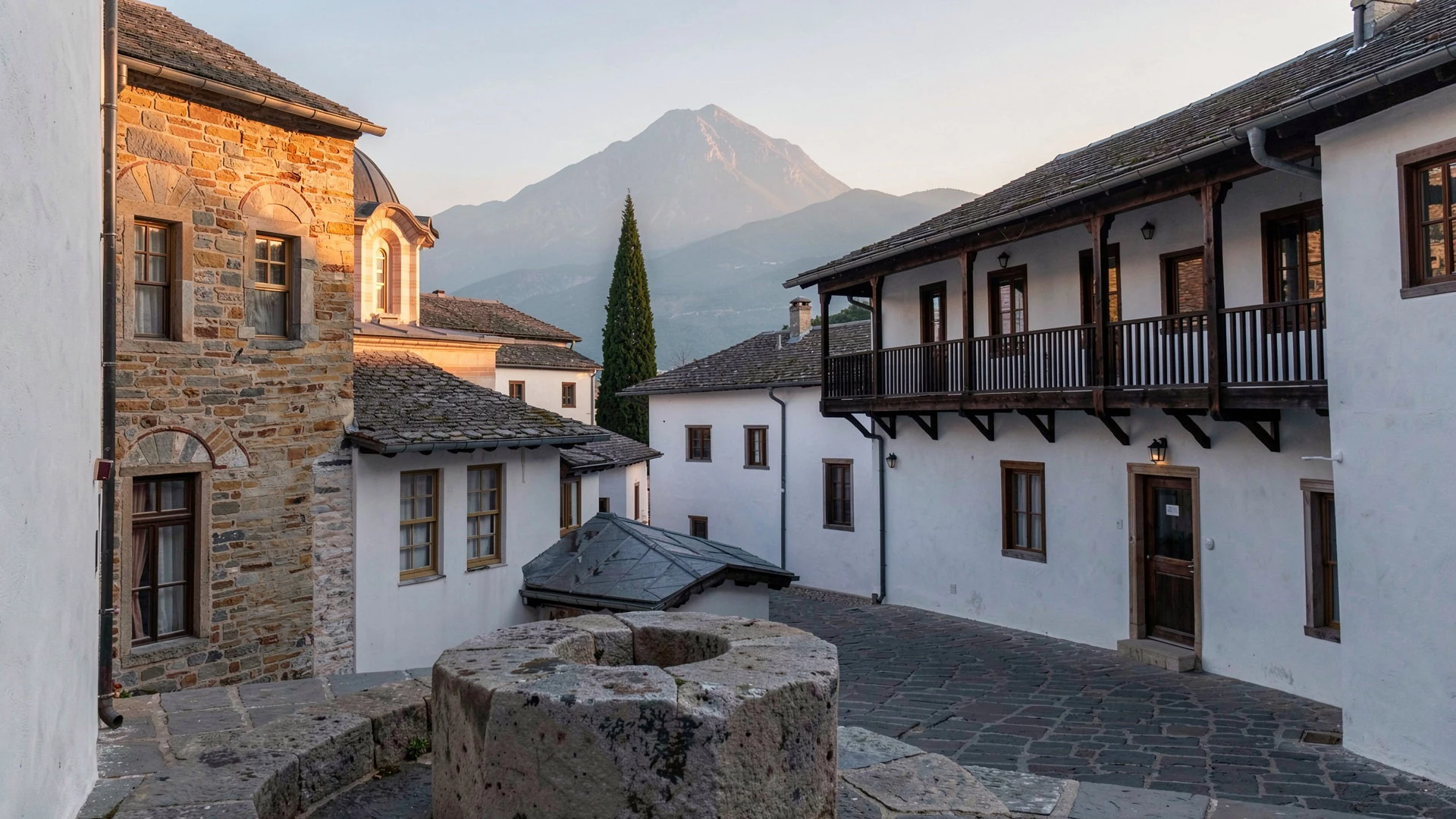
Culture
Stavronikita Monastery belongs to Eastern Orthodox monastic life, and its rhythm is set by services, meals and silence rather than by sightseeing. It is dedicated to Saint Nicholas and keeps the Orthodox calendar of feasts and fasts, which shapes what is served at the table and when the church is full. The community is small enough that a guest is noticed and treated as a pilgrim, not a customer. Hospitality is a duty on Athos, and a visitor is typically offered water, a sweet and a small drink on arrival, followed by a bed within the monastery's timetable. Beyond the walls, Greek manners are informal. Politeness is read in behaviour more than in elaborate words, and an overdone formal tone can sound pretentious. Strangers tend to wait for the other person to speak first, so a friendly hello usually warms things at once. A few words help: efharistó (Ευχαριστώ) for thank you and parakaló (Παρακαλώ) for please. Inside a monastery the tone is quieter still, with low voices, unhurried movement and respect for the monks' work and prayer. Silence during services is part of the experience, and the monks' routines come before any visitor's plans. Dress modestly, keep your voice low, and ask a monk before photographing the church interior, a service or any person.
What to wear
At Stavronikita Monastery the traditional dress is the monastic habit: a long black inner cassock and a looser black outer one, usually of wool or cotton, topped by a stiff cylindrical hat. Black is the colour of the monastic vocation and is worn daily, with fuller vestments reserved for services and feast days. Mainland Greece has its own traditional costume, such as the pleated white fustanella kilt of ceremonial guards, but nothing like it is seen on Athos. What people wear now is practical. Monks wear the black habit for services and simpler working clothes for labour in the gardens, workshops and kitchens, while workers and pilgrims on the peninsula mostly wear plain, hard-wearing clothes. Visitors should dress for both climate and respect. Long trousers and shirts with sleeves are the norm in monastic buildings; shorts, sleeveless tops and loud slogans are out of place. The paths are stony and often steep, so sturdy closed shoes or light boots matter more than style. In summer a brimmed hat, sun protection and breathable cotton or linen help with the heat and glare off the sea. In spring and autumn a warm layer is useful for cool evenings and the sea wind, and a light waterproof is sensible outside the dry months. Smart clothes are unnecessary; clean, modest and comfortable is the standard.
What to eat
- Fasolada — Monastery guesthouse meals; village eateries on the mainland
A bean soup cooked with olive oil, tomato and herbs, and well suited to the many fasting days of the Orthodox year. It is plain, filling food, often served in monastic dining rooms and in village eateries across mainland Greece.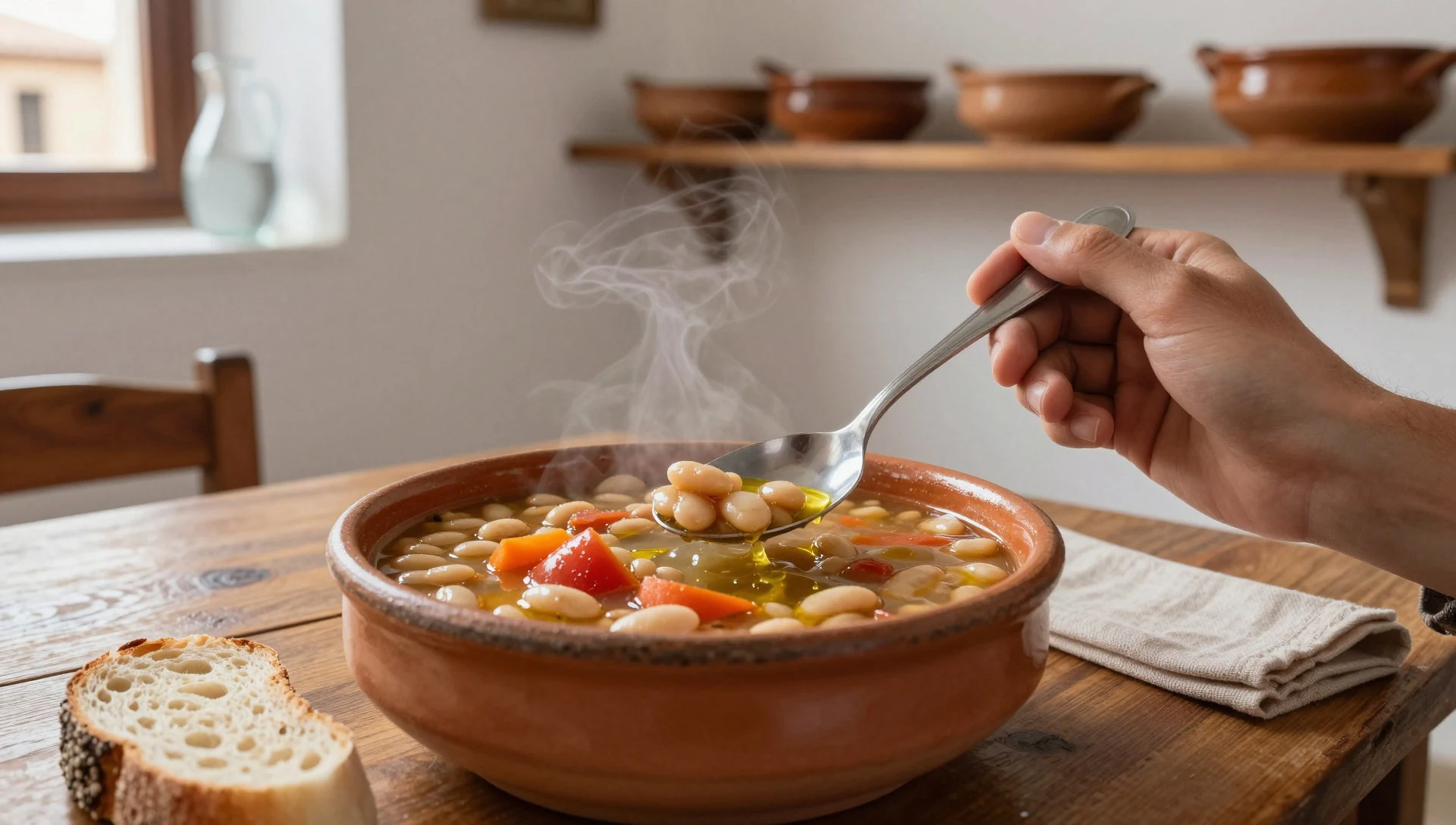
- Bread, olives and olive oil — Any monastic meal; bakeries in Ouranoupoli
Bread, olives and good oil are the base of a monastic table, often with lemon and tomatoes on the side. The simplicity is deliberate, and the quality of the oil and bread is what stays in memory.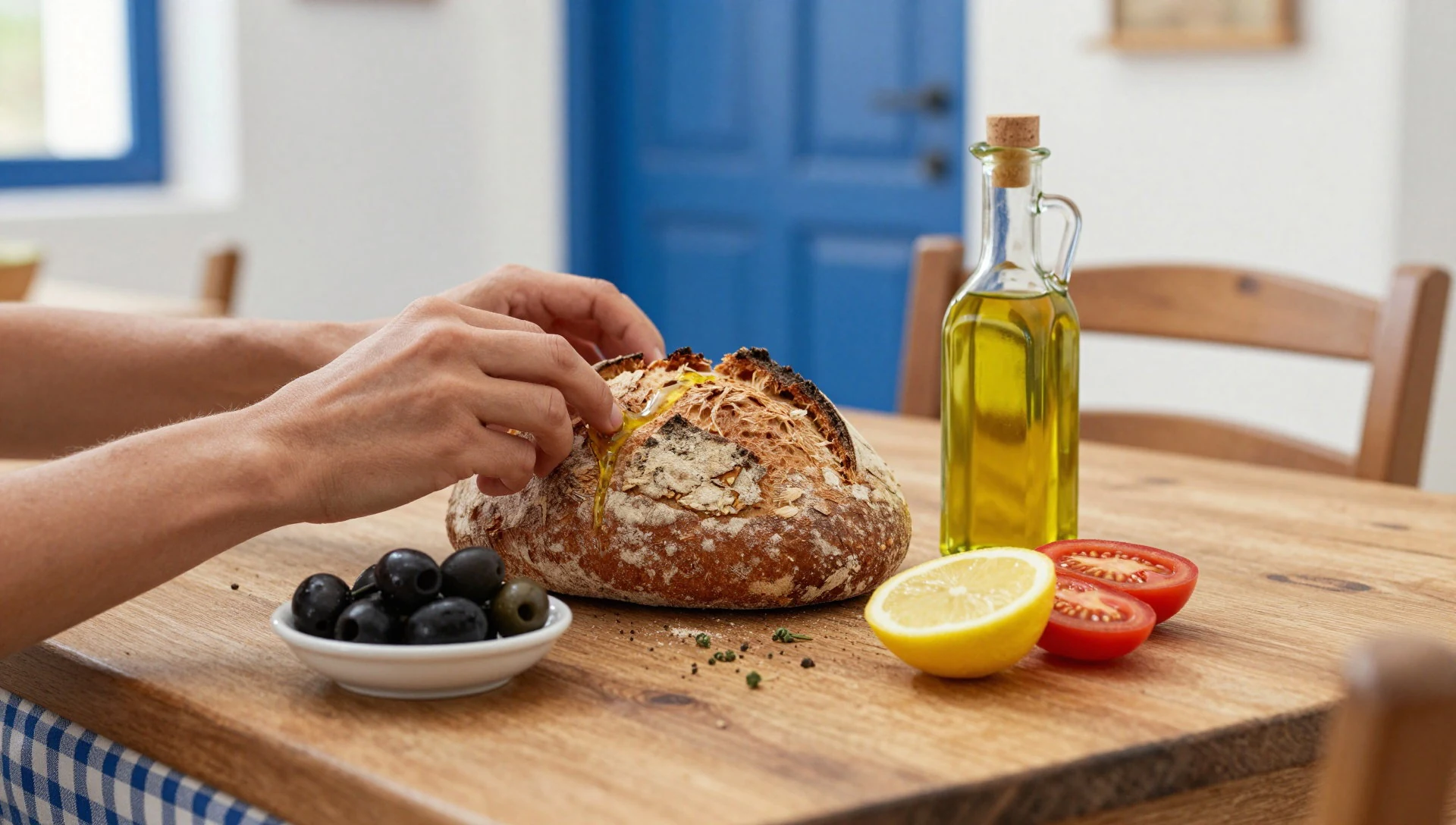
- Horta — Village tavernas and family eateries on the mainland
Boiled wild or garden greens dressed with olive oil and lemon, served warm or cool. Horta suits fasting days and hot weather alike, and it is a staple of Greek home cooking as well as simple village tavernas. - Loukoumi with tsipouro — Arrival reception at Athonite guesthouses
Soft, sweet loukoumi paired with a small glass of tsipouro, the clear grape spirit, is a traditional welcome for arriving guests. A sip and a bite is the usual measure, taken sitting down after the journey. - Grilled fish — Seafront tavernas in Ouranoupoli and nearby coastal villages
Greece takes plenty of seafood, and on the coast it is often simply grilled with oil and lemon. Fish is generally eaten on the mainland side before or after a visit, since monastic menus follow the fasting calendar.
Plan it
Best time. May–June and September–October, when the walking weather is comfortable and the sea is calm. July and August are hot and busy along the Greek coast, and winters are cooler and wetter, with boat services and visits more likely to be disrupted.
How long. 2–3
Getting there. Fly to Thessaloniki, then travel by road to Ouranoupoli or Ierissos on the mainland. From there a boat runs along the Athos coast to the monastery landing; the last stretch is a short walk up to the buildings. A visitor permit is required in advance.
Budget. mid
Tips
- Apply for the Mount Athos permit well ahead, as numbers are limited; check the official site, http://www.mountathos.gr
- Confirm boat times just before travelling, since schedules shift with season and weather
- Carry cash, because monasteries and small boats rarely take cards
- Bring a passport or ID, a refillable water bottle, a sun hat and sturdy shoes for stony paths
- Arrive before the evening service so that the guesthouse routine is not disrupted
Etiquette
- Dress modestly in long trousers and sleeved shirts, and keep voices low
- Ask a monk before taking photographs inside the church or of any person
- Follow the guesthouse timetable for meals and services, and thank the hosts when leaving
Nearby
Sources
- Wikidata Q1141004 (CC0)
- Wikipedia: Stavronikita (rev 1362412670) (CC BY-SA 4.0)
- Wikivoyage: Greece (rev 5425334) (CC BY-SA 4.0)
- Photo: Stavronikita from the south-east, Thodoris Lakiotis (CC BY 3.0)
- Photo: Chapel of Saint Demetrius, Michalis Famelis (CC BY 3.0)
- Photo: Entrance and aqueduct, Aroche (CC BY 3.0)
- Photo: Interior and Athos peak, Michalis Famelis (CC BY 3.0)
- Photo: Edward Lear, Mount Athos and the Monastery of Stavronikétes (Public domain)
- Photo: Fresco of St. Nestor, Thiv56 (CC BY 4.0)
- Photo: Nikos G. Pentzikis with Abbot Vasileios and Archbishop Stylianos, Thiv56 (CC BY 4.0)
- Photo: Pentzikis, Karakatsanis and others at Stavronikita, Thiv56 (CC BY 4.0)


