Słowiński National Park
Słowiński National Park, Poland
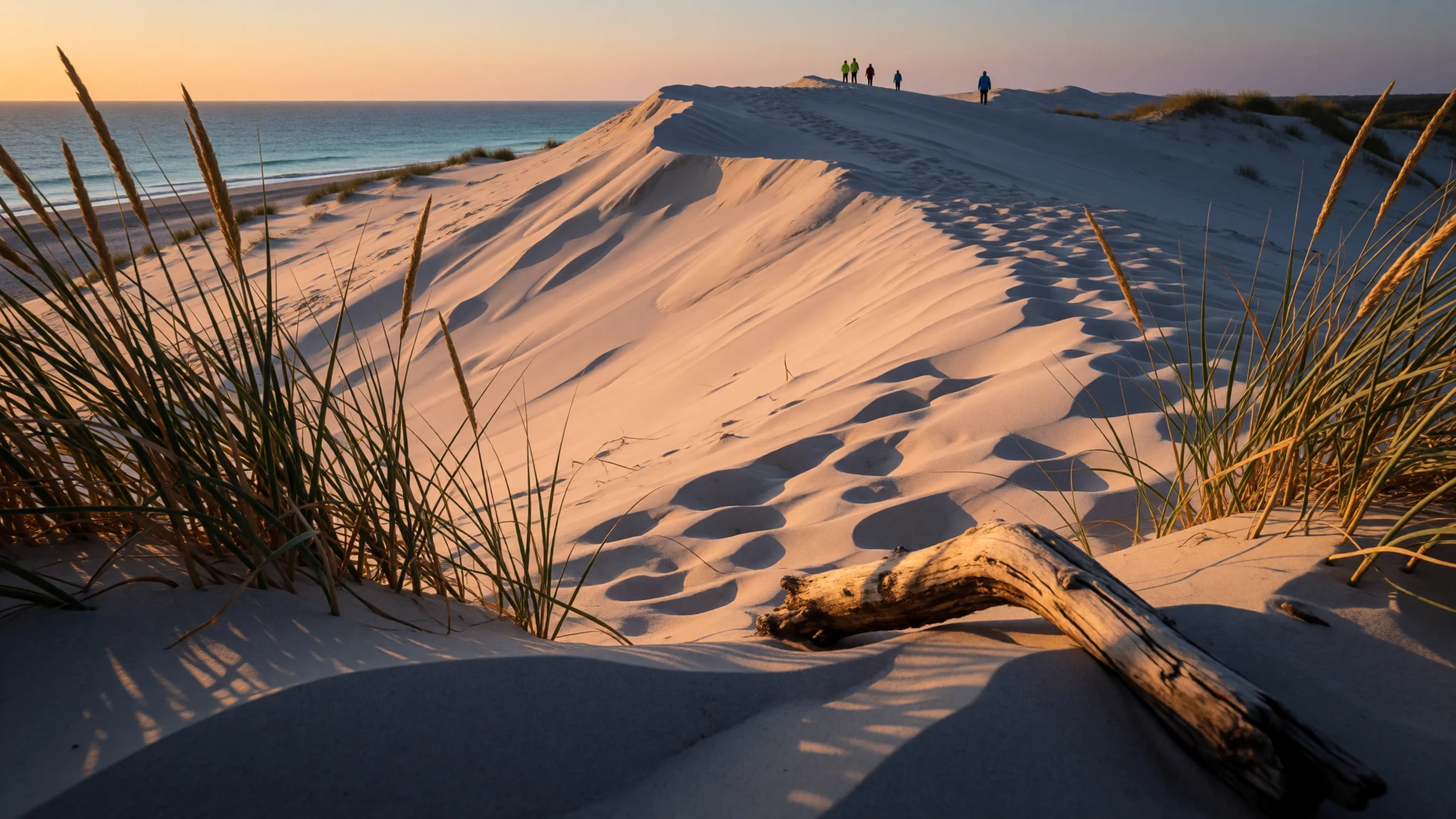
Słowiński National Park is northern Poland’s dune-and-wetland world, where sand still creeps and birds keep migrating through.
The place
Słowiński National Park (Słowiński Park Narodowy) sits on Poland’s Baltic coast in the Pomeranian Voivodeship, straddling the area between Łeba and Rowy. The coastline forms the park’s northern edge, with a measured stretch of 32.5 kilometres. This is a landscape shaped by the sea: in the past the area was a Baltic Sea bay, and over time sand dunes formed as waves and wind pushed material inland.
What makes Słowiński feel alive is that the dunes still move. As wind carries sand inland, dune ridges drift at a slow but noticeable pace of 3 to 10 metres per year, and some dunes rise to around 30 metres. The park’s highest point, Rowokol, is an especially good viewpoint for spotting the dune fields and the flatter wetlands behind them.
Water takes up about half the park’s area, with lake and river systems that include Łebsko and Gardno, plus smaller waters such as Dolgie Wielkie. Several rivers run through the park, including the Łeba and Łupawa. Forest is mostly pine, and there are also peat bog areas, so the scenery changes from open dunes to wooded patches and damp ground.
Wildlife is a major draw. The park sits on migrating bird routes, and limited human activity helps them stay. Birdlife is diverse, and you can also find mammals such as deer, wild pigs and hares. Even in summer, the best moments often come from quiet walking on marked paths rather than from big crowds.
Its story
The story of Słowiński National Park begins with an idea in 1946, when scientists gathered in Łeba to discuss protecting the area. The park itself arrived later: it was created in 1967, building on the recognition that this Baltic-coast landscape was changing in distinctive ways.
Słowiński’s terrain is essentially a record of coastal motion. The sea once occupied the region as a bay, then retreated, leaving behind sand that gathered into dunes. Wind continues to shift that sand, so the coastline you see today is still in the middle of a slow transition. Rowokol, the park’s highest point, gives one of the clearest perspectives on how dunes meet wetlands.
This is also a wetland-rich place, and the mix of water, forest and peat creates habitat for wildlife that depends on seasonal movement. Bird migration is central to why the park matters. In 1977, UNESCO designated the park a biosphere reserve as part of its Man and the Biosphere programme, adding international weight to local conservation efforts. The wetlands later received another layer of protection when the area was designated a Ramsar site in 1995.
The park’s name links directly to people who used to live nearby. It comes from the West Slavic group known as the Slovincians, who lived in an area described as swampy and difficult to access at the edge of Lake Leba. Today, the open-air museum in Kluki keeps part of that everyday life visible, so the landscape isn’t only about dunes and water—it’s also about human adaptation.
What to see
- Wydma Łącka — Near Łeba (coastal access)
Wydma Łącka is a dune viewpoint in the park, useful for taking in the dune fields and the Baltic coast. It sits around 30 metres above the sea and makes a straightforward option for an easy morning climb.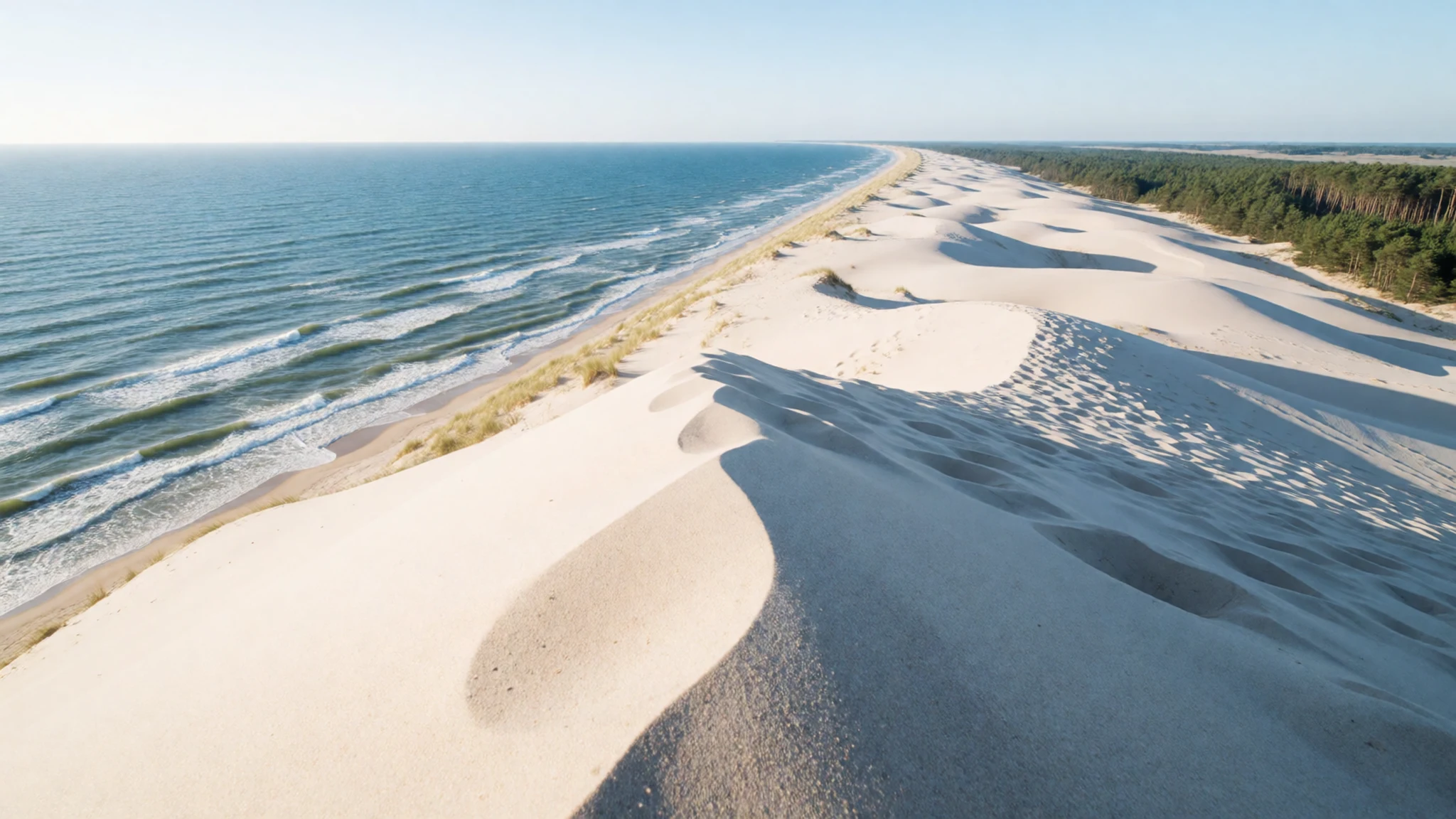
- Czołpino Lighthouse — Czołpino area (lake-and-coast views)
Czołpino Lighthouse is a landmark inside the park and a good spot to look out over the surrounding landscape. It’s a stop where the setting does the explaining: dunes nearby, water not far away.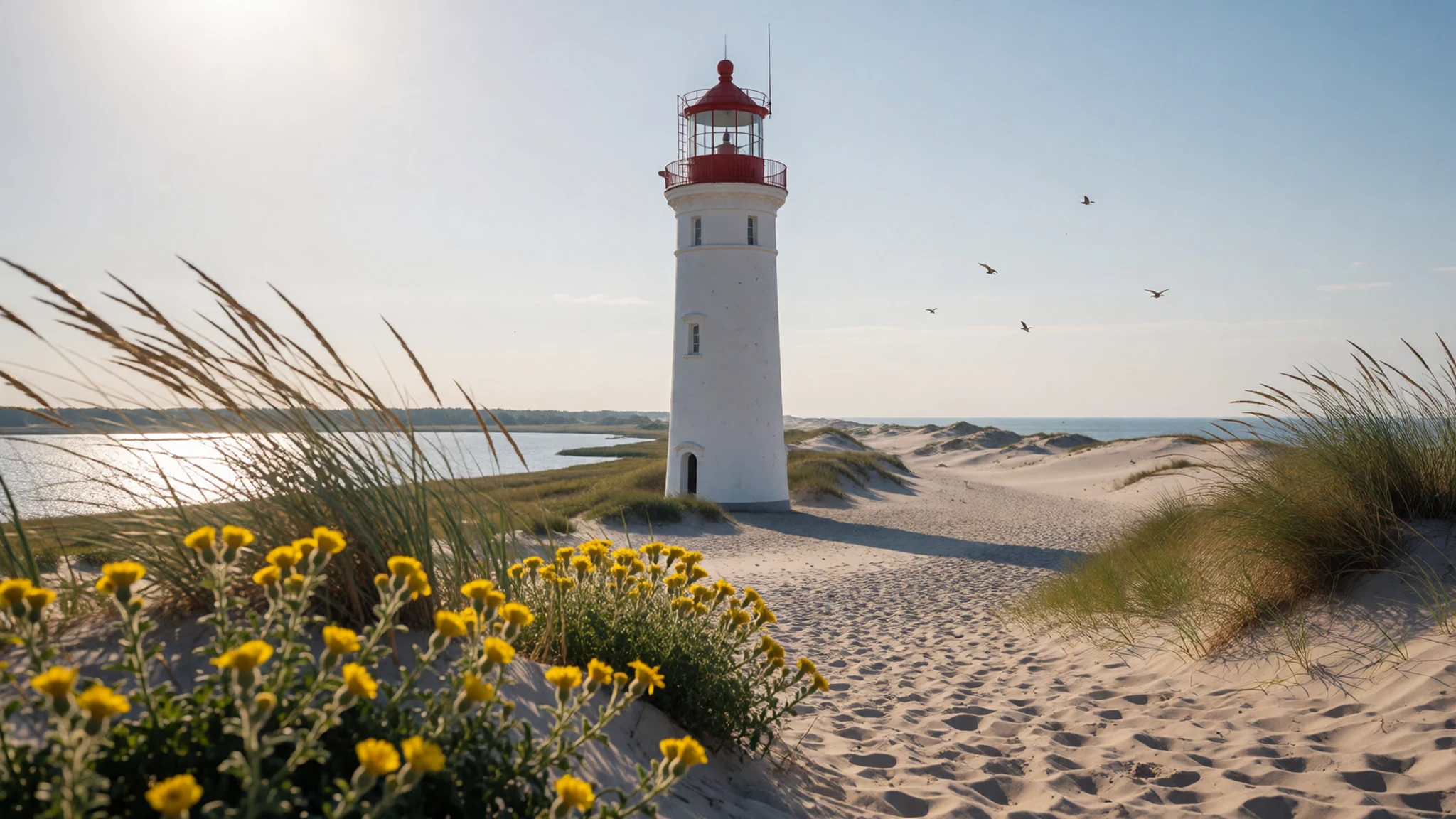
- Submerged Forest — Near the receding beach zones
The Submerged Forest is a landscape surprise: buried or submerged segments of woodland in the Baltic Sea that can re-emerge when conditions shift. It’s changeable enough that it may be partly covered again, so timing and recent weather matter.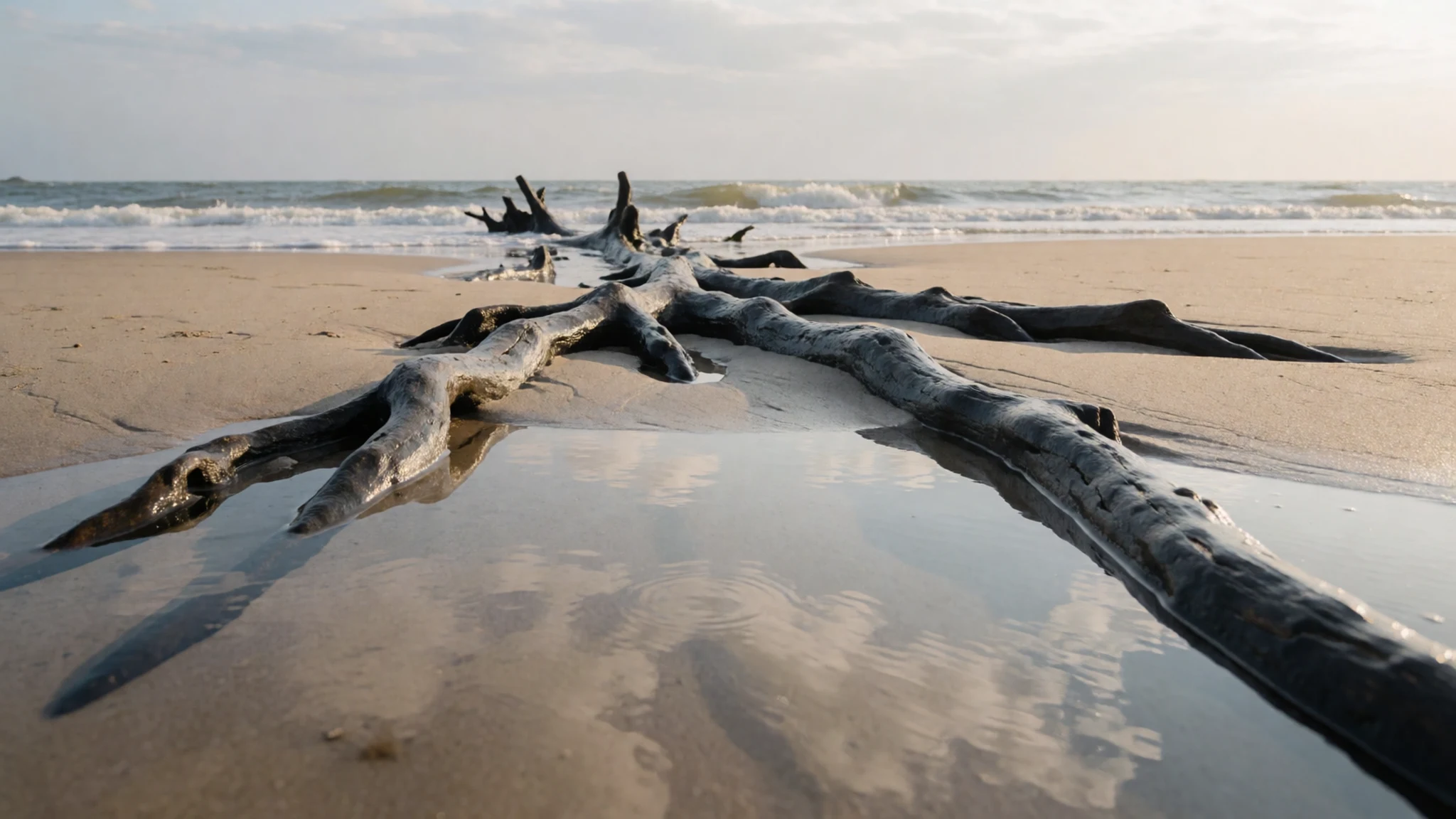
- Slovincian Countryside Museum — Kluki (Slovincian area)
The Slovincian Countryside Museum is where you connect the natural park to local history. Expect exhibits centred on traditional life, architecture and agriculture in the surrounding countryside—helpful context for understanding why this region was once hard to reach and how people made use of it.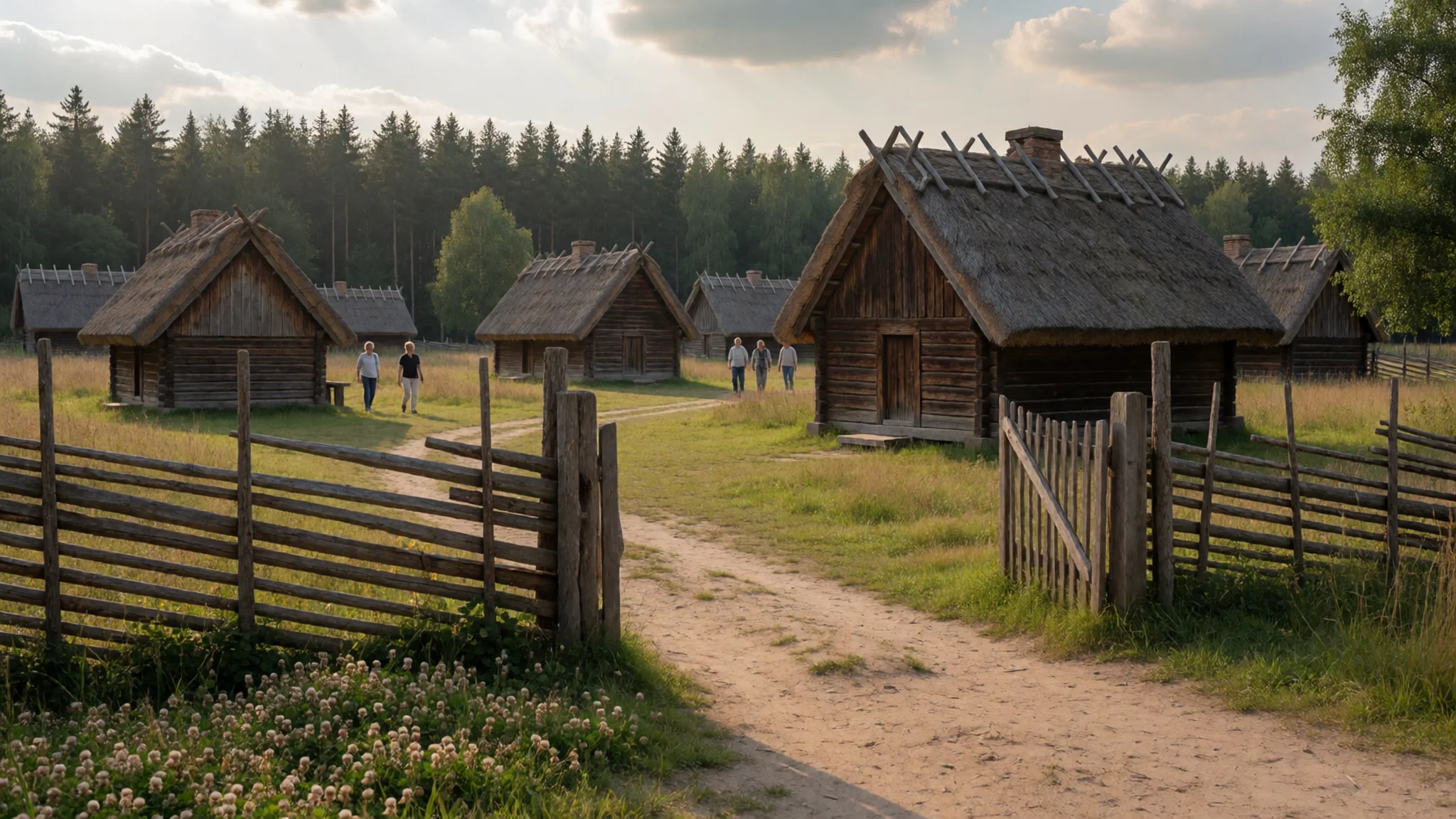
- Great Swamp — Peatland wetlands (birdwatching)
Great Swamp is a marshy, peatland-feel area that’s good for birdwatching. Migratory birds use the habitat, and it’s a good place to slow down and watch rather than rush scenery. If you’re here in quieter hours, the bird activity feels more noticeable.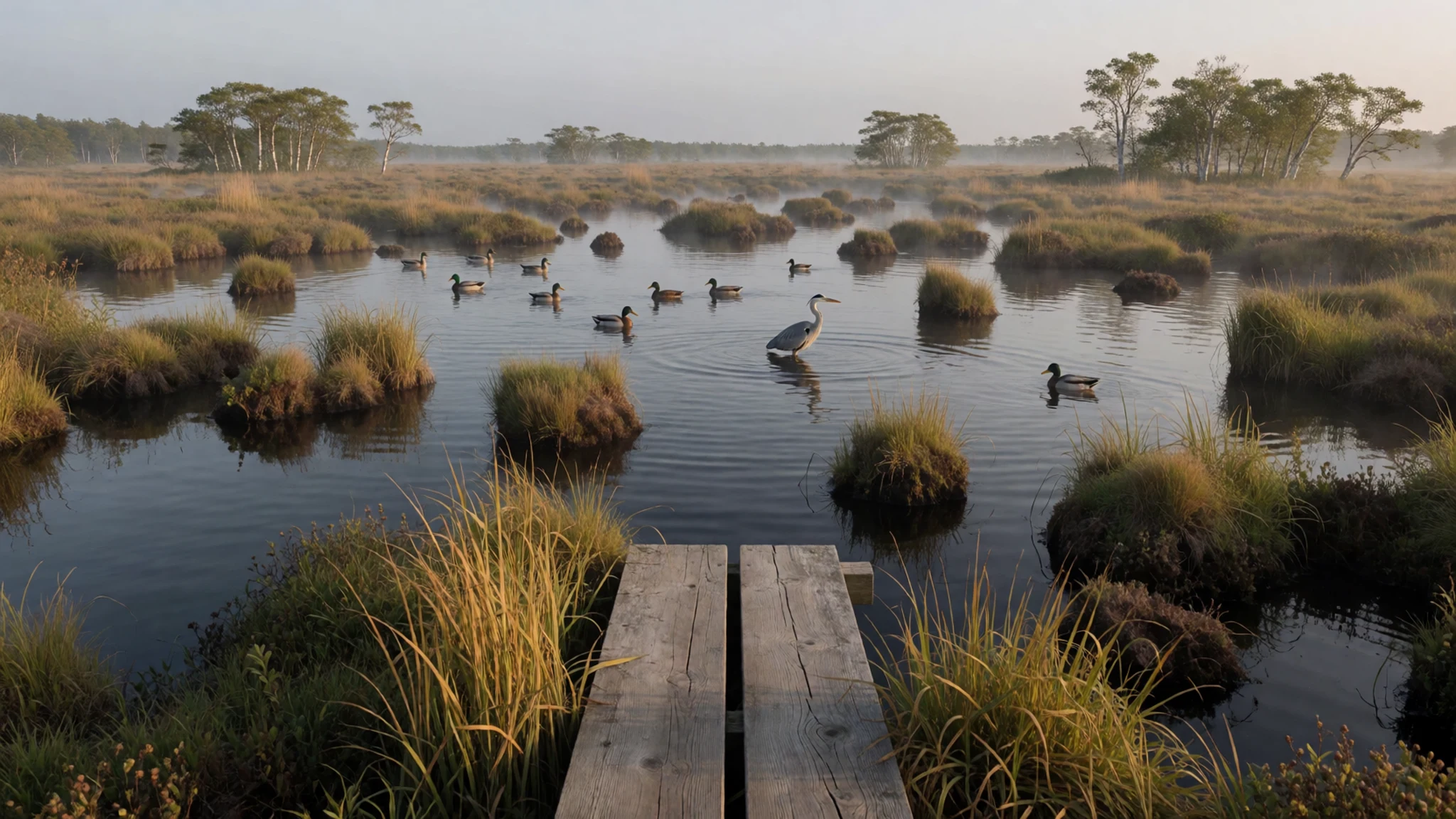
Culture
Słowiński National Park is one of those places where the rules are part of the experience: moving dunes, fragile vegetation, and wildlife that relies on limited disturbance. Human activity is intentionally restricted, which is why the park works so well for migrating birds.
On the ground, the etiquette is practical. Stick to marked paths rather than cutting across dune slopes or walking through forest. Sand and vegetation recover slowly, and the dunes themselves can be affected by trampling. If you’re taking photos, keep an eye on where your feet are going—busy paths are not the same thing as safe ground away from them.
Insects are another reality of the park, especially around wetter zones, so it’s worth planning for repellent before you head out. If you’re visiting the museums, the tone is usually calm and educational, but you’ll still want to keep noise down and give other visitors space around exhibits and viewing areas.
Visitor etiquette: stay on paths, don’t walk on dunes or forest off-trail, and use insect repellent near wetlands.
What to wear
In Słowiński National Park, the dress code is less about tradition and more about terrain, wind and water. Even in warmer months, coastal air can feel cooler once you’re walking through open dunes, and damp spots around lakes and peatland can mean heavier legs and colder footing.
Traditional clothing in the region is tied to the Slovincian story you’ll see in Kluki’s open-air museum, but day-to-day visitors won’t need to dress “in costume”. What people wear now across Łeba, Rowy and the surrounding countryside is typically casual: breathable layers, practical trousers/jeans, and waterproof outerwear when the weather turns. In summer, lightweight tops are common, but you’ll still benefit from a layer that blocks wind.
For visiting the park: wear shoes with solid grip for sand and uneven ground, and consider long socks where dunes and scrub brush your ankles. A hat helps against sun and wind, and bring something waterproof for coastal drizzle. If you’re heading out near water and in higher-insect areas, long sleeves can make the repellent routine easier while keeping skin comfortable.
What to eat
- Pierogi (stuffed dumplings) — Łeba town centre
Pierogi are the easiest go-to during a Baltic trip, and you’ll find them widely around seaside towns like Łeba. Look for them at local eateries or at simple dining counters where they’re served warm, often with savoury fillings.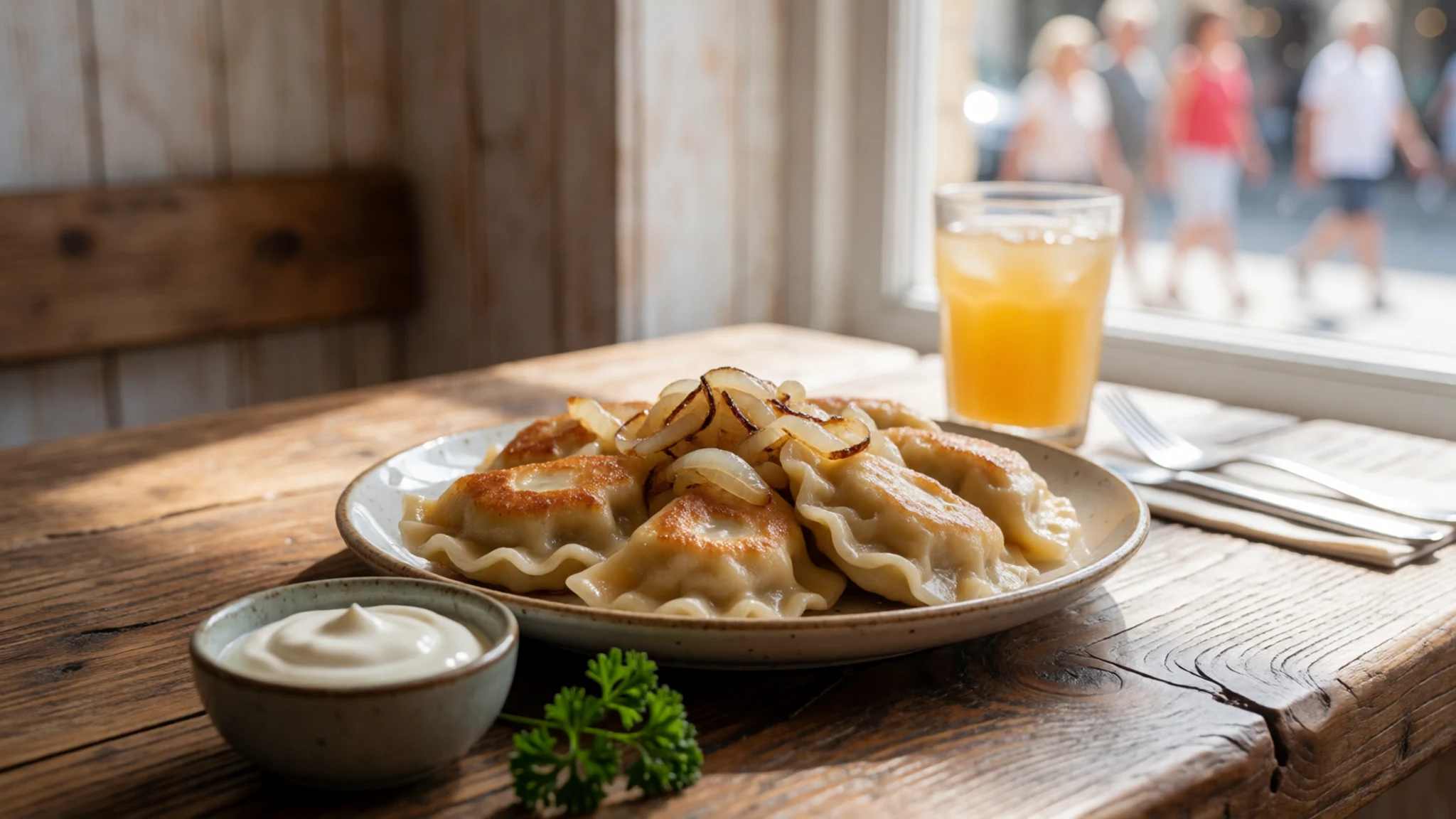
- Barszcz (beet soup) — Łeba and Rowy (restaurants)
Barszcz is a comforting, tangy beet soup that fits cooler dune mornings. It’s commonly available at Polish restaurants and casual lunch stops in the Łeba–Rowy area, and it works well alongside hearty bread when you’re getting back from walking.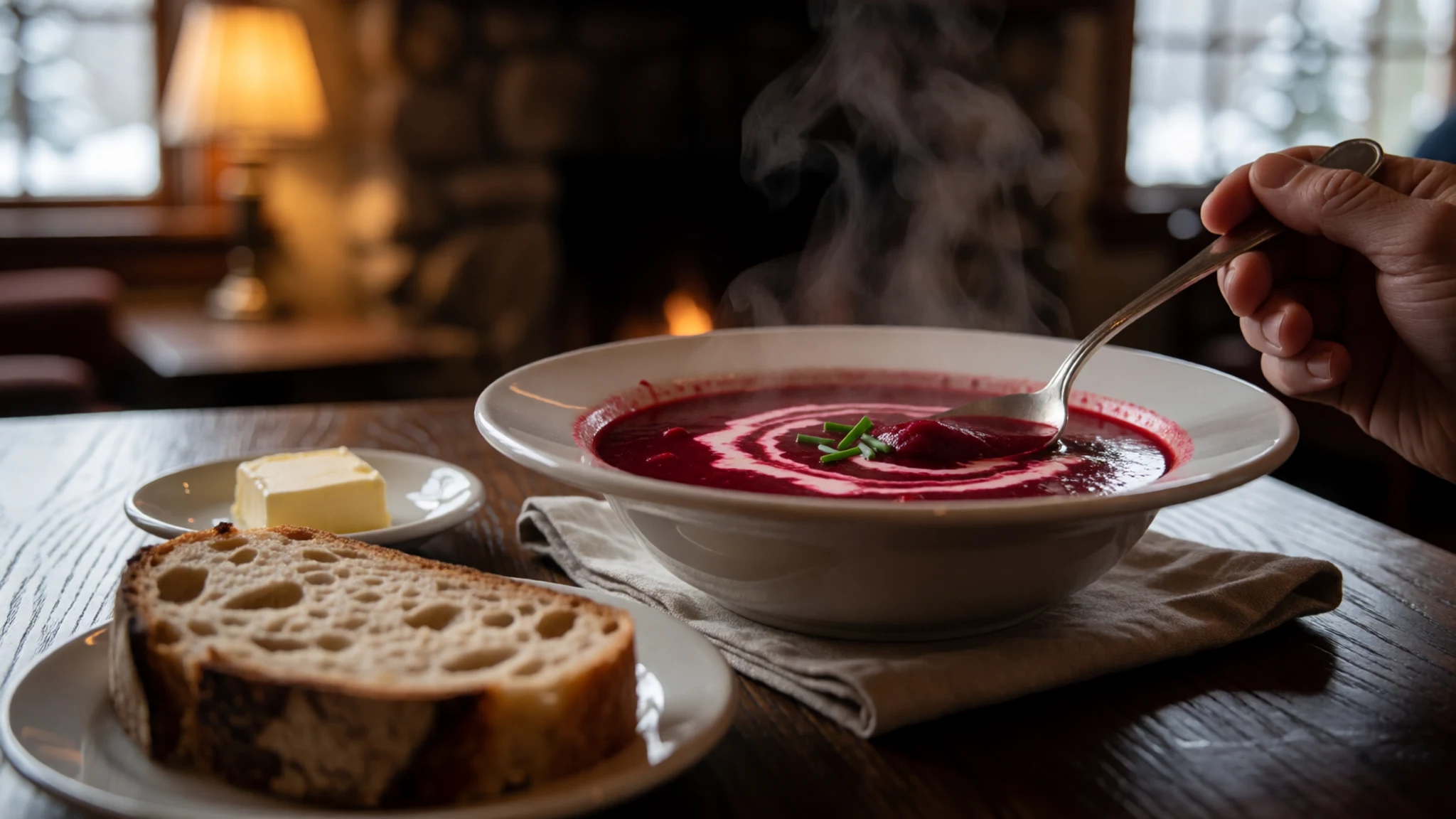
- Smażony ryby (fried fish) — Seafront eateries in Łeba
With the Baltic nearby, fried fish is a popular choice when you want something filling after a windy walk. You’ll typically see it as a daily special or a standard dish at local seaside eateries, often with potatoes and a simple salad. - Kaszanka or grilled meats — Town restaurants in Łeba/Rowy
If you’re after a properly Polish, warming meal, look for grilled meats or kaszanka. These dishes turn up in everyday menus rather than just tourist spots, especially in smaller town restaurants where locals eat after work. - Seasonal berries and cakes — Cafés around Łeba
For something lighter between long walks, try Polish cakes or berry-based desserts when they’re in season. In Baltic resort towns, you’ll often find them in cafés, with the menu changing by season and supplier.
Plan it
Best time. June to August for the warmest conditions, with the wettest period in July; February to April for the coldest-to-comfortable shoulder season, with lower rainfall than summer. If you dislike soggy paths, it’s best to avoid the wettest mid-summer spell.
How long. 2–3
Getting there. Get to Łeba first: take the minibus from Lębork railway station to Łeba, then walk to the park entrance about 3 km west of Łeba. From the park access point, follow the marked cycling and footpaths towards the dunes.
Budget. mid
Tips
- Start early in the day to beat peak-season foot traffic near the main dune areas.
- Bring insect repellent—mosquitoes can be a real problem around the wetlands.
- Stay on paths; it’s illegal to walk on dunes and forest on your own.
- If you enjoy covering ground efficiently, consider renting a bicycle in Łeba before heading to the dunes.
- Pack water and a light windproof layer for Baltic weather swings.
Etiquette
- Stay strictly on marked routes rather than cutting across dune slopes.
- Keep noise down around birdviewing areas so wildlife can carry on undisturbed.
Nearby
Sources
- Wikidata Q1572525 (CC0)
- Wikipedia (rev 1340221304) (CC BY-SA 4.0)
- Wikivoyage (rev 5309939) (CC BY-SA 4.0)
- Photo photos/01-s-owi-ski-park-narodowy-1.jpg (CC BY 3.0)
- Photo photos/02-2-spn-01.jpg (CC BY-SA 2.5)
- Photo photos/03-signpost-in-s-owi-ski-national-park.jpg (CC BY-SA 4.0)
- Photo photos/04-dune-in-s-owi-ski-national-park-01.jpg (CC BY-SA 4.0)
- Photo photos/05-dune-in-s-owi-ski-national-park-02.jpg (CC BY-SA 4.0)
- Photo photos/06-dune-in-s-owi-ski-national-park-03.jpg (CC BY-SA 4.0)
- Photo photos/07-dune-in-s-owi-ski-national-park-04.jpg (CC BY-SA 4.0)
- Photo photos/08-dead-trees-in-s-owi-ski-national-park-01.jpg (CC BY-SA 4.0)


