Sintra
Sintra, Portugal
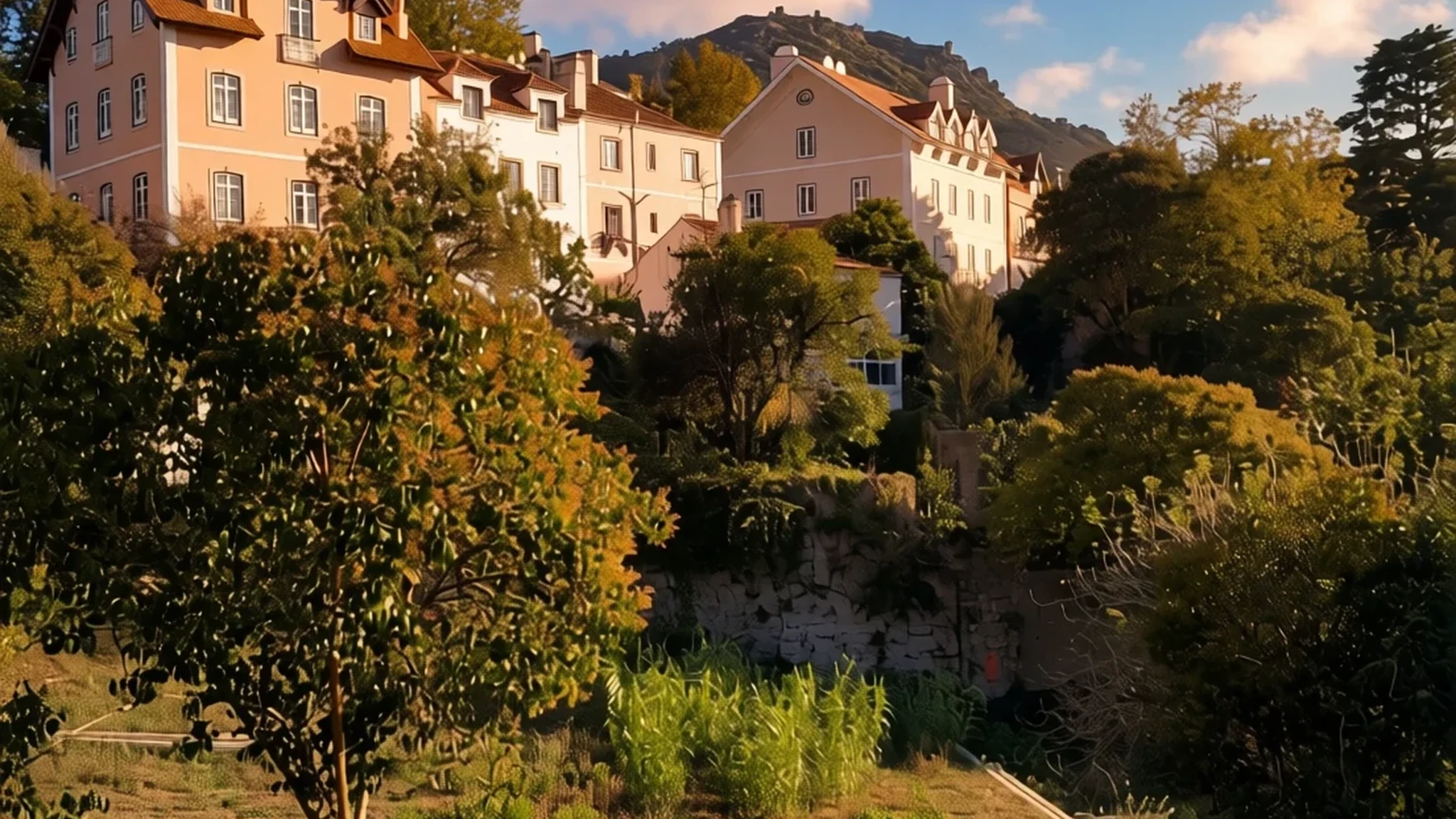
Sintra is a hillside town of romantic palaces, forest paths and sea mist, a short train ride from Lisbon.
The place
Sintra sits on the slopes of the Sintra Mountains, a short way inland from the Atlantic coast of Portugal, and it is close enough to Lisbon that many visitors make it a day trip. The town itself is small and steep, with narrow streets of pale houses, tiled facades and cafés that fill up by late morning. Around it the land rises into wooded hills, and the hills are where most of the famous places are: palaces perched on crags, castle walls strung along a ridge, and gardens full of grottoes and ferns.
About 385,000 people live in the wider municipality, which makes it one of the more densely settled parts of the country. Yet the old centre keeps a village feel, partly because so many of those arriving are visitors. The town sits at roughly 193 metres above sea level, so the air is often cooler and damper than in Lisbon, and cloud can roll in quickly off the hills. Much of the surrounding land is protected within a wide natural park that runs down towards the coast.
Sintra attracted royals and wealthy families who wanted a cooler base, and that history shows in the architecture. The mix of Romantic, Gothic and Moorish-inspired styles is unusual, and the historic centre has been recognised as a World Heritage Site for its palaces, estates and gardens. Expect crowds at the big sites from mid-morning and a steady stream of buses on the hill road.
Its story
People have lived in the Sintra hills for a very long time. Stone tools and pottery from the earliest periods have turned up at several sites around the foothills, including places near the old Moorish castle, and later Neolithic and Chalcolithic settlements left decorated vessels and flint blades behind. Bronze Age remains are scattered across the mountains too, suggesting a community that worked the high ground and the valleys for centuries.
The most celebrated find is a gold neck-ring from the middle Bronze Age, unearthed close to the town in the late nineteenth century. It is known as the Sintra Collar and now sits in the British Museum in London, which is an odd thing to hold in mind while walking the hillside where it was found.
Under Moorish rule the hilltop fortress grew into a defended settlement. When Christian kingdoms took the area, the town became a royal retreat. Kings built a chapel in the 14th century, and the palace around it expanded over generations into the summer residence of the Portuguese court. It stayed in royal use until the republican revolution of 1910 ended the monarchy.
The nineteenth century transformed Sintra again. Wealthy owners, some of them foreign, bought estates and hired architects to build fantasy palaces and landscaped gardens. Romantic and revivalist styles were layered over older walls, and the result is the mix of Gothic, Moorish and Renaissance forms that still defines the skyline today.
What to see
- Pena National Palace — Hilltop above the town
Pena National Palace is the showpiece of the hills: a Moorish-style Romantic palace in bright reds and yellows, set on a crag above the town. Inside you can see a good collection of furniture and the royal apartments. Walking up from the centre takes about an hour and is steep, so most people take a bus instead. Arrive early, as queues build after mid-morning.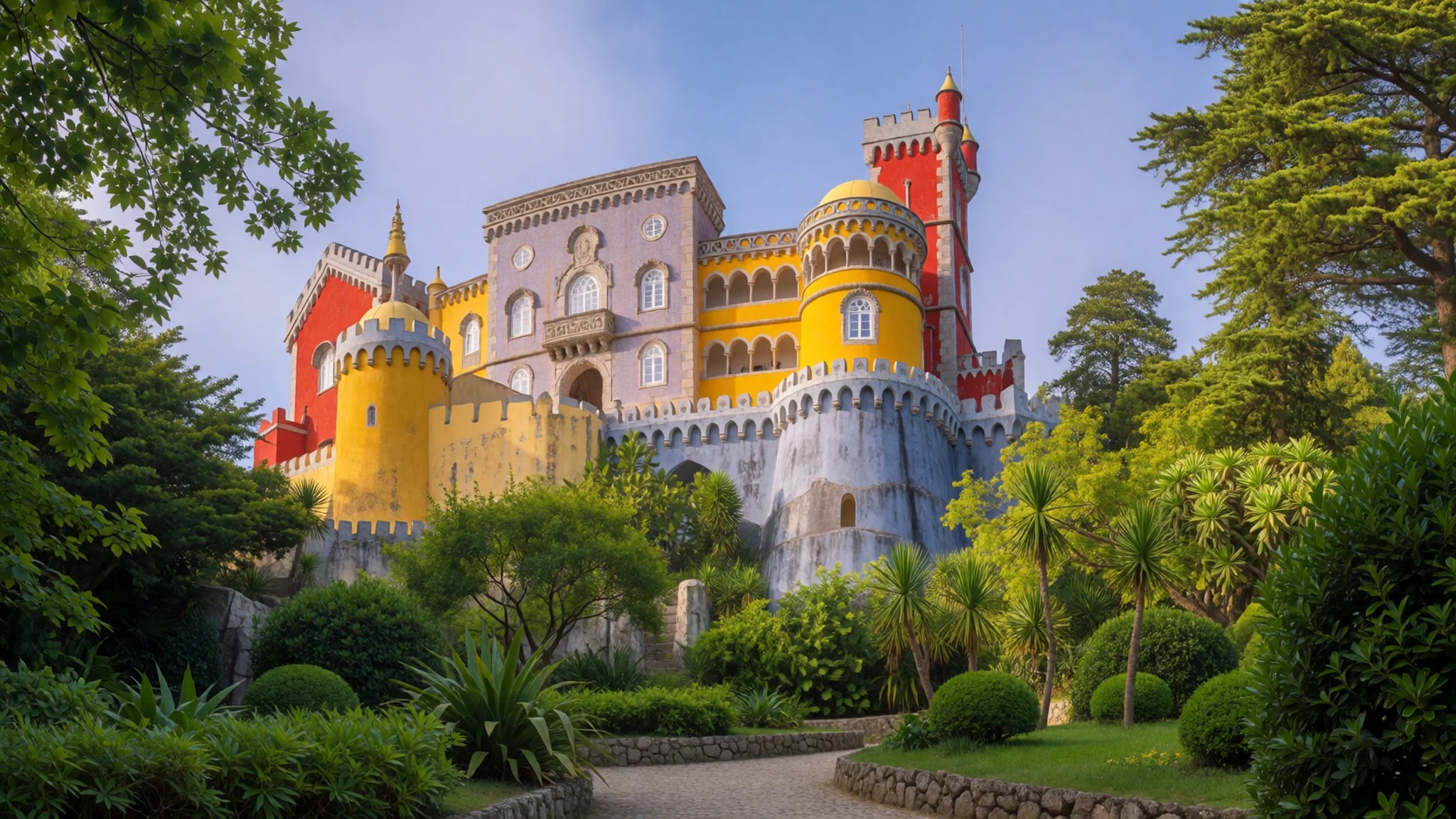
- Moorish Castle — Ridge above the old town
The Moorish Castle is a ruined fortress whose walls wind along a ridge above the town. Its ramparts give wide views over the forest, the roofs of Sintra and, on clear days, the Atlantic coast. The walls date from the 10th century onwards, when Moorish builders held the site, and the ruins are best reached on foot, so bring sturdy shoes for uneven stone paths.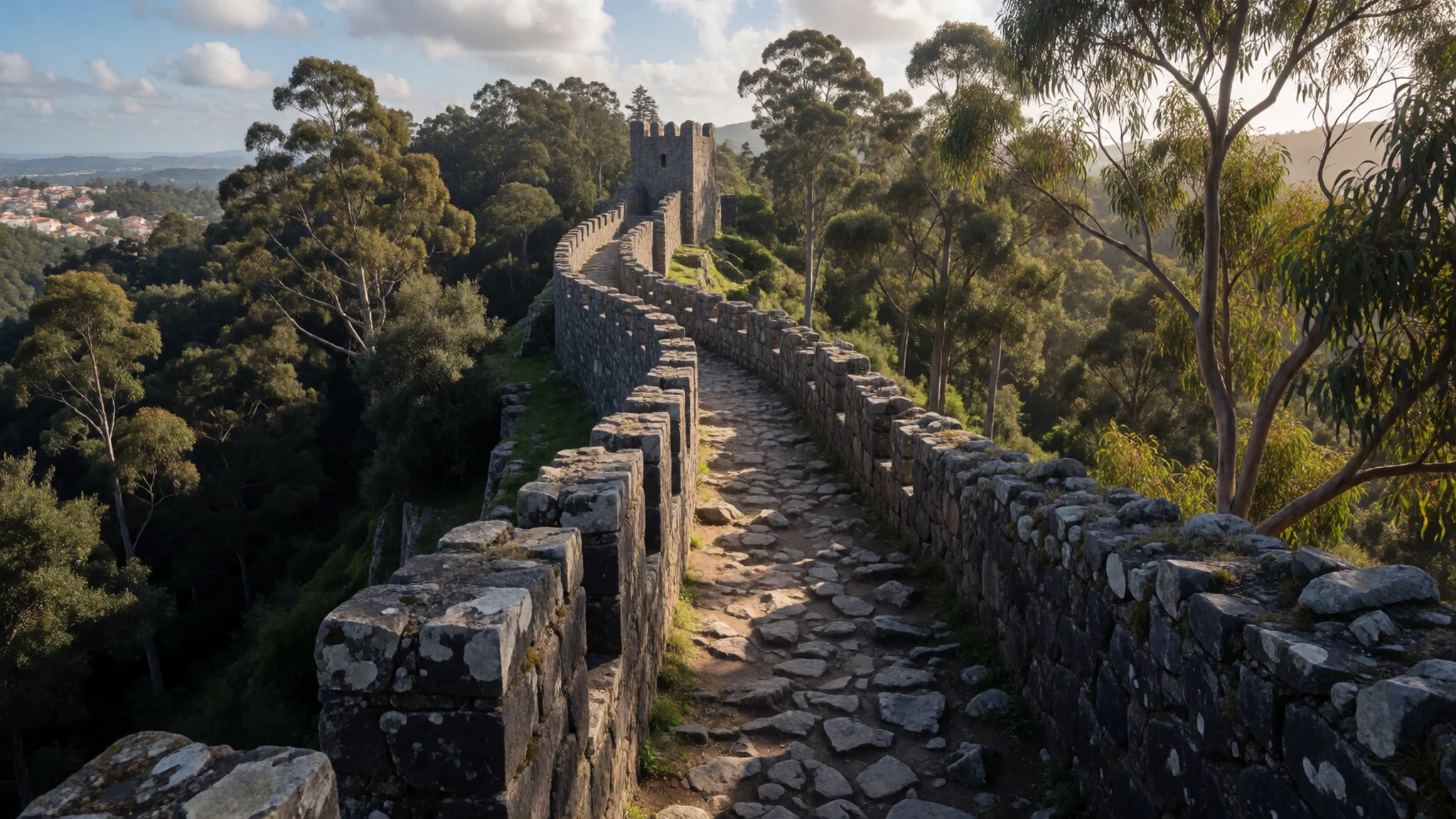
- Sintra National Palace — Old town centre
Sintra National Palace sits in the middle of the old town, a short walk from the centre. It was the summer estate of the Portuguese royal family for centuries, until the 1910 revolution. The oldest surviving part is a chapel from the 14th century, and the rooms show tiled walls and layered additions from different reigns. Allow an hour or more for the rooms.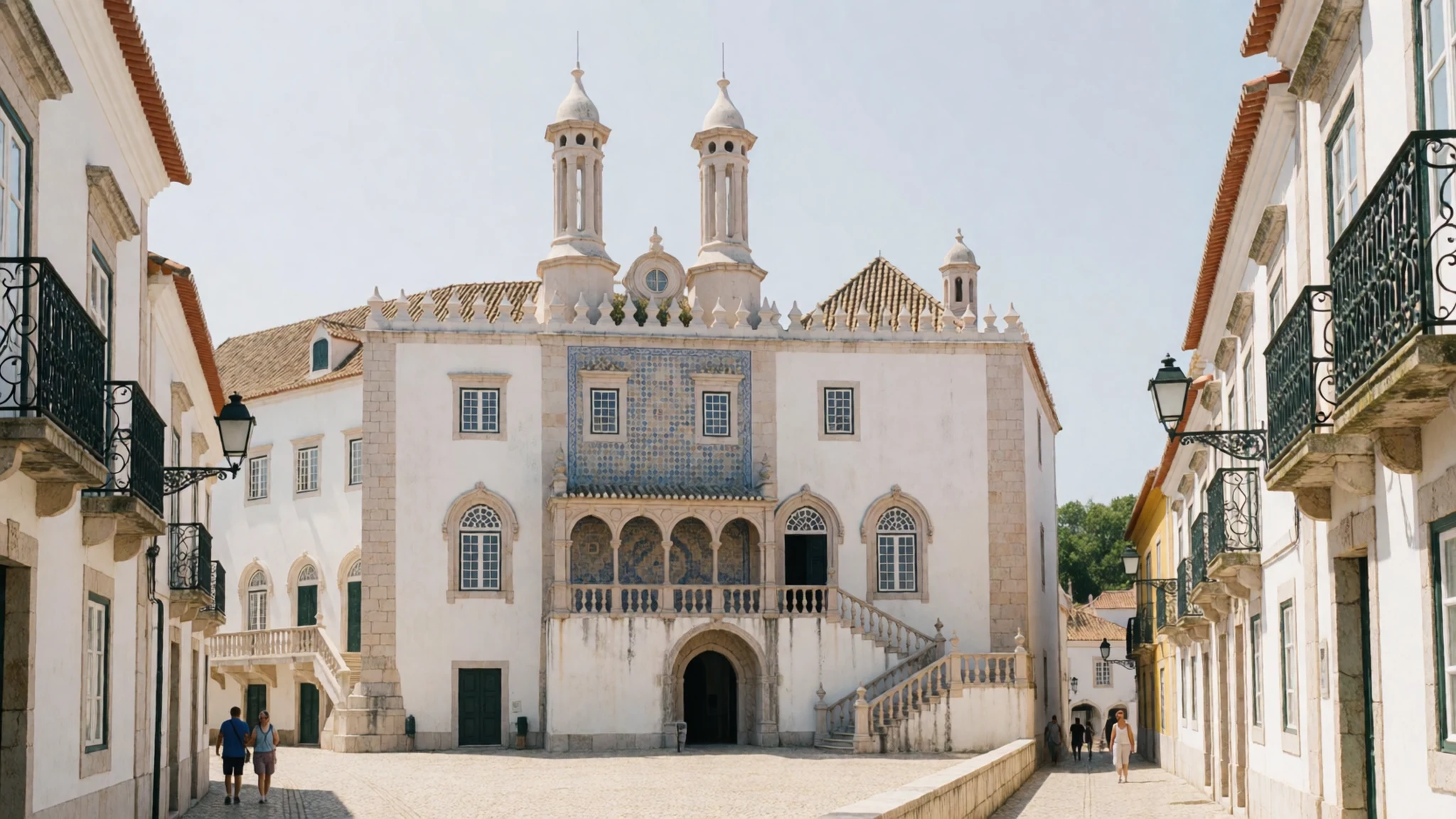
- Quintinha de Monserrate — Monserrate estate, west of the town
The Quintinha de Monserrate estate has a farmyard where you can learn about traditional local farming, a rare change of pace from the palaces. Its present form was shaped in the 19th century by Francis Cook, a British industrialist. The nearby palace is a romantic neo-gothic building with Moorish-inspired details, set within lush gardens.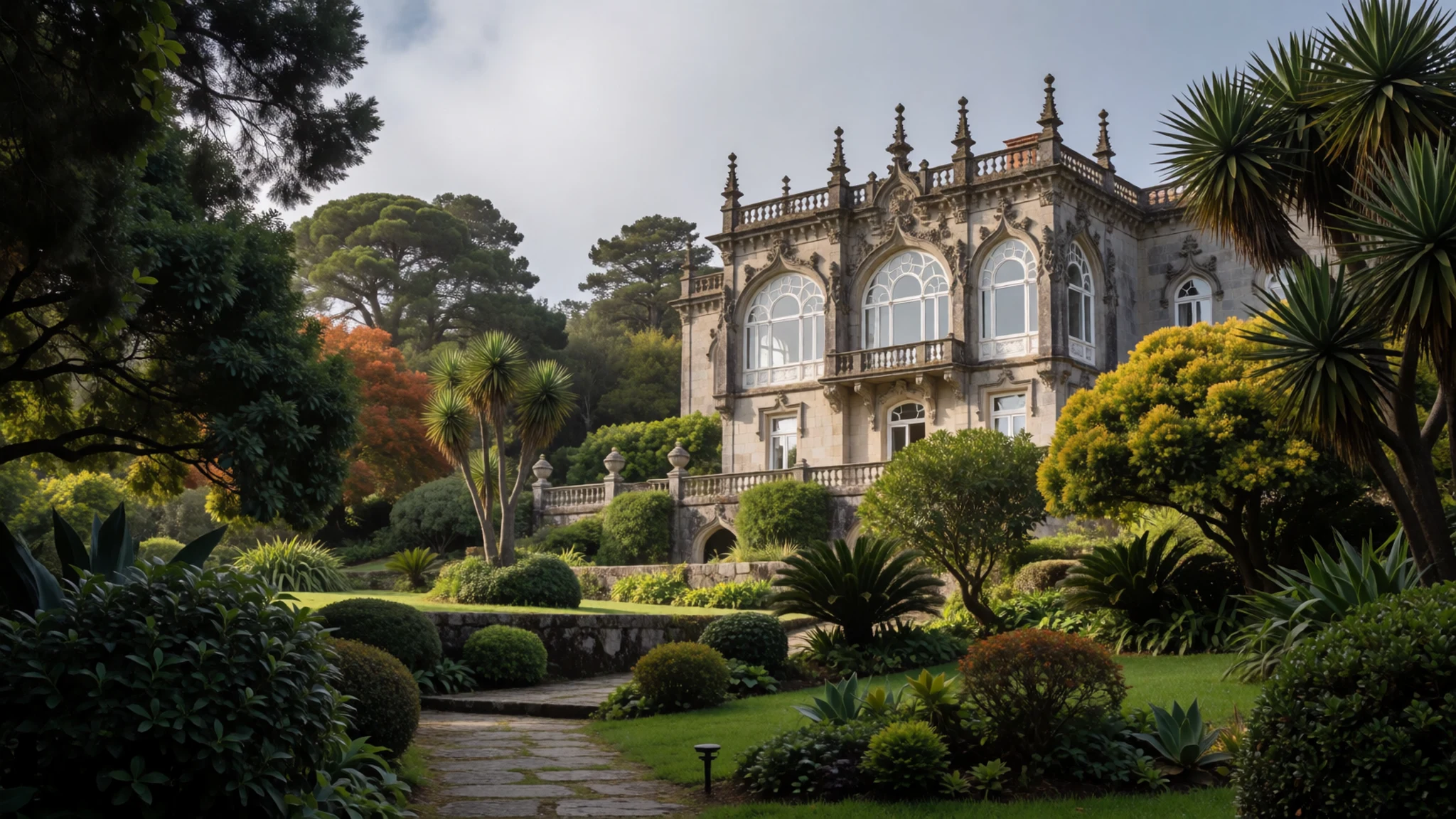
- Convento dos Capuchos — Western side of the hills
The Convento dos Capuchos is a secluded abbey in the hills where monks once lived closely among the trees. It is a useful contrast to the palaces: rooms are small, the walls are close around you, and the trees press in from every side. The site is quiet, so keep voices low.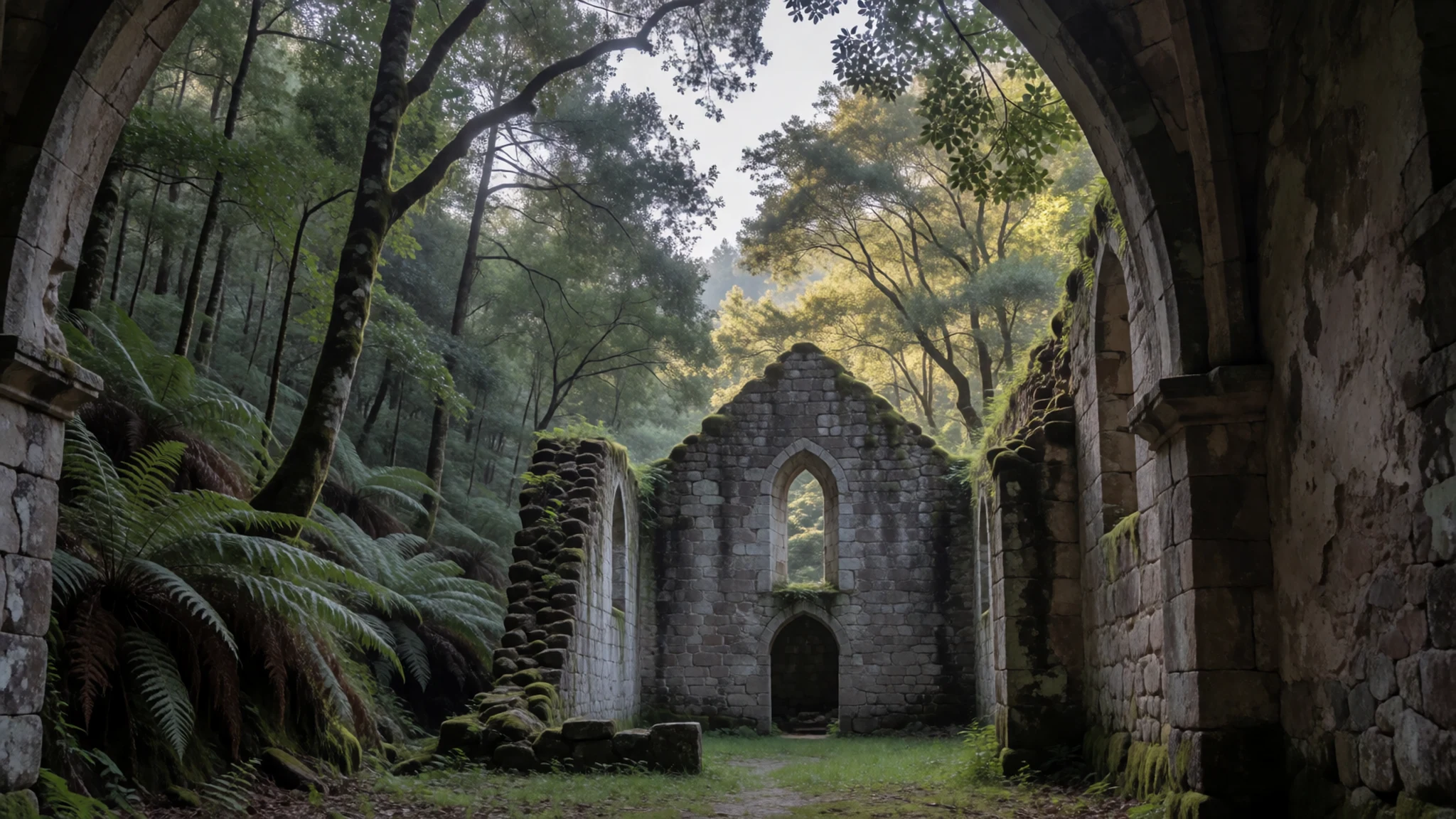
Culture
Sintra is a working Portuguese town as well as a showcase, so its cafés open early for coffee and pastries, and residents share the steep streets with visitors. Many of the palaces and estates were built as private residences for royalty and wealthy families, which means their rooms feel lived in rather than staged. Portuguese is the everyday language, although staff at the larger sites and in tourist-facing cafés usually speak English. A simple greeting in Portuguese, such as bom dia before noon, goes a long way in small shops and bakeries. Rounding up a bill is common in cafés and restaurants, and a small tip is appreciated but not required. Expect the big sites to be busy from mid-morning, and queue patiently at ticket windows, where lines move slowly. Photography rules differ from room to room and flash is usually banned, so follow the posted signs closely. In chapels and cloisters, keep your voice low, and never climb on walls or garden structures for a better photograph.
What to wear
Sintra does not have a costume of its own in the way some rural Portuguese regions do, so any traditional dress you see comes from wider Portuguese folk custom. Those costumes were usually made at home from wool, linen and cotton, with embroidered aprons, dark skirts and woollen shawls worn for festivals and church days. Embroidery and simple woven cloth were common in household linen, and you will see fine textile work in the palace interiors, in hangings and upholstery.
Locals now dress much as people do in Lisbon. Day to day that means jeans, cotton tops, light jackets and trainers, with heavier coats in winter, because the hills are cooler and damper than the coast below. Older residents still wear dark clothing for church and funerals, and you will notice more formal dress at weddings and local celebrations.
For a visit, dress in layers. The weather can change quickly as mist rolls off the hills, so bring a light waterproof and something warm for higher terraces. Choose shoes with good grip, because many paths around the palaces are steep, uneven and slippery after rain. For religious sites, cover shoulders and knees, and avoid very short shorts or vests. A sun hat and water are useful in summer, when the lower town can feel warm and still.
What to eat
- Queijadas de Sintra — Pastry shops and long-standing coffee houses in the old town
Small cheese-and-egg tarts with a soft, sweet filling and a thin pastry shell. Sintra's version is made with fresh cheese, sugar and eggs, and bakeries sell them by the box. Buy a few to eat warm with coffee on a bench near the palace.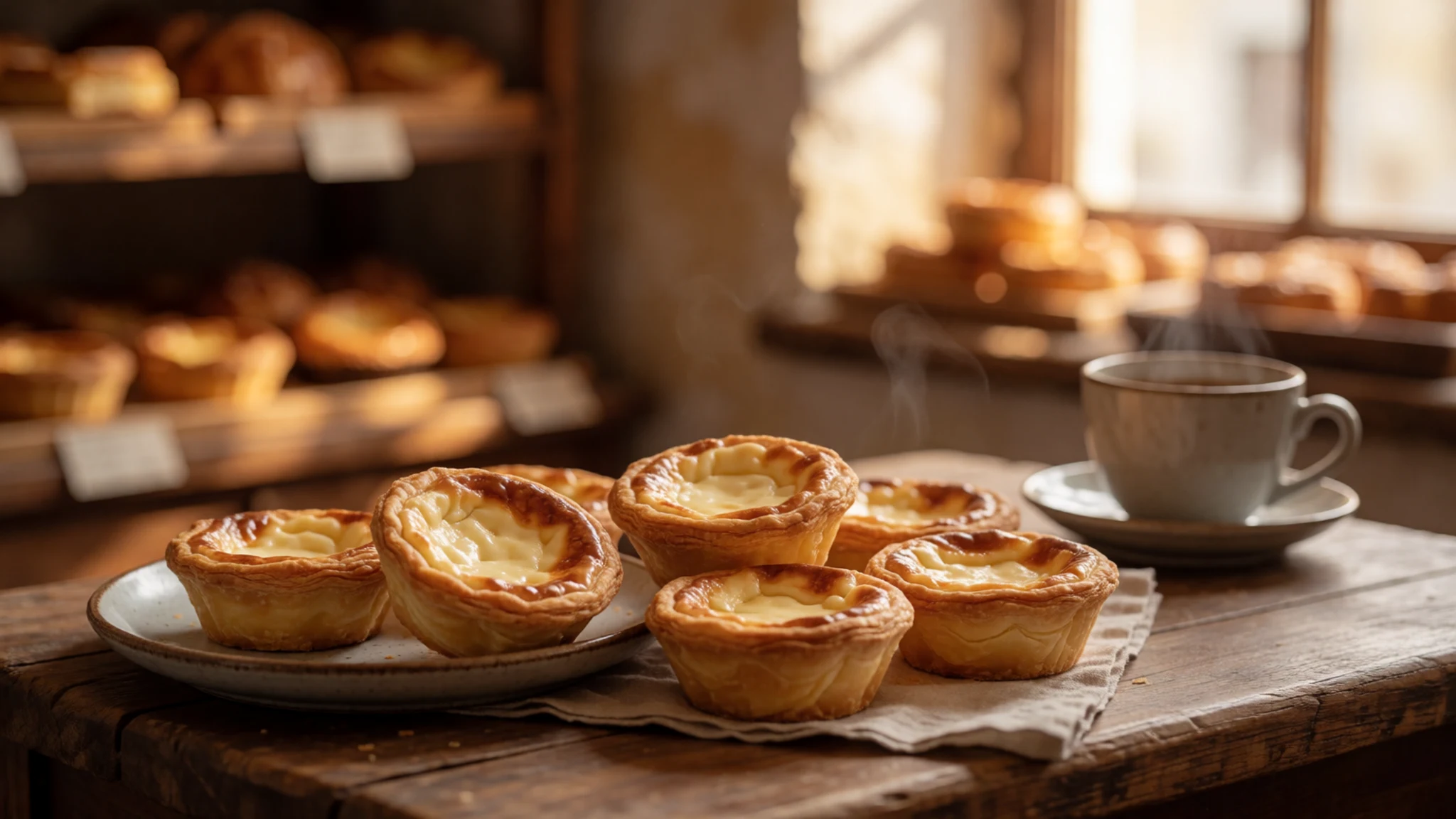
- Travesseiros — Coffee houses near the palace square
Pillow-shaped pastries of thin, flaky dough wrapped around a sweet almond and egg filling. They are a Sintra speciality, sold alongside queijadas, and are best eaten fresh on the day they are baked. Ask for one with your morning coffee, then pick up a box to take home.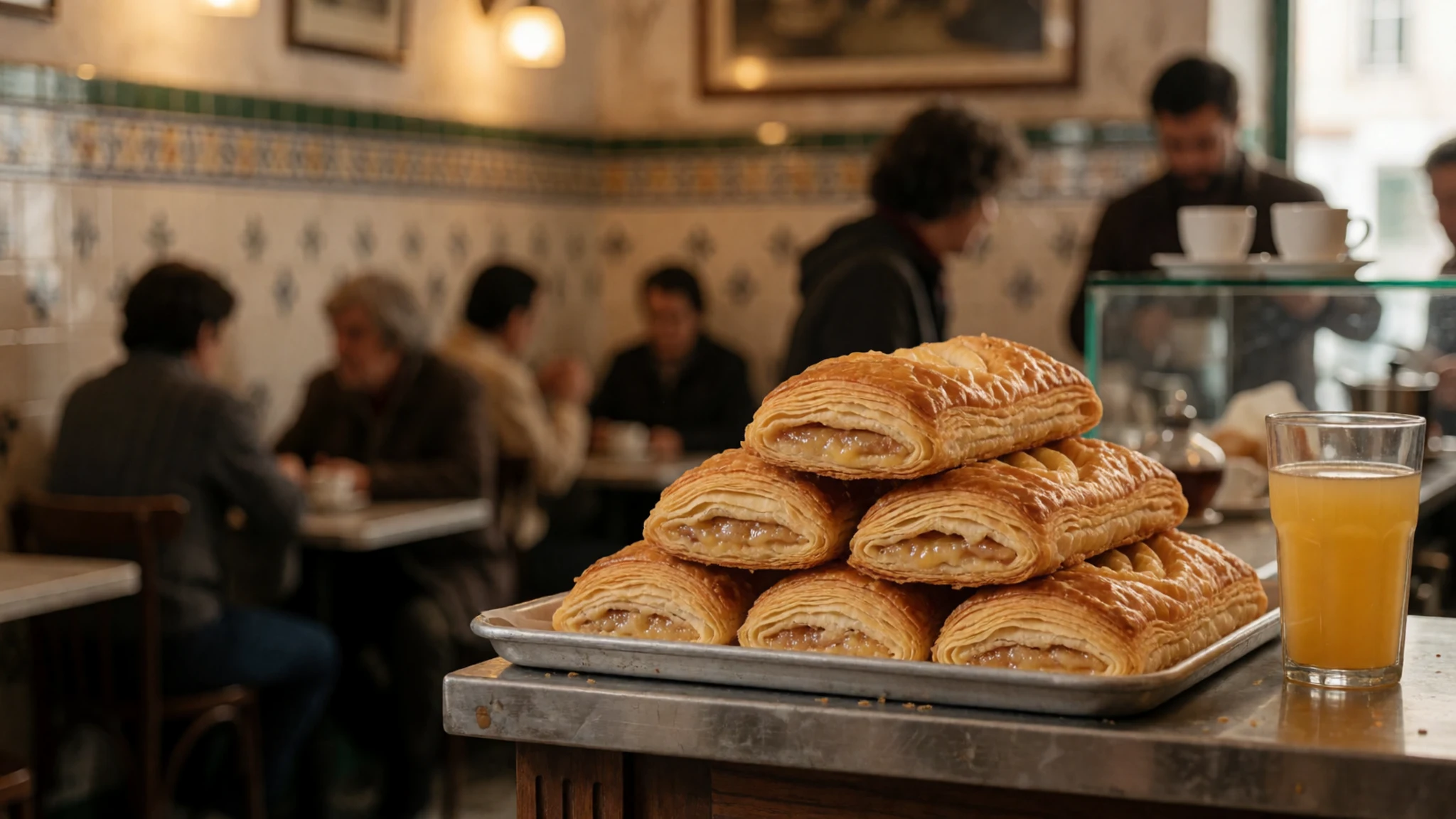
- Bacalhau à brás — Small eateries by the bus and rail stations
Shredded salt cod fried with thin straw potatoes and scrambled egg, with onion and parsley folded through. It is a classic Portuguese dish and a good choice if you want something hearty. Look for it on the menu of small eateries near the transport hub.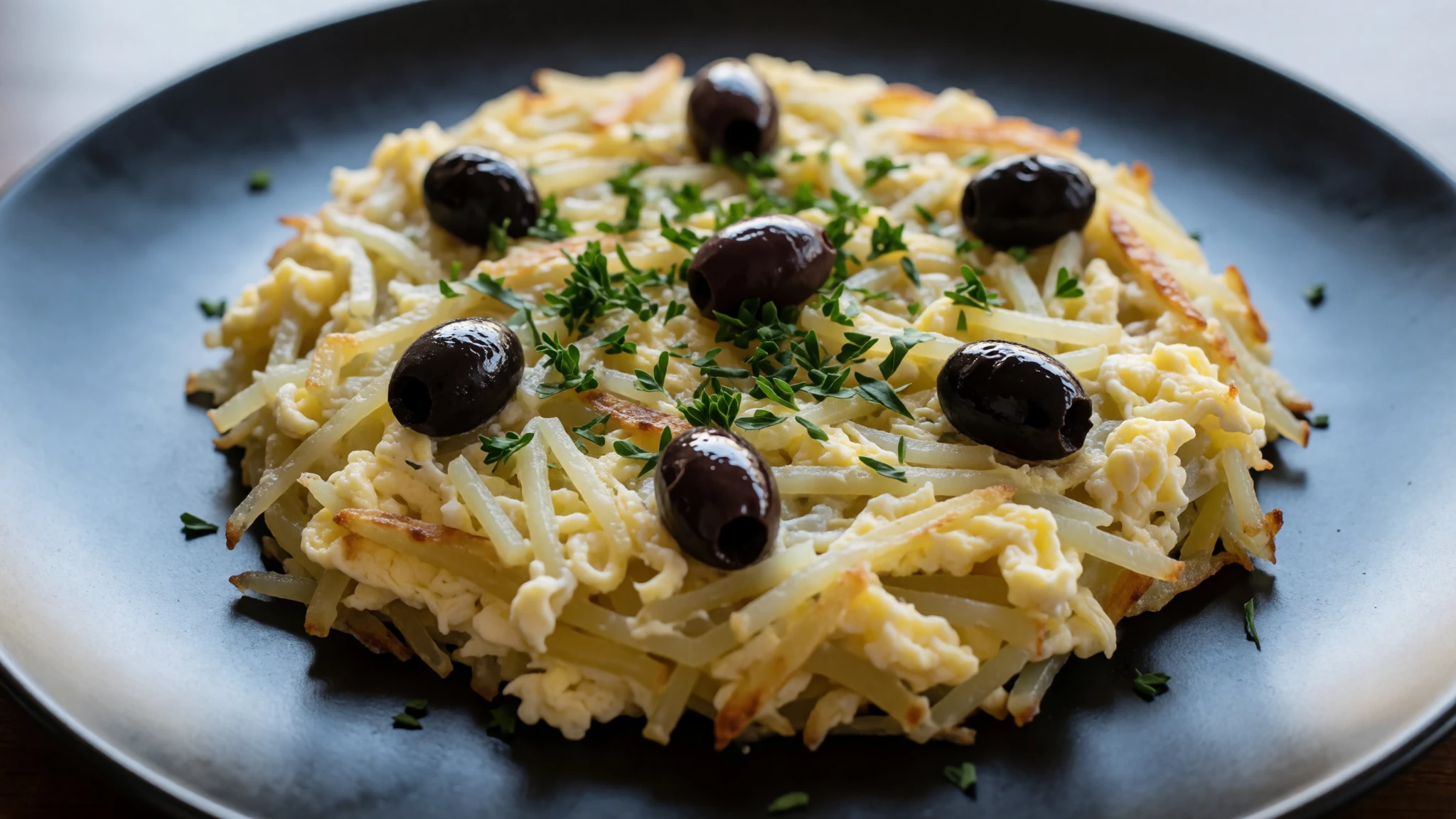
- Colares wine — Wine cellars and tasting rooms on the coast road, arranged in advance
Colares is a small wine region on the coast west of Sintra, known for red and white wines with a distinctive character. Tastings at the regional wine cellar need to be arranged in advance, and the minimum group size is ten. Smaller groups can ask a local tour operator to help. - Grilled fish of the day — Family-run restaurants in the lower town with daily specials
Grilled fish is a staple of Portuguese restaurants, and Sintra's smaller local eateries often list a fish or meat special each day. Order the grilled fish of the day, usually served with potatoes, rice or a simple salad. It is a reliable choice for a sit-down lunch.
Plan it
Best time. April and May suit most visitors, with mild temperatures, greener hills and fewer crowds than midsummer. Winter is cooler and damper, with mist and rain, while July and August are busy and warmer, though the hills stay a little cooler than Lisbon.
How long. 2–3
Getting there. By train from central Lisbon to Sintra station, which is a short walk or bus ride from the old town. The last leg is usually a city bus up the hill, and the same buses run the circular routes to the main sites.
Budget. mid
Tips
- Buy a one-day bus ticket at the station, since it covers the circular routes to the main sites
- Arrive at the big palaces before mid-morning, when queues are shortest
- Check https://cm-sintra.pt/ for current opening times and prices before you go
- Carry cash for small cafés and for ticket machines, which often take coins only
- Pack water and a layer for the damp hill air, as cloud can change the view quickly
- Cycling suits experienced riders only; book a guided tour or hire a bike from a local company
Etiquette
- Keep to marked paths in the parks and gardens, and stay off the walls of ruins
- Give way on narrow stairs and ramps, which fill up with tour groups
- Speak quietly in chapels and cloisters
Nearby
Sources
- Wikidata Q190187 (CC0)
- Wikipedia (Sintra, rev 1380628759) (CC BY-SA 4.0)
- Wikivoyage (Sintra, rev 5391665) (CC BY-SA 4.0)
- Palácio Nacional de Sintra from above (Kent Wang) (CC BY 4.0)
- Sintra - Palacio da Pena (Singa Hitam) (CC BY 2.5)
- Palacio de Monserrate (kkmarais) (CC BY 2.5)
- Azenhas do Mar (Husond) (CC BY 3.0)
- Praia da Ursa, Portugal (Rosino) (CC BY-SA 2.0)
- The gardens of the Quinta da Regaleira (Maria Eklind) (CC BY-SA 2.0)
- Palácio de Seteais (Jorge Franganillo) (CC BY 3.0)
- Anta de Adrenunes (Roundtheworld) (CC BY-SA 4.0)


