Simien Mountains National Park
Simien Mountains National Park, Ethiopia
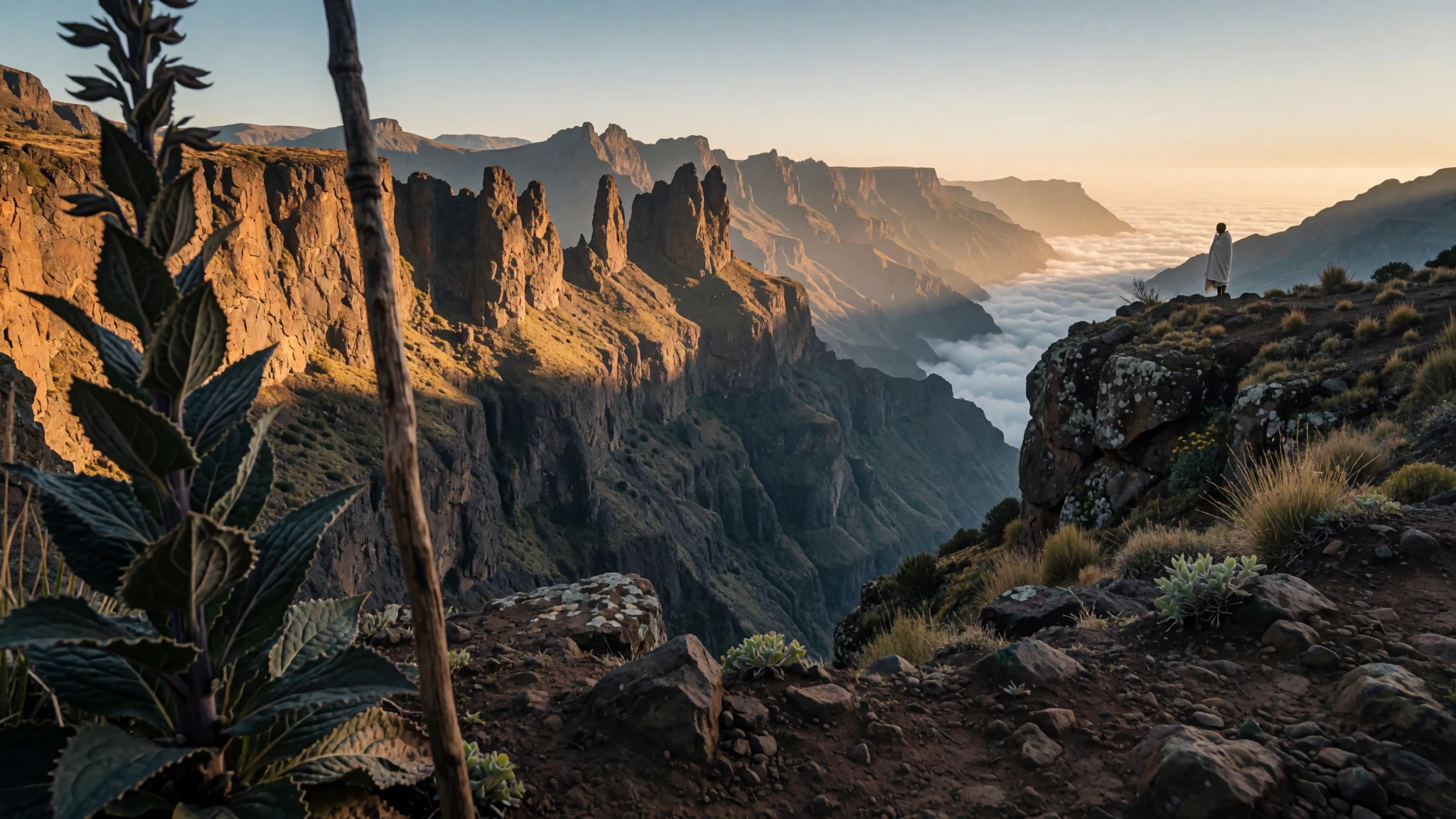
Simien Mountains National Park offers dramatic volcanic escarpments, rare highland wildlife, and some of the most striking trekking terrain in Africa.
The place
Simien Mountains National Park sprawls across the highest territory of the northern highlands, forming the largest protected mountain sanctuary in the country. The landscape is an immense volcanic remnant sculpted by millions of years of heavy weathering and tectonic shifts. Deep river valleys, serrated rock towers, and sheer vertical cliffs drop away in breathtaking fashion from high plateau edges. An unpaved track cuts right through the heart of the reserve, linking administrative headquarters to windswept upland passes and remote settlements. Across the escarpments, ancient basalt rock acts as a natural catchment, feeding mountain streams that carve further into the earth. The air here is thin, sharp, and intensely clear, carrying the scent of dry grasses and mountain herbs across immense distances. Sunlight shifts rapidly across the canyon walls, painting the precipitous drops in amber, ochre, and deep shadow as day turns to evening. It is a rugged, remote environment where weather can turn quickly from brilliant warmth to biting alpine chill, requiring preparation and sturdy boots for anyone stepping off the road.
Its story
The protected area was formally established in 1969, largely brought into being through the conservation efforts of British naturalist Clive Nicol, who recorded his time living among the wildlife and local communities in his writing. Long before formal protection began, however, human hands had shaped these uplands for generations. Communities have cultivated the gentle slopes and grazed livestock across the margins for millennia, gradually pushing agriculture further into steeper terrain as populations grew. In recognition of its unique biological heritage and towering geological formations, the park was chosen as one of the very first places globally to receive international protection status when it was inscribed by UNESCO. Decades later, mounting human pressure and dwindling numbers of native mammals led to the site being placed on the heritage danger list. Intensive conservation work, community engagement, and habitat management eventually allowed populations of flagship species to rebound, leading to the removal of that warning status. Today, the reserve serves as a delicate balance between preserving endangered endemic wildlife and accommodating the ancestral rights of local farmers who share the mountain ridges.
What to see
- Northern Escarpment — Northern park boundary
The edge of the plateau offers vertiginous viewpoints where sheer rock faces drop thousands of feet into the valleys below. Walking along this rim reveals sweeping vistas across the folded earth and distant canyon floors, making it a primary draw for every visitor who arrives in the highlands.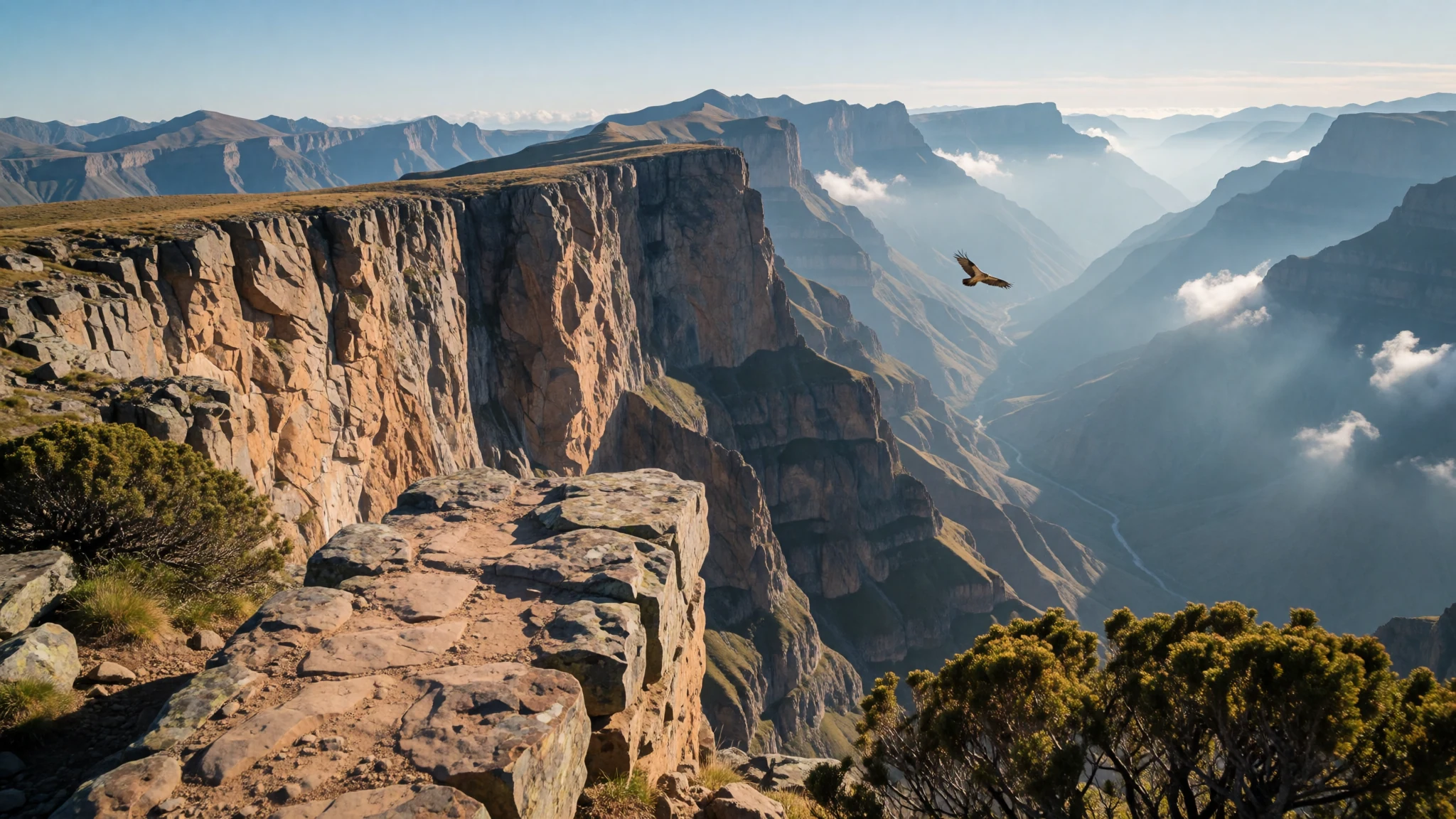
- Gelada Baboons — Highland meadows and Chennek Camp area
Large troops of grass-eating geladas graze peacefully along the alpine meadows and rocky slopes. These distinctive primates often tolerate hikers walking nearby, allowing quiet observers to watch them forage, groom, and interact within their complex social groups against sweeping valley backdrops.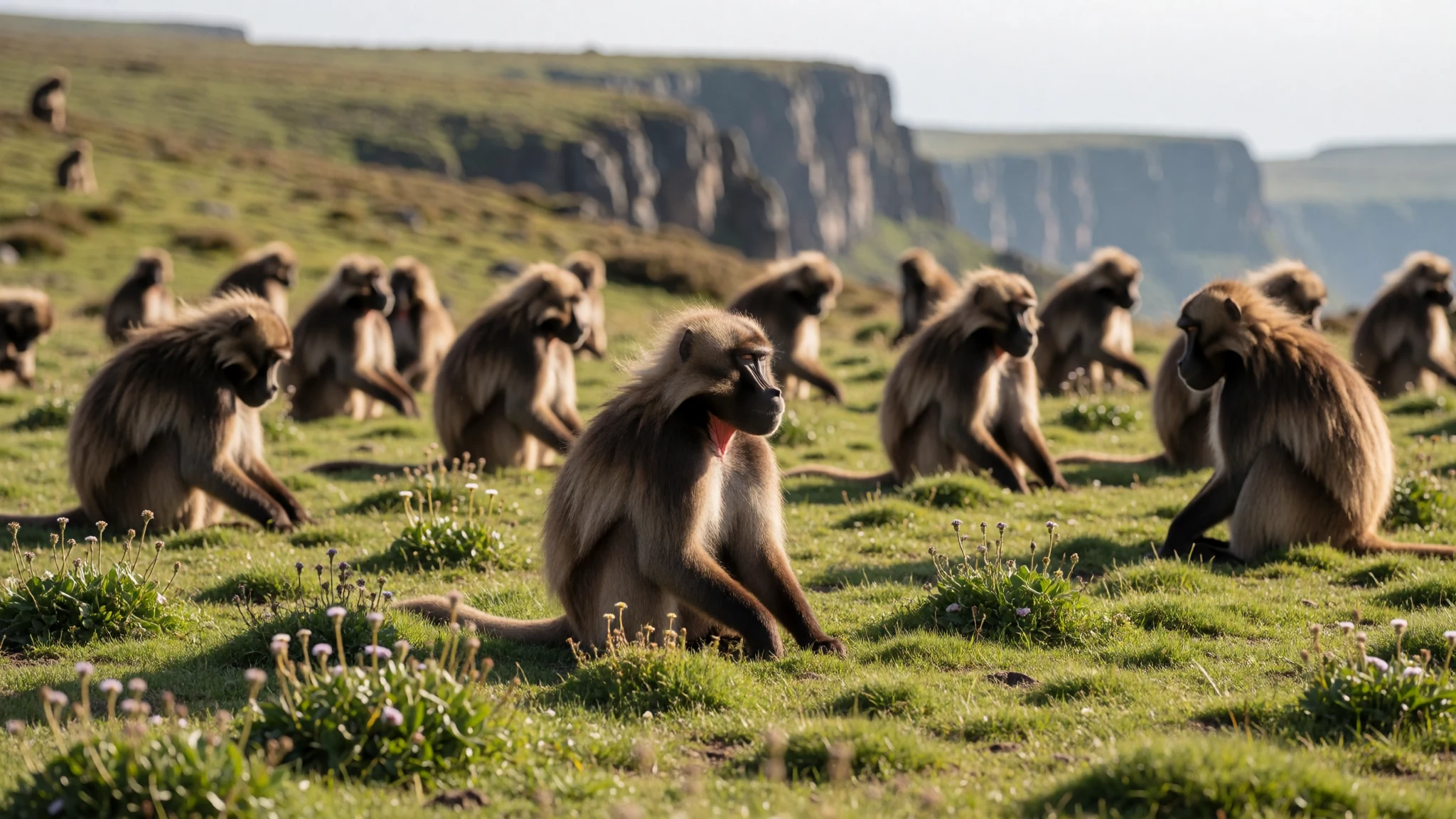
- Walia Ibex — Higher rocky ledges and escarpment walls
This elusive wild goat is entirely unique to these specific mountains and nowhere else on earth. Spotting one usually requires scanning steep, rocky precipices and rugged cliff ledges where the animals find refuge among sparse alpine vegetation and rocky outcrops.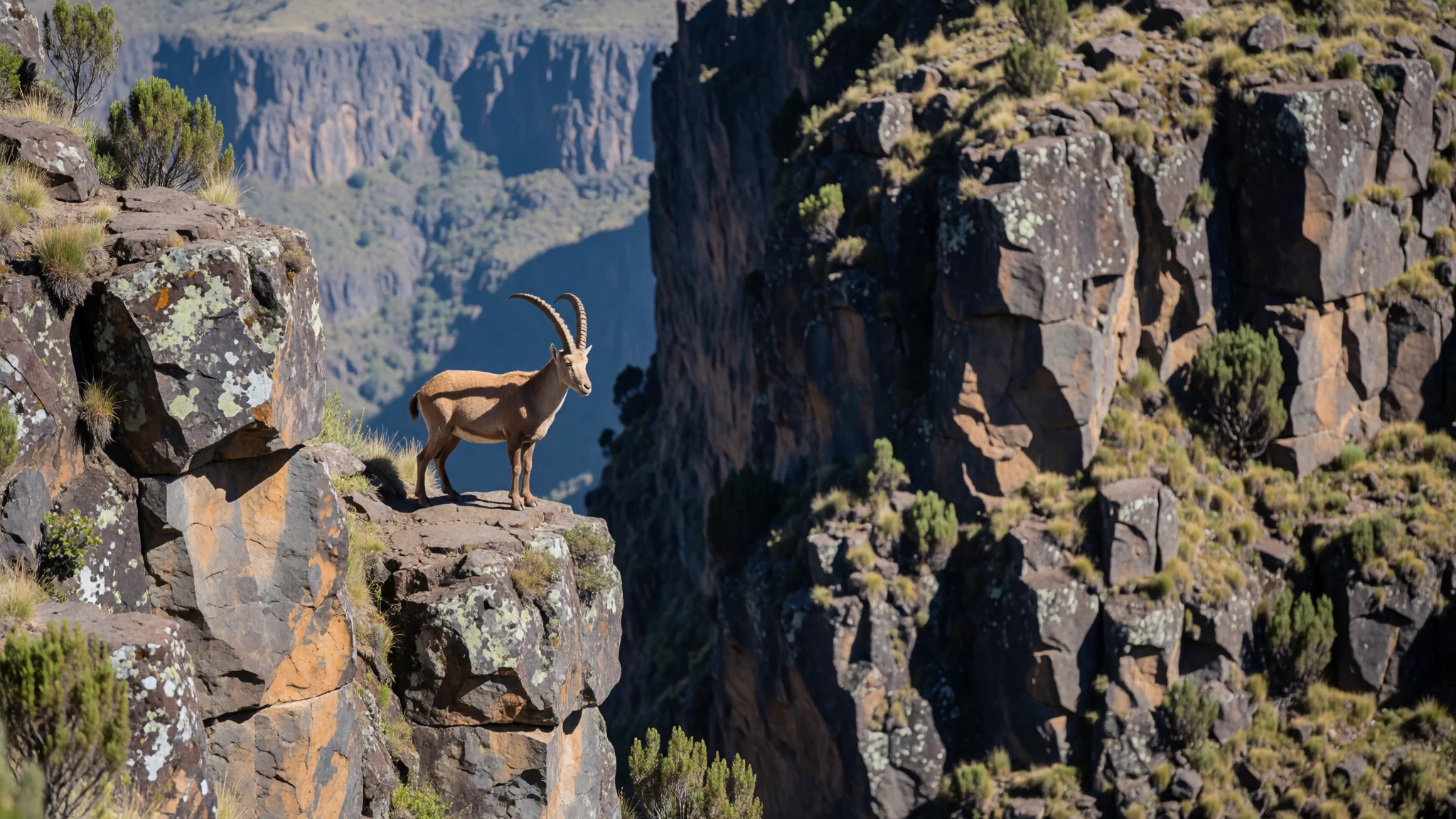
- Giant Lobelias — Sankabar and Geech plateau tracks
Towering rosettes of giant lobelia plants punctuate the high-altitude landscape with their thick, sculptural stalks and leafy crowns. Adapted to survive freezing night temperatures and intense tropical sun, these striking plants create an otherworldly atmosphere across the damp moorlands.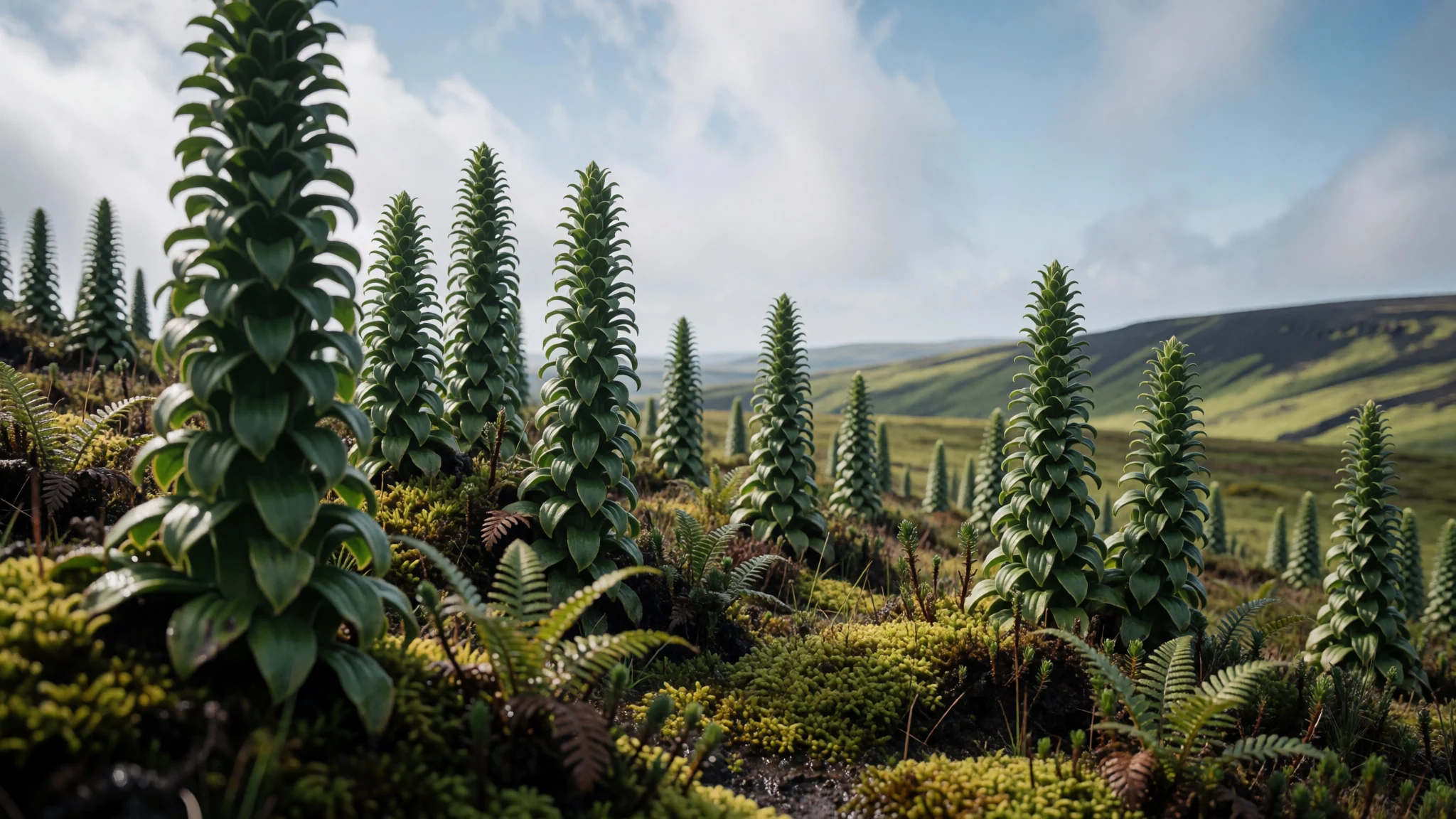
Culture
Life in the mountain communities is shaped by traditional highland agriculture, seasonal weather cycles, and deep-rooted Orthodox Christian heritage. Families live in small stone and mud-plastered tukuls with thatched roofs, cultivating barley and wheat on steep terraces while tending to cattle and sheep. Visitors are greeted with warmth and curiosity by children and farmers alike, though daily existence here is hard-won and self-reliant. Hospitality is expressed through the preparation of coffee and the sharing of simple shelter against the mountain cold. Traditional highland dress remains common, alongside woven cotton blankets draped over shoulders to ward off the chill of high altitudes. When trekking through farmland or villages within the park, always greet locals respectfully and ask permission before taking photographs of individuals or private homesteads.
What to wear
Traditional dress in the Amhara highlands reflects practical needs against cold mountain weather and rugged terrain. Local people commonly wear hand-spun white cotton garments, including loose trousers and tunics, layered with heavy, patterned woollen blankets or shawls known as gabi to trap warmth during freezing alpine nights. Sturdy leather shoes or simple sandals are worn for walking across stony paths. Modern everyday wear in nearby towns mixes practical western items like second-hand jackets and trousers with traditional textiles. For visitors, clothing should prioritize functional layering rather than fashion. Temperatures shift dramatically from strong daytime sun to biting cold once the sun drops behind the escarpment. Pack thermal base layers, a windproof and waterproof outer jacket, sturdy broken-in hiking boots with good ankle support, a warm fleece, and a woollen hat or sun hat depending on the hour. Modest dress that covers shoulders and knees is appreciated when visiting local villages and community areas.
What to eat
- Injera with Watt — Simien Park Hotel and local eateries in Debark
Spongy, fermented flatbread made from teff flour, served alongside rich, spiced stews flavoured with berbere spice and lentils or meat, found in local eateries and guesthouses.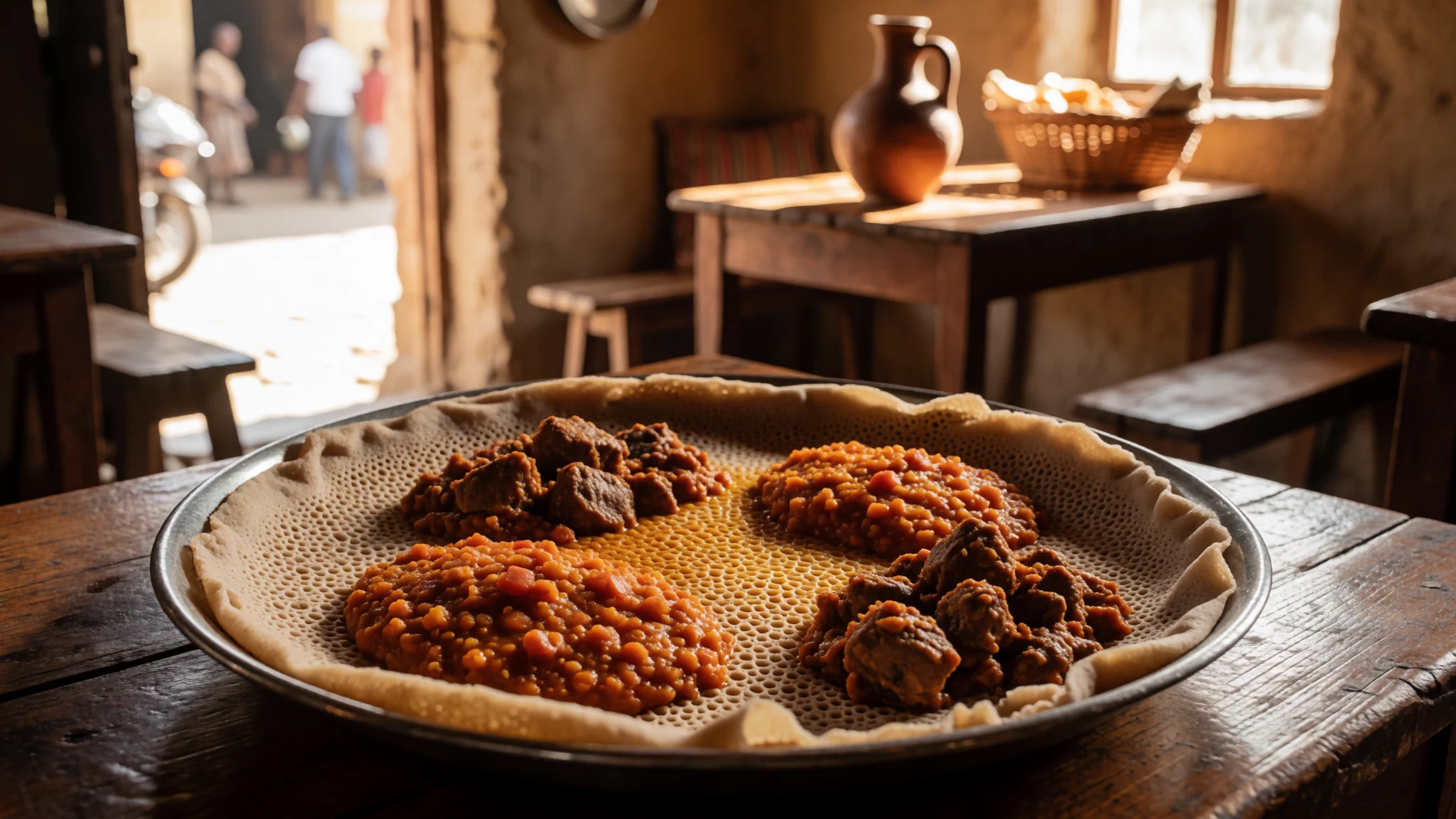
- Ethiopian Coffee — Simien Lodge at Buyit Ras and local coffee stops
Freshly roasted and brewed coffee served in a traditional clay jebena pot, offering a rich, aromatic ritual shared across homes and lodges after a long day of hiking.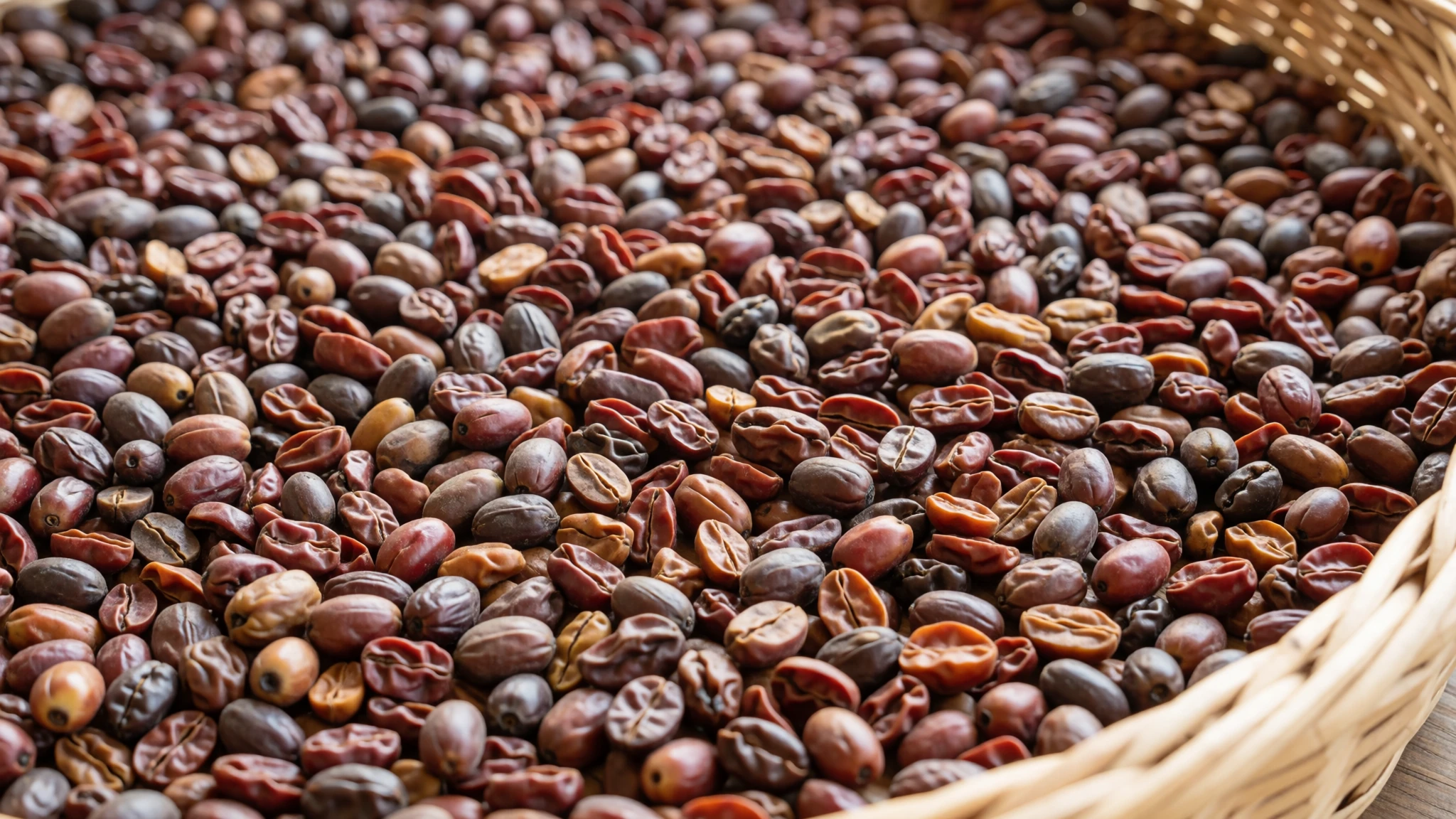
- St. George Beer — Hotels and lodges in Debark and Buyit Ras
A popular, crisp local lager brewed nationally, widely available chilled to refresh travellers returning from dusty mountain trails. - Simple Bread and Tinned Provisions — Small shops along the main road in Debark
Basic wheat loaves and packaged supplies sold in small village shops, useful for supplementing trail rations during multi-day treks.
Plan it
Best time. October to May offers the clearest skies and driest weather for trekking, avoiding the heavy rains of the wet season.
How long. 3–5
Getting there. Travel by road from Gondar to Debark, which takes about three hours on a paved road, then arrange local transport or guides into the park.
Budget. mid
Tips
- Acclimatise to the high elevation before attempting strenuous hikes along the upper escarpments.
- Carry plenty of drinking water and purification tablets for all trekking routes.
- Bring sufficient cash in local currency, as card facilities are unavailable in mountain settlements.
- Hire a mandatory local guide and armed scout at the park headquarters in Debark before setting off.
- Start morning walks early to catch clear views before afternoon clouds roll across the peaks.
Etiquette
- Always ask permission before photographing local farmers or village children.
- Respect farming plots and stay on designated park trails to protect fragile vegetation.
- Tip local guides, cooks, and scouts fairly for their essential support during treks.
Nearby
Sources
- Wikidata Q504315 (CC0)
- Wikipedia (rev 1362907689) (CC BY-SA 4.0)
- Wikivoyage (rev 5333520) (CC BY-SA 4.0)
- Photo 01-simiensk-hory.jpg (CC BY 3.0)
- Photo 03-simien-national-park.jpg (CC BY-SA 4.0)
- Photo 05-walia-ibex-3.jpg (CC0 1.0)
- Photo 08-geladas-near-chennek.jpg (CC BY 3.0)


