Simferopol
Simferopol, Ukraine
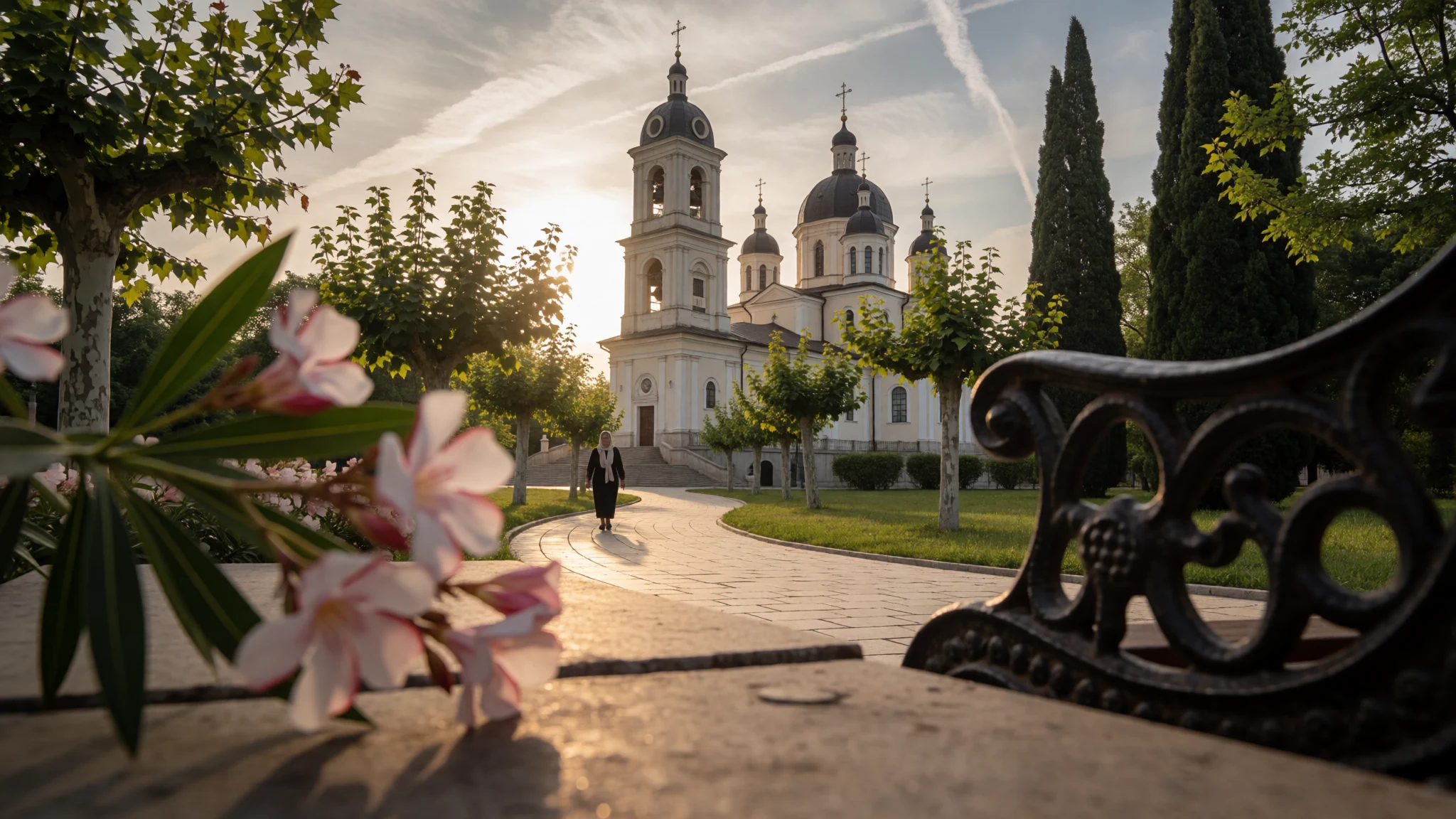
Simferopol is Crimea's transport crossroads, a city layering Scythian ruins, Crimean Tatar roots and imperial streets, whose status remains contested.
The place
Simferopol sits in the south-central part of the Crimean Peninsula, on the Salhir River, at an elevation of about 235 metres. It is a working inland city of about 335,000 people rather than a seaside resort, and its main job is to be the junction through which roads, rail and air routes into Crimea pass. Most visitors arrive here and move straight on to the coast, but the city rewards a day or two of slower looking.
The status of the place needs saying plainly. Internationally, Simferopol and the rest of Crimea are recognised as part of Ukraine, and Ukraine regards the city as the seat of the Autonomous Republic of Crimea. Since 2014, however, it has been under Russian control, and Russia treats it as the capital of its own Republic of Crimea. That shapes who can travel here, by which routes, and how the official tourism site presents the city.
The setting is a broad valley, with low hills to the south that lead on to the mountains and then the sea. A reservoir on the Salhir supplies the city's drinking water. The climate is humid subtropical, close to a continental pattern: winters are cold, with January lows near -21 °C, while summers are hot, with July and August highs averaging about 37–38 °C, so spring and autumn are the easiest seasons.
On the ground, Simferopol is a mix of tree-lined Soviet-era boulevards, older merchant streets, a pedestrian axis named after Karl Marx, parks, markets and Old Simferopol, the district that keeps the memory of the earlier Tatar town. It is not polished, and services and signage reflect the present uncertain situation.
Its story
Simferopol has a longer past than its founding date of 1784 suggests. Finds in the Chokurcha cave show that people lived on this ground very early, and on the city's edge lie the ruins of Scythian Neapolis, the remains of a capital of the Crimean Scythians, who held the area for several centuries around the start of the Common Era.
Much later, the Crimean Tatars built the town of Aqmescit, a name meaning 'White Mosque'. It was the residence of the Qalğa-Sultan, the deputy to the Khan within the Crimean Khanate, which gave the town real political weight. The quarter once called Aqmescit is now known as Old Simferopol.
The great break came in 1784, when the Russian Empire annexed the Khanate under Catherine II. She ordered a new city on the site of Aqmescit and gave it a Greek name, Simferopolis, 'the city of usefulness', part of her wider habit of handing classical names to newly won southern lands. In 1802 it became the administrative centre of the Taurida Governorate. During the Crimean War the city served as a base behind the front, holding army reserves and a hospital.
Soviet rule then reshaped the streets and buildings that visitors see today. The most recent turn came in 2014, when Russia took control of Crimea, a change that most of the world does not recognise. The city's story is therefore still being argued over, and residents' own accounts of it differ.
What to see
- Scythian Neapolis — Eastern edge of the city
The ruins of Scythian Neapolis lie on the edge of Simferopol, the remains of a settlement that served as a Scythian capital. Expect foundations, low walls and a hillside setting rather than standing monuments, so it suits those who enjoy imagining a site. Check current opening arrangements locally before heading out. - The Hercules Tauris oak — Park area north of the centre
A giant oak known as Hercules Tauris grows in the park area near the zoo, with a trunk too thick for a few people to circle and a crown that shades a wide patch of ground. Younger oaks stand beside it. It makes an easy, shady stop on a hot afternoon. - Holy Trinity Cathedral — City centre
This Orthodox cathedral stands among the central streets, its domes and bell tower rising above the surrounding trees and buildings. It is a working church, so services set the rhythm of the day. Visit outside service times for a quiet look, and dress modestly.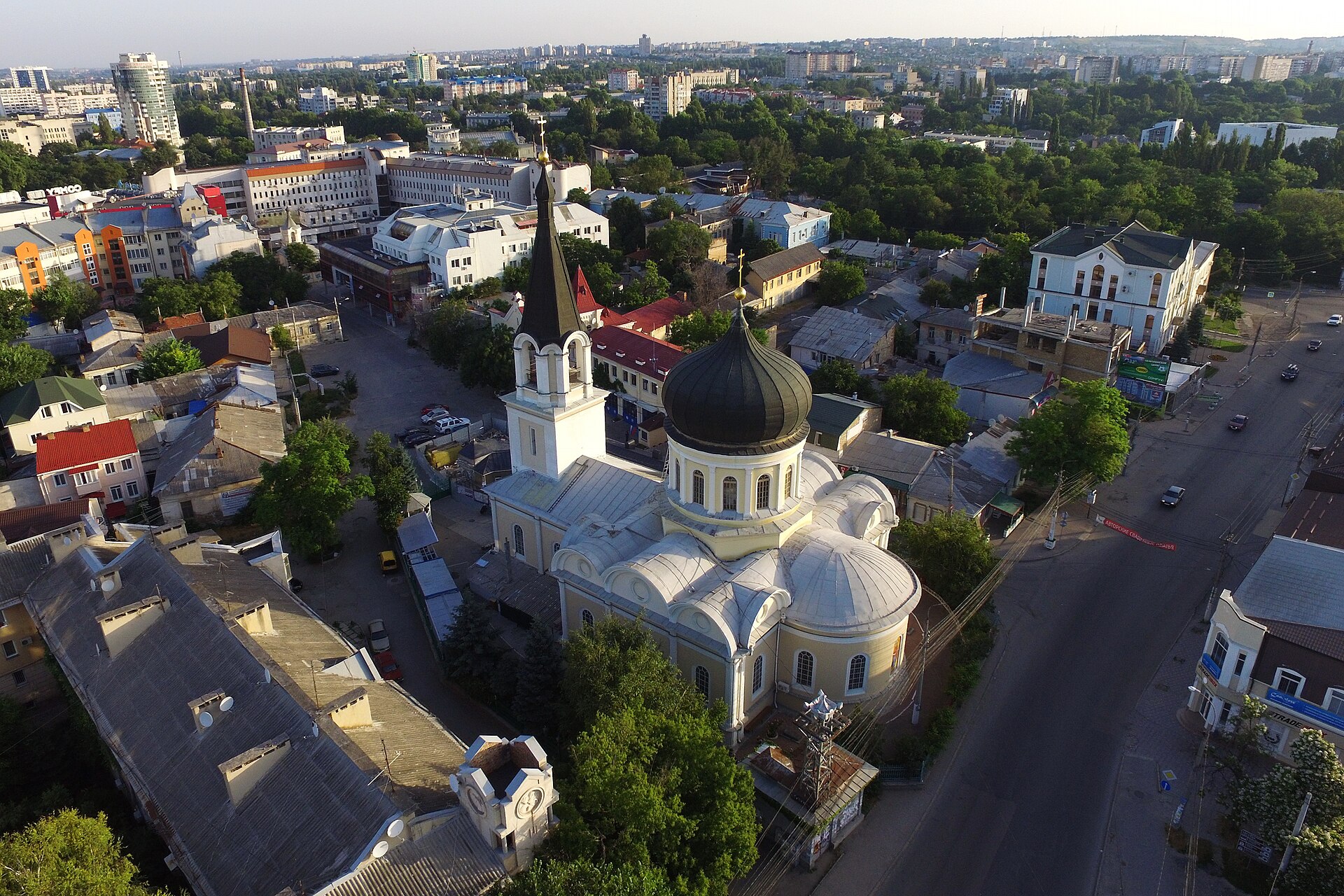
- Maxim Gorky Crimean Theatre — City centre
The Crimean Theatre is named after the writer Maxim Gorky and stands as one of the city's civic landmarks. Evening performances are most likely in Russian, so it suits those who enjoy the atmosphere of an old-fashioned theatre night. Check the programme and booking arrangements locally.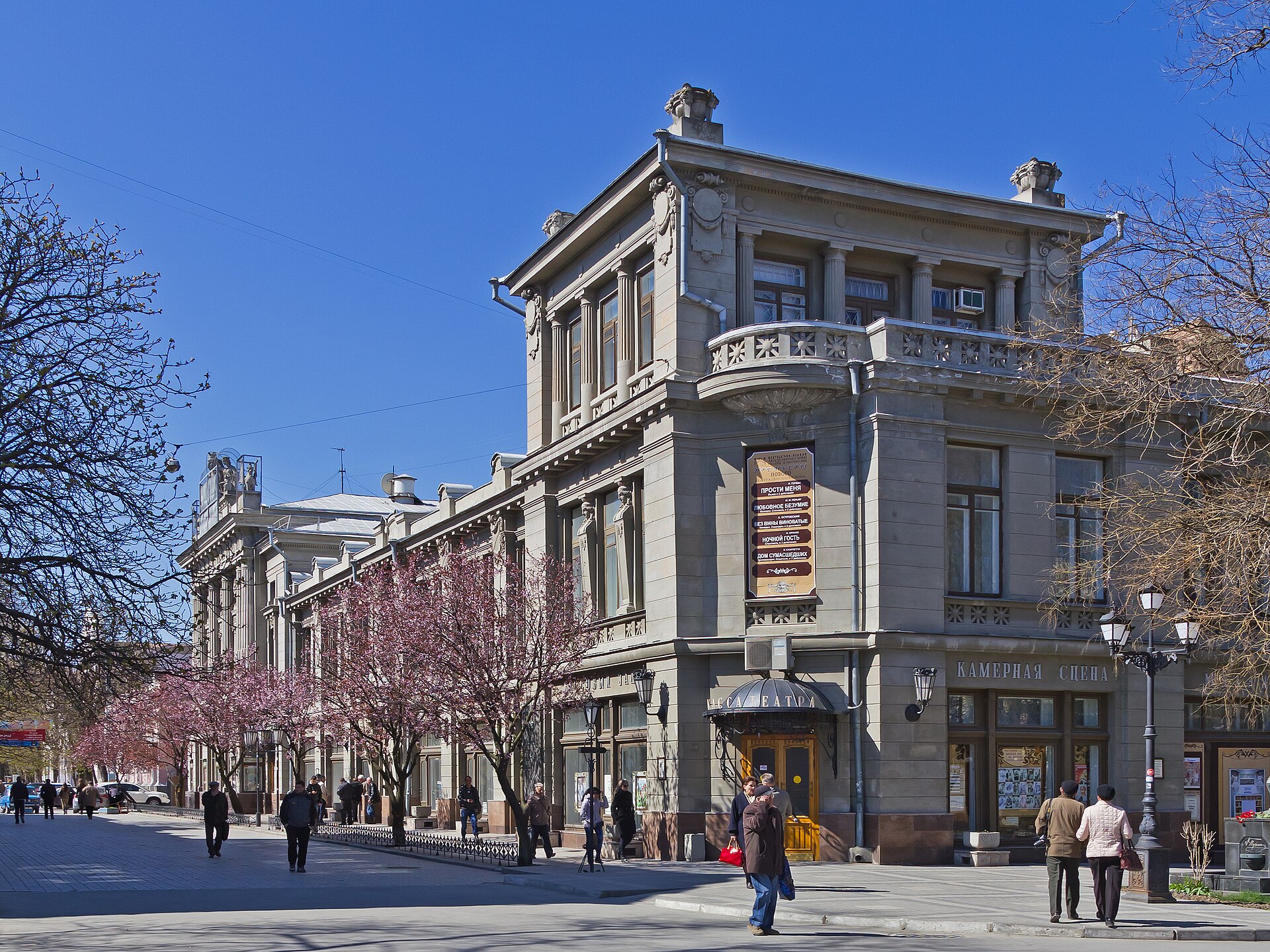
- Karl Marx pedestrian street — City centre
The pedestrian street named after Karl Marx is the easiest place to watch everyday Simferopol: shoppers, benches, cafés and families on an evening stroll. It has no single monument to tick off. Come in the late afternoon, when the heat eases and the street fills.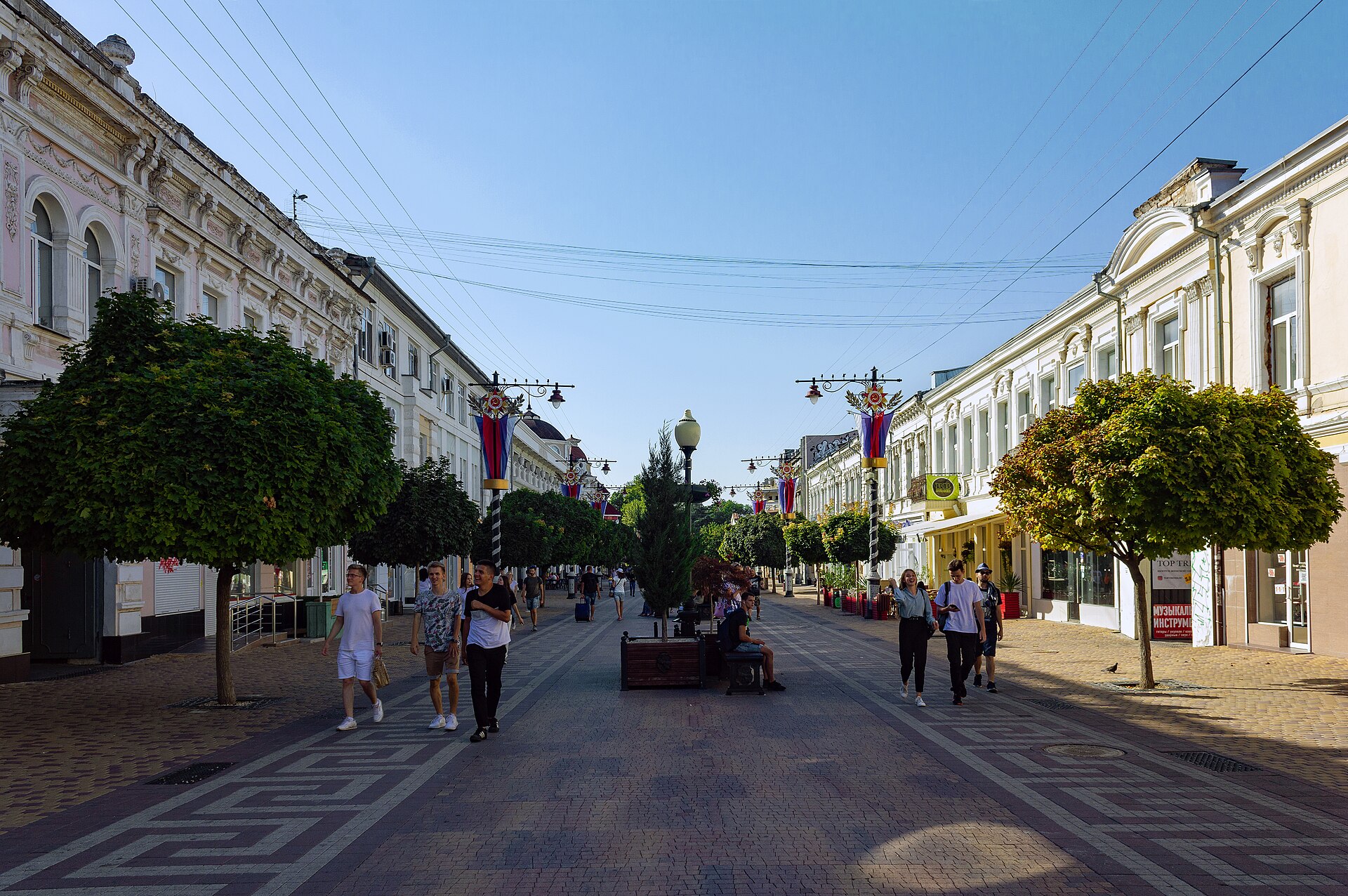
- Botanical garden and Vorontsov Manor — Garden grounds
The botanical garden holds the former kitchen house of the Vorontsov Manor, a reminder of the estates that once surrounded the town. Green space is welcome in a dusty inland city. Go in spring or early autumn, and check ahead for current access.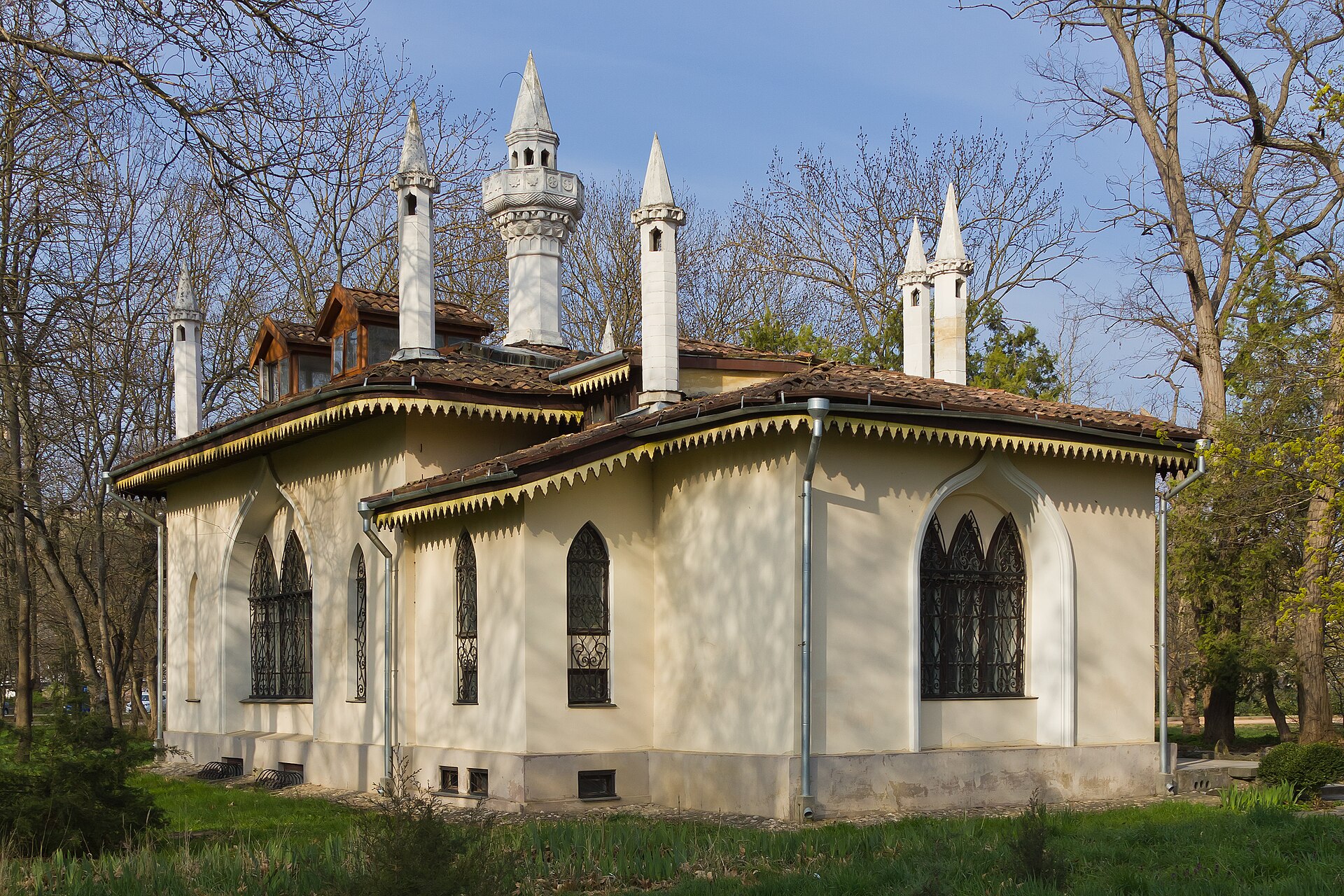
Culture
Simferopol's culture is layered, and the layers do not always agree. Russian is the everyday language of the streets, while Ukrainian and Crimean Tatar identities are also part of the city's story, and the Greek-sounding name on the map recalls the imperial period. Orthodox churches, including the Holy Trinity Cathedral, anchor the religious calendar, while the older Tatar heritage survives in the name Aqmescit, in Old Simferopol and in the kitchen.
Soviet-era architecture, theatres and parks give the centre its character. The evening routine of a stroll, a bench, ice cream or a night at the theatre feels thoroughly Eastern European. Hospitality is usually generous: guests are fed, tea comes with sweets, and conversation is direct and curious. Family and neighbourhood ties matter, and markets are social places as much as shops.
Politics is the exception. The city's status is a live and painful subject, and residents hold very different views, often within the same family. Visitors generally do better listening than arguing, and taking care around official buildings, military sites and anything that looks like security infrastructure, where photography may be restricted.
In an Orthodox church, dress modestly, women usually cover their hair, and nobody should photograph worshippers or a service without asking.
What to wear
Fashion in Simferopol runs from Crimean Tatar costume to ordinary city clothes. Traditional Crimean Tatar dress typically used velvet, silk, wool and felt, with metal-thread embroidery on caps, waistcoats and women's jackets, plus headscarves, decorative belts and jewellery for celebrations. Embroidered linen shirts belong to the Ukrainian and Russian folk traditions in the same way. These outfits now appear mainly at festivals, weddings, folk performances and museum displays rather than on ordinary days.
Day to day, people dress much as they do in other Eastern European cities: jeans, jackets, neat shoes and plain, practical layers. Smart clothes are worn for the theatre, restaurants and church on feast days, and younger residents follow international streetwear. Summers are hot enough for shorts, sandals and sun hats, while winters call for a proper coat, hat and gloves because temperatures often fall well below freezing.
Visitors should pack for the season in layers. Comfortable closed shoes with a good grip suit uneven pavements, park paths and the dusty slopes at the Scythian ruins. A sun hat and water bottle help in summer, and a light waterproof is useful in autumn. For churches, carry a scarf to cover hair and shoulders, and wear trousers or a skirt below the knee. Smart casual is enough almost everywhere else.
What to eat
- Plov — The Central Market and simple canteen-style eateries
A Turkic rice dish cooked with meat and vegetables, plov is rich and very oily, so anyone watching their diet should ask before ordering. It is filling, cheap fuel and one of the clearest echoes of the Tatar kitchen. - Shashlik — Charcoal grills in parks and roadside eateries
Chunks of meat grilled on skewers over charcoal, served with raw onion dressed in vinegar. Locals eat it with round flatbread known as lepeshka. The smoke and char make it the classic outdoor meal in warm weather. - Lagman — Canteens and family restaurants in the centre
A local version of noodle soup, with a savoury broth, vegetables and meat over thick noodles. It is a hearty bowl for cooler days and another sign of the city's Central Asian and Turkic food links. - Borshch — Any everyday canteen or home-style eatery
The vegetable soup that many locals name as their favourite, usually eaten with bread. Recipes vary by household, and a bowl often comes with a spoonful of sour cream. It is a reliable, inexpensive meal at any time of year. - Solyanka — Home-style eateries and market canteens
A thick, sharp-tasting local soup that is worth trying alongside borshch. It is tangy and robust, and often served as a warming lunch. Ask what is in it, since versions differ between kitchens.
Plan it
Best time. April, May and October, when days are warm without the peak summer heat and the parks and gardens are at their best. January is bitterly cold, with lows near -21 °C, and July is hot, with highs around 37 °C.
How long. 1–2
Getting there. Simferopol is the transport hub of Crimea, but flight and rail availability has changed repeatedly since 2014, so check current operators and your own government's advice before booking anything. Locally, marshrutka minibuses and trolleybuses link the airport, the railway station and the intercity bus stations, with onward buses to Sevastopol, Yalta, Sudak and Yevpatoria.
Budget. low
Tips
- Check your government's current travel advice before planning; many governments advise against travel to Crimea, and entry rules depend on the route taken.
- Agree a taxi fare for the whole journey before getting in, especially at the airport.
- Book intercity buses ahead for weekends, when services to the coast fill up.
- Check that your bank cards will work and carry some cash for markets and small eateries.
- Private rooms are offered by people with 'Housing' signs near the railway station; look carefully before agreeing.
Etiquette
- Dress modestly and keep voices low inside Orthodox churches.
- Avoid photographing military sites, official buildings or people without permission.
- Treat questions about the city's status with care, and let locals lead the conversation.
Nearby
Sources
- Wikidata Q19566 (CC0)
- Wikipedia: Simferopol (rev 1378857382) (CC BY-SA 4.0)
- Wikivoyage: Simferopol (rev 5418217) (CC BY-SA 4.0)
- Photo: Simferopol, Holy Trinity Cathedral — Vahe Martirosyan (CC BY-SA 2.0)
- Photo: Main railway station building with clock tower — A.Savin (CC BY-SA 2.5)
- Photo: Maxim Gorky Crimean Theatre — A.Savin (CC BY-SA 2.5)
- Photo: Vorontsov Manor kitchen house, botanical garden — A.Savin (CC BY-SA 2.5)
- Photo: Симферополь в феврале 2022 года — Mitte27 (CC BY-SA 4.0)
- Photo: Троицкий собор в Симферополе — Andrey Butko (CC BY-SA 4.0)
- Photo: State Medical University building — A.Savin (CC BY-SA 2.0)
- Photo: Пешеходная улица Карла Маркса — Bestalex (CC BY-SA 4.0)


