Sibiu
Sibiu, Romania
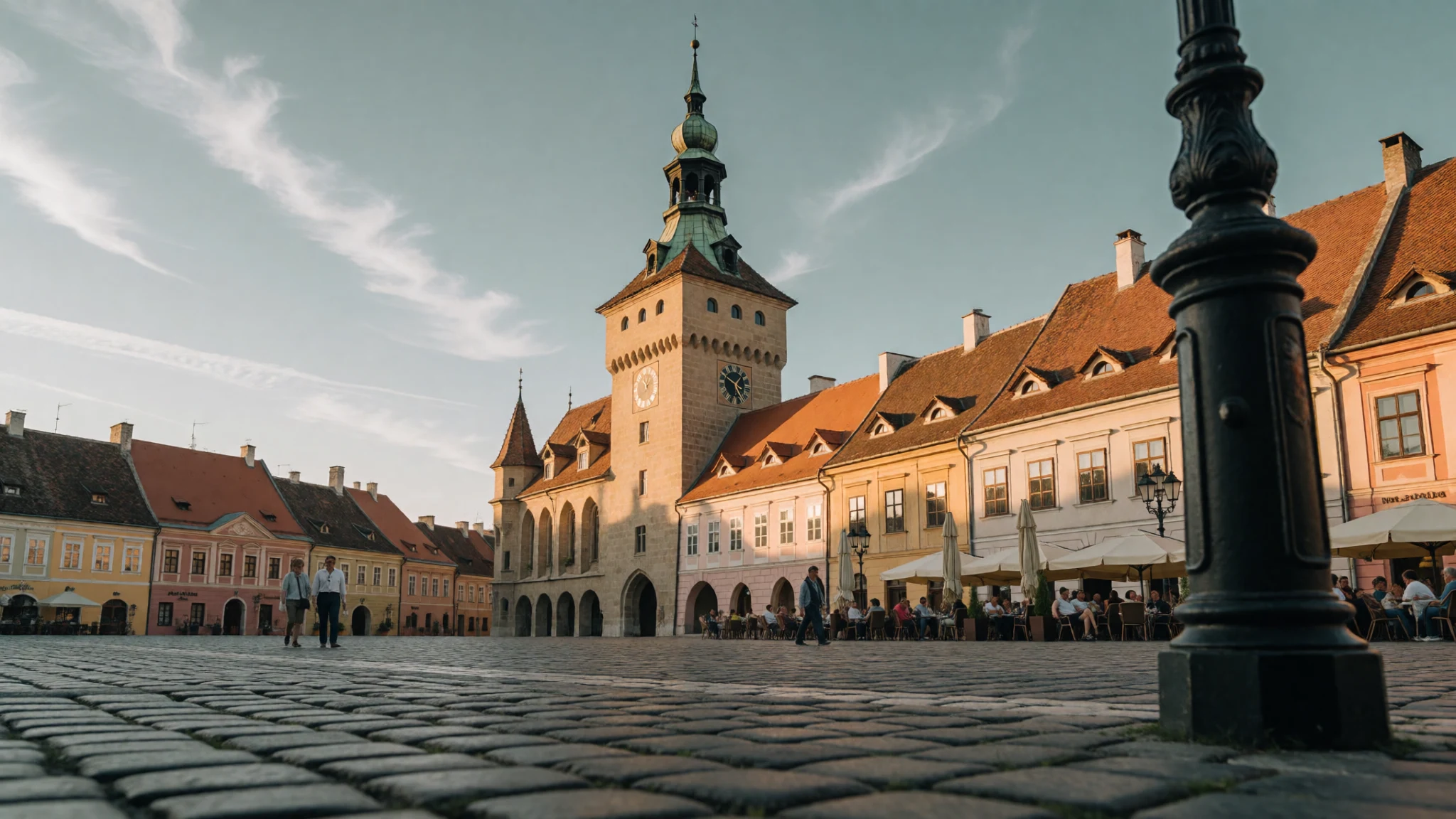
Sibiu is a walkable Transylvanian town of pastel squares, Saxon towers and good cellar cooking, with a calmer pace than most Romanian tourist stops.
The place
Sibiu sits in central Romania, in the historical region of Transylvania, on the Cibin River, a tributary of the Olt. It lies about 275 km north-west of Bucharest, at an elevation of 434 m, and has roughly 134,000 residents. Germans call it Hermannstadt and Hungarians Nagyszeben, and all three names still turn up on plaques, menus and old maps.
The historic core is split in two. The Upper Town stands on a bluff and holds the main squares: the Great Square, the Small Square and Huet Square, all linked by arched passages and short lanes. The Lower Town runs down towards the river, with older, plainer houses and a more everyday feel. Covered stairways and steep alleys join the two levels, and they are among the most photogenic corners of the city.
The town's nickname, the Town with Eyes, comes from the small attic windows that sit in the tiled roofs like half-closed eyelids. Pastel façades, stretches of the old defensive wall and several towers complete the picture. Almost everything worth seeing lies within a flat ten-minute walk of the Great Square, so the city suits a slow wander more than a checklist.
Sibiu is busiest in summer and during festival weekends, when the squares fill with stages and terraces. Winters are cold and quiet, and a few smaller sights keep shorter hours. Spring and early autumn give the best balance of light, mild weather and elbow room. The city also works well as a base for the fortified villages and hill roads in the surrounding countryside.
Its story
Sibiu began as a settlement of Saxon colonists, German-speaking families who were invited into Transylvania by the Hungarian crown in the 12th century. They came from lands that are now Germany, France and the Low Countries, and they built a town that was meant to defend itself. In 1191 a papal document confirmed the Saxons' church organisation in Transylvania, with its seat here, which is why that year is the usual date for the city's founding. By 1223 the name Villa Hermanni was in use, probably honouring a man called Hermann, though historians disagree over which one.
For centuries Sibiu was the leading town of the Saxon community. Guilds, walls and towers made it a commercial and defensive centre, and the Saxon university was based here. Power over the region shifted around it: the Hungarian kingdom gave way to the Principality of Transylvania, which in turn passed under the Habsburgs. Under Habsburg rule Sibiu served as capital of Transylvania more than once, and the Baroque townhouses and the grand museum collection are legacies of that official, cultured period.
The twentieth century brought Romanian rule, then communism, and many Saxon families left over the following decades. The German-language school and theatre section remain, though the community is now small. After the fall of communism the old centre was repaired, and in 2007 Sibiu shared the title of European Capital of Culture with Luxembourg City. That year did much to reintroduce the town to visitors, and it still shapes the festivals and restored façades seen today.
What to see
- The Great Square — Upper Town
The Great Square (Piața Mare) is the broad central space of Sibiu, lined with pastel townhouses whose roof windows peer out like half-lidded eyes. Cafés spill onto the paving, buskers and festival stages come and go, and the Baroque buildings around the edge reward a slow lap both in morning light and at dusk.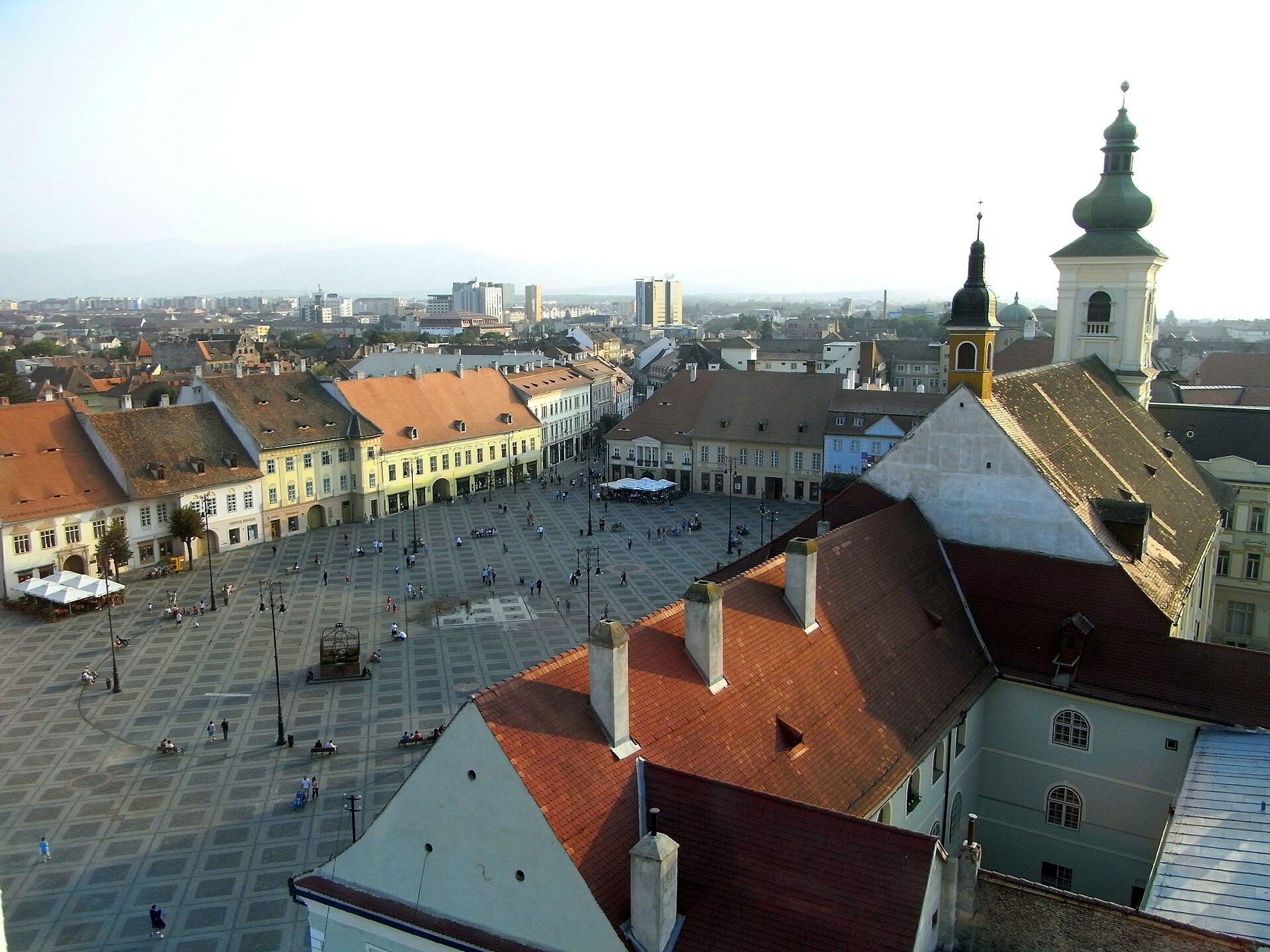
- Council Tower — Between the Great and Small Squares
The Council Tower (Turnul Sfatului) stands between the Great Square and the Small Square and has long served as a rooftop viewpoint over the tiled roofs. When this reading was prepared it was closed for renovation, so check the official site before planning around it. The passage beneath remains the natural link between the two squares. - Huet Square and the Lutheran Cathedral — Upper Town
Huet Square is a quieter, more enclosed space dominated by the Lutheran cathedral, a Gothic church that is the city's Saxon landmark. Inside is a fine collection of medieval tomb covers. Parts of the building have been under restoration in recent years, so expect scaffolding or restricted areas on some visits.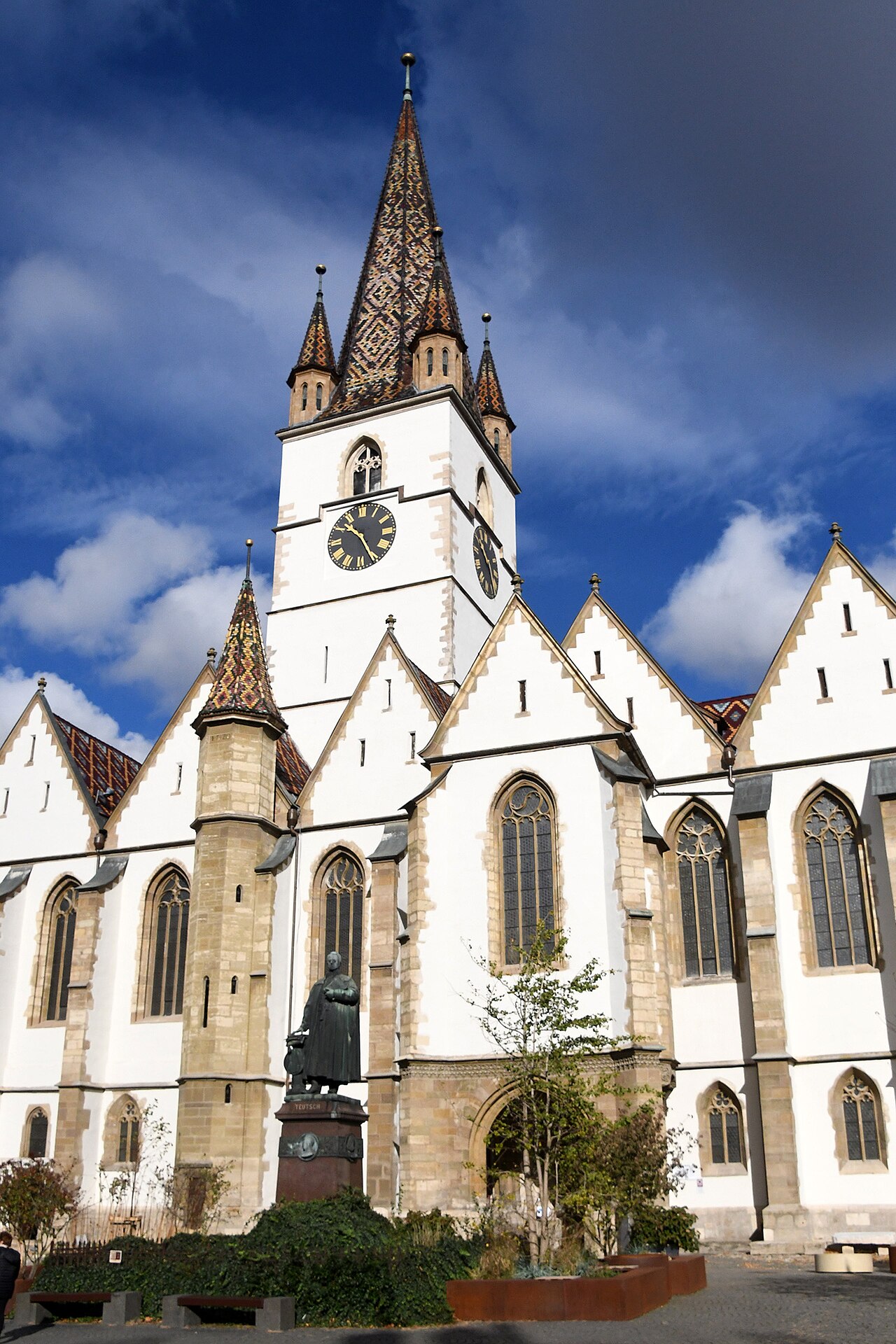
- Brukenthal National Museum — Great Square
The Brukenthal National Museum is named for Samuel Brukenthal, the eighteenth-century governor of Transylvania whose collection formed its core. The paintings include Dutch and Flemish, Italian, German, Austrian and Romanian schools. It is a comfortable rainy-afternoon stop, set in a Baroque palace on the Great Square.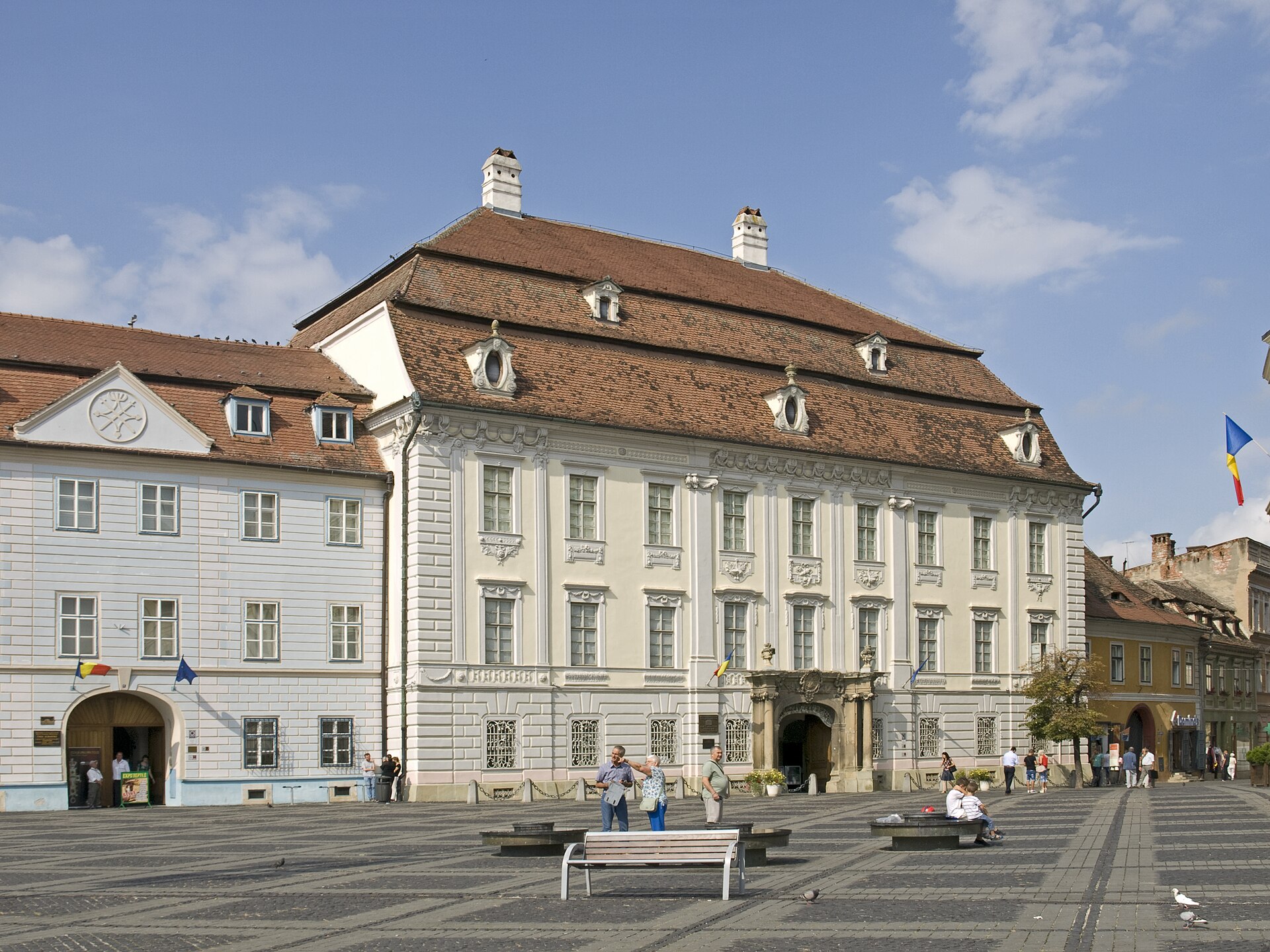
- Franz Binder World Ethnography Museum — Near the Great Square
The Franz Binder World Ethnography Museum displays objects gathered by Binder and his colleagues on journeys far beyond Transylvania. It is a small and unusual collection, a reminder that this Saxon town was once wired into global trade and curiosity. It pairs easily with a visit to the nearby ASTRA museum of Transylvanian civilisation.
Culture
Sibiu is a town where three traditions overlap: Romanian, Saxon German and Hungarian. Church bells, street names and school signs still carry that mix, and the Orthodox and Lutheran cathedrals stand a few minutes apart. Visitors will notice that many older residents switch between languages without thinking.
The performing arts are unusually strong for a city of its size. The Radu Stanca National Theatre has roots going back to the eighteenth century and runs both Romanian-language and German-language companies, attracting well-known directors from across the country. The Gong Theatre specialises in puppetry, mime and unconventional shows for children and teenagers, also in two languages. The State Philharmonic gives weekly classical concerts, and the university's acting students stage regular performances of their own.
Festivals fill much of the summer, with theatre, music and street events spreading across the squares. Daily life is more modest: coffee on a terrace, a long lunch of soup and grilled meat, and an evening stroll under the arches. Sundays are quiet, and churches are the focus of the morning.
In the Orthodox cathedral, cover your shoulders and knees, keep your voice low, and ask before photographing worshippers or services in progress.
What to wear
Sibiu's traditional dress reflects its mixed population. Transylvanian Saxon women's costume typically combined an embroidered white blouse, a pleated skirt, a dark bodice or jacket and, for married women, a distinctive headdress. Romanian village costume is built around the ie, a linen, cotton or hemp blouse with dense hand embroidery, worn with wraparound woollen skirts and woven belts. Both are now brought out for weddings, church festivals, folk events and heritage days, and are seen in the surrounding villages more often than on the city's streets.
On an ordinary day, people in Sibiu dress much as in other central European towns: jeans, jackets, trainers and good coats in winter. Younger residents lean towards casual, slightly smart city style, and dressing up for the theatre or philharmonic is common. Embroidered blouses and folk-inspired accessories do appear as everyday fashion, especially in summer.
A visitor should plan for a continental climate. Summers are warm and can be hot at midday, so light, breathable clothes and a hat help, with a layer for the evening. Winters are cold, so a proper coat, hat and gloves are needed. The old town is paved with cobbles and uneven stones, so comfortable shoes with grip matter more than anything else. For churches, carry a scarf or light shawl and avoid very short shorts or sleeveless tops, particularly in Orthodox buildings.
What to eat
- Ciorbă — Any traditional restaurant or cellar eatery near the Small Square
Ciorbă is a sour soup built on meat or vegetables, tangy from fermented bran or sour cream and often finished with fresh herbs. It is the standard opener to a Transylvanian meal and one of the cheapest, most reliable dishes around. - Sarmale — Traditional restaurants in the Upper Town
Sarmale are cabbage leaves rolled around minced meat and rice, simmered slowly, and usually served with polenta and sour cream. They are a festival and Sunday dish, rich and warming, especially good in the colder months. - Mămăligă with stew — Cellar restaurants and family-run eateries
Mămăligă is cornmeal polenta, served alongside stews, cheese, sour cream or grilled meat. It acts as the bread of the region. Order it with a slow-cooked meat stew for a plain, filling plate that suits cold evenings. - Grilled meats — Terraces and restaurants around the Great Square and Small Square
Mixed grills of pork, sausage and minced-meat rolls are a regular on menus here, usually served with chips or pickles and plenty of bread. Portions are large, so sharing is easy and sensible. - Papanași — Most traditional restaurants, as a dessert
Papanași are fried or boiled cheese doughnuts, topped with sour cream and sweet berry jam. They are heavy but very popular, and best shared after a main course rather than ordered alone.
Plan it
Best time. May–June and September–October, when days are mild and the squares are lively but not crushing. July and August are warm and busy with festivals; winter is cold, quiet and good for atmosphere, though some sights keep shorter hours.
How long. 2–3
Getting there. Sibiu has a small airport with limited routes, so check current connections, and many visitors fly to Bucharest instead. Trains and buses from Bucharest and Cluj-Napoca run several times a day and are reliable and cheap; check times on Autogari.ro for buses. Budapest is a long journey by rail or road. From the station or bus terminal, the old town is a short walk or taxi ride.
Budget. low
Tips
- Book accommodation early for summer weekends and festival dates, when the old town fills up.
- Walk the squares at first light or after dusk, when tour groups have gone and the light is softer.
- Carry some cash for small cafés and market stalls, though cards are widely accepted in the centre.
- Check opening times and any renovation closures on the official site (http://www.sibiu.ro/) before visiting towers and museums.
- Use Sibiu as a base for the fortified Saxon villages nearby, such as Biertan, with a car or a local tour.
Etiquette
- Dress modestly and speak quietly when entering churches.
- Ask before photographing people, especially worshippers and older residents.
- A small tip, or rounding up the bill, is normal in restaurants and cafés.
Nearby
Sources
- Wikidata Q83324 (CC0)
- Wikipedia: Sibiu (rev 1383574628) (CC BY-SA 4.0)
- Wikivoyage: Sibiu (rev 5418127) (CC BY-SA 4.0)
- Photo: Der Große Ring in Sibiu-Hermannstadt (Aisano) (CC BY 3.0)
- Photo: Sibiu/Hermannstadt Romania, the Small Plaza (Zubi Travel) (Public domain)
- Photo: Evangelical cathedral in Sibiu (Pasztilla aka Attila Terbócs) (CC BY-SA 4.0)
- Photo: Ansamblul fortificațiilor orașului medieval (Nicubunu) (CC BY-SA 4.0)
- Photo: In Sibiu / Hermannstadt in Siebenbürgen (-wuppertaler) (CC BY-SA 4.0)
- Photo: Pont de les mentides (Lohen11) (CC BY 4.0)
- Photo: Brukenthal Palace and the Blue House (Ymblanter) (CC BY-SA 4.0)
- Photo: Sibiu, May 2018 554 (XeresNelro) (CC BY-SA 4.0)


