Si Phan Don
Si Phan Don, Laos
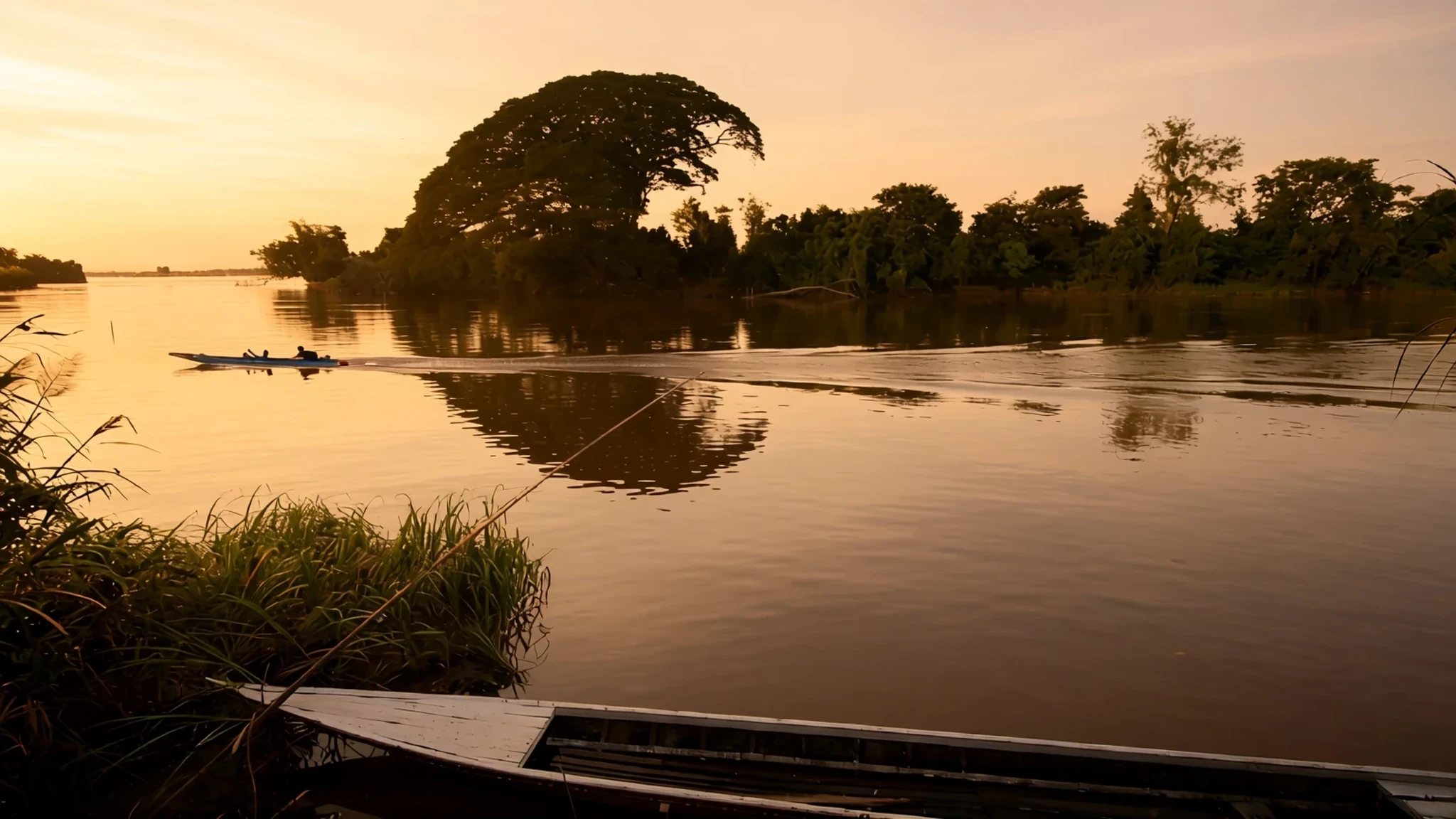
Quiet river islands on the Mekong where the pace is slow, the falls are loud and the dry season is the time to go.
The place
Si Phan Don, meaning Four Thousand Islands, is a riverine archipelago in the Mekong River in Champasak Province, in southern Laos. The name is generous, but the river really does scatter islands across a wide, slow stretch of water, and during the flood season about half of them sit beneath the current. The principal islands are Don Khong, the largest, Don Som, Don Det and Don Khon. Don Khong is the biggest but has less to hold a visitor, so most people settle on Don Det or Don Khon, where guesthouses are cheap and the river is close enough to walk to.
The district of Khong takes in the islands and a strip of mainland to the east. Life here remains largely agricultural. Families grow rice, keep cattle, chickens, pigs and water buffalo, and tend small vegetable plots on sandbanks when the water drops. Tourism has grown steadily, but it is concentrated on the few inhabited islands, and many of the others are rarely visited at all.
Across the water lies Cambodia, and the two sides share historical and cultural ties. Pakse is the nearest of Laos's larger cities and the usual starting point for the journey south. The islands feel removed from that world, with slow mornings, bicycles, longtail boats and the sound of the river after dark.
Its story
The story of Si Phan Don begins with an obstacle on the Mekong. Above the islands the river drops through a long succession of rapids, the Khone Phapheng Falls, which no boat could pass. Goods and travellers had to be carried around them. When the French set out to move cargo and passengers along the river, they built a narrow gauge railway between Don Det and Don Khon so that vessels could be unloaded above and below the falls. It was the first railway in Laos, and its remains still lie on the islands, long disused but easy to find.
Life on the islands changed slowly after that. For a long time timber was cut from forests that ran down to the riverbank. Logging is now regulated, and illegal felling carries stiff penalties, a sign of how much the forests were once worked and how carefully they are now guarded. Farming, fishing and river trade stayed at the heart of local life, and villages kept their own rhythm through the wet and dry seasons.
In recent decades the islands have drawn a growing number of visitors. Tourism gathered on Don Khong, Don Det and Don Khon, with smaller numbers on Don Som, while most of the other islands stayed quiet. The river's wildlife has suffered as well. The last river dolphin in Laos has died, although a small community survives over the border in Kratie, and the story of the dolphins is now part of the conversation about the river's future.
What to see
- Tad Somphamit (Li Phi Falls) — Don Khon, southern Si Phan Don
Tad Somphamit, also called Li Phi Falls, lies on Don Khon and is the easiest falls to reach on foot from the guesthouse strip. The water spreads across rock ledges in broad, uneven sheets, and the walk along the shore is short and flat. Entry is charged, so carry small notes. It makes a good first stop before heading out onto the wider river.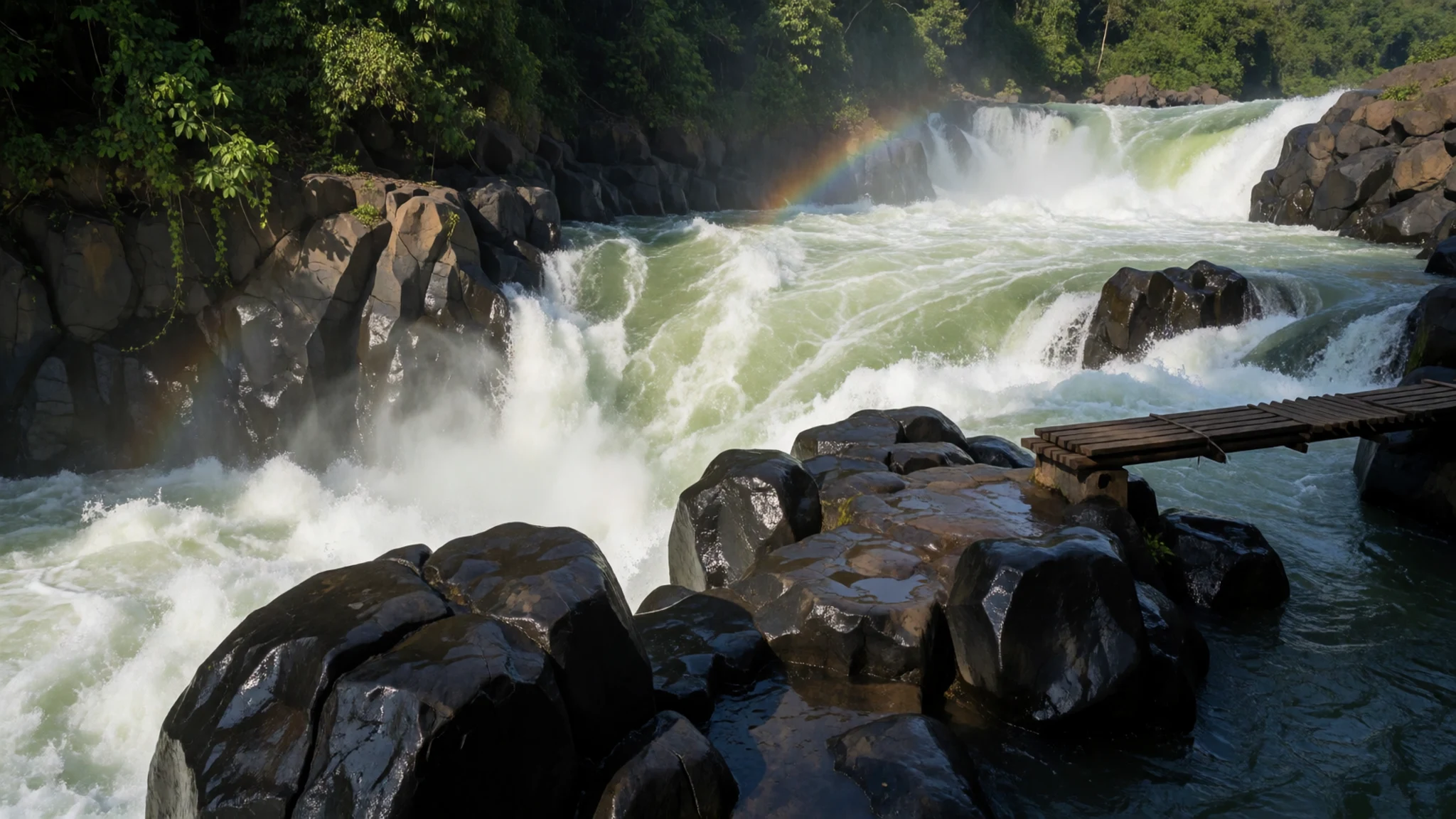
- Khone Phapheng Falls — Mainland, reached from Ban Nakasang
Khone Phapheng Falls are the reason the railway was built, and they are often described as the largest waterfall in Southeast Asia. The river breaks into a long series of rapids across a wide front, too turbulent for boats to pass. The falls are reached from Ban Nakasang on the mainland, usually by tuk-tuk, and the approach passes rice fields and village houses. Viewpoints sit on the rocks above the water, so keep a firm grip on children.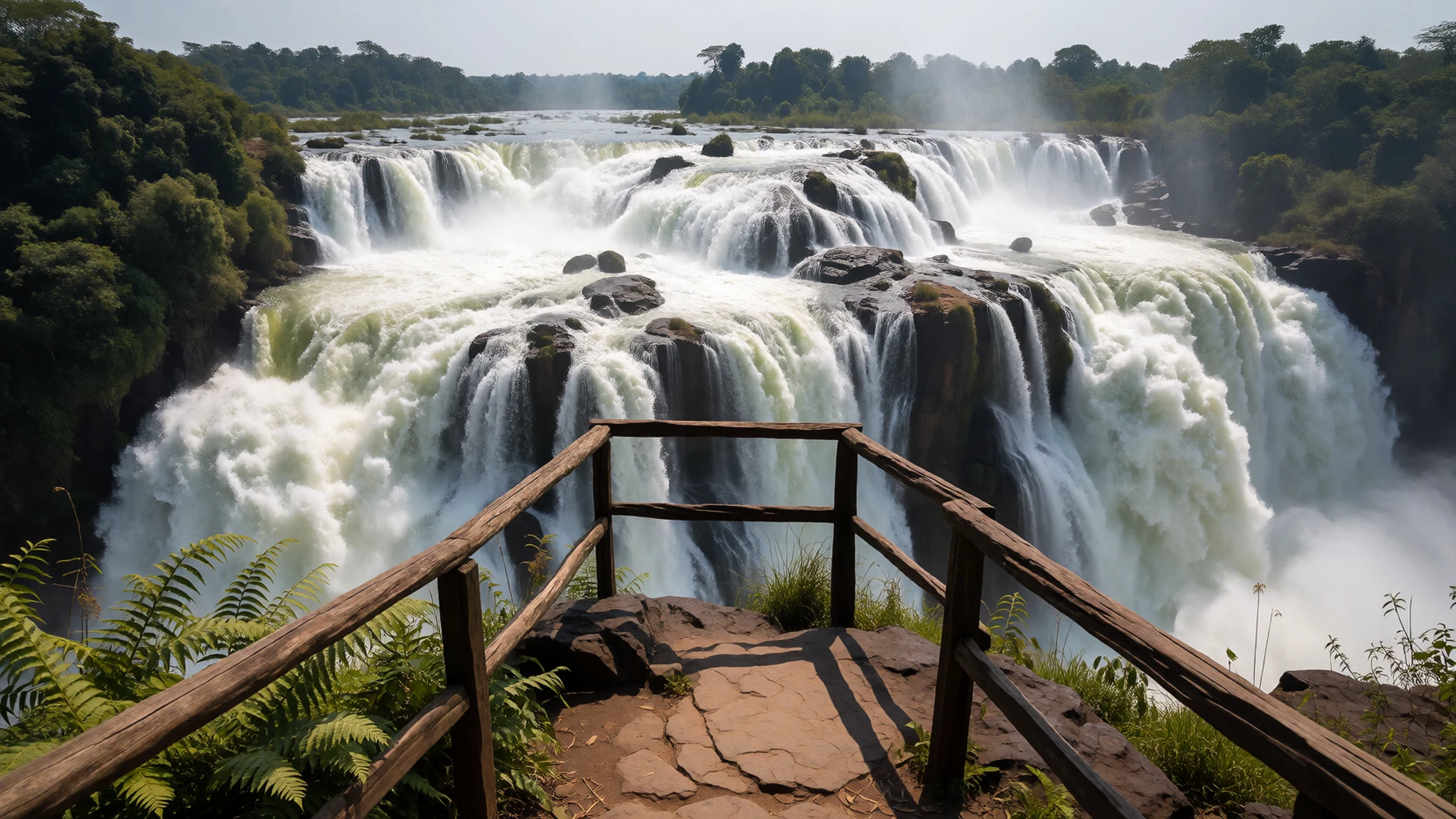
- The western shore of Don Det — Don Det, facing the river to the west
The western shore of Don Det is where most of the island life gathers. Guesthouses and small patio restaurants sit on stilts or low banks, with hammocks and bicycles along the paths. Sunset is the time to be there, when the light turns the river gold and boats come in along the water. It is the easiest way to spend an evening, and the most pleasant part of the day.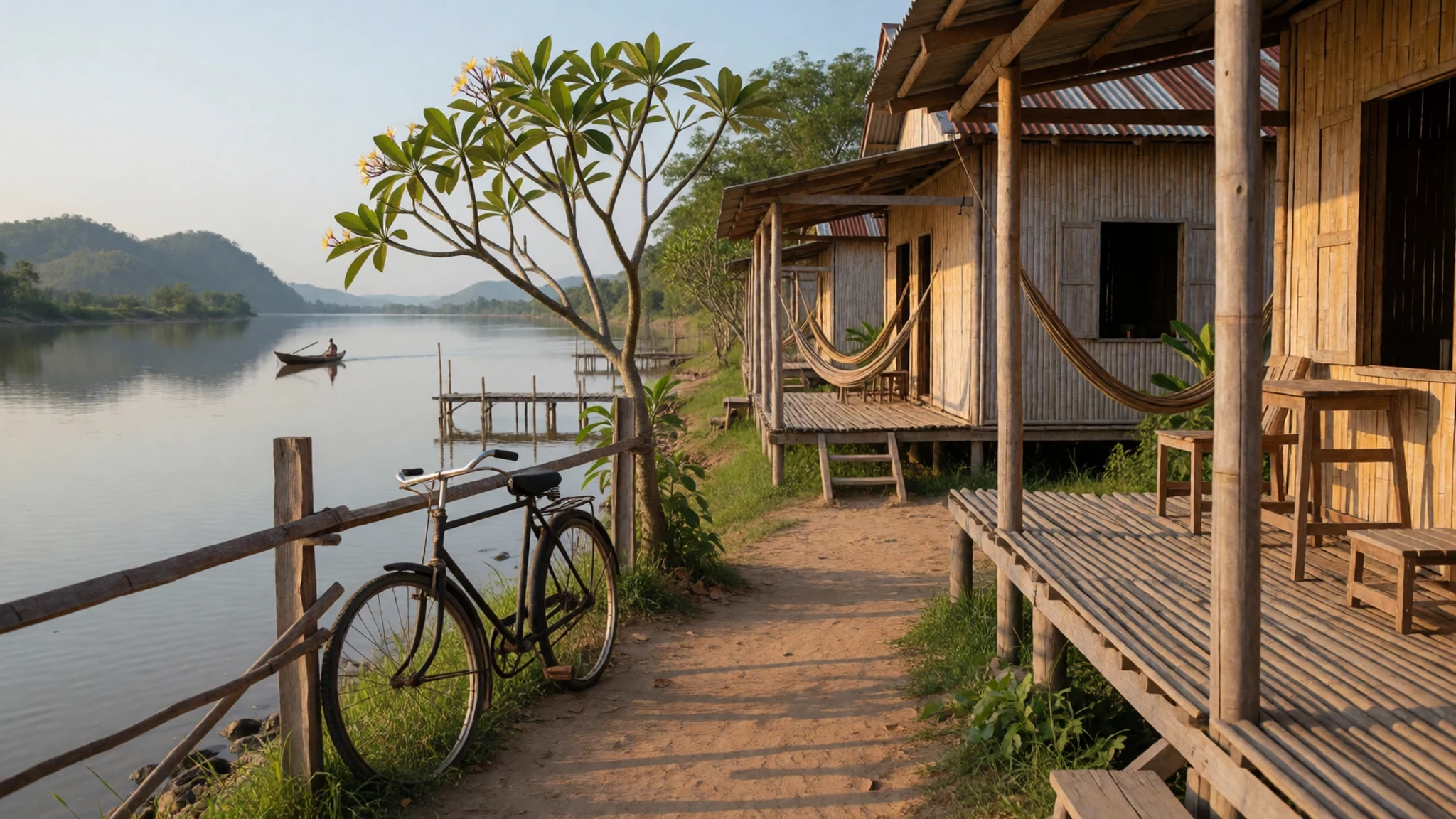
- Pirogues and buffalo barges — Channels between Don Det and Don Khon
Boats remain the main way across the channels, and small wooden pirogues carry people, goods and livestock between the islands. Buffalo are sometimes moved by river, standing on the hull of a barge beside a boy or a man. Boat tours around the islands are an easy way to see the channels, fishing and farms from the water. Speak with a local boatman to reach a particular destination.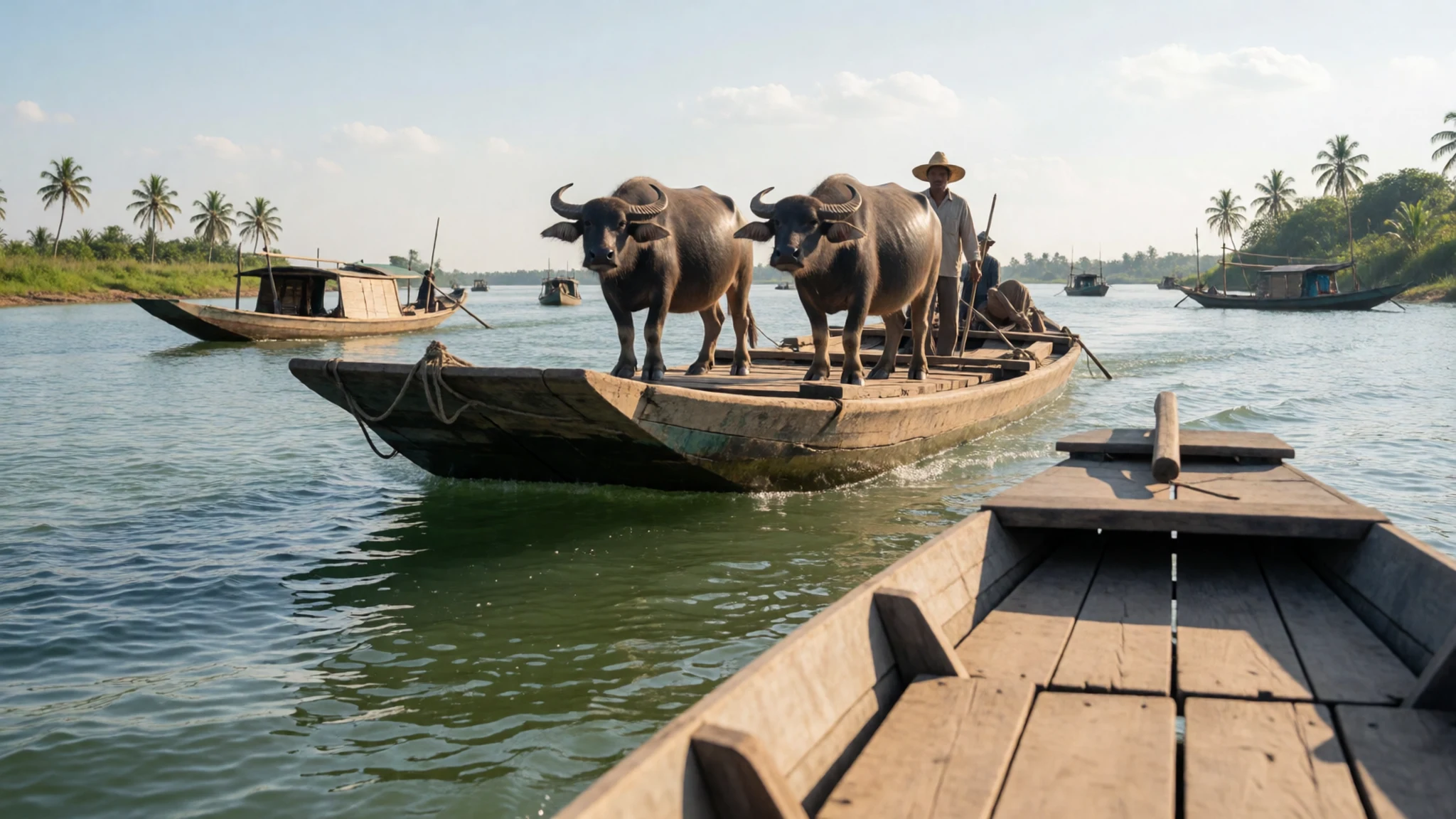
- Farmland on the small islands — Small islands near Don Puay and Don Loppadi
Away from the guesthouses, the islands are farmed. Sandbanks and riverbank plots grow cucumbers, vegetables and herbs, watered by hand when the river drops. Cattle, chickens, ducks, pigs and water buffalo wander the tracks, and villages go about their business with little interest in visitors. Cycling out from Don Det to the quieter islands shows the place as residents know it.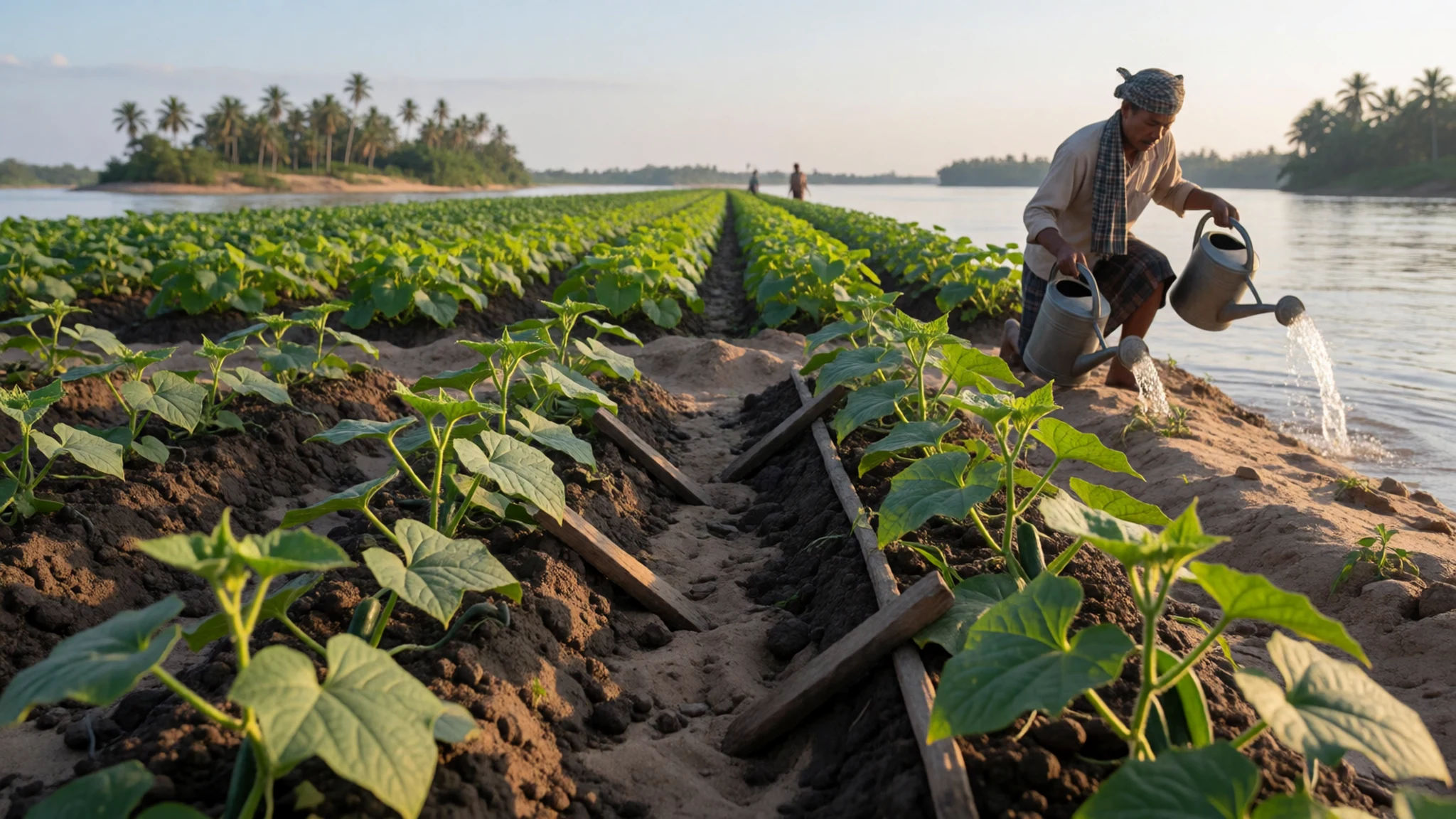
Culture
Si Phan Don is a rural place with a village rhythm, and most of its social life runs on quiet routines. Lao Buddhism shapes the calendar, and the temples on the islands are modest, often plain buildings where monks and local families come and go. Visitors are welcome, but the islands are not a stage set. The people who live here are farmers and fishermen as much as hosts.
Nights are quiet, and most places close well before midnight. Beach parties with candles, guitars and drums are a known source of irritation to locals, the authorities and other travellers, so if a party is the goal, guesthouses can arrange a gathering at a more remote spot reached by boat. Marijuana and mushrooms are tolerated at some patio restaurants on Don Det, but they remain illegal in Laos.
Lao people are generally patient and courteous, and raised voices or public displays of anger are poorly received. Dress modestly away from the beaches, and do not touch anyone on the head, which is considered the most sacred part of the body.
Remove your shoes at any temple or house where you see a step up and slippers waiting, and ask before photographing people, especially children and monks.
What to wear
Traditional dress on Si Phan Don is the Lao dress of the Mekong valley. Women traditionally wear the sinh, a woven tube skirt made from silk or cotton, with a patterned hem and a fitted blouse, often finished with a phaa biang shawl on formal occasions. The weaving is slow, done on a backstrap or simple loom, and the patterns are passed down within families. Men traditionally wear checked cotton cloth wrapped as a sarong, sometimes with a plain shirt.
What people wear now is mostly practical. Everyday clothes are cotton t-shirts, shorts, sarongs and sandals, with women in the villages still wearing sinh on market days, temple visits and festivals. Fishermen and farmers dress for the water and the sun, with wide-brimmed hats, long sleeves for the fields and bare feet on the sandbanks.
A visitor should dress for heat and the river. Light cotton or linen, a sarong for temples and a long-sleeved layer for evenings keep off mosquitoes. Shoulders and knees should be covered when walking through villages or entering a temple. Sturdy sandals are best for the rocky paths near the falls, and flip-flops will do for the guesthouse strip.
What to eat
- Sticky rice with grilled fish — A morning market or a riverside grill on Don Det
The Lao meal revolves around sticky rice, eaten by hand from a woven basket. It is served with fish grilled over charcoal and seasoned with lime, chilli and herbs. Mekong fish is the local staple, so it tastes fresh and simple, and it is the dish most worth trying early.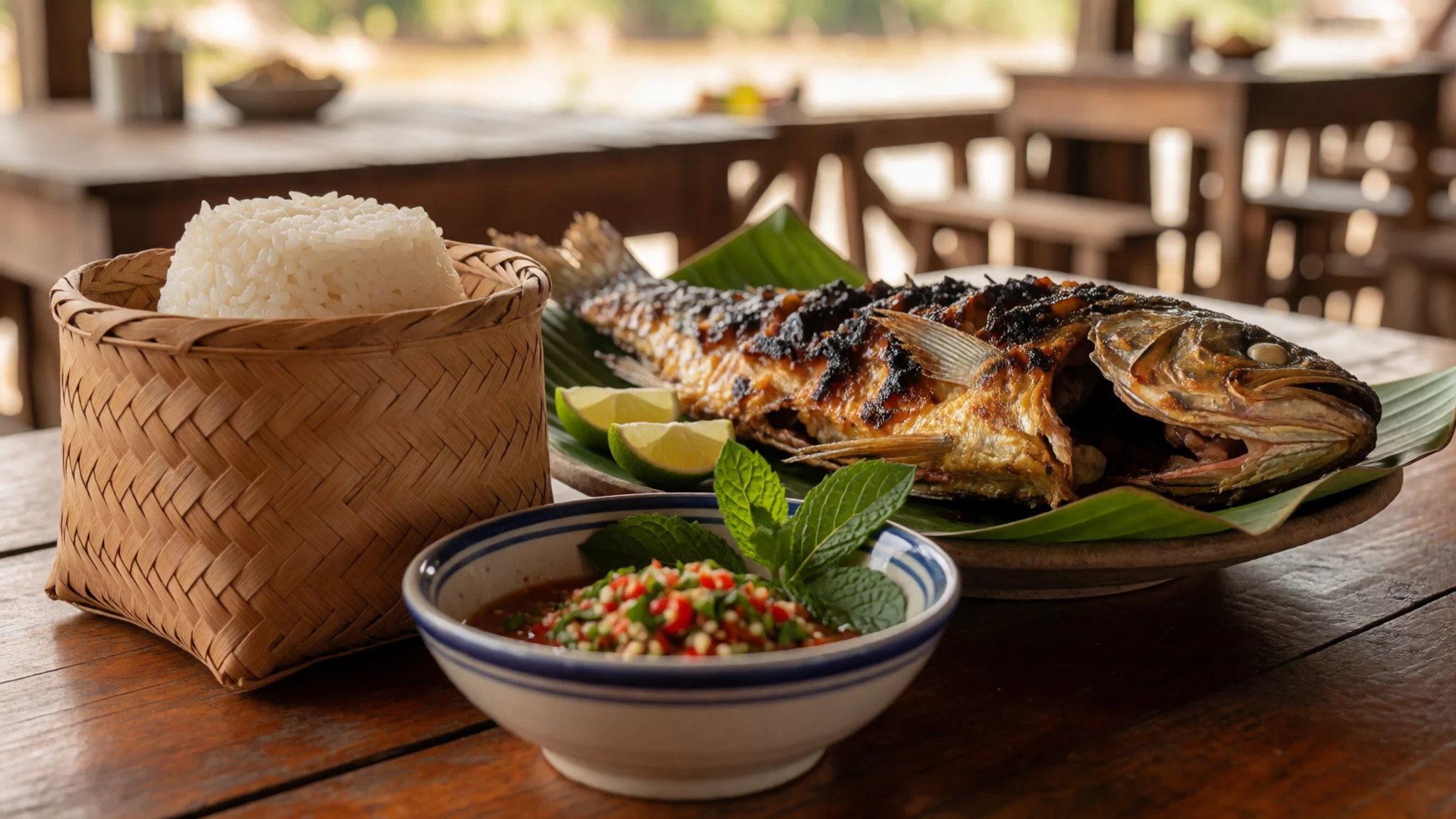
- Larb — Any Lao eatery on the main path of Don Khon
Larb is a minced meat salad, usually chicken, pork or fish, tossed with lime juice, fish sauce, mint, spring onion and toasted ground rice. It is sharp, herby and often hot unless asked for mild. Lao eateries serve it with sticky rice and fresh greens.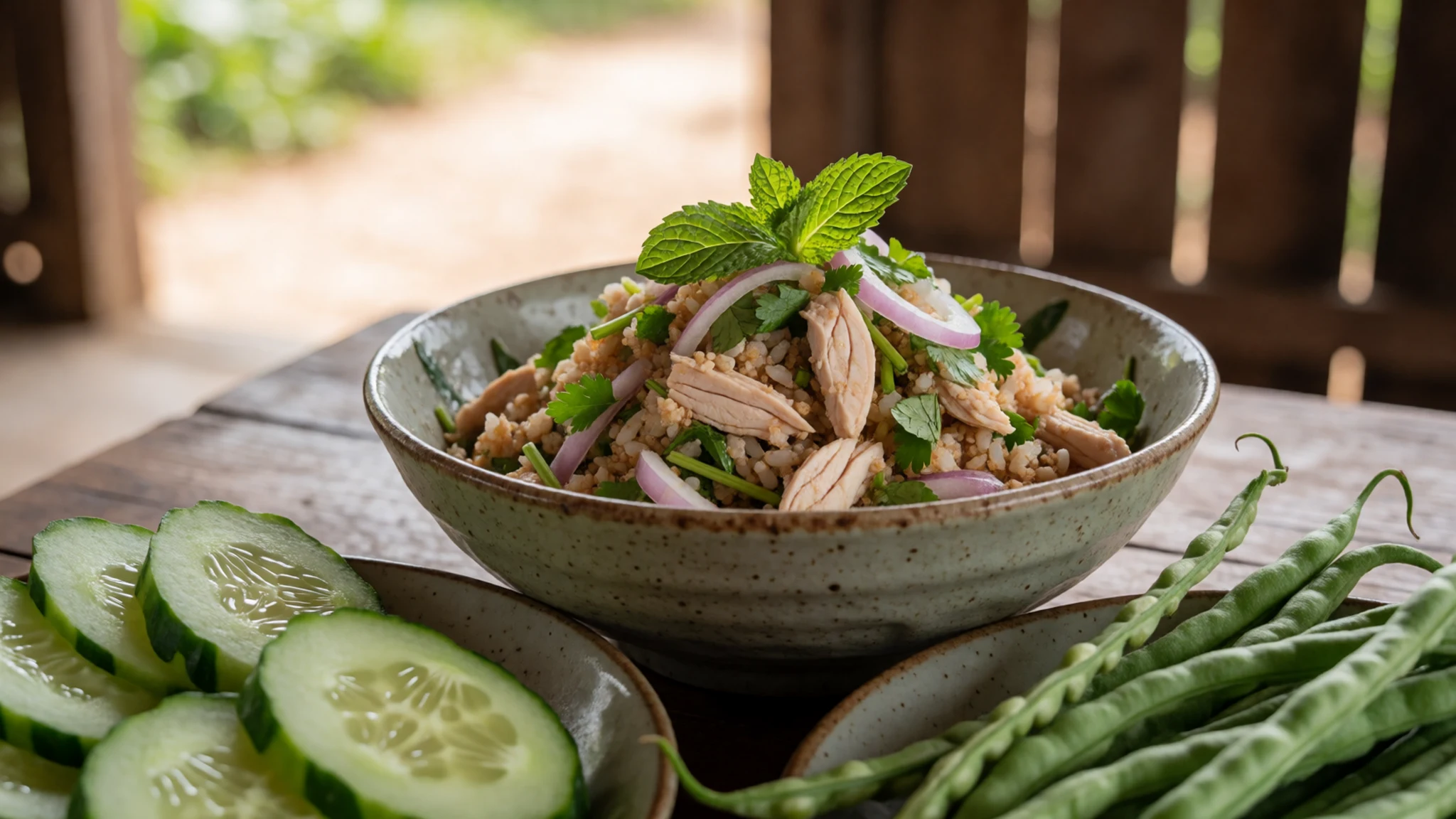
- Green papaya salad — Village eateries and the stalls near the market
Green papaya is pounded in a mortar with chilli, garlic, lime, tomato and fish sauce, sometimes with dried shrimp. It is crunchy, sour and very spicy, and locals eat it alongside grilled dishes and sticky rice. Asking for it less spicy is usually understood. - Fresh fruit shakes — Guesthouse patios along the river on Don Det and Don Khon
Fruit shakes appear on almost every menu, blended with banana, mango, papaya or pineapple, usually with ice and sometimes a little condensed milk. They are made to order and are the easiest way to cool down in the afternoon heat, especially after a bicycle ride. - Beerlao at sunset — The western side of Don Det, facing the river
Beerlao is the national beer and is sold across the islands, usually in large bottles. The best place to drink it is the western end of Don Det, where several guesthouses and riverside restaurants face the sunset over the water.
Plan it
Best time. November to April is the dry season, when the water is lower, the falls are easier to reach on foot and the weather is most reliable. December to February is the coolest stretch. June to October is the flood season, when about half the islands are submerged, the river runs high and fast and some routes are disrupted.
How long. 2–3
Getting there. Pakse is the nearest larger city and is reached by air or long-distance bus. From Pakse, take a bus south towards the Cambodian border, change to a jumbo for Ban Nakasang, then take the river ferry to Don Khong or Don Det. From Cambodia, vans from Kratie or Stung Treng include the boat trip to the islands.
Budget. low
Tips
- Visit Khone Phapheng Falls early, before the heat builds and the tour groups arrive
- Carry enough cash in kip, as card payments are not reliable on the islands
- Rent a bicycle from a guesthouse and cycle between the main islands
- Bring water, sun cream, mosquito repellent and a torch for unlit paths
- Book onward transport a day ahead where you can, especially for the Cambodia crossing
Etiquette
- Take off your shoes at temples and homes where a step up waits
- Keep beach parties quiet and avoid loud gatherings after dark
- Ask before photographing people or monks
Nearby
Sources
- Wikidata Q1319369 (CC0)
- Wikipedia: Si Phan Don (rev 1376185707) (CC BY-SA 4.0)
- Wikivoyage: Si Phan Don (rev 5186341) (CC BY-SA 4.0)
- Tango7174, Champasak DonKhone LiPhi1 (CC BY-SA 4.0)
- Tango7174, Champasak DonKhone DonDet2 (CC BY-SA 4.0)
- Basile Morin, River bank of Don Khon with stilt wooden houses (CC BY-SA 4.0)
- Basile Morin, Mekong beach in Si Phan Don (CC BY-SA 4.0)
- Basile Morin, Transport of buffalos on the Mekong (CC BY-SA 4.0)
- Basile Morin, Mekong pirogue at sunset in the 4000 islands (CC BY-SA 4.0)
- Basile Morin, Man watering cucumbers on a small island (CC BY-SA 4.0)
- Basile Morin, Kitchen garden on a Mekong bank (CC BY-SA 4.0)


