Shetland
Shetland, United Kingdom
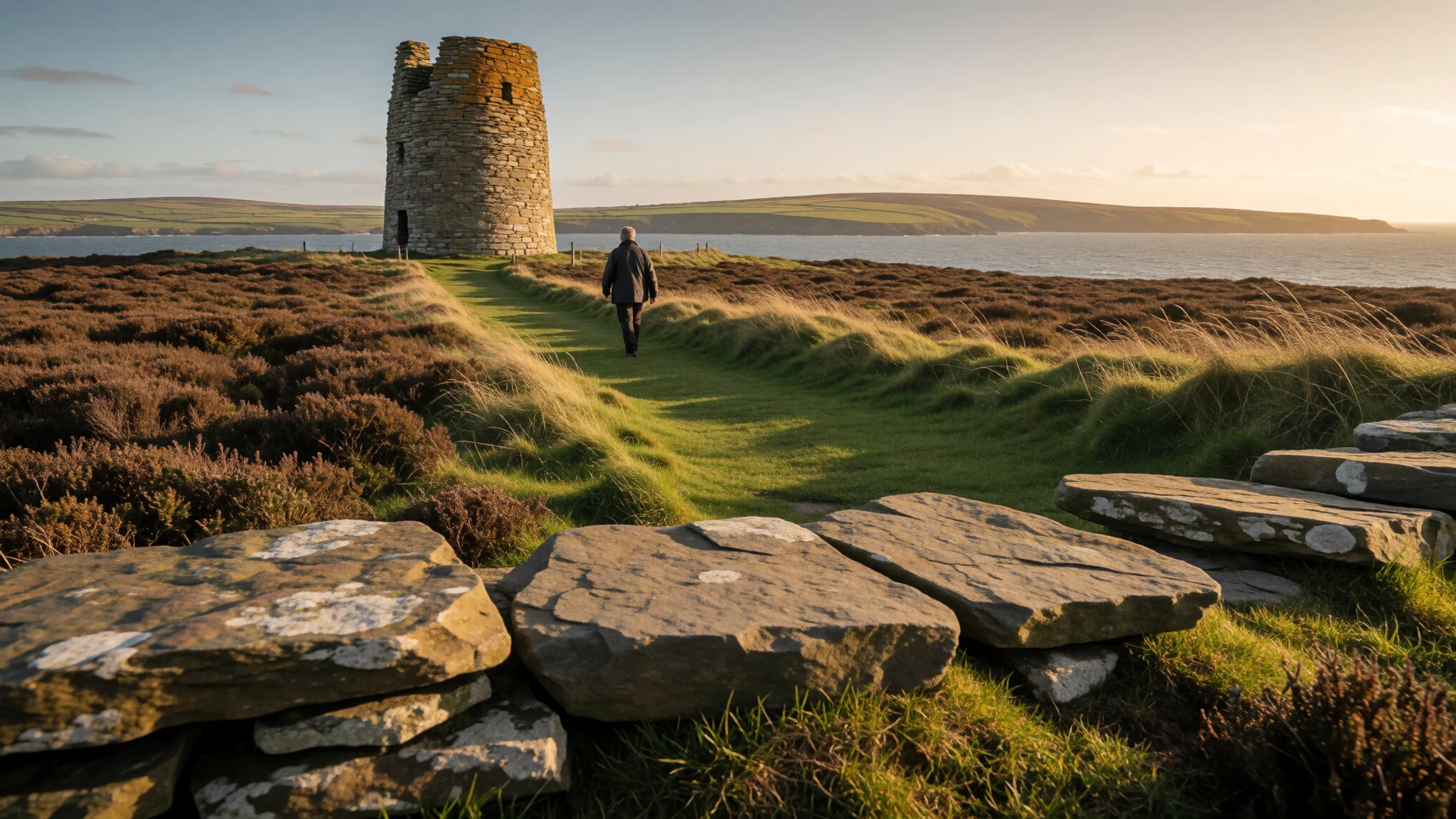
Shetland is a windswept northern archipelago of Norse names, prehistoric stone towers, fiddle music and long summer light, reached only by sea or air.
The place
Shetland is the northernmost part of the United Kingdom, a scatter of islands lying between Orkney, the Faroe Islands and Norway, about 170 km from the Scottish mainland and 220 km from Norway. Around 23,000 people live here, spread across sixteen inhabited islands. The biggest, known simply as the Mainland, holds Lerwick, the capital since 1708 and the only burgh, along with most of the shops, ferries and places to eat. Atlantic water meets the North Sea along these coasts, and the result is an oceanic climate: mild for the latitude, damp, and rarely still. With so few trees to slow the wind, the land reads as low rolling hills, peat moor, sheep pasture and a coastline cut into inlets, cliffs and narrow sea lochs. Distances look short on a map, but many roads are single-track, ponies and sheep wander across them, and a ferry hop is needed to reach outer islands such as Unst. The place feels more Scandinavian than Scottish in its names, its festivals and its habit of gathering for music. Light matters here: summer evenings barely darken, while winter days are short and often stormy, which shapes both the mood and the logistics of any trip. Getting here takes planning, since there are almost no international links and everything routes through the Scottish mainland.
Its story
Shetland has been lived in since the Mesolithic, long before anyone wrote its name down, and the stone towers and house foundations at sites such as Jarlshof show how continuous that occupation was. The change that shaped today's islands came with Norse settlers in the late eighth and ninth centuries. What happened to the Picts already living here is uncertain. The Scandinavian inheritance runs deep: place names are Norse, and surnames ending in -son preserve the old patronymic habit. Vikings used the islands as a base for raids on Norway and Scotland, until the Norwegian king Harald Fair Hair annexed Orkney and Shetland in 875. Shetland then belonged to an earldom of Orkney, which at its widest stretched south to Caithness and Sutherland on the British mainland. Christianity arrived around the late tenth century. For several more centuries the islands stayed under Norwegian rule, and only in 1472 did Scotland take them over. Scalloway served as capital until 1708, when the role passed to Lerwick, a harbour town that grew with the sea trade. That Norse past is not buried history. It surfaces every winter in Up Helly Aa, when costumed guizers march with torches and burn a longship, and it sits behind the fiddle tradition that still fills halls and kitchens.
What to see
- Shetland Museum and Archives — Lerwick
The Shetland Museum and Archives in Lerwick is the sensible first stop, because its displays tie together the geology, wildlife and long human story of the islands before any driving begins. It is indoors, so it also works as a refuge on a wet or gale-struck day. Check the official site for opening times.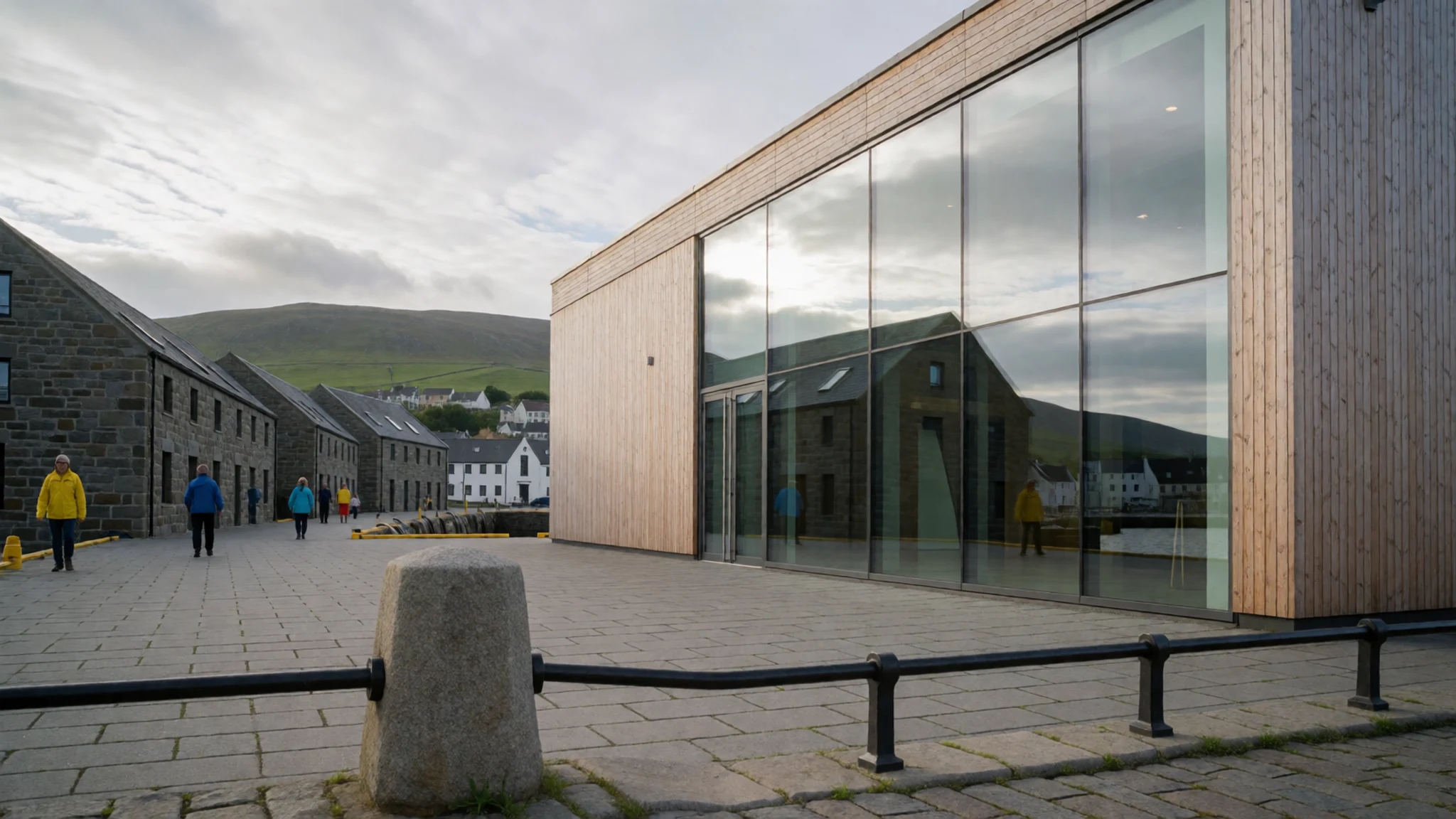
- Up Helly Aa Exhibition — Lerwick
Lerwick's Up Helly Aa Exhibition shows how the fire festival is made. Through the year, guizers build a Viking longship, and by summer the work in progress is on display alongside costumes and background on the event. The torchlit procession and ship burning itself take place on the last Tuesday in January, so summer visitors get the story rather than the spectacle.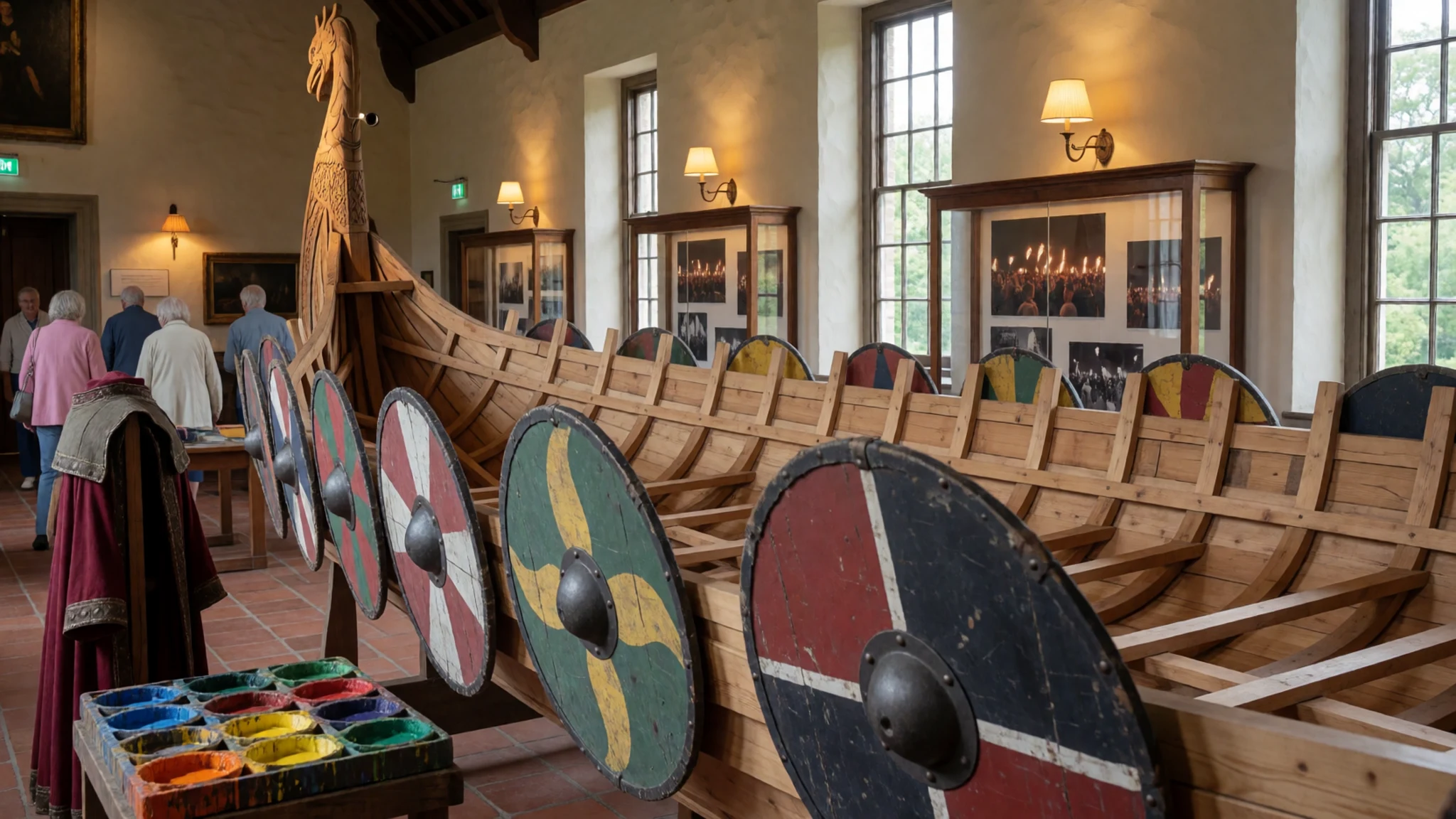
- Jarlshof — Sumburgh, south Mainland
Jarlshof, near Sumburgh at the southern tip of the Mainland, packs many periods of settlement into one site, from prehistoric houses through an Iron Age broch to later buildings. Walking between the walls makes the sweep of time easy to grasp. Old Scatness, close by, adds more excavated Iron Age remains.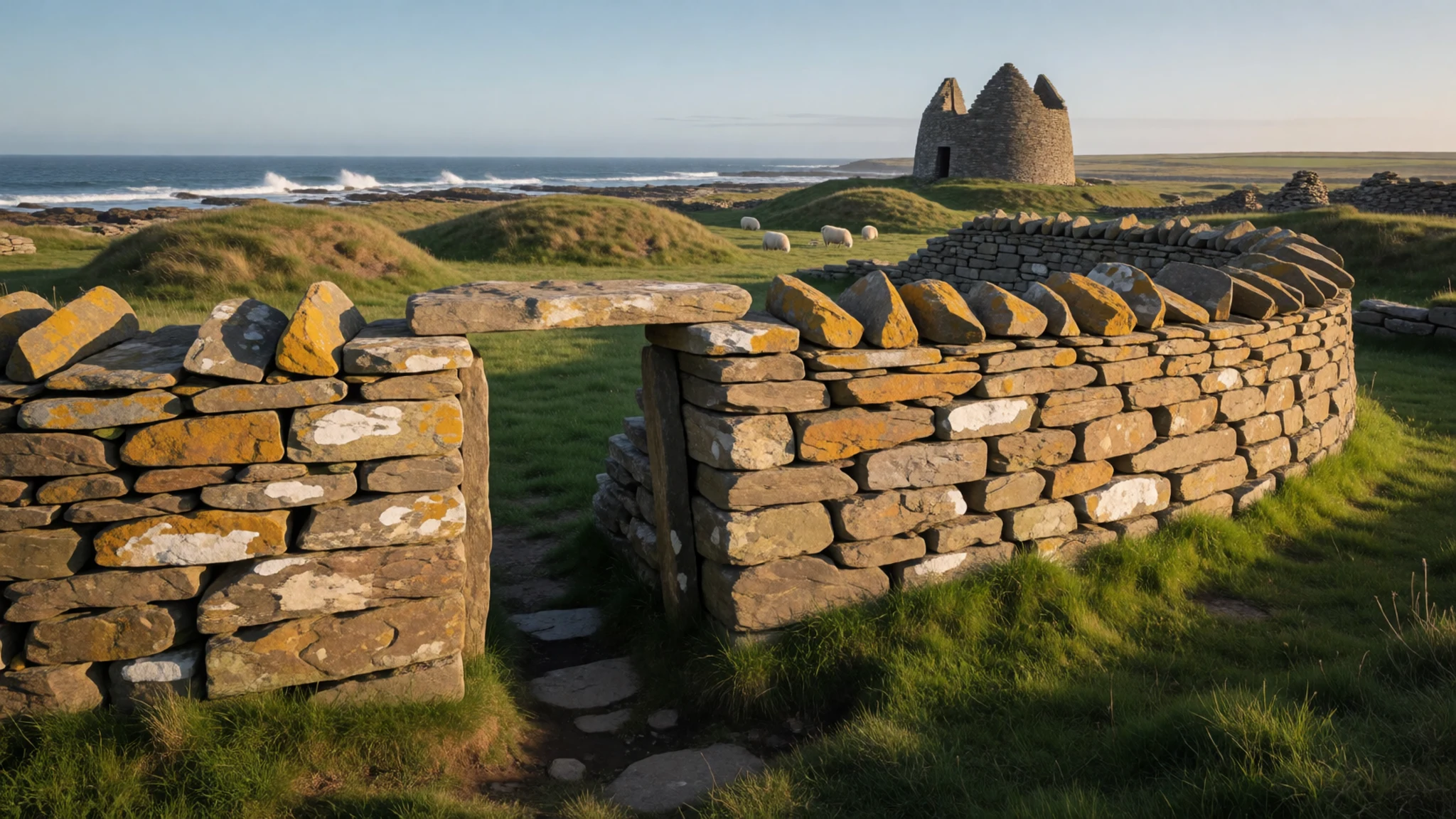
- Mousa Broch — Mousa, off Sandwick
Mousa Broch is an Iron Age stone tower on the small island of Mousa, reached by boat from Sandwick on the Mainland. Sailings depend on season and tides, so book through the operator and check the official site. The crossing and the short walk across the island make a satisfying half-day outing.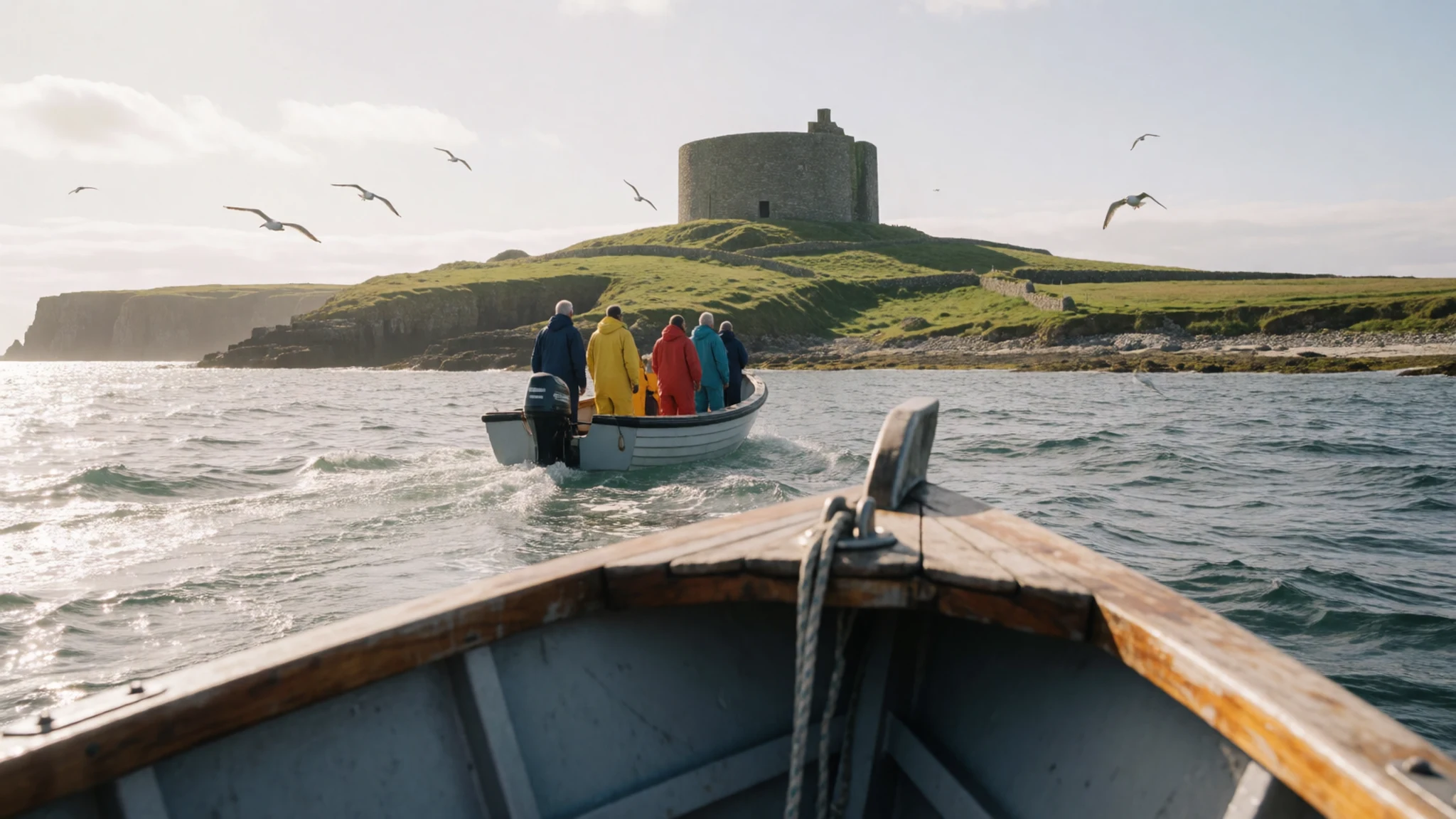
- Scalloway Castle — Scalloway
Scalloway, the old capital on the west side of the Mainland, has the castle most worth visiting, though Shetland's castles are mostly ruined or derelict. Go for its shape against the harbour rather than for interior displays. The village still has a working fishing harbour, which gives the stop a lively backdrop.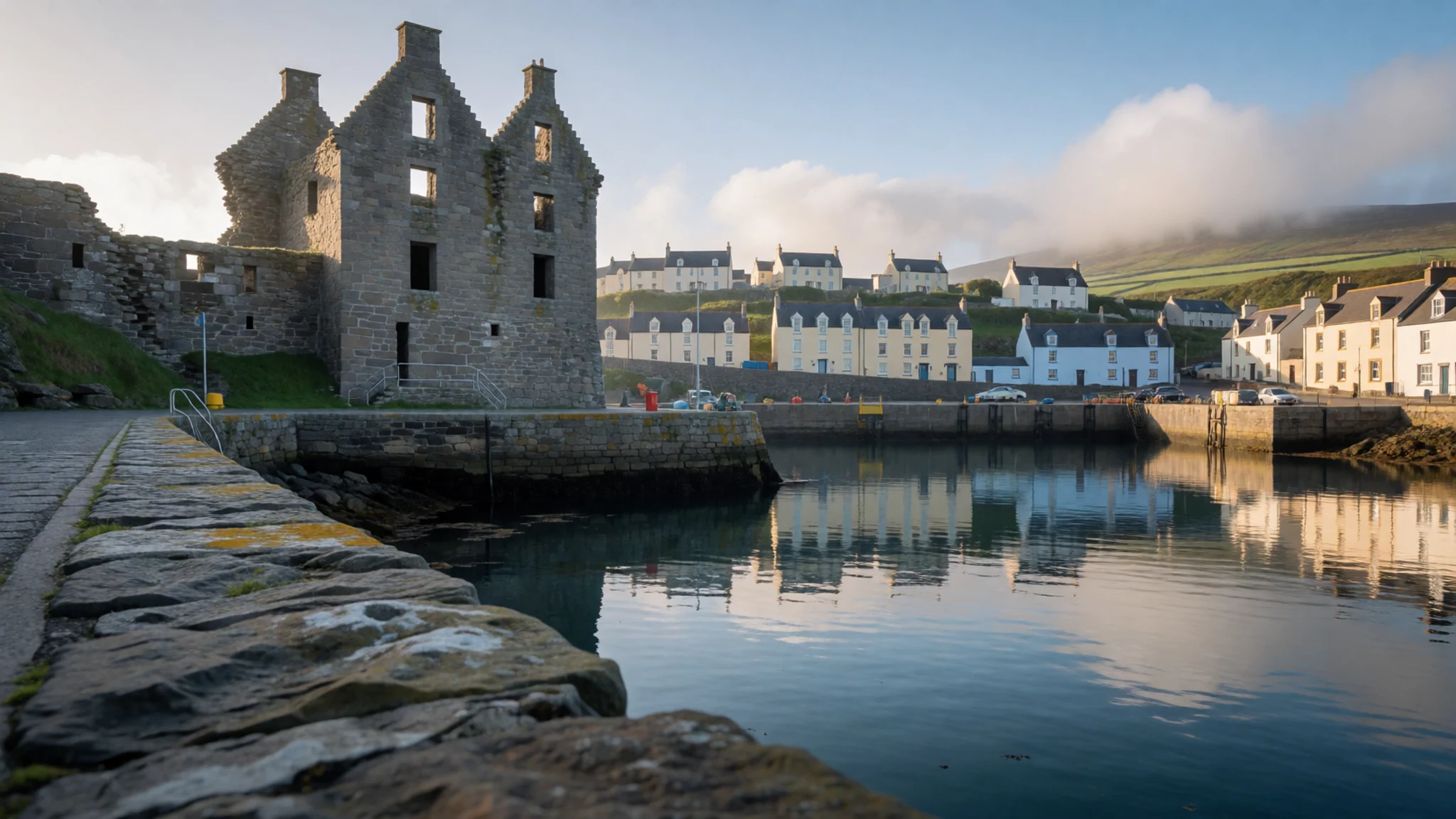
- Otters and roadside wildlife — Coastal inlets across the islands
Shetland's coasts suit otters, which locals call draatsi, particularly where a freshwater stream runs into the sea. Early morning or dusk and a quiet approach help. Keep watching the road as well, because sheep and Shetland ponies roam free on the narrow lanes.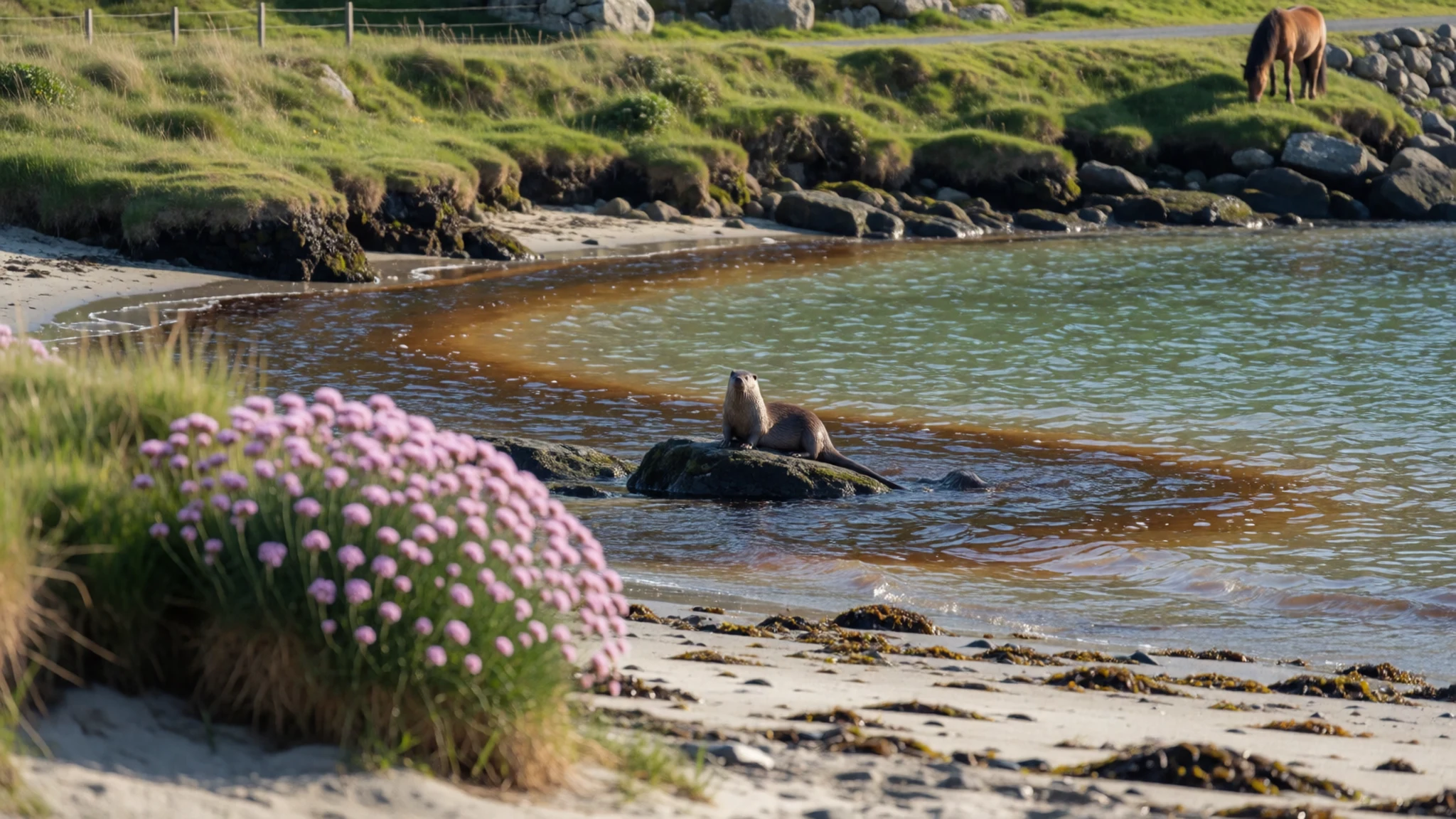
Culture
Shetland's culture rests on a Norse inheritance and a working life tied to sea, croft and weather. Names, dialect words and the patronymic surnames all point towards Scandinavia, and the islands feel their closeness to Norway more than to London. Music is central: the fiddle tradition is strong, and informal sessions, dances and concerts happen across the islands. Up Helly Aa, held in Lerwick on the last Tuesday in January, is the vivid public face of this heritage, with squads of costumed guizers, a torchlit procession and a longship set alight; smaller versions take place elsewhere in the islands. In summer, village halls host Sunday teas with home baking, usually raising money for charity, and they are an easy way to meet people. Crofting, fishing and knitting remain part of daily life, so a farm gate, a fishing quay or a peat bank is often somebody's workplace rather than a sight. Shetlanders are generally friendly and direct, with a dry humour, and appreciate visitors who show interest in local ways without treating the place as a theme park. Ask before photographing people or walking across croft land, and close any gate you open so livestock stay where they belong.
What to wear
Shetland's best-known traditional textile is knitwear, made from the wool of the islands' own sheep. Fair Isle patterning, with bands of small coloured motifs worked in several shades on jumpers, hats and gloves, is the classic look, and fine lace shawls knitted in Unst and elsewhere are another local craft. These were once made largely at home, in the gaps between croft work, and sold or traded. Knitting is still practised, though more as a craft and small business than a necessity. For Up Helly Aa the traditional dress is costume: guizers wear Viking-inspired outfits of helmets, shields and tunics, prepared by each squad. Day to day, people wear what the weather demands: waterproof jackets, wool jumpers, sturdy boots and caps, with smarter clothes for dances and weddings. A visitor should dress in layers even in July, since wind and rain can arrive within the same hour. Pack a windproof, waterproof shell, a warm mid-layer, a hat and gloves for exposed headlands, and walking shoes or boots with good grip for wet turf and rocky shores. Churches and museums ask for nothing beyond ordinary respect, and a hand-knitted piece bought from a local maker makes a lasting souvenir.
What to eat
- Reestit mutton — Traditional cafés and restaurants in Lerwick, and home cooking at village events
Salted and dried mutton, a Shetland speciality that was once a way of keeping meat through winter. It is usually served in a potato soup or alongside bannocks. The flavour is salty and strong, so trying it in soup first is a gentle introduction.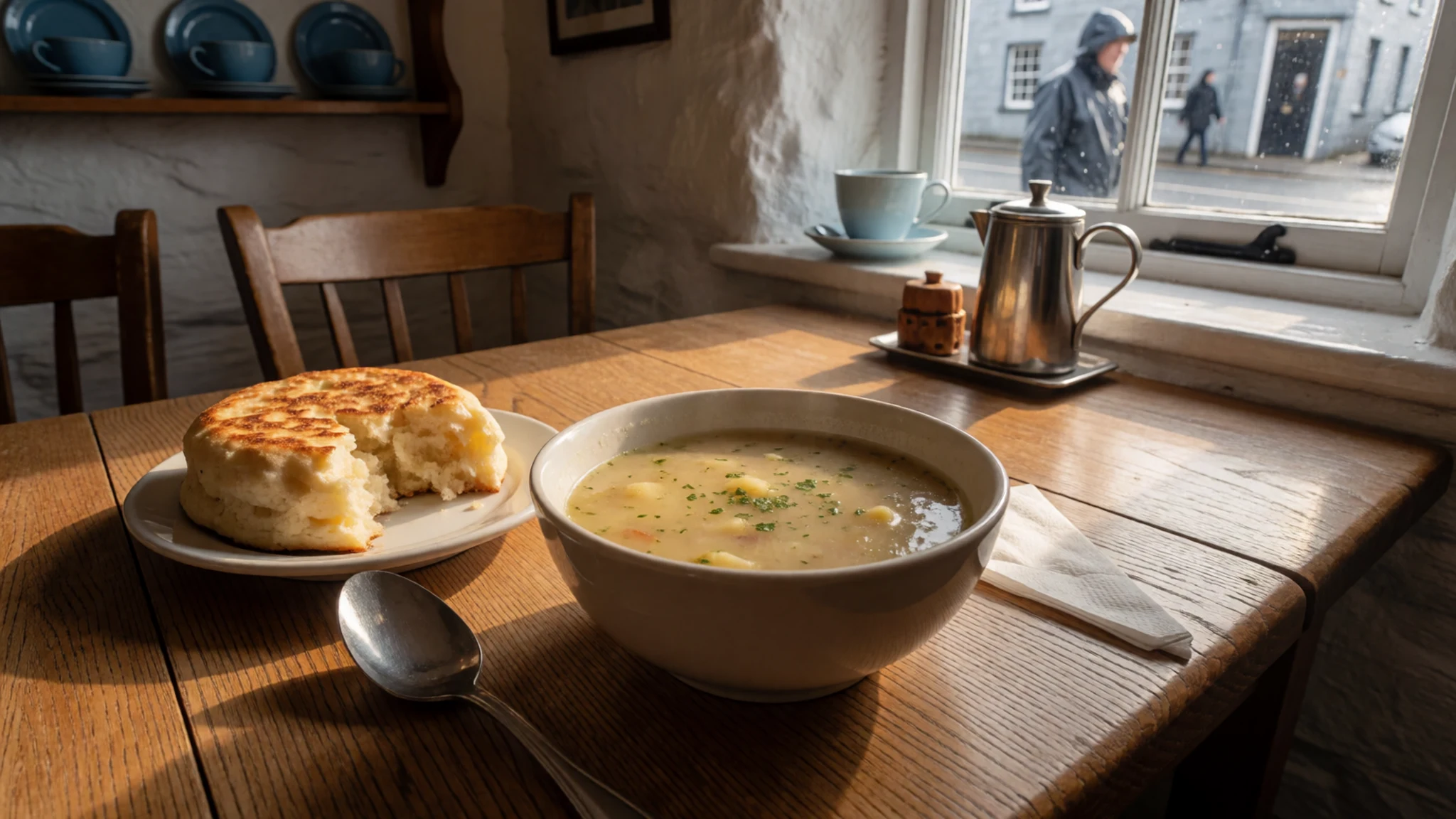
- Shetland lamb — Restaurants in Lerwick and dining rooms of country inns
Lamb from animals raised on rough island grazing, roasted or served in stews. Menus in Lerwick and in the dining rooms of country inns elsewhere often feature it. Availability varies by season, so ask what is local that day.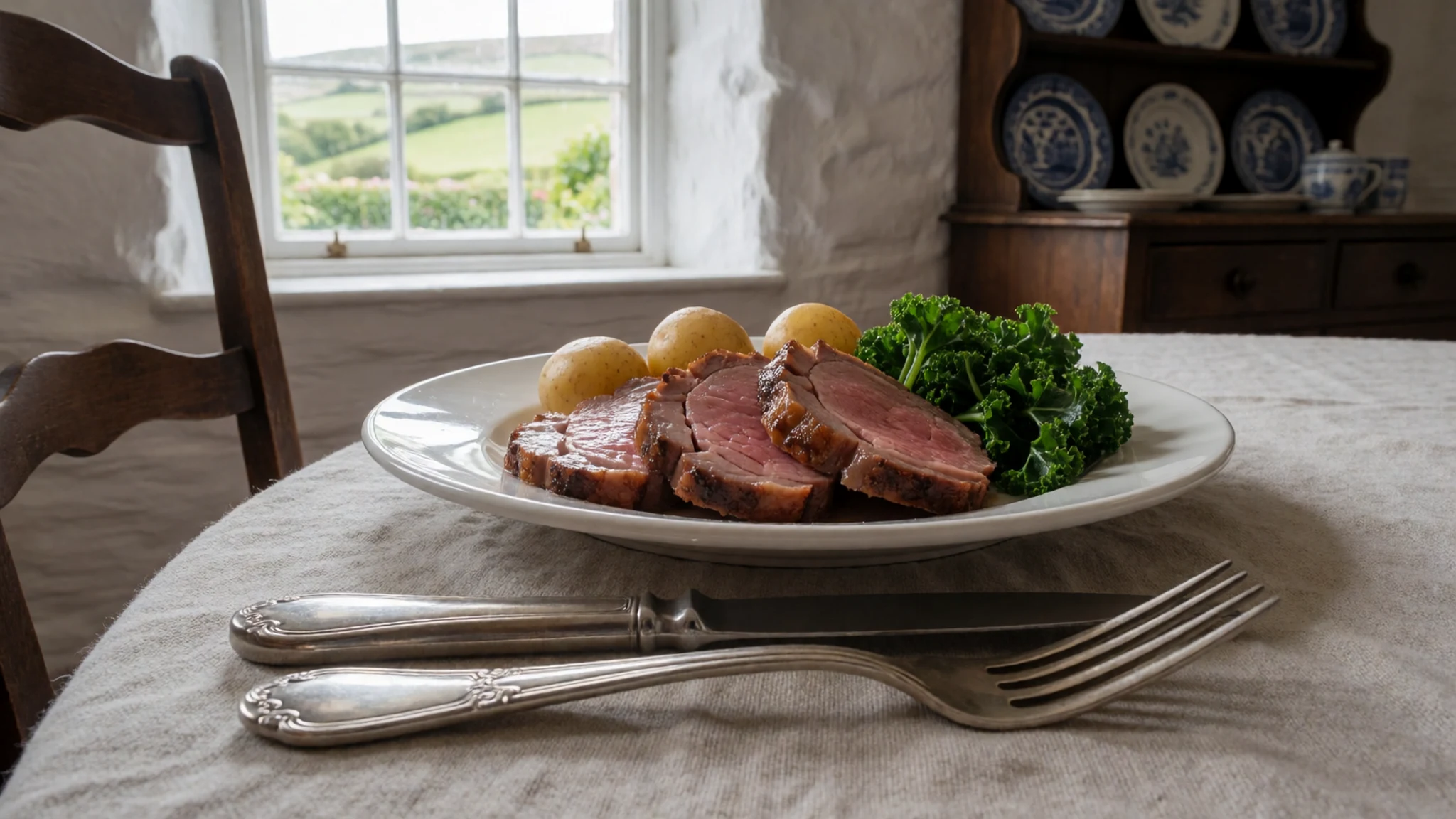
- Fresh local seafood — Restaurants and takeaways in Lerwick and fishing harbours such as Scalloway
Fish and shellfish landed in island harbours form the backbone of local eating, from haddock and cod to mussels and crab. Order whatever is freshest rather than hunting for one particular dish. - Sunday tea and home baking — Village halls across the islands, in summer
In summer, village halls lay on Sunday teas of sandwiches, tray bakes, scones and cakes, with proceeds usually going to charity. It is simple, generous food and one of the friendliest ways to spend an afternoon. - Shetland gin and malt whisky — Unst, in the north isles
The Shetland Distillery Company on Unst makes gin and a blended malt whisky. A small bottle travels well as a souvenir. Check the distillery's own site before travelling if a visit or tasting is planned.
Plan it
Best time. May to August for long daylight, milder weather and the easiest walking and wildlife watching; the oceanic climate stays windy and damp all year. Late January suits those who want Up Helly Aa in Lerwick, though winter days are short and storms can disrupt ferries and flights.
How long. 4–6
Getting there. Fly to Sumburgh Airport (LSI) at the southern tip of the Mainland, with Loganair services from Aberdeen, Dundee, Edinburgh, Glasgow, Inverness and Kirkwall; Lerwick is a drive north from there. Car hire is available at the airport. Ferries also run from mainland Scotland, so check the operators' sites for current sailings.
Budget. mid
Tips
- Book flights, car hire and Mousa boat trips well ahead for summer
- Carry waterproofs and warm layers in every season
- Allow extra time on single-track roads and watch for sheep and ponies
- Check flight and ferry status in winter, when weather can cause delays
- Keep some cash for village halls and small shops
Etiquette
- Use passing places on single-track roads and never park in them
- Close gates and keep dogs under control around livestock
- Ask before photographing people or entering croft land
Nearby
Sources
- Wikidata Q47134 (CC0)
- Wikipedia: Shetland (CC BY-SA 4.0)
- Wikivoyage: Shetland Islands (CC BY-SA 4.0)
- Relief map of the Shetland Islands, Nilfanion (CC BY 3.0)
- Shetland2022OSM, Kelisi (CC BY-SA 4.0)
- Gulberwick IMG_3157, Ronnie Robertson (CC BY-SA 2.0)
- Interpretative map of Shetland geology, Derek Flinn (CC BY-SA 4.0)
- Starry Nights IMG_5868, Ronnie Robertson (CC BY-SA 2.0)
- Lerwick from Staney Hill, Remy Osman (CC BY 3.0)
- Jarlshof, aisled roundhouse and broch, Otter (CC BY 3.0)
- Wind Bound, Lerwick around 1880, JD Rattar (Public domain)


