Sheikh Zayed Grand Mosque
Sheikh Zayed Grand Mosque, United Arab Emirates
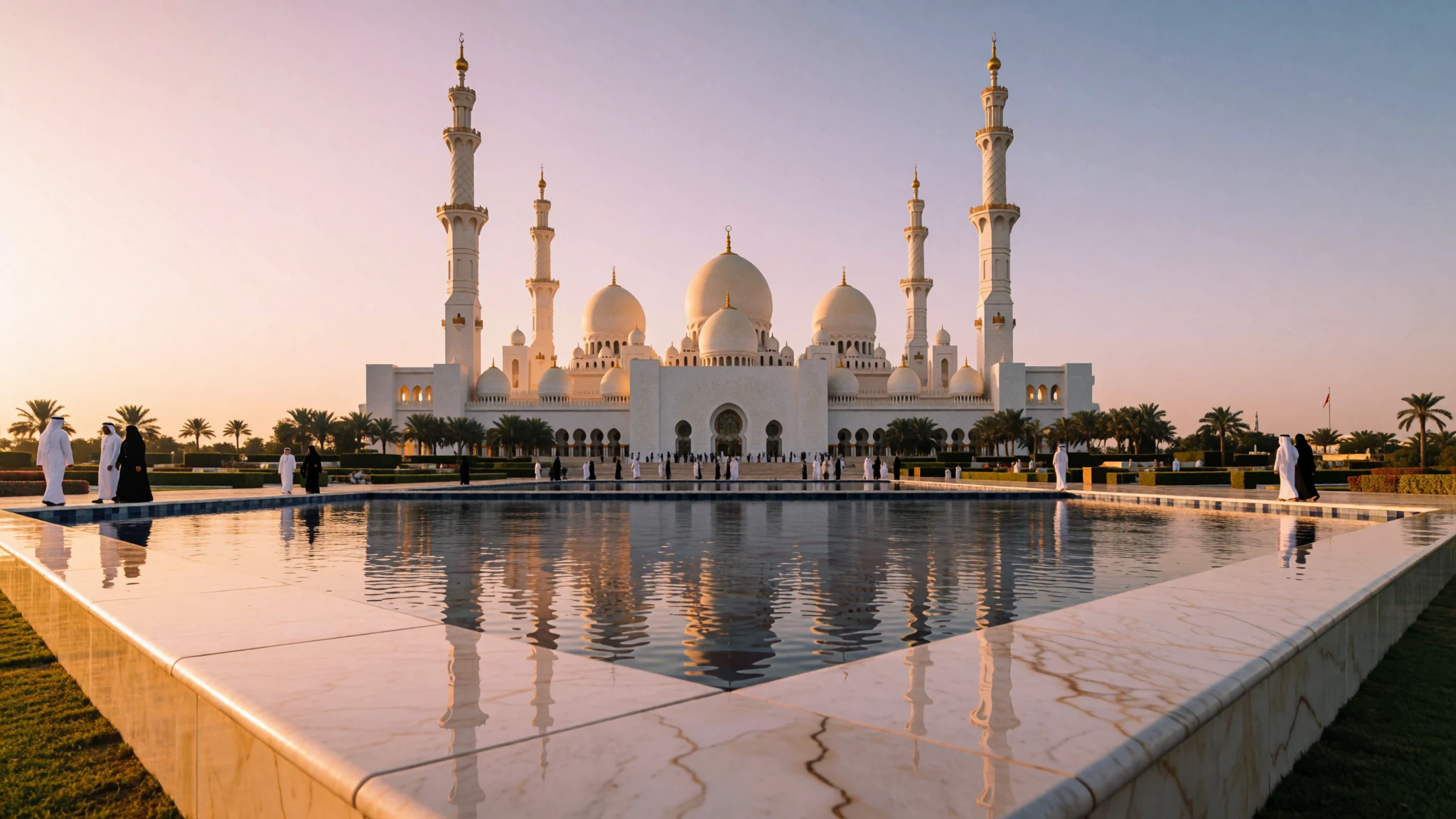
Visit the Sheikh Zayed Grand Mosque to witness a remarkable modern marvel uniting diverse Islamic architectural traditions across white marble halls.
The place
The Sheikh Zayed Grand Mosque dominates the southern gateway to Abu Dhabi, serving as the country's largest place of worship for daily Islamic prayers. Constructed between the late twentieth century and the year two thousand and seven, the sprawling building complex covers an expansive area that excludes exterior landscaping and vehicle parking. Its principal axis is carefully tilted slightly south of true west, perfectly orienting the sanctuary toward the holy Kaaba in Mecca. The complex is anchored by numerous gleaming white domes and towering minarets that house administrative offices and specialized libraries. Inside, vast prayer halls are illuminated by enormous chandeliers and covered by intricate carpets crafted by master artisans. Visitors arriving at the mosque walk through expansive reflecting pools that mirror the intricate floral stonework and gleaming columns under the bright desert sun. The surrounding grounds provide tranquil spaces for quiet contemplation before stepping inside the cooled marble interiors. Management teams oversee daily visitor programmes, ensuring that everyone can appreciate the craftsmanship while maintaining the sacred atmosphere of the sanctuary. Throughout the day, changing light transforms the exterior surfaces from brilliant white to soft amber and gold as the sun moves across the sky.
Its story
The Sheikh Zayed Grand Mosque was envisioned by the late president of the United Arab Emirates, Sheikh Zayed bin Sultan Al Nahyan, who passed away before its completion and was subsequently laid to rest within the courtyard. His grand vision was to establish a monumental structure that would successfully unite the rich cultural diversity of the wider Islamic world with contemporary and historical artistic values. Artisans, materials, and designers were brought together from every corner of the globe, including nations such as Italy, Germany, Morocco, India, Turkey, Iran, and the United Kingdom, turning the construction site into an international collaboration of craft. Marble, gold, semi-precious stones, ceramics, and massive quantities of wool and cotton were shipped to the capital to realise the ambitious design. After years of meticulous construction, the monumental doors opened to the public in December of two thousand and seven, instantly becoming an enduring symbol of national identity and architectural ambition. Today, the Sheikh Zayed Grand Mosque Center manages daily operations, operating not merely as a landmark for travellers, but as a vibrant educational hub dedicated to the study of Islamic history, calligraphy, and diverse scientific disciplines.
What to see
- Sheikh Zayed Grand Mosque Main Prayer Hall — Main Complex
The Sheikh Zayed Grand Mosque main prayer hall shelters an enormous handcrafted carpet and massive crystal chandeliers under a soaring central dome. Visitors entering this sacred space must walk quietly across the polished marble floors while admiring the intricate floral wall mosaics crafted from precious and semi-precious stones imported from across the globe.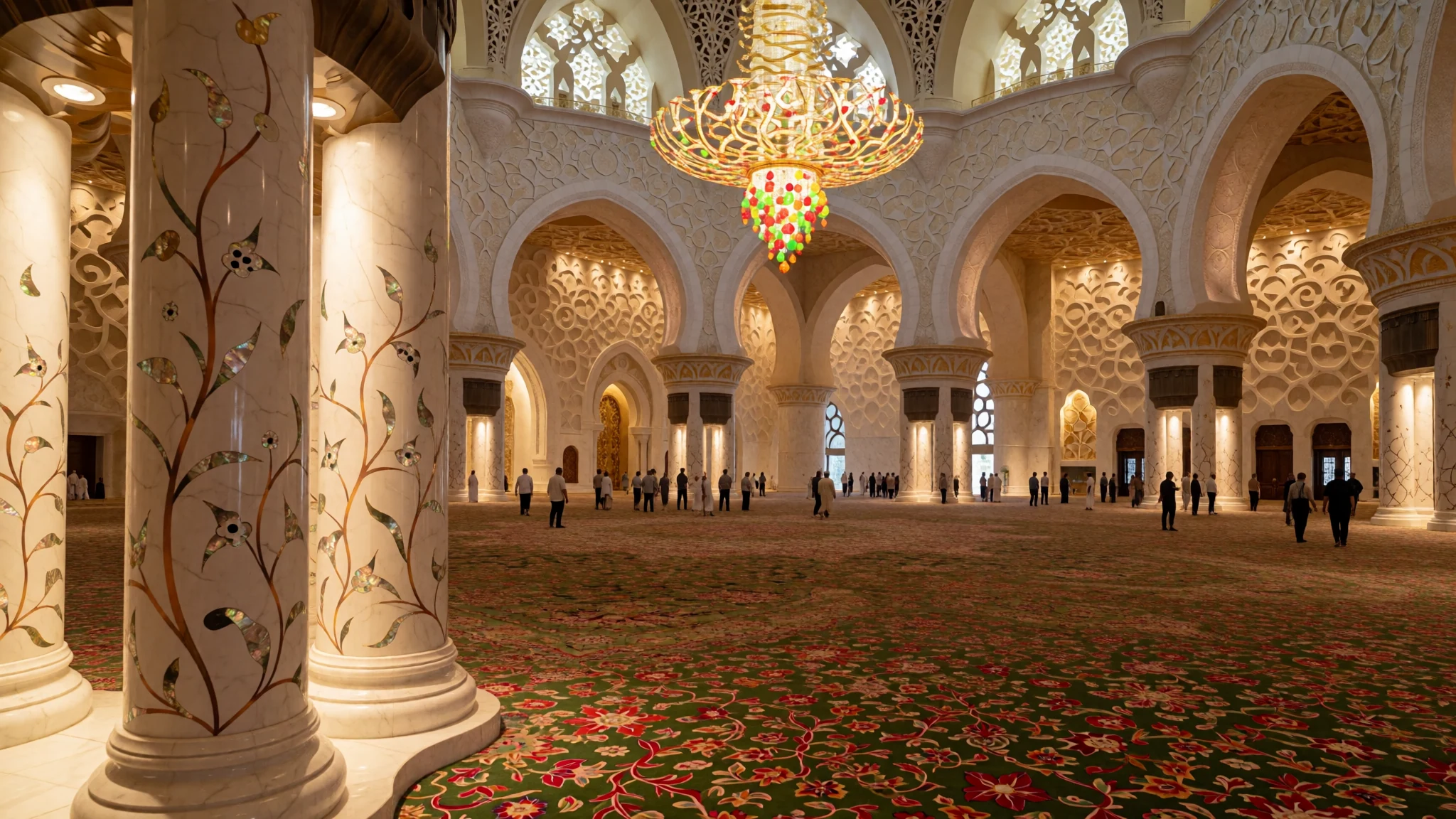
- Qasr Al Watan Presidential Palace — Ras Al Akhdar
Qasr Al Watan is an opulent working presidential palace opened to the public for diplomatic visits and cultural exhibitions. Guests can wander through vast vaulted halls adorned with golden details, intricate geometric patterns, and extensive libraries celebrating the governance, heritage, and scholarly contributions of the nation.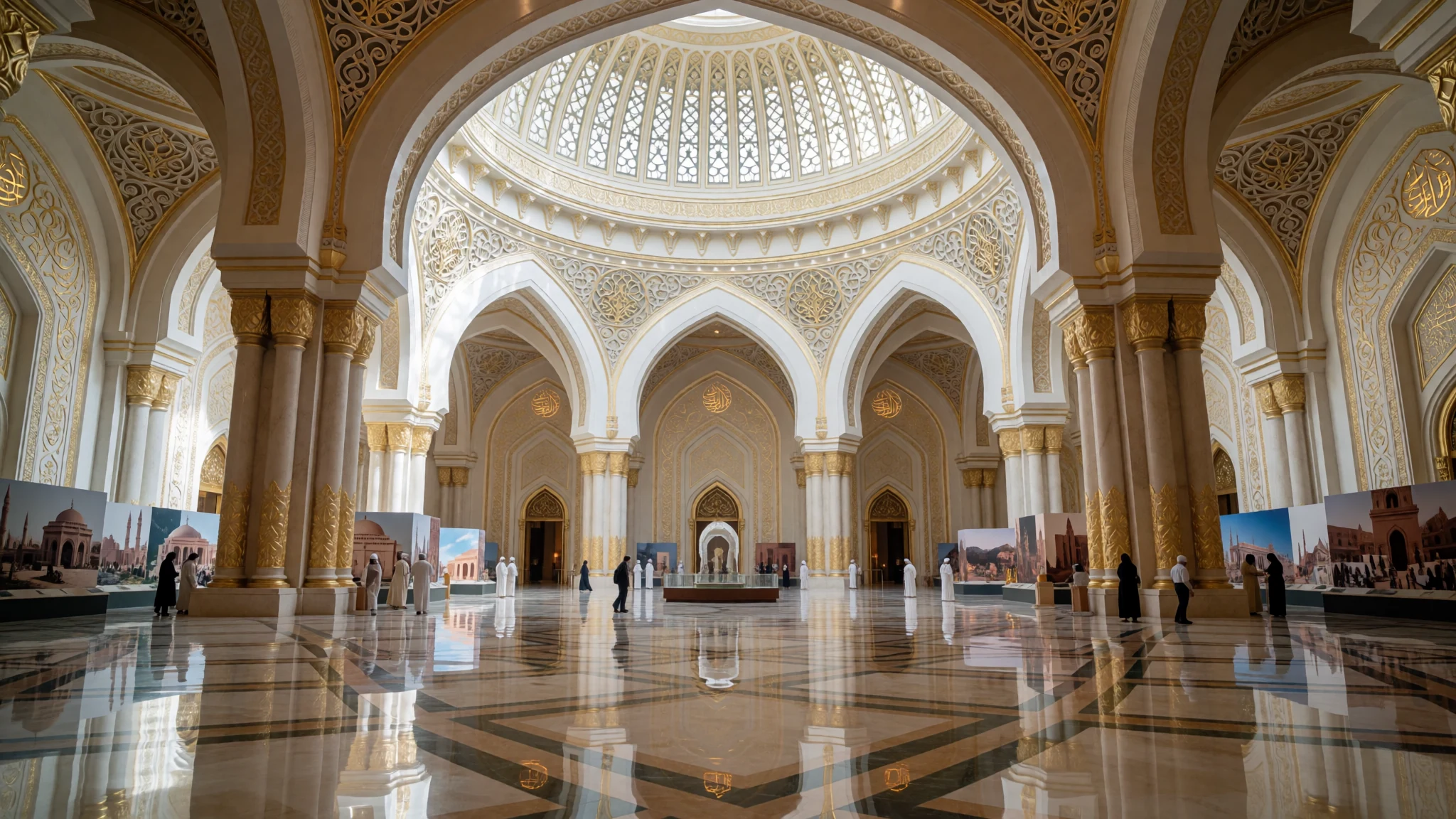
- Qasr al-Hosn Fort — Al Hosn
Qasr al-Hosn stands as the oldest historic stone building in Abu Dhabi, serving as a vital defensive watchtower and royal residence for generations of rulers. The surrounding cultural precinct now houses a fascinating museum documenting the remarkable transformation of the emirate from a pearl diving settlement into a modern metropolis.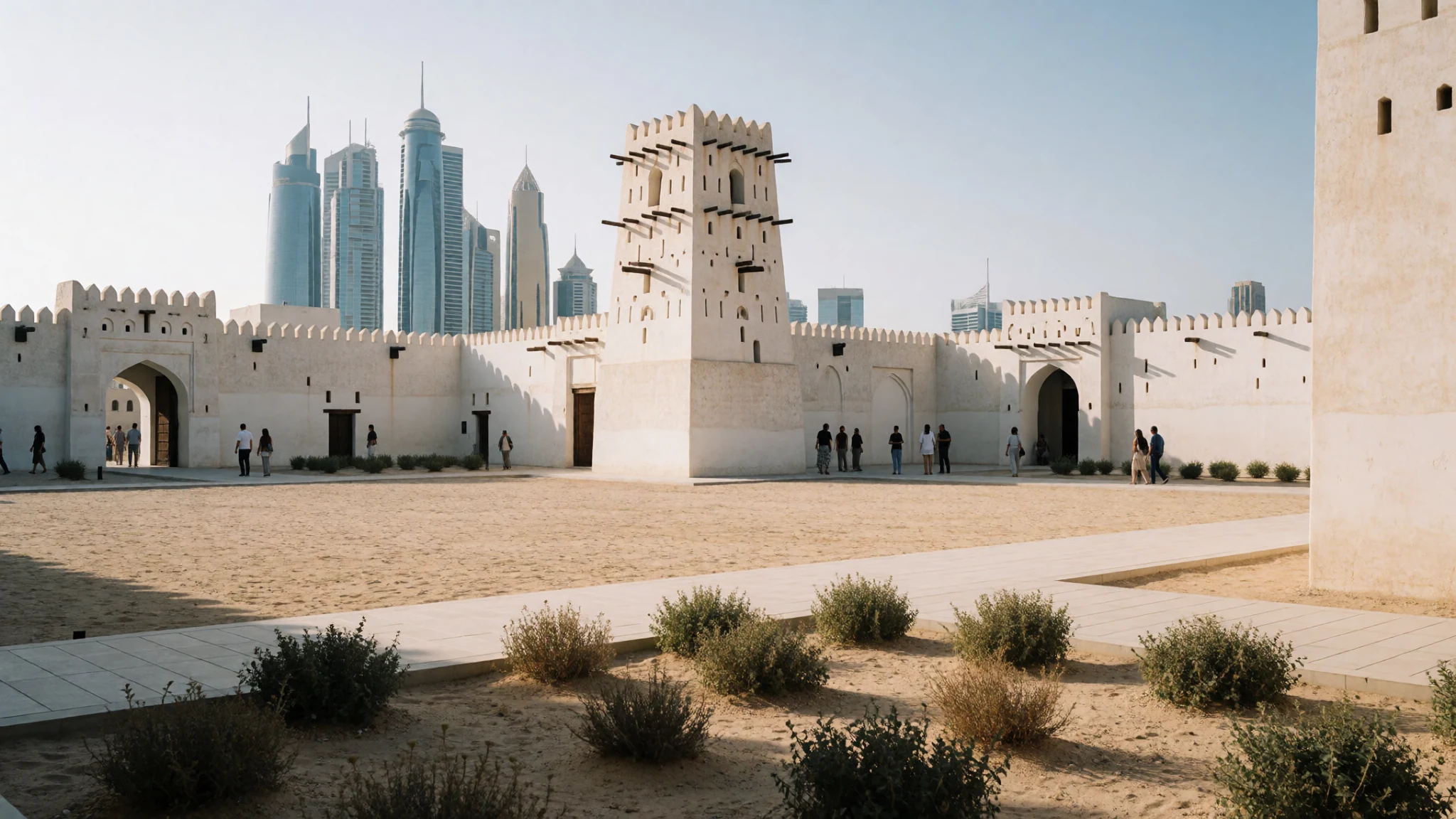
- Corniche Road Waterfront — Corniche
Corniche Road is the city's signature seaside boulevard, curving gracefully along a pristine stretch of coastline overlooking the sparkling waters of the Arabian Gulf. Walkers, cyclists, and families frequent the manicured parks, cycling tracks, and public beaches that line the route from the breakwater near Marina Mall to the eastern port.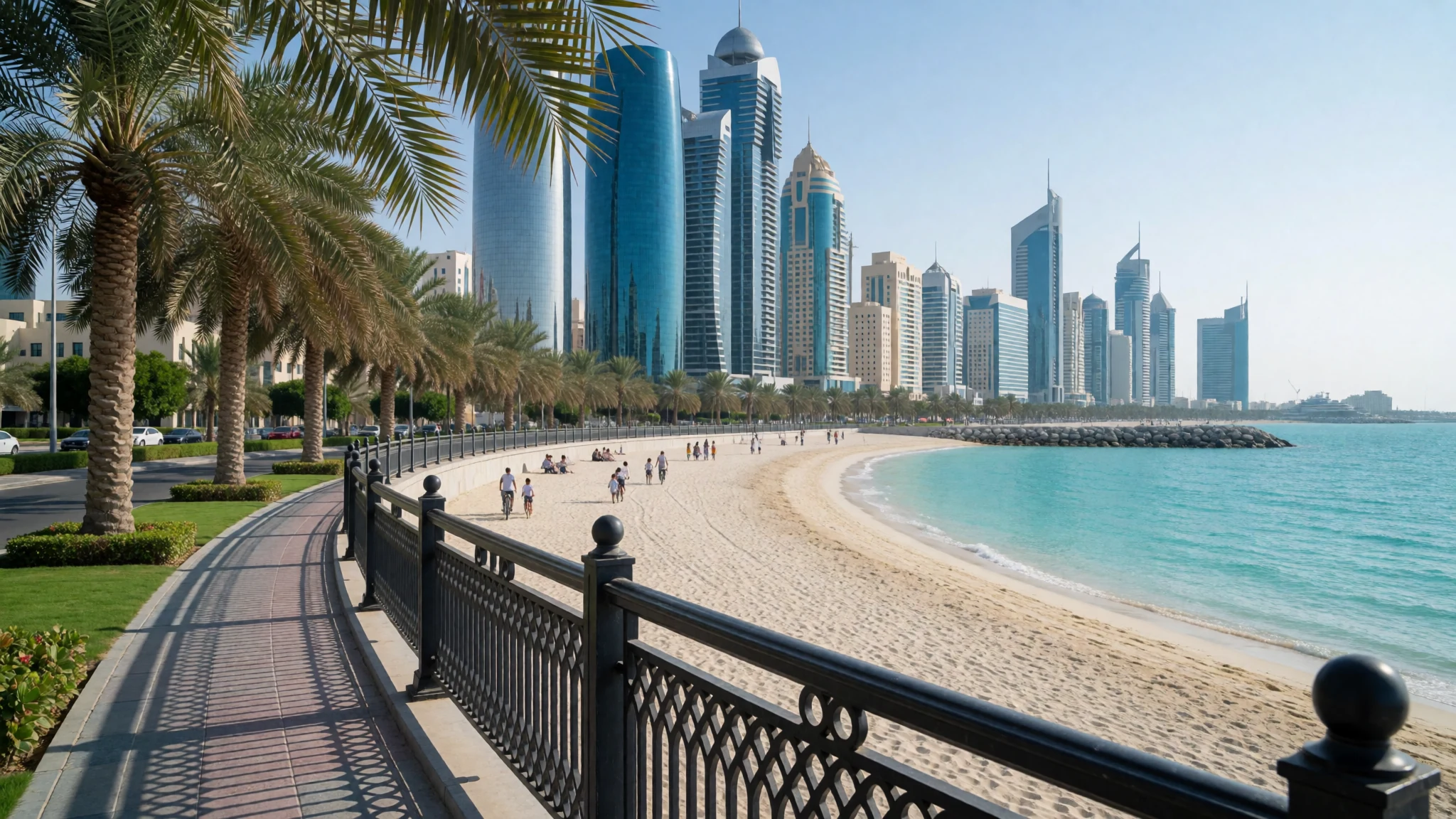
- Louvre Abu Dhabi Museum — Saadiyat Island
Louvre Abu Dhabi is a striking universal art museum designed by architect Jean Nouvel beneath a vast, geometrically patterned dome that filters sunlight like palm fronds. The galleries display significant artworks and historical artifacts borrowed from French national collections and international institutions, bridging diverse human cultures across millennia.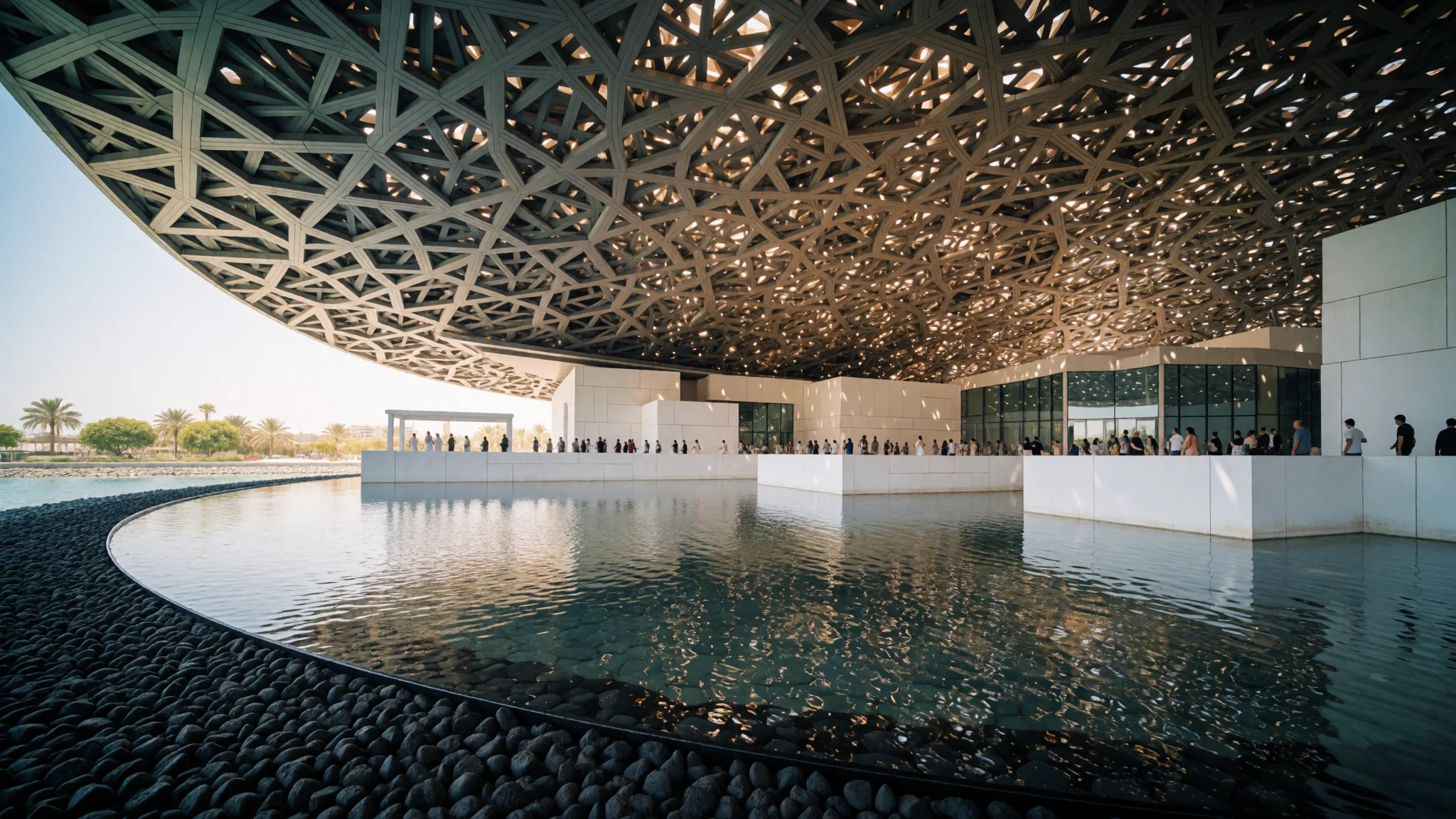
Culture
The Sheikh Zayed Grand Mosque and wider Emirati society reflect a deeply traditional Islamic heritage blended with modern cosmopolitan influences drawn from expatriate communities across South Asia, the Middle East, and beyond. Emirati culture places a strong emphasis on hospitality, family bonds, and respect for religious traditions, which govern daily rhythms and public life. Traditional values are preserved through poetry, pearl diving history, falconry, and maritime trades, even as glass towers and modern infrastructure shape the contemporary landscape. Visitors should always dress modestly, covering shoulders, knees, and hair for women, and respect all prayer times and restricted areas throughout the religious complex. Always remove your shoes before stepping onto carpeted prayer areas inside the mosque.
What to wear
Traditional attire at the Sheikh Zayed Grand Mosque and across Abu Dhabi reflects both practical desert adaptation and deep religious modesty. Emirati men typically wear the kandura, a crisp, ankle-length white robe paired with a ghutra headscarf secured by an agal cord. Women traditionally wear the abaya, a flowing black outer garment, often layered over fashionable outfits and accompanied by a shayla headscarf. Modern street fashion in the city is remarkably diverse due to the large expatriate population, featuring contemporary Western clothing alongside various international styles. Visitors touring the mosque must adhere strictly to modest dress codes, meaning women need to wear loose-fitting long sleeves, long trousers or skirts, and a headscarf covering their hair completely, while men must wear long trousers and shirts with sleeves covering the shoulders.
What to eat
- Fresh Seafood at Mina Fish Market — Mina Zayed Port
Select your choice of catch of the day from the stalls at the bustling port market and have local chefs grill, fry, or curry the fish with your preferred regional spices and accompaniments.
- Levantine Mixed Grills — Al Khalidiyah
Savour succulent skewers of spiced lamb kofta, shish taouk chicken, and grilled meats served alongside warm flatbreads, creamy hummus, garlic paste, and crisp fattoush salads at neighbourhood grills.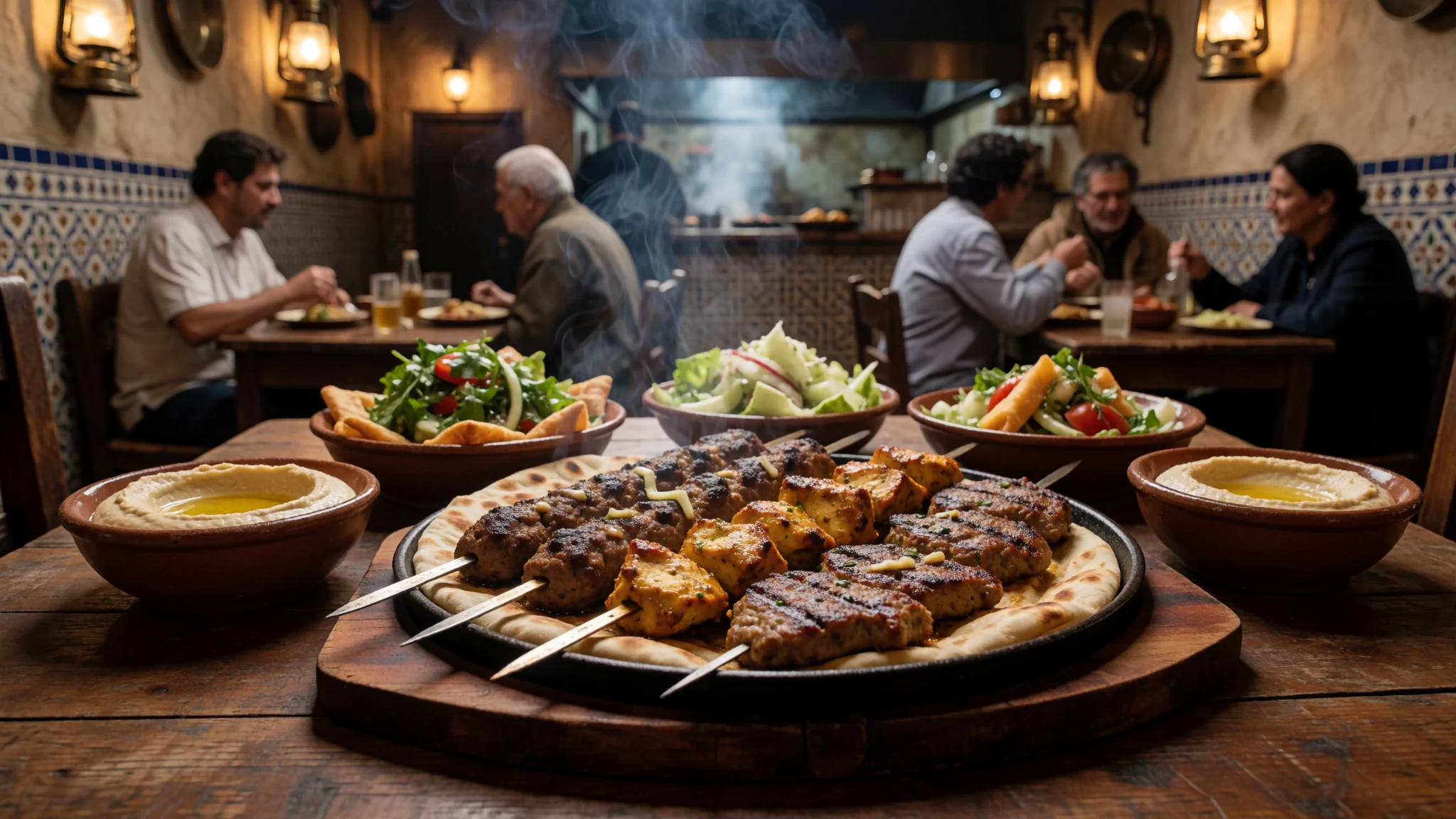
- South Indian Chettinad Fare — Al Danah District
Enjoy aromatic crispy paper dosas, fluffy appam hoppers, and fiery curries prepared with fragrant curry leaves and rich spices by local cooks in neighbourhood eateries. - Filipino Comfort Dishes — Al Khalidiyah Branch
Sample savoury chicken adobo, comforting beef sinigang soup, and sweet halo-halo desserts at casual local cafeterias popular with the city's diverse working community.
Plan it
Best time. December through February offers the most comfortable weather for walking outdoors, with the lowest temperatures of the year; June through August brings intense, humid heat.
How long. 2–3
Getting there. Fly into Abu Dhabi International Airport or Dubai International Airport and take a taxi or public bus route number fifty-four to the complex.
Budget. mid
Tips
- Check official entry guidelines and visiting hours online before setting out
- Arrive early in the morning to beat the midday tour bus crowds
- Wear slip-on shoes since footwear must be removed frequently
- Carry a light scarf for modesty requirements inside the sanctuary
Etiquette
- Dress respectfully with shoulders and knees fully covered at all times
- Refrain from public displays of affection within religious grounds
- Ask permission before photographing local worshippers
Nearby
Sources
- Wikidata Q695604 (CC0)
- Wikipedia (CC BY-SA 4.0)
- Wikivoyage (CC BY-SA 4.0)