Shanhai Pass
Shanhai Pass, People's Republic of China
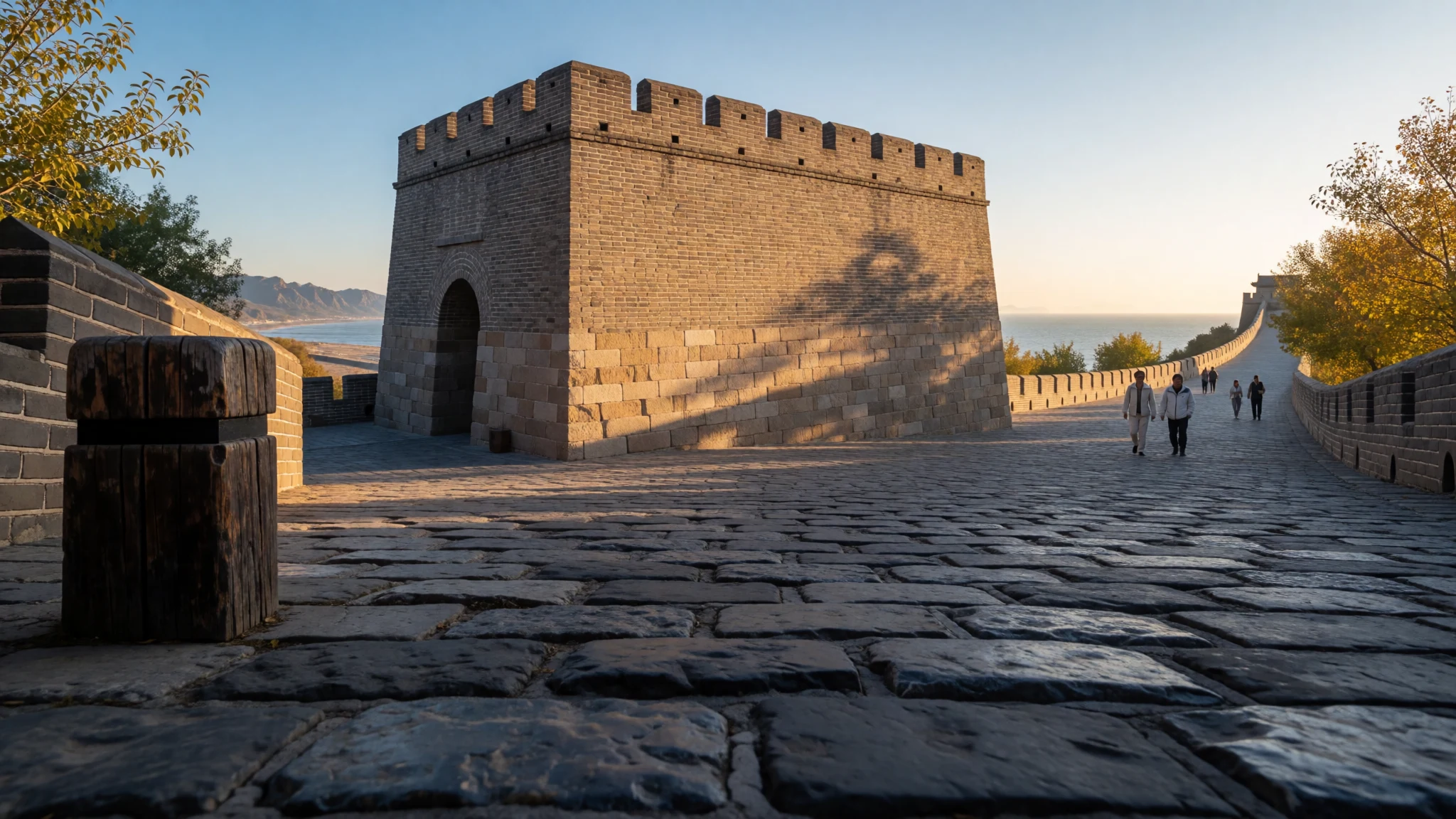
Shanhai Pass is where the Ming Great Wall meets the Bohai Sea, a fortified gate set between mountains and coast.
The place
Shanhai Pass sits in Shanhaiguan District, part of Qinhuangdao in Hebei province, on the east bank of the Shi River. The name means Mountain Sea Pass (山海关, Shānhǎi Guān), and the geography explains it. The Yan Mountains rise to the north, the Bohai Sea lies to the south, and between them runs a narrow strip of flat coastal land. That strip was the easy route between North China and the Northeast, so whoever held it controlled armies, traders and news. The wall here is less a lone gate than a piece of military planning. Defensive lines ran from the hills right down to the water, and a walled garrison town grew up around the pass. Today the old town is a mix of grey brick, gate towers and rebuilt streets, with modern Qinhuangdao and its beaches close by. The site carries a UNESCO listing as part of the Great Wall and holds China's top tourist-attraction rating, so domestic tour groups arrive in numbers, especially at weekends and on public holidays. The climate is humid continental with a monsoon pattern: summers are hot and humid with the rain, winters are cold and dry. This is not the ridge-top scramble of the wall's mountain sections near Beijing. It is flatter, more urban and more about the sea. Anyone wanting a day of walking along a crumbling crest will be happier elsewhere, while those curious about how a wall actually sealed a corridor will find the logic plain on the ground. The sea end, at Old Dragon Head, is a rebuilt section and feels more like a monument than a ruin.
Its story
Shanhai Pass has been a gate for far longer than the present walls have stood. Earlier dynasties, including the Northern Qi, Sui and Tang, built passes in this narrow corridor, and in the Tang period the site was known as Yuguan and held a garrison. Control later passed through regional governors and the Liao dynasty, and garrisons appeared again under the Jin and Yuan. The pass people visit now dates from 1381, when the Ming general Xu Da was ordered to repair older passes at Yongping and Jieling. His work produced a new fortified gate, named Shanhaiguan because it stood between the mountains and the sea. After the Yongle Emperor moved the capital from Nanjing to Beijing, the pass mattered still more, because it shielded the country around the imperial city from raiders out of the Northeast, among them the Khitan and Jurchen in earlier centuries and the Manchus later. Towards the end of the Ming, the general Qi Jiguang added forts and walled towns to the east, south and north until the whole area bristled with defences. Under the Qing the pass changed role and became the seat of Linyu County, under Yongping Mansion, and in the late Qing period more forts went up along the coast. The result is a layered site: a Ming gate, older foundations beneath it, and coastal defences built when the danger came from the sea rather than the steppe.
What to see
- Old Dragon Head — Coast south of the old town, Qinhuangdao
Old Dragon Head is where the Great Wall runs out into the Bohai Sea, south of the old town. The original masonry is gone, and what stands is an extensive rebuild, so treat it as a reconstruction with a good view rather than an ancient survival. It suits the end of the day, when the light over the water softens. A local bus links it to town.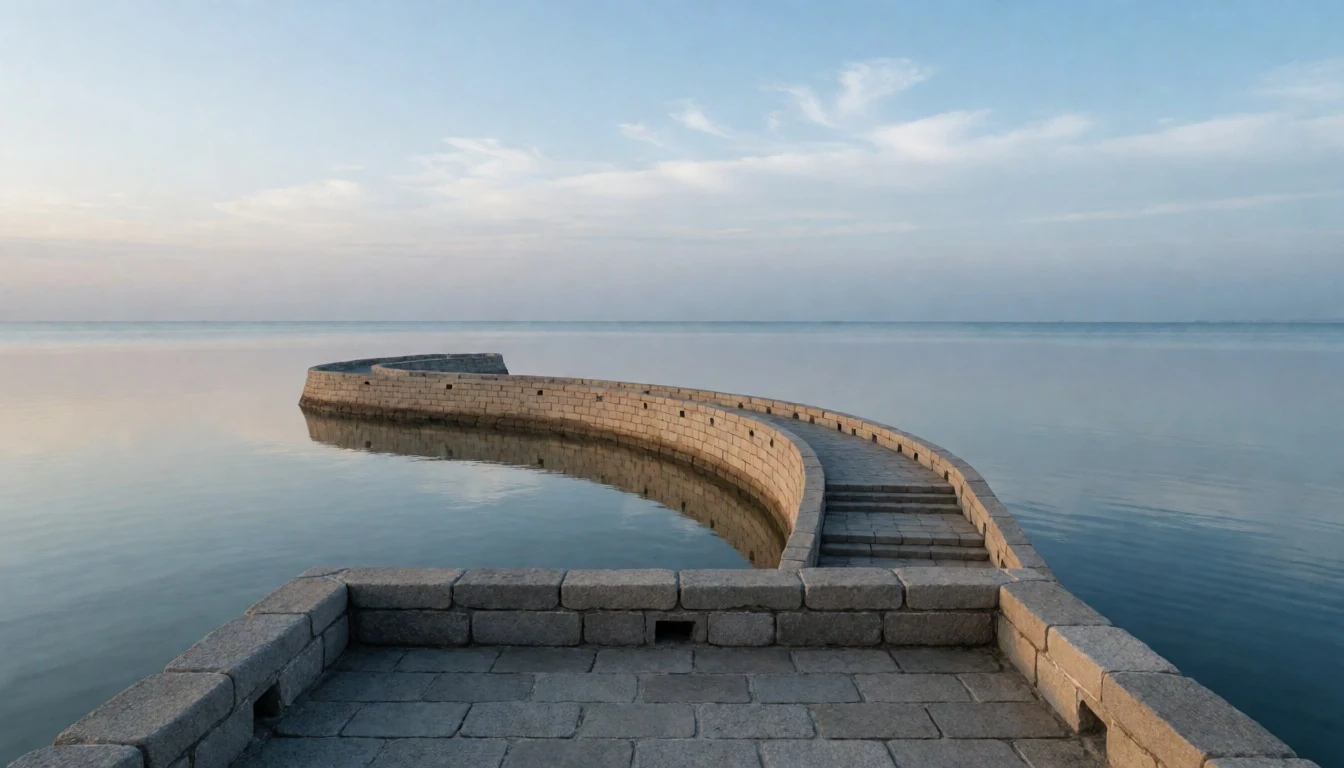
- First Pass under Heaven — Centre of Shanhaiguan
The pass itself, known as the First Pass under Heaven, is the gate-tower complex at the heart of Shanhaiguan, where the Ming wall begins. Come for the tower, the wall running off on either side and the sense of how narrow the land is. Entry is ticketed, and some tickets bundle other sites, so check official listings before buying.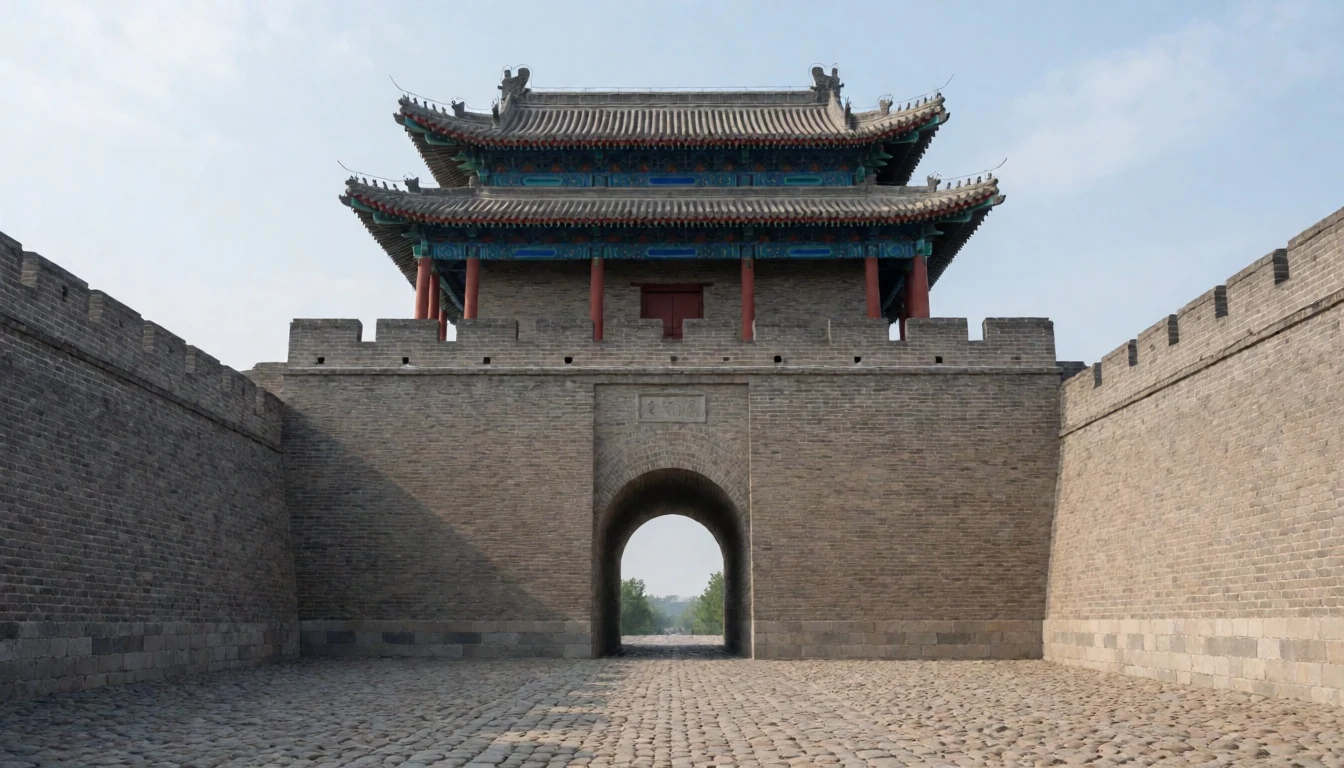
- Shanhaiguan old city walls — Old walled town, Shanhaiguan
The old walled town of Shanhaiguan is part of the defence, not just a place beside it. The whole settlement was laid out as a fortress guarding the pass, and its walls and gates still shape the street plan. The lanes inside are quieter than the main gate, though much of the architecture has been rebuilt for visitors.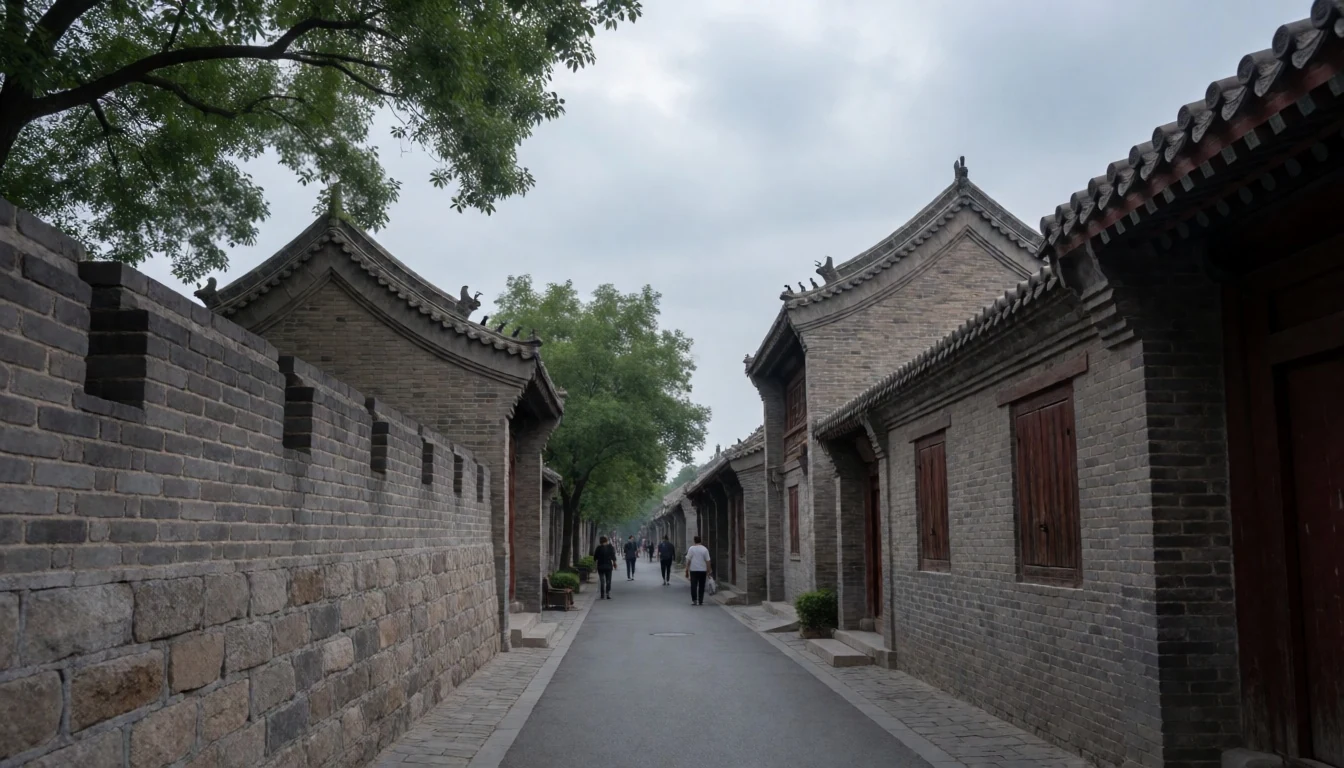
- Great Wall Museum — North-west of the pass, Shanhaiguan
The Great Wall Museum stands north-west of the pass, outside the main compound, so it is easy to miss. It is a useful stop for understanding how the wall was built and how the garrisons worked, before or after seeing the gate itself. Some pass tickets have included entry, so ask when buying.
- Jiao Shan and Five Buddha Park — Inland hills, north of Shanhaiguan
Jiao Shan lies inland and shows a different Great Wall, snaking over the hills near Five Buddha Park. On the road out, a large earth wall stands a short walk from the verge, completely unrestored and rough. It gives a feel for the wall before rebuilding. Arrange transport in advance, as facilities here are thinner.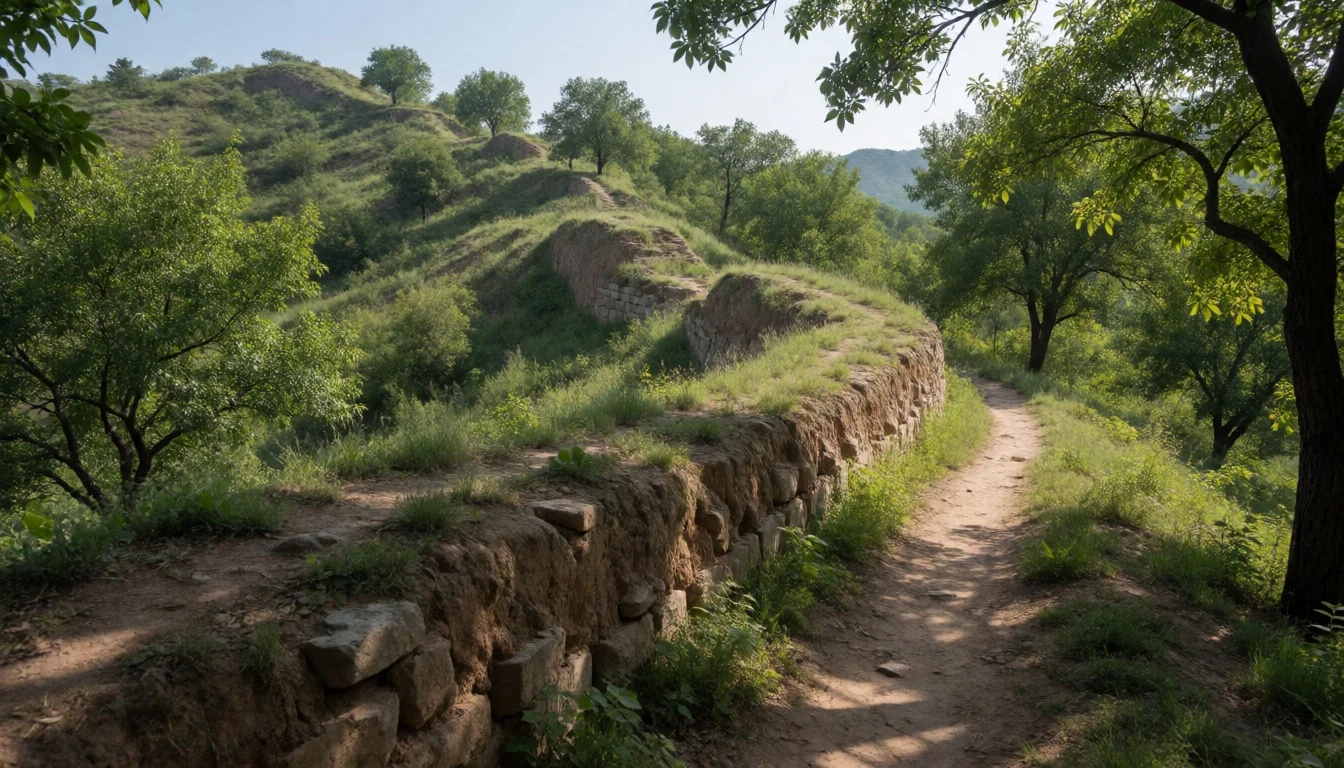
- Park of Shrine of Emperor's Quest — Coast west of Shanhaiguan
This coastal park lies west of the pass and recalls the legend that Qin Shi Huang went searching for immortality. It is a story-led stop rather than a historic fortification, and a quiet break from wall-watching. It combines well with an afternoon on the beach.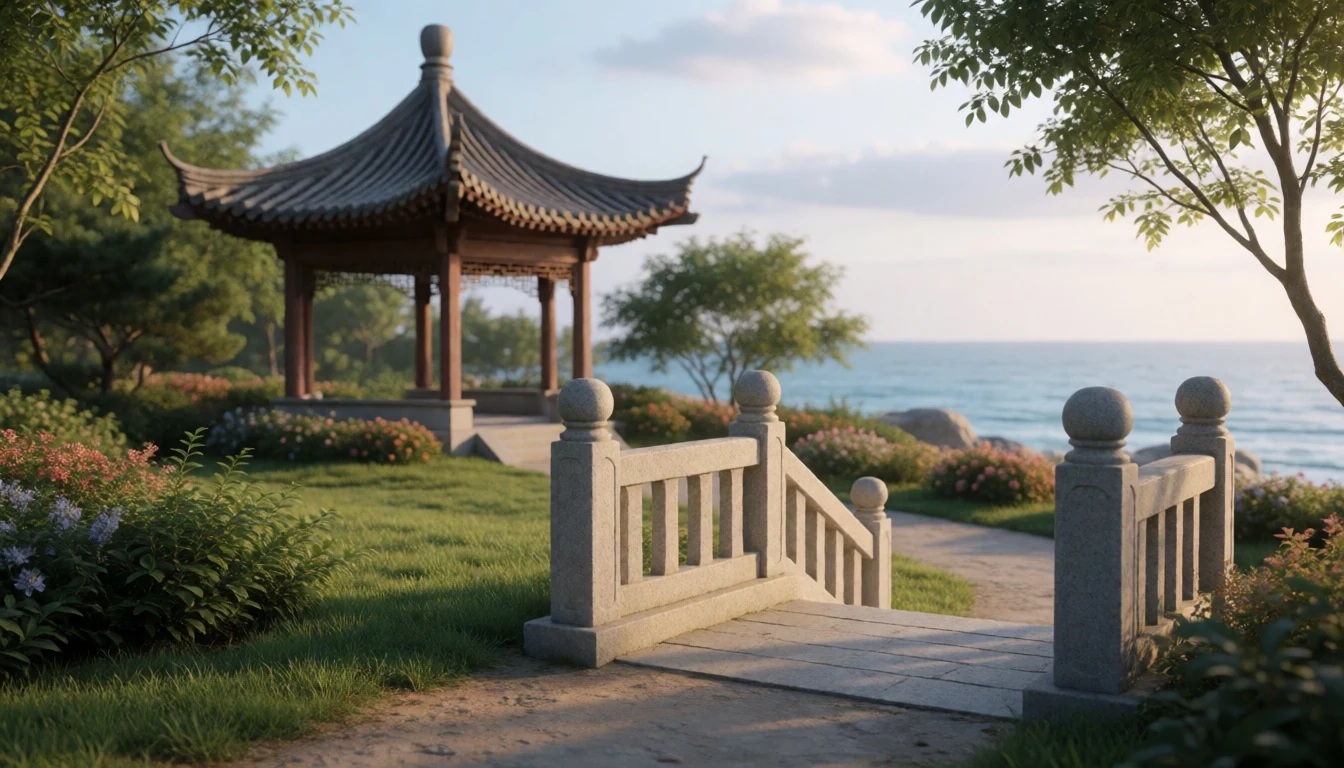
Culture
Shanhai Pass is a place where history is presented with some theatre. The pass carries the title First Pass under Heaven, a boast that shows how the Ming court saw this gate: as the doorway to the empire. Many visitors are Chinese families and school groups, and the mood is part pilgrimage, part day out, with costumed photo stands, souvenir stalls and loudspeaker commentary at busy times. Much of what stands has been rebuilt or restored, and Chinese heritage practice often favours a reconstruction that looks complete over a preserved ruin, so sharp new brick sits beside weathered stone. Qinhuangdao is also a seaside resort for people from Beijing and Tianjin, so the wall, the beach and a seafood supper belong to the same weekend. The legend of Qin Shi Huang searching for immortality, commemorated on the coast, shows how local memory mixes emperors, sea and myth. Signs carry some English, but guides and displays mostly work in Chinese, so a translation app helps. Weekdays outside holidays are calmer, while national holidays fill the gate area with crowds. Queue patiently at the gate, and ask before photographing other families or children, accepting a refusal with a smile.
What to wear
Shanhaiguan sits in Han Chinese heartland close to the old Manchu homelands of the Northeast, and both traditions show in historic dress. Han clothing of the Ming period, now revived as hanfu, uses silk and brocade in wide-sleeved robes with crossed collars. Manchu women's gowns of the Qing period lie behind the qipao, a closer-fitting silk or cotton dress. Today these appear mostly at festivals and in photo hire shops at heritage sites, where visitors sometimes dress up for the day. Everyday wear locally is plain and practical: T-shirts, jeans, sportswear and sun hats, with umbrellas used against summer sun as much as rain. At Qinhuangdao's beaches in July and August, swimwear and light cover-ups are normal. For a visit, dress for weather and walking. Summer calls for breathable cotton, a hat, sunscreen and plenty of water. Spring and autumn bring cool mornings, so carry a light layer. Winter is cold, and a proper coat, gloves and thermal layers matter on exposed walls beside the sea. Wear closed shoes with good grip, because the worn stone steps and uneven brick at the gate and on the wall can be slippery. There is no strict dress code at the pass, though covering shoulders and knees is sensible if a temple or shrine is on the route.
What to eat
- Bohai seafood — Seafood restaurants near the harbour and beach districts of Qinhuangdao
Fresh catch from the Bohai coast is the natural meal in Qinhuangdao: shellfish, fish and prawns steamed, grilled or stir-fried. Look for seafood restaurants near the harbour and beach areas, where tanks let diners pick their own. Ask how the dish is priced before it is weighed and cooked.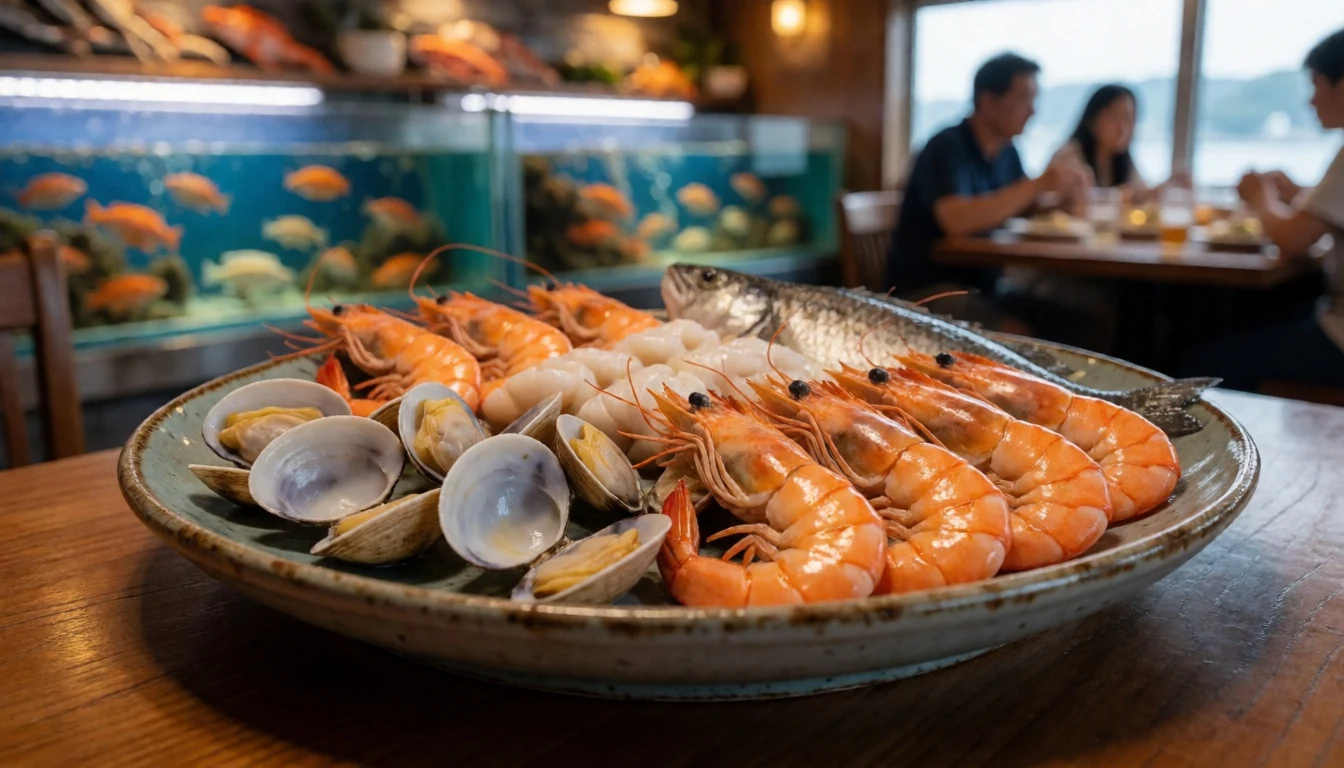
- Jiaozi — Small family eateries in the lanes of old Shanhaiguan
Jiaozi are the northern staple: dumplings of wheat dough, boiled or pan-fried, filled with pork, vegetables or seafood. Small family eateries in the old town serve them by the plate with vinegar, garlic and chilli oil on the table, making a cheap, filling lunch between sights.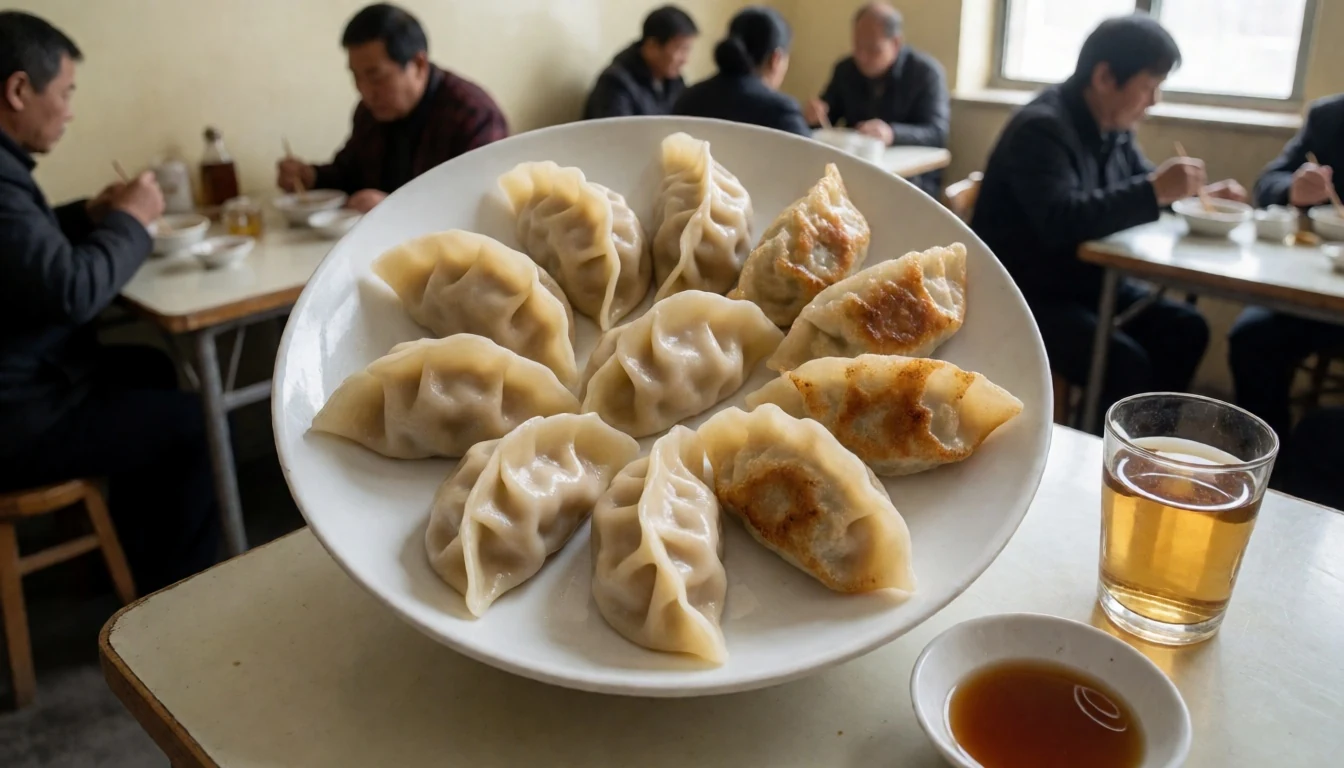
- Jianbing — Breakfast street stalls near the station and old town
Jianbing is a thin savoury crêpe cooked on a round griddle, folded around egg, sauce, spring onion and a crisp cracker. It is made to order at breakfast street stalls, eaten hot on the move, and a good fuel for an early start at the pass. - Hand-cut wheat noodles — Any local noodle shop in Shanhaiguan
Wheat noodles, cut or pulled by hand, in a hot broth with meat, vegetables or egg, suit the dry northern cold. Any local noodle shop will do. Portions are generous, and a bowl is an easy, warming stop after a windy walk on the walls. - Seaside coffee and brunch — Beachfront cafés and cultural spaces around Qinhuangdao's resort districts
Qinhuangdao's beachfront has modern cafés that serve coffee by day and cocktails after dark, some combined with bookshops or small cultural spaces. They suit a slow weekend brunch with a sea view, and they are a change of pace from the noodle shops and dumpling houses.
Plan it
Best time. April and October, when the days are mild and the summer rains have largely eased, suit walking best. July and August are hot, humid and busy with seaside holidaymakers, and winter is cold and dry.
How long. 1–2
Getting there. Fly to Beijing Capital (PEK) or Tianjin (TSN), then take a D-series fast train to Qinhuangdao, about two hours from either city. Long-distance buses also run from a station near the central train station. For the last leg, use a local bus or taxi to Shanhaiguan, and check which station your train uses.
Budget. low
Tips
- Arrive early on weekdays; public holidays and summer weekends bring tour groups to the gate
- Check the official listings before buying tickets, as some bundle the museum and other sites
- Carry some cash as well as a phone payment app, since small stalls and eateries may not take foreign cards
- Bring water and sun protection in summer, and a windproof layer in winter on the exposed walls
- Combine the pass with Old Dragon Head on the coast, and allow travel time between the two
Etiquette
- Queue patiently at the gate and on the stairs, and give way on narrow wall steps
- Ask before photographing other people, especially children
- Do not climb or sit on unrestored wall sections, which are fragile
Nearby
Sources
- Wikidata Q1048381 (CC0)
- Wikipedia: Shanhai Pass (rev 1367567934) (CC BY-SA 4.0)
- Wikivoyage: Qinhuangdao/Shanhaiguan (rev 5415366) (CC BY-SA 4.0)
- Photo 01-panoramio.jpg — Nyx Ning (CC BY 3.0)
- Photo 02-old-dragon-s-head-of-great-wall.jpg — Prince Roy (CC BY 2.5)
- Photo 03-shanhaiguan.jpg — BenBenW (CC BY 2.5)
- Photo 04-dv239-shanhaiguan-china.jpg — J. R. Harding (Public domain)
- Photo 05-shanhaiguangreatwall-end.jpg — fuzheado (CC BY 2.5)
- Photo 06-1907.jpg — 东方杂志 (Public domain)
- Photo 07-1909.jpg — 图画日报 (Public domain)
- Photo 08-1919.jpg — 妇女杂志 (Public domain)


