Sedona, Arizona
Sedona, Arizona, United States
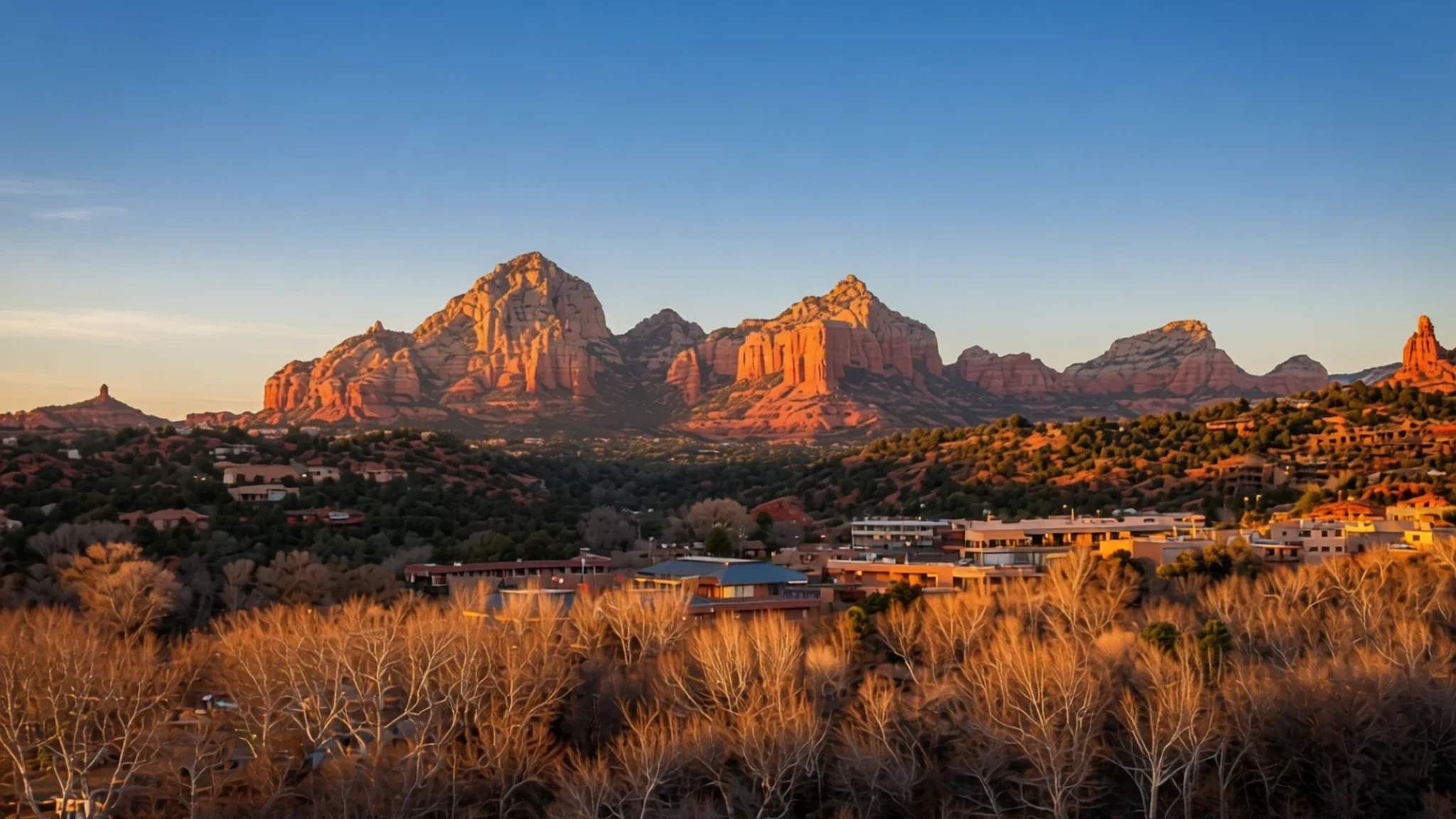
Go for the red rock that glows pink at dawn and dusk, and stay for the trails, the quiet canyons and the sheer scenery of the Verde Valley.
The place
Sedona sits in the northern Verde Valley of Arizona, straddling the line between Coconino and Yavapai counties and largely surrounded by the Coconino National Forest. The town had 9,684 residents at its last count and lies at about 1,319 metres above sea level. What draws people is the rock. Layers of sandstone turn a deep pink when the sun rises or sets, and that colour frames nearly everything here, from the trail map to the postcard racks. Most visitors come to walk or ride a dense network of trails, though the town also has a strong reputation for yoga, meditation and quiet reflection in the landscape. The vegetation is mostly chaparral and semi-desert scrub, with oaks and small pines appearing where the ground rises. Winters are mild and summers are warm, so the shoulder seasons are the most comfortable. Downtown is compact and built around the main road, with galleries, cafés and a lot of tour offices. Oak Creek is the one green thread through the landscape, and it offers relief from the heat. Weekends in spring and autumn are busy, so start early and plan parking in advance.
Its story
The area's first European-American settler arrived in Oak Creek Canyon in the late nineteenth century, drawn by its orchards of peaches and apples. Early residents were mostly farmers and ranchers, and the town was tiny when its post office opened in 1902. Life was rough and isolated. For a long time there was no local government, and the land fell under two counties at once. A turning point came when a resident found a reliable water supply, which meant people no longer had to haul water and could start building proper infrastructure. Electricity reached some outlying parts of the area only later in the twentieth century. The town was named after Sedona Schnebly, whose husband Theodore became the first postmaster. She was remembered for her hospitality and hard work, and her mother is said to have invented the name simply because it sounded pleasant. Tourism and retirement living grew through the middle of the twentieth century, and most of the town as it looks now was built in the decades after. Film also left its mark: dozens of Hollywood productions were shot here, taking advantage of the red rock as a stand-in for other landscapes. Today there is little undeveloped land left inside the town. The Chapel of the Holy Cross, completed later in the century, is built into a cliff face and has become a symbol of the place.
What to see
- Chapel of the Holy Cross
A small chapel built into a red cliff, with a tall cross that stands out sharply against the rock. It is one of the most recognised sights around Sedona, and the terrace offers wide views over the valley. Arrive an hour before sunset for the best light on the stone, and expect other visitors doing the same.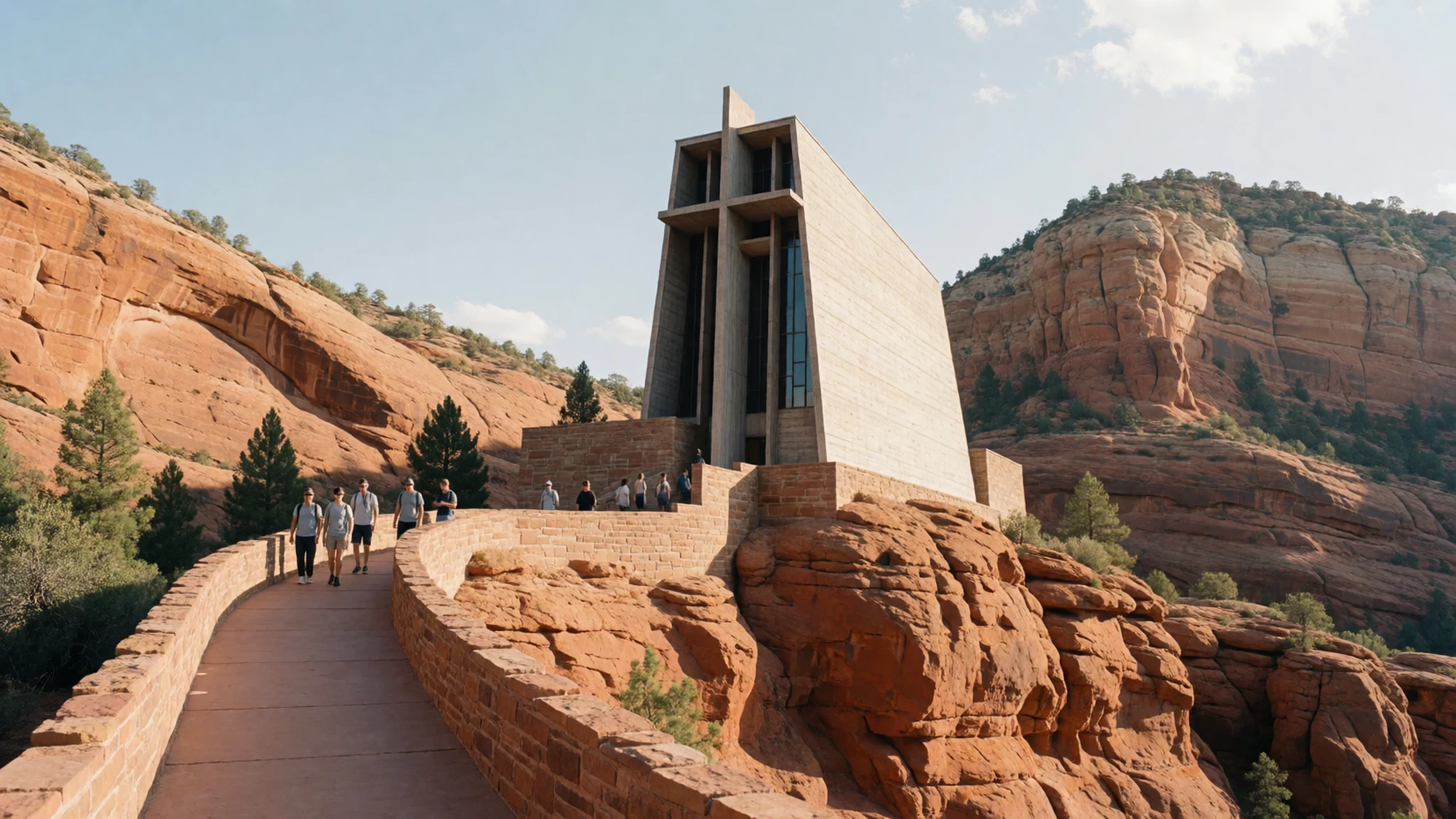
- Palatki Heritage Site
Cliff dwellings and rock art left by the Sinagua people, who lived in this region for centuries. The site sits within the Coconino National Forest and has three interpretive trails that explain how the people used the shelters. Go with a printed guide or a ranger talk if you can, because the pictographs and petroglyphs are much easier to understand with context.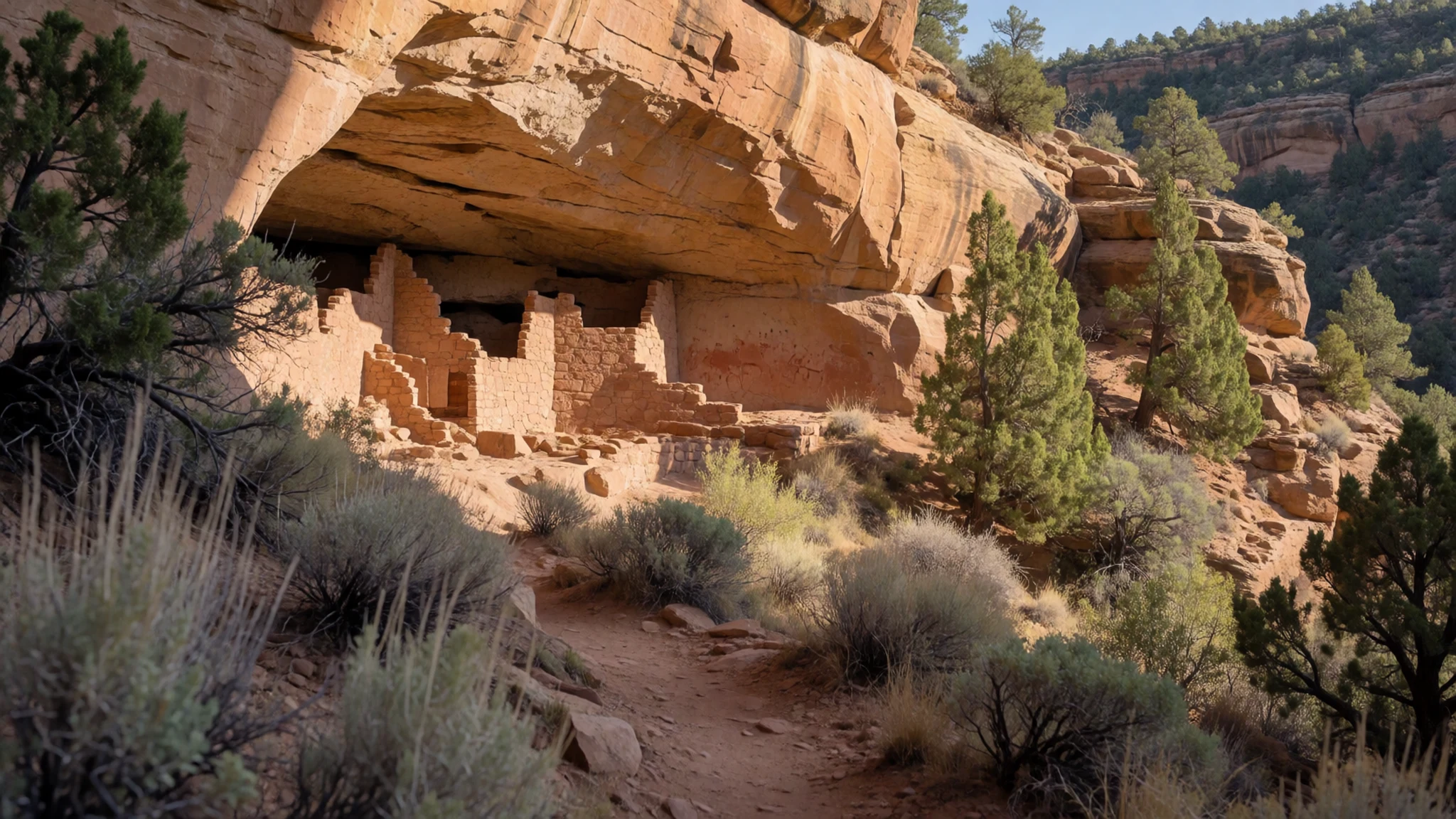
- Boynton Canyon
One of the most scenic box canyons near Sedona, and correspondingly busy. The trailhead is a short walk from the car park, and the views of the rock walls are the reason to come. Parking near the luxury resort is not for hikers, so use the designated public spaces and expect a crowd at midday.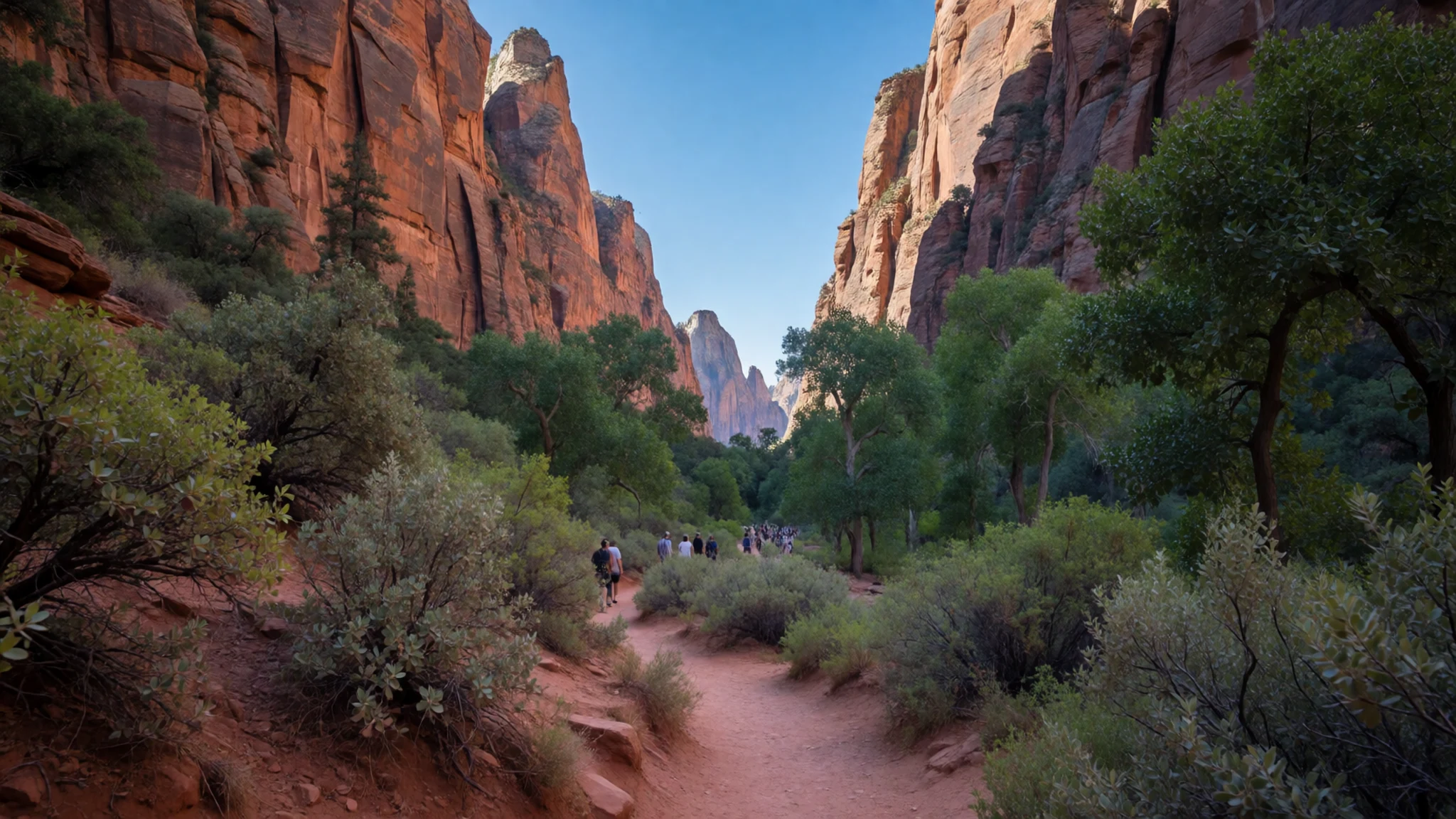
- Broken Arrow Trail
An easy, well-marked route to Chicken Point, with wide views and cairns guiding the way. It suits families and anyone after a relaxed walk rather than a serious climb. Start early in the morning, before the jeep tours arrive, because the trail gets crowded and the light is better in the cool hours.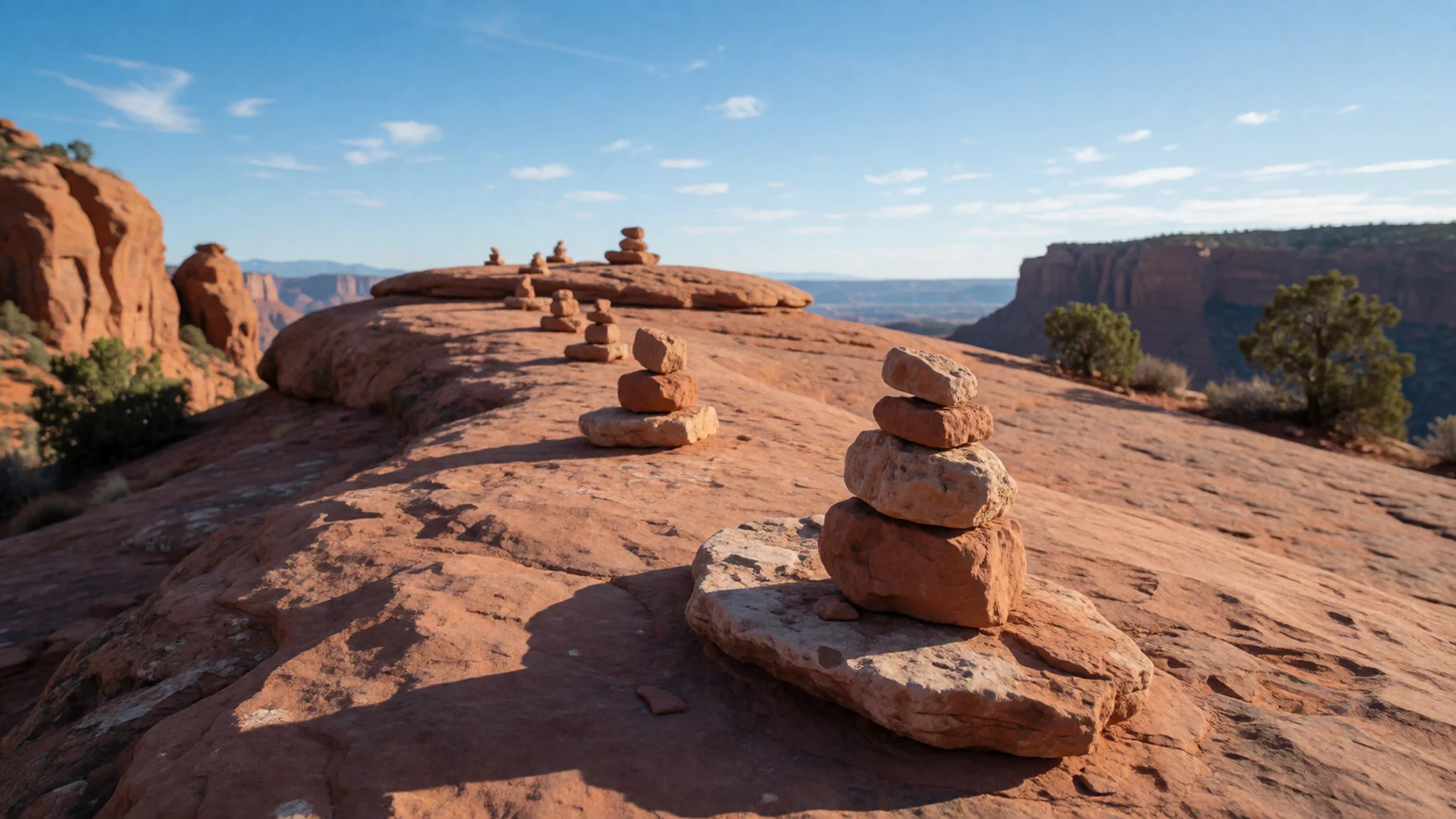
- Sedona Heritage Museum
A small museum covering the early European-American settlers of the area and how the town grew out of orchards, ranches and a tiny post office. It is a useful stop before a trip into the landscape, because it gives context to the names of places you will see on the trails and roads.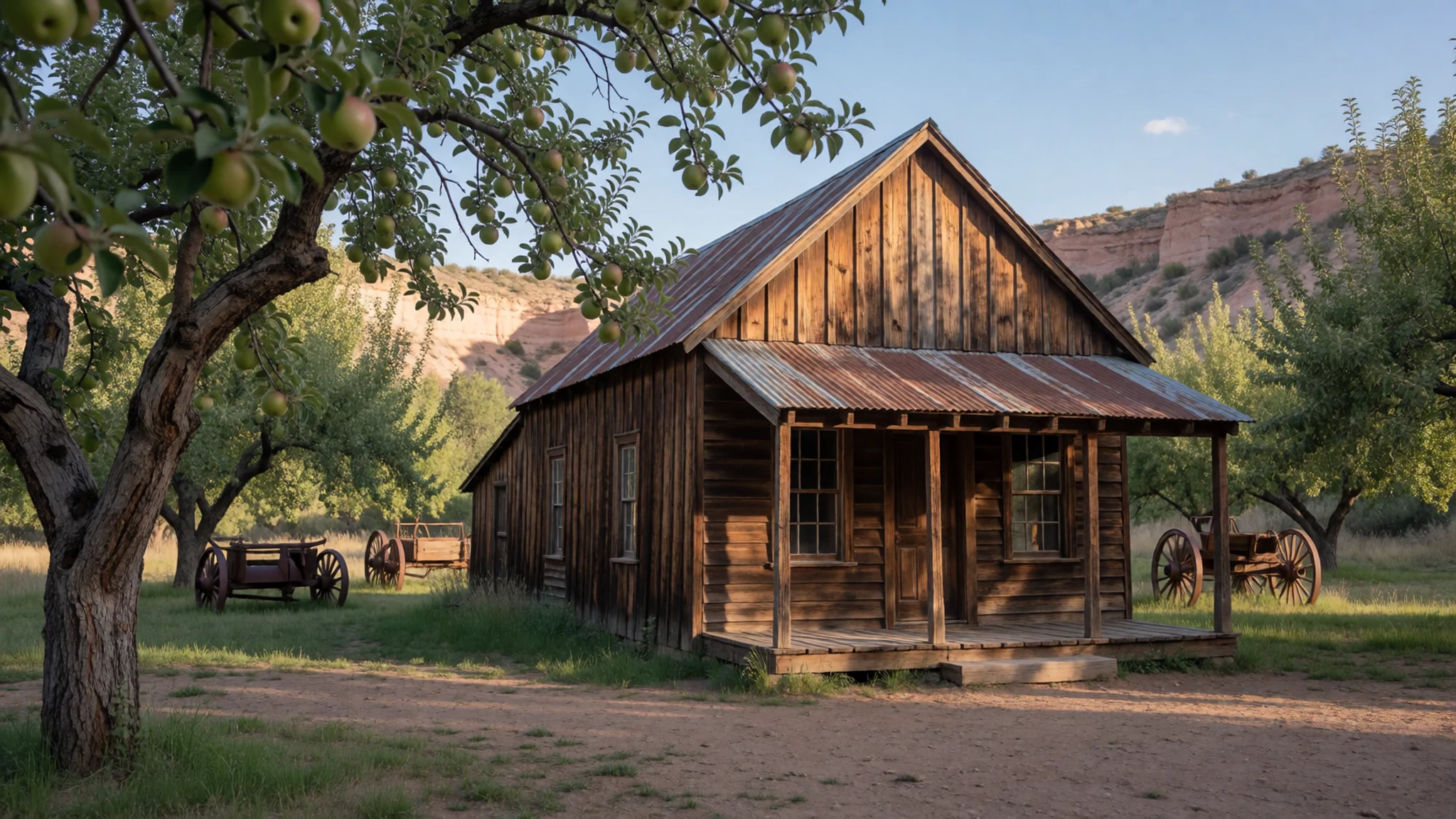
Culture
Sedona's social life is shaped by its outdoor culture and its reputation as a place for spiritual seekers. The town hosts a St Patrick's Day parade, a Food Truck Festival, a Hummingbird Festival, a marathon, and a film festival that has run since the mid-1990s. The Sedona Arts Center is the oldest arts centre in northern Arizona, and galleries and chamber music concerts give the town a more cultivated side than the trail maps suggest. Solstice festivals are held at Unity of Sedona each summer and winter. A New Age tourist industry has grown up around the idea of spiritual vortices at sites such as Bell Rock, Airport Mesa, Cathedral Rock and Boynton Canyon. Not everyone who visits believes in these energies, and many people come simply for the hiking. Locals and visitors share the same trails, so expect people to be quietly meditating or doing yoga on the rocks. Many people come to the Sedona Wetlands Preserve to go birdwatching. Keep your voice down at sacred sites and the chapel, do not climb on delicate rock features, and stay on marked routes.
What to wear
Sedona has no single traditional costume. The older dress of the region comes from the Sinagua people who built cliff dwellings here, and from the ranching life of the nineteenth-century settlers, whose clothes were practical: denim, leather, wool and straw hats, with boots for riding and working the land. Those ranching roots survive as cowboy boots, belt buckles and the occasional Western shirt on weekends in town. What people wear now is largely outdoor gear. Walkers and cyclists wear technical fabrics, breathable shirts and trail shoes, while the restaurants and galleries downtown welcome smart casual clothes. For a visit, dress in layers because the temperature swings between hot days and cool mornings and evenings. Wear a wide-brimmed hat, sunglasses and high-factor sunscreen, and choose closed shoes with good grip for the sandstone, which can be slippery when dry and very hot underfoot in summer. Pack a light fleece or jacket for the early starts. At the chapel and heritage sites, modest clothing is sensible, and at restaurants a clean casual outfit is fine.
What to eat
- Wood-fired pizza — a pizzeria in the centre of town
Pizza is one of the easiest meals in Sedona, and the town has several pizzerias near the centre with a wide range of toppings. Ask about take-out if you plan to eat on a trail or at a viewpoint. Choose a place with a short queue at lunch to avoid the rush of tour groups.
- Bread, sandwiches and salads — a bakery-café on the main road
Bakery-cafés along the main road serve fresh bread, sandwiches and salads at prices that suit a budget. Several have seating with a view of the rock formations, so you can eat while watching the colour change through the day. It is a good option for breakfast or a picnic before a long hike.
- Coffee and a pastry — a coffee shop with a view of the rock
A coffee shop with open views of the red rock is a good place to start the day. Look for indoor and outdoor seating, and order a pastry with your drink before heading out. Go early on weekends, because the most popular spots fill up quickly.
- Steak — a steakhouse in the centre of town
Central steakhouses are popular with visitors looking for a hearty evening meal, and the atmosphere is relaxed and often lively. The steaks are the main attraction, so order them if you want the local experience. Book ahead on weekends, when the wait can be long. - American-Mexican plates — a cantina with a balcony overlooking the valley
Cantinas in town serve large portions of American-Mexican food, from burritos and enchiladas to margaritas on the balcony. The food is hearty rather than refined, and the views from the upper floor are the main reason to visit. It is a good choice after a day outdoors.
Plan it
Best time. Spring and autumn are the most comfortable months, with mild days, cool evenings and clear views. Winters are mild and summers are warm, so the peak summer heat makes long walks hard work. Late spring brings flowers and busy weekends, and autumn is equally busy but cooler.
How long. 2–3
Getting there. Fly into Phoenix's main airport or Phoenix-Mesa Airport, then drive north. The drive from Phoenix takes you through the Verde Valley and into Sedona. From Flagstaff, the scenic road through Oak Creek Canyon is the most memorable route, though the drive takes longer than the direct road.
Budget. mid
Tips
- Book popular restaurants and tour slots ahead, especially at weekends and during spring and autumn
- Start early for trails and viewpoints, both to avoid crowds and to beat the heat
- Carry water on every walk, because the sun is strong and shade is limited on the rock
- Check the official site for trail, parking and tour information before you go
- Carry some cash for small vendors and tour operators, but cards are widely accepted
Etiquette
- Stay on marked trails and do not move the cairns that mark the routes
- Do not touch the rock art at heritage sites or climb onto fragile features
- Keep noise down at the chapel and at quiet viewpoints where people are meditating
Nearby
Sources
- Wikidata Q80041 (CC0)
- Wikipedia: Sedona, Arizona (CC BY-SA 4.0)
- Wikivoyage: Sedona (CC BY-SA 4.0)
- Cathedral Rock at Red Rock Crossing, Adam Baker (CC BY 2.5)
- Cathedral Rock at sunset, Terrydarc (CC BY 3.0)
- Chapel of the Holy Cross, Matthew P. Del Buono (CC BY 3.0)
- Downtown Sedona - Route 89A, Ken Lund (CC BY-SA 2.0)
- Oak Creek, Scotwriter21 (CC BY-SA 4.0)
- Panoramic view from the vortex point, Liusheng79 (CC BY 3.0)
- Sedona Airport, Shane.torgerson (CC BY-SA 4.0)
- Hiking above Oak Creek, Scotwriter21 (CC BY-SA 4.0)


