Saxon Switzerland National Park
Saxon Switzerland National Park, Germany
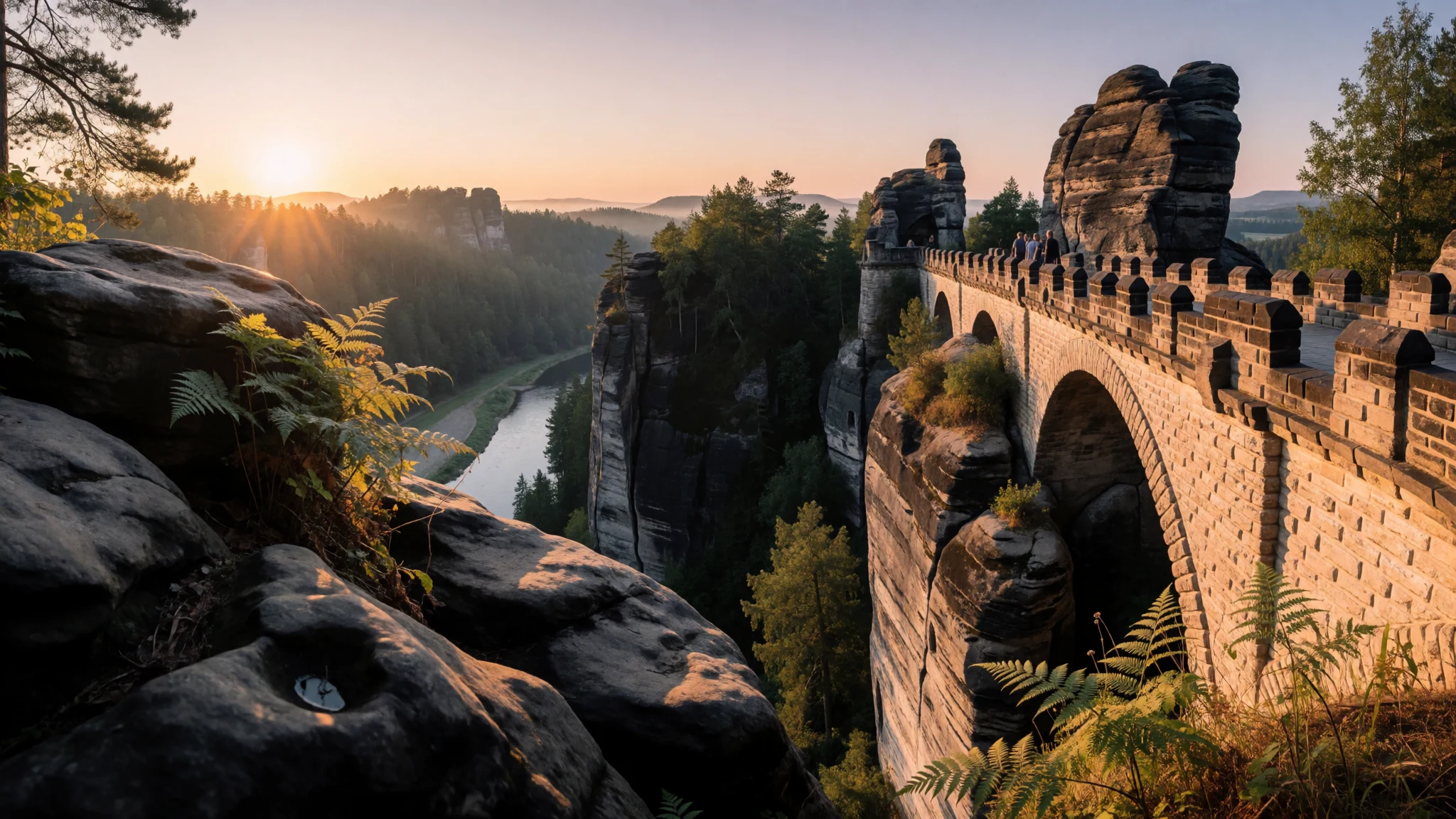
Saxon Switzerland National Park packs sandstone towers, gorges and forest trails into easy reach of Dresden, with viewpoints that reward early starts.
The place
Saxon Switzerland National Park lies in the German state of Saxony, a short trip upriver from the capital Dresden, and covers two separate areas of the Elbe Sandstone Mountains. The wider range, usually called Saxon Switzerland, is a larger lived-in region where towns such as Bad Schandau and Königstein sit among the rocks. The park is the protected core of it, and it received national park status in 1990. It adjoins Bohemian Switzerland National Park across the Czech border, so the same scenery carries on beyond the frontier. The terrain is a maze of gorges, rock towers, ledges and narrow ravines cut into soft stone, with the Elbe winding along the valley floor. The highest point, the Großer Winterberg, stands only a modest height above the river, yet the sharp vertical drops create very different conditions within a short walk: cool, damp gorge bottoms, sun-baked rock tops and wooded slopes in between. Some of the forest grows without human management, which is unusual in central Europe, and gorge and mountain forest are both under pressure across the continent. The sandy soil and countless fissures drain quickly, so many spots are drier than the temperate climate would suggest. The western part holds the Bastei area, the Lilienstein and the Polenz valley, and it is the busier half. Most visitors come to walk, and the network of paths, stairways and viewpoints is what makes the place work.
Its story
The story of Saxon Switzerland National Park begins with a nickname. Swiss-born artists working in Dresden saw something of home in the rocky, wooded valleys upriver, and the label Saxon Switzerland stuck, outlasting its origins and now covering the whole sandstone region. Painters and poets of the Romantic period followed, drawn by crags and mist, and the long-distance Malerweg, the Painters' Way, still threads through country they would recognise. Walking, and later climbing on the free-standing sandstone towers, became a local passion with its own customs and a loyal following in Saxony. The land was farmed, quarried and logged for generations, and the villages around its edge remain living communities rather than museum pieces. National park status arrived in 1990, bringing the highest natural protection available in Germany and a core of forest and gorge where nature is meant to run its own course. That ambition creates tension. Dead and dying trees are left standing in places, some paths and zones are restricted so wildlife has quiet, and the crowds at famous viewpoints must be balanced against a landscape that erodes easily. The park shares a border with a Czech neighbour, so caring for one sandstone landscape is a conversation across two countries. Today it works both as a conservation area and as a favourite weekend escape for people from Dresden and further afield.
What to see
- Bastei — Western part, near Kurort Rathen
The Bastei is a well-known viewpoint, a rocky balcony above the Elbe near Kurort Rathen, reached by a stone bridge linking several sandstone pillars. Views run down to the river bend and across to flat-topped hills. It is also the busiest spot in the park, so early morning or a weekday brings far more room and softer light.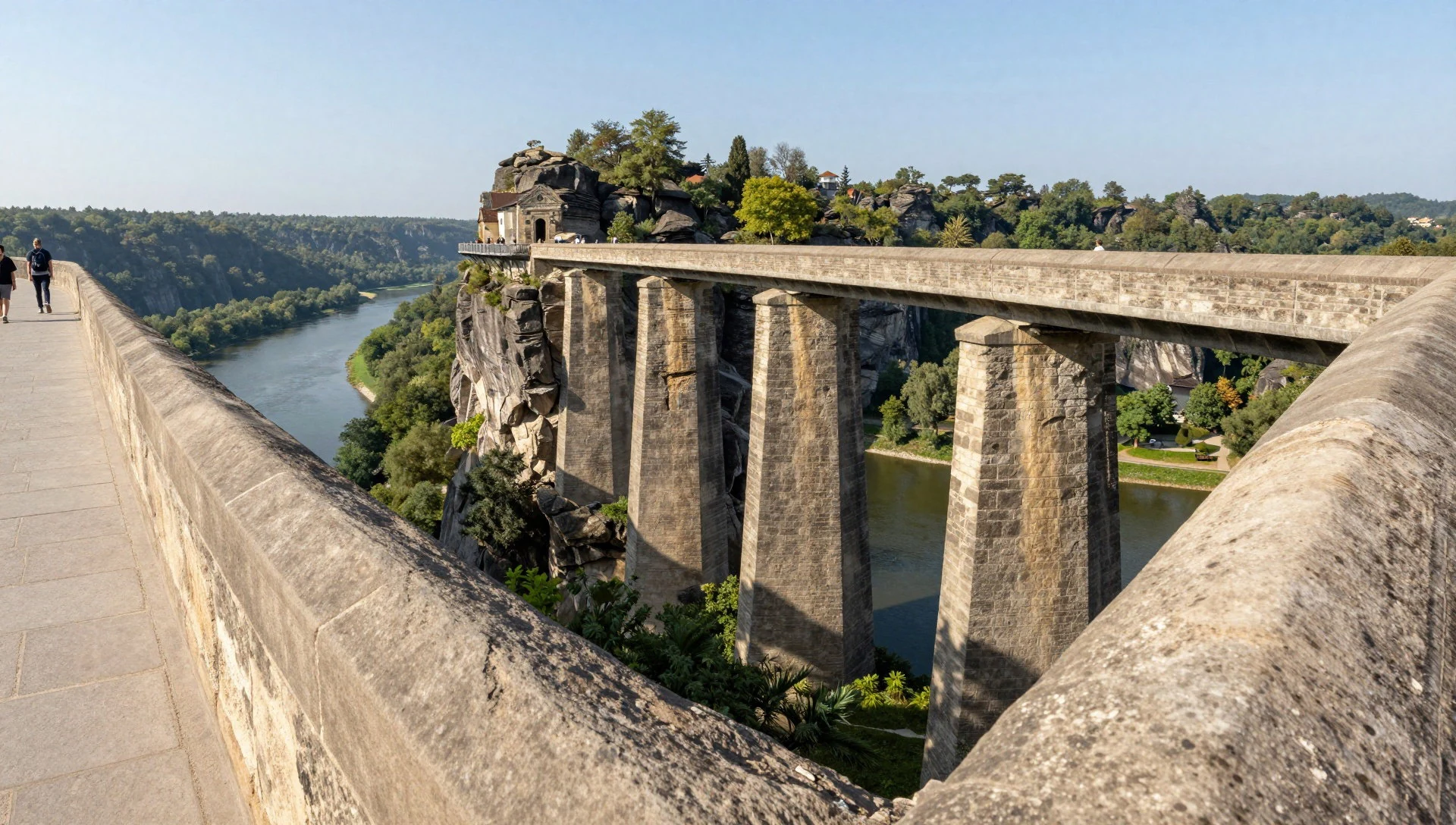
- Lilienstein — Western part, beside the Elbe
The Lilienstein is a flat-topped sandstone table standing apart from the main rock massif, in a loop of the Elbe on the western side of the park. Paths climb to the summit plateau for open views over the river and surrounding hills. It suits a half-day walk with a clear goal and a rewarding top.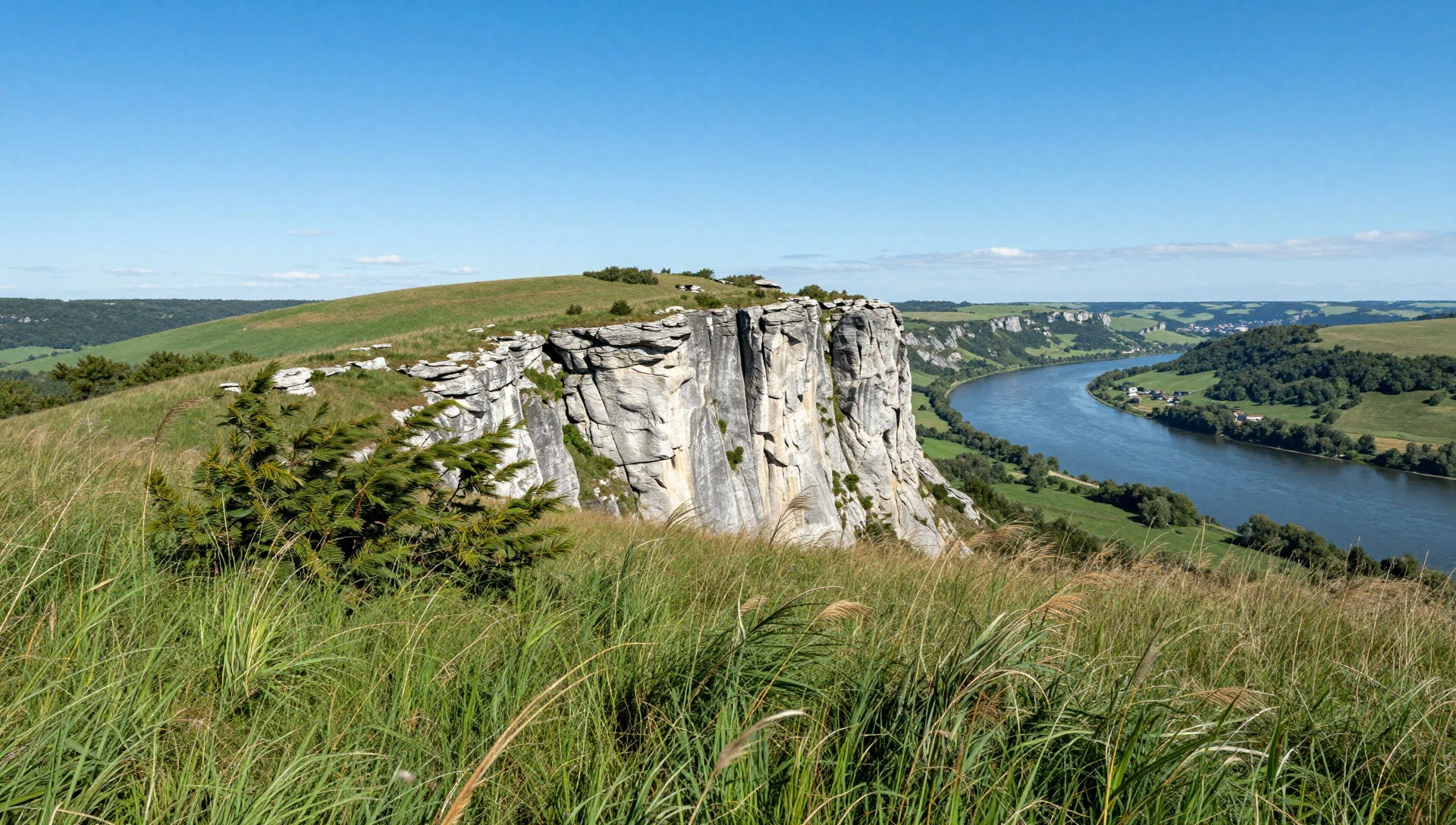
- Carolafelsen — Above Bad Schandau, Schrammsteine ridge
Carolafelsen is a rocky lookout on the Schrammsteine ridge above Bad Schandau, reached by a forest walk and several rock stairways. From the top the jagged ridge and the Elbe valley stretch out below. Paths here have steps and drops, so sturdy footwear matters, and the approach is steeper than a stroll.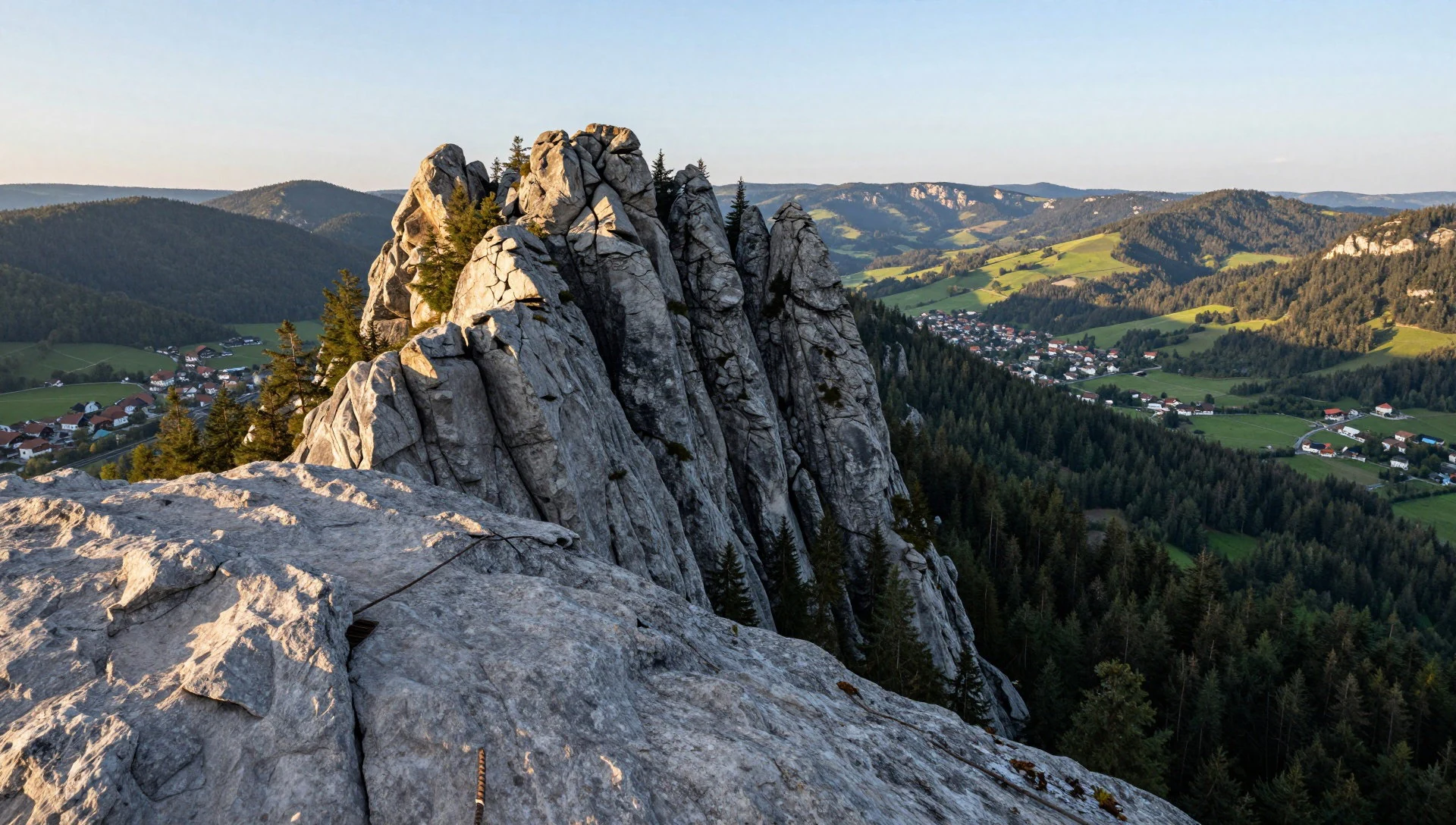
- Polenz valley — Western part, near Hohnstein
The Polenz valley, in the western part of the park, is a quieter way into sandstone country, following a small stream through woods and beneath rock walls. It suits walkers who want shade, birdsong and fewer crowds than the main viewpoints, and it links naturally with the Bastei area for a longer day on foot.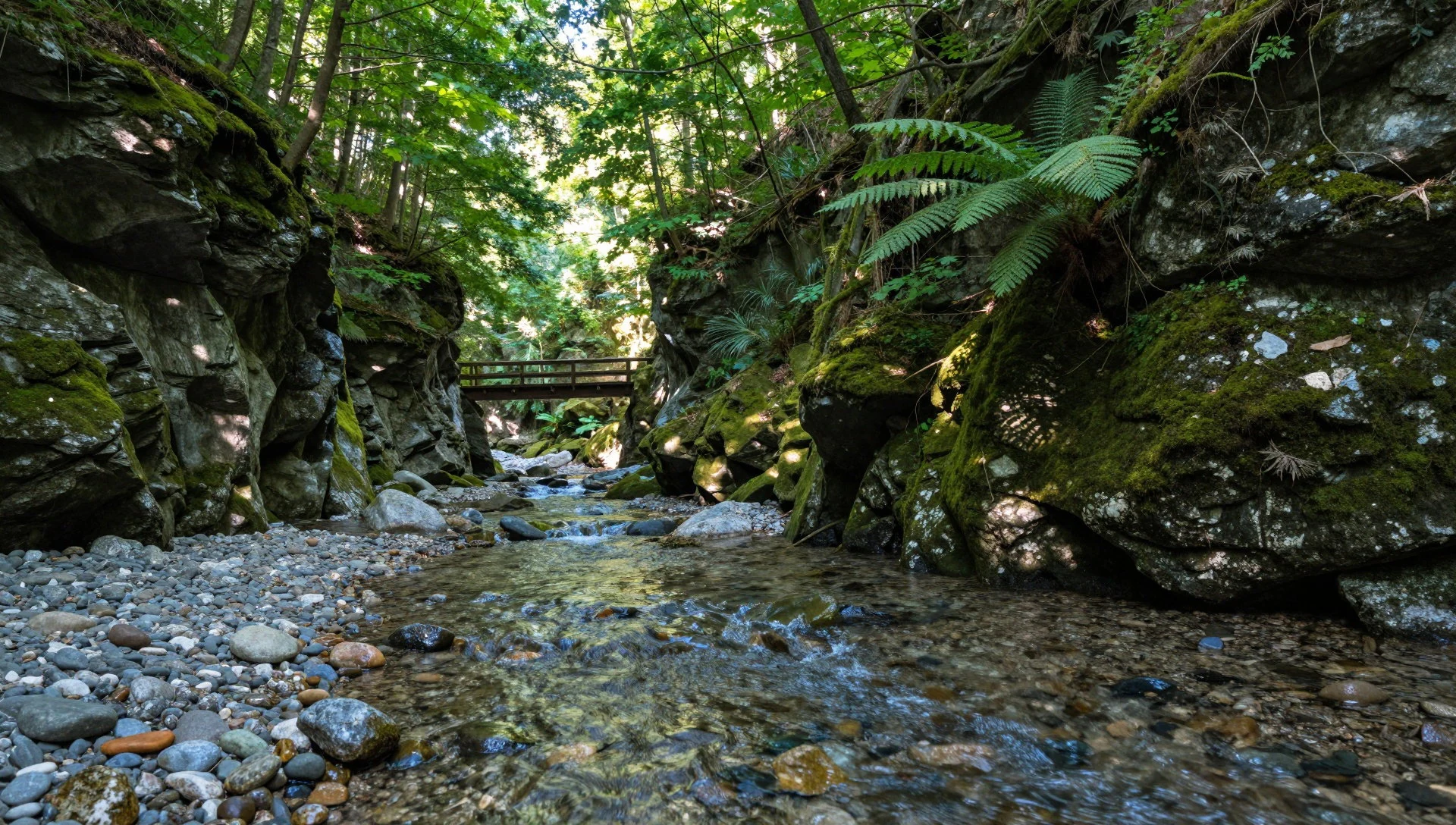
- Großer Winterberg — Eastern part, near the Czech border
The Großer Winterberg is the highest peak in the park, yet it rises only modestly above the Elbe, so the walk is about forest rather than altitude. Mixed woodland covers the slopes, and surrounding trails pass gorges and quiet viewpoints. It is a calmer destination for anyone wanting to avoid the busy western sights.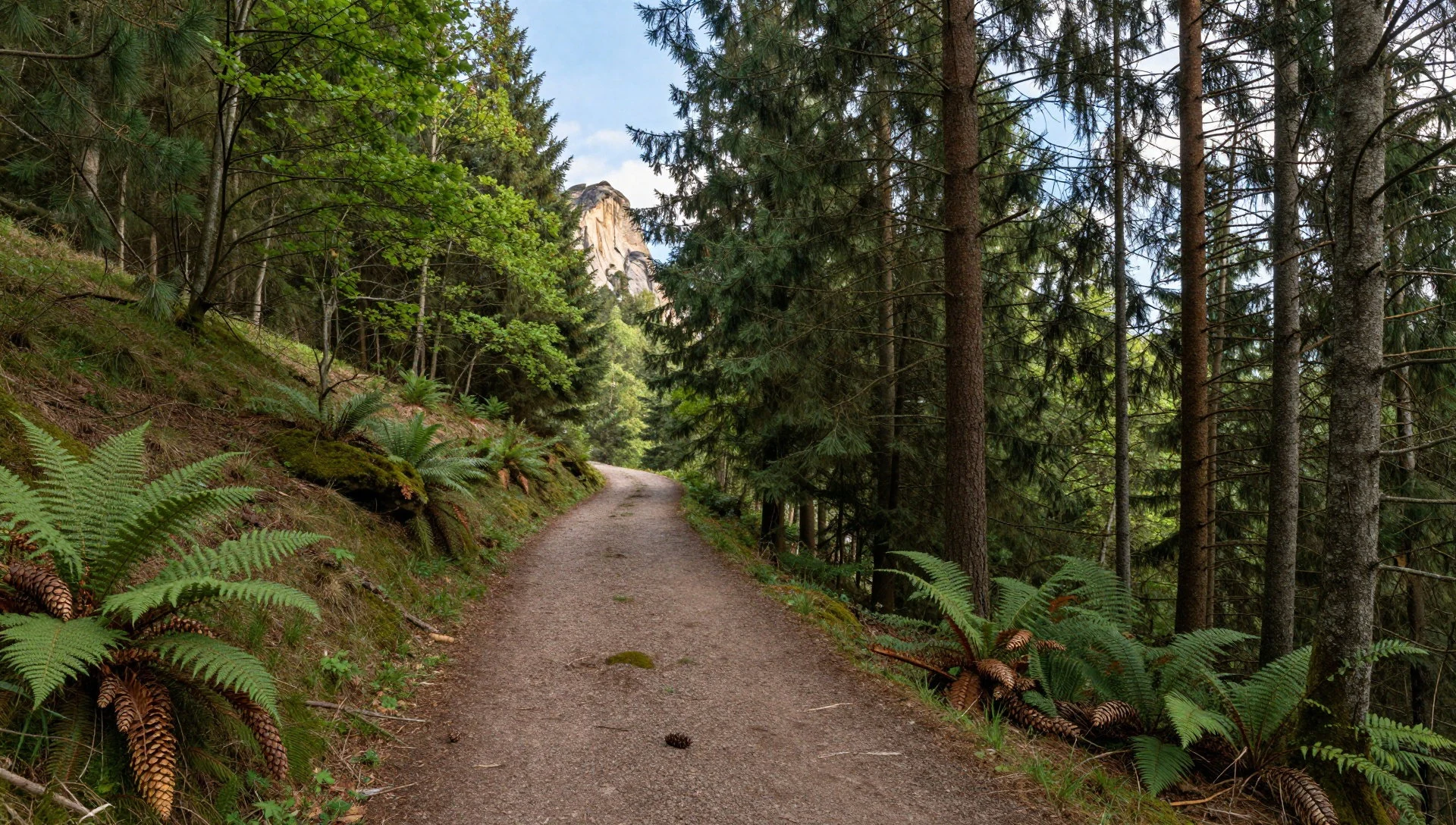
- Malerweg (Painters' Way) — Across the Saxon Switzerland region
The Malerweg is a long-distance walking route through the Saxon Switzerland region, named for the artists who sketched these rocks. It is usually walked in stages, linking viewpoints, villages and ferry crossings, and single sections make good day walks. Look for the way-posts at junctions, which help in forest where paths branch often.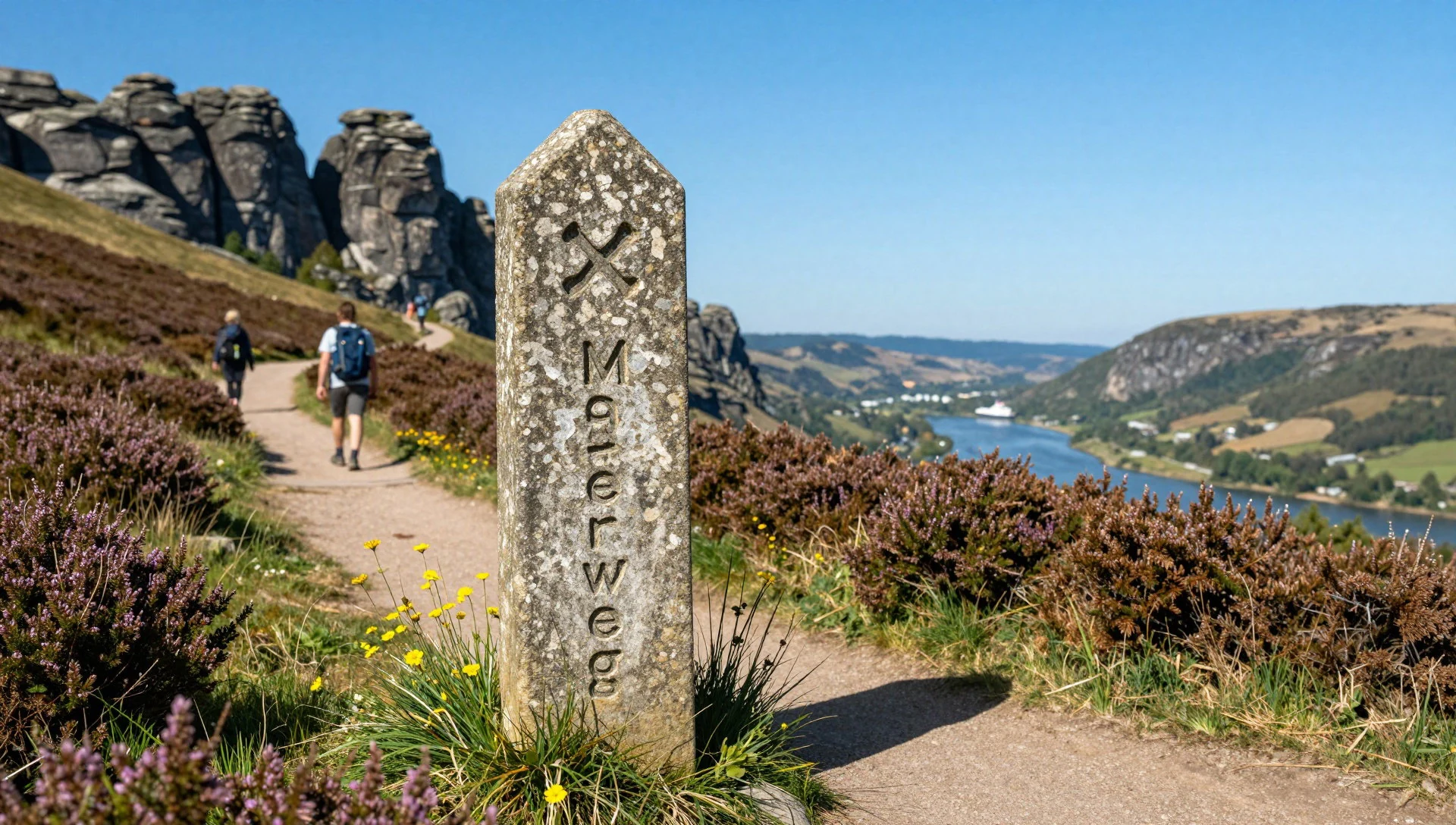
Culture
Saxon Switzerland National Park sits in a region where walking is close to a social institution. Dresden families, school groups and retired couples all head up the Elbe for a day on the paths, and the habit shapes the culture: well-marked trails, inns placed for lunch halts, and a shared expectation that walkers will be considerate on narrow ways. Climbing has its own tradition on the sandstone towers, with local rules meant to protect the soft rock, such as limits on equipment and on which summits may be climbed. Climbers take these seriously, and newcomers are expected to learn them before they start. A brief 'Hallo' or 'Guten Tag' to people you pass on quiet paths is normal, and German hikers tend to be practical, punctual and ready for changing weather. The park's wild core has a conservation culture too: some dead wood and fallen trees are left in place by design, and certain paths are closed so wildlife has room. The villages around the park, such as Bad Schandau and Königstein, are living towns with their own routines, so Sundays and holidays can be busy yet unhurried. Visiting well here means treating the rocks, the forest and the neighbours as shared property. Stay on the marked paths, take every scrap of rubbish home, and keep voices and dogs under control, especially in the core zone.
What to wear
Saxon Switzerland National Park has no everyday traditional dress of its own, and visitors should not expect to see costume on the trails. Saxony as a whole does keep regional clothing alive for festivals. Sorbian communities in Upper Lusatia, east of Dresden, wear embroidered costumes with fine linen, wool and brightly patterned ribbons at Easter and other celebrations. Miners' parade uniforms from the Ore Mountains, dark with braid and plumed hats, appear at processions and Christmas events. Lace from the Vogtland region is a traditional textile. Around the park itself, people wear outdoor clothes: walking boots, zip-off trousers, fleeces, waterproof shells and small rucksacks, often in muted greens and greys. Weekend walkers from Dresden favour practical layers over style, and trekking poles are common. Visitors should dress for the terrain rather than the occasion. Choose boots or sturdy trainers with good grip, because sandstone steps and rock ledges turn slippery when wet and the paths include many stairways. Pack layers for cool gorge bottoms and exposed viewpoints, a light rain jacket in any season, and a hat and sunscreen for summer. Long trousers help where paths are overgrown. No religious dress rules apply on the trails, though modest, comfortable clothing is sensible when stopping in village churches or inns afterwards. In winter, add warm gloves and consider grips for icy steps.
What to eat
- Kartoffelsuppe (potato soup) — Village inns and walkers' inns around the park
Potato soup is a staple Saxon dish, thick and savoury, often served with a sausage or a slice of bread. It is the classic restorative after a long walk and appears on the menu at most village inns and walkers' inns around the park.
- Sauerbraten — Traditional restaurants in Bad Schandau and Königstein
Sauerbraten is a marinated pot roast, tender and tangy, served with gravy, red cabbage and potato dumplings. It suits cold days and large appetites, and is a standard of traditional Saxon restaurants in towns such as Bad Schandau and Königstein.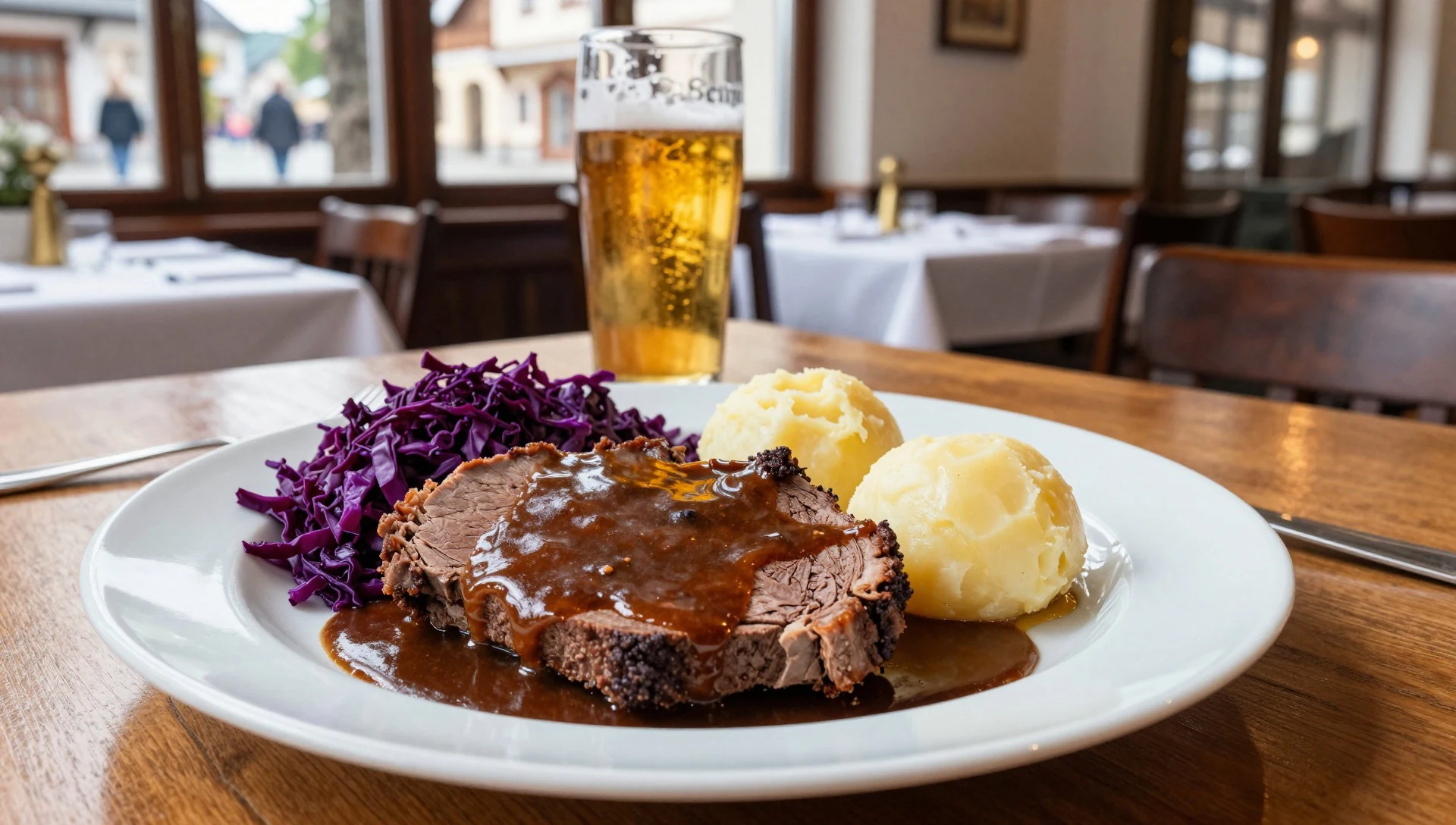
- Falscher Hase (Wiegebraten) — Regional inns serving Saxon home cooking
Falscher Hase, literally 'false hare', is a baked meatloaf, often with a boiled egg in the middle, served with potatoes and gravy. It is plain home cooking and a good way to taste everyday Saxon food at a regional inn. - Forelle (trout) — Riverside restaurants along the Elbe and smaller streams
Trout from local rivers and ponds is a regional favourite, usually pan-fried or baked whole with butter, parsley and potatoes. It is a lighter choice among the heavier meat dishes and turns up at restaurants close to the water. - Eierschecke — Village bakeries and coffee shops in the Elbe towns
Eierschecke is a Saxon layered cake of yeast dough, quark and egg custard, soft and gently sweet. It is the usual accompaniment to afternoon coffee and is easy to find after a walk.
Plan it
Best time. May–June and September–October are the most comfortable months, with mild days for walking and forests either fresh green or turning colour. July and August are warm and the busiest, especially at the Bastei. Winter brings quiet trails but icy steps, and some paths and inns may be closed.
How long. 2–3
Getting there. Fly to Dresden (DRS), where a frequent S-Bahn service runs to the main station; from there regional S-Bahn trains follow the Elbe towards Bad Schandau and Kurort Rathen, the main gateways. Prague is another option, with good road links to Dresden. Check timetables and the last leg on the day.
Budget. mid
Tips
- Reach the Bastei and other famous viewpoints early in the morning, or on a weekday, to avoid the crowds
- Check the park's official site, https://nationalpark-saechsische-schweiz.de/, for current path closures and zones before setting out
- Carry water and snacks, since inns on the trails may be closed outside the main season
- Wear shoes with good grip, as sandstone steps are slippery when wet
- Carry some cash as well as a card, since small village inns and kiosks may not take cards
Etiquette
- Stay on marked paths and respect any closures, especially in the core zone
- Take all rubbish home and keep noise low
- Greet walkers you pass on narrow paths and give way when asked
Nearby
Sources
- Wikidata Q702566 (CC0)
- Wikipedia: Saxon Switzerland National Park (rev 1362904946) (CC BY-SA 4.0)
- Wikivoyage: Saxony (rev 5387106) (CC BY-SA 4.0)
- Photo: Bastei in the morning (Zuschnitt), Thomas Wolf (CC BY-SA 3.0 de)
- Photo: Lilienstein from the Gamrig, Merops (CC BY 3.0)
- Photo: Treppengrund in the core zone, Lukas Beck (CC BY 4.0)
- Photo: Carolafelsen, Prazak (CC BY 3.0)
- Photo: Bastei in the morning, Thomas Wolf (CC BY-SA 3.0 de)
- Photo: Malerweg way-post, Bybbisch94, Christian Gebhardt (CC BY-SA 4.0)
- Photo: Idagrotte walk, Molgreen (1) (CC BY-SA 4.0)
- Photo: Idagrotte walk, Molgreen (2) (CC BY-SA 4.0)


