Sark
Sark, Guernsey
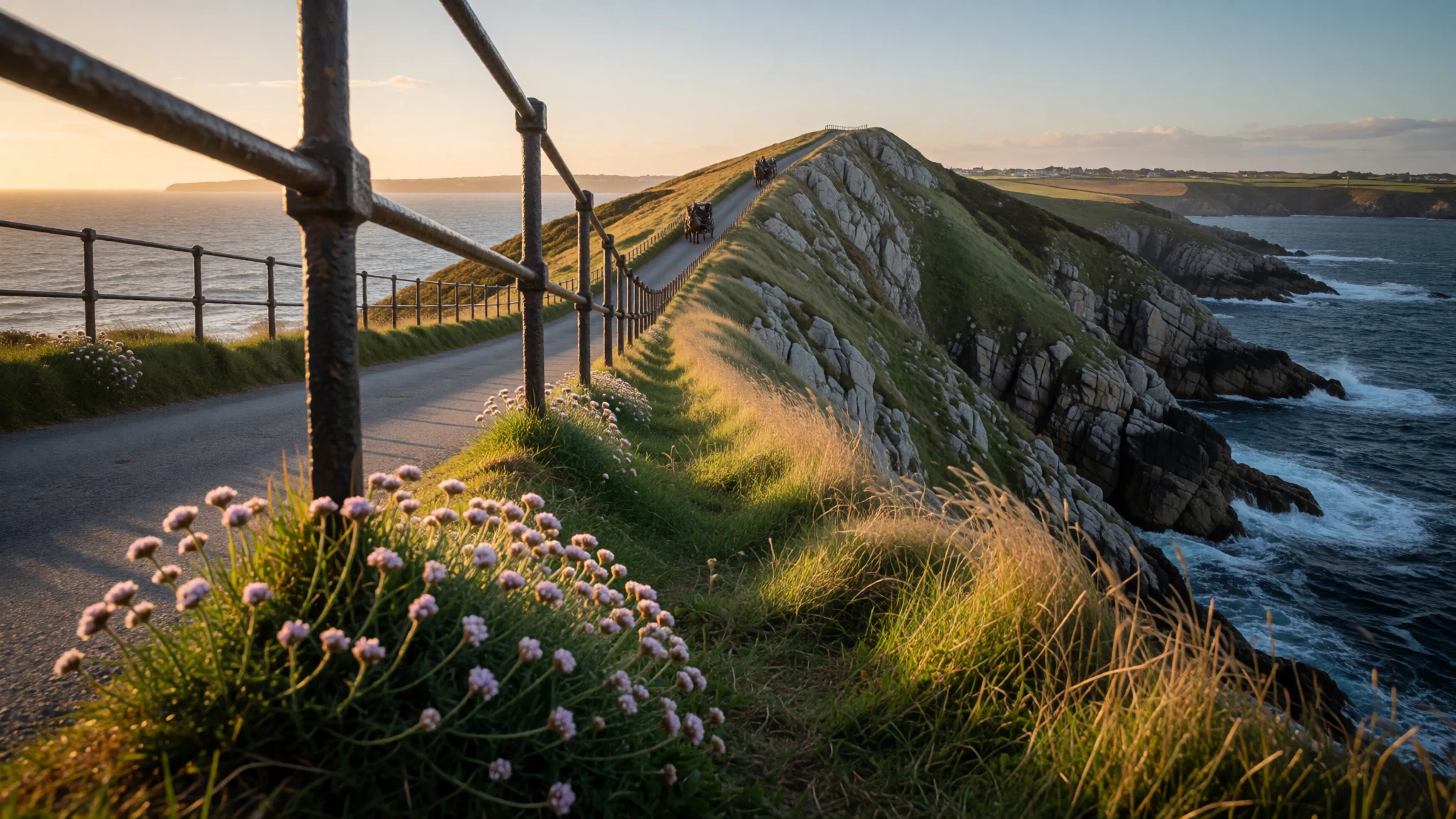
Sark is a car-free Channel Island of lanes, cliffs and dark night skies, where bicycles and horse-drawn carriages set the pace.
The place
Sark is a small island in the southwestern English Channel, off the Normandy coast. It belongs to the Bailiwick of Guernsey, a self-governing Crown Dependency with its own parliament and laws rooted in Norman custom. About 562 people live here, most of them in or near The Village, and the way of life is obvious within minutes of landing: no cars, only tractors, bicycles and horse-drawn carriages. Greater Sark is a plateau of fields, farms and shaded lanes, rising to 114 metres at its highest, and ringed by cliffs and small bays reached by steep paths. To the south lies Little Sark, tied to the main island by La Coupée, a high, narrow isthmus with a sheer drop on either side. Most everyday services gather around The Avenue, a short climb from the harbour. The buildings there are plain and practical, and the charm lies in the quiet beyond them. Arrival is by sea only, so the weather and the ferry timetable shape every visit, and day-trippers should plan around the last boat back. Those who stay overnight get the island once the crowds leave, including its night skies: Sark was designated a Dark Sky Community in 2011. Expect wind, changeable light and a lot of walking.
Its story
Sark's recorded past begins on the Cotentin side of the water. The island was almost certainly home to the Gallic Unelli, who came under Roman rule after Julius Caesar's campaigns around 56 BC. In 933 it passed into the Duchy of Normandy, and after the conquest of England in 1066 it came under the English Crown, a tie that has lasted in altered form ever since. Monastic communities lived here in the Middle Ages, and the manor house of La Seigneurie is thought to stand on the site of a monastery of Saint Magloire, a guess supported by old farm names such as La Moinerie. When the monks left, the island emptied, and by the sixteenth century pirates were using it as a refuge. Resettlement came in 1565, when Helier de Carteret took the island on feudal terms and brought families over to farm it. His successors held the title for centuries, and La Seigneurie has been the Seigneur's home since 1730. Feudal government survived far longer than elsewhere in Britain's orbit: only in 2008, when a new constitution took effect, did Sark shift to an elected system. A more recent chapter is written in concrete. The road over La Coupée was laid in 1945 by German prisoners of war working under the Royal Engineers, replacing a path so exposed that, before railings arrived in 1900, children reportedly crossed on hands and knees.
What to see
- La Seigneurie gardens — Near The Village, Greater Sark
The manor house is a private home and its interior is closed to visitors, but the walled garden is the reason to come. It is tidy, sheltered and a relief from the wind on the plateau. Guided tours run on set days, so check the island website before planning around one.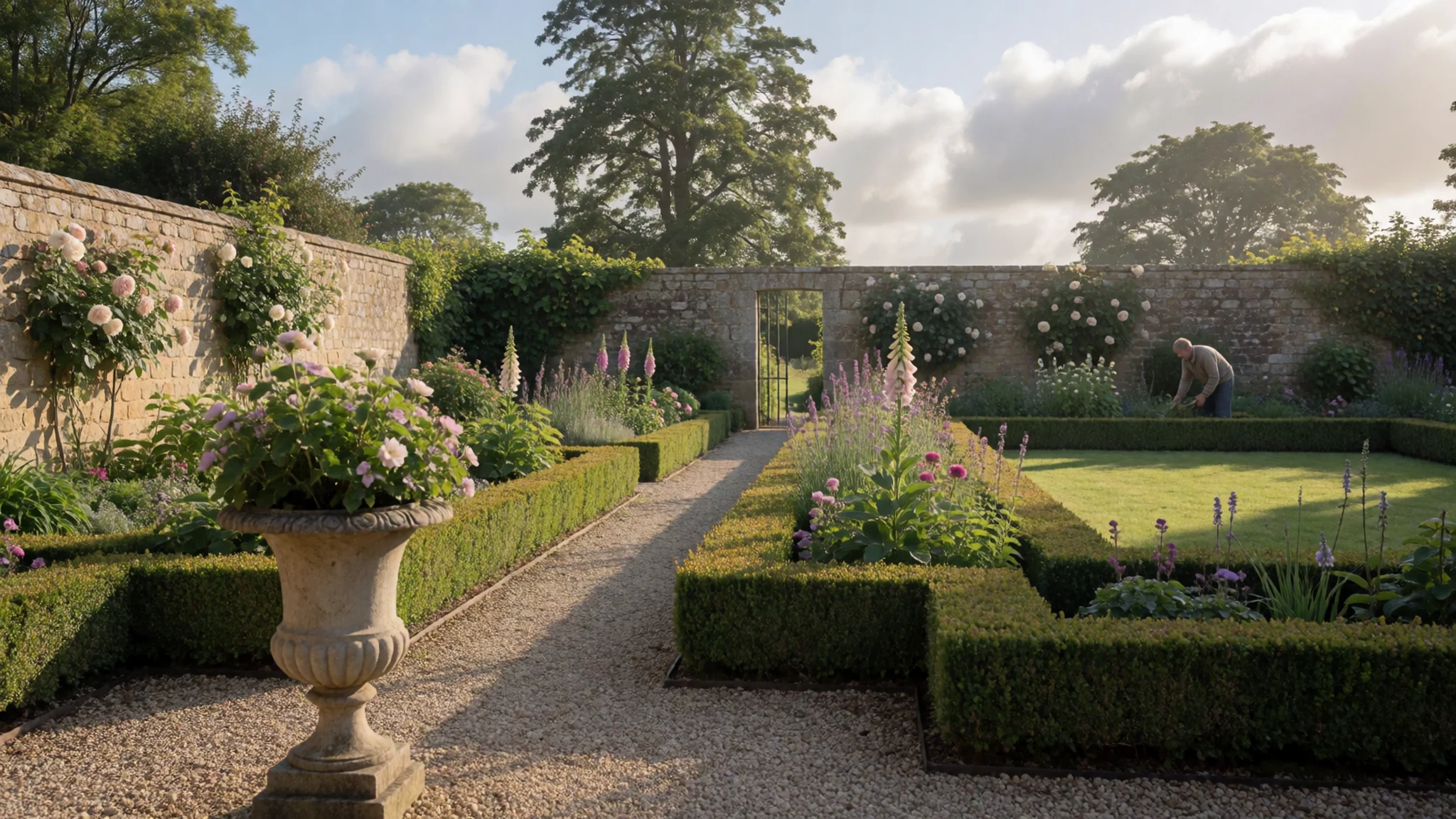
- La Coupée — Between Greater and Little Sark
This narrow ridge joins Greater Sark to Little Sark, with a drop of about a hundred metres on each side and a concrete road laid in 1945. Railings make it safe, but the wind is strong, so hold hats and children and stop only where there is room.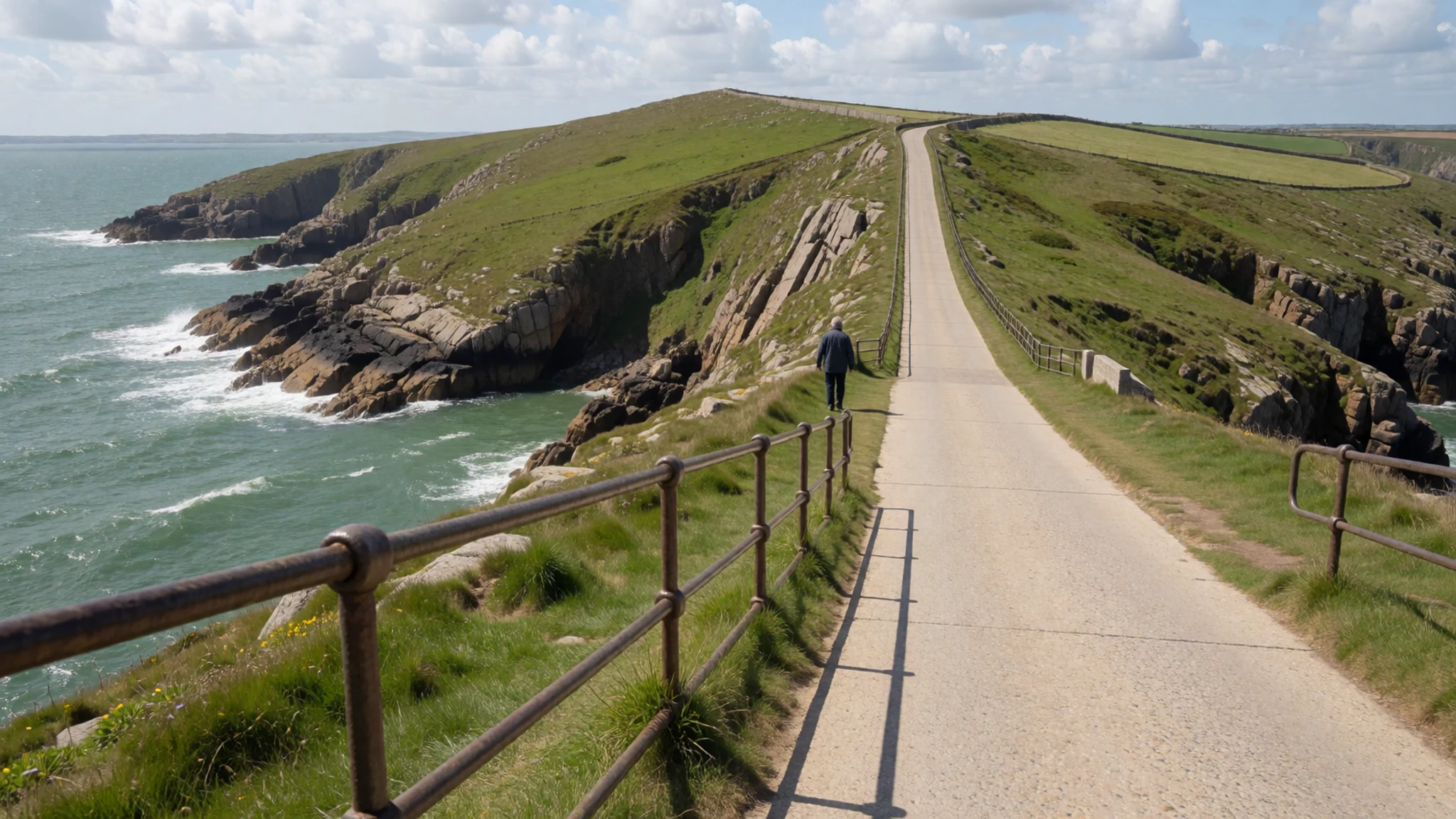
- The Window in the Rock — West coast, below La Seigneurie
A tunnel blasted through the cliff in the 1850s under a Seigneur, the Reverend Collings, frames the coast west of La Seigneurie. Whether it was meant for hauling goods from the beach or simply for the view, it ends at a sheer drop. Keep dogs and children close.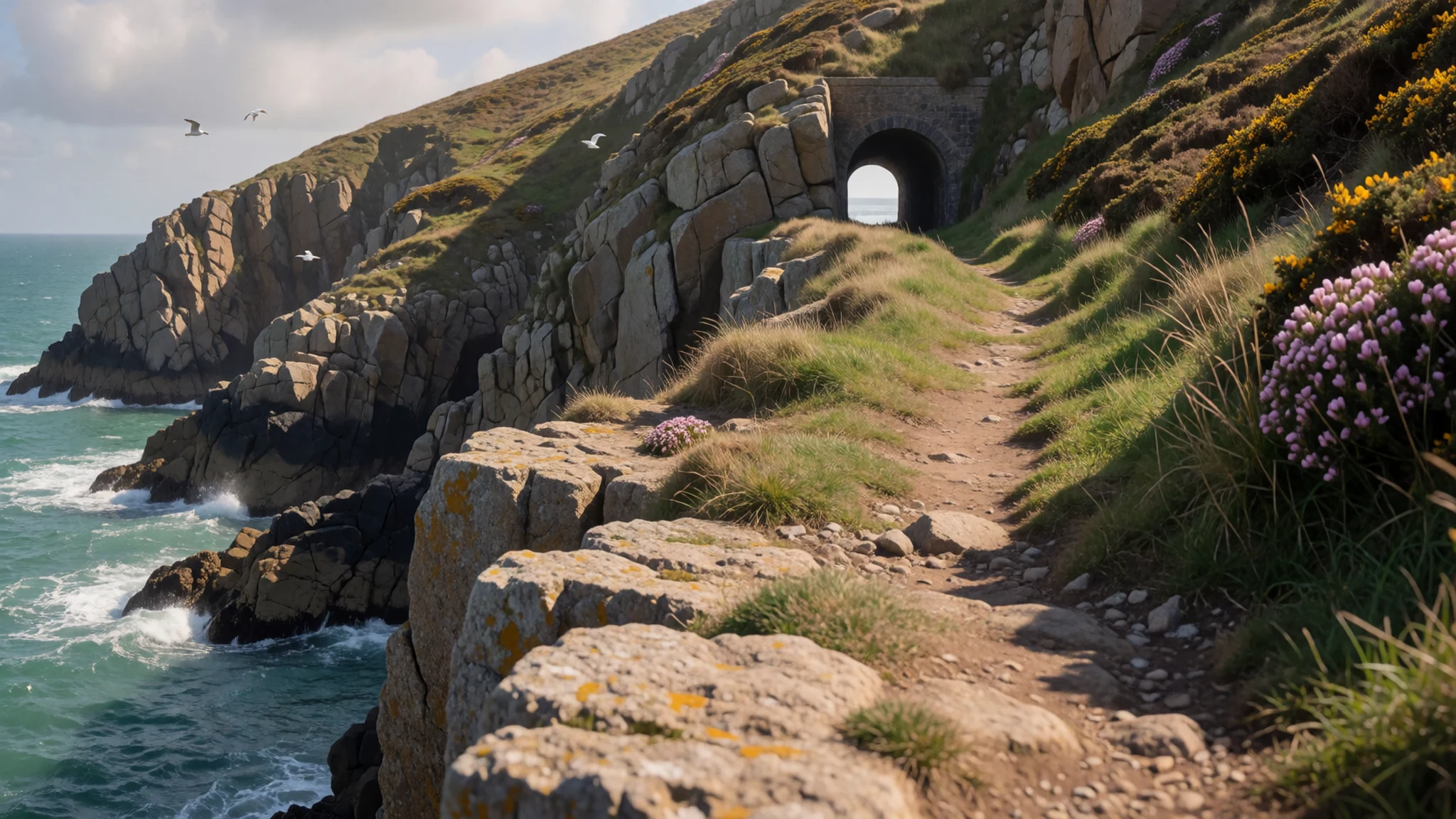
- L'Eperquerie — North tip of Greater Sark
The northern tip of Greater Sark is open headland, quiet and exposed, with views west towards Guernsey and Herm. A Buddhist rock carving was inscribed here in 2000. The islet of La Grune lies just offshore. It makes a good end point for a long walk.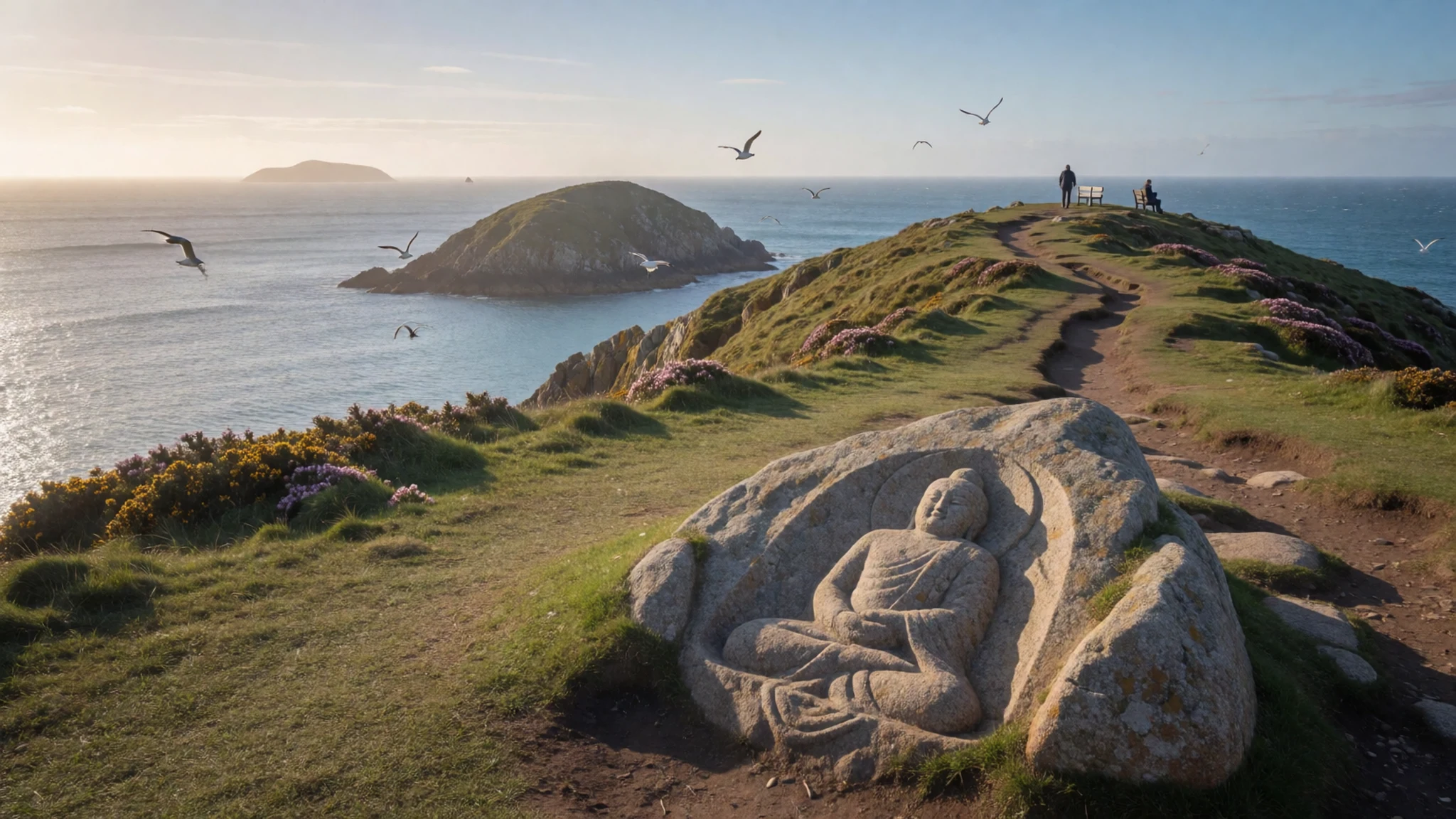
- The Avenue and Harbour Hill — Top of Harbour Hill, The Village
From the pier a steep lane climbs to The Avenue, where shops, eateries and island services sit among a mix of plain buildings. It is the island's working centre, and the best place to watch carriages, tractors and cyclists share the road. The Old Island Hall sometimes holds exhibitions.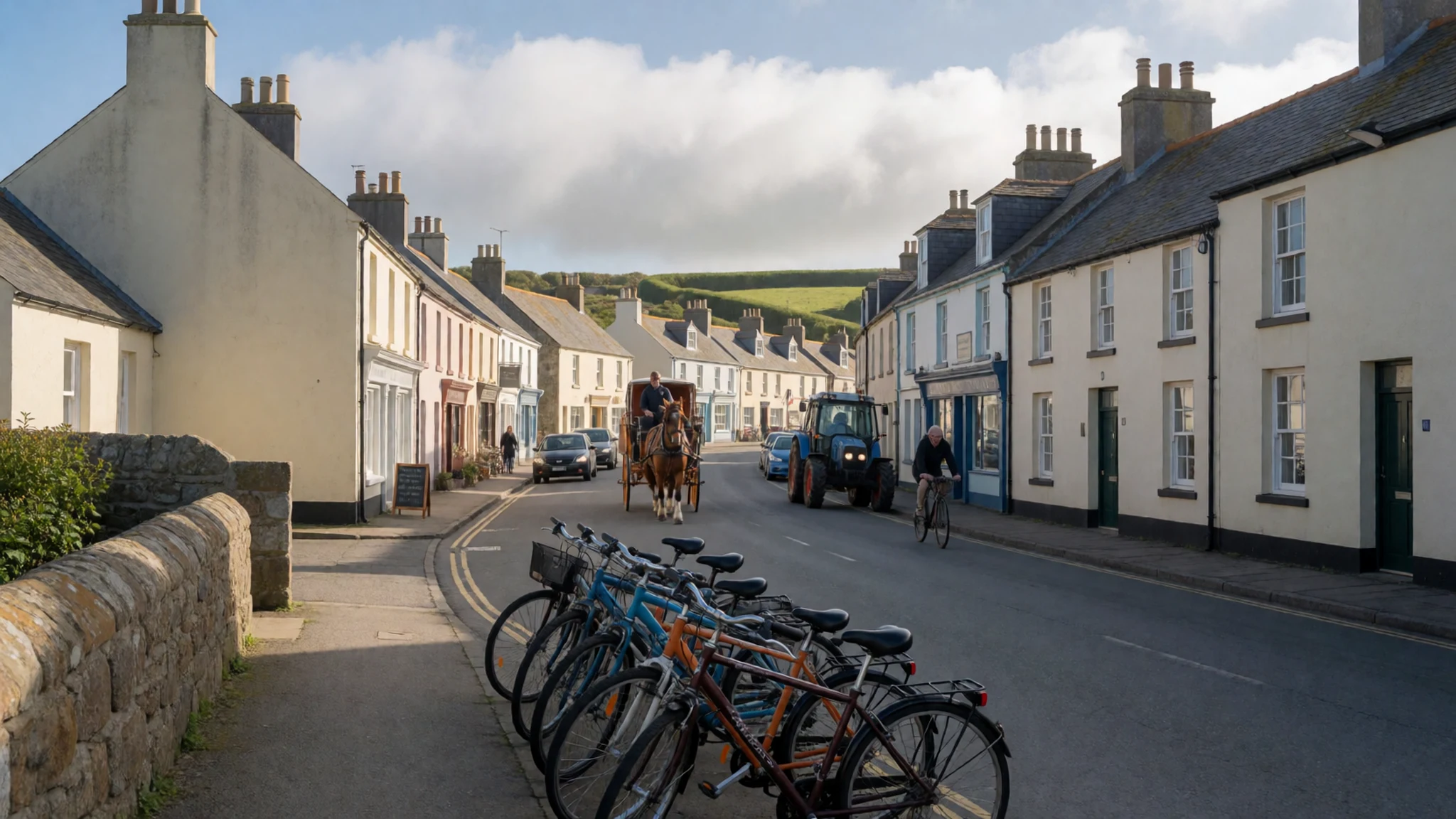
Culture
Sark's culture is shaped by smallness, church and a long habit of self-reliance. The island has Anglican and Methodist congregations: St Peter's church dates from 1820, and the Methodist chapel was dedicated in 1797 after preachers from Jersey and Guernsey had worked for years in cottages around the island. Law and government have Norman roots, and the island kept its own feudal order until 2008, which still colours how people talk about land, family farms and who has a say. Daily life runs on community habits: tractors carry goods and luggage up from the harbour, carriages serve as taxis, and neighbours generally know each other. The ban on cars is not a gimmick but part of how the island sees itself, and visitors who treat it that way are warmly received. Island stories often involve the sea, the pirates of earlier centuries and the occupation years, and you will hear them in pubs rather than museums, since the former museum has closed. Pubs and cafés double as social centres, though Sunday opening can be limited. Smoking is banned in pubs, bars and restaurants. Greet people you pass on the lanes, give way to carriages and tractors by stepping to the side, and ask before photographing residents or their animals.
What to wear
Sark has no widely documented national costume of its own, and it would be wrong to invent one. The nearest thing to a local textile tradition is the wider Channel Islands knit, the tightly worked wool jumper associated with sailors and fishing families, still worn for its warmth and wind resistance. Church-going on Sark traditionally meant Sunday best, and some residents still dress up for services. Day to day, islanders wear practical working clothes: waterproof jackets, boots, fleeces and caps for farm, boat and building work, with bicycles and tractors in mind. In summer, shorts and T-shirts are common among both residents and visitors, and the mood is relaxed. Visitors should dress for wind and changeable weather first. Bring a windproof layer even in summer, a light waterproof, and a warm jumper for evenings and ferry crossings, which can be cold and splashy. Sturdy, grippy shoes matter more than style, as paths to bays are steep and can be slippery, and La Coupée is exposed. Cyclists should carry a hat that stays on. For church services, or when visiting the garden of La Seigneurie, neat casual clothes are fine; no special dress code applies, but covering swimwear away from the beach is courteous. Sun cream and sunglasses are worth packing for bright days.
What to eat
- Café breakfast and lunch — Cafés around The Avenue and The Village
Village cafés serve generous portions of breakfast and lunch, good fuel before a long cycle. Expect cooked breakfasts, sandwiches, soups and cake. They are a handy meeting point near The Avenue and fill up when the morning ferry arrives.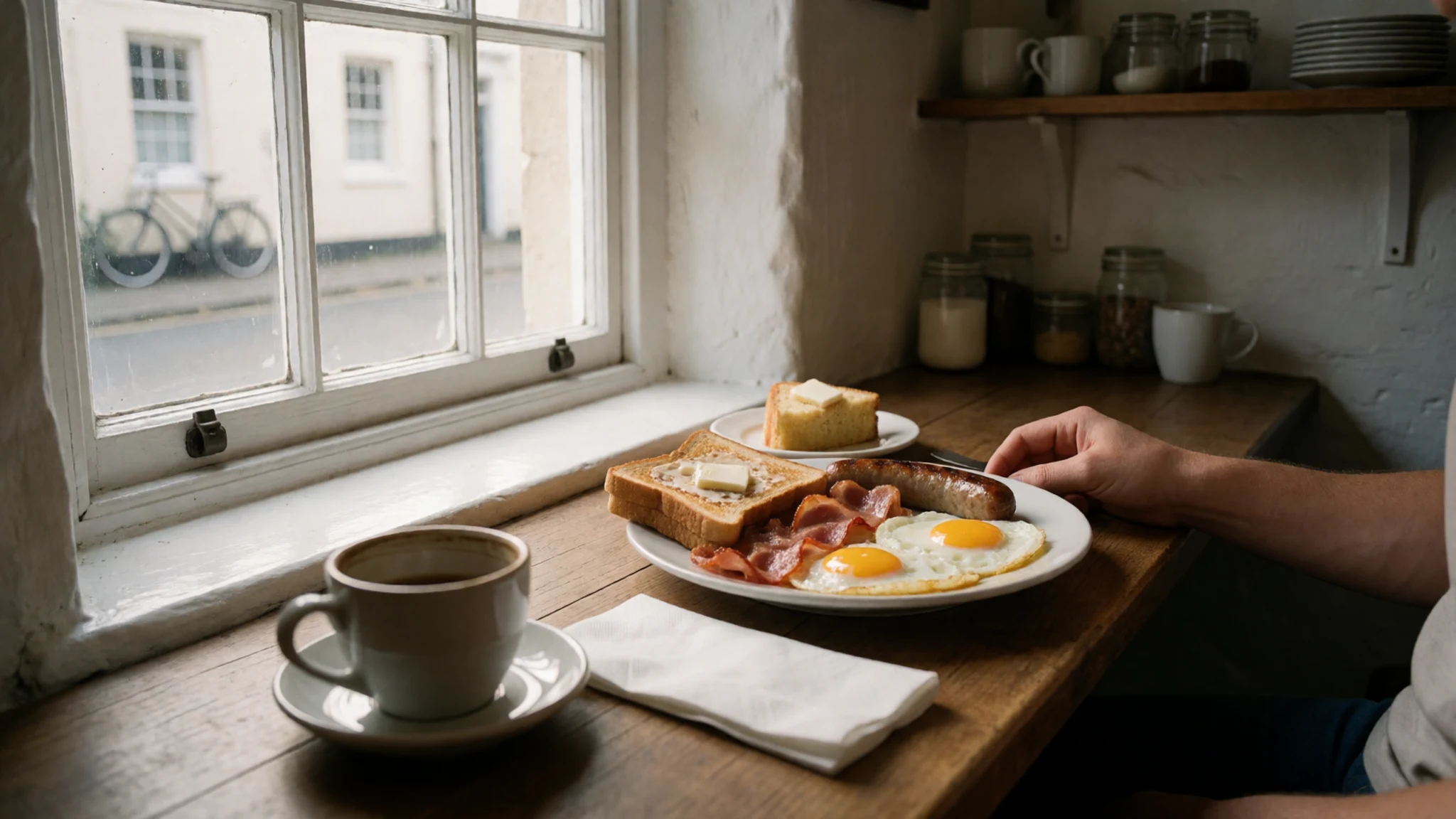
- Garden-café light lunch — The café at La Seigneurie gardens
At La Seigneurie's garden there is a café offering light meals and refreshments, with dinner some evenings. It pairs well with a garden visit, and sitting among the borders is gentler than eating in a crowded room on a busy day.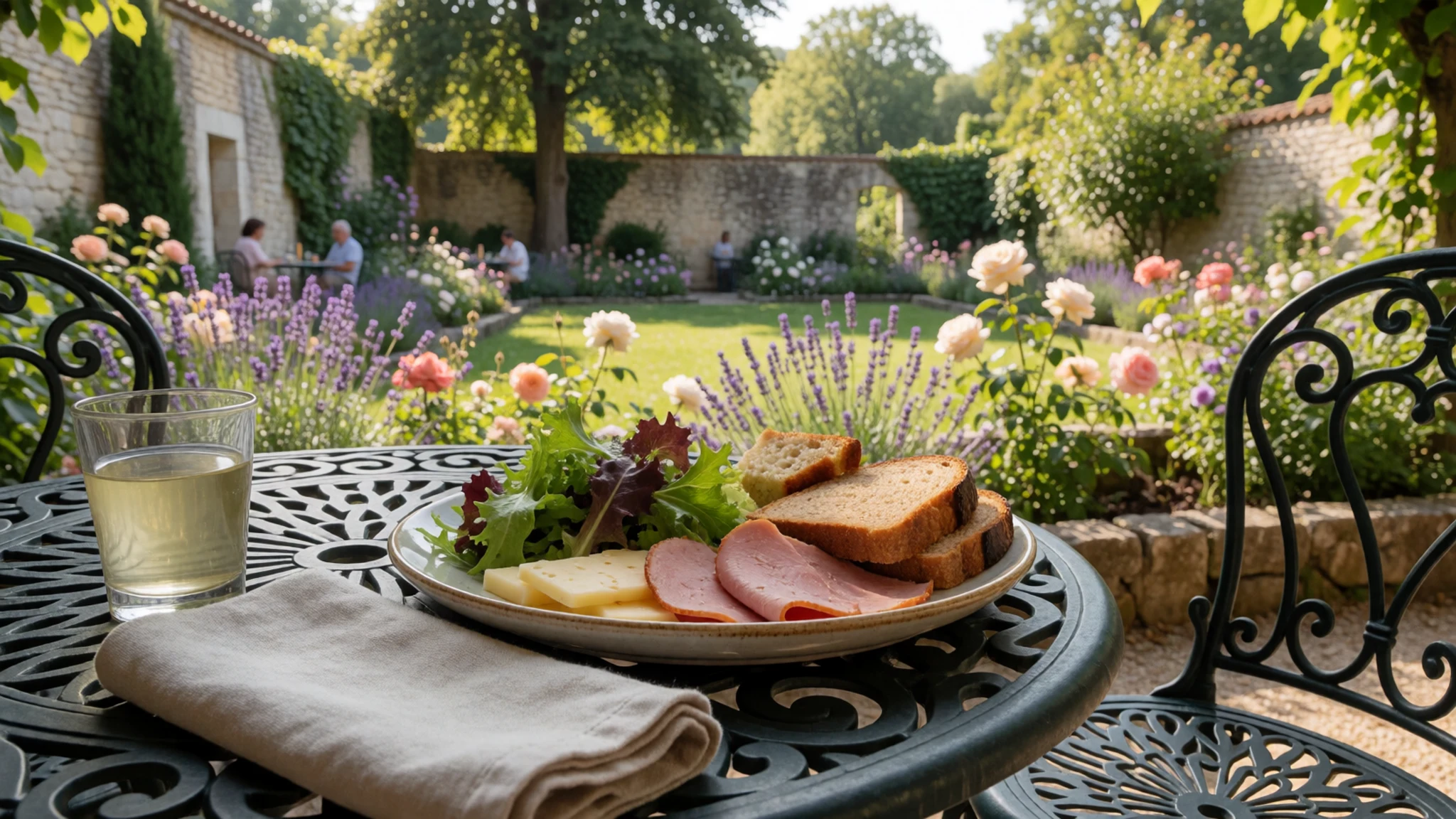
- Chocolates and cake — The chocolate shop near La Coupée
A chocolate maker north of La Coupée sells handmade chocolates, cake and takeaway coffee. The former tearooms remain closed, so treat it as a stop for a snack to carry along the cliff path rather than a sit-down meal. - Pub pizza and a pint — Pubs near the harbour hill and in The Village
Island pubs serve simple food, and pizza with a beer in a garden is a reliable end to a day. One pub sits at the top of the steep lane from the harbour, so it works as a first or last stop. - Traditional supper — Village restaurants and the dining rooms on Little Sark
Some village restaurants serve traditional island-style cooking in the evenings, with limited days and hours, so ask ahead. For a dressier meal, the two upscale dining rooms include one on Little Sark; reservations are recommended.
Plan it
Best time. May to September for the gentlest weather, long daylight and the fuller ferry timetable, which runs from April to October. Winter has fewer sailings and short days, though clear nights suit stargazing.
How long. 1–2
Getting there. Fly or sail to Guernsey and take the foot-passenger ferry from St Peter Port to Sark, about 55 minutes. From April to October there are also services from St Helier on Jersey (about 70 minutes), and some start from Granville in Normandy. Check live sailings and cancellations at sark.syndakat.com and the island site, http://www.sark.co.uk/.
Budget. mid
Tips
- Check the ferry timetable and the last boat back before you plan the day; winter sailings are few and some are mainly for cargo
- Day trips are tight, so stay a night if you want La Coupée, Little Sark and the dark skies
- Bring a windproof layer and sturdy shoes, as cliff paths are steep and exposed
- Carry some cash and check with each eatery about cards and opening days, as hours vary
- Book meals ahead for the upscale dining rooms and for evenings, especially on Sundays
Etiquette
- Step aside for carriages, tractors and bicycles on the lanes
- Keep dogs and children close near cliff edges and the Window in the Rock
- Ask before photographing residents and their animals
Nearby
Sources
- Wikidata Q3405693 (CC0)
- Wikipedia: Sark (rev 1376296919) (CC BY-SA 4.0)
- Wikivoyage: Sark (rev 5417620) (CC BY-SA 4.0)
- Photo: Sark aerial, Phillip Capper (CC BY 2.5)
- Photo: Location map of Sark, Aotearoa (CC BY 3.0)
- Photo: La Coupée, Clemensfranz (CC BY 3.0)
- Photo: Sark windmill, Judges, Hastings (Public domain)
- Photo: Horse-drawn carriage, H. de Vegt (CC BY 3.0)
- Photo: La Seigneurie, Daniel Kraft (CC BY 3.0)
- Photo: Sark July 2011, Man vyi (Public domain)
- Photo: Sark ferry arrival, Hello 912 (Public domain)


