São Miguel das Missões
São Miguel das Missões, Brazil
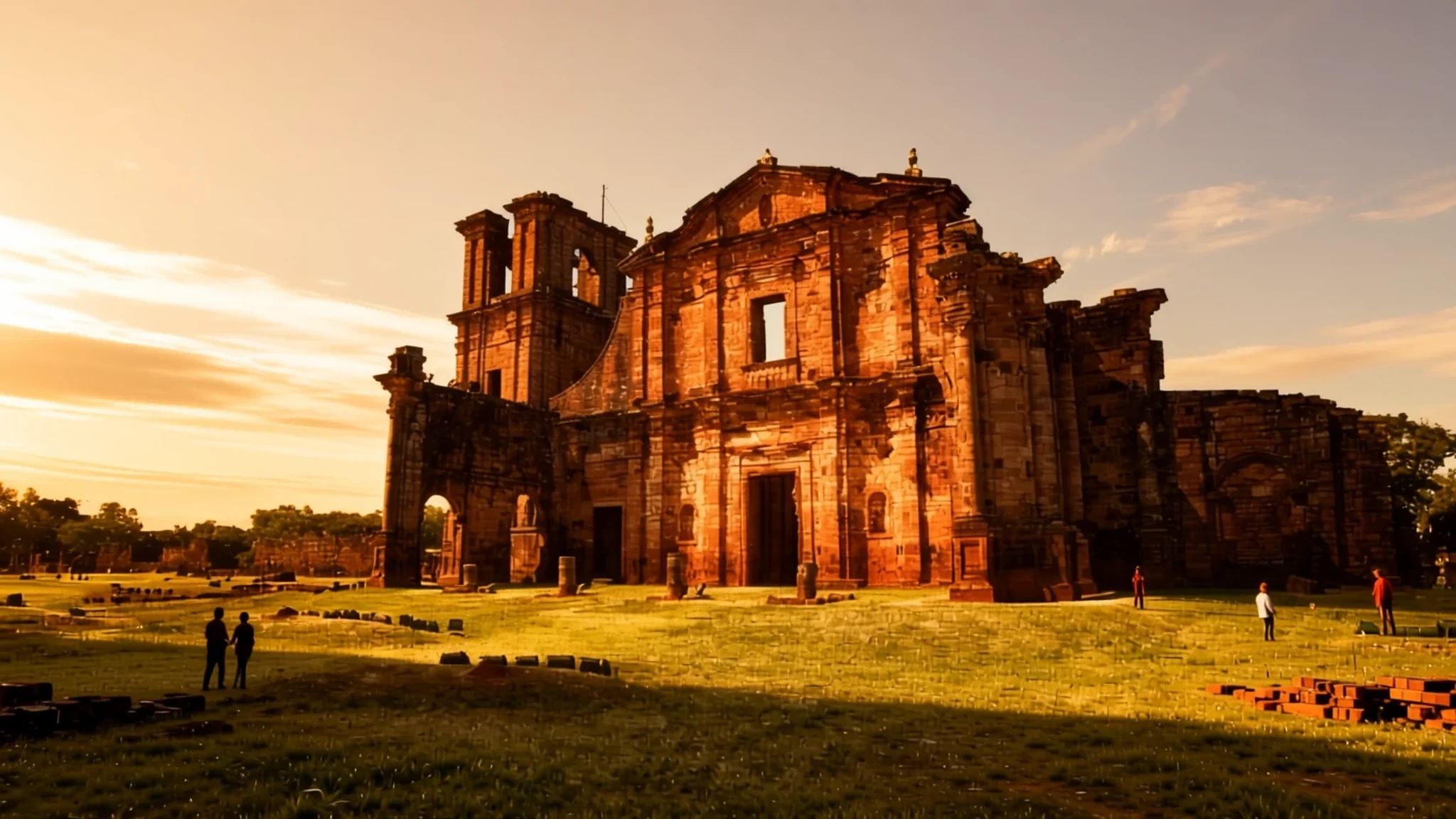
São Miguel das Missões keeps the ruins of a Jesuit mission in a quiet corner of Brazil's southern pampas, best seen at dusk.
The place
Located in Rio Grande do Sul, Brazil's southernmost state, São Miguel das Missões is a municipality where rolling farmland meets the wide grasslands of the pampas. The town itself is small, home to about 7,000 people, and most visitors come for one reason: the stone ruins of a Jesuit mission that stand on the edge of the modern settlement. The site lies about 305 metres above sea level. Spanish Jesuit priests, working with Guarani communities, built the mission as part of a wider network of settlements in the borderlands of the River Plate region. Those settlements were ambitious in their organisation, with workshops, schools and farmland run on shared lines, but they were eventually abandoned as colonial powers fought over the territory. What survives today is a set of stone walls, arches and the shell of a large church, set in open grass with a few shade trees. The town has a few places to eat and sleep, but the choice is limited, so check ahead. Most people plan a day here, with the evening show as the high point, and treat the town as a base for the ruins rather than a destination in its own right.
Its story
São Miguel das Missões grew out of an idea the Jesuits pursued across the region: gather Guarani families into a planned town, teach them trades and the Christian faith, and let them farm, herd and make things together. Each mission followed a similar grid, with a central plaza, a church at one end, and rows of houses, workshops and storehouses around it. At São Miguel the church became the dominant building, designed by an Italian architect and built to impress as much as to serve worship.
The arrangement did not last. Rivalry between Spain and Portugal, and raids by slave-hunting expeditions from the Portuguese side, pressed on the missions from outside. Over time the Guarani were moved, dispersed or killed, and the Jesuits themselves were expelled from Spanish and Portuguese territories. The towns emptied, and the stone they had built was left to weather under grass and forest.
The ruins were later rediscovered, studied and protected, and today the site is cared for as a heritage place. Visitors read the story in the walls: the outlines of the cloisters, the surviving carved details, and the sheer scale of the church. The modern town runs alongside the site, but the ruins are the reason the place is on the map. Knowing the history helps, because the evening show retells it through the eyes of the Jesuits, the Guarani and the Spanish and Portuguese empires that competed for this land.
What to see
- São Miguel Arcanjo church — the archaeological site, in the town
The centrepiece of the archaeological site is the Church of St Michael the Archangel, a Baroque building designed by an Italian architect. Construction took roughly a decade, and the shell still shows three naves divided by stone piers. Walk slowly around the outside first, then step inside, where the layout is easiest to read. Allow at least an hour so you can see the carved stonework and the proportions of the walls.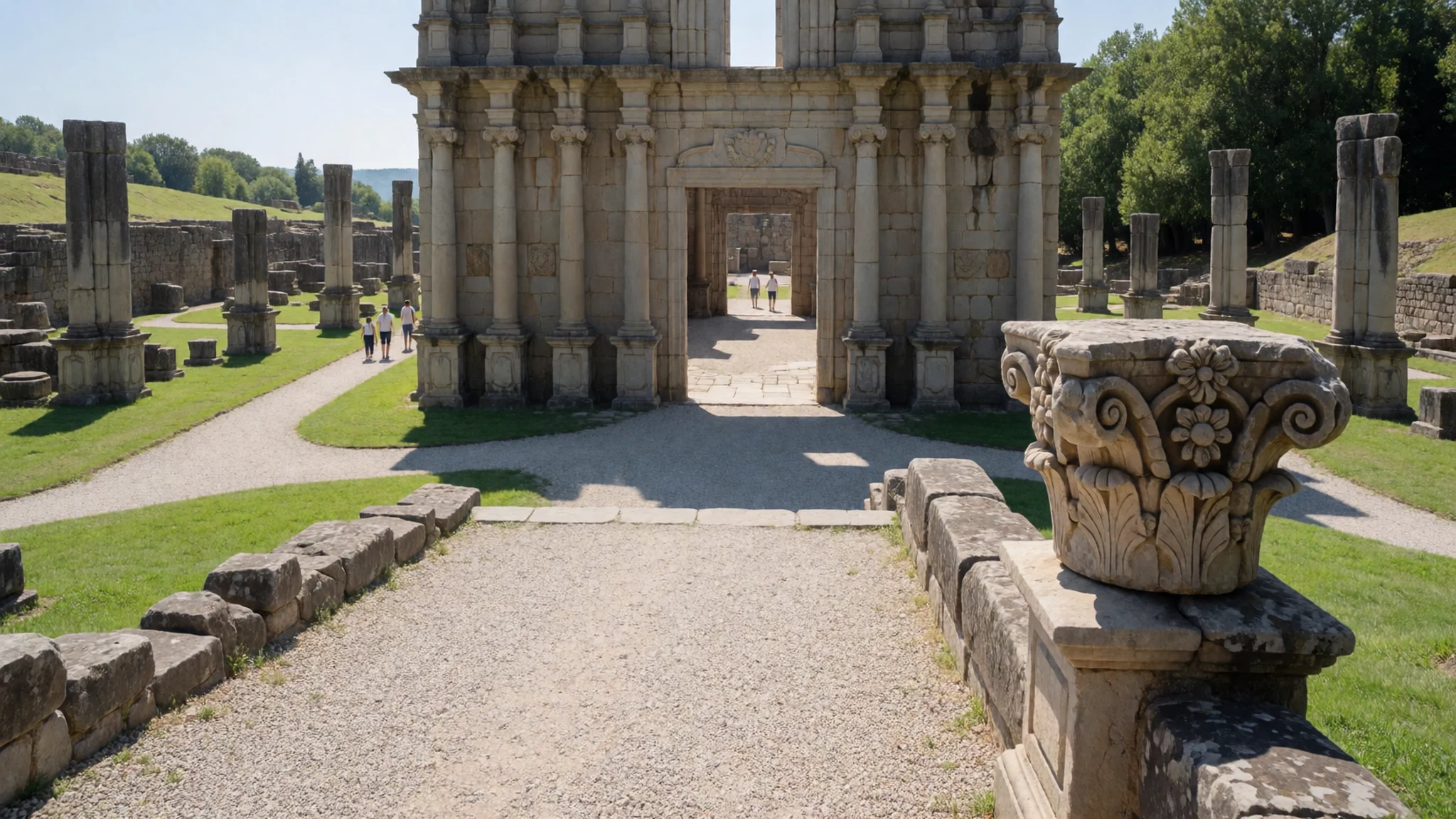
- Mission walls and open ground — the grounds around the church, inside the archaeological site
Beyond the church, the ruins spread across open grass, with low walls marking houses, workshops and courtyards. Paths lead between the foundations, and the best views come from raised points where you can see how the mission plan was laid out. Stay on the marked routes, since the stone is fragile and the ground can be uneven, especially after rain.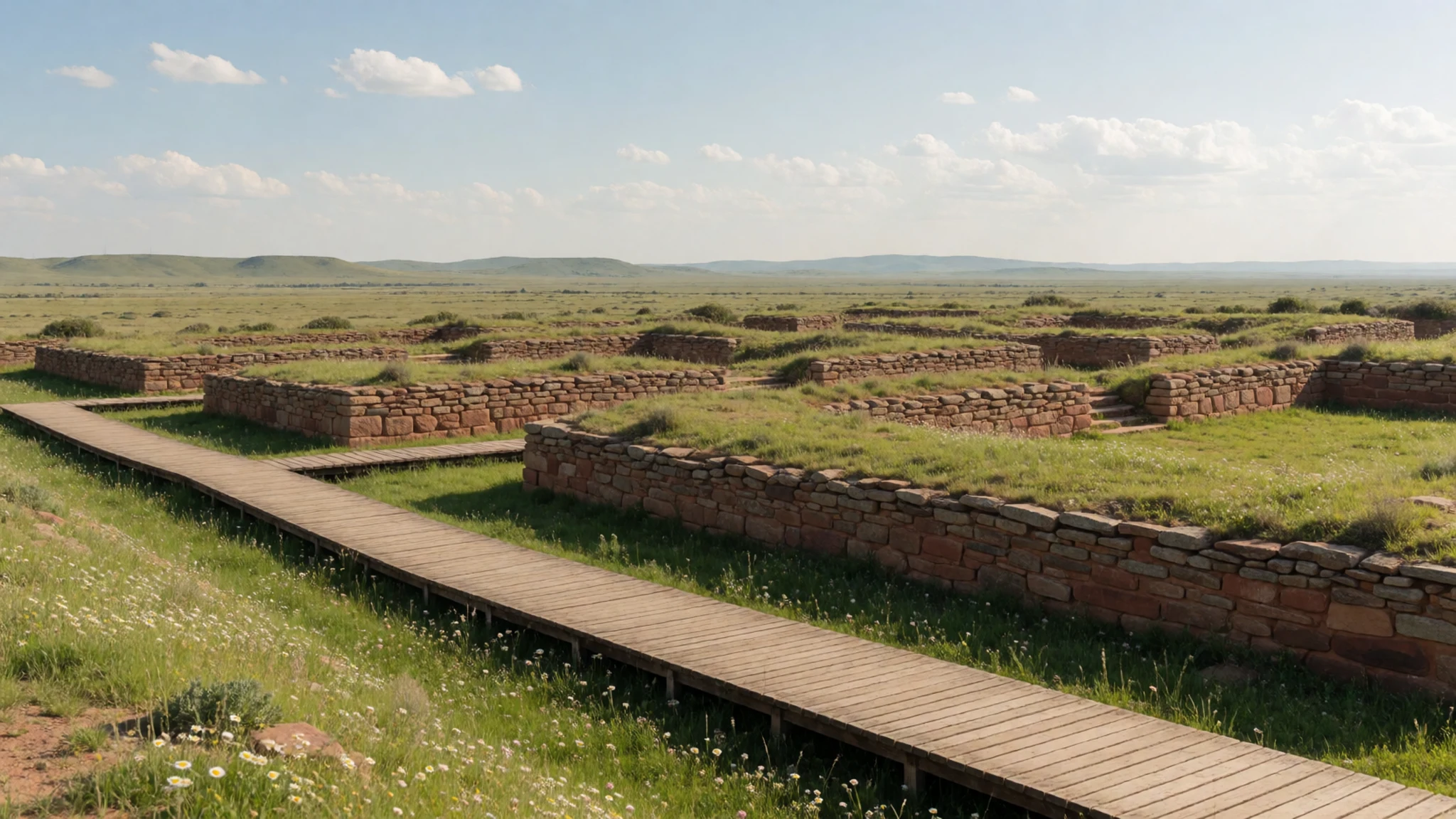
- Light and Show Spectacular — the archaeological site entrance and grounds
The Espetáculo de Som e Luz runs outdoors at dusk and tells the history of the Jesuits, the Guarani and the Spanish and Portuguese empires in this territory. Bring a layer, because the nights can be cold, especially in the southern winter. Show times change with the season, so check the official site before you go. Tickets are sold at the site entrance, so carry some cash just in case.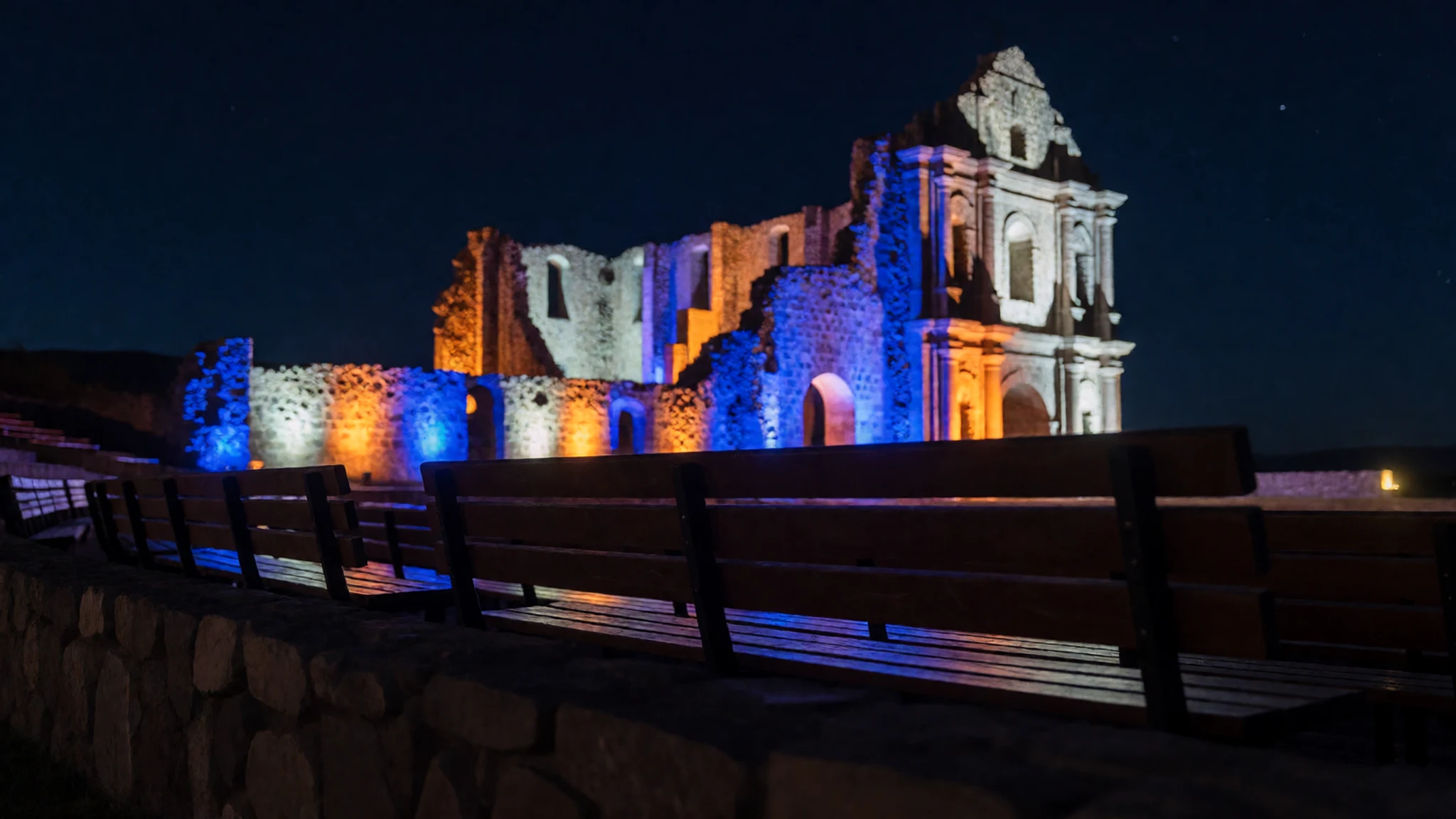
- Missions Museum — beside the ruins, a short walk from the church
The museum was designed by the architect Lúcio Costa in the mid-twentieth century, and its design draws on the dwellings of the missionaries. A veranda roofed with clay tiles runs along its front, which gives shade when the sun is strong. Inside, displays help you place the ruins in context, so visit before or after the church to make the walk around the site more meaningful.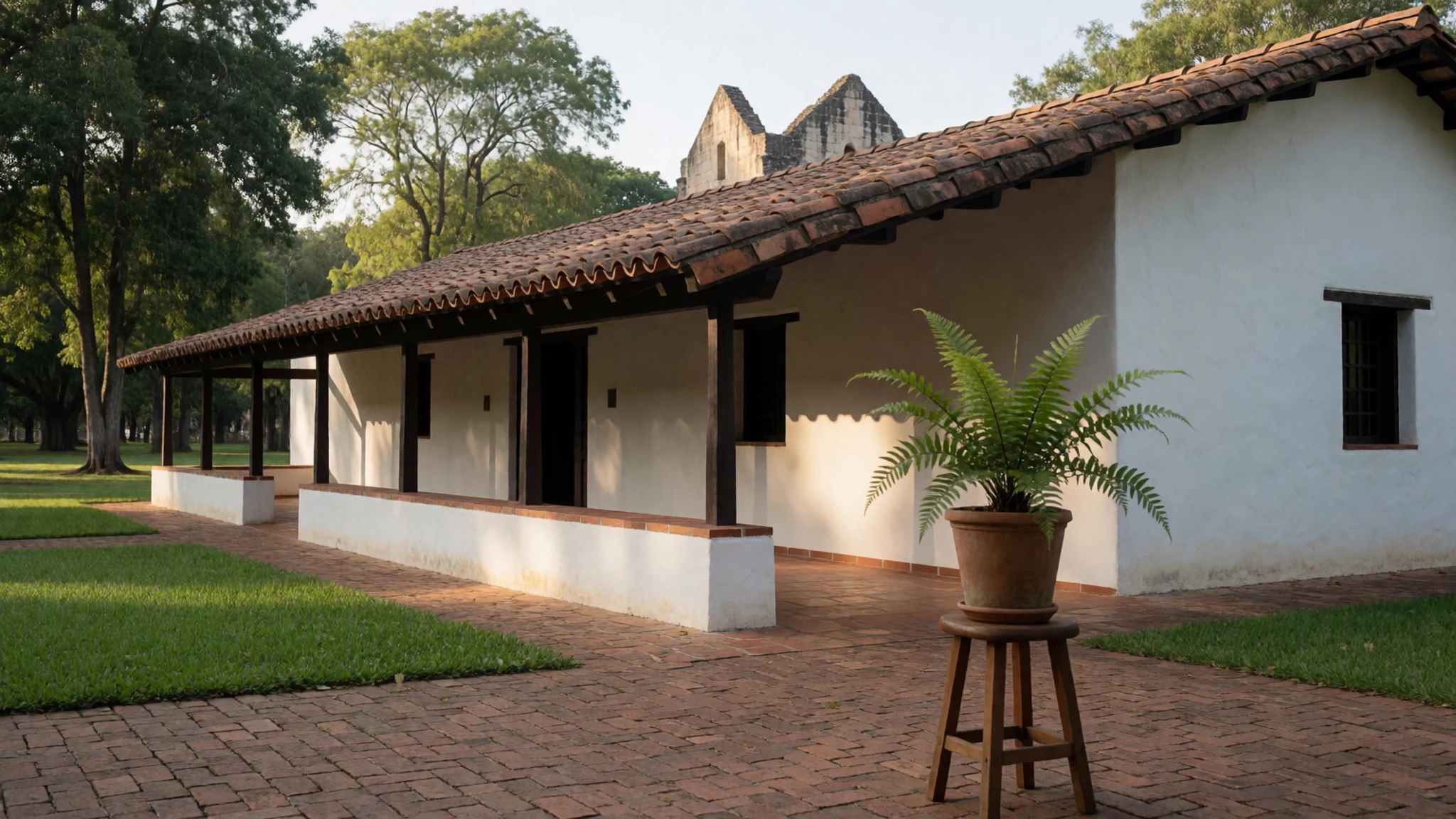
- Town gateway — the entrance to the town, on the approach to the ruins
At the entrance to the town, a gateway marks the way to the ruins. It makes a sensible first photo stop when you arrive, and it is a useful landmark for finding your way to the site. Park nearby and walk in, since the approach gives you a sense of how the modern town sits alongside the old mission.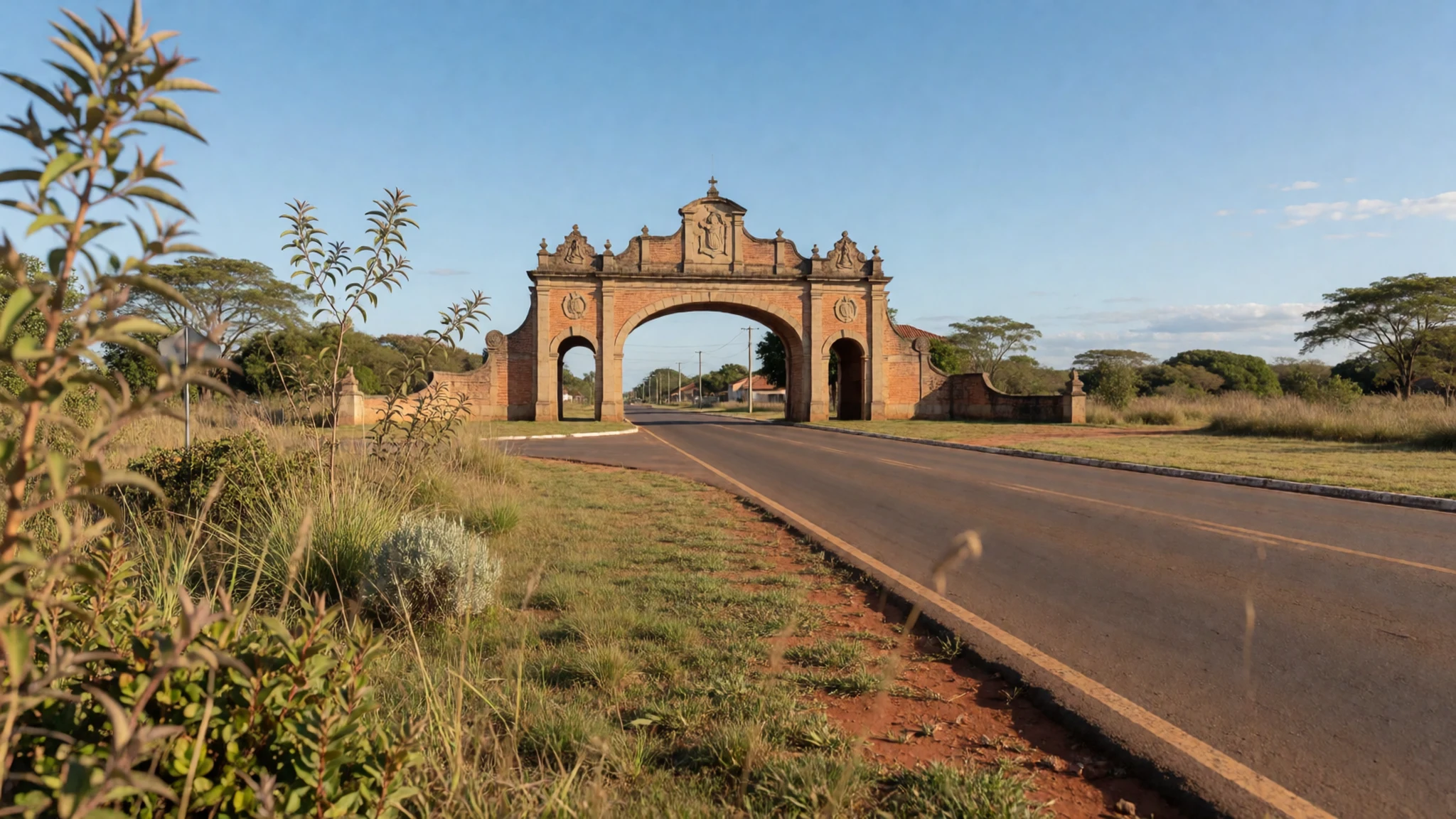
Culture
The ruins are a place of memory for Guarani communities as well as a heritage site, and that shapes how you should behave. Staff at the site are usually glad to explain the history if you ask, so do ask, and try a few words of Portuguese, which goes a long way in this part of Brazil. Inside the church and along the walls, keep your voice low, because families and school groups use the open grass for picnics and quiet walks. Sunset draws photographers, so look for signs before you climb onto low walls or step into areas marked as protected. The town moves at an unhurried pace, so do not plan a tight schedule around the site. Card payment is common in larger towns, but carry some cash for tickets and small purchases. Please keep to the marked paths, and do not climb on the stonework, lean against the walls or carve names into them.
What to wear
São Miguel das Missões has no dress of its own, but its history touches two textile traditions. The mission workshops, run by Jesuits with Guarani weavers, are believed to have produced cotton and wool cloth and simple garments, and the courtyards of the ruins show where such work took place. Across Rio Grande do Sul, the gaúcho tradition is more visible in daily life. Men often wear the bombacha, loose trousers gathered at the ankle and worn with tall boots and a neckerchief, and women sometimes wear full skirts at festivals. Townspeople today dress much as people do across southern Brazil, in jeans, shorts and cotton shirts, with the occasional gaúcho outfit at local events. Visitors should dress for a sunny, open site. Light cotton or linen, a hat, sunglasses and sunscreen are the basics. Bring a light jacket or fleece for the evening show, which can be cool, particularly from May to July. Choose closed shoes with good grip, because the ground is uneven around the stone walls and grass can be slippery after rain. Cover shoulders and knees when you go inside the church.
What to eat
- Chimarrão — any café or kiosk in the town, and the benches near the ruins
Chimarrão is a bitter, hot mate tea drunk from a gourd through a metal straw, and it is the everyday drink of the gaúchos. It is shared: one person prepares the gourd, drinks, and passes it to the next. Refills are normal, so you can keep sipping as the conversation goes on. Ask for it without sugar for the traditional taste.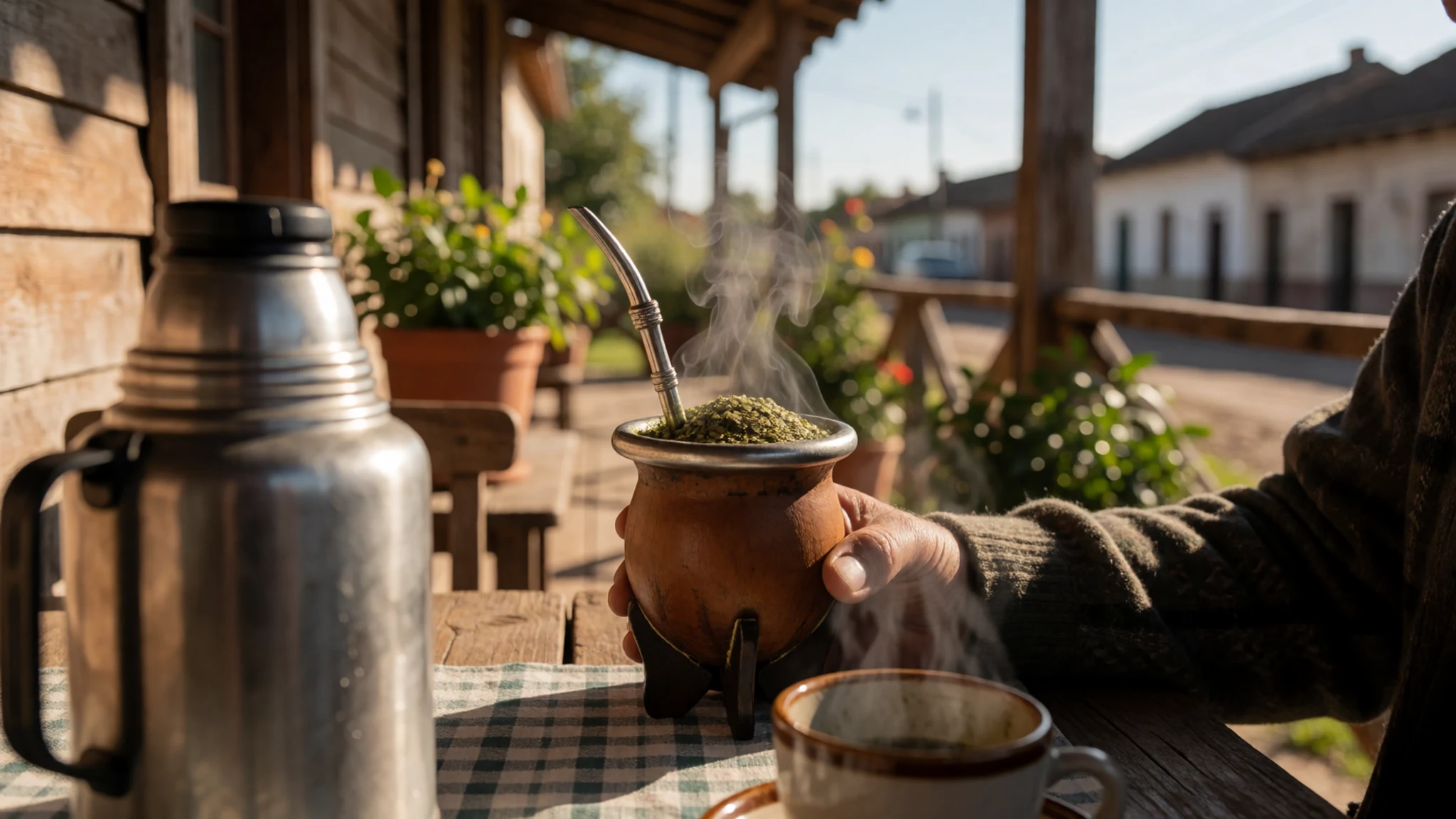
- Churrasco — a churrascaria or a barbecue spot in the town centre
Churrasco is grilled beef, often served on skewers carved at the table, and it is the classic weekend meal across the state. Cuts range from picanha to sausage, with side dishes of rice, salad and farofa. Go at lunchtime, when the grill is busiest and the meat is freshest, and expect a long, relaxed meal.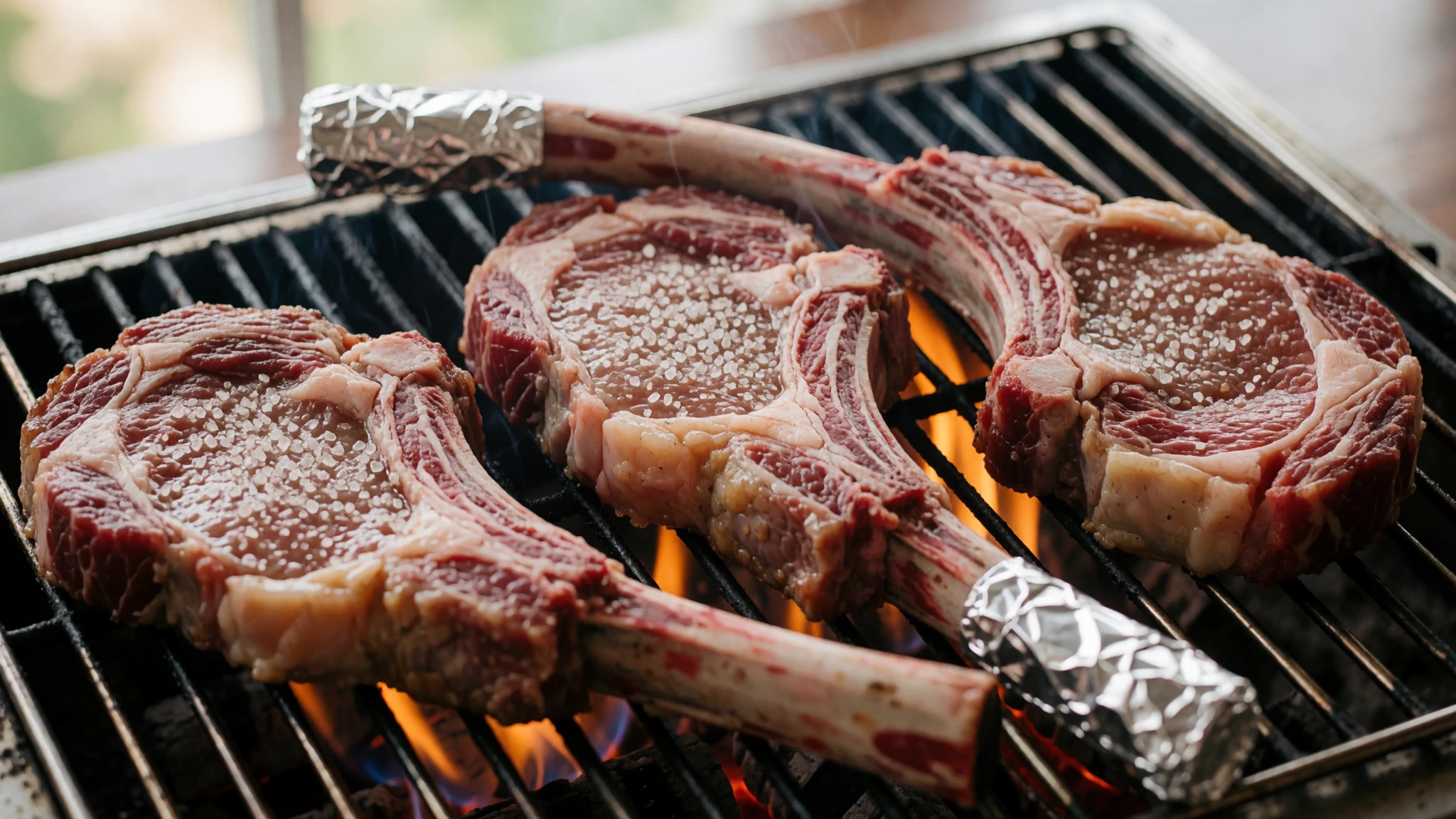
- Pão de queijo — bakery counters on the main street, especially in the morning
Pão de queijo are small cheese breads made with cassava flour, crisp outside and chewy inside. They are best eaten warm, straight from the oven, and they make an easy breakfast or mid-morning snack. Bakeries often sell them by weight or by the bag, so you can take a few with you to the ruins. - Mandioca frita — a self-service lunch counter or a simple family-run eatery
Mandioca frita is cassava cut into thick sticks and fried until golden, usually served with meat or as a side dish. It has a soft, floury centre and a crisp outside. It is a filling lunch option when you want something simple after a morning walking the ruins. - Pastel — a street stall or lanchonete, especially on weekend evenings
Pastéis are thin pastry parcels, fried until crisp, with fillings such as cheese, minced meat or palm heart. They are cheap, portable and easy to eat between visits to the site. Many stalls are busiest in the evening, so they are a good option before or after the show.
Plan it
Best time. Winter, from June to August, suits the ruins best. June to August bring cooler days for walking the site, though the nights are much colder. Summer, from December to February, is warm, so plan visits for early or late in the day. In the winter months of May to July, the evenings turn cold, and the show needs a coat.
How long. 1–2
Getting there. Fly to Santo Ângelo, the nearest airport, where carrier flights land. Flights from other states and countries usually connect through Porto Alegre or São Paulo. From Santo Ângelo's bus station, local services run to São Miguel das Missões, or you can take a taxi or hire a car for the last stretch. Executive coaches run from Porto Alegre and many other cities across Rio Grande do Sul to Santo Ângelo, and the journey by road is a long day's travel.
Budget. low
Tips
- Visit the ruins in the late afternoon for softer light on the stone, and stay for the show at dusk.
- Check the official site (saomiguel-rs.com.br) for current show times before you travel, since they change with the season.
- Carry cash for show tickets, which are bought at the site entrance.
- Bring water and a hat, because there is little shade across the open grass.
- Check bus frequencies in advance if you plan to travel between Santo Ângelo and the town, and book accommodation early if rooms are scarce.
Etiquette
- Keep to marked paths and do not climb on or lean against the stone walls.
- Ask before photographing people at the site, especially children and staff.
- Keep voices low in the church and during the show.
- Take your litter with you, since bins are few.
Nearby
Sources
- Wikidata Q2107884 (CC0)
- Wikipedia, São Miguel das Missões (rev 1379596628) (CC BY-SA 4.0)
- Wikivoyage, São Miguel das Missões (rev 5100561) (CC BY-SA 4.0)
- Photo 01, San Miguel Arcángel ruins (Leandro Kibisz) (CC BY 3.0)
- Photo 02, Gateway to the city (Fernando H. Kreutz) (Public domain)
- Photo 03, Flag of the city (Município de São Miguel das Missões) (Public domain)
- Photo 04, Heritage monument (Foto Fernando Gomes) (CC BY-SA 4.0)
- Photo 05, Ruinas-saomiguel5 (CC BY-SA 2.5)
- Photo 06, Ruínas 1 (Ian Storni Machado) (CC BY-SA 4.0)
- Photo 07, Sítio Arqueológico (Eliane Andrea Bender) (CC BY-SA 4.0)
- Photo 08, Acesso Lateral II (Carin Kunde) (CC BY-SA 4.0)


