Santos
Santos, Brazil
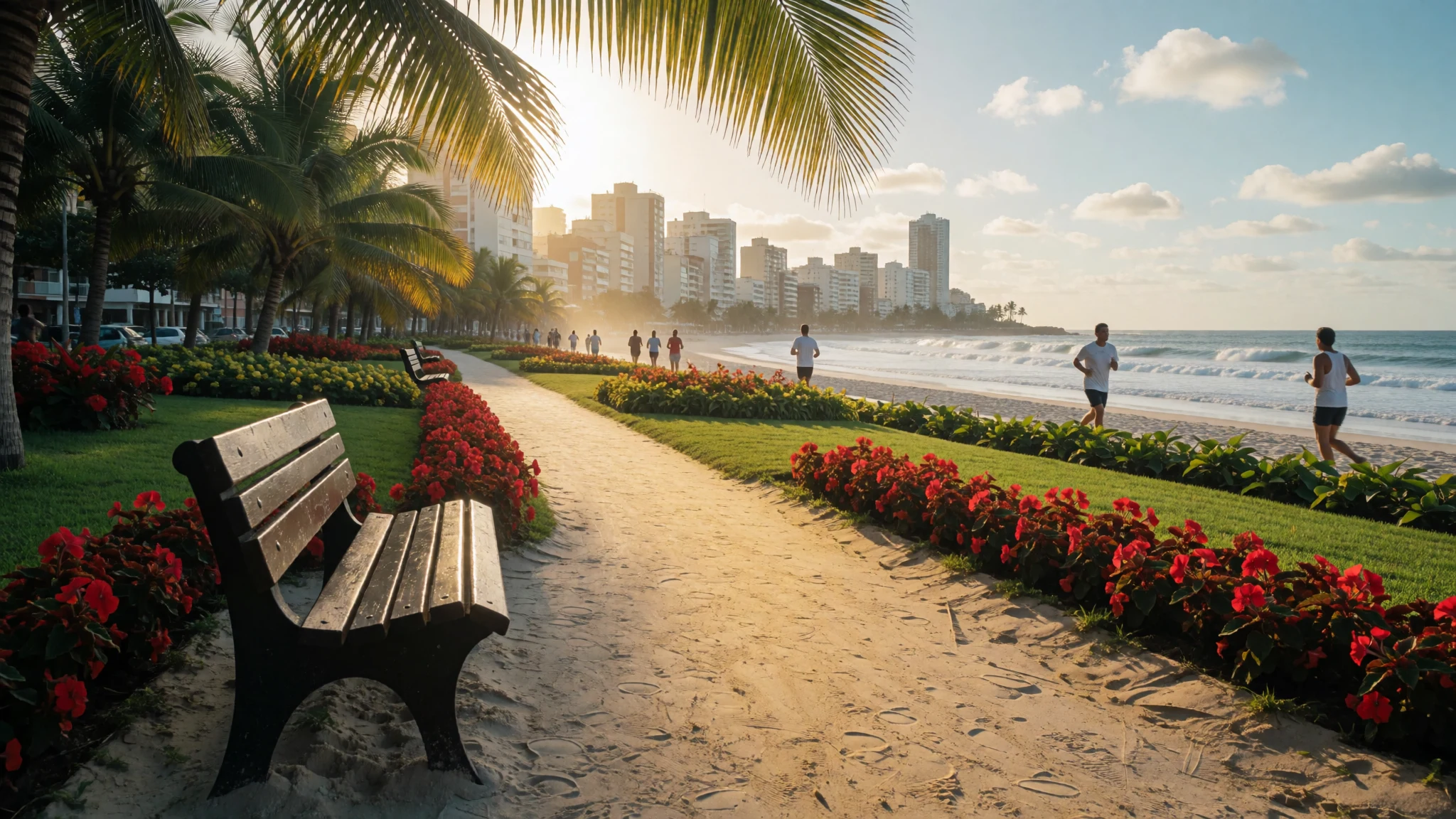
Santos pairs a working coffee port and football pride with a long garden-lined bay, an easy coastal escape from São Paulo.
The place
Santos is a coastal city in São Paulo state, sitting about 2 m above sea level on the island of São Vicente, which it shares with its twin town of the same name. Just under half a million people live in the municipality, and it anchors the wider Baixada Santista region. The island side is dense and urban, while much of the mainland part of the municipality is protected land. Two things define the place. One is the port, which handles a large share of Brazil's foreign trade and shapes the working waterfront, with cranes, warehouses and old coffee-trading buildings around the historic centre. The other is the sea-facing side, where a broad bay beach is backed by a continuous ribbon of lawns, flowerbeds and trees that Guinness World Records lists as the largest beachfront garden in the world. Football runs deep here too: Pelé spent most of his career at Santos Futebol Clube, and the city keeps a memorial to the club's triumphs. Santos lies below the Serra do Mar from the city of São Paulo, so many visitors arrive for a day at the beach or a weekend. It feels like ordinary Brazilian city life more than resort polish, with tower blocks, bakeries, bars playing live music at weekends and a habit of strolling the seafront in the evening. Offshore, the Laje de Santos Marine State Park protects a rocky stretch of sea and was the first marine park created by the state.
Its story
Santos grew out of Portuguese colonial effort on the island of São Vicente. European ships first named the island after a saint early in the sixteenth century, and a small trading village with a dock was already working there when the Crown sent an officer to mark out the territory. Brazil was gaining weight in Portuguese plans, and the coast needed settlers and order. Santos itself was founded in 1546 by Brás Cubas, a Portuguese nobleman who moved the port to calmer water at a place the local inhabitants called Enguaguaçu. A chapel built on a small hill by Luís de Góis marked the area, and the new settlement was first known as the town of All Saints. Cubas also set up a hospital modelled on the Santa Casa de Misericórdia in Lisbon, an early institution of its kind in Brazil. The real transformation came later with coffee. Beans grown on the inland plateau travelled down the mountains to Santos and left from its docks, and the city's Coffee Stock Exchange, now a museum, is where world coffee prices were once negotiated. The dock workers who carried the sacks by hand are remembered in a statue near the old port. Port, coffee and sea have kept the town busy ever since, and the old trading streets still sit close to the modern beachfront.
What to see
- Coffee Museum — Centro
The Coffee Museum fills the old Coffee Stock Exchange in the historic centre of Santos, where traders once set world prices. Inside are the trading hall, old machinery and displays on how coffee shaped Brazil. It pairs well with a walk through the surrounding old streets and a small cup of local coffee. Check the official site for opening times.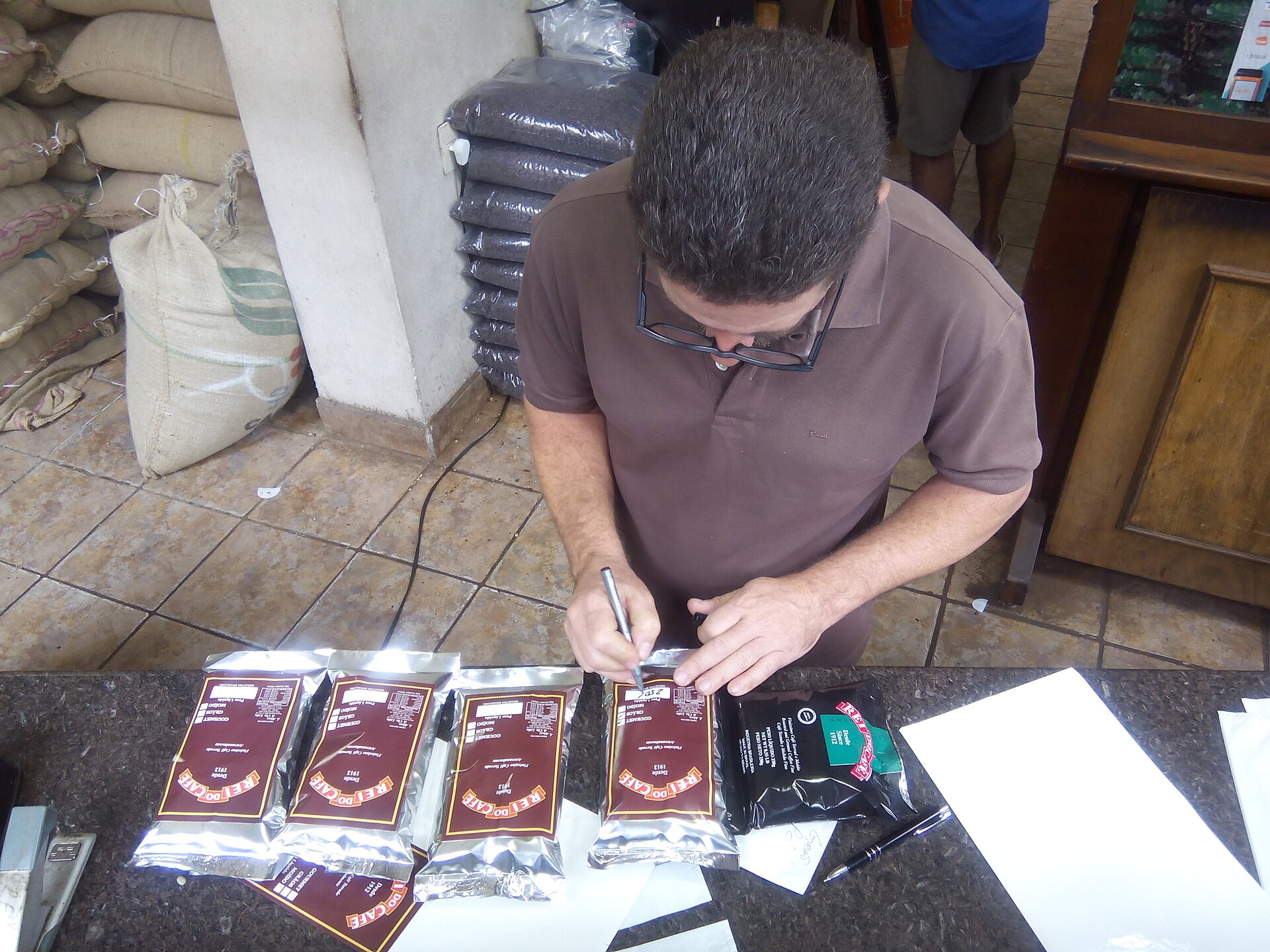
- Beachfront garden — Beach area
The beachfront garden of Santos runs along the bay behind the sand, a continuous strip of lawns, flowerbeds and shade trees that Guinness World Records lists as the largest of its kind. Locals jog, cycle and sit on benches here, so it is best taken slowly on foot in the late afternoon, with the sea on one side.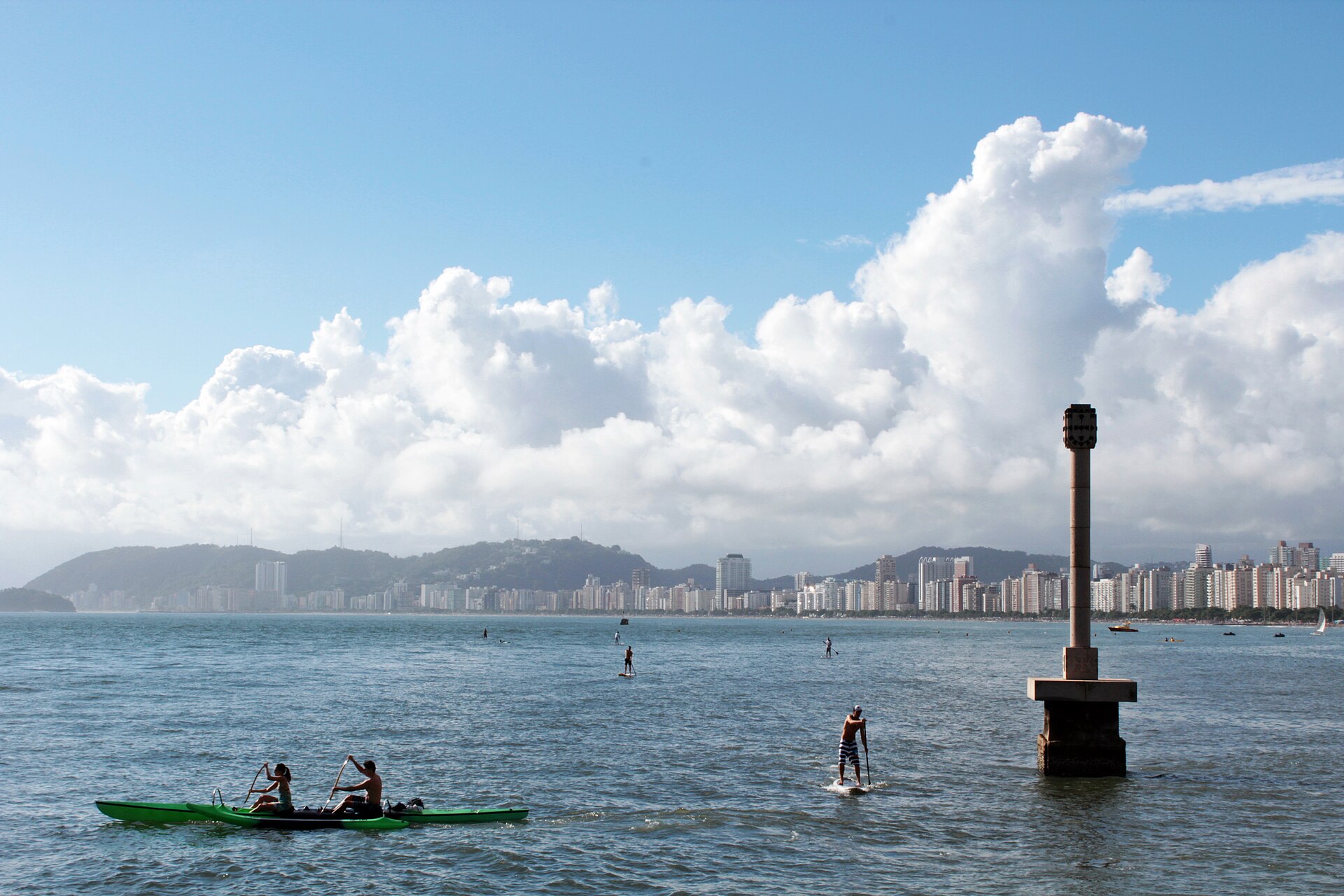
- Monte Serrat — Centro
Monte Serrat is a hill right in the middle of Santos, and its top gives a full circle of views over the port, the bay and neighbouring towns such as Guarujá. Cafés and small restaurants sit near the summit. Go on a clear morning, since haze and cloud flatten the view, and check the official site for how to get up. - Santos Aquarium — Eastern beach area
The aquarium near the eastern end of the seafront is described as the first public aquarium in Brazil, with tanks of species from Brazilian waters. It suits a wet or overcast day and works well for families. Entry is ticketed, so check the official site for current details before heading over. - Dock Museum and dock worker statue — Docks
The Dock Museum and the tall statue of a dock worker stand by the old port area and honour the men who carried sacks of coffee to the ships. It is a short, quiet stop that explains why Santos exists at all, and it fits naturally into a morning with the Coffee Museum. - Football memorial — Santos
The memorial to Santos Futebol Clube gathers trophies and memories from the club where Pelé played for most of his career. It is really for football fans, and anyone indifferent to the sport may find an hour here plenty. Opening times change, so check the official site first.
Culture
Santos has the easy, outdoor culture of Brazil's coast, with some local twists. The port and the coffee trade drew workers and merchants from many places, and the city still feels practical and lived-in rather than polished. Football is close to a civic religion: Santos Futebol Clube and Pelé are sources of local pride, and on match days cafés and bars become shared living rooms. Music matters too. Many bars host live MPB, short for Música Popular Brasileira, at weekends, and the evening rhythm is long, with late dinners, drinks afterwards and sociable crowds along the seafront. Coffee is part of the local identity, tied to the docks that once shipped it to the world, and a small strong cup after a meal is the natural full stop. People greet each other warmly, with a handshake or a kiss on the cheek depending on how well they know each other, and conversation tends to be unhurried. Weekends bring families from São Paulo to the beach, so the city shifts from quiet weekdays to a lively Saturday and Sunday. Beer, caipirinha and batidas are served everywhere, and bars fill up quickly on weekend nights. Football shirts are common, and a friendly question about the club opens conversations fast. Ask for the bill (a conta) yourself in bars and cafés, since staff rarely bring it unprompted, and keep any football banter about Santos FC and Pelé friendly.
What to wear
Santos has no single traditional costume of its own, and the coast's working communities historically dressed for labour and weather rather than ceremony. Fishing and dock families wore plain cotton and linen, with straw hats against the sun. Brazil's better-known traditional textiles, such as the white cotton and lace worn in Afro-Brazilian religious and festival dress, appear in celebrations across the country rather than as everyday wear here, and Carnival brings sequins, feathers and bright printed fabrics. Day to day, people in Santos dress for a warm, humid seaside city: shorts, sandals, light cotton shirts, sundresses and swimwear on the sand. Football shirts are everywhere, and the white of Santos FC is a familiar sight. In the evening people dress a little smarter, with a clean shirt or dress and closed shoes in better restaurants. A visitor should pack light, breathable fabrics, a hat, sunscreen and a thin rain jacket for sudden showers. Beachwear belongs on the sand and the seafront, so slip a shirt or wrap on before walking into shops, bakeries or churches. Comfortable sandals or trainers suit the flat seafront and the older streets, and shoes with grip help on the hill at Monte Serrat. Santos has no strict modesty rules, but covered shoulders are polite inside churches.
What to eat
- Cafezinho — Coffee bars in the historic centre
A cafezinho is a small, strong, usually sweetened coffee, served after meals and at any time of day. In Santos it carries extra meaning given the city's coffee history. Look for it at coffee bars in the historic centre and in cafés on Monte Serrat. - Pastel — Snack bars and stalls near the beach
Pastel is a thin, crisp fried pastry with fillings such as cheese, minced meat or palm heart, eaten hot as a snack. It pairs well with sugarcane juice or a cold beer. Find it at simple snack bars and stalls near the beach and in the centre. - Moqueca — Seafront restaurants in the beach districts
Moqueca is a coastal fish or seafood stew cooked with tomato, peppers, onion and coconut milk or palm oil, usually served with rice. It is a sensible choice by the sea, where the catch is fresh. Try it at seafront restaurants in the beach districts. - Caipirinha and batidas — Bars in the beach area, busiest at weekends
Caipirinha mixes cachaça, lime and sugar, while batidas blend cachaça with fruit juice or coconut milk. Both are found everywhere in Santos, especially in the lively bars that fill up at weekends, often with live MPB music playing in the background. - Açaí bowl — Juice bars and healthy-food cafés near the beach
Açaí na tigela is a thick frozen purple fruit purée in a bowl, topped with granola and banana, and a sensible cooling snack after a morning on the beach. Healthy-food cafés and juice bars around the seafront serve it throughout the day.
Plan it
Best time. April–May and September–October for milder, less crowded beach weather. December to March is hot, humid and busy, with heavy weekend traffic on the mountain roads; the cooler winter months can be grey but quiet.
How long. 2
Getting there. Fly into Guarulhos or Congonhas airport in São Paulo, then take a bus from Jabaquara Bus Station, which runs around the clock and takes well over an hour, or arrange a taxi transfer. By car, the Anchieta and Imigrantes highways both descend the Serra do Mar; Imigrantes is wider and straighter, while Anchieta is older and more winding. Buses end at the central bus terminal, and some continue to the beach districts.
Budget. mid
Tips
- Travel on weekdays or early in the day, since weekend traffic on the mountain roads is heavy in summer
- Keep valuables out of sight on the seafront and avoid the rougher streets between the centre and the port, especially if travelling alone
- Carry a card and a little cash for beach kiosks and small bars
- Bring sunscreen, a hat and water, as the seafront has little shade at midday
Etiquette
- Ask for the bill (a conta) yourself in bars and cafés
- Cover up with a shirt or wrap when leaving the beach for shops or churches
- Keep football banter about Santos FC and Pelé friendly
Nearby
Sources
- Wikidata Q81882 (CC0)
- Wikipedia: Santos, São Paulo (rev 1377893051) (CC BY-SA 4.0)
- Wikivoyage: Santos (rev 5356131) (CC BY-SA 4.0)
- Panoramic view of Santos, Diego Torres Silvestre (CC BY 2.5)
- At Santos, Brazil, Mike Peel (CC BY-SA 4.0)
- At Santos, Brazil 2018 330, Mike Peel (CC BY-SA 4.0)
- Canal 6 em Santos/SP, Leguth Edson (CC BY 3.0)
- Vista da Baía de Santos, Daniel Guimarães (CC BY 2.5)
- Santos, São Paulo, Brazil, Mike Peel (CC BY-SA 4.0)
- Rei de Café, Santos, Sasha India (1) (CC BY 2.5)
- Rei de Café, Santos, Sasha India (2) (CC BY 2.5)


