Santa María la Mayor
Santa María la Mayor, Argentina
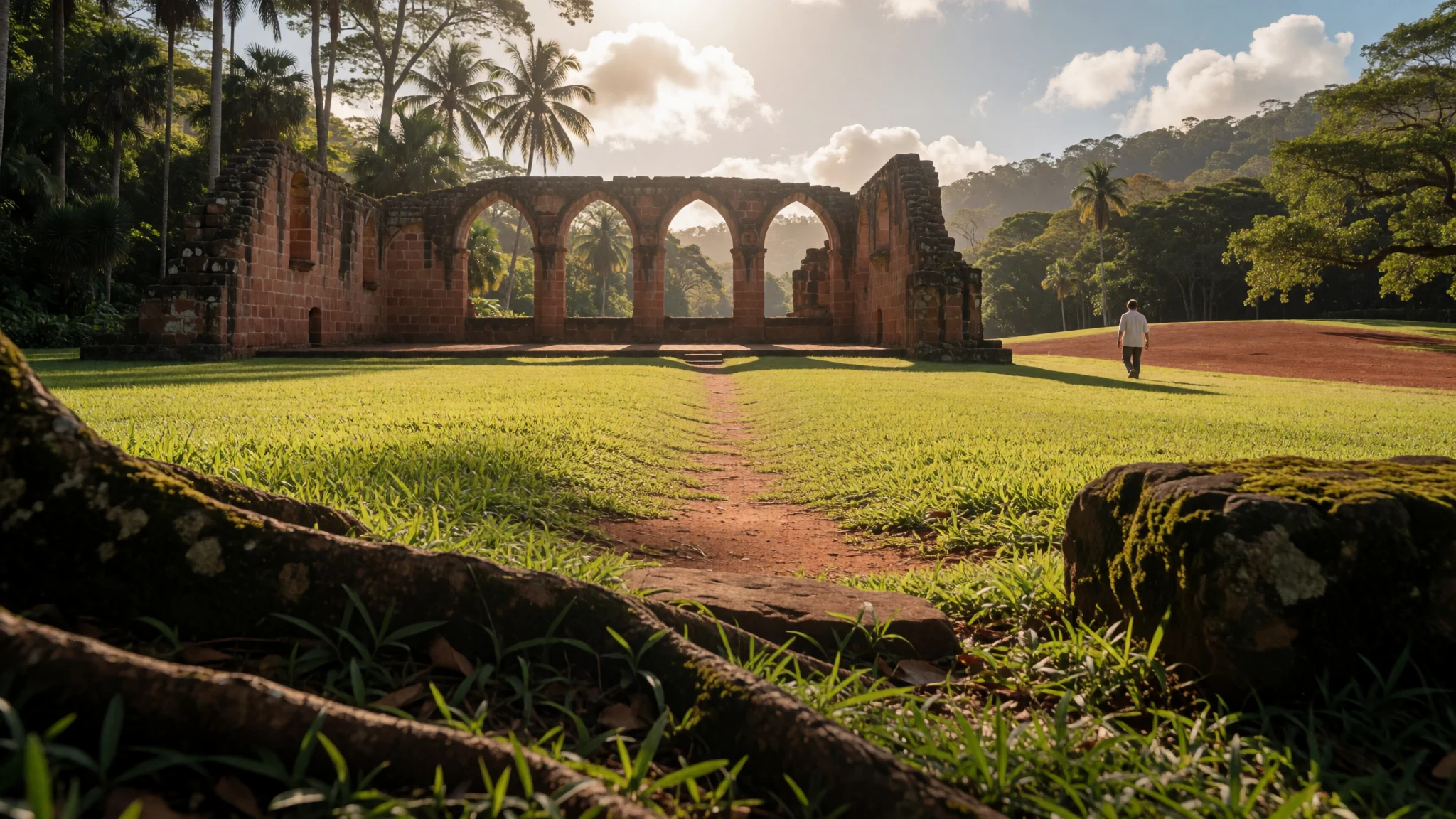
Santa María la Mayor is a quiet Jesuit-Guaraní ruin in Misiones, with room to wander and a clear sense of how a mission town was laid out.
The place
Santa María la Mayor is a ruined Jesuit mission in Santa María Department, Misiones Province, the narrow north-eastern finger of Argentina that pushes between Paraguay and Brazil. Rivers form much of the province's border, and the land inside is rolling, red-soiled and thickly green, with subtropical forest, yerba mate plantations and small farming towns. The site is one of the reductions, as the Jesuits called their planned mission towns, and it is among the four in Argentina that carry World Heritage status (UNESCO reference 275-005). What survives is a ground plan more than a finished building: low walls of the dwellings, the outline of the church and chapel areas, a cross, and open lawns where the central plaza once lay. Photographs show stonework softened by moss and roots, and the mood is calm rather than monumental. Misiones is humid, warm for much of the year and prone to sudden heavy rain, so the ruins work best as a half-day stop in a longer route that also takes in the other missions and the waterfalls at Iguazu. Roads are decent but distances add up, and public transport away from the main highways is thin. Opening arrangements and facilities at the site are best confirmed locally before setting out.
Its story
Santa María la Mayor was founded in the 17th century by Jesuits as one of the reductions of the Spanish colonial period, part of a network of mission towns among the Guaraní peoples of the upper Paraná region. The idea was to gather scattered communities into planned settlements around a church and a plaza, where Guaraní families farmed, built, made music and practised crafts under Jesuit direction and the protection of the Spanish crown. Historians still disagree about how protective or how controlling this arrangement was. The missions offered some defence against slave raiders and settlers, yet they also remodelled Guaraní life on a European pattern. Guaraní craftspeople did much of the carving and building, and the towns traded in goods such as yerba mate. When the Jesuits were removed from Spanish territories, the mission system lost its organisation, populations drifted away, and forest and weather slowly took over the buildings. Much of what visitors see now is what stonework and foundations were left behind. In 1984 UNESCO listed the site as one of four reduction sites in Argentina, which brought it conservation attention and a modest trickle of visitors. Standing in the empty plaza today, it is easy to read the layout of the town and harder, and more worth the effort, to imagine the people who lived in it.
What to see
- Main entrance and information board — Site entrance
The entrance to Santa María la Mayor is the place to get oriented. An information board near the gate sets out the history and the layout in Spanish, and it helps to read it before walking in, since the ruins themselves carry few labels. Ask staff what is open that day. - The church and chapel remains — Central plaza area
The outline of the church is the anchor of the site, and photographs show the chapel interiors as roofless spaces with worn stonework and grass underfoot. Walk the full length slowly and look for how the walls frame the sky. Morning light is kind to photographs and to tired legs. - The dwelling blocks — Around the plaza
Low walls mark the rows of houses where the Guaraní families lived, set around the plaza in the planned grid typical of reductions. They are less dramatic than the church but explain the town best, because the scale of ordinary daily life becomes clear when the rooms are counted. - The cross and chapel corner — Within the ruins
A stone cross marks one corner of the site, and it makes a natural pause point and a good frame for photographs with the ruins behind. It is a reminder that this was a working religious community, not only an archaeological site. Keep voices low near it. - The other Argentine missions — Elsewhere in Misiones Province
Santa María la Mayor is one of four listed Argentine reductions, alongside San Ignacio Miní, Nuestra Señora de Santa Ana and Nuestra Señora de Loreto. Seeing two or three on one trip shows how different decay, restoration and setting can make the same kind of town look.
Culture
Santa María la Mayor sits in a part of Argentina where Guaraní heritage, Jesuit history and everyday Paraguayan-influenced habits overlap. Many people in Misiones speak Spanish with a distinct local rhythm, and Guaraní words survive in place names, in food and in the vocabulary of the countryside. Communities of Mbya Guaraní still live in the province and make baskets and carved animals that are sold by the roadside and at craft stalls. The ruins are cared for as a heritage site, and many local people also see the mission story as part of their own family history, with pride and some discomfort in equal measure. Social life moves around mate, shared from a single gourd and metal straw, and passing it is a gesture of welcome. Pace is relaxed, afternoons are slow in the heat, and a short chat with the person at the gate or the roadside stall usually rewards the effort. Religious feeling around the former church is real but quiet, since the site is no longer in worship. Visitors who treat it as a place of memory rather than a backdrop tend to be met with warmth. Stay on the marked paths, do not climb on the old walls, and ask before photographing Guaraní craft sellers or their families.
What to wear
Santa María la Mayor lies in a region where historic Guaraní dress is now mostly a matter of ceremony, craft and community identity rather than daily wear. In the mission period, cotton cloth was woven and worn, and Mbya Guaraní communities today are better known for basketry from forest fibres, seed necklaces and carved wooden figures than for a documented textile tradition, so it is wise not to expect traditional costume on the street. Rural Misiones has its own working wardrobe: loose bombachas de campo, the wide gaucho trousers in cotton or twill, with a simple shirt, a brimmed hat and alpargatas or boots. In towns, people wear what the heat allows, which means light cotton, football shirts, jeans in cooler months, sandals and sports shoes. Smart clothes are kept for church and family occasions. A visitor should dress for a humid subtropical climate: breathable long sleeves and a wide-brimmed hat against sun, a light waterproof for sudden downpours, and insect repellent rather than anything fussy. Footwear matters more than style, because paths are uneven, grass is often wet and red mud sticks. Closed shoes with grip are better than sandals. Modesty rules are relaxed at the ruins, but shoulders and knees covered is sensible in any working church nearby.
What to eat
- River fish: surubí, dorado and pacú — Riverside towns and roadside eateries
Misiones cooking leans on fish from the Paraná and Uruguay rivers. Surubí, dorado and pacú are grilled, fried or baked, often with simple sides of manioc or salad. Look for them in riverside towns and in small family eateries along the main roads. - Chipa — Street sellers and local bakeries
Chipa is a small, chewy baked roll made with manioc starch and cheese, a Guaraní-rooted snack found across Paraguay and north-east Argentina. It is sold warm on the street and in most bakeries, and is best eaten fresh with a hot drink. - Chipa guazú — Family restaurants and eateries
Chipa guazú is a soft, savoury corn cake made with fresh maize, cheese and egg, closer to a moist bake than a bread. It suits a long lunch and is often served beside grilled meat or fish. - Sopa paraguaya — Local eateries and market food counters
Despite the name, sopa paraguaya is a dense solid cornbread enriched with cheese and onion. It shows how much Paraguayan cooking shapes Misiones tables. Slices are served with meals or taken as picnic food on a day of ruin-walking. - Papaya jam with cheese — Home-style restaurants and farm stalls
Sweet papaya preserve is served in thin slices beside a fresh white cheese, a pairing that balances sugar and salt. It is a common dessert or snack in the province, and worth ordering when it appears on a set menu. - Mate and tereré — Everywhere, from homes to petrol stops
Mate is made from dried yerba mate leaves steeped in hot water and drunk bitter or sweetened. In summer people switch to tereré, the same herb with iced water or juice. Mate cocido is a tea-bag version, usually taken with milk.
Plan it
Best time. April–May and September–October, when the humid subtropical heat of Misiones eases and walking the open ruins is comfortable. Midsummer is hot and sticky with sudden storms, and winter mornings can be cool.
How long. 2–3
Getting there. Fly to Posadas or Puerto Iguazú, then continue by road. Buses join the main cities along National Road 12 by the Paraná river, and the 300 km between Puerto Iguazú and Posadas takes about 6 hours by bus or 4 by car. Services to smaller places are less frequent, so a hire car or a local taxi makes the last leg easier.
Budget. low
Tips
- Go in the morning, when it is cooler and the light is good for photographs
- Carry water, a hat and insect repellent, as shade at the ruins is limited
- Bring some cash, because small towns and craft stalls may not take cards
- Check locally for opening arrangements and any entry fee before setting out
- Combine the visit with the other Jesuit missions and Iguazu Falls rather than treating it as a single trip
Etiquette
- Stay on marked paths and do not climb on the old walls
- Ask before photographing people, especially Guaraní craft sellers
- Accept a shared mate with thanks, or decline politely
Nearby
Sources
- Wikidata Q2036701 (CC0)
- Wikipedia: Reducción de Santa María la Mayor, Argentina (rev 1367033215) (CC BY-SA 4.0)
- Wikivoyage: Misiones (rev 5385240) (CC BY-SA 4.0)
- Photo: Misión jesuítica de Santa María la Mayor (CarlosBrys) (CC BY-SA 4.0)
- Photo: Misión jesuítica de Santa María la Mayor (CarlosBrys) (CC BY-SA 4.0)
- Photo: Cartel de Referencia en la Entrada de la Misión (Crismus) (CC BY 3.0)
- Photo: Main entrance of Santa María la Mayor (Crismus) (CC BY 3.0)
- Photo: Santa María la Mayor Jesuit reductions - Misiones (Silvanamisiones) (CC BY-SA 4.0)
- Photo: Misión jesuítica de Santa María la Mayor (CarlosBrys) (CC BY-SA 4.0)
- Photo: Misión jesuítica de Santa María la Mayor (CarlosBrys) (CC BY-SA 4.0)
- Photo: Misión jesuítica de Santa María la Mayor (CarlosBrys) (CC BY-SA 4.0)


