Santa Fe, New Mexico
Santa Fe, New Mexico, United States
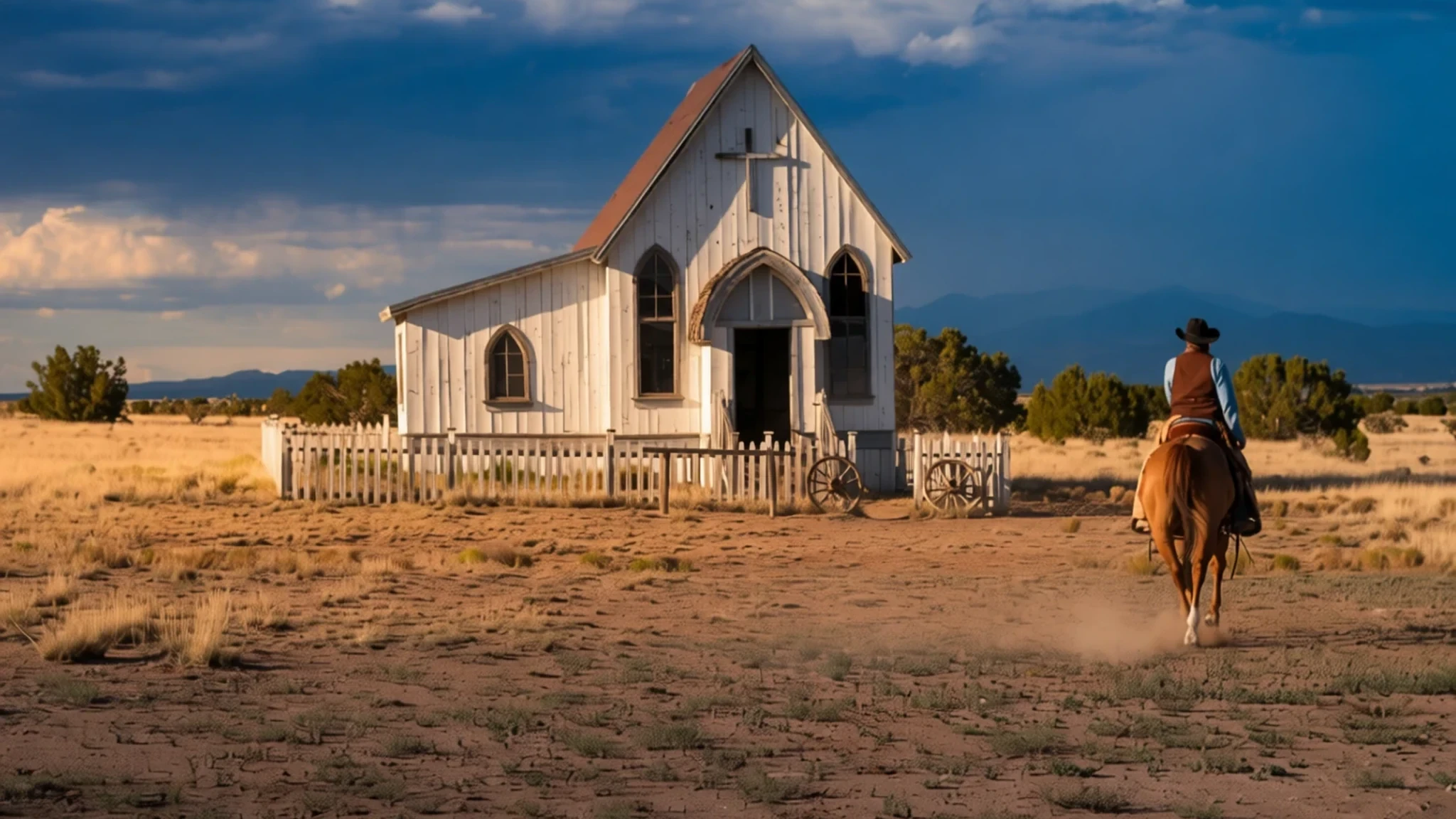
Santa Fe is a high, dry, adobe-walled capital where four centuries of Pueblo, Spanish, Mexican and American history share one old plaza.
The place
Santa Fe sits at the foothills of the Sangre de Cristo Mountains, at 2,194 metres, which makes it the highest of any US state capital. The air is thin and dry, the light is clear, and the city of about 87,500 people feels more like a large town than a metropolis. Most of what visitors come for lies within walking distance of the central plaza, where the Palace of the Governors, the cathedral and a scatter of galleries and shops sit around streets that narrow and bend as they leave the centre.
Architecture sets the tone. Buildings are finished in earthy, rounded forms, many with the mud-plaster look of adobe, and the habit of keeping facades low and unfussy keeps the skyline quiet. Turquoise doors, strings of dried red chillies hanging from porches and exposed wooden beams are everyday sights rather than staged ones.
Santa Fe is also a city of arts. Galleries, craft markets and a busy performing arts calendar run through the year, and a mix of Pueblo, Hispanic and Anglo residents shapes everything from cooking to music. Summer afternoons can be hot, though evenings cool quickly at this height. Winter is cold, with snow on the higher ground, so layers make sense in every season. Weekends and festival dates bring the heaviest crowds to the central streets, and hotels fill early, so book ahead.
Its story
Long before Spanish settlers arrived, the valley had names of its own. The Tewa-speaking peoples call the place Pʼoegeh, meaning 'water place', a name rooted in the springs and river that made the site worth settling. The Navajo name, Yootó, pairs the word for bead with the same idea of water. Tanoan-speaking communities built villages along the Rio Grande, and a settlement in what is now downtown Santa Fe dates from after 900 AD.
In 1598 Juan de Oñate set up the area as Santa Fe de Nuevo México, a province of New Spain. Formal colonial settlement took shape under Pedro de Peralta, who gave the town its longer title, the Royal Town of the Holy Faith of Saint Francis of Assisi. The shorter 'Holy Faith' outlasted the longer name. The town was founded in 1610 as the capital of the province, and it is the oldest state capital in the country and the earliest European settlement west of the Mississippi.
Trade built the city's reputation. Merchants and migrants used El Camino Real de Tierra Adentro and later the Santa Fe Trail, and the town grew into a commercial hub at the edge of the frontier. After Mexican independence in 1821, the province became a Mexican territory. Following the Mexican–American War, the region was ceded to the United States in 1848, and in 1851 Santa Fe was named the capital of the new US territory, a role it still holds for the state.
Nicknames have tracked the city's self-image. 'The City of Holy Faith' comes from its own history, 'The City Different' is the tag the state's tourism department promotes now, and earlier writers called it 'The Ancient'.
What to see
- Palace of the Governors — North side of the Plaza
Often described as the oldest public building in the United States, the Palace of the Governors was built during the Spanish colonial period and once served as the seat of government. Today it houses the New Mexico History Museum, with galleries on the Pueblo, Spanish, Mexican and American periods, and a shop in the arcaded frontage. Give the galleries a good hour and read the panels on the earliest occupants of the valley.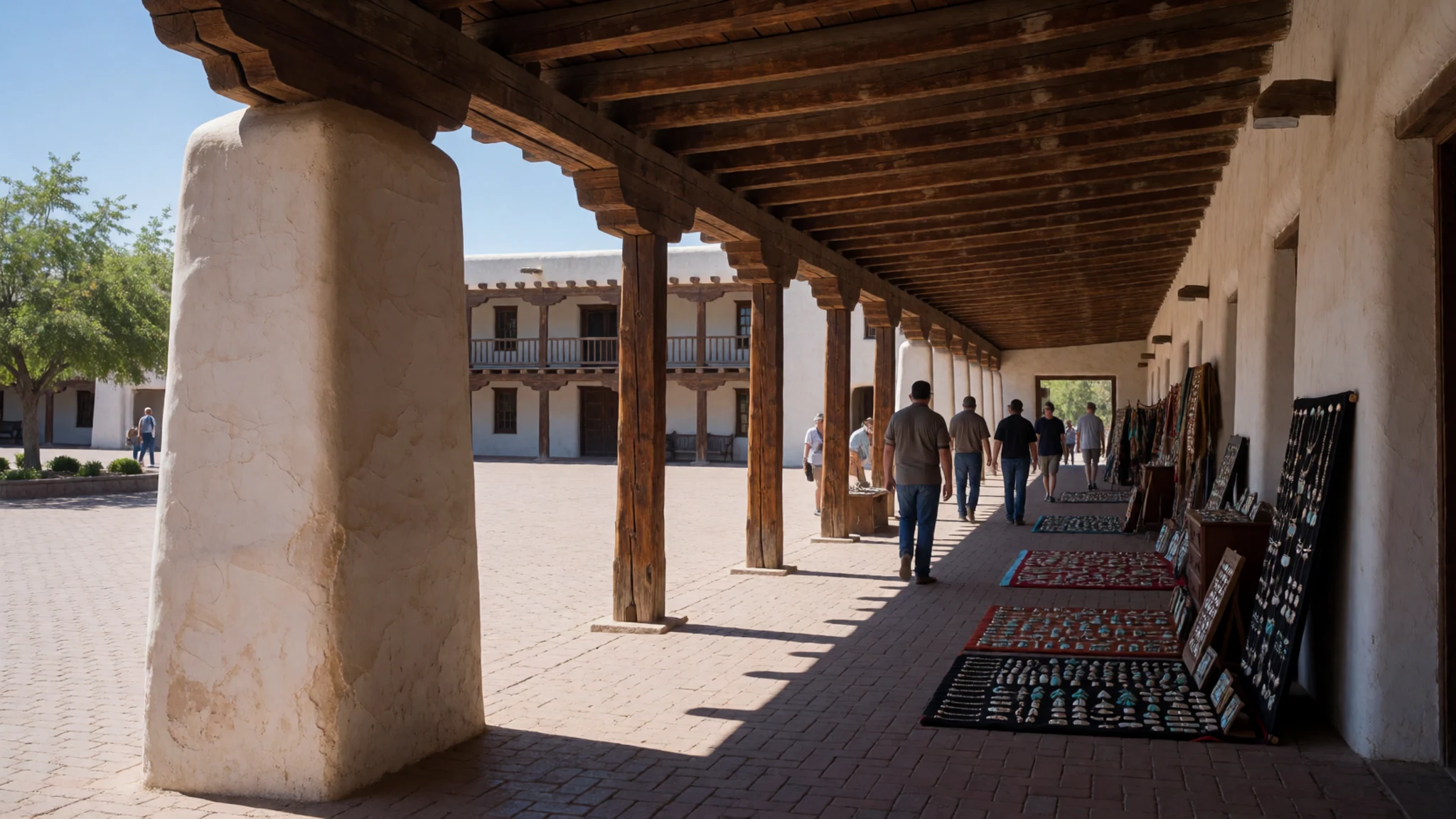
- New Mexico Museum of Art — Central old town, near the Plaza
Its collection is more varied than the O'Keeffe Museum's, though it keeps a strong focus on New Mexico. Expect regional landscape painting alongside modern and contemporary work by artists who lived and worked in the state. Because it sits close to the Plaza, it works well as a half-day stop between the historic buildings and the shops.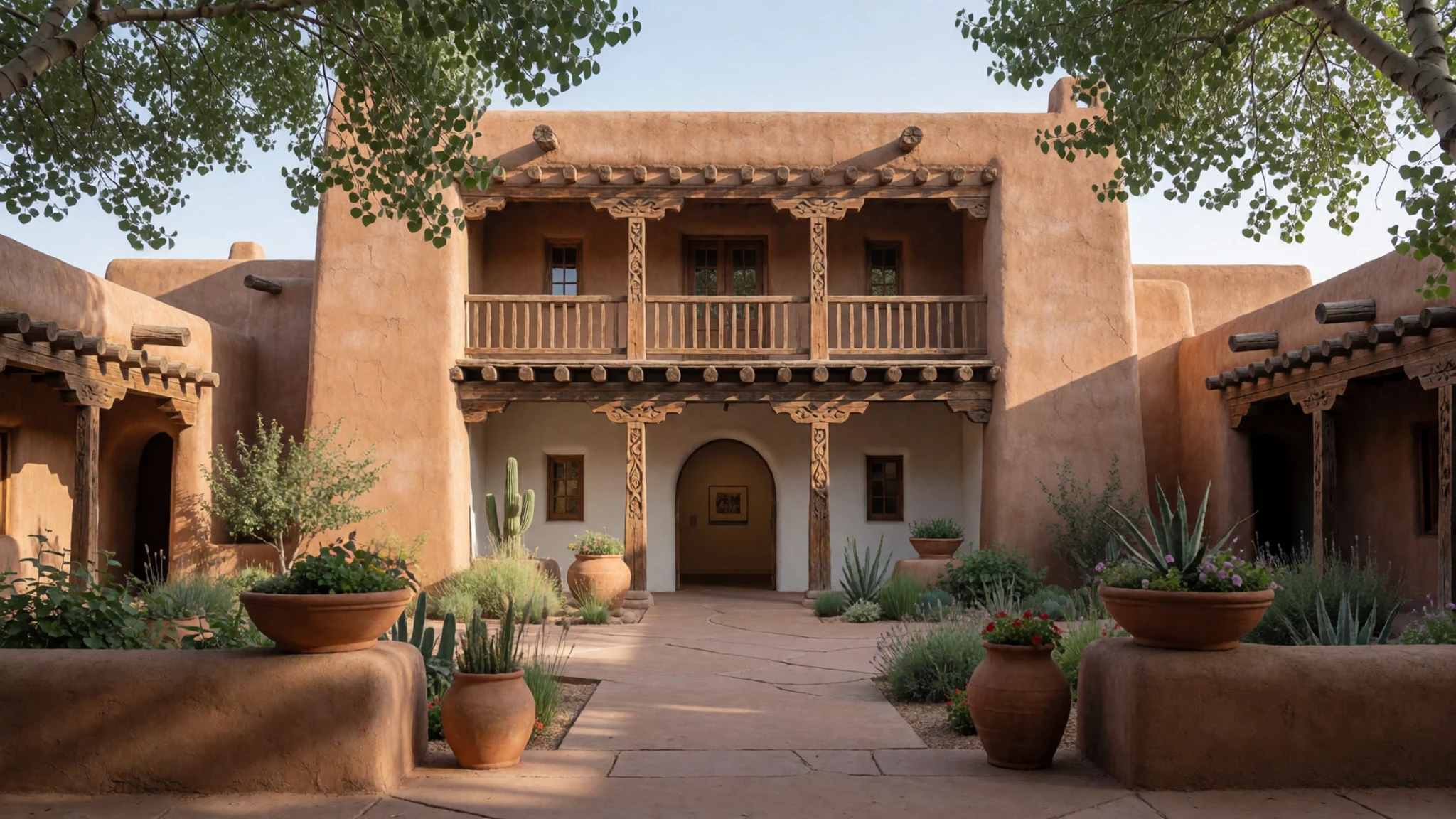
- Georgia O'Keeffe Museum — Central old town
Devoted to the twentieth-century painter who settled near Abiquiu, a small town north of Santa Fe, the museum shows her paintings of flowers, bones and desert landscapes. Her work explains why this light and terrain drew artists here. Book ahead on busy weekends and check the official site for current opening times before you set out.
- Loretto Chapel — Beside St Francis Cathedral, old town
The chapel stands beside the larger St Francis Cathedral, a short walk from the Plaza, and its interior is small enough to take in within a few minutes. Most visitors come for the spiral staircase, whose origin story mixes craftsmanship with legend. Check the official site for opening times and whether there is an entry charge.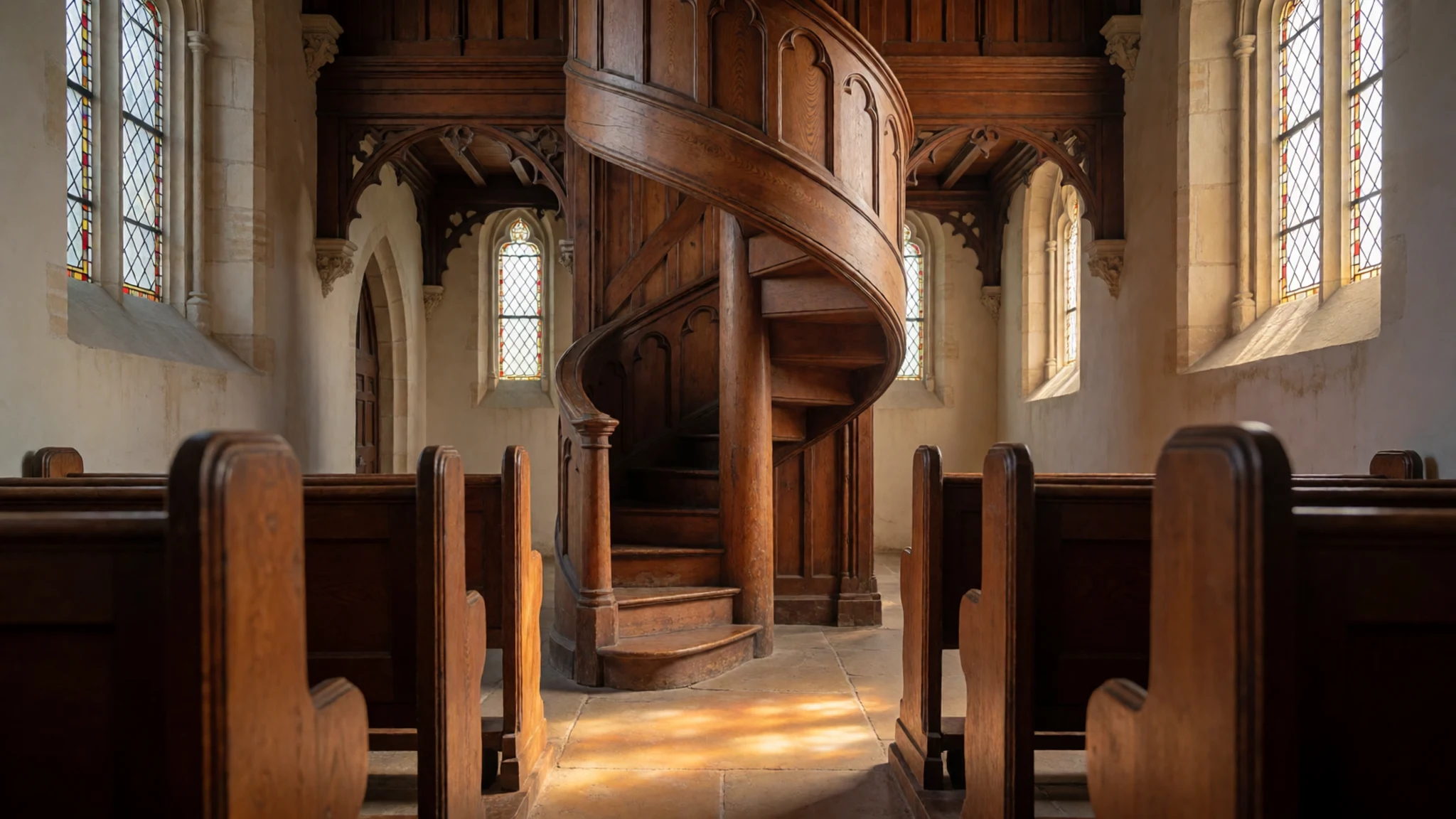
- New Mexico State Capitol — Southern part of the city, away from the old town
New Mexico's state capitol is still the working seat of government, and its grounds and public areas are open to visitors. The building's design draws on the region's architectural traditions, which makes it a useful contrast with the adobe and older masonry of the historic centre. Access to the legislative chambers depends on the session calendar, so check the official site before you go.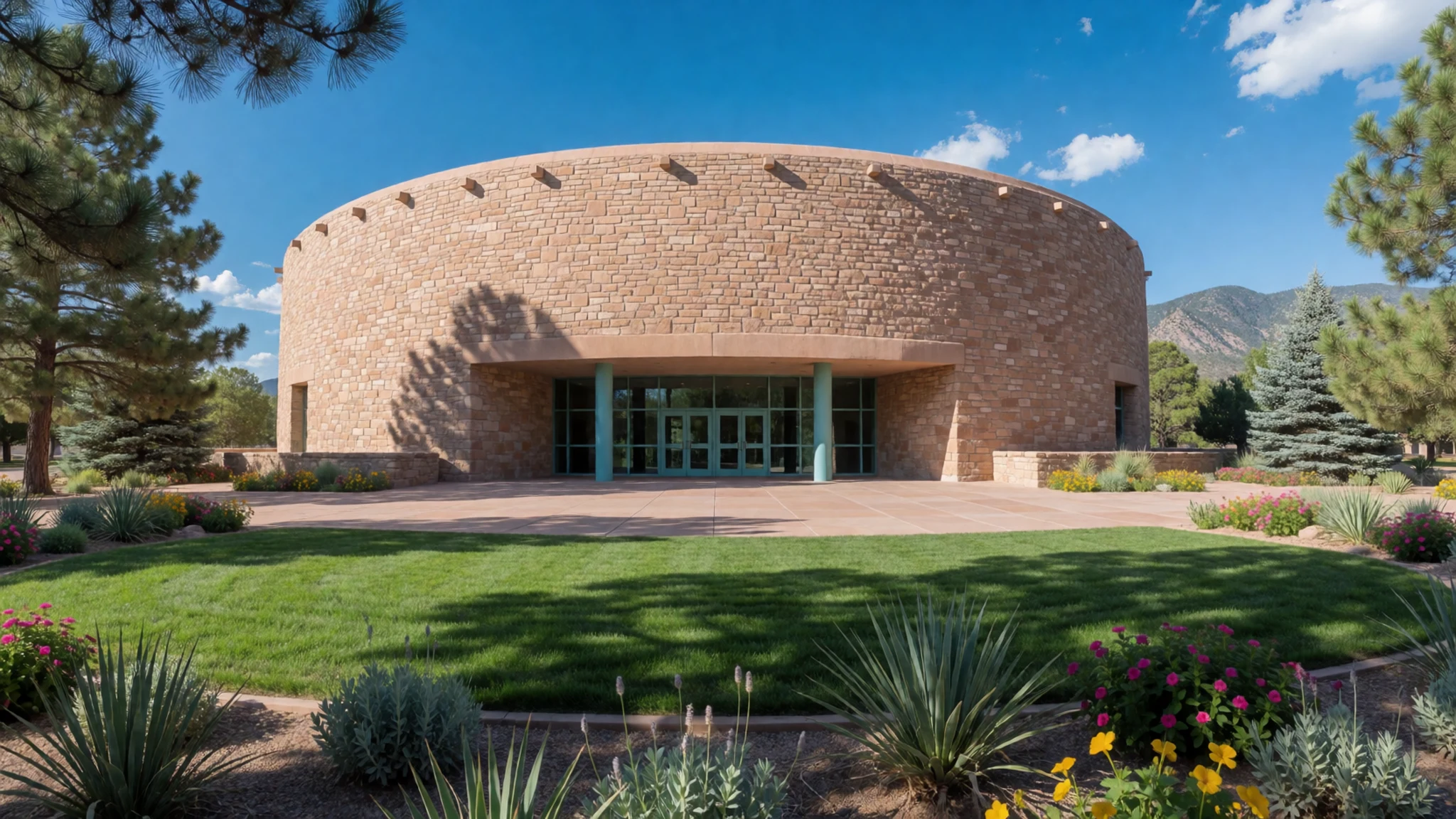
Culture
Santa Fe is known as a centre for the arts and for its multicultural character, and since 2005 it has held UNESCO Creative City status in Crafts and Folk Art. The old town follows Spanish colonial planning. Rules issued in 1573 asked that a settlement be organised around a central square, and here the Palace of the Governors stands on the north side while the church that became the cathedral basilica stands on the east. Streets radiate from the plaza in a grid that loosens at the edges, where lanes gradually merge into farm tracks.
For visitors, the plaza is the social heart of the city. Musicians, vendors and families use it through the day, and the nearby shops and galleries sell local craft, from silver jewellery to woven textiles. Many of the makers you will meet are Pueblo, Navajo or Hispanic New Mexicans whose families have worked in these forms for generations, so buying directly and asking about the piece is a good way to learn. Churches are working places, so keep your voice low inside and avoid visiting during a service unless you are attending it.
When you photograph dancers, craftspeople or market stallholders, ask first and follow any sign that bans cameras.
What to wear
Santa Fe's dress tradition runs in several strands. Pueblo and Navajo makers have long worked in silver and turquoise, and in woven wool, with Navajo weaving the best known of the region's textiles. Hispanic New Mexican women developed colcha embroidery, long stitches laid in wool across linen, and that work still appears on altar cloths and wall hangings. Ceremonial dress at Pueblo feast days is worn for religious occasions and is not a costume for visitors to copy.
What people wear now is practical and layered. Locals in Santa Fe favour jeans, boots, denim and fleece, with the occasional turquoise bracelet or squash blossom necklace as a nod to the region's silver. Artists and gallery owners tend towards natural fabrics in earthy colours, and a wide-brimmed hat is common in summer.
For a visit to Santa Fe, dress for a wide temperature range. Days can be warm and sunny and nights cool, and the altitude means strong sun even when the sky is hazy, so bring a hat, sunglasses and sunscreen. Wear comfortable closed shoes, because the old town's paving and hill streets are uneven. Cover shoulders and knees when entering the cathedral or any church or pueblo site, and avoid wearing ceremonial-style dress unless you are invited to a community event.
What to eat
- Frito pie — The Five and Dime on the Plaza
A bag of corn chips split open and filled with chile, cheese and onions, eaten straight from the bag with a fork. Locals say the dish started on the Plaza, and the Five and Dime, in a former Woolworths on the square, is the place to try it.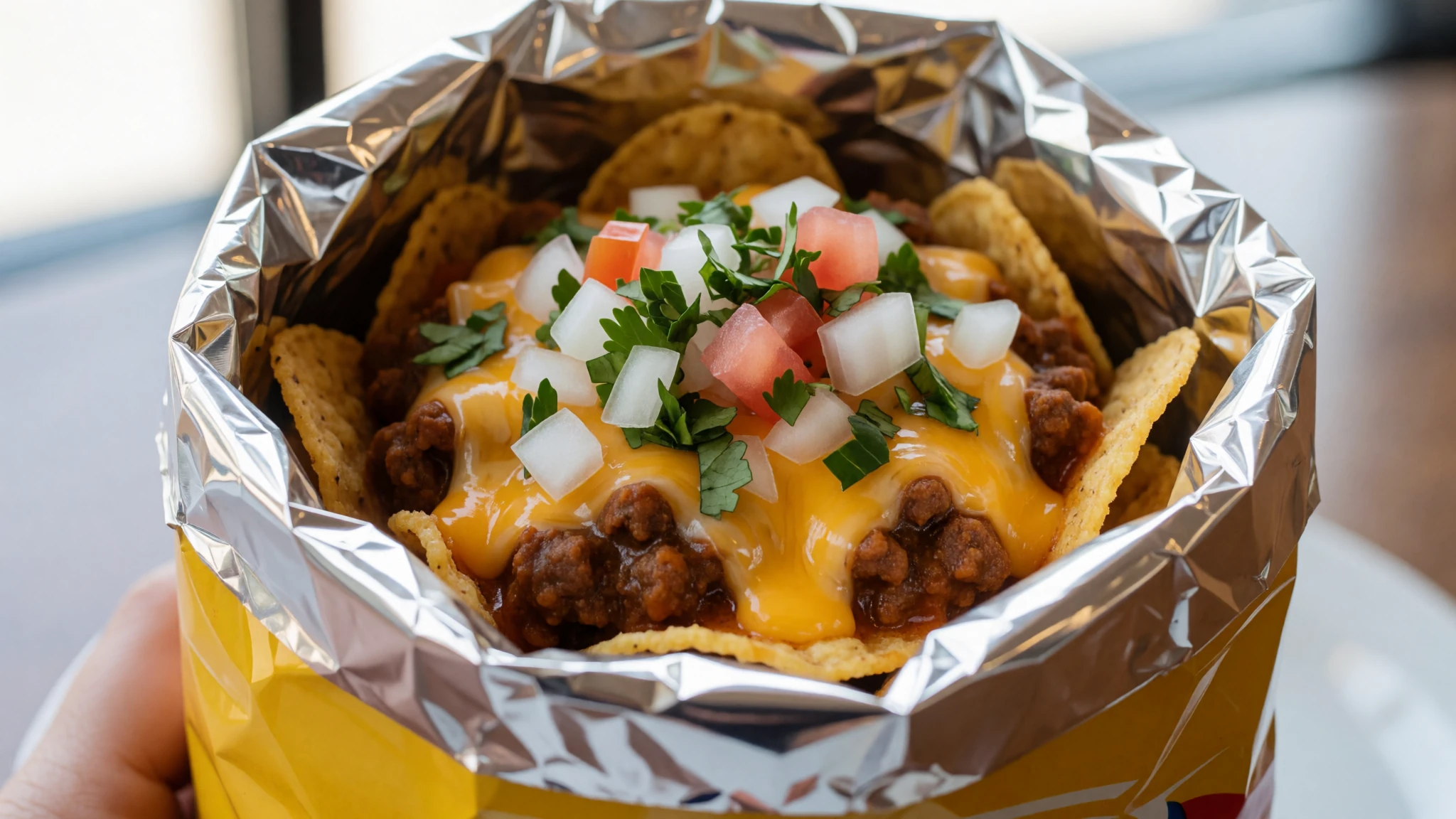
- Red and green chile — Any New Mexican kitchen, such as The Shed, a rustic lunch spot near the Plaza
New Mexican cooking turns on chile, served red from dried pods or green from roasted fresh ones, and many diners order both. Chile appears on almost everything, from eggs to enchiladas, so it is worth tasting it on its own first.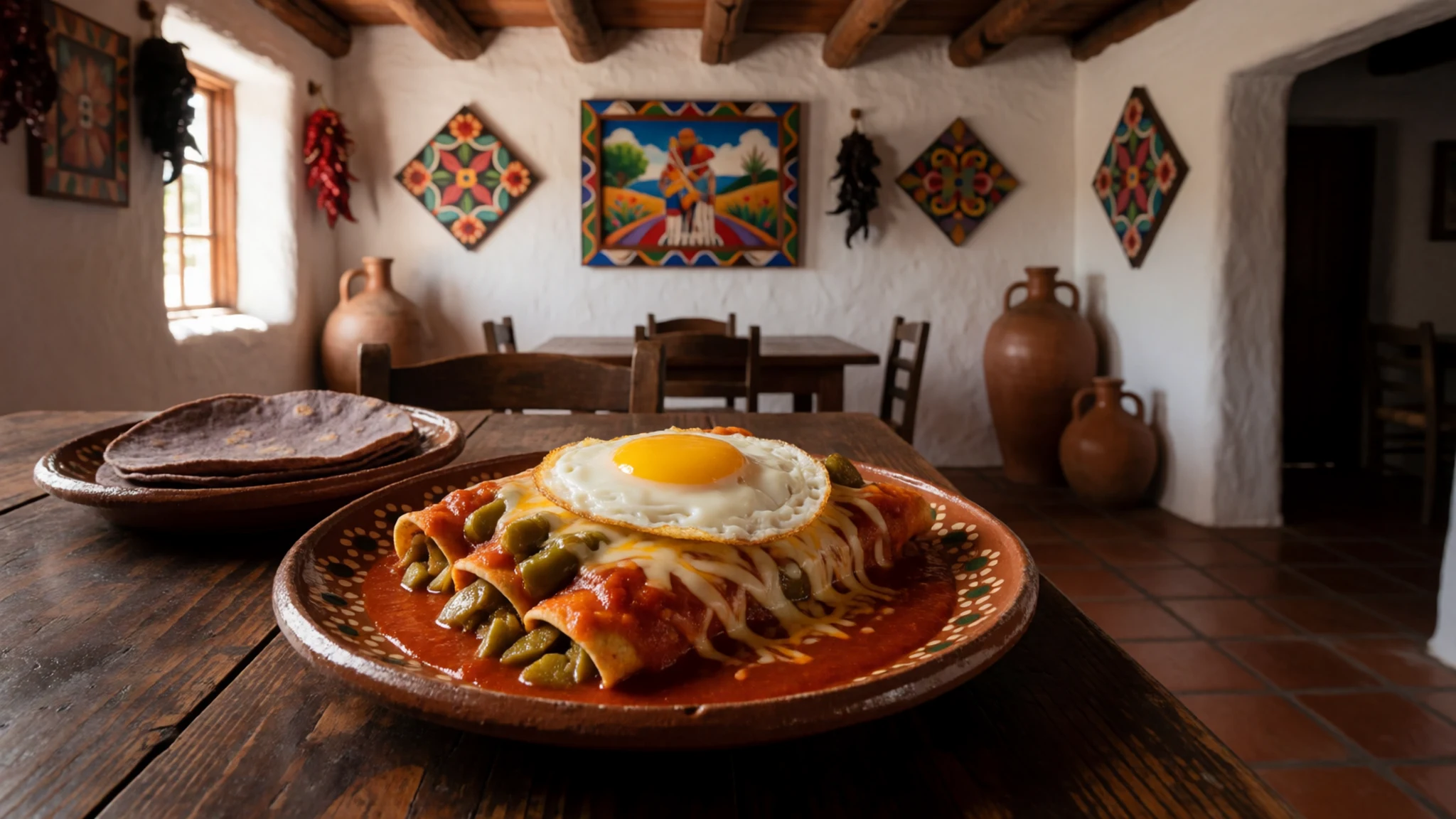
- Enchiladas and stuffed sopaipillas — Traditional lunch spots in the centre of town
Enchiladas and stuffed sopaipillas make up the classic New Mexican plate. Sopaipillas are light fried puffs of dough that arrive hollow and can be filled with meat or beans and drizzled with honey. Both appear on the traditional menus at The Shed and its sister restaurant, La Choza.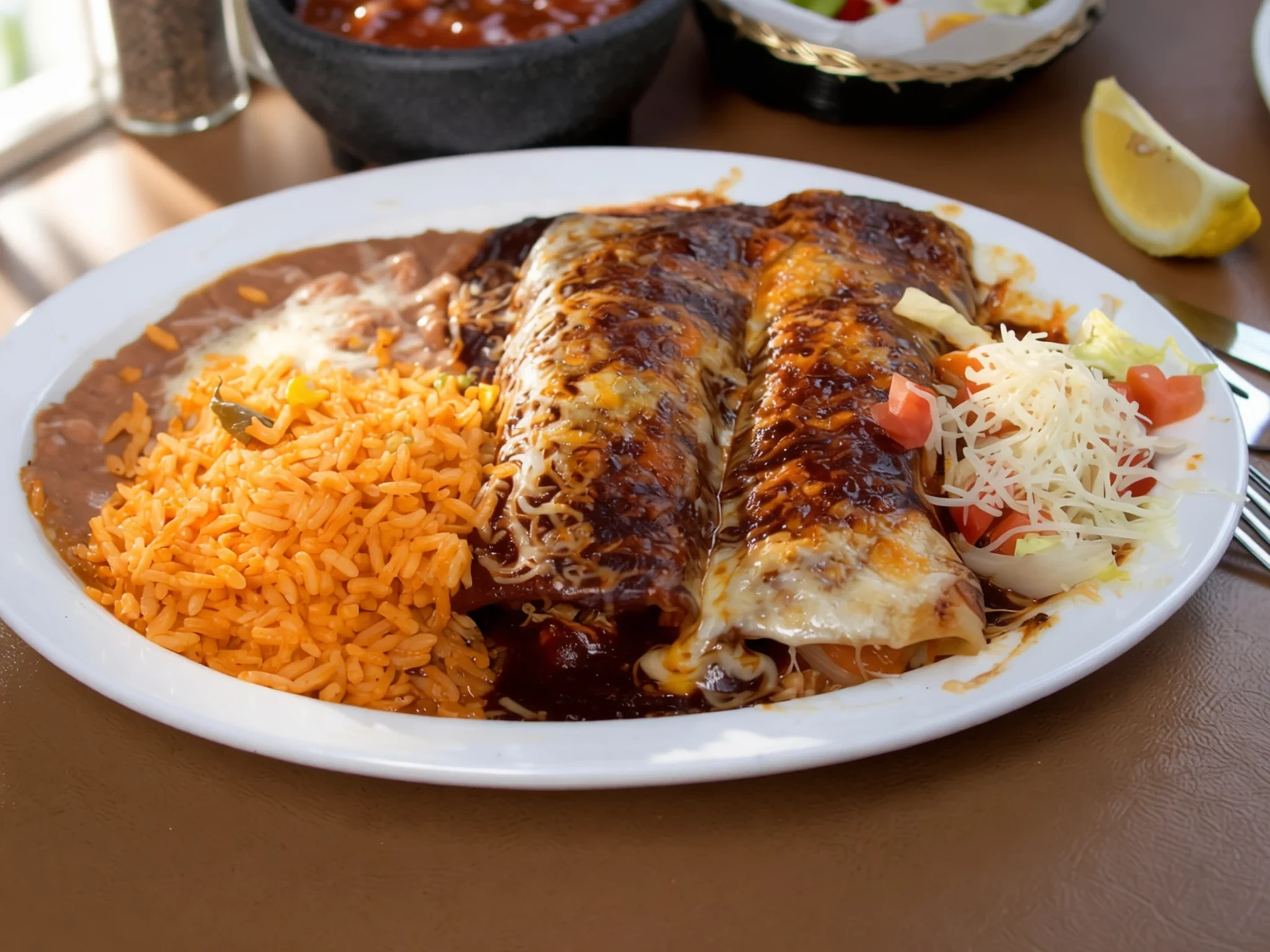
- Farmers Market produce — The Farmers Market, a produce market on the west side of the old town
The Santa Fe Farmers Market brings together a wide range of local produce, from chiles and squash to fresh bread and honey. Go early while the stalls are full, and taste before you buy so you know what you are carrying home.
Plan it
Best time. Spring can be windy and is the least pleasant time to visit, while June is hot and dry, and October brings cooler air and clear autumn light. Early summer is hot and dry, but from mid-July monsoon storms cool the afternoons, though July and August bring the heaviest rain. Winter is cold, with snow on the higher ground.
How long. 3–4
Getting there. Fly into Albuquerque (ABQ), then take the Rail Runner commuter train, or a shuttle such as Groome Transportation, which drops at several points in Santa Fe. The Santa Fe Depot near the Railyards is the most useful station for the historic centre. Many visitors rent a car, which also helps with trips to places such as Abiquiu.
Budget. mid
Tips
- Book rooms early for festival weekends and for the summer months
- Carry water and sunscreen, because the altitude dries you out quickly
- Visit the Plaza early or in the evening, when the crowds thin
- Keep some cash for market stalls, and ask before you order if a small eatery takes cards
- Walk the old town in the morning and save the afternoon for museums
Etiquette
- Ask before photographing people at markets, performances or pueblo events
- Keep to marked paths at heritage and archaeological sites
- Speak quietly inside churches and do not take photographs during services
Nearby
Sources
- Wikidata Q38555 (CC0)
- Wikipedia: Santa Fe, New Mexico (rev 1381318661) (CC BY-SA 4.0)
- Wikivoyage: Santa Fe (New Mexico) (rev 5386788) (CC BY-SA 4.0)
- Santa Fe NM.jpg, Unknown author, via Wikimedia Commons (CC BY 3.0)
- Loretto Chapel, Santa Fe, NM, Don Graham, via Wikimedia Commons (CC BY-SA 2.0)
- Plaza, Santa Fe, NM, Don Graham, via Wikimedia Commons (CC BY-SA 2.0)
- Cathedral (15505189166), Tony Hisgett, via Wikimedia Commons (CC BY 2.5)
- The Lensic Theatre (22812990792), Tony Hisgett, via Wikimedia Commons (CC BY 2.5)
- IAIA Museum (cropped), via Wikimedia Commons (CC BY 2.5)
- New Mexico State Capitol, Jim Bowen, via Wikimedia Commons (CC BY 2.5)
- Santa Fe New Mexico flag, Oskiwiki1986, via Wikimedia Commons (CC BY-SA 4.0)


