Salvador, Bahia
Salvador, Bahia, Brazil
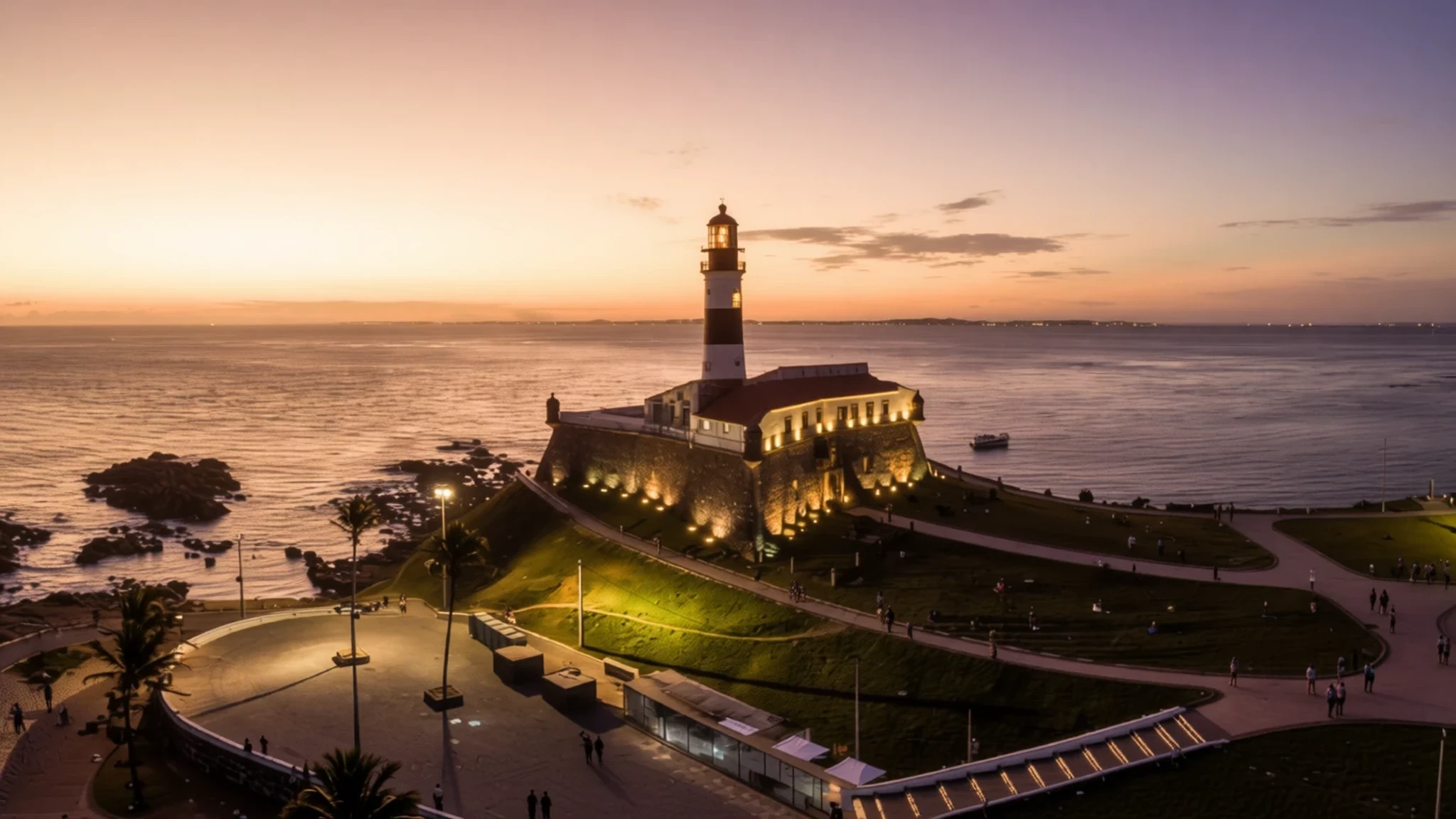
Salvador is a centre of Afro-Brazilian culture: a colonial hilltop city of baroque churches, street music and Bahian food on the Bay of All Saints.
The place
Salvador is the capital of Bahia state, set on a steep, roughly triangular peninsula in north-eastern Brazil. It lies between the Bay of All Saints to the west and the Atlantic Ocean to the east, and its population is about 2.5 million. Much of the city sits barely 8 metres above sea level, but the ground rises sharply in an escarpment that has divided the place into two levels from the start: the Upper Town (Cidade Alta) on the cliff top and the Lower Town (Cidade Baixa) by the harbour. Later builders added valley avenues and a lift so that the two levels could be joined more easily.
Getting around the old quarter means climbing cobbled slopes, which tires most people faster than the heat does. The Pelourinho district in the Upper Town holds the painted colonial houses and churches that appear in most photographs, while the lower town is busier, with markets, ferry traffic and offices. Modern neighbourhoods such as Barra and Ondina run along the coast, with apartment blocks, beaches and surf.
Salvador's identity is strongly African in origin. Drumming groups, capoeira, Candomblé and a cuisine built on palm oil and coconut shape daily life far more than any list of monuments. Hot, humid weather is the norm for much of the year, so mornings and late afternoons suit walking best, and the middle of the day suits a long lunch or a museum.
The city is not a tidy museum town. Crowds gather at weekends and during the carnival season, when street parties fill the squares and trucks with loud sound systems move through the centre. Traffic can be heavy, and the historic centre is where most visitors spend their time.
Its story
Salvador was founded in 1549 by Tomé de Sousa, sent by the Portuguese crown to set up the General Government of Brazil, and for a time it was the colony's first capital. Administrators, merchants and religious orders built their churches and palaces on the high ground, while port workers and warehouses gathered on the lower level below the cliff.
Europeans reached the bay early. Portuguese navigators arrived on the coast in the first years of the sixteenth century, and the Italian explorer Amerigo Vespucci sailed into the great inlet on All Saints' Day, giving the bay its name. Long before that, the Tupinambá people had lived along these shores. A shipwrecked Portuguese man, Diogo Álvares Correia, known as Caramuru, lived among them and married into the community. Later, mistreatment of the Tupinambá by settlers turned the region hostile, and the Portuguese were forced to withdraw for a time.
Sugar paid for much of the city's churches, convents and mansions, and that wealth rested on the labour of enslaved Africans. The Afro-Brazilian presence therefore runs through the city's story. The Largo do Pelourinho takes its name from the pillory that once stood there, a reminder of the punishments carried out in public.
Salvador lost its status as capital when government moved south to Rio de Janeiro, and the city settled into a quieter role. After independence, its writers, such as the poet Castro Alves, kept it at the centre of Brazilian literature. In later decades the old quarter declined, was then restored, and the historic centre now carries UNESCO World Heritage status.
What to see
- Igreja de São Francisco — Cidade Alta, in the Pelourinho district
A showcase of Brazilian baroque church building, the Church of Saint Francis is covered in carved wood and gold leaf from floor to ceiling. The adjoining convent has blue-and-white tiled cloisters that reward a slow look. A late-morning visit suits the light, and opening times change, so check them locally before going.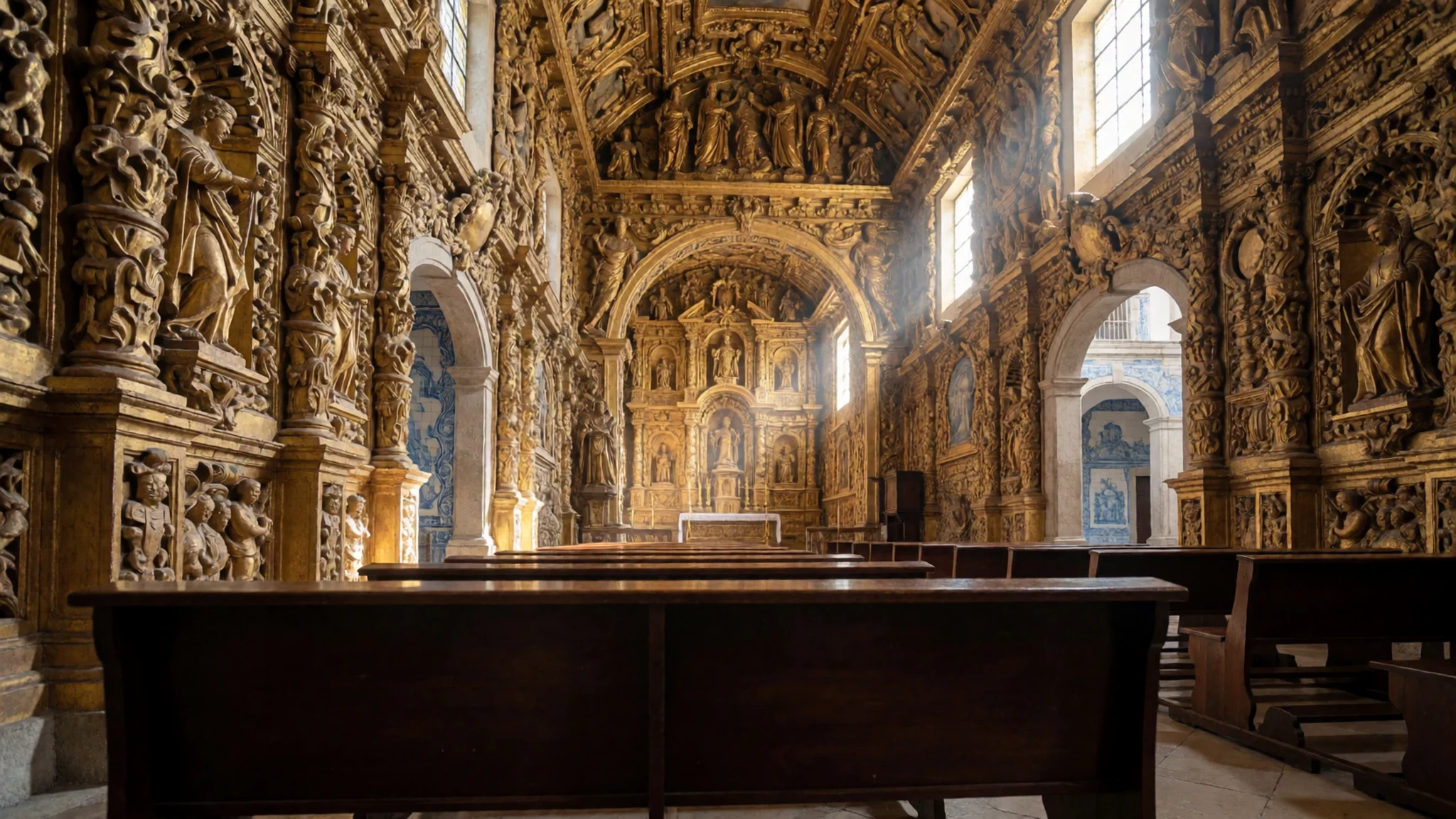
- Museu Afro-Brasileiro — Cidade Alta, near the Terreiro de Jesus
The Afro-Brazilian Museum documents the slave trade that brought Africans to the city and the culture they built afterwards. Displays cover religion, music and craft, and they make the city's history easier to follow before you walk the streets. Allow a couple of hours, and check the official opening times before you go.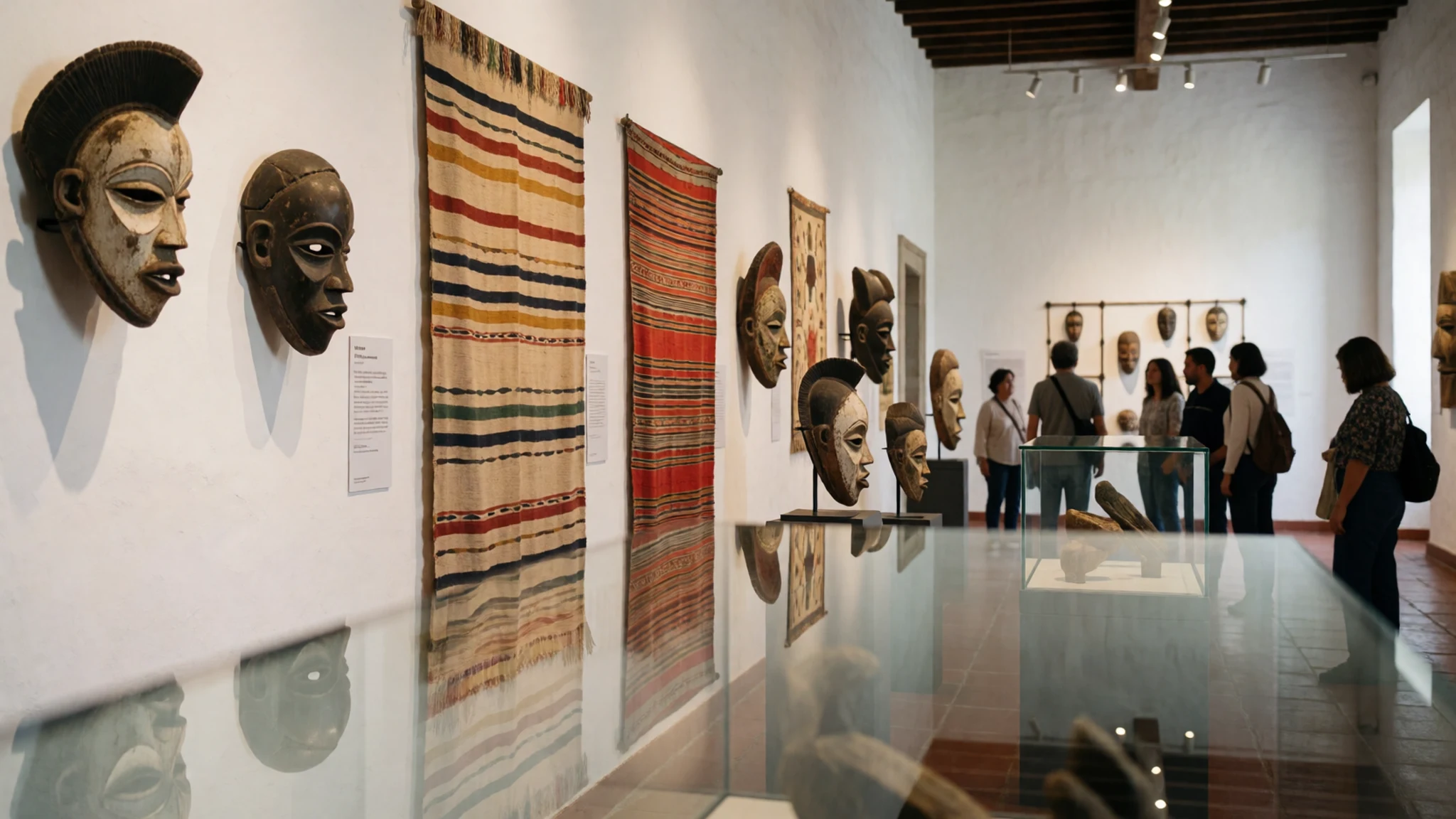
- Largo do Pelourinho — Pelourinho, Cidade Alta
A small triangular plaza and one of the oldest parts of the city, the Largo takes its name from the pillory that once stood there. Its colonial façades are painted in bright colours, and street musicians and dancers gather in the evenings. It is busy by day and livelier after dark, so keep valuables out of sight.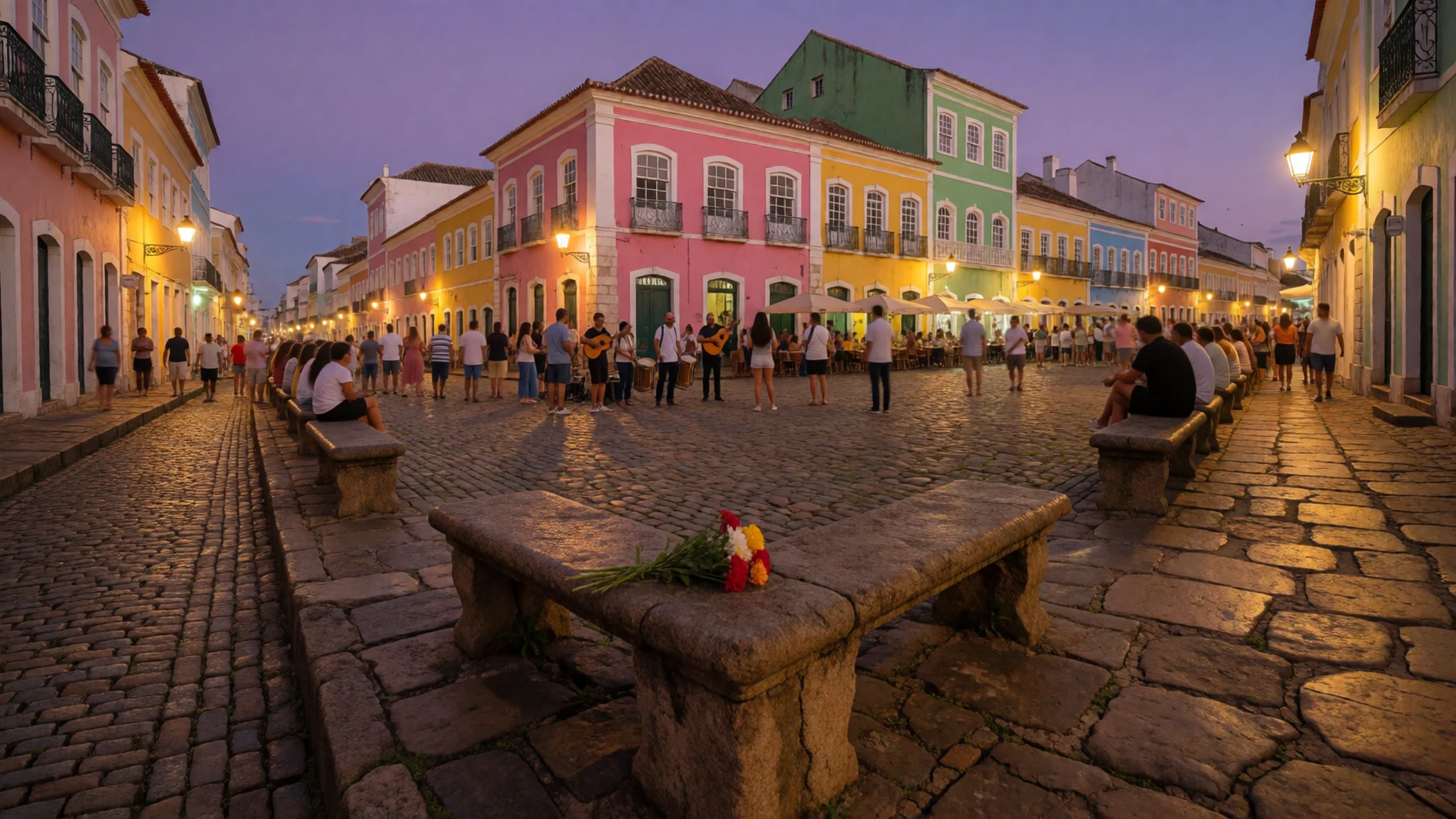
- Mercado Modelo — Cidade Baixa, the lower town by the harbour
The city's main market sits in the lower town and is the place for crafts, leather goods, lace and souvenirs. Stallholders expect some bargaining, so start below the asking price with a smile. In the square outside, capoeira players often perform, and the mix of music and crowds makes it a lively stop.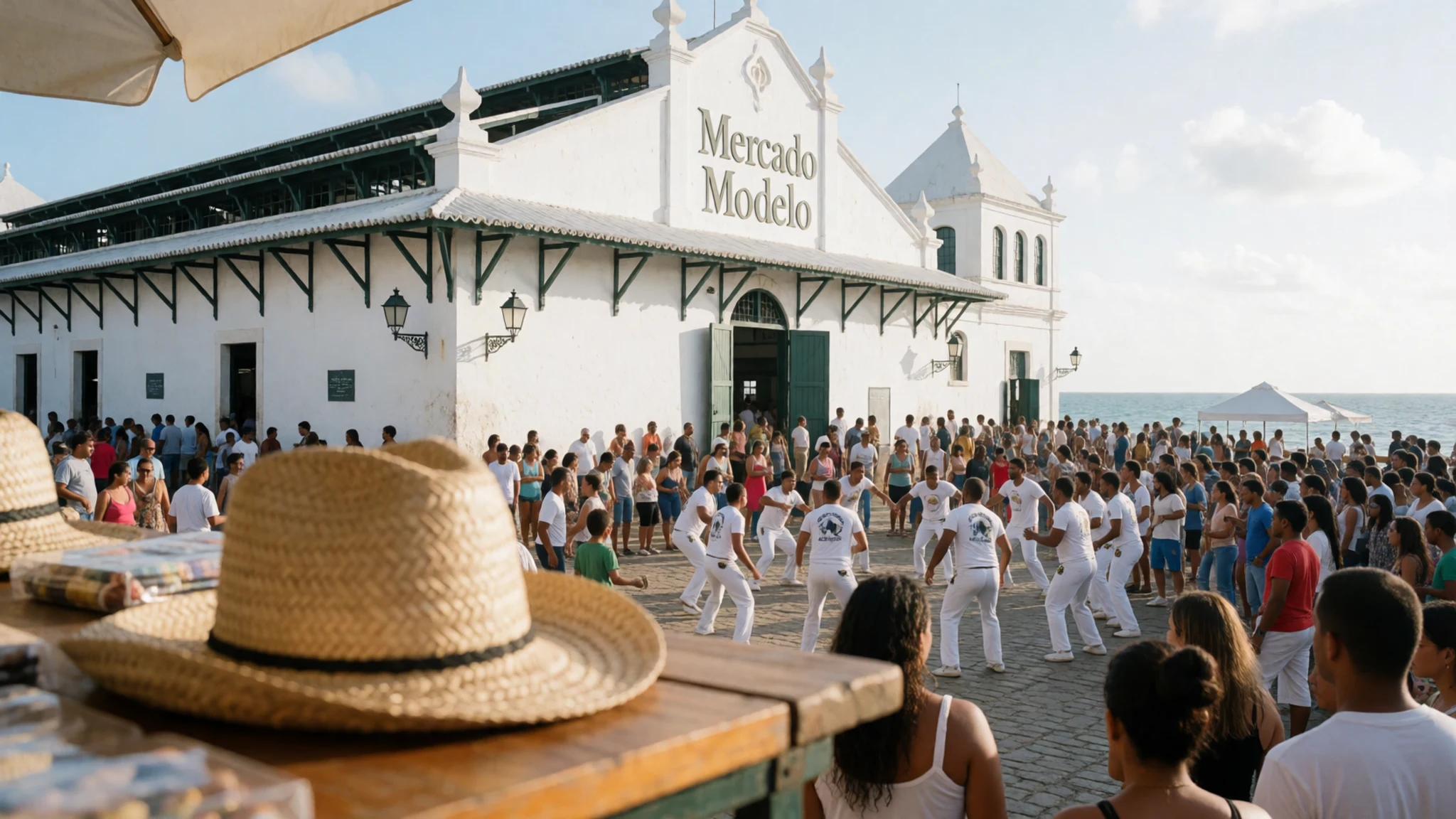
- Igreja do Nosso Senhor do Bonfim — Bonfim, a neighbourhood on the bay shore to the north
A small church in a northern neighbourhood, Bonfim has drawn pilgrims for generations. Visitors tie thin coloured ribbons around their wrists here, a custom said to bring a wish. The January celebrations bring crowds and processions, so expect busy streets and travel early or late.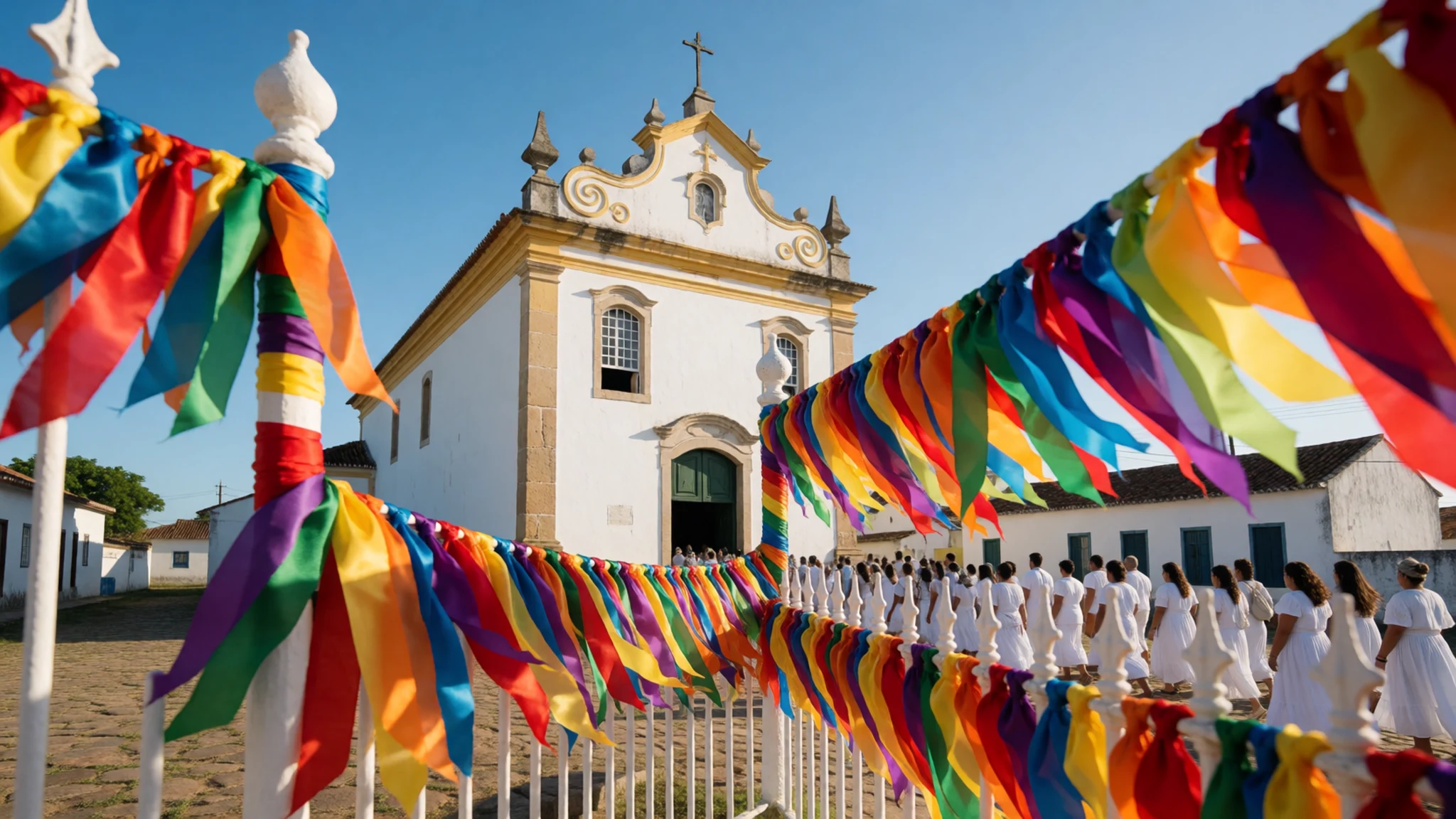
- Solar do Unhão — Unhão, on the bay shore
An old house on the bay shore, the Solar do Unhão is a well-known spot for watching the sunset over the water, and it also houses a museum of modern art. Arrive before dusk to find a good seat, and travel back by taxi or ride-hailing app, since the road is quiet after dark.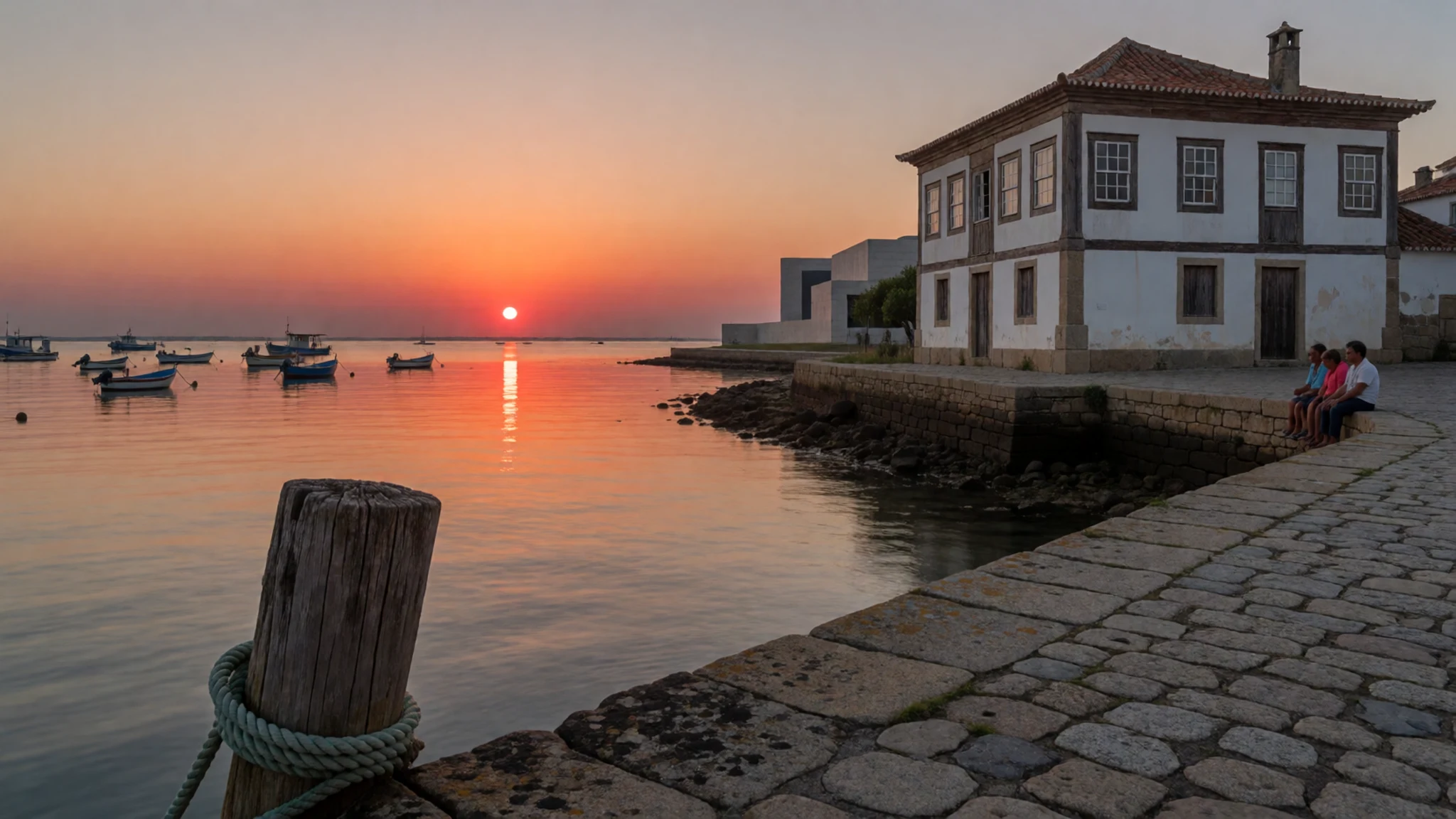
Culture
Salvador's customs grew from the meeting of Indigenous, African and European traditions, and that mix shows in religion, music and food. African cultural practices are especially celebrated, and Candomblé houses, or terreiros, hold drumming and dance ceremonies that are central to community life. Percussion groups and samba-reggae bands keep rhythm at the heart of street life, particularly at weekends.
Literature has deep roots in the city. The Baroque poet Gregório de Mattos was born here, and the sermon writer Father António Vieira was schooled by the Jesuits in Salvador and died in the city. In the nineteenth century the Romantic poet Castro Alves and the diplomat Ruy Barbosa were both associated with Salvador, and their names remain part of its literary heritage.
Religion is part of everyday life. Catholic churches and Candomblé houses both expect respect, and services and processions can draw large crowds. Greetings tend to be warm, with a kiss on the cheek between friends and a handshake for new acquaintances, and conversation moves at a relaxed pace. Ask before photographing people, especially at a terreiro or during a ritual, and do not enter a religious ceremony unless someone invites you.
What to wear
The traditional dress most linked with Salvador is the baiana outfit: a white blouse with wide lace or crochet trim, a full, layered skirt, a headwrap and beaded necklaces. The textiles are usually plain white cotton or linen, so the handmade renda lace and embroidery stand out. The outfit is worn by the women who sell acarajé in the streets, and at festivals and some Candomblé ceremonies, where white is the colour of many rituals.
Day to day, people in Salvador dress for heat and humidity. Light cotton shirts, sundresses, shorts and sandals are common in the lower town and at the beaches, while office workers in the Cidade Baixa wear lighter, smarter clothes. Football shirts, bright prints and athletic wear appear everywhere, and street performers in the Pelourinho often wear bold costumes.
Visitors should pack loose, breathable clothing in natural fibres, plus a light layer for air-conditioned buses and restaurants. Cover shoulders and knees when entering churches. A swimsuit belongs on the beach, not in the old town. Footwear matters more than style, because the streets of the Cidade Alta are steep and cobbled: choose shoes with grip and cushioning, and carry a hat and sunglasses for the midday sun.
What to eat
- Acarajé — Street stalls by the Rio Vermelho seafront and near the lower-town markets
Black-eyed pea fritters, mashed, deep-fried in dendê oil and split open to hold vatapá, dried shrimp and a hot pepper sauce. Sellers in white lace dress work stalls by the Rio Vermelho seafront and near the lower-town markets. Eat it hot, standing at the stall.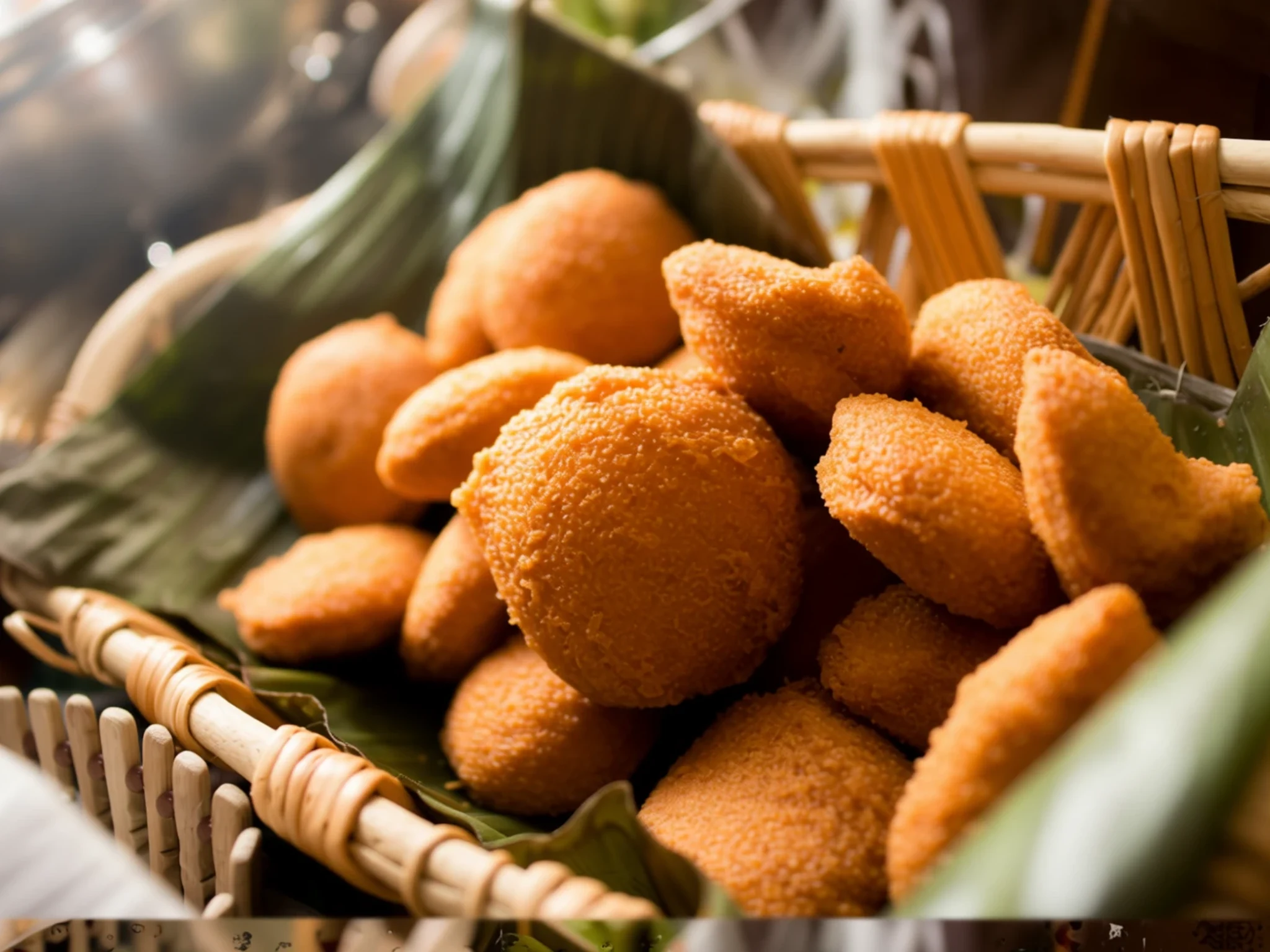
- Moqueca baiana — A seafood restaurant in the lower town
A slow stew of fish or shrimp with tomato, onion, coconut milk and dendê oil, served with rice and pirão, a thick manioc porridge. Recipes vary from kitchen to kitchen. Order it at a seafood restaurant in the lower town, while the broth still bubbles.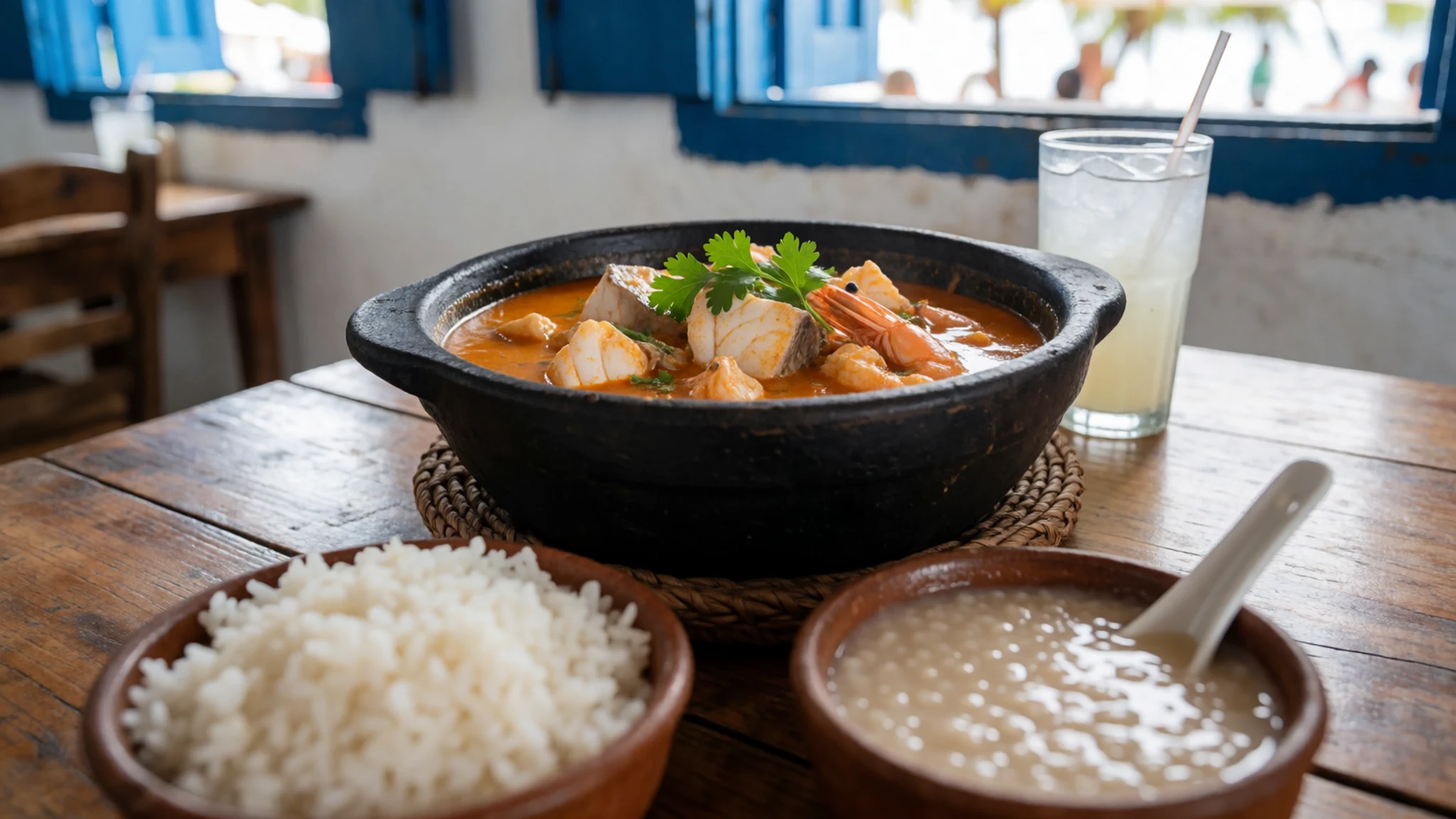
- Vatapá — Lunchtime buffets and traditional eateries in the lower town
A creamy paste of stale bread, dried shrimp, peanuts, cashew nuts, coconut milk and dendê oil, with a rich, nutty flavour. It is spooned over fish, shrimp or rice, and it fills acarajé. Look for it on lunchtime buffets and in the traditional eateries of the lower town.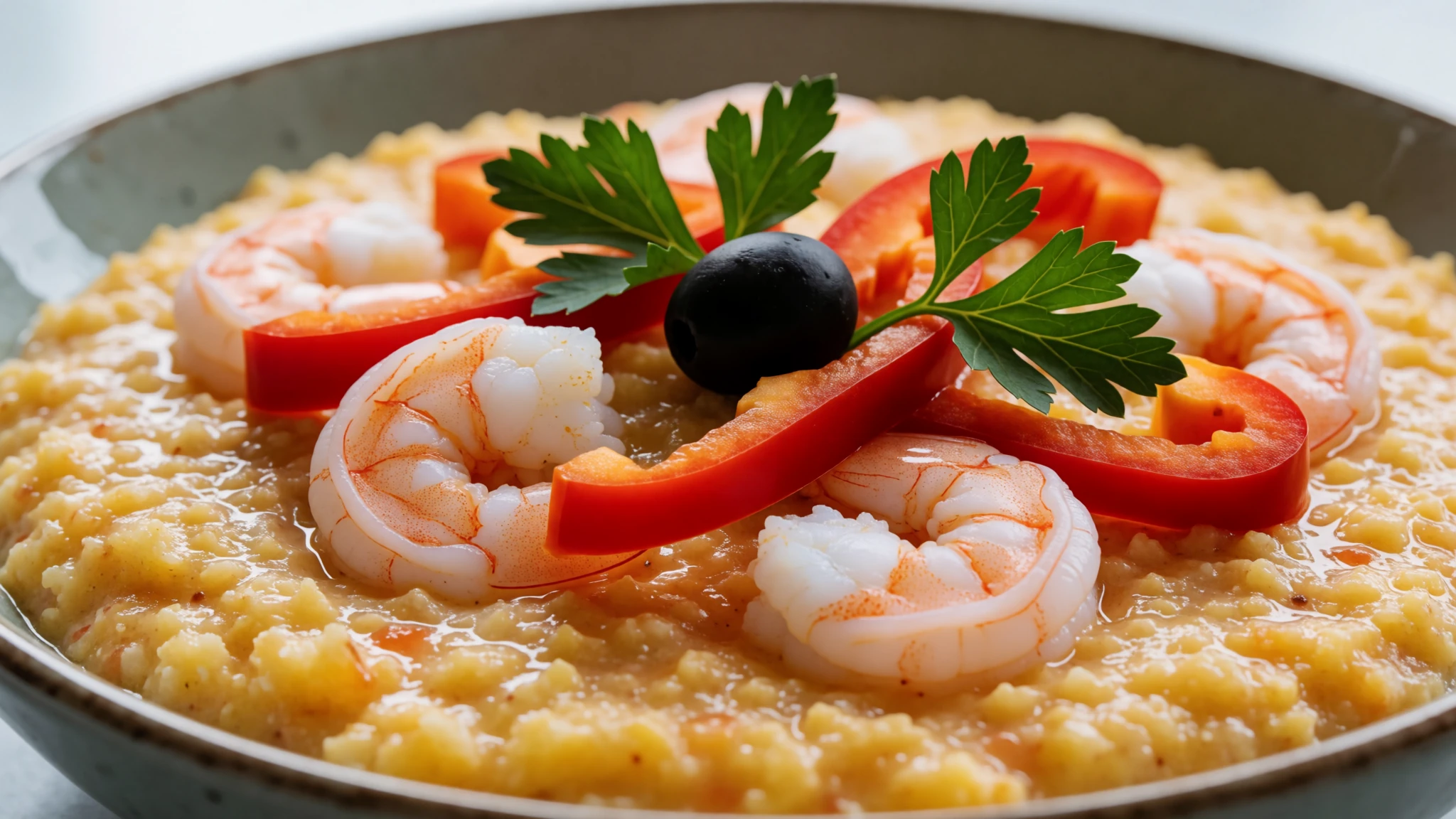
- Caruru — Market stalls in the Cidade Baixa, especially during saints' day festivals
A stew of okra, dried shrimp, peanuts and dendê oil, made for the festivals of the twin saints in late September. Cooks in the lower town and at Candomblé celebrations serve it generously. Ask at a market stall in the Cidade Baixa during the festival period. - Cocada — Street vendors and the Mercado Modelo
A chewy coconut sweet made from grated coconut, sugar and sometimes ginger, cooked until it sets. Vendors sell it on the street and at the Mercado Modelo, where it makes an easy snack for the walk back up to the Upper Town.
Plan it
Best time. Salvador stays warm all year, so rain matters more than temperature. December and January are the drier months, with fewer heavy showers and a steadier sea breeze; April to June is the wetter season, with frequent downpours.
How long. 2–3
Getting there. Salvador's airport is about 28 km from the centre, reached by the Paralela expressway or the coastal road. A free shuttle bus links the terminal to the subway, which runs into the city centre and to the main bus terminal. For Barra, Campo Grande or Ondina, take the subway to Lapa and continue by bus, taxi or ride-hailing app; for Pelourinho, take the subway to Campo da Pólvora and walk or take a taxi.
Budget. mid
Tips
- Climb the cobbled streets of the Upper Town before midday, when the heat is lower
- Carry small notes for markets and street food, as many smaller stalls prefer cash
- Drink bottled or filtered water and keep a refillable bottle for the afternoons
- Use taxis or ride-hailing apps after dark rather than walking the quieter streets
- Head to the seafront at sunset, when the breeze picks up
Etiquette
- Ask permission before photographing people, especially at religious events
- Cover shoulders and knees when entering a church, and remove hats inside
- Greet shopkeepers and stallholders before asking prices or browsing
- Do not join a Candomblé ceremony unless you have been invited
Nearby
Sources
- Wikidata Q36947 (CC0)
- Wikipedia: Salvador, Bahia (rev 1382697135) (CC BY-SA 4.0)
- Wikivoyage: Salvador (rev 5411117) (CC BY-SA 4.0)
- Photo: SalvadorDaBahiaPalacioRioBranco.jpg (CC BY 3.0)
- Photo: Salvador BA (cropped) 2 (CC BY 2.5)
- Photo: Farol da barra (CC BY 3.0)
- Photo: Pelourinho - Igreja Rosario dos Pretos (CC BY-SA 4.0)
- Photo: Museu de Arte da Bahia Salvador 2018-0828 (CC BY-SA 4.0)
- Photo: Centro Histórico Salvador Vista Aérea 2021-0933 (CC BY-SA 4.0)
- Photo: Entardecer elevedor lacerda (CC BY-SA 4.0)
- Photo: Salvador Brazil skyline (cropped) (CC BY 2.5)


