Saint Anthony Monastery
Saint Anthony Monastery, Egypt
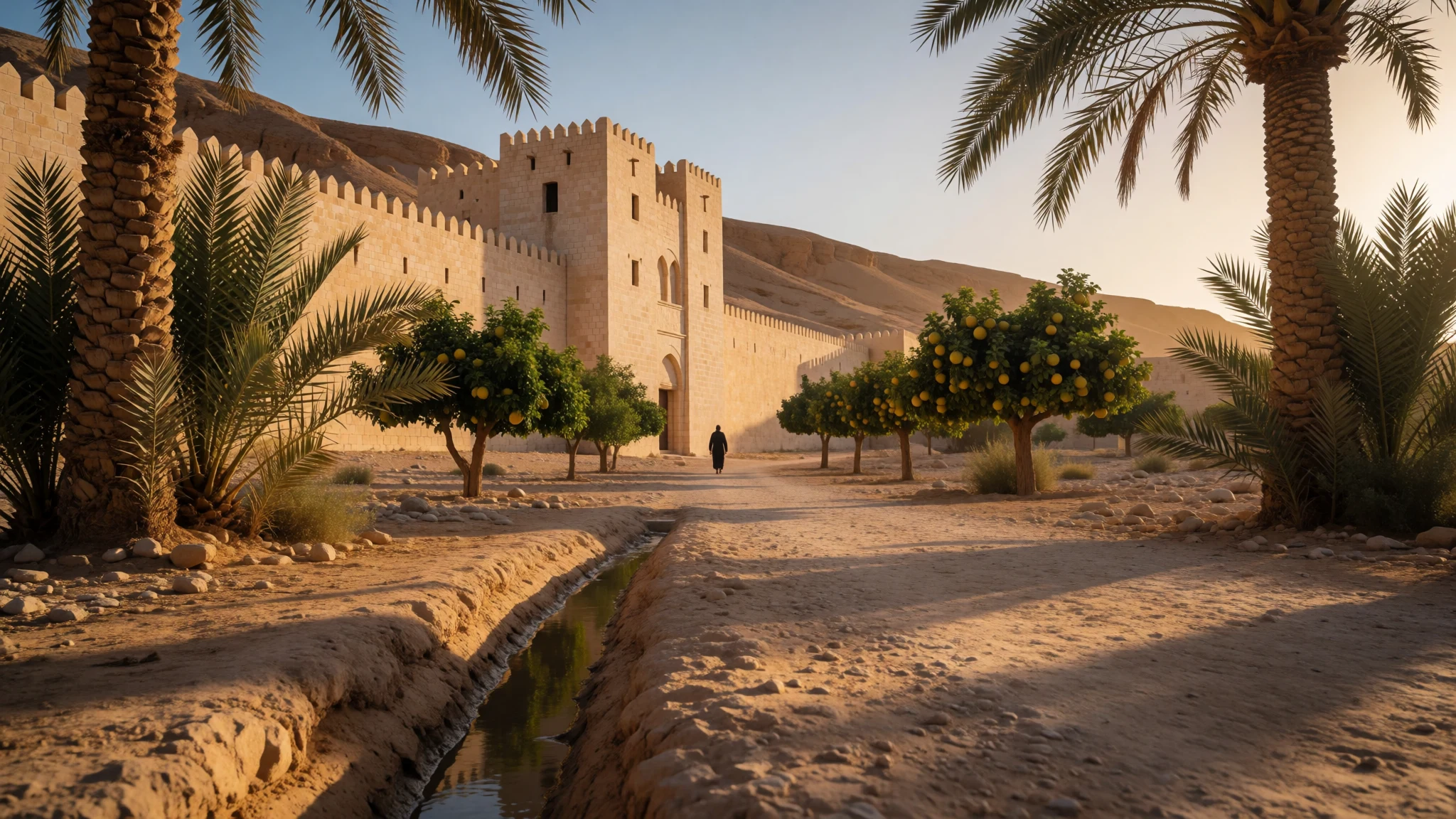
Saint Anthony Monastery is a working Coptic Orthodox community in an Eastern Desert oasis, with gardens, medieval paintings and the monks' daily routine still intact.
The place
Saint Anthony Monastery sits in a green pocket of the Eastern Desert, in the northern part of Egypt's Red Sea Governorate, at an elevation of 445 m. From a distance it looks like a walled block of pale stone against bare mountains. The surprise is the greenery inside. A spring-fed oasis supports gardens, so the compound feels less like a fortress and more like a small village that happens to be ringed by rock.
It is a working Coptic Orthodox monastery, and that shapes everything. Monks live, pray and labour here. Within the walls are a mill, a bakery, gardens and five churches. Pilgrims arrive daily, many of them Egyptian Christians on a retreat or a family outing, so weekends and feast days can be busy and noisy in a place that is otherwise defined by quiet.
The setting is remote but not hard to reach. The monastery lies south-east of Cairo, across the desert towards the Red Sea, and most visitors come by road from the capital, either on a long day trip or with an overnight stay arranged through the community. Summers are fierce, because the bare rock throws the heat back. Winter mornings can be cold enough to need a jacket.
The monastery makes more sense as a sequence than as a single sight. The hermit's cave is on the cliff above, the church and gardens are below, and the monks' routine of bells, bread and prayer holds the two together. A quick photo stop misses most of that, and half a day spent slowly is a better measure of the place.
Its story
Saint Anthony Monastery grew out of the legacy of Anthony the Great, an early Christian hermit who chose the desert for solitude. Followers settled near the place where he had lived, and the monastery's founding is recorded as 298, though the earliest years are wrapped in tradition as much as documents.
The first community was austere. Monks lived in separate cells around a shared place of worship, ate in a plain dining hall and prized isolation. Over time that pattern softened. The monks wanted safety, practical convenience and each other's company, and daily life shifted gradually from solitary asceticism towards living together as a community.
The monastery's position also made it a refuge. In the sixth and seventh centuries, monks from the Scetes monasteries came here to escape repeated raids by Bedouin and Berber groups. Those years brought a mixed population, with Coptic monks from Scetes and Melkite monks from the east sharing the site, and sometimes contesting it, at different moments.
In later centuries the monastery became influential well beyond its walls. Several patriarchs of the Coptic Church came from its ranks, and it helped shape Coptic institutions and the wider practice of monastic life in Egypt. In 2002 the Egyptian government began a long restoration programme, work that has helped conserve the buildings and paintings that visitors see now.
What survives is unusual: a place founded as a retreat from the world that ended up sustaining a village, a library of tradition and a steady flow of pilgrims, while still keeping its original purpose of prayer.
What to see
- Church of Saint Anthony — Inside the monastery compound
The Church of Saint Anthony holds medieval Coptic wall paintings, including an apse image of Christ in majesty. The colours are muted but the figures are large and direct, and the low light inside rewards slow looking. Ask at the gate about entry, as access depends on services and the monks' day.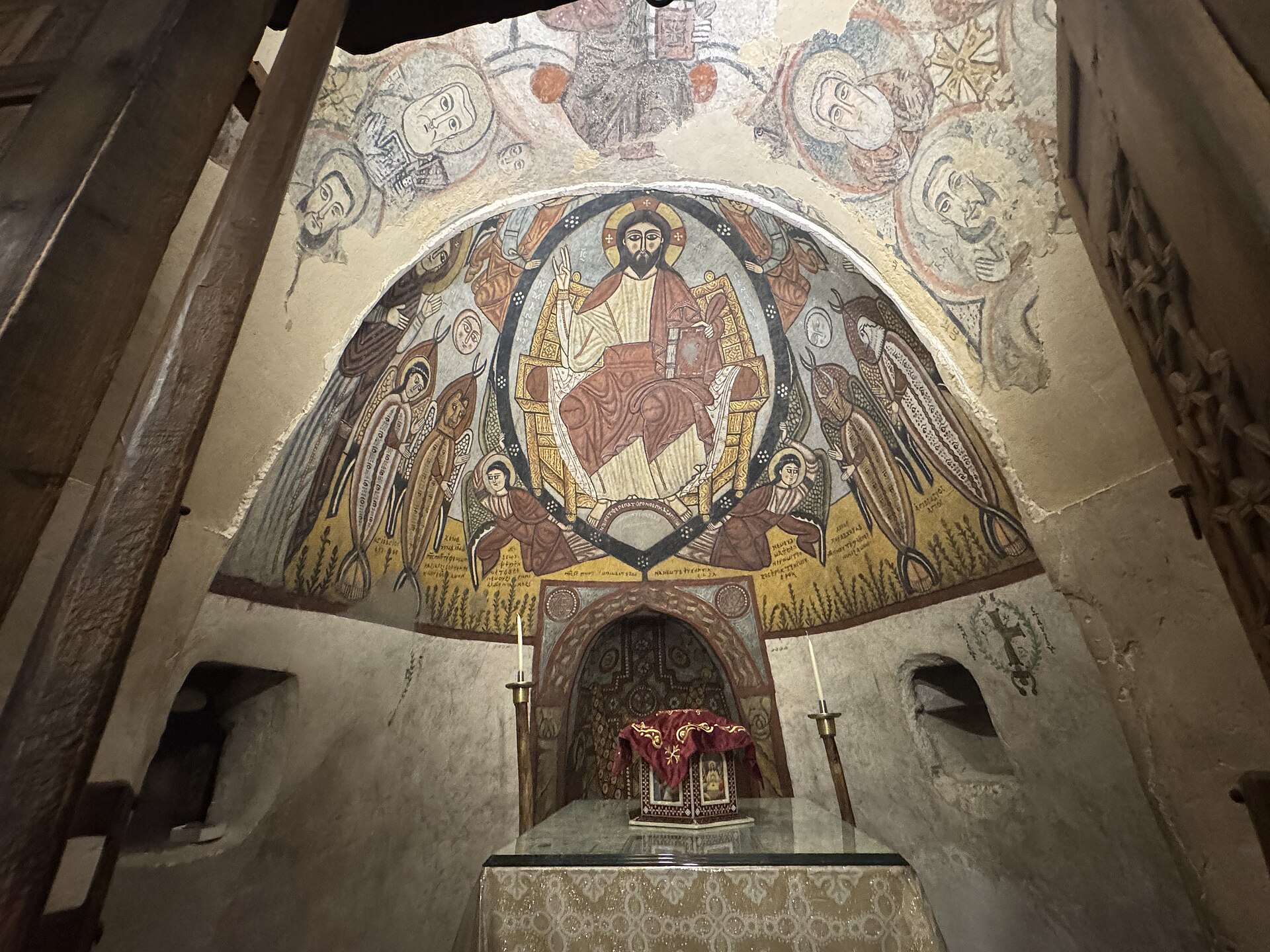
- The outer walls — Approach and perimeter
The outer walls rise from the desert floor as a plain, fortress-like shell, and the contrast with the trees inside is sharpest in clear morning light. Seeing them from outside explains why the monks needed protection in the centuries of raids, and where the green of the oasis begins.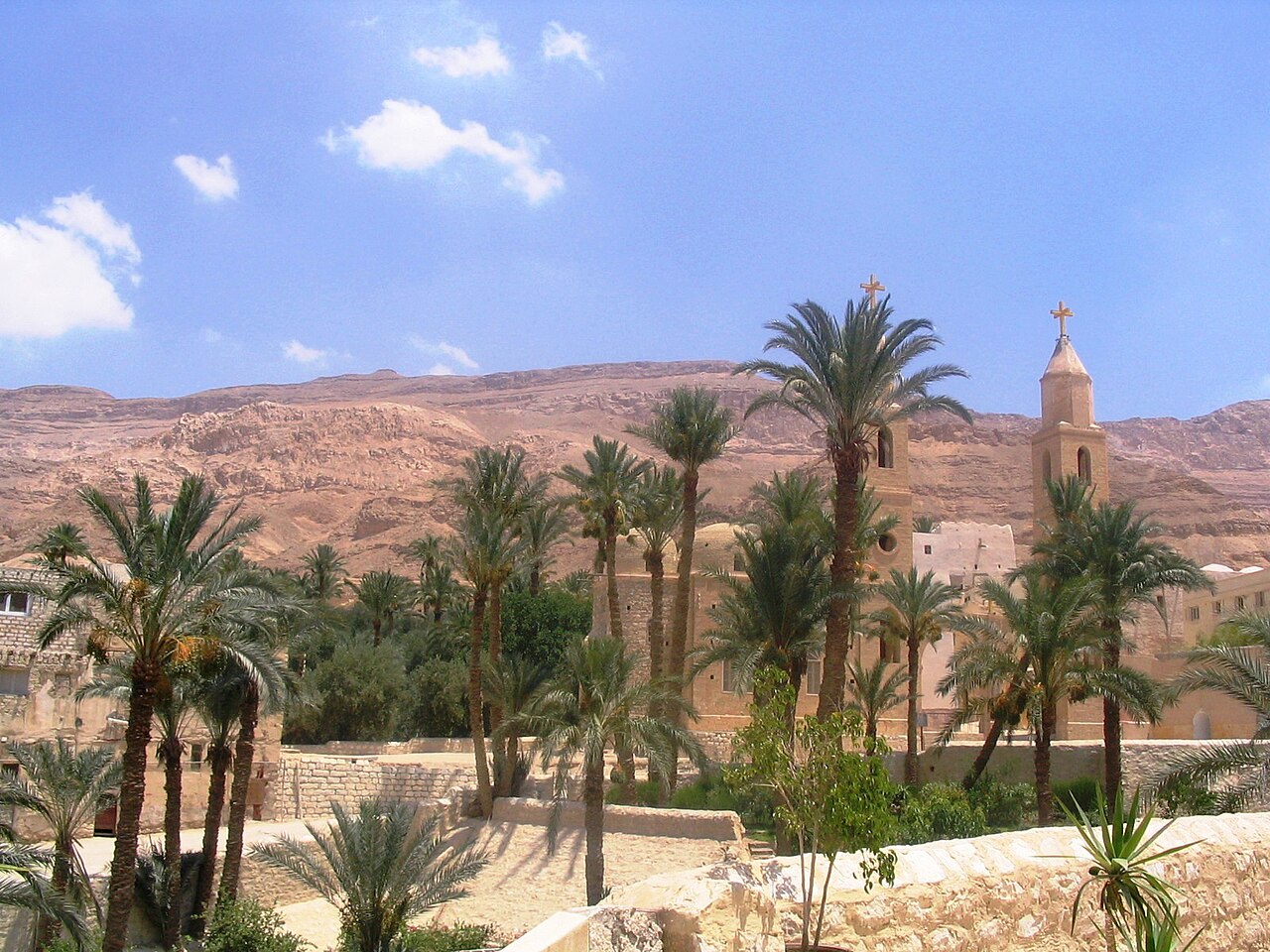
- Gardens and oasis — Inner compound
Inside the walls, paths run between palms, trees and vegetable plots watered by the oasis. Monks still tend the land, and the shade makes this a welcome corner in midday heat. Visitors can rest here, but the gardens belong to the community, so keep to paths and speak quietly.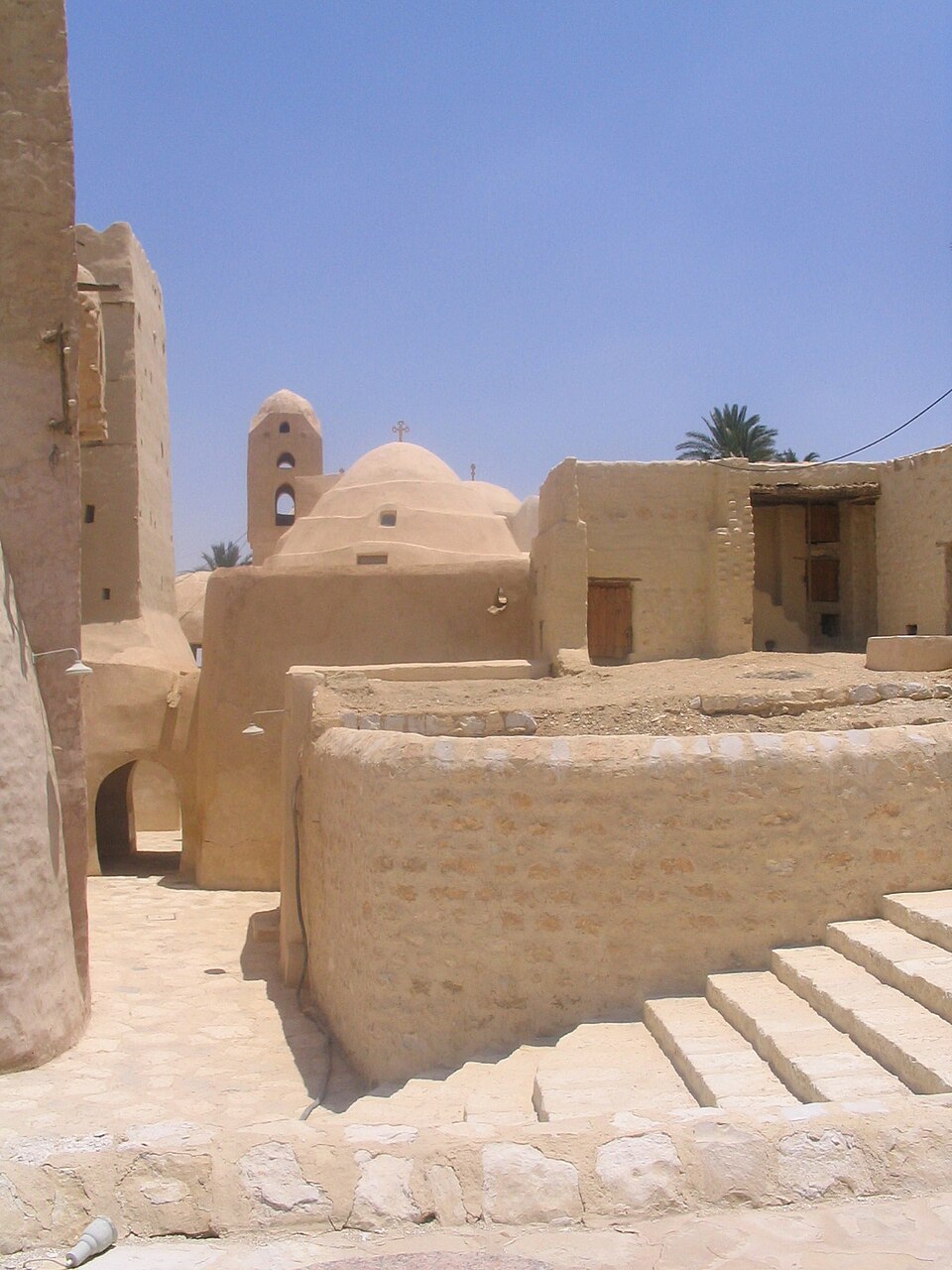
- Mill and bakery — Inner compound
The mill and bakery show the monastery as a self-sufficient village, with grain, bread and daily routine handled inside the walls. Visitors are not guaranteed to see them working, since this is a living community and not a museum, but the layout of the inner lanes explains how the place feeds itself. - Saint Anthony's cave — Cliff above the monastery
On the cliff above the compound, the hermit's cave marks the original reason for the monastery. The climb is steep and exposed, so it suits visitors with sturdy footwear and an early start, before the sun reaches the rock. Check with the monastery whether access is open and whether a guide is required.
Culture
Saint Anthony Monastery is a place of Coptic Orthodox worship before it is a sight, and its culture is the rhythm of the monks' day: prayers, work in the gardens and bakery, and the welcome given to pilgrims. Coptic Christianity has deep roots in Egypt, and monastic life is part of its identity. A visit here is closer to entering a religious household than to touring a monument.
Egyptians generally treat guests warmly, and hospitality is a point of honour. That carries into the monastery, where visitors may be offered tea or simple food and a patient answer to a sincere question. Many of the people met here are Egyptian Christian families on a pilgrimage or a day out, so the mood is often social and devout at the same time. Feast days bring chanting, crowds and queues for the churches. Some visitors find that the best time to see the monastery as a living pilgrimage, and others find it simply too busy.
Religion is a sensitive subject in Egypt. Asking questions with curiosity works far better than arguing a point, and criticising anyone's beliefs or behaviour in front of others tends to cause offence, because it makes a person lose face. The same applies to the monks, who are not tour guides and have mostly chosen a quiet life.
Dress modestly with shoulders and knees covered, speak quietly in the churches, and ask a monk before photographing him, a service or any painting.
What to wear
Dress around Saint Anthony Monastery splits between everyday Egyptian clothing and the monks' own habit. The traditional garment across Egypt is the galabeya, a long, loose robe usually cut from cotton or a cotton blend, worn daily in the countryside and for comfort at home. Cotton has a long history in Egypt, and light, breathable cloth suits the climate. The monks wear dark robes with a head covering, plain by design and the same through the seasons.
What pilgrims wear now is mostly ordinary modest clothing: long trousers or skirts, shirts with sleeves, and shoes that are easy to slip off. Some women cover their hair in the churches, though practice varies from family to family. Younger visitors from Cairo tend to wear casual, covered-up clothes, with jeans and a long-sleeved top common.
Visitors should plan for heat and for religious space together. Pack loose, light trousers or a long skirt and tops that cover shoulders and upper arms, plus a scarf that can cover the head if wanted. Sturdy closed shoes matter for the desert paths and for any climb towards the cave. A brimmed hat, sunglasses and sunscreen are needed for most of the year, while a warm layer is useful for winter mornings and evenings, when the desert cools sharply. Avoid shorts, sleeveless tops and anything see-through.
What to eat
- Fūl medames — Roadside eateries and neighbourhood counters in Cairo
Slow-cooked fava beans dressed with oil, lemon and cumin, eaten with flatbread. It is the standard Egyptian breakfast and a common fasting meal. Look for it at simple roadside eateries on the desert route and at neighbourhood counters in Cairo. - Ta'amiya — Street stalls and sandwich counters in Cairo
Egypt's version of falafel, made from fava beans rather than chickpeas, so the inside is green and soft. It is fried to order and tucked into bread with salad. Good for a road-trip snack before the long drive. - Koshari — Dedicated koshari restaurants in Cairo
A hearty mix of rice, lentils and pasta, topped with tomato sauce and crisp fried onion. It is meat-free, so it suits the long fasting periods observed by Coptic Christians, and it is filling after a morning of walking. - Molokhia — Home-style eateries in Cairo and towns along the route
A garlicky soup of finely chopped green leaves, usually served over rice, sometimes with chicken. The texture is silky and the flavour herbal. It is a home-style dish, best at family-run eateries rather than anywhere aimed at tourists. - Aish baladi and sweet tea — Neighbourhood bakeries, and monastery hospitality for guests
Aish baladi is Egypt's everyday flatbread, and the monastery bakes bread for its own community. Hospitality often comes with sweet black tea. Visitors may be offered it; accept with thanks, and buy fresh loaves at neighbourhood bakeries.
Plan it
Best time. March–April and October–November, when days are warm rather than punishing. Summer in the Eastern Desert is very hot, and winter mornings and nights can be cold, so pack layers.
How long. 1–2
Getting there. Fly to Cairo International Airport, then travel by road south-east across the Eastern Desert towards the Red Sea. There is no rail link, so most visitors hire a driver or join an organised pilgrimage trip. Confirm visiting arrangements with the monastery before setting out.
Budget. mid
Tips
- Confirm that visitors are welcome on your dates before travelling, since access depends on services and the monks' schedule
- Start early from Cairo to avoid the worst of the heat and arrive while the light is soft
- Weekends and Christian feast days draw large crowds, so choose a weekday for a quieter visit
- Carry plenty of water and some cash, and expect no shops or reliable cards in the desert
- Bring sun protection and sturdy shoes, especially if planning to climb to the cave
Etiquette
- Dress modestly, with shoulders and knees covered
- Ask before photographing monks, services or paintings
- Keep voices low and stay on marked paths in the gardens and churches
Nearby
Sources
- Wikidata Q2088356 (CC0)
- Wikipedia: Monastery of Saint Anthony (rev 1381036756) (CC BY-SA 4.0)
- Wikivoyage: Egypt (rev 5410102) (CC BY-SA 4.0)
- Photo: St. Anthony's Monastery 2006 (Tentoila) (Public domain)
- Photo: MonasteroAntonio2 (LorisRomito) (CC BY 3.0)
- Photo: St. Anthony's Monastery (inside) 2006 (Tentoila) (Public domain)
- Photo: Monastery of Saint Anthony, apse painting of Christ in majesty (Alena Belova) (CC BY-SA 4.0)
- Photo: Antonius Kloster BW 7 (Berthold Werner) (CC BY 3.0)
- Photo: MonasteroAntonio3 (LorisRomito) (CC BY 3.0)
- Photo: MonasteroAntonio4 (LorisRomito) (CC BY 3.0)
- Photo: MonasteroAntonio5 (LorisRomito) (CC BY 3.0)


