Royal Pavilion
Royal Pavilion, United Kingdom
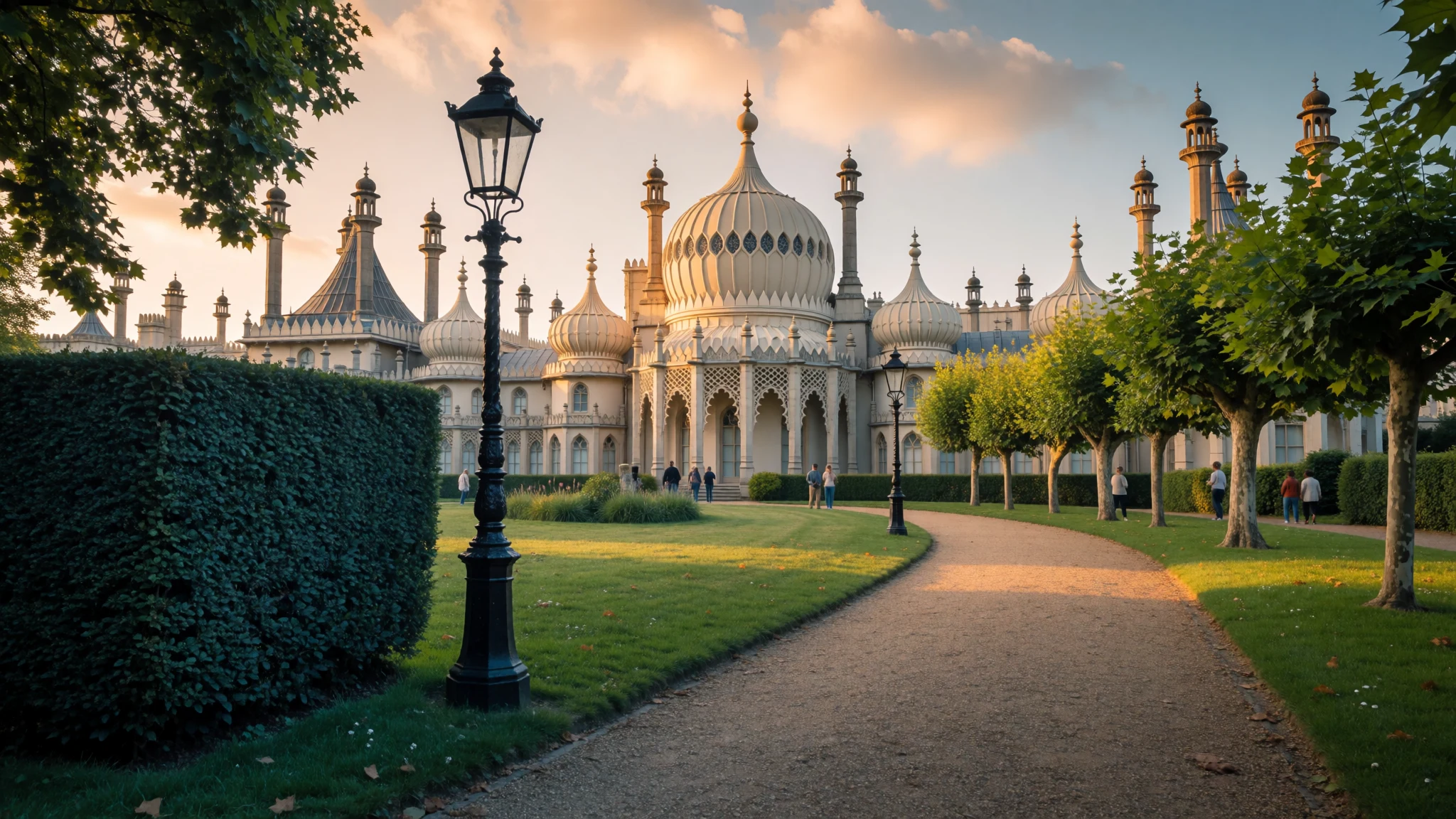
The Royal Pavilion in Brighton is a seaside palace dressed as a Mughal fantasy, built for a prince who wanted pleasure far from London.
The place
The Royal Pavilion stands in the middle of Brighton, a short walk from the seafront and the narrow lanes of the old town, inside its own gardens. From the outside it looks like something lifted from Agra or Rajasthan: onion-shaped domes, slim minarets, small domed chhatri pavilions on the rooflines and arches with scalloped edges, all in pale stone under a grey English sky. The style is usually called Indo-Saracenic, and it is strange to see it above bus stops and chain cafés. Visitors from India may recognise the vocabulary at once, and the mix of familiar and wrong is half the fun. Inside, the mood changes again. The rooms lean towards Chinese-inspired decoration, with dragons, lacquer, painted panels and heavy chandeliers. The building is Grade I listed and now runs as a museum under Brighton's local museum service. Opening times and ticketing change, so check the official site, https://brightonmuseums.org.uk/royalpavilion/, before planning around it. The gardens are open green space that locals use for lunch breaks, and they give the clearest views of the roofline. Brighton itself is a lively, slightly shabby seaside city with a pebble beach, a pier, independent shops and a big student population. The Pavilion works best as a morning or afternoon stop within a wider day by the sea rather than a full day on its own. Summer weekends bring crowds to the building, the gardens and the beach alike.
Its story
The Royal Pavilion in Brighton started in 1787 as a modest seaside villa and kept growing with the ambitions of its owner. George, Prince of Wales, first came to Brighton in 1783. The town was fashionable because of his uncle, the Duke of Cumberland, who liked gambling, theatre and good dinners, and the prince's doctor supplied a respectable reason: sea water and fresh air for his gout. Brighton also suited him because it was far from the court. He was in debt after the costly building of Carlton House in London, and Parliament was asking awkward questions. He rented a farmhouse facing the Old Steine, a grassy promenade, and used the distance to see Maria Fitzherbert, whom he married in secret, since her Catholic faith made a lawful royal marriage impossible. In 1787 he hired Henry Holland, the designer of Carlton House, to enlarge the house into a neoclassical seaside villa with French-leaning interiors and painted decoration. The prince's taste kept expanding. After he became Regent and then king, he turned to the architect John Nash, whose work from 1815 gave the building its domes, minarets and Indian-looking arches. Later monarchs used the Pavilion, but Queen Victoria preferred Osborne House as her seaside retreat, and in 1850 the Pavilion was sold to the town. It has belonged to Brighton ever since, not to the Crown.
What to see
- The domed exterior — Pavilion Gardens, central Brighton
The outside is the main event. Walk the full circuit and watch the silhouette change: central dome, clusters of minarets, pierced stone screens and chhatri-topped corners. It looks best in low morning or evening light, when the pale stone warms up. Notice how the Mughal features sit on a very English frame.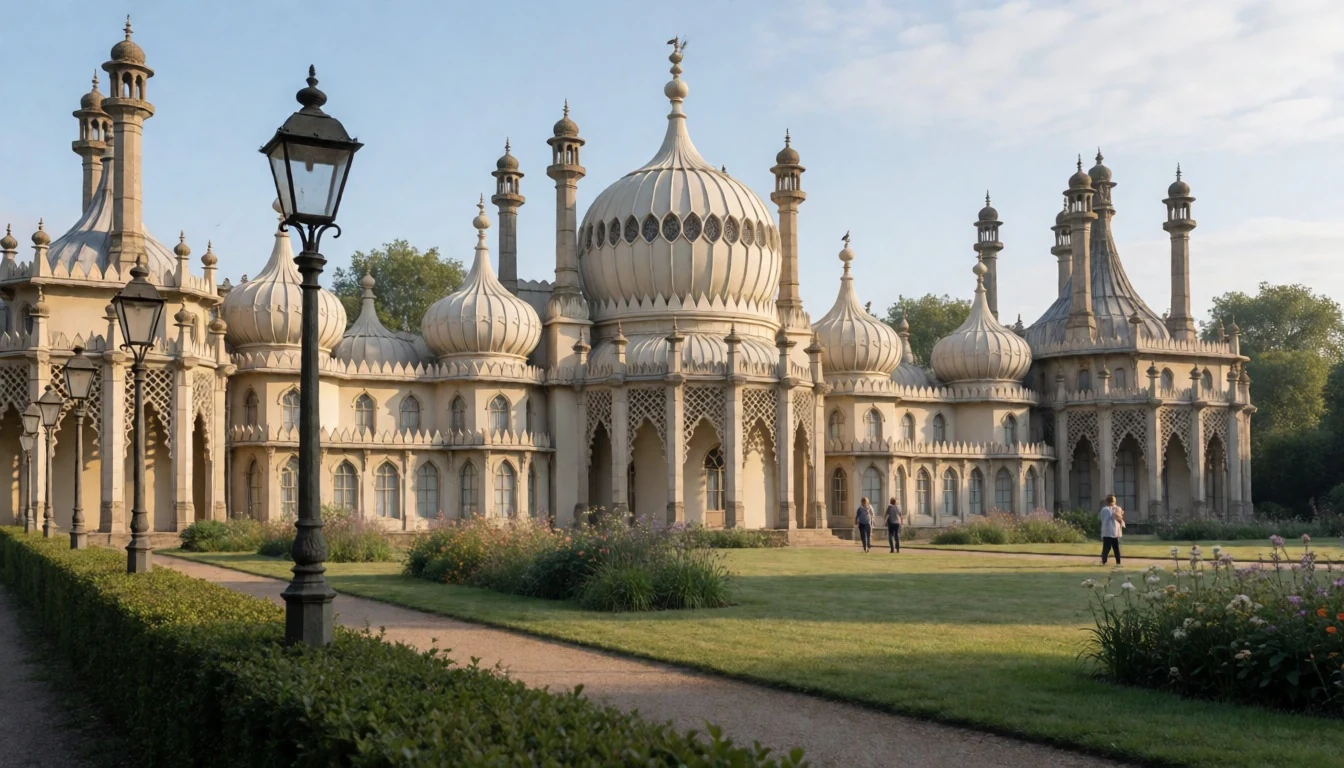
- The Banqueting Room — Inside the Royal Pavilion
The Banqueting Room is where the Chinese-style fantasy peaks. A giant dragon hangs above the table, wrapped around a chandelier, with painted palms and lotus-shaped lights overhead. It was designed for long, extravagant dinners, and standing in it explains the prince's reputation for excess better than any label does.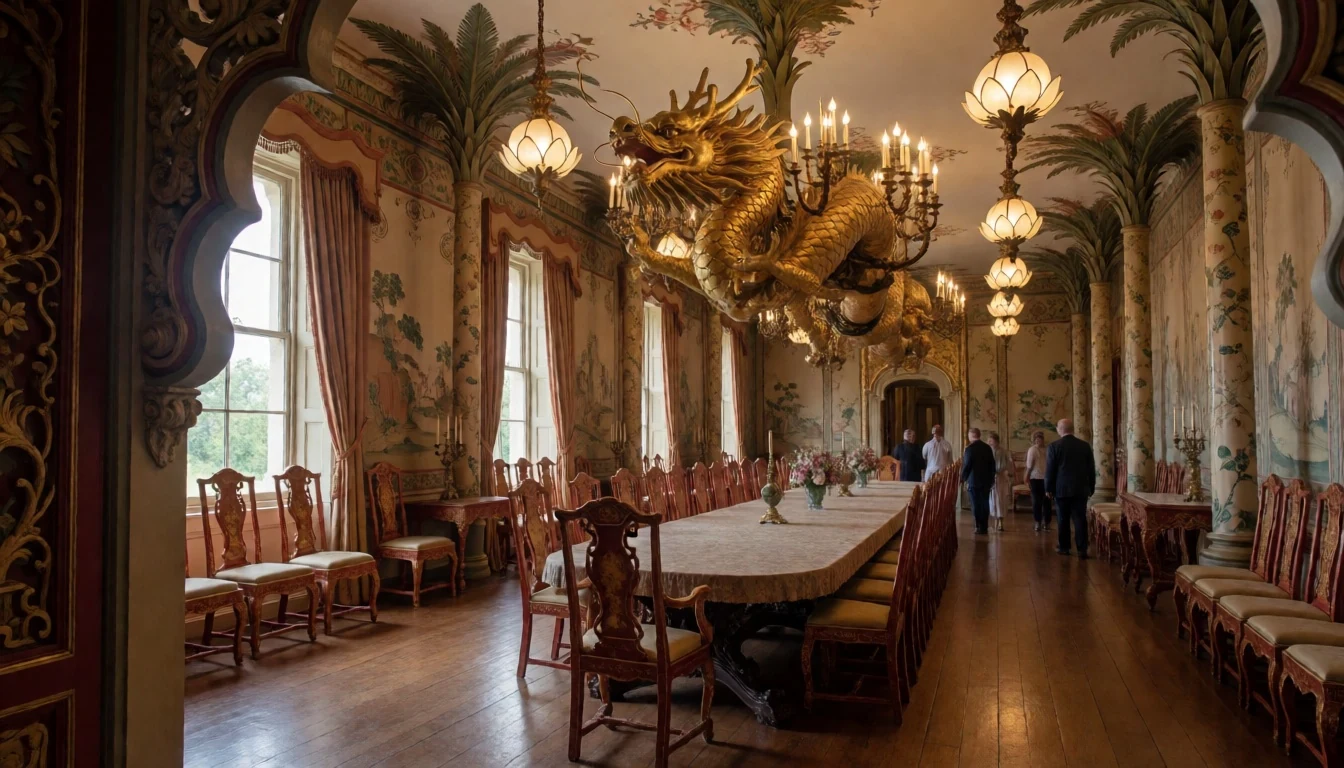
- Pavilion Gardens — Around the Royal Pavilion
The gardens wrap the building in lawns, paths and flowerbeds, and they are free to wander around when the weather is kind. Office workers, students and families all use them. Benches face the domes, and a short pause here shows how well the palace's roofline works from a distance.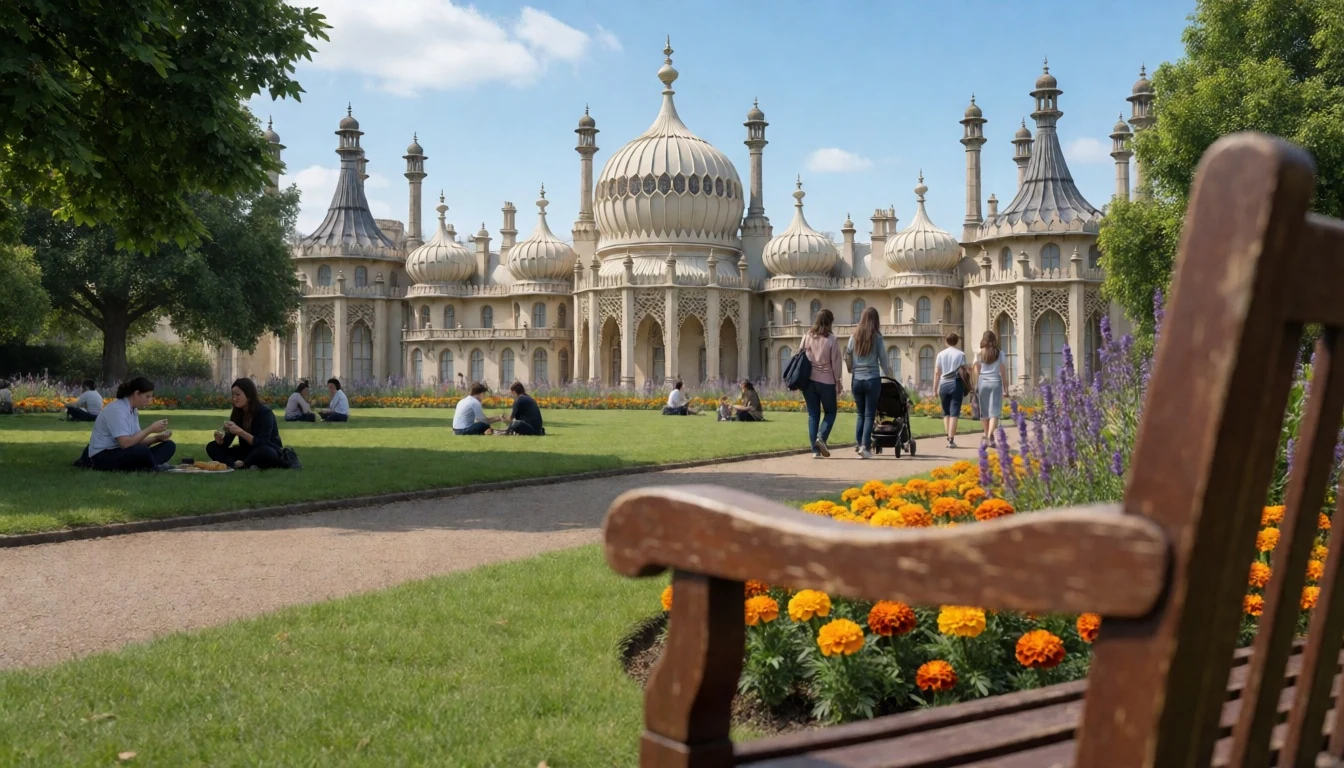
- The Old Steine — Between the Pavilion and the seafront
The Old Steine is the grassy strip where the prince first rented his farmhouse and where fashionable visitors once strolled. Today it is a traffic-lined green with fountains and statues. It links the Pavilion to the seafront, and walking it downhill to the sea retraces the old holiday route.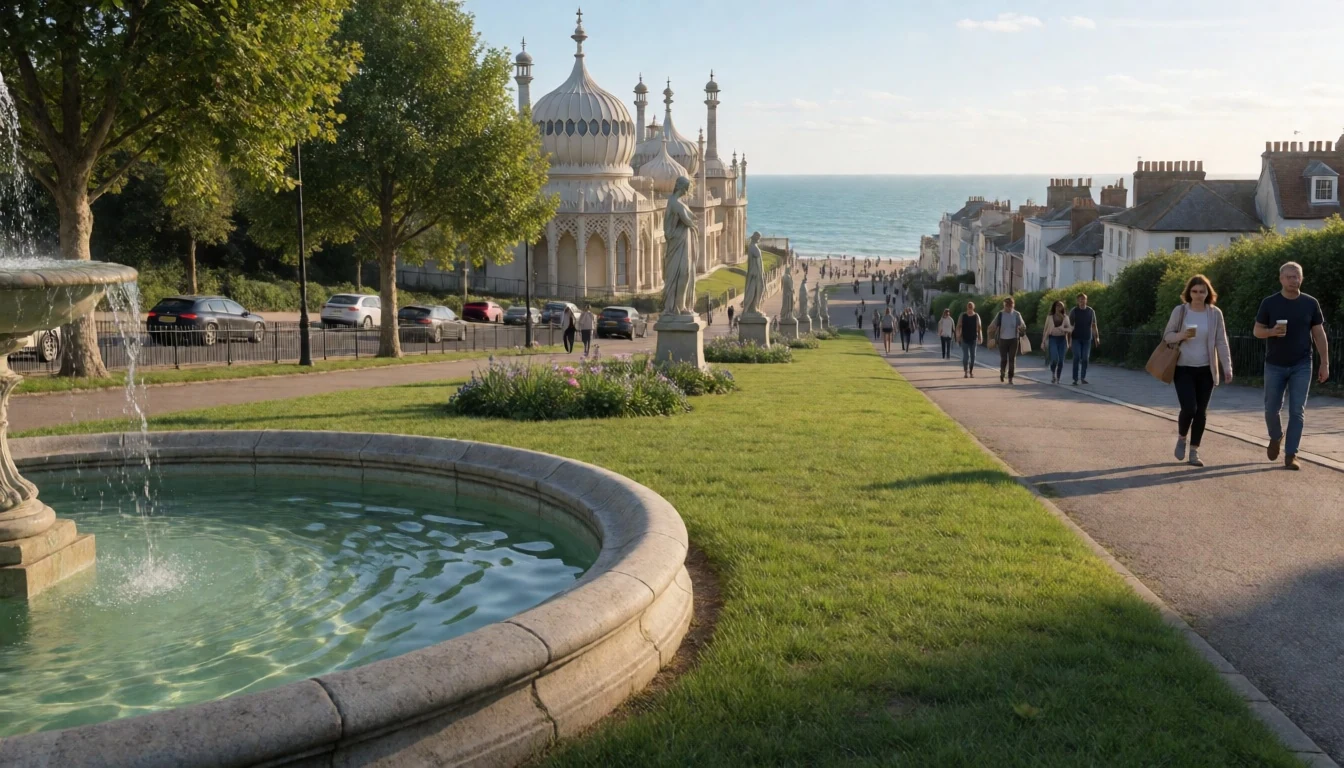
- The Lanes — Old town, a few minutes from the Pavilion
The Lanes are a tangle of narrow alleys behind the seafront, lined with jewellers, antique shops, small cafés and pubs. They are easy to find, easy to get lost in and busy at weekends. A wander here fits neatly before or after the Pavilion, and gives a sense of old Brighton.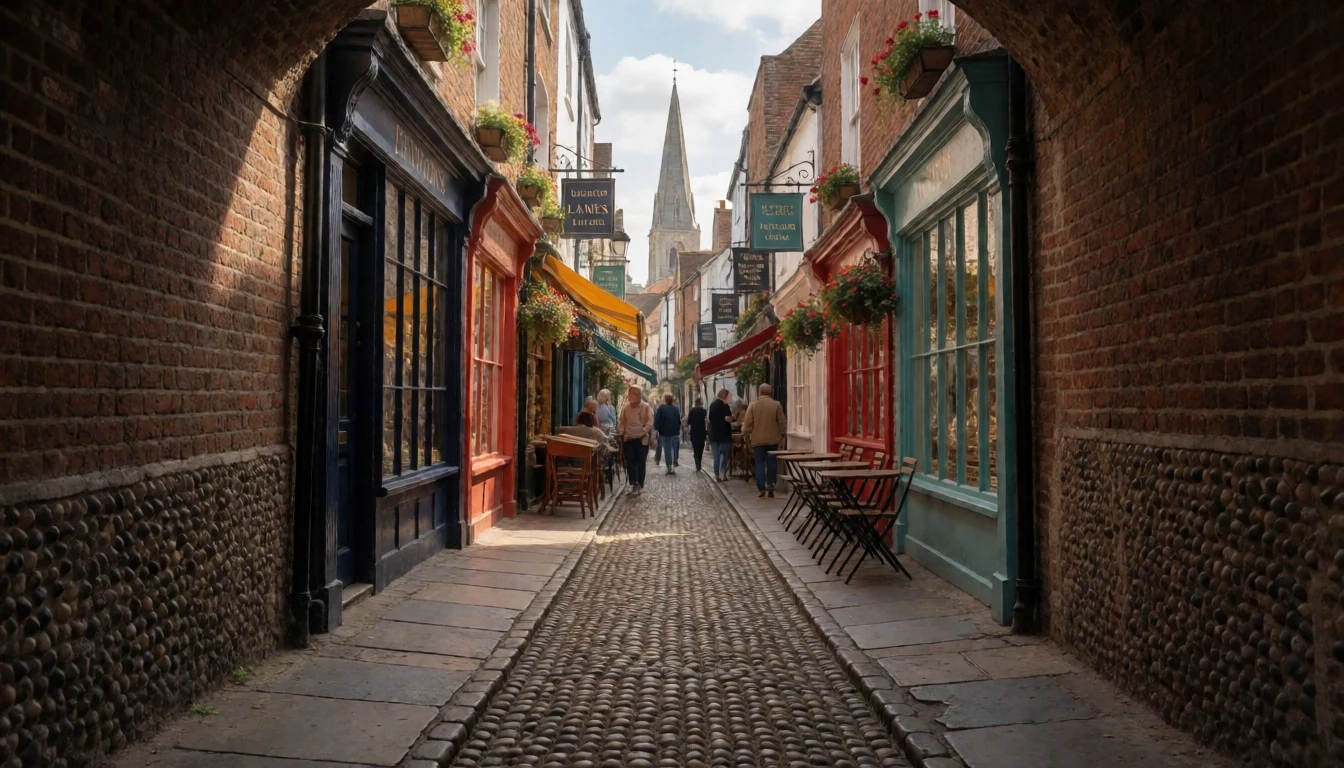
Culture
The Royal Pavilion shows how fashionable Britain of the early nineteenth century imagined the East: admired, copied and rearranged for pleasure. Nobody involved was trying to reproduce an Indian palace faithfully. The designers took Mughal-looking features, set them on a frame fitted with Chinese-style interiors, and presented the result as taste. For visitors from India the experience can feel like seeing familiar architecture in fancy dress, and that reaction is worth sitting with rather than hurrying past. The building also belongs to Britain's wider appetite for Asian goods, styles and wealth in that age, which is a more complicated story than the cheerful domes suggest. Locally, the Pavilion carries a different meaning. Brighton treats it as the town's emblem, and residents are fond of it in a slightly teasing way. It appears on postcards, in school trips, and as a backdrop for events in the gardens. The city has long drawn artists, performers and people looking for a looser life by the sea, and the building's theatrical style sits comfortably with that. The museum service looks after the interiors and changes displays from time to time, so the rooms and exhibitions can differ between visits. In the state rooms, follow the posted rules on photography, bags and touching, and ask a steward before using a flash or tripod.
What to wear
Fashion around the Royal Pavilion works on two levels: the dress of the prince's own age and what Brighton wears today. England has no single national costume, so traditional dress is best understood by period and region. In the Regency, the prince's circle wore fine muslin and silk gowns with high waists, while men wore tailcoats of wool broadcloth with starched cravats. In the Sussex countryside, shepherds and farm workers wore smocks of linen or cotton with decorative stitching, now seen mostly in museums and at folk festivals. Today Brighton dresses casually: jeans, trainers, layers, vintage finds and plenty of individual style, especially along the seafront and in the Lanes. Nobody expects formal clothes anywhere in town. For a visit, wear comfortable shoes, since the pavements are hard and the beach is pebbles. Bring a windproof jacket because sea wind can cool even a sunny day, add a hat and sunscreen in summer and carry a compact umbrella in any season. The Pavilion has no religious dress code, though beachwear and bare feet would feel out of place inside the state rooms, and a light extra layer helps in cooler interiors.
What to eat
- Fish and chips — Chip shops and seafront takeaways
Battered white fish with thick chips, salt and vinegar is the standard seaside meal. Eat it from paper on the seafront, away from the gulls if possible. Many places also offer vegetarian options such as battered halloumi or veg-based fritters.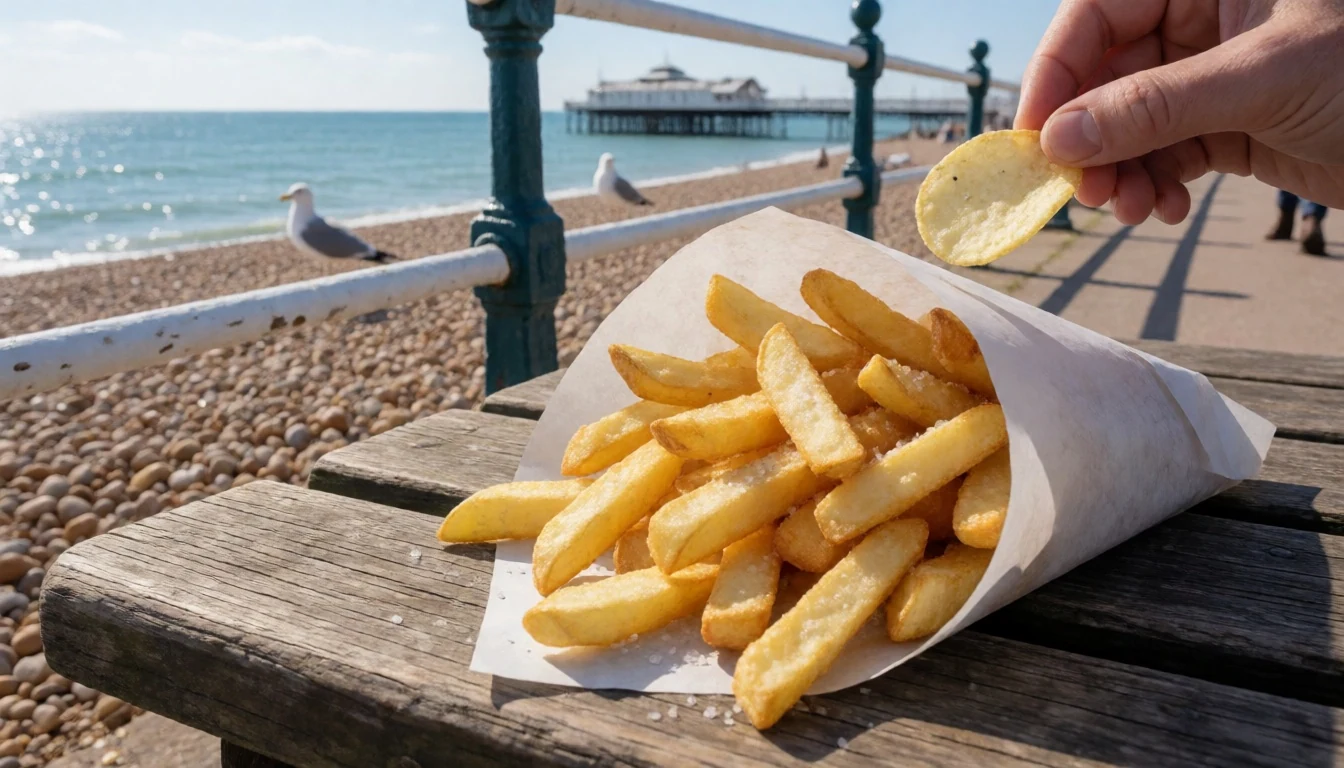
- Fresh shellfish — Seafront stalls and fishmongers near the beach
Crab, cockles, whelks and prawns are sold in small pots at stalls along the seafront. They suit a light lunch with lemon and a little pepper. Quality depends on the stall, so go where locals queue.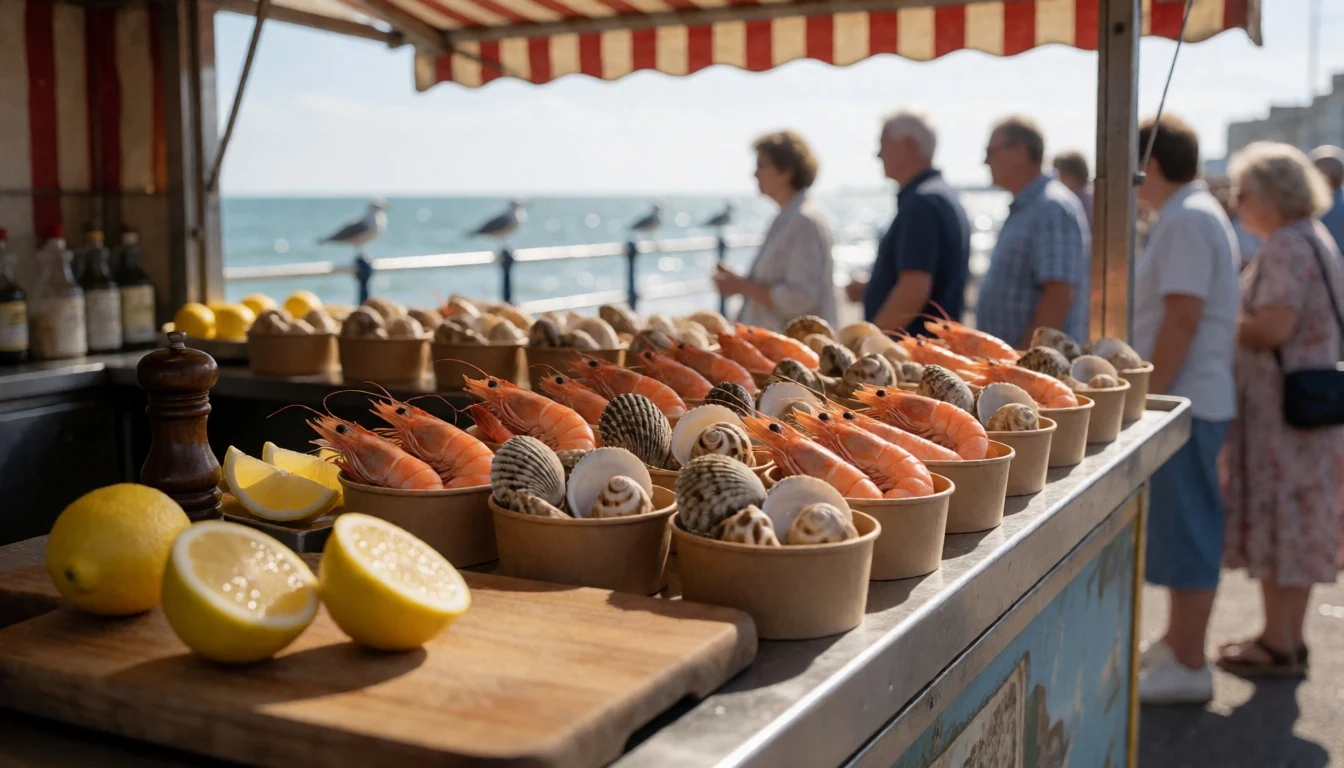
- Full English breakfast — Cafés and pubs across the town centre
Eggs, bacon, sausages, grilled tomato, mushrooms and toast make a long-lasting start before a day of walking. Many cafés offer vegetarian and vegan versions, which Brighton does particularly well. - Sunday roast — Pubs in the Lanes and nearby streets
Roast meat or a nut roast with potatoes, vegetables, gravy and Yorkshire pudding is the traditional weekend lunch. Pubs serve it in the afternoon, and busy ones need a table booked ahead. - Sussex produce and farmers' market food — Farmers' markets and farm shops around the county
Sussex farmers' markets sell local cheese, bread, cakes, apples and preserves, often cheaper and fresher than supermarket versions. Most towns hold one at least monthly, so check local listings for the date.
Plan it
Best time. May–June and September for mild weather, longer days and thinner crowds than peak summer. July and August bring the busiest beach weekends, while winter is quieter but windy, grey and chilly by the sea.
How long. 1
Getting there. Fly to Gatwick Airport and take a train to Brighton station, or travel by rail from London. The last leg is a short walk downhill through the town to the Pavilion. Ferries from Dieppe to Newhaven also connect with the Sussex coast.
Budget. mid
Tips
- Check the official site, https://brightonmuseums.org.uk/royalpavilion/, for opening times, ticketing and any booking requirement
- Go early on summer weekends, when the building and seafront both fill up
- Carry a light waterproof, as sea weather changes quickly
- Pair the Pavilion with the Lanes and seafront for a full day
- Cards are widely accepted, but carry a little cash for small stalls
Etiquette
- Follow the photography and bag rules posted in the state rooms
- Keep to marked routes inside and do not touch the decoration
- Take litter with you from the gardens and beach
Nearby
Sources
- Wikidata Q62364 (CC0)
- Wikipedia: Royal Pavilion (rev 1380528286) (CC BY-SA 4.0)
- Wikivoyage: East Sussex (rev 5401449) (CC BY-SA 4.0)
- Brighton royal pavilion_Qmin — Qmin (CC BY 3.0)
- Brighton Banqueting Room Nash edited.jpg — Unknown author (Public domain)
- Brighton 2015 — Bryan Ledgard (CC BY 2.5)
- Islamic on the outside, Far Eastern inside — Briantist at English Wikipedia (Public domain)
- The Royal Pavilion and surrounding gardens in Brighton, England — Jvhertum (CC BY 3.0)
- Royal Pavilion — Poliphilo (CC0 1.0)
- The Royal Pavilion Brighton, UK — Fenliokao (CC BY 3.0)
- The Royal Pavilion — Mymuk (CC BY 3.0)


