Rovaniemi
Rovaniemi, Finland
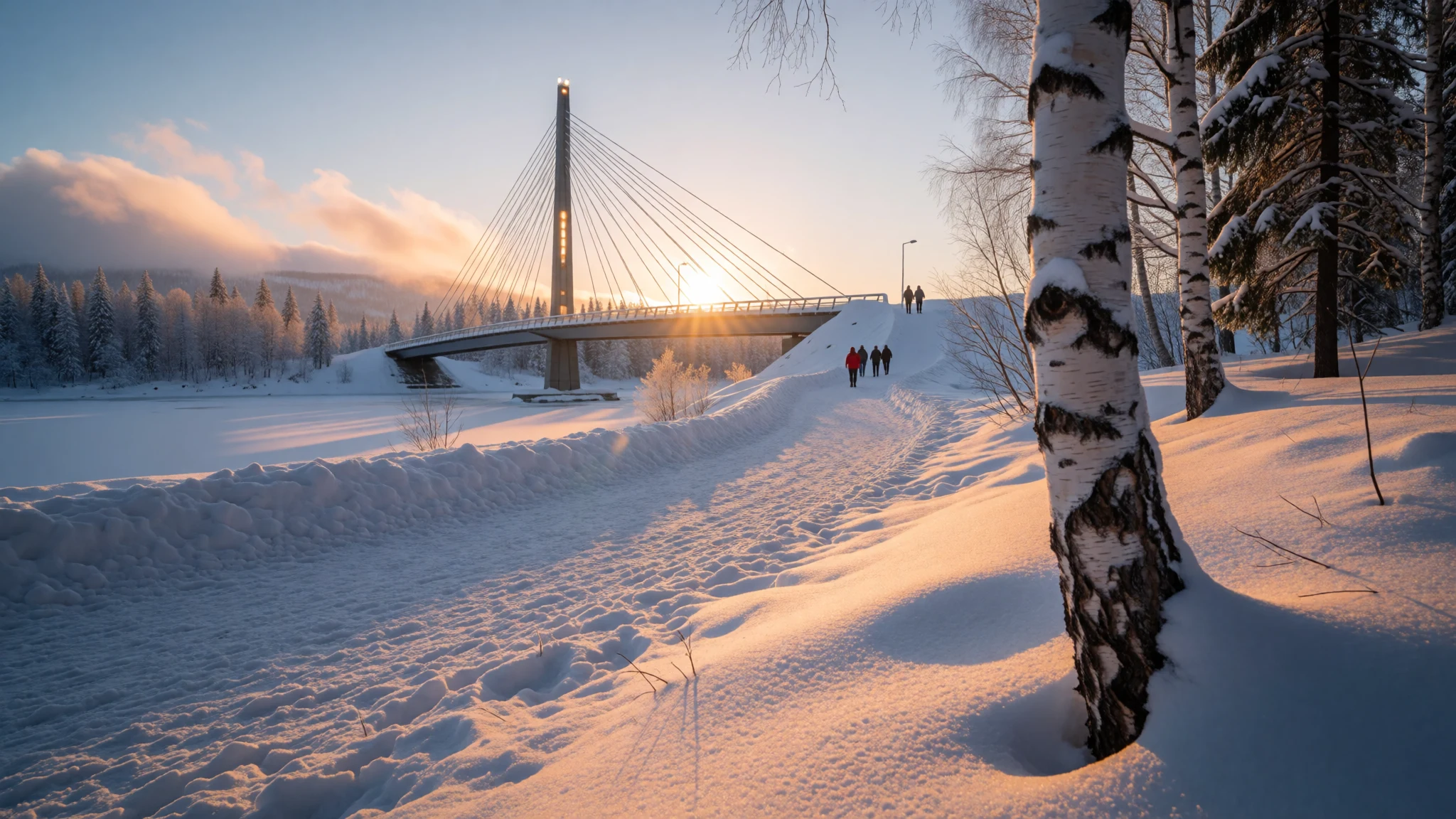
Rovaniemi is a practical Arctic Circle town where snow, aurora, midnight sun and Santa meet, and where Lapland's forests start within minutes of the centre.
The place
Rovaniemi is the administrative capital of Lapland, Finland's northernmost province, and sits just below the Arctic Circle in the country's northern interior. The city centre lies about 6 km south of the line, on flat ground 88 m above sea level, between the low hills of Ounasvaara and Korkalovaara. Two rivers meet here: the broad Kemijoki, and its tributary the Ounasjoki. Much of the town's character comes from that water, which is frozen white in winter and wide and pale under the light summer nights.
The population is 65,329, which makes Rovaniemi small by most standards. Yet it works as the commercial and service hub for a huge, thinly settled region. Shops, offices, the main bus station and the rail terminus for most trains from the south all sit here. After Helsinki, it is also among the places in Finland most visited by foreign tourists, so the seasons have a clear rhythm. Winter brings Christmas and aurora crowds, summer brings midnight-sun travellers, and the months between are noticeably quieter and cheaper.
Anyone expecting a wilderness village may be surprised. The centre is a practical modern grid of low buildings, shopping streets and cafés, with forest and riverside trails reaching it within minutes. Rovaniemi works best as a base: somewhere to eat, sleep, hire warm gear and set out into the woods, rather than a destination of grand monuments. Its pleasures are the light, the rivers and the quiet.
Its story
Rovaniemi's recorded history is short, but people were in the area long before anyone wrote its name down. Farming by clearing and burning patches of forest began here several centuries BC, and from the early centuries AD travellers from Karelia, Häme and the Arctic coast passed through this river country. The Sami, indigenous to Sápmi, are the region's longest-standing culture, and their presence runs through the whole of northern Finland.
The settlement appears in official documents by name in 1453, when it was a scatter of small villages living from farming, herding, fishing and hunting. In the 1800s, forestry and gold fever pulled thousands of people north, and as Lapland's natural resources were worked, Rovaniemi grew into the province's business centre. A township decree led to it being separated from the surrounding rural parish as a market town at the start of 1929.
The Second World War changed the place. After the Winter War, Finland drew closer to Germany, and a transit agreement let German troops and supplies cross Finnish territory towards occupied northern Norway. Rovaniemi, as the hub of Lapland's roads and rail, was part of that traffic, and the war left the town badly damaged. Much of the modern centre is a postwar rebuild, which explains its planned, low and practical look, with few old buildings. The most recent layer is tourism, built around the Arctic Circle and Christmas, which now shapes the local economy as much as timber once did.
What to see
- Jätkänkynttilä Bridge — Kemijoki river, northern centre
The Lumberjack's Candle Bridge crosses the Kemijoki at the northern edge of the centre and was finished in 1989. Locals treat it as the city's emblem. Its tall pylon is lit after dark, so the riverbank path at dusk is the best place to see it, with the water reflecting the light.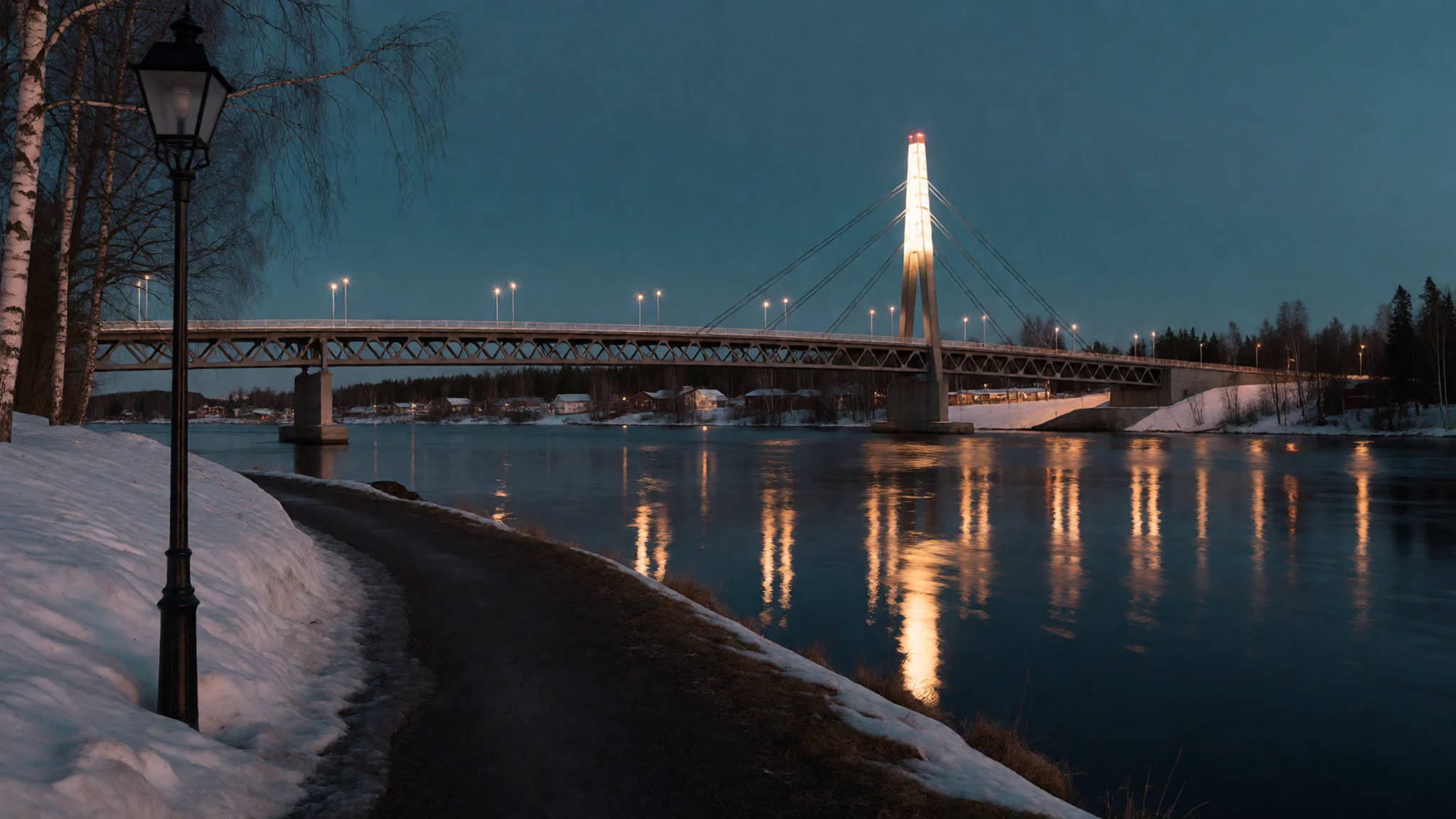
- Santa Claus Village — Northeast of the centre, near the airport road
Santa Claus Village stands near the old marked position of the Arctic Circle, which modern calculation places about 2 km further north. It is openly commercial and very busy in December, but crossing the line, posting a card and meeting Santa make it hard for families to skip. Go early in the day.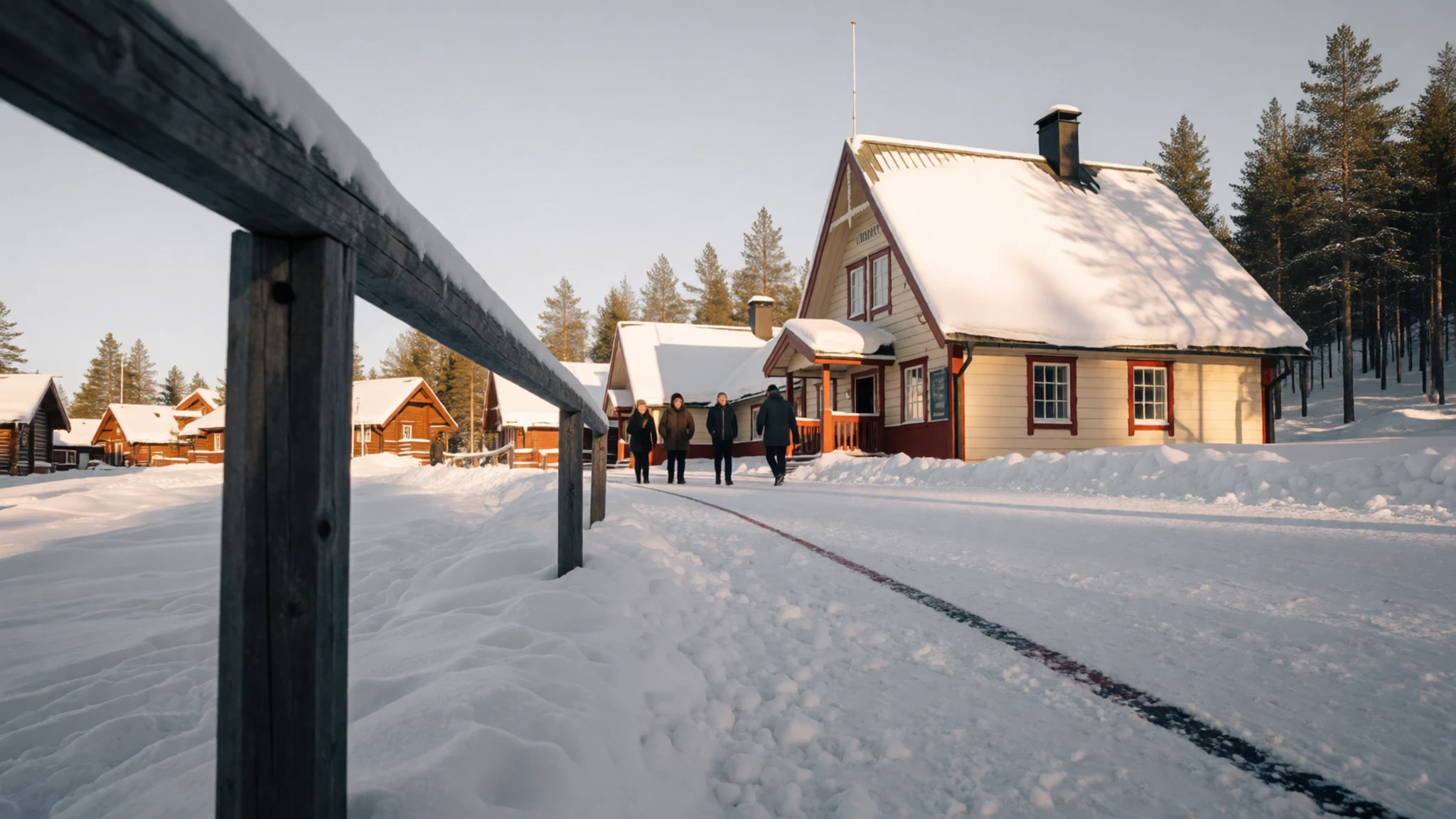
- Santapark — Near Santa Claus Village
Santapark is an underground amusement park a short walk from Santa Claus Village, open only in the winter season. It suits families with young children and doubles as warm shelter on the coldest days. Check the official city website for opening dates and tickets before planning a day around it.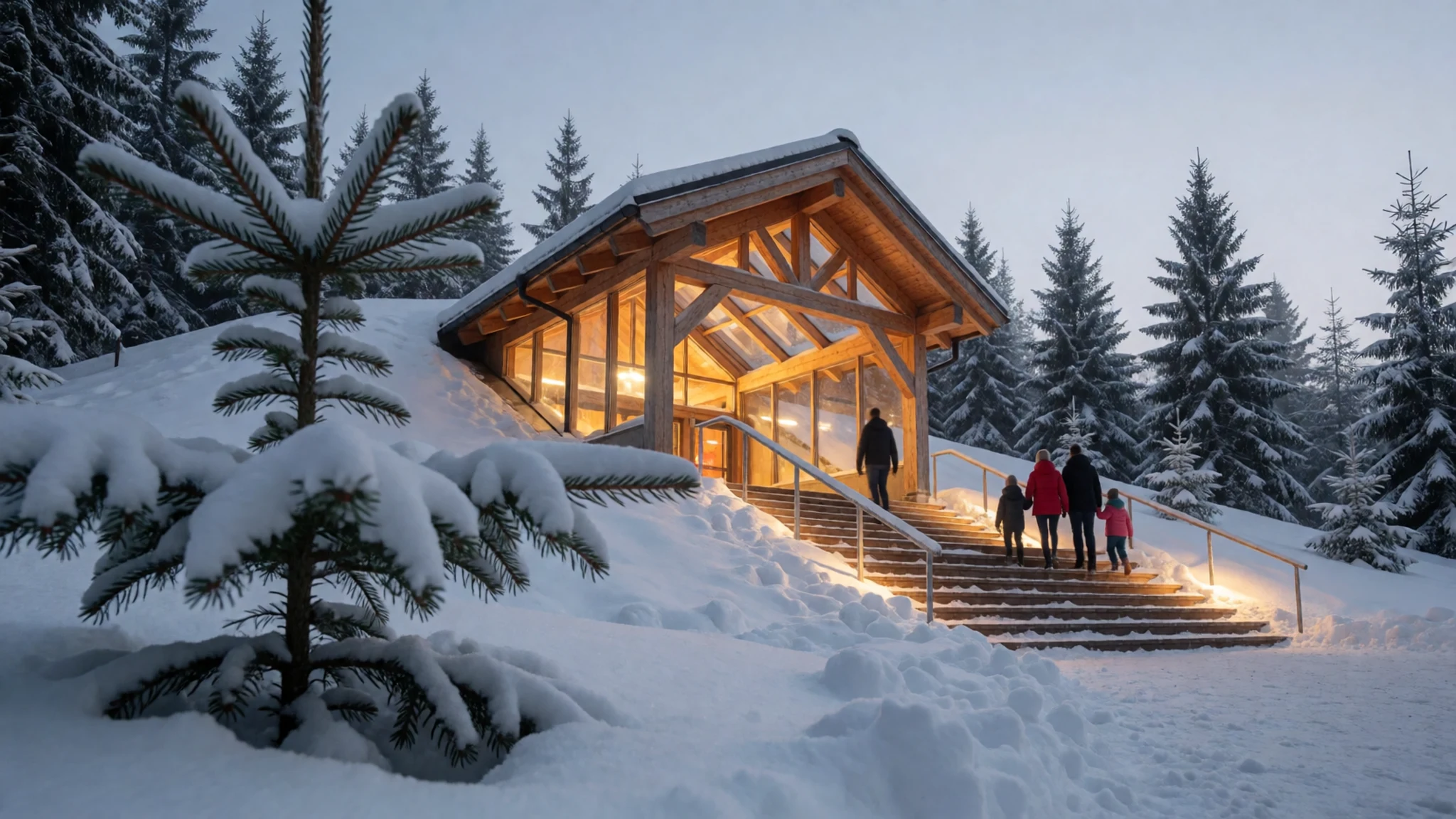
- Kirkkolampi Arboretum — Southwest of the centre
Kirkkolampi Arboretum is a park around a small pond near the centre, and a favourite for easy walks among locals. In summer the paths are green and full of birdsong; in winter they become packed snow. It is a gentle way to see everyday Rovaniemi away from the tourist circuit.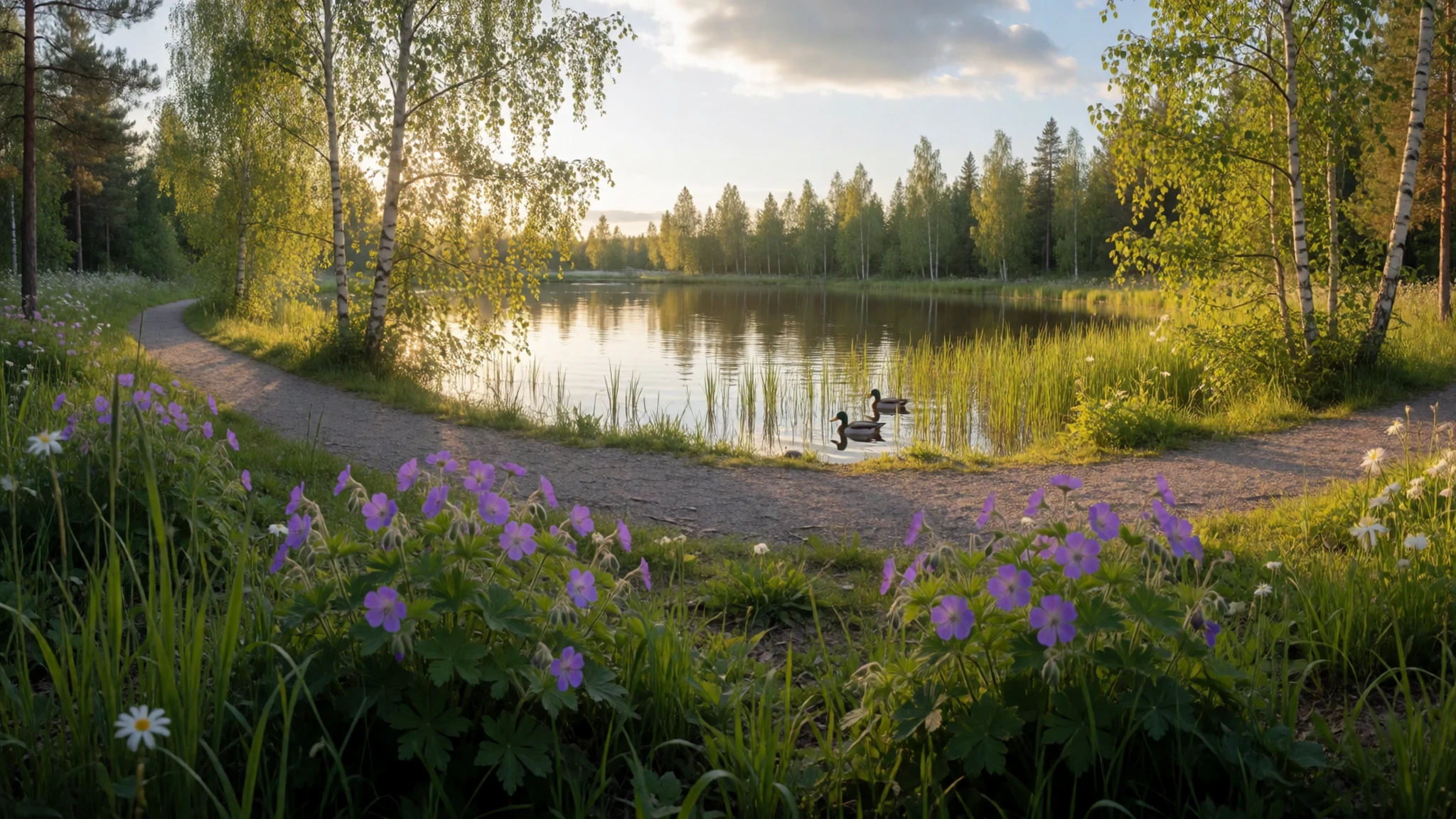
- German Soldier Cemetery — North of the city, in open countryside
North of the city, this war cemetery holds 2,683 German soldiers who died in the Lapland fighting. Built from large blocks of stone and set in open country, it is sombre and quiet, and well away from the busy tourist areas. Most visitors need a car or taxi to reach it.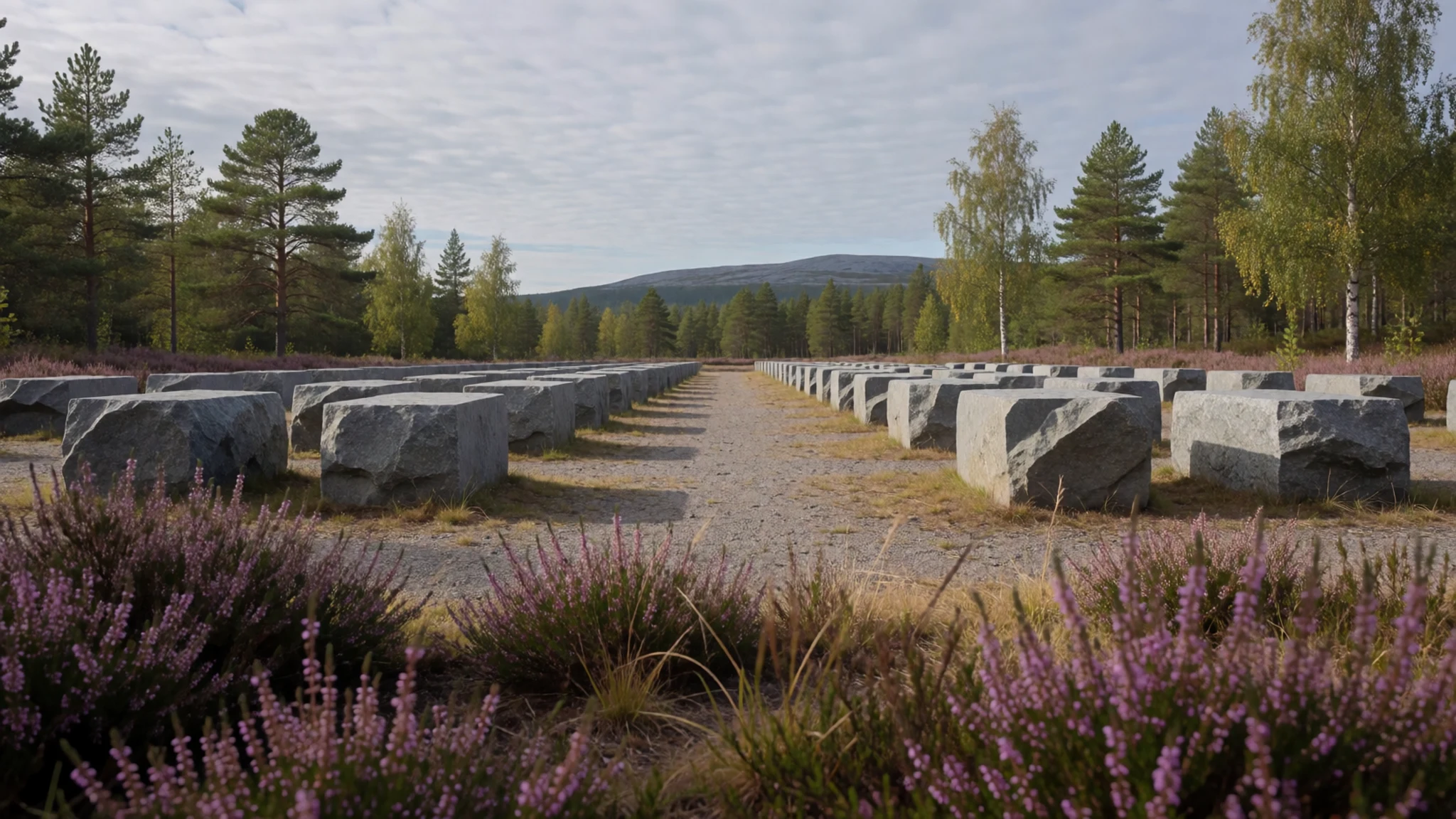
Culture
Rovaniemi has a Finnish manner that visitors often read as reserved. Conversation is calm, silence is comfortable and personal space matters, but people are helpful when asked and keep to their word. The city also sits in Sápmi, the homeland of the indigenous Sami, and Sami languages, crafts and reindeer herding are part of the wider Lapland identity, even though most visitors meet them only through souvenirs and tours. It is worth choosing Sami-run experiences when possible.
Nature is part of daily life here. Locals ski, fish, pick berries and walk in the forest all year, and Finland's tradition of public access lets people roam freely on uncultivated land. That freedom has limits, though. Gardens, farmland and yards are private, and some landowners have had enough of trespassers, which is what a yksityisalue sign tells you. Reindeer, which wander and graze across much of the north, belong to herders and are working animals, not pets.
The sauna is the real social space of the country: quiet, bare and unhurried, and not a place for loud behaviour. Winter is dark and long, summer light and bright, and both shape local moods, with outdoor cafés filling the moment the sun is warm. Nobody expects tips beyond rounding up.
If a sign says yksityisalue, treat it as a firm request to stay out, and never approach, feed or chase reindeer or other animals for a photograph.
What to wear
Traditional dress in Rovaniemi means Sami dress, above all the gákti, the tunic worn across northern Lapland. It is made of heavy wool, often blue or red, with coloured bands along the hem, cuffs and collar, and it is worn with a belt, pewter-thread embroidery or silver, and boots made of reindeer leather and fur. The colours and patterns signal family and home area. Sami people wear it on national and family occasions, such as weddings, confirmations and festivals, and increasingly as proud everyday dress.
What people wear now is practical and understated. In winter it is down or insulated jackets, wool layers, dark colours, felt-lined boots, thick hats and mittens. Locals dress for the weather first, and style second. In summer, jeans, trainers, light jackets and sunglasses are normal, with a rain layer always in the bag. Indoors, people often remove outdoor shoes at homes and some guesthouses.
Visitors should plan by season. In winter, bring thermal base layers, a warm mid-layer, a windproof outer coat, insulated waterproof boots with good grip, a hat that covers the ears, and mittens rather than thin gloves. Hire specialist overalls if the tour does not provide them. In summer, bring light layers, comfortable walking shoes, a rain jacket and insect repellent for forest walks. There is no dress code for churches or shops, though quiet, simple clothes suit the war cemetery.
What to eat
- Poronkäristys (sautéed reindeer) — Most proper restaurants in the town centre
Rovaniemi's signature plate is thin slices of reindeer fried and stewed in butter, served on mashed potato with lingonberry jam and sometimes pickled cucumber. It tastes rich and mild, and is worth trying once. Look for it in most of the town's sit-down restaurants.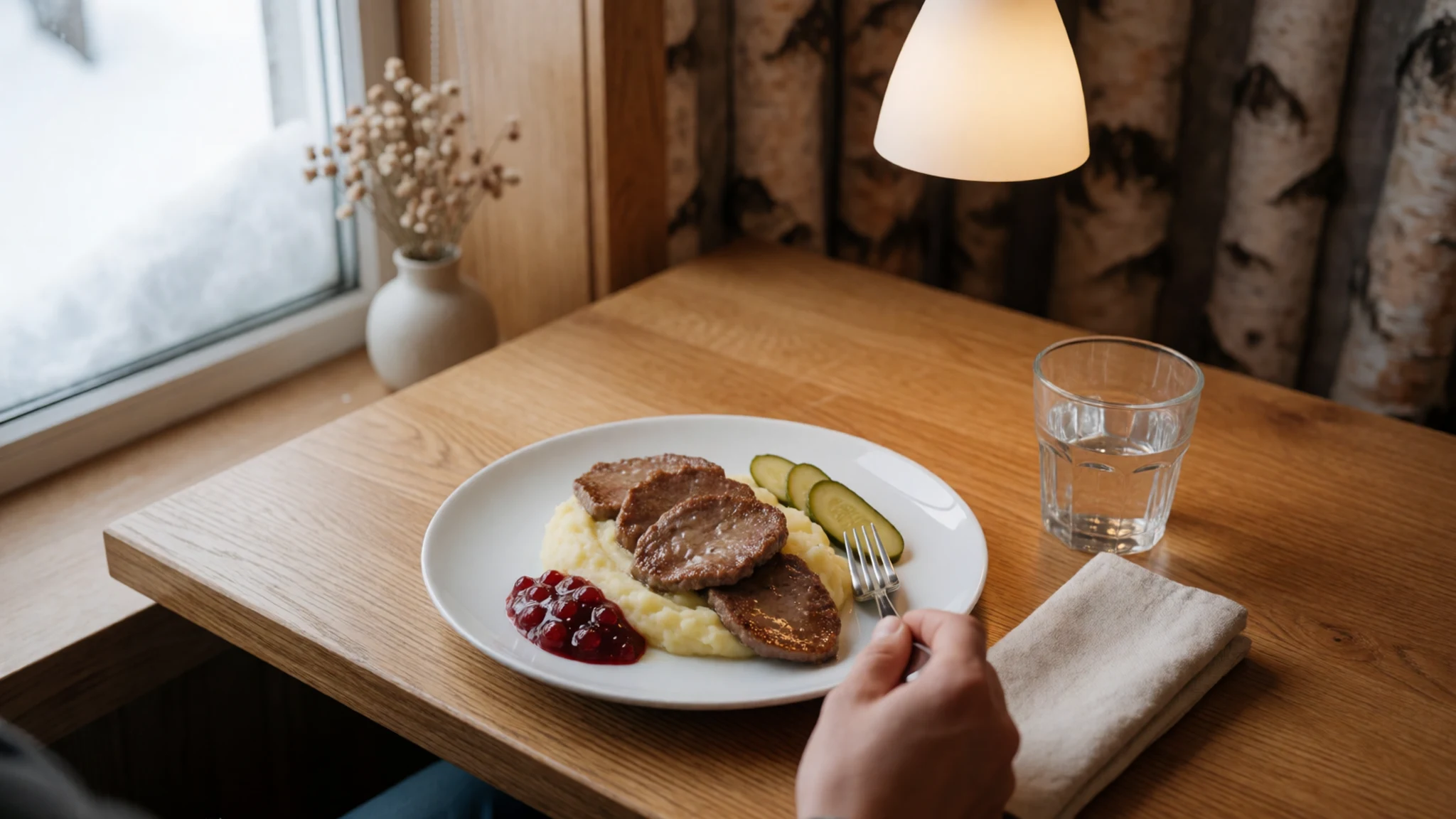
- Lohi (salmon) — Restaurants and lunch cafés in the centre
Salmon is a staple across Lapland, served grilled, smoked or in a creamy soup with potatoes and dill. The fish is mild, fresh and filling, and it makes a good alternative for visitors who would rather not eat reindeer.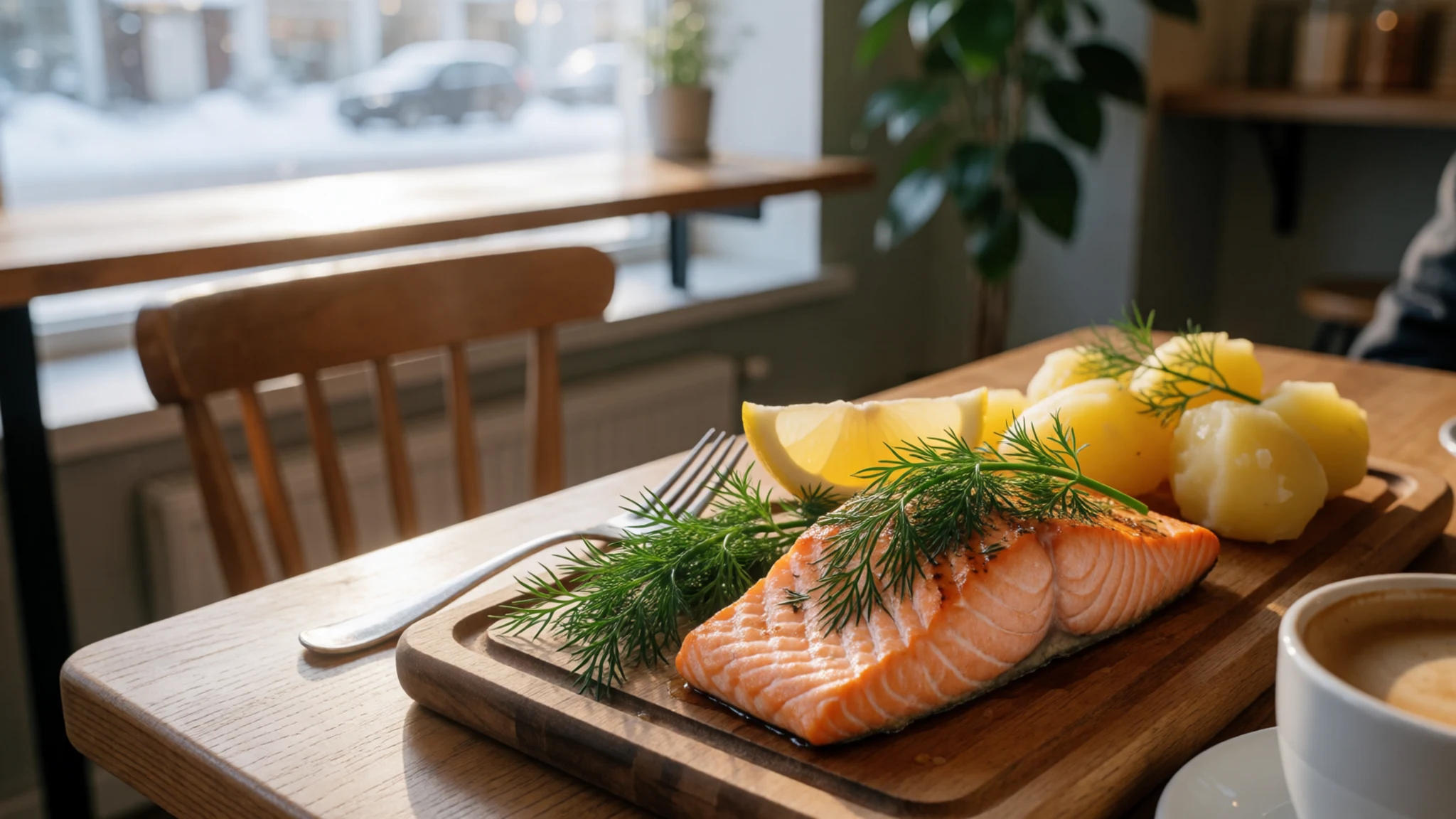
- Siika (lavaret) — Restaurants in the centre, especially in the evenings
Siika is a freshwater whitefish of northern lakes and rivers, often pan-fried or baked with butter and herbs. It has a delicate, clean flavour and is served with boiled potatoes. It is a good, plain way to taste local river and lake produce. - Rieska (flatbread) — Any grocery store or supermarket
Rieska is a soft, pale flatbread, made from barley (ohrarieska) or sometimes potato (perunarieska). It is eaten with butter, cheese or smoked fish, and is an easy picnic or breakfast item to carry for a day outdoors. - Weekday lunch buffet — Restaurants and cafés around the town centre, on weekdays
Many central restaurants run a set lunch on weekdays, usually soup, salad, a hot dish, bread and coffee. It is the most affordable way to eat well here, and options range from Finnish home cooking to Indian and Nepalese buffets with good vegetarian choices.
Plan it
Best time. February and March for deep snow, long days and a good chance of aurora; December for the Christmas season, which is busy and dear; June to August for midnight sun and forest walks, with mosquitoes; September for autumn colour and quieter streets.
How long. 2–3
Getting there. Fly to Rovaniemi Airport, close to the city, then take the airport shuttle or a taxi into the centre; check the Visit Rovaniemi site for recommended taxi services and shuttle times. The overnight sleeper train from Helsinki is slower but comfortable, and most trains from the south end at Rovaniemi station, close to the centre.
Budget. mid
Tips
- Book winter flights, rooms and activities well ahead, especially around Christmas
- Pre-arrange taxis or use recommended services, because prices can be steep in busy seasons
- Wear real winter layers and boots, even for short outdoor stops
- Go to Santa Claus Village early to avoid the biggest crowds
- Cards are accepted almost everywhere, so little cash is needed
Etiquette
- Respect yksityisalue signs and stay out of private land
- Keep a distance from reindeer and never feed them
- Keep voices low in saunas, and remove outdoor shoes when entering a home
Nearby
Sources
- Wikidata Q103717 (CC0)
- Wikipedia: Rovaniemi (rev 1383251422) (CC BY-SA 4.0)
- Wikivoyage: Rovaniemi (rev 5427058) (CC BY-SA 4.0)
- Photo: Rovaniemi – The Lumberjack's Candle Bridge (Tarja Mitrovic) (CC BY 2.5)
- Photo: Rovaniemi montage (Jari Kolehmainen and others) (CC BY 3.0)
- Photo: Departure board of the Santa Express sleeper train (FrogsLegs71) (CC BY 3.0)
- Photo: Lordin Aukio (Floppyjb) (CC BY-SA 4.0)
- Photo: Aerial view of Rovaniemi (MattiKSinisalo) (CC BY 3.0)
- Photo: Rovaniemi in summer (Floppyjb) (CC BY-SA 4.0)
- Photo: Jätkänkynttilä Bridge (kallerna) (CC BY-SA 4.0)
- Photo: Santa Claus Village (Floppyjb) (CC BY-SA 4.0)


