Rouen
Rouen, France
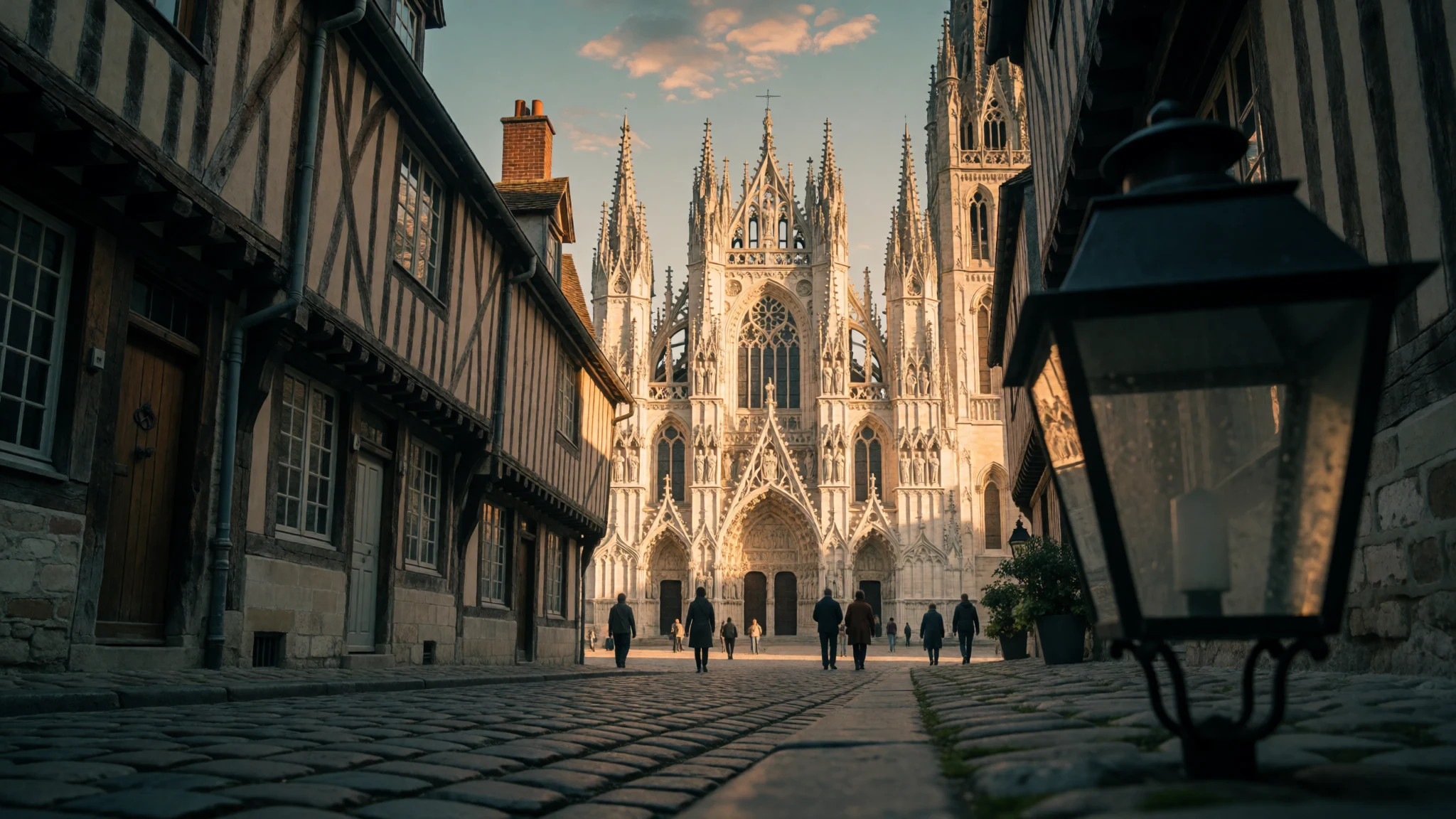
Rouen packs Gothic churches, timber-framed lanes and the story of Joan of Arc into a flat, walkable Norman city on the Seine.
The place
Rouen sits on the River Seine in northwestern France and serves as the capital of Normandy and of the Seine-Maritime department. The commune holds 117,662 people, while the wider urban area around it was counted at 715,239 in 2023. Residents are called Rouennais. The ground is low, about 10 metres above sea level, which makes the centre easy to cover on foot. The old core is a tangle of narrow streets lined with timber-framed houses, and several large Gothic churches stand within a short walk of one another. Over them all rises the cathedral, whose openwork stone façade has made it a favourite subject for painters. Rouen is not a preserved museum piece, though. Bombing in 1944 flattened large stretches, and the rebuilt districts mix postwar blocks with restored medieval lanes. The river still matters: the port downstream has been joined with those of Le Havre and Paris under a single authority, and cargo ships are part of the view. The climate is oceanic, meaning cold winters, warm summers, frequent cloud and showers in any month rather than a dry season. Rouen suits a slow weekend of churches, galleries and long lunches, and it also works as a day out from Paris, though a night or two lets the old town quieten down in the evening. Crowds gather around the Gros Horloge and the cathedral in the middle of the day, especially in summer, and thin out after dinner.
Its story
Rouen began as a settlement of the Veliocasses, a Gaulish tribe whose territory ran along the lower Seine. They called it Ratumacos. The Romans renamed it Rotomagus and made it an important city of their province, leaving behind the foundations of an amphitheatre and baths. A bishop was installed in the fifth century, and the town later served as a capital under the Merovingian rulers of Neustria. Viking raiders, the Normans, pushed up the Seine in 841 and overran the city. From 912 it was the capital of the Duchy of Normandy and home to its dukes, until William the Conqueror shifted his base to Caen. A charter of 1150 let the townspeople manage their own affairs. In the same era a thriving Jewish community ran a yeshiva here, the Maison Sublime, which was uncovered in 1976 and now works as a museum. In 1204 the French king Philip Augustus took Rouen and with it Normandy. His men pulled down the Norman fortress, and his own château, Bouvreuil, went up over the old Roman arena. Cloth-making and river trade made the city wealthy in the following centuries. Rouen was later fought over by the French and the English, and Joan of Arc was tried here and burned on 30 May 1431. Bombing in 1944 caused heavy damage, and the centre was rebuilt in the years that followed.
What to see
- Rouen Cathedral — Old town centre
The western façade of Rouen Cathedral is a screen of pinnacles, gables and carved figures that shifts colour with the light, which is why Monet painted it again and again. Inside, the architecture moves between Gothic phases because of rebuilding across many centuries. Check the cathedral's own notices for opening times and any closed areas.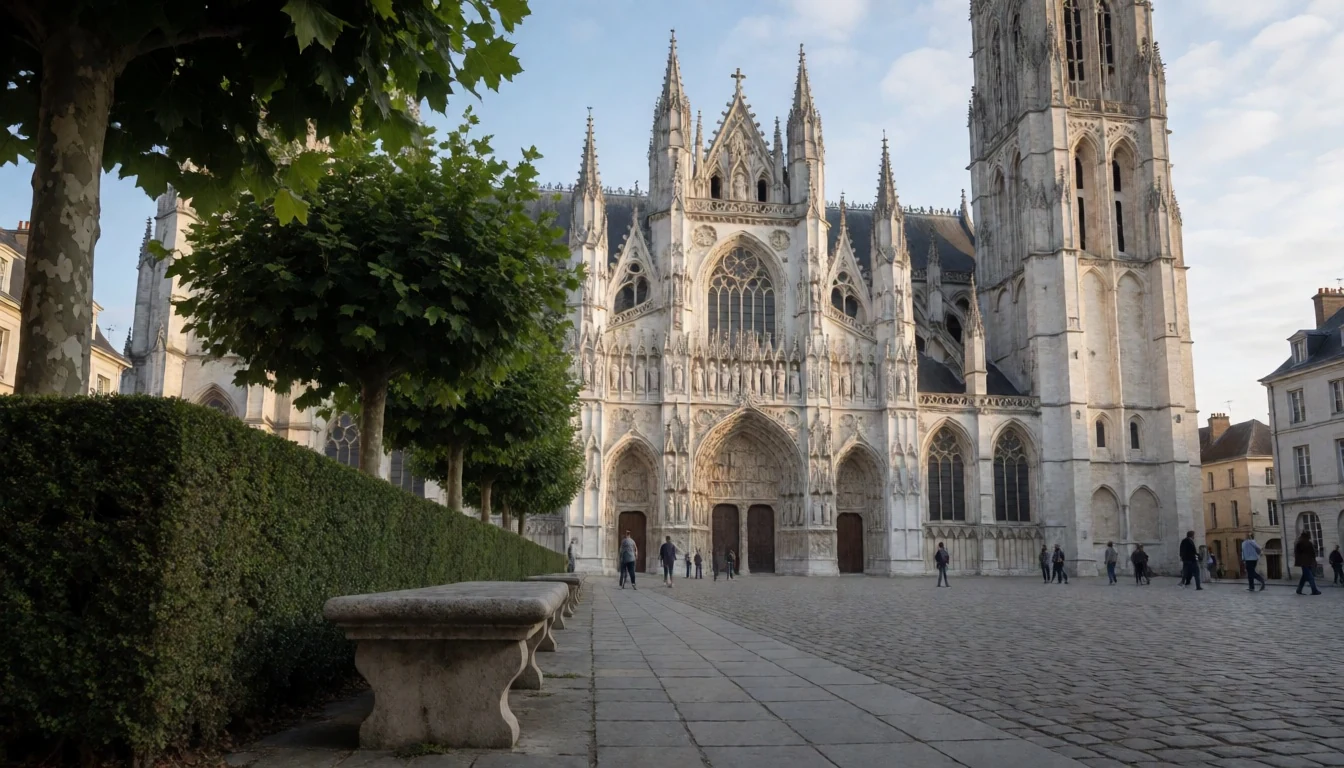
- Gros Horloge — Rue du Gros-Horloge
The Gros Horloge is a gilded clock face on an arch that spans the pedestrian street of the same name. The mechanism is respected as a piece of early clockwork, and the belfry gives a rooftop view over the cathedral spire and the river. Opening arrangements change, so check rouen.fr before planning around it.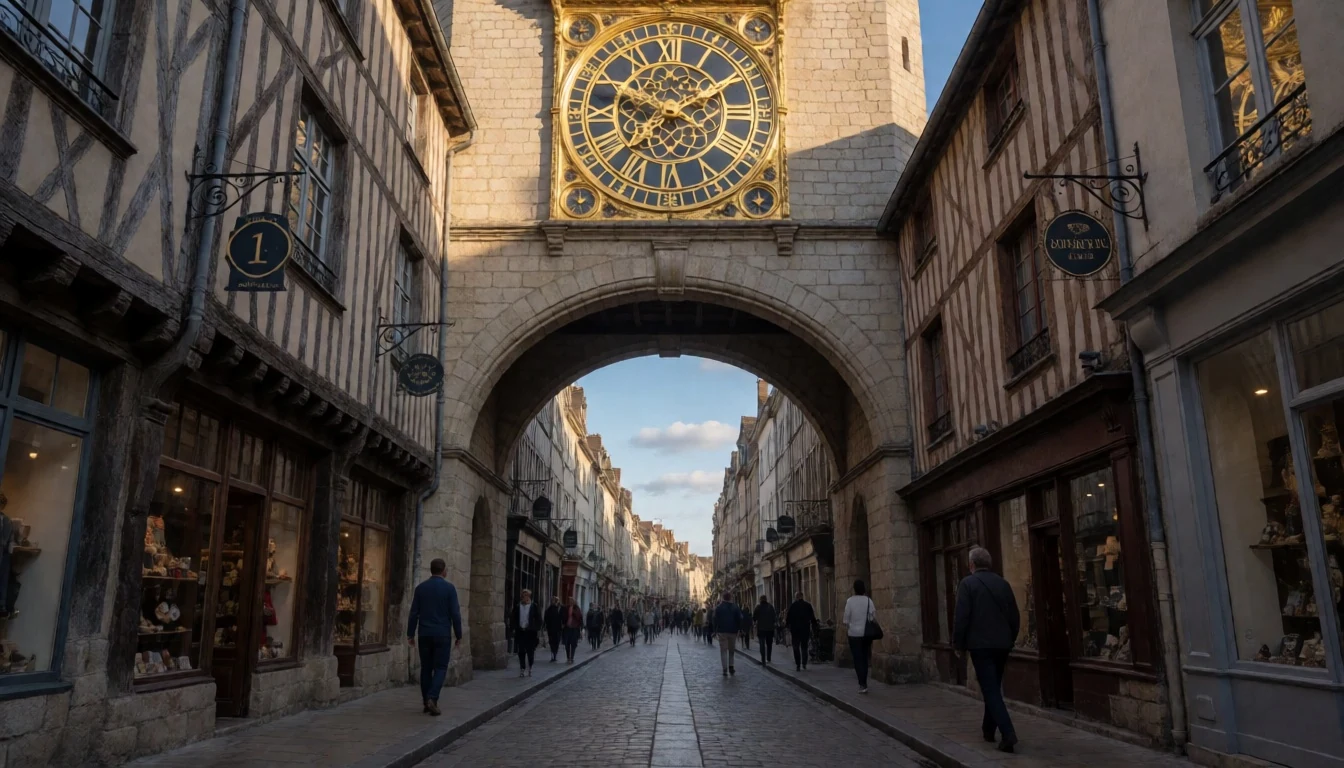
- Abbatiale Saint-Ouen — East of the old centre
Saint-Ouen is a former abbey church in Gothic style, with a tall, airy nave and a restrained interior that feels calmer than the cathedral. The west end, with its twin towers, is worth a look from the gardens beside the town hall. Visit on a weekday morning for the quietest light and the fewest people.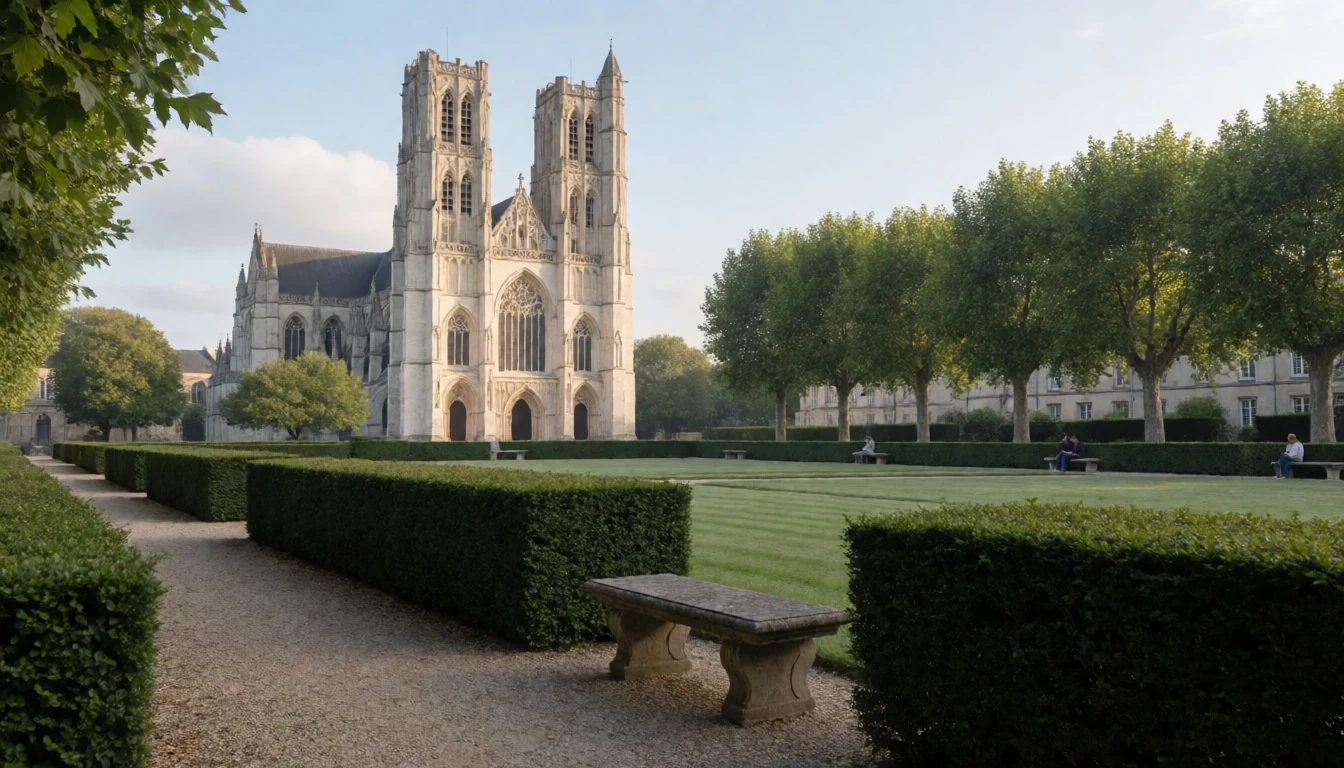
- Église Saint-Maclou — Old town, north of the cathedral
Saint-Maclou is a late Gothic church whose carved porch and doors reward a slow look. It stands among half-timbered houses on lanes that survived the war better than much of the centre, so the surrounding streets are as interesting as the building. Morning is best for photographs, before the cafés set out their tables.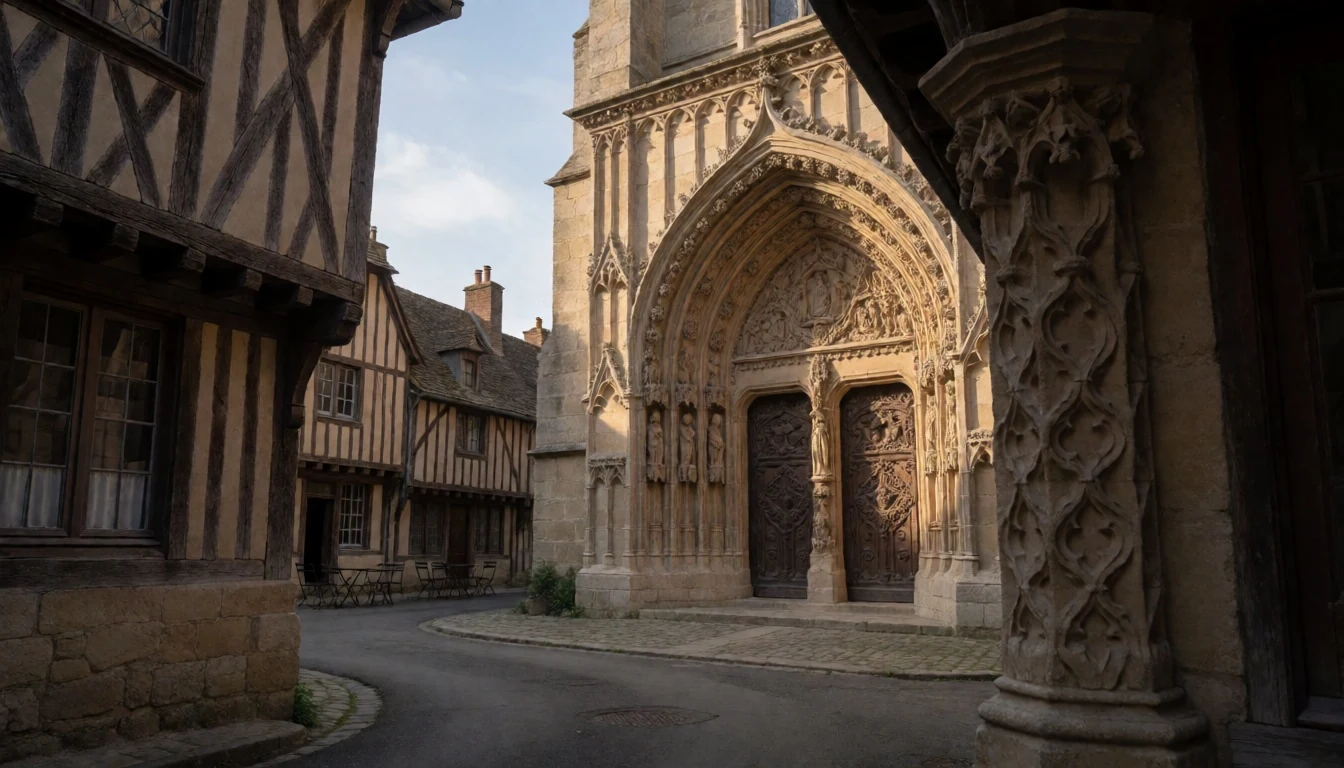
- Musée des Beaux-Arts — Near the Square Verdrel
Rouen's fine arts museum was founded under Napoleon and holds paintings by Monet, Caravaggio and the local artist Robert Antoine Pinchon, among others. It makes a good wet-weather stop, and the Monet cathedral studies are an easy way to connect the paintings with the building outside. Check the official site for current opening days.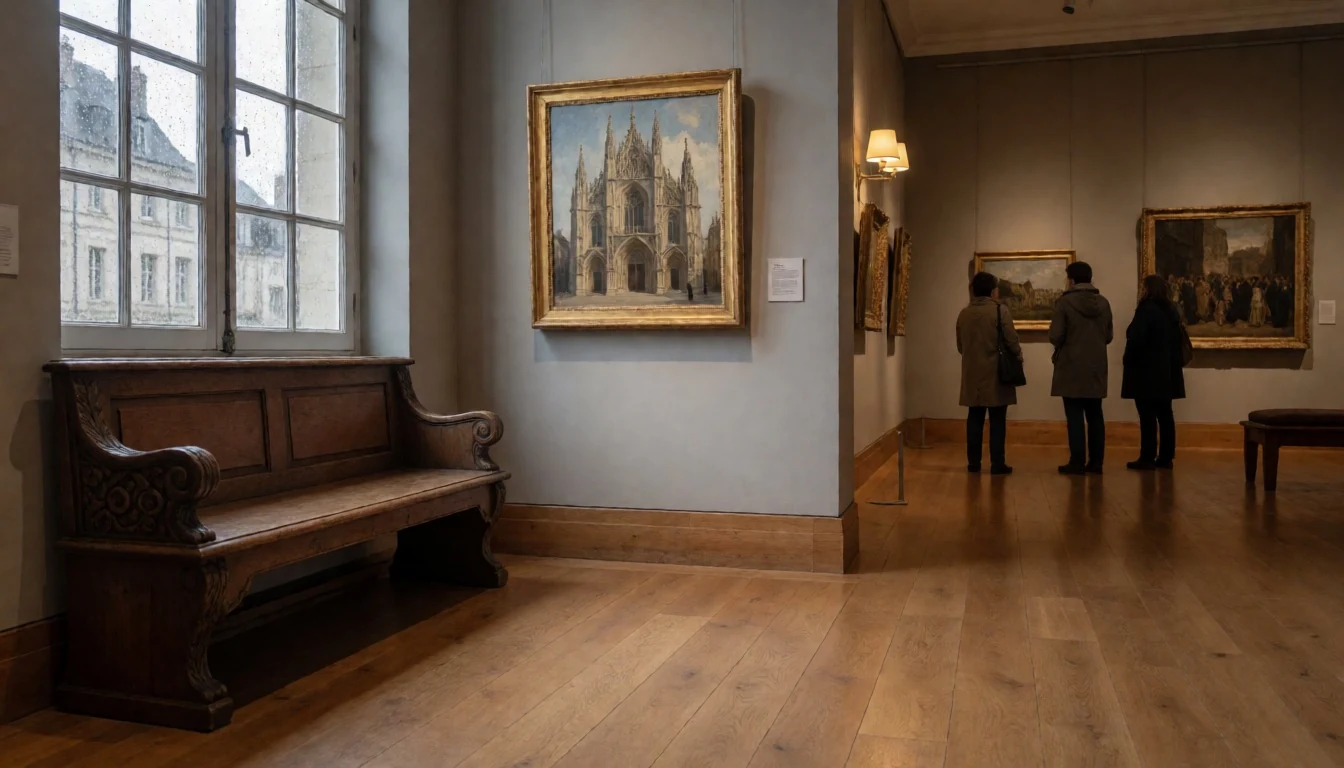
- Joan of Arc sites — Place du Vieux-Marché
A memorial marks the spot in the old market square where Joan of Arc was burned, with a modern church dedicated to her standing beside it. Nearby, the Historial Jeanne d'Arc tells her trial through an audio-visual presentation rather than a conventional display of objects. Many of the town's tourist restaurants cluster around this square.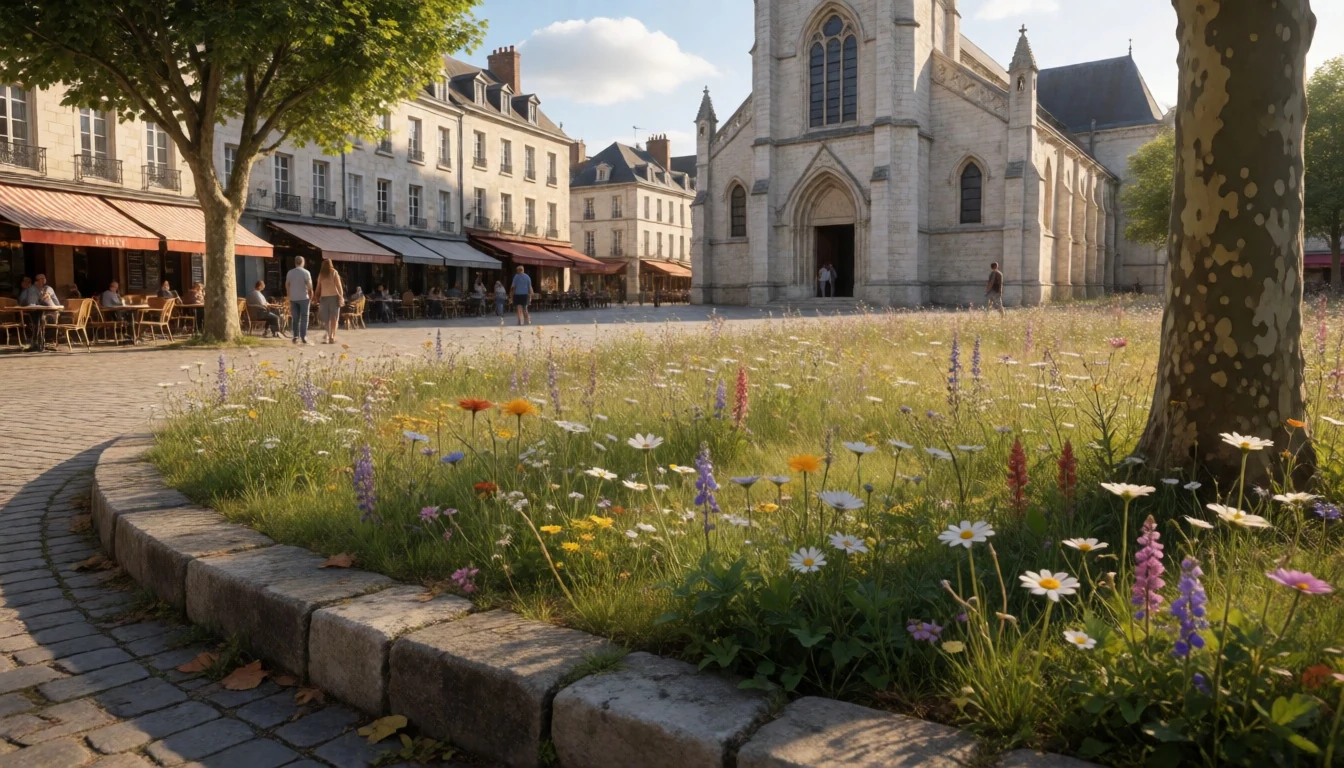
Culture
Rouen carries its past lightly but visibly. Joan of Arc is the city's most debated memory, and her story fills a museum, a modern church and a market square. Literature is another pillar: the novelist Gustave Flaubert, author of Madame Bovary, and the dramatist Pierre Corneille, known for Le Cid, were both born here. Flaubert's family home is now a museum of his life and of nineteenth-century medicine, since his father and brother were doctors. Music and the stage run through the Opéra de Rouen Normandie, which presents opera, concerts and dance at the Théâtre des Arts. Every five years the quays host L'Armada, a large maritime gathering of ships that draws crowds from across the region. Sport has a loyal local following too: Quevilly-Rouen play football, Rouen Normandie Rugby play in the second tier of the French game, and the Dragons de Rouen are an ice hockey side based at the Île Lacroix arena. Evenings in the old town are social and unhurried, with people lingering over meals outside the cafés once the daytime crowds have gone. Sunday is quieter than other days, since many local restaurants and shops close. In churches, keep your voice low and your camera discreet during services, and greet staff with a friendly 'bonjour' before asking for anything in shops and cafés.
What to wear
Rouen's traditional dress belongs to the wider Norman countryside rather than to the city itself. Women of the Caux area wore a tall white lace cap, the coiffe cauchoise, with linen blouses, wool shawls and wooden clogs, and these outfits now appear mainly at folklore festivals and costume events. Rouen was also a cloth town for centuries, and printed cotton fabric sold as rouennerie carried its name. Today people dress in the usual French urban way: neat, mostly dark or neutral layers, jeans or tailored trousers, scarves, trench coats and clean trainers rather than sportswear. In the evening, locals tend to dress up a little for restaurants and the opera. A visitor should plan for variable weather, since the oceanic climate brings showers and wind off the river in any season. Carry a light waterproof, wear layers, and pick comfortable shoes with decent grip, because the old lanes are cobbled and uneven. In summer a hat and sun cream are enough, while winter calls for a warm coat and a scarf. For the cathedral and other churches, cover shoulders and knees and avoid beachwear, particularly if a service is taking place.
What to eat
- Canard à la rouennaise — Traditional bistros in the old town
Rouen's signature duck is a rich dish traditionally served with a dark sauce made from the bird's own juices and often finished at the table. It is a special-occasion order and best shared. Look for it at traditional bistros around the old town rather than casual cafés.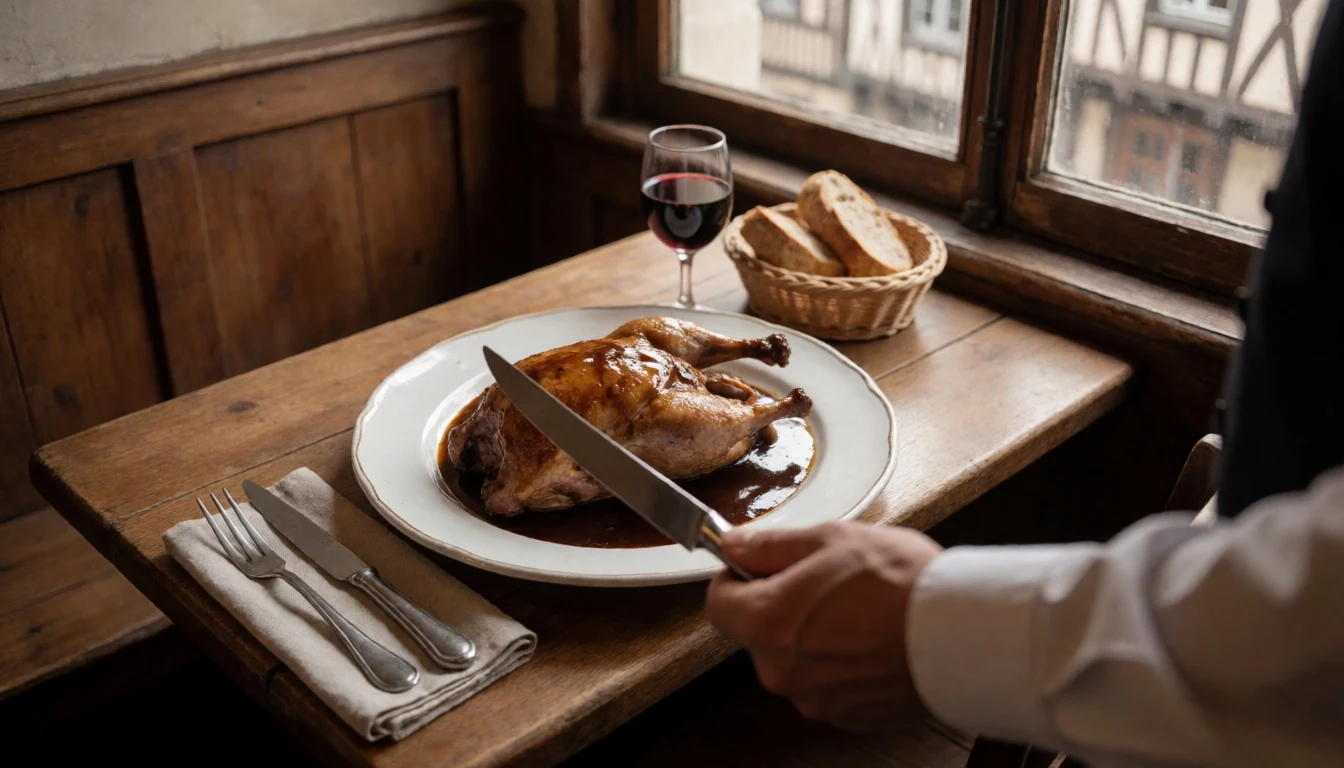
- Sole normande — Brasseries near the quays and cathedral
Sole normande is flat fish served in a creamy sauce, typically with mussels, shrimp and mushrooms. It shows how Normandy cooking blends the coast's seafood with the region's dairy. Choose a brasserie near the quays or the cathedral quarter where fish is the focus of the menu.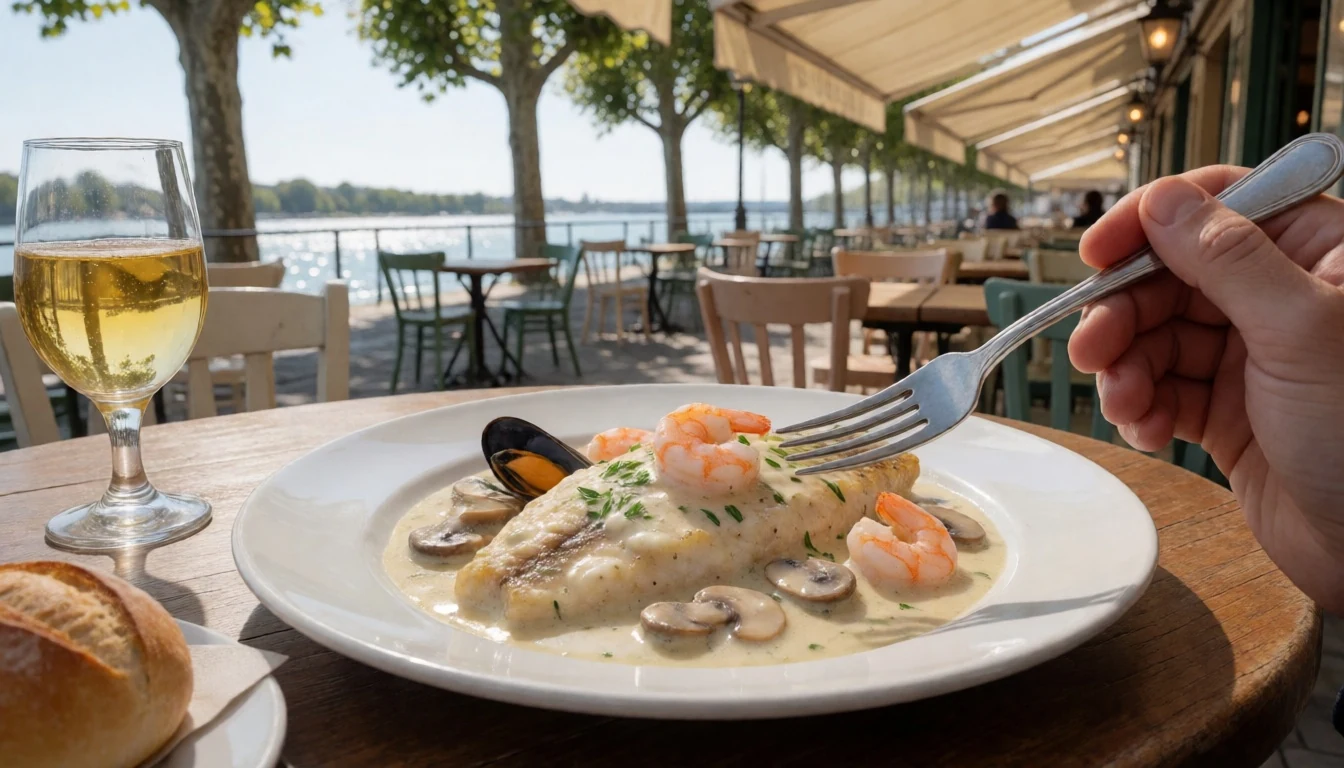
- Galettes and crêpes — Crêperies in the old town lanes
Savoury buckwheat galettes and sweet wheat crêpes are an easy, inexpensive way to eat well. Fillings range from ham and egg to local cheese and apples. Several crêperies stand along the lanes of the old town, and vegetarians are well served. - Normandy cheeses — Fromageries and the covered market near the old market square
Camembert, Pont-l'Évêque and Livarot all come from the region and make a simple lunch with bread and a glass of cider. Buy small portions to take away or order a cheese plate at a bistro. Strong ones can be pungent on a train. - Tarte normande and cider — Patisseries and bistros across the centre
A Norman apple tart, often with cream or custard beneath the sliced fruit, is the usual way to finish a meal. Locals pair it with dry or sweet cider, or with calvados, the local apple brandy, for those who want something stronger.
Plan it
Best time. April and October suit walking best, while July and August are the hottest months, with highs above 34 °C. The oceanic climate means showers can arrive in any month, so carry a waterproof all year. Winter is grey and cool but quieter, and July–August is the busiest stretch around the cathedral.
How long. 2
Getting there. Fly to a Paris airport, then take a train from Paris St-Lazare towards Le Havre or Dieppe. The platform number is posted only shortly before departure, so wait on the concourse, and punch your ticket in a yellow machine before boarding. By car, Rouen is roughly an hour and a half from Paris on a toll motorway.
Budget. mid
Tips
- Visit the cathedral and Gros Horloge early in the morning or after the lunchtime rush to avoid the thickest crowds
- Many restaurants close on Sundays, but those near the Joan of Arc church tend to stay open, so plan lunch accordingly
- Carry a light waterproof and shoes with good grip, since the lanes are cobbled and showers are possible in any month
- Check the official website, https://rouen.fr/, for current opening times of museums and towers before you go
Etiquette
- Greet shopkeepers and waiters with 'bonjour' before asking for anything
- Keep your voice low and your camera discreet inside churches, especially during services
- Do not rush a meal, since lunch in France is an unhurried affair and staff will not hurry you out
Nearby
Sources
- Wikidata Q30974 (CC0)
- Wikipedia: Rouen (rev 1383766589) (CC BY-SA 4.0)
- Wikivoyage: Rouen (rev 5416121) (CC BY-SA 4.0)
- Rouen — Herbert Frank, via Wikimedia Commons (CC BY 2.5)
- Rouen Cathedral as seen from Gros Horloge — DXR, via Wikimedia Commons (CC BY 3.0)
- Le Musée des Beaux-Arts de Rouen — Velvet, via Wikimedia Commons (CC BY-SA 4.0)
- Rue du Gros Horloge — kirkandmimi, via Wikimedia Commons (CC0 1.0)
- Westwork of Saint Ouen Abbey Church — Bert in England, via Wikimedia Commons (CC BY-SA 4.0)
- Jardin des Plantes in Rouen — Arnaud Serander, via Wikimedia Commons (CC BY 3.0)
- Église Saint-Maclou de Rouen — Alphaclem, via Wikimedia Commons (CC BY 3.0)
- Cathédrale de Rouen, vue de l'Opéra de Rouen — Philippe Roudaut, via Wikimedia Commons (CC BY-SA 4.0)


