Roubaix
Roubaix, France
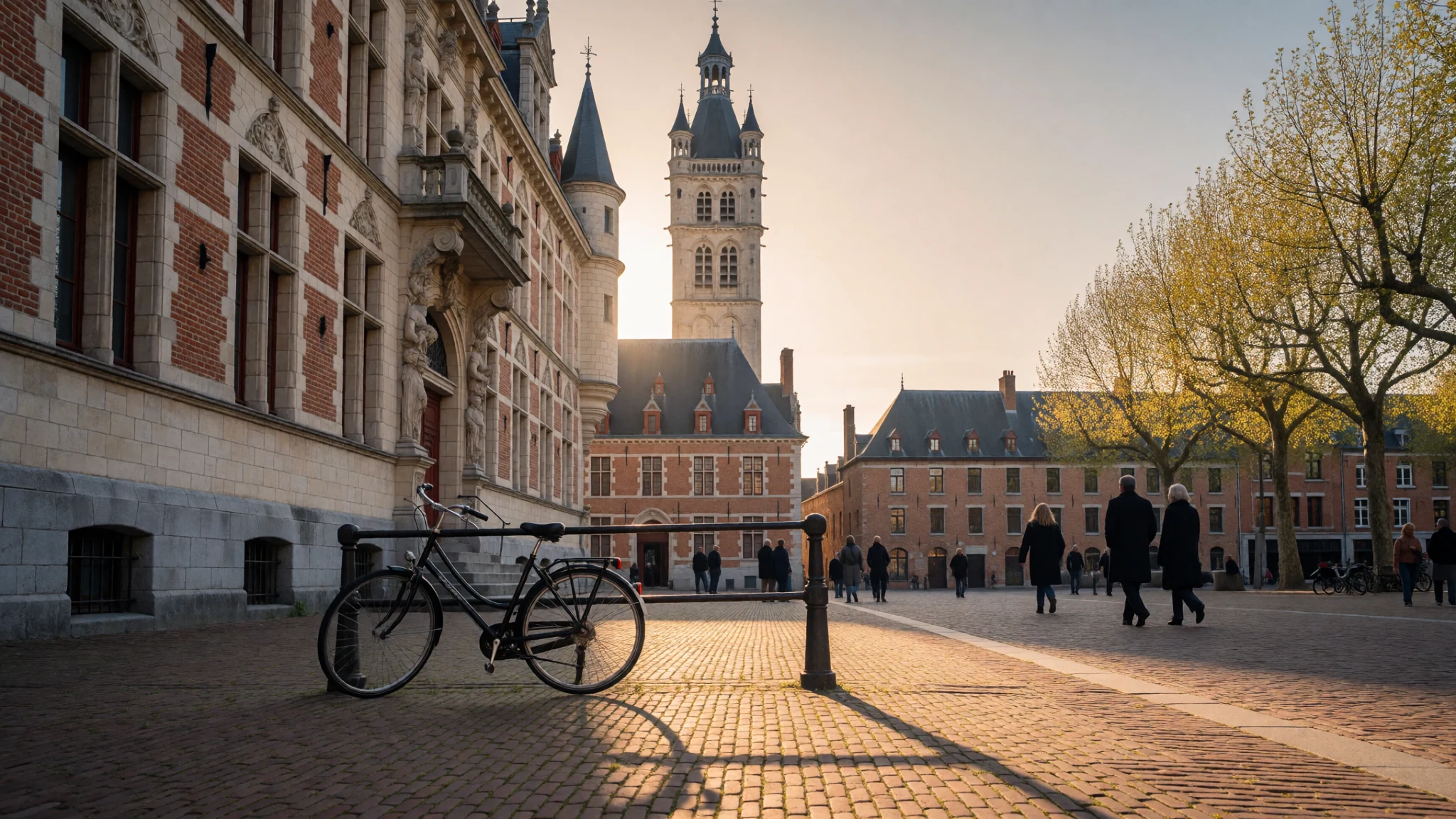
Roubaix is a former textile boom town on the Belgian edge of the Lille metropolis, with mill-era museums and brick streets.
The place
Roubaix is a commune and city in the Nord department of northern France, set inside the Lille metropolitan area and hard against the Belgian border. Its population is 98286, and the ground sits at 32 metres. Names on this border shift with the language: Dutch speakers say Robaais, West Flemish Roboais, and Picard Roubés. The place was built around one trade. Textiles made it swell in the industrial age, and it took on the look of a boom town of the kind long familiar in Britain and the United States: packed streets, large works, and a town hall meant to announce that the money had arrived. Roubaix lies northeast of Lille and shares a boundary with Tourcoing. It is the administrative seat of two cantons and ranks fourth by population among cities in the Hauts-de-France region. Together with Lille, Tourcoing, Villeneuve-d'Ascq and a wide set of neighbouring communes, it is one of four centres in the European Metropolis of Lille, a cross-border urban region rather than a single old city with a ring of suburbs. The same concentration that built Roubaix later undid its ease. Once the major industries faded, in the later twentieth century, the town had to live with urban decay and with the economic and social strain that follows a one-trade collapse. The result is not a museum piece. Brick houses, a formal square and former mills stand in a city that is still repairing itself, close enough to Lille for a short ride and distinct enough that the mill past is the main reason to come.
Its story
Roubaix's early painted view shows a castle ringed by a moat and open country, a small northern settlement rather than a city of sheds and terraces. The change came with cloth. Spinning and weaving drew in labour and capital until the commune was a one-industry town, growing fast enough to share the marks of mill boom towns in Britain and America: sudden streets, large civic buildings, and a population tied to the factory bell. That density of work also drew political heat. During police raids, officers searched the homes of anarchists living in Roubaix and found almost nothing. The raids did not change the trade that ran the town. Cloth still set the hours, the housing and the mood. The deeper break came when those industries lost their hold. In the later twentieth century the major works declined, and Roubaix faced the crisis of a former boom town: closed sheds, neighbourhoods worn thin, and a hunt for new uses for buildings raised as machines for making cloth. Painters who made their names here, among them Jean-Joseph Weerts and Rémy Cogghe, had taken the industrial city as their subject. Afterwards a loose circle called the Groupe de Roubaix, linked with Arthur Van Hecke and Eugène Leroy, kept working in and around the town while the mills faded. What a visitor follows is that sequence: moat and castle, then cloth, then the long question of what a mill town is for once the looms stop.
What to see
- Hôtel de Ville — Grand'Place
Roubaix's town hall stands on the Grand'Place, a formal façade turned toward the city's main square. The building is the civic face of the old mill town: ornate, symmetrical and large enough to announce that textiles once paid for public grandeur. Around it the square still works as an everyday meeting ground, with brick streets spreading out behind the set-piece front.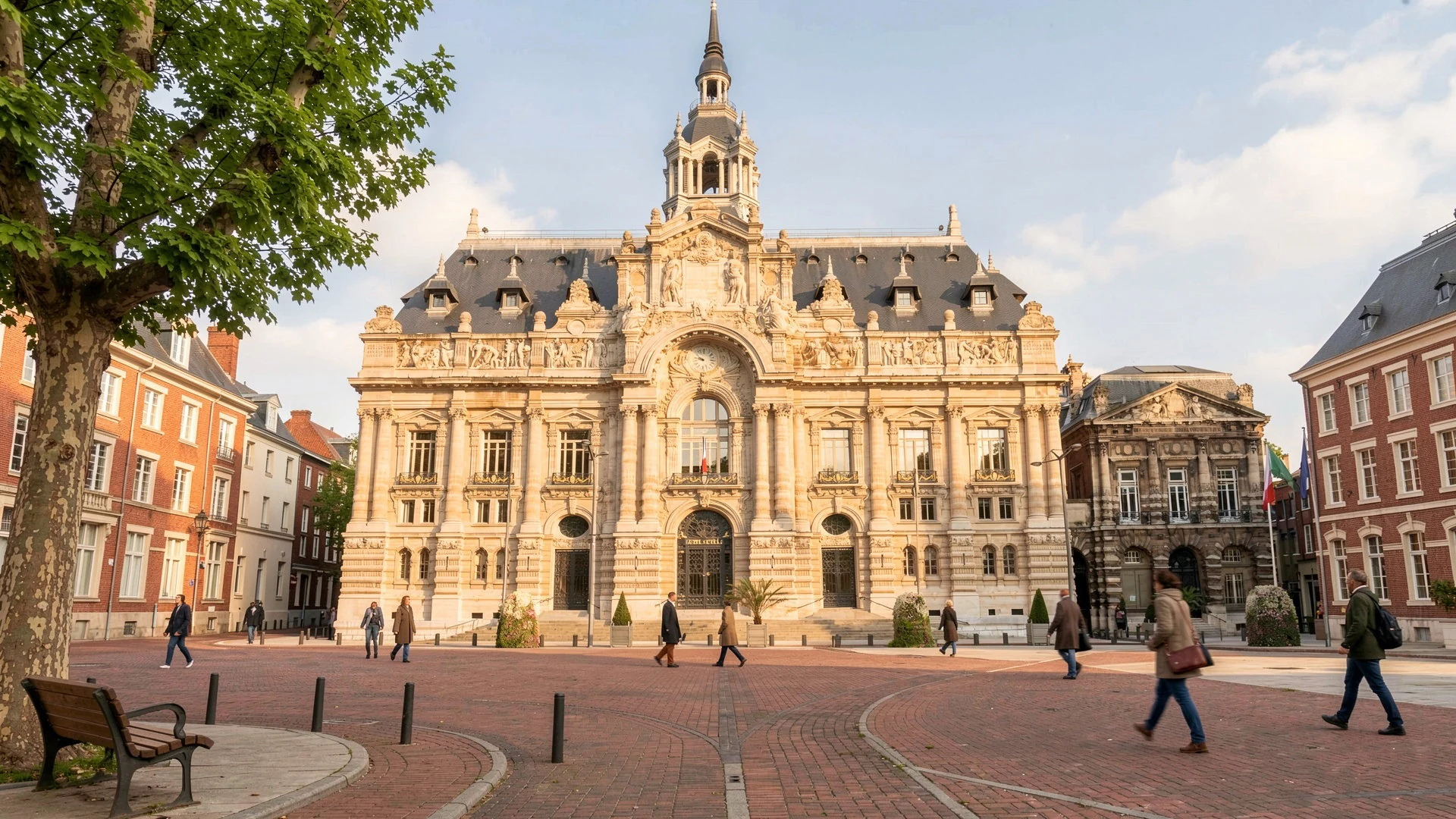
- La Piscine — former municipal baths
La Piscine, the Musée d'Art et d'Industrie André Diligent, fills a former swimming pool in Roubaix. The Art Deco bathhouse was remodelled to hold the city's nineteenth- and twentieth-century collections, so paintings and objects share the old pool hall with tiles and water. The building carries the town's double inheritance: factory wealth on one side, a public taste for art on the other.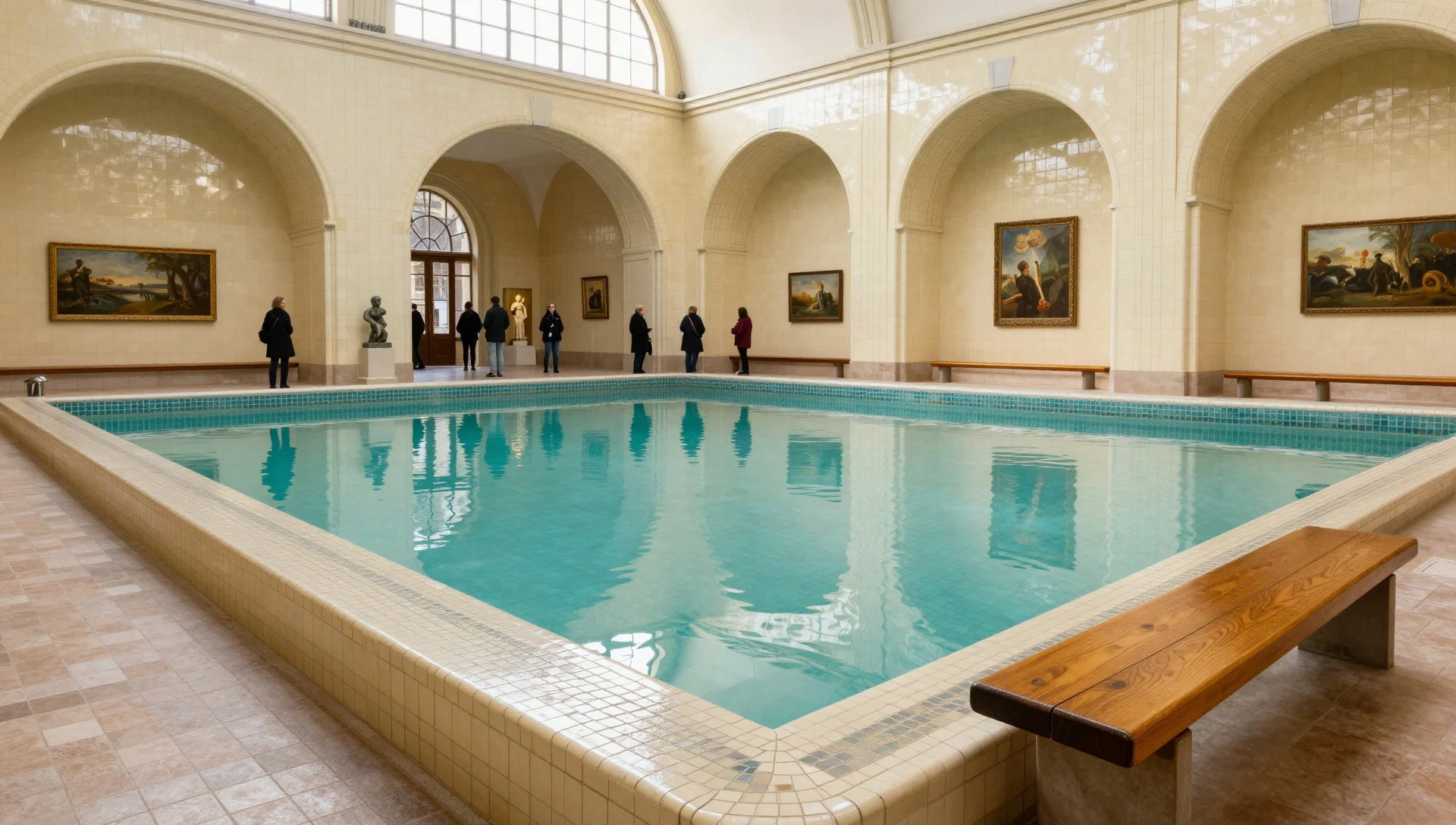
- La Manufacture — former weaving factory
La Manufacture holds Roubaix's cloth collection in a shed that used to weave. In northern France this is the museum that takes the mill trade as its subject, keeping looms and workshop memory in the kind of building where the job was done. Walking the town afterwards is clearer for it: houses, the textile school and the civic square all point back to thread.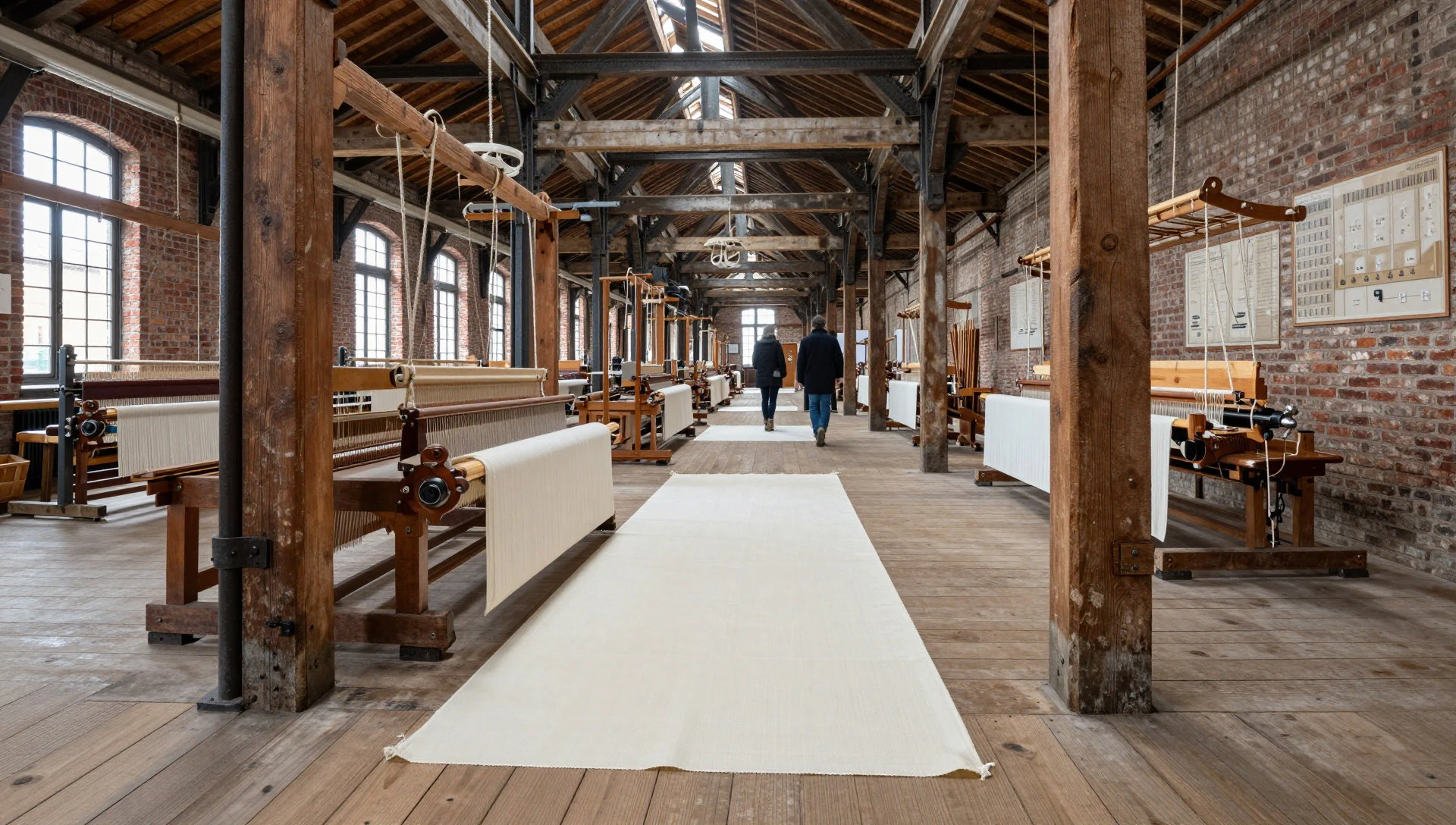
- Maison Élie Dervaux — boulevard du Général-Leclerc
Roubaix keeps a listed historic house by the architect Élie Dervaux on boulevard du Général-Leclerc. The façade shows the domestic taste that arrived while the mills were still paying: curved lines, crafted detail, a private house behaving like a small public statement. Brick and stone neighbours keep it in a lived-in street, not a museum garden.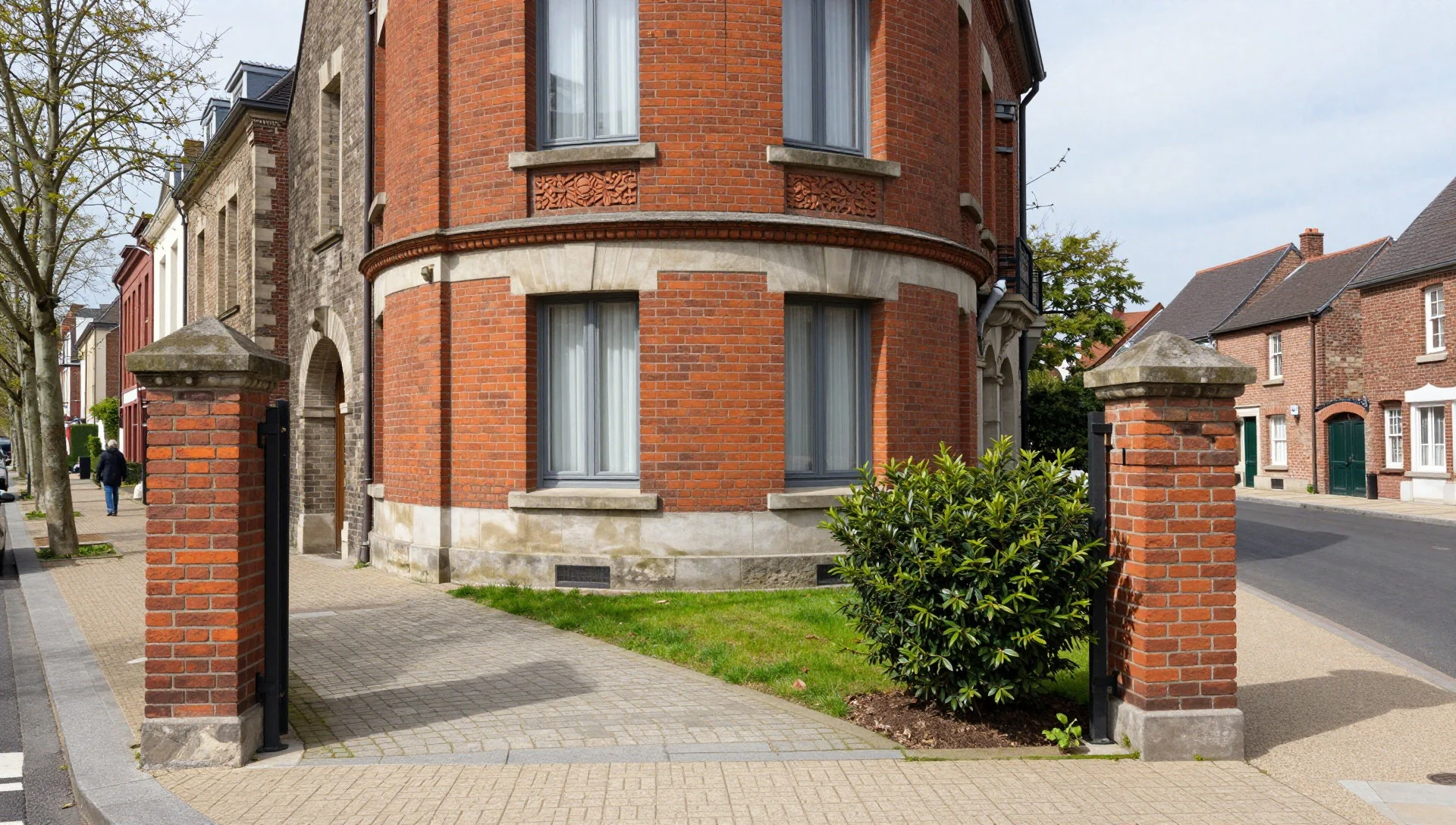
- Maison de Rémy Cogghe — rue Rémy-Cogghe
Roubaix remembers the painter Rémy Cogghe on rue Rémy-Cogghe, the street that carries his name. The house is a private address, not a gallery, and that is its value: an artist who made his reputation in this mill town still has a door on an ordinary pavement. The façade is brick and bourgeois, the sort of home a successful painter kept while the factories ran.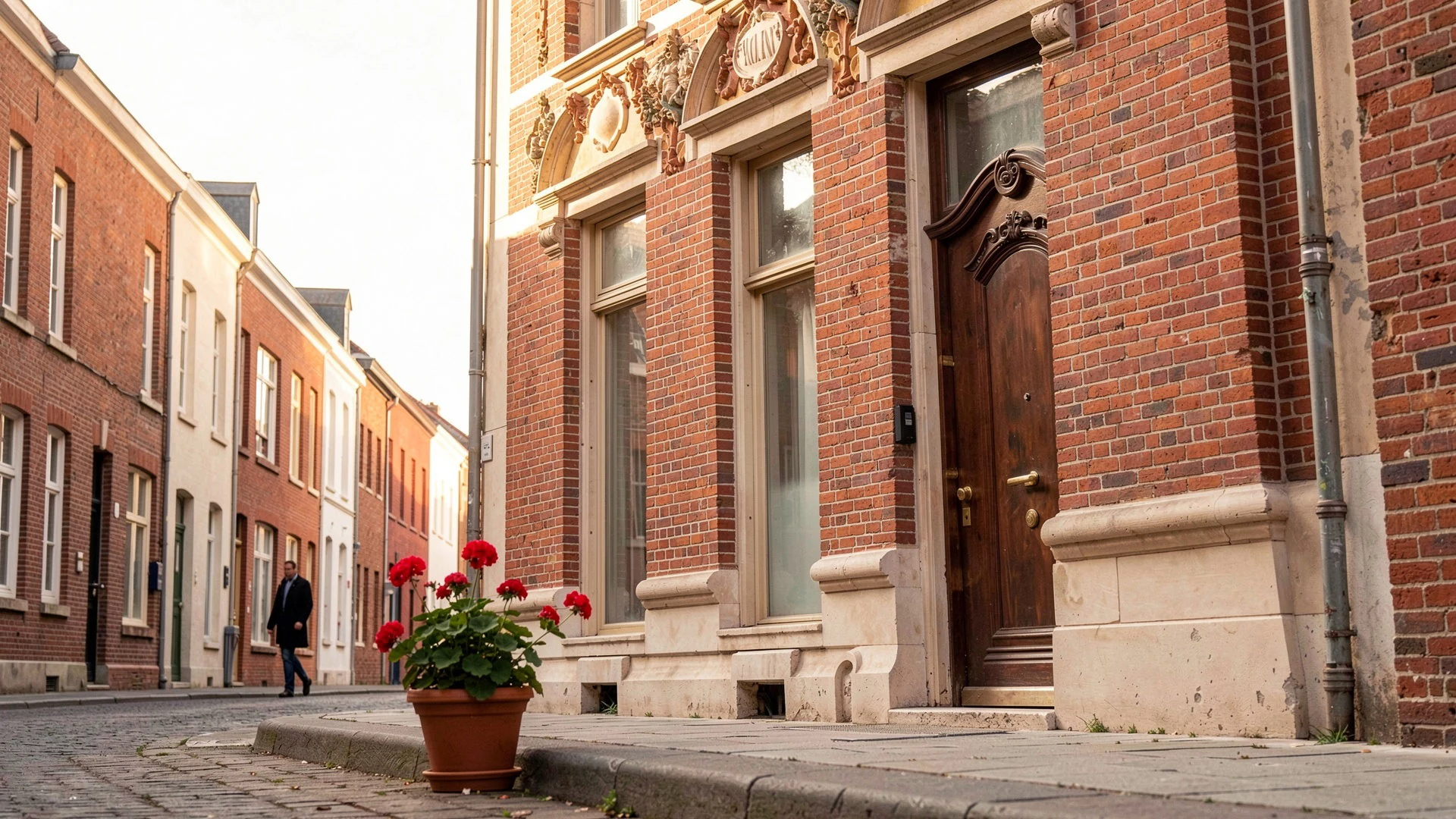
Culture
Roubaix's cultural life still explains the mill economy that produced it. Two museums carry that past. La Piscine, in the old Art Deco swimming baths, and La Manufacture, in a former weaving shed, hold the city's art beside the history of the trade that paid for it. Painting has its own local line. Jean-Joseph Weerts and Rémy Cogghe made their reputations in the town through the industrial decades. Later the Groupe de Roubaix gathered younger artists from the city and the surrounding area, and Arthur Van Hecke and Eugène Leroy are commonly linked with that circle. Fashion took the same thread forward. With Lille, Roubaix has given space to new designers under the Maisons de Mode name, and the Roubaix room, Le Vestiaire, stands beside La Piscine. These places do not pretend the looms are still busy. They show what a textile city keeps when the orders stop: pictures, machines, and a workshop for clothes being designed now. In Roubaix, ask before you photograph people at close range on the street or in a gallery, and keep your voice down in the pool hall.
What to wear
Roubaix dressed itself in the cloth it made. The traditional story here is less a folk costume than a textile one: weaving sheds produced the fabrics that clothed both the mill floor and the bourgeois parlour, and a successful household showed that success in tailored daywear cut from local cloth. Painters' streets and the ornate houses near the centre still hint at that wardrobe — dark coats, neat dresses, clothes meant to last a northern year. Maisons de Mode, shared with Lille, and Le Vestiaire beside La Piscine are the present tense: rooms for new designers who treat the old trade as a starting point rather than a costume to copy. On the street today people wear ordinary French city clothes, layered for rain and wind off the plain, with trainers or boots more common than anything ceremonial. A visitor should do the same. Pack a waterproof layer and comfortable shoes for brick pavements, and dress modestly if a stop includes a church: covered shoulders are a safe habit there, though the pool museum is a civic gallery and not a shrine. Smart-casual layers suit the square and the old mills. Leave beachwear for the coast; this inland town has no sand.
What to eat
- Moules-frites — brasseries across the city
Moules-frites is the plate Roubaix shares with Hauts-de-France and with Belgium next door: a deep bowl of mussels beside a heap of fried potatoes. Brasseries around the city serve it as a shared, hot, plentiful meal on grey days. The fries belong in the same order, not as an afterthought.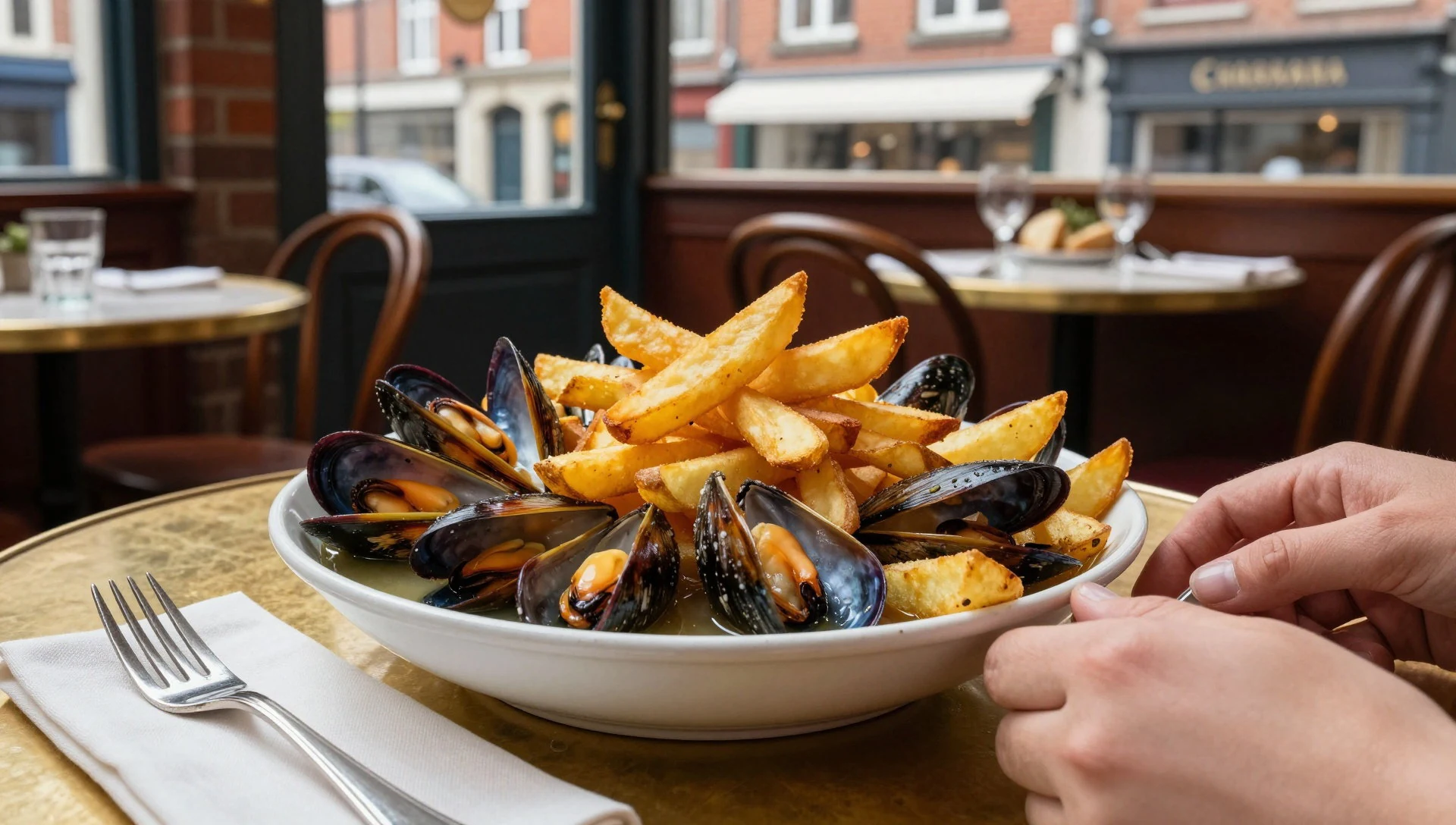
- Moules marinières — brasseries and estaminets
Moules marinières is the mussel pot Roubaix kitchens usually mean: shellfish steamed in white wine with shallot, butter, parsley, pepper and garlic. It shows up in brasseries and estaminets, the plain local eateries, where bread is for the sauce in the pan.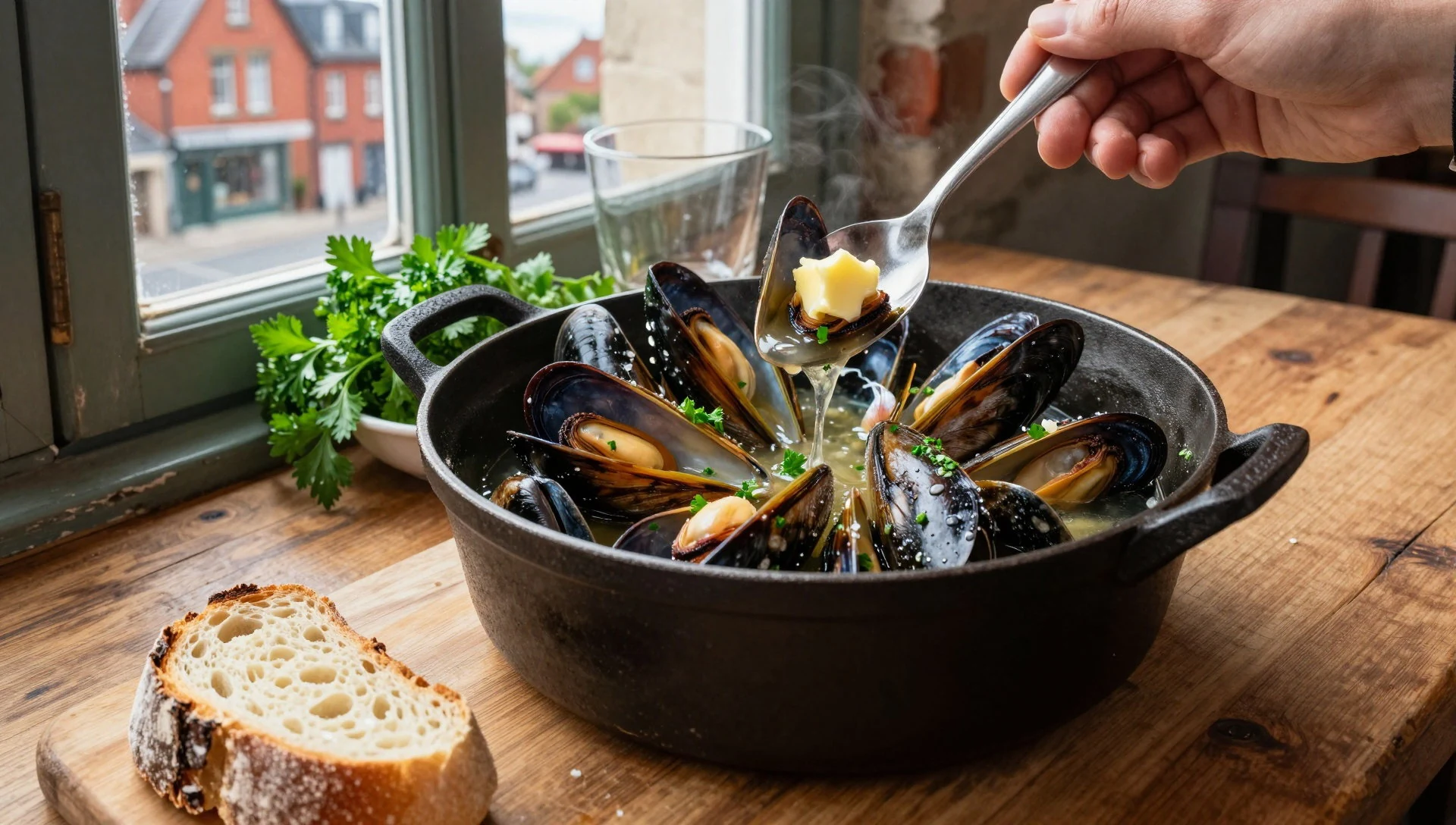
- Ficelle picarde — traditional eateries and family tables
The ficelle picarde is comfort food in Roubaix as across the wider north: an oblong savoury pancake filled with ham, mushrooms and a mild cheese such as emmental or gruyère. Traditional eateries and family tables both serve it, baked until the edges colour. It stands as a meal by itself. - Maroilles — local eateries and market stalls
Maroilles is the cow's-milk cheese of this part of northern France, and Roubaix does not treat it as a shy afterthought. The smell is strong, the paste soft, and people either adopt the taste or leave it. It turns up on cheese boards in local eateries and at market stalls.
Plan it
Best time. Late spring and early autumn are comfortable months for Roubaix, with mild days for walking between the square and the museums. Summer is warmer and the Lille area is busier. Winter is grey, damp and short on daylight, which still suits indoor rooms such as La Piscine and La Manufacture.
How long. 2–3
Getting there. Roubaix is reached via Lille, on the high-speed rail corridor. Eurostar from London St Pancras calls at Lille-Europe, a TGV from Paris-Nord or Brussels also stops at Lille-Europe, and regional trains from western Belgium run to Lille-Flandres. A local train, metro or bus then continues northeast to Roubaix, with Tourcoing as the neighbouring alternative if that connection is easier. Drivers take the motorway from Paris, where tolls apply, or cross from Belgium under Schengen rules. Confirm the last local ride on the operator's site. The city website is https://www.ville-roubaix.fr.
Budget. mid
Tips
- Treat Lille as the rail hub and check the last local train or metro back from Roubaix before an evening out.
- Confirm museum hours on the city website, and book ahead when a temporary exhibition is listed.
- Carry a bank card and a little cash, because small bakeries and market stalls may still prefer coins.
- Begin at the Grand'Place in the morning, then walk on to the museums before the square gets busy.
- Pack a light waterproof; rain on the plain is ordinary, and brick pavements are hard on thin soles.
Etiquette
- Ask before photographing people at close range in the street or in a gallery.
- Keep voices low in La Piscine; the old pool hall carries sound.
- Leave private houses, including artists' former homes, as residences rather than places to enter.
Nearby
Sources
- Wikidata Q34001 (CC0)
- Wikipedia (CC BY-SA 4.0)
- Wikivoyage — Hauts-de-France (CC BY-SA 4.0)
- Photo: Hôtel de ville and Grand'Place (CC BY 3.0)
- Photo: Old Roubaix view (Public domain)
- Photo: Centre médical Barbieux (CC BY-SA 4.0)
- Photo: ENSAIT (CC BY 3.0)
- Photo: Hôtel Catteau (CC BY 3.0)
- Photo: Art nouveau house, boulevard du Général-Leclerc (CC BY-SA 4.0)
- Photo: House, rue du Maréchal-Foch (CC BY 3.0)
- Photo: Maison de Rémy Cogghe (CC BY 3.0)


