Ronda
Ronda, Spain
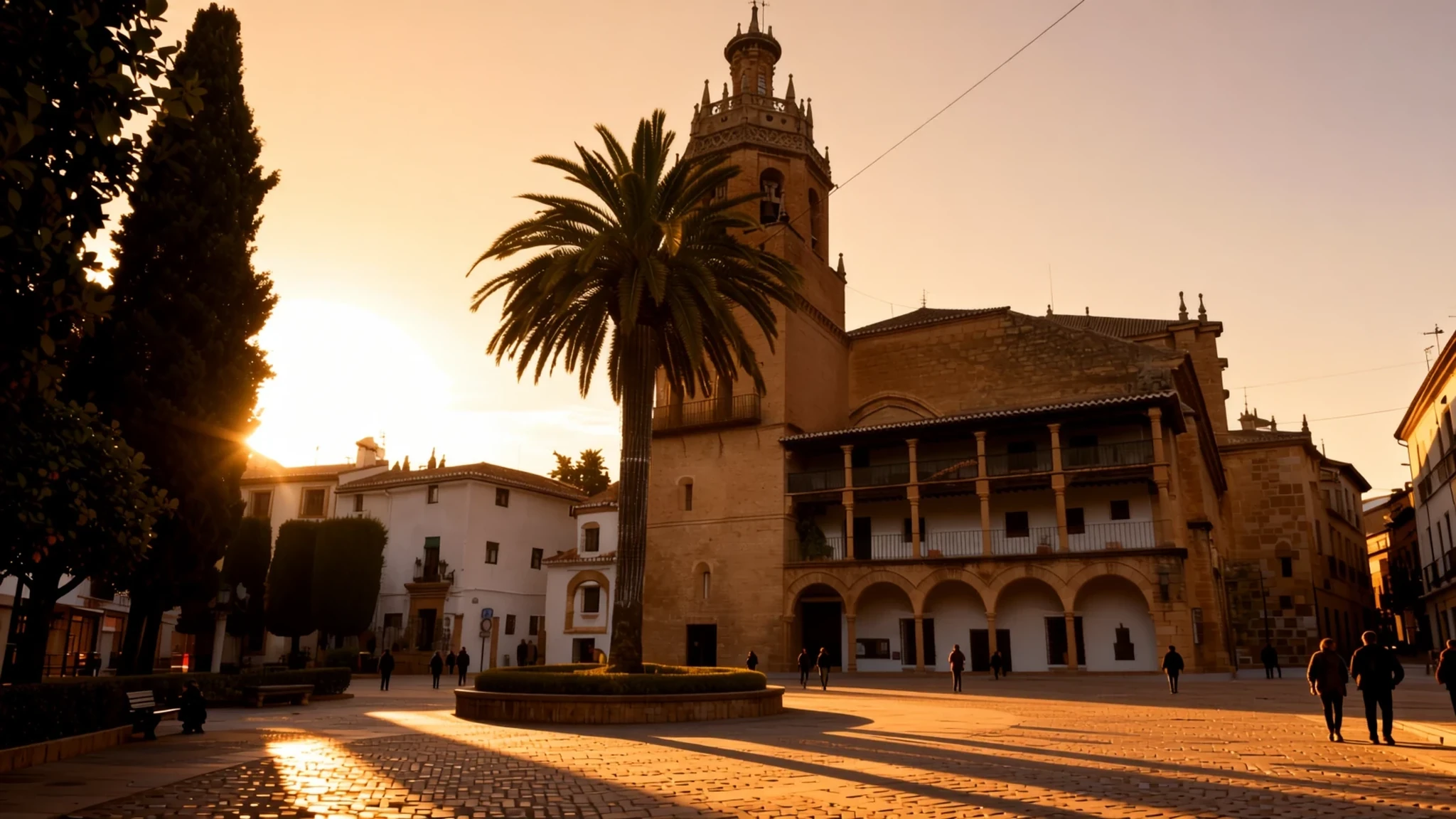
Go for a gorge-edge town of white houses, a famous stone bridge and a Moorish-era old quarter that rewards a slow morning walk.
The place
Ronda is a municipality in the province of Málaga, in the Andalusian interior, perched about 724 metres above sea level on a broad plateau. The Guadalevín river has cut a deep gorge, El Tajo, straight through the middle of town, so the old quarter of La Ciudad sits on one rim and the newer districts on the other, joined by stone bridges. The population is 33,671, which makes it a small town rather than a city, and its streets rise and fall steeply enough that most of the walking is uphill on one side and downhill on the other.
The setting is the reason people come. Views open suddenly from the edge of the gorge, and the light changes through the day as the walls turn from pale to deep gold. Around the town the Ronda Depression is farmland, with wheat, olives and vines, and the mountains behind it are part of the Sierra de las Nieves National Park, which makes walks and drives into the hills easy to fit around a day in town.
Day visitors arrive by coach from the Costa del Sol in the late morning and leave before evening, so the cafés near the bridge are full from late morning until mid-afternoon. Early mornings and the hour after the coaches depart are far calmer. Summer afternoons are hot and dry, and the gorge gives little shade from the glare, so the walking is best kept for the cool hours. Winter can be cold and windy on the heights, so a layer is worth packing even when the sun is out.
Its story
Ronda's history begins long before its walls. Neolithic people left traces in the hills, and the cave of La Pileta, a short drive away, holds rock art that is among the best-known in the region. Roman-era writers placed Arunda and Acinipo in the area, and many historians link Ronda with Arunda, a settlement that grew into one of the main towns of the plateau during the High Imperial period.
After the Roman period the town passed through the hands of the Suebi, the Eastern Roman Empire and the Visigoths before Umayyad armies took it in the early eighth century. They called it Hisn al-Rundah, the Castle of Rundah, and made it the capital of a province. The gorge became the natural defence it still is, and the walls were built with it in mind.
When the caliphate of Córdoba broke apart, Ronda became the seat of a small taifa kingdom under the Berber Banu Ifran, and much of the Islamic architecture that remains in the old town dates from this time. Abbas ibn Firnas, the polymath who is said to have attempted early flight, came from Ronda, as did the poets and scholars Abu al-Baqa ar-Rundi and Ibn Abbad al-Rundi. In 1065 the taifa of Seville took the town, and later it became part of the Nasrid Kingdom of Granada.
Castile seized Ronda in 1485 and granted it a charter modelled on the one used in Seville. Churches were built over former mosques, and the Christian town grew around them. Tensions between Christian settlers and the Moriscos, the Muslims who had converted, flared in the later sixteenth century. The town's Moorish heritage and its Christian buildings now sit side by side in the same few streets.
What to see
- Puente Nuevo — Across the Tajo gorge, linking La Ciudad with the newer town
The bridge that defines the town, finished in 1793 and spanning the Tajo gorge to link the old quarter with the newer side. It towers 120 m (390 ft) above the canyon floor, the tallest of the three bridges, so the view from its parapet drops straight down the rock face to the river far below. Go early or at dusk for the light, and stand on the pedestrian walkway to see the arches.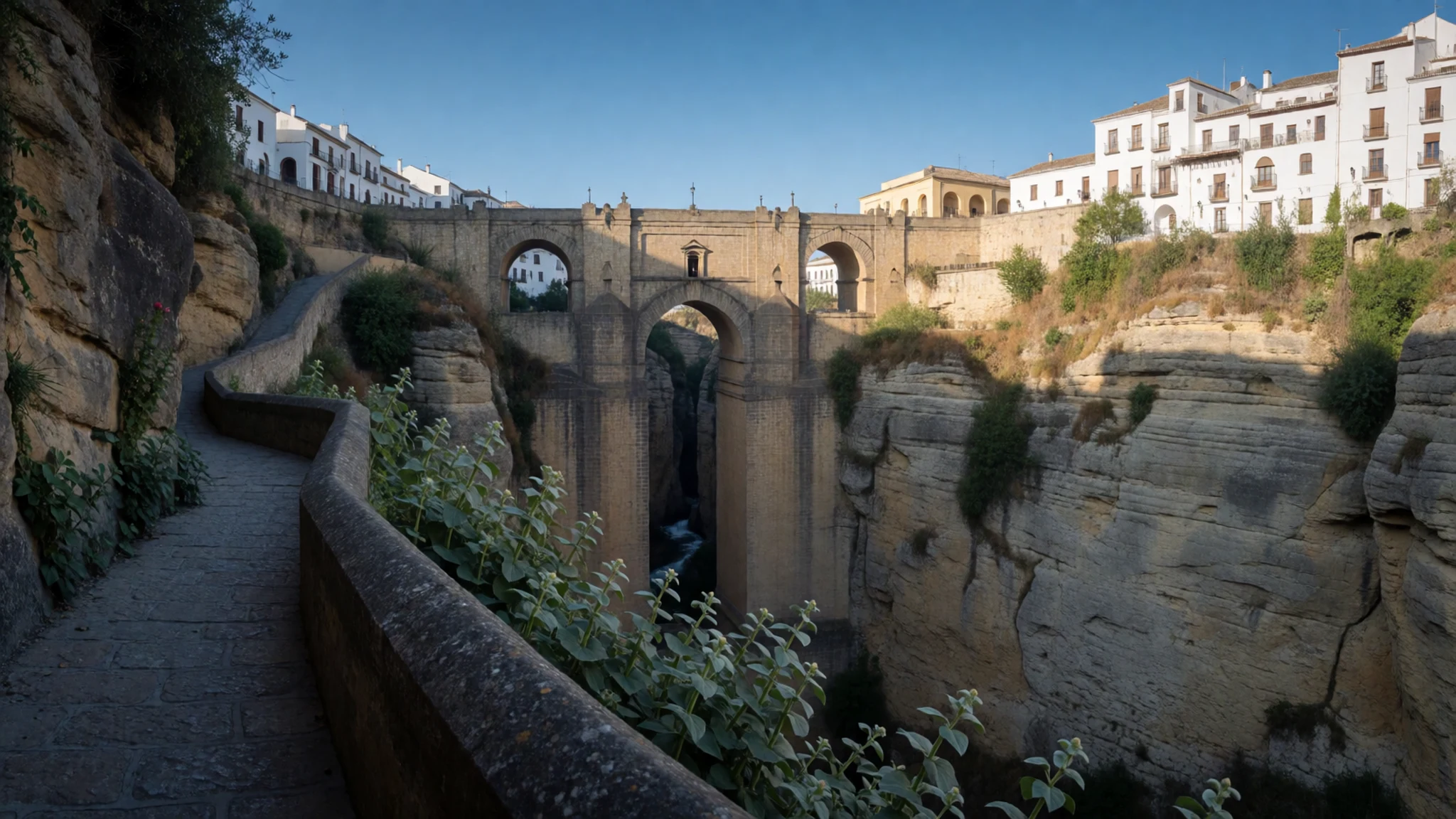
- Plaza de Toros — Near the Alameda, on the edge of the new town
One of the oldest bullrings in Spain, built in 1785 in the neoclassical style. It is widely regarded as the cradle of modern bullfighting, and the building is a serious piece of architecture whatever your view of the sport. Check the official site for opening times before planning a visit.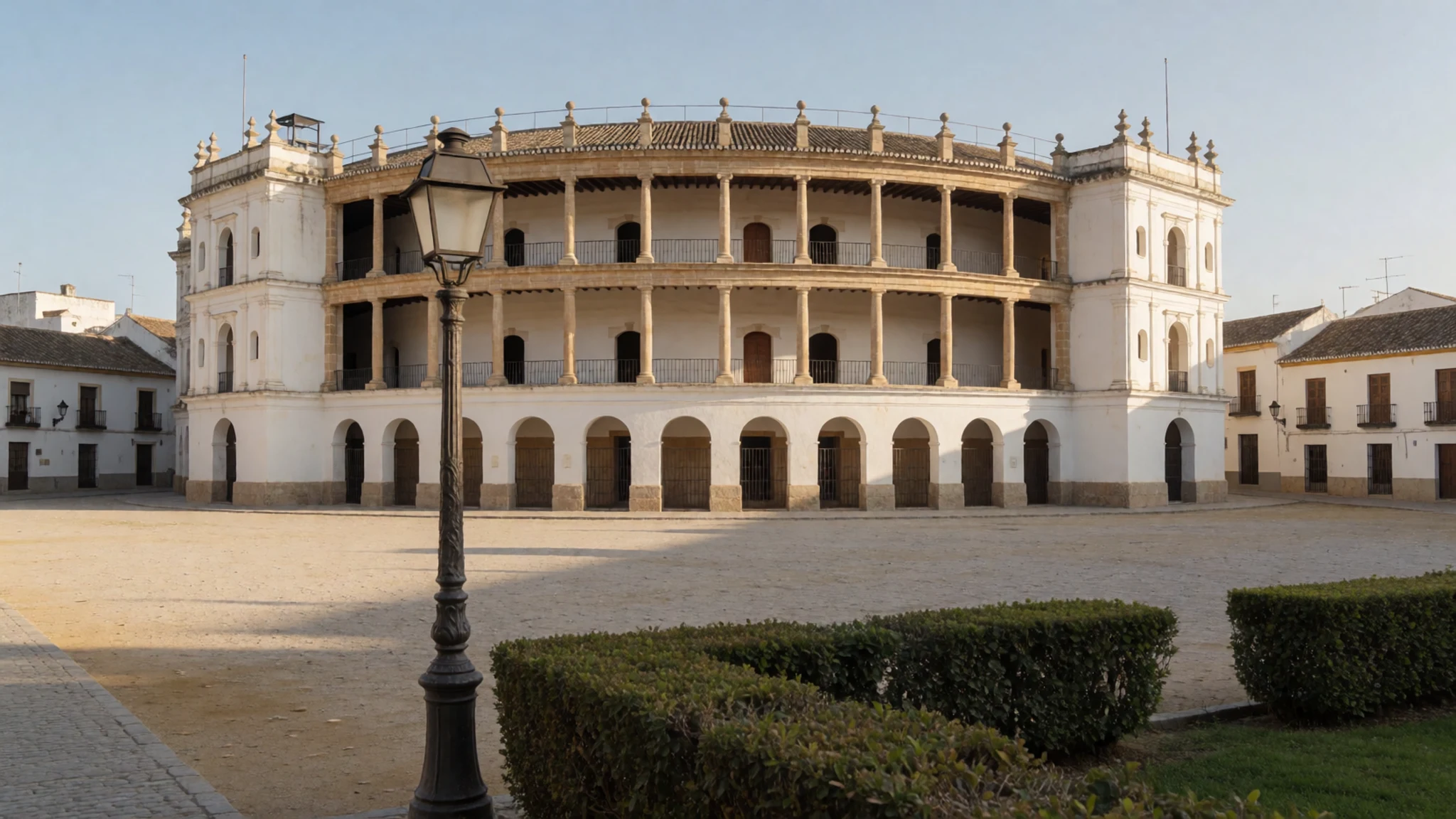
- Parque Alameda — The Paseo de la Alameda del Tajo, along the gorge rim
The Paseo de la Alameda del Tajo runs along the edge of the gorge, shaded by tall trees and wide enough for an easy stroll. Its viewing platforms give some of the best panoramas of the canyon and the bridge, especially in the late afternoon. Benches fill with locals in the evening, which makes it one of the more relaxed places in town for a slow walk.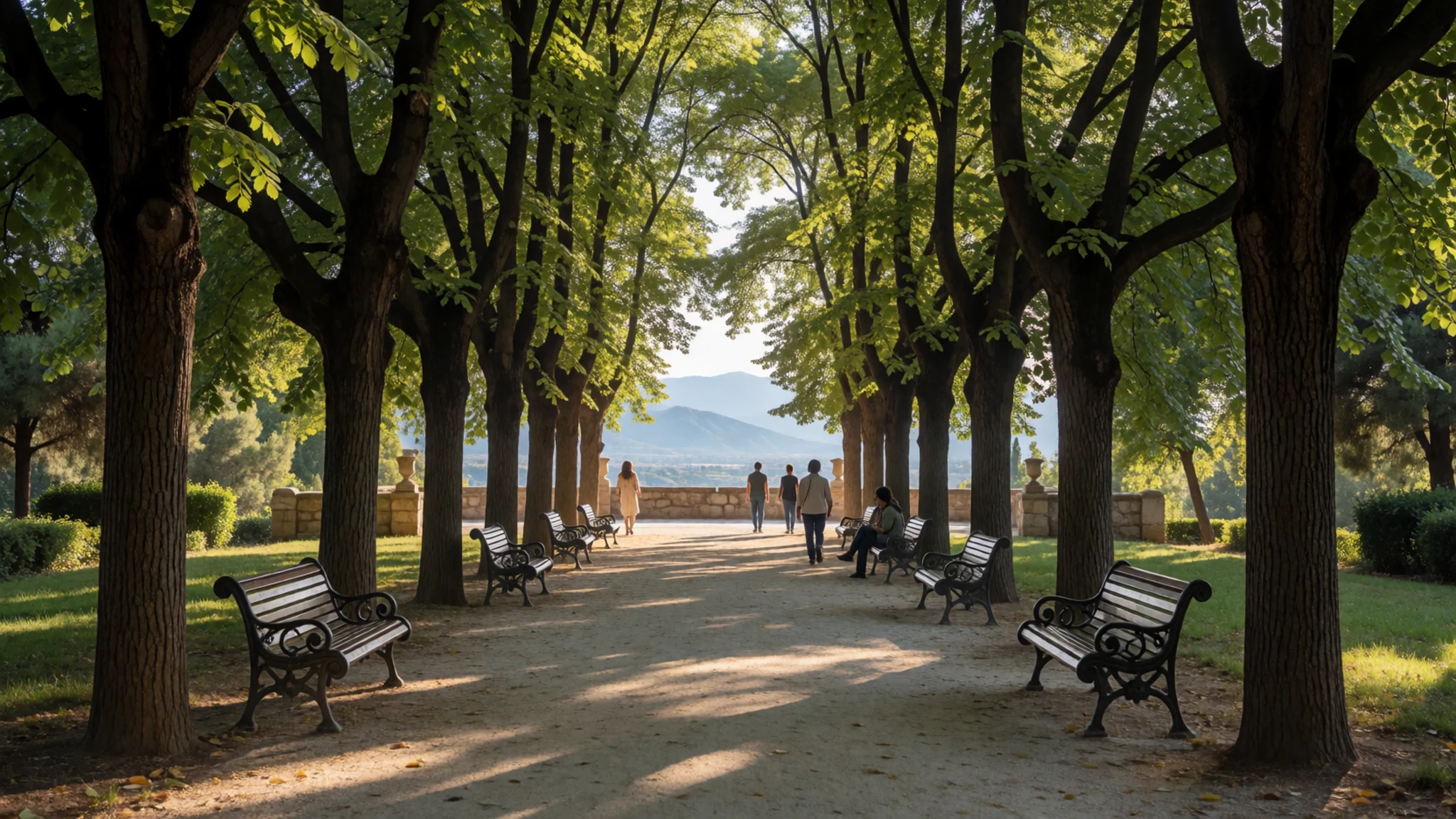
- Iglesia de Santa María la Mayor — The old quarter, La Ciudad
The principal church of Ronda, built on the site of the town's main mosque after the Christian conquest. Work began in 1485 and continued until the end of the seventeenth century, so its design reflects several periods. Dress modestly to enter and step quietly, since it is still an active place of worship.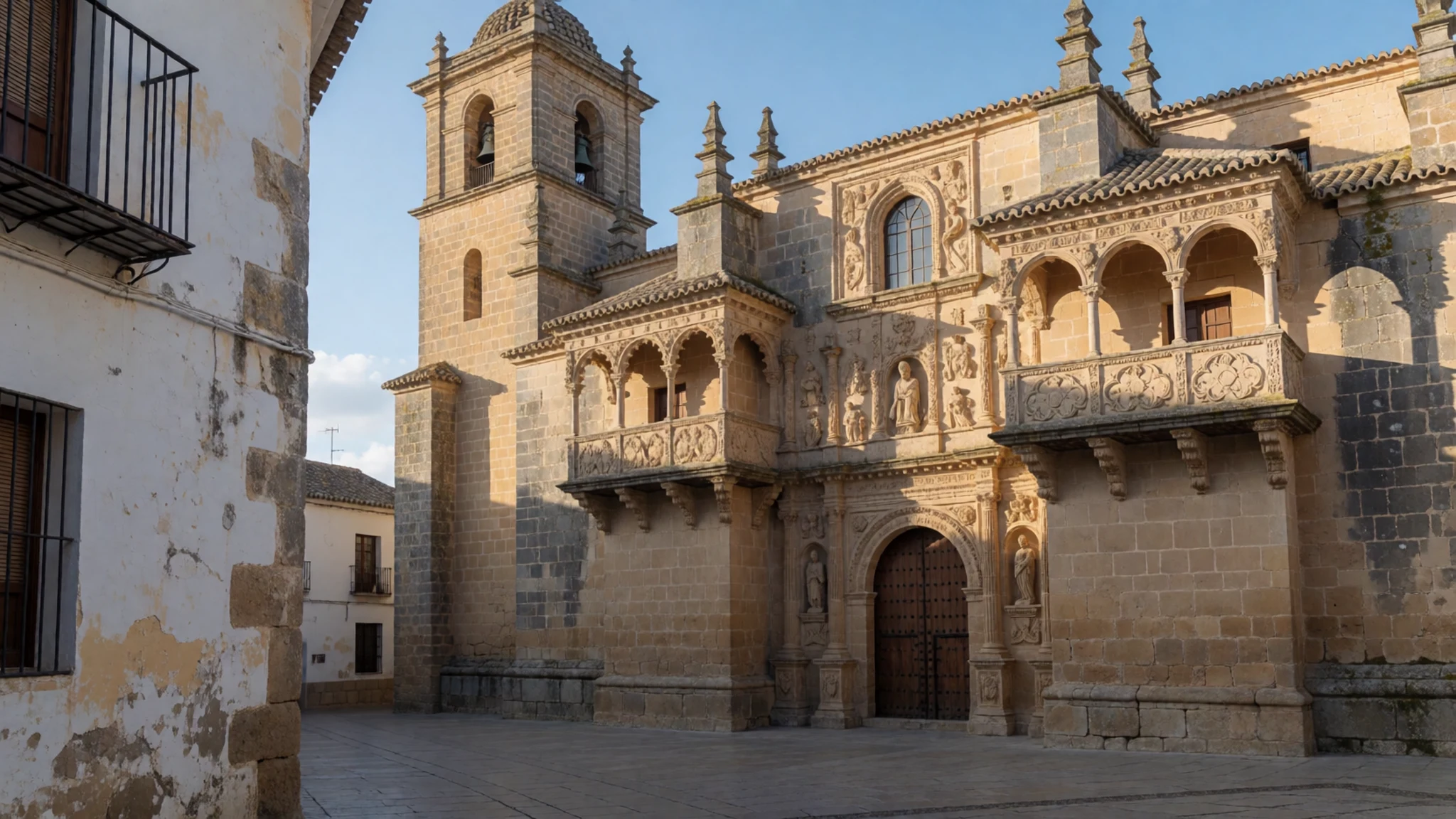
- Palacio de Mondragón — The old quarter, near the church of Santa María
A former Moorish palace with courtyards, a terrace and a view that drops toward the gorge. Its inner gardens are a quiet contrast to the busy streets outside, and the building shows how the town's Islamic architecture was adapted over the centuries. Check the official site for opening times, as they change by season.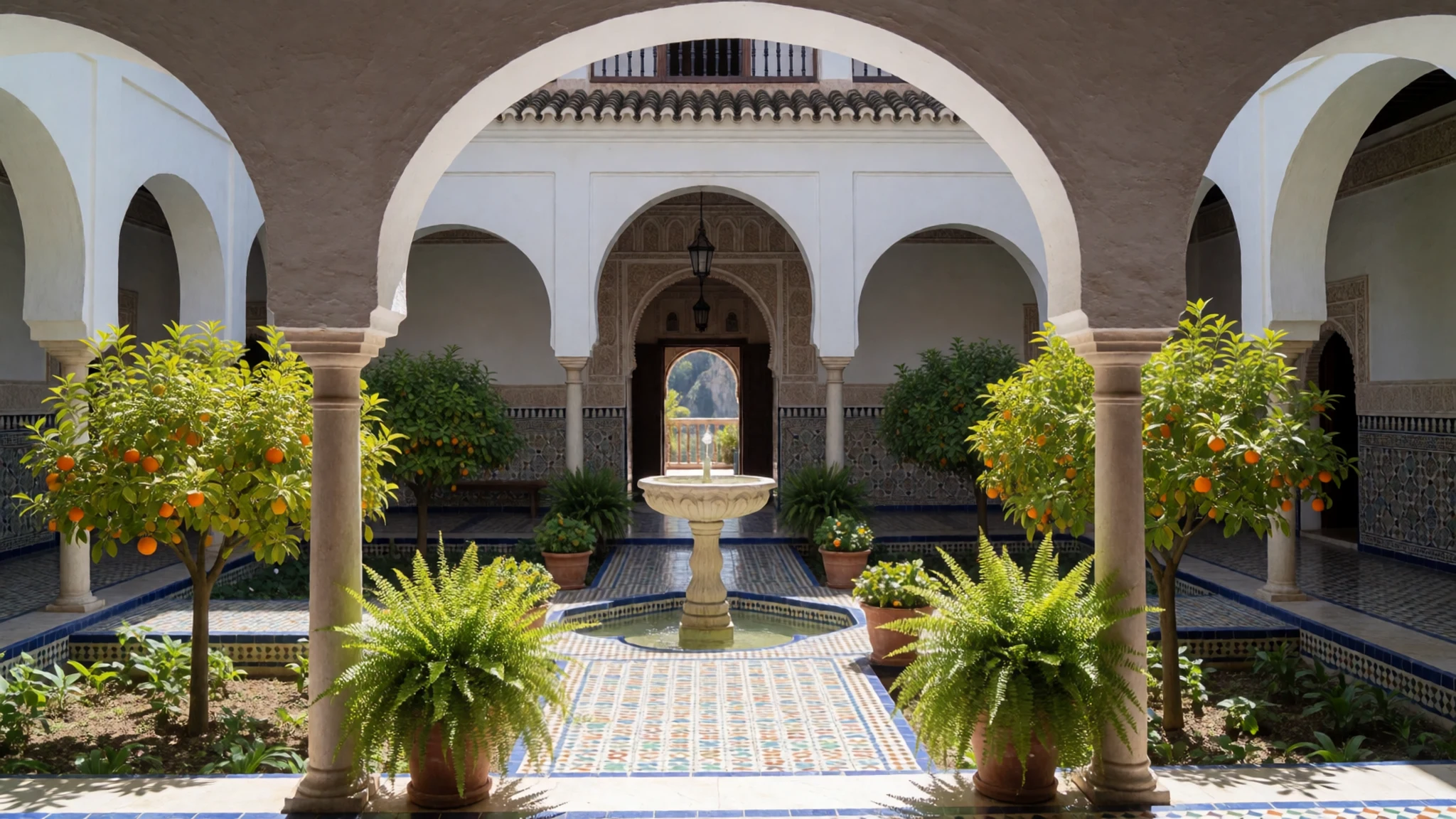
Culture
Ronda runs on a daily rhythm that visitors feel quickly. Lunch is late in the afternoon, and many shops close for a long midday break before reopening in the evening. Bars are a social centre rather than a quick stop: people stand at the counter for a coffee or a small glass of wine, and the bill is often settled at the bar before leaving.
The bullring is part of local identity, and bullfighting remains a contested subject in Spain. Visitors will hear strong views on both sides, and it is wise to listen without arguing in the street. Religious life is also visible in the town, especially during Holy Week, when processions move through the old quarter and crowds line the route.
Photographing street life is normal, but ask before taking close portraits of people, especially at processions or in small family shops. Tipping is modest, and rounding up the bill or leaving a few coins for good service is the usual practice. Residential streets are quiet late at night, so keep voices down once the bars empty.
Cover your shoulders and keep your voice low when you enter the churches, and remove your hat inside.
What to wear
Traditional dress in Ronda follows the wider Andalusian pattern. The most recognisable is the flamenco-style dress of ruffled cotton or silk, worn at fairs and celebrations with a matching shawl. The traje corto, a short jacket and trousers linked to horsemen and the bullfighting world, is the classic male costume for fairs. Lace, especially black lace mantillas, is worn by women in Holy Week processions, a tradition that remains part of the Andalusian calendar.
Day to day, people in Ronda dress much as they do elsewhere in Spain. Jeans, linen shirts and simple dresses are common, and older residents often wear darker colours for church. Summer evenings are relaxed, and smart-casual is the norm in restaurants, though nobody will object to a T-shirt in a bar.
For a visit, plan for layers. Summers are hot, so light cotton and a hat are the sensible choice, while spring and autumn evenings on the gorge can be cool and windy. Wear flat, supportive shoes with good grip, because the streets are steep and the stones can be slippery after rain. Churches need covered shoulders, so a light scarf in your bag solves this quickly.
What to eat
- Pan tostada with café con leche — Neighbourhood bars in the old town, before midday
Breakfast of toasted bread rubbed with tomato and olive oil, or simply with butter and jam, served with coffee made with milk. Order it at any neighbourhood bar in the morning, and expect the sugar sachet to come with the coffee, as it always does.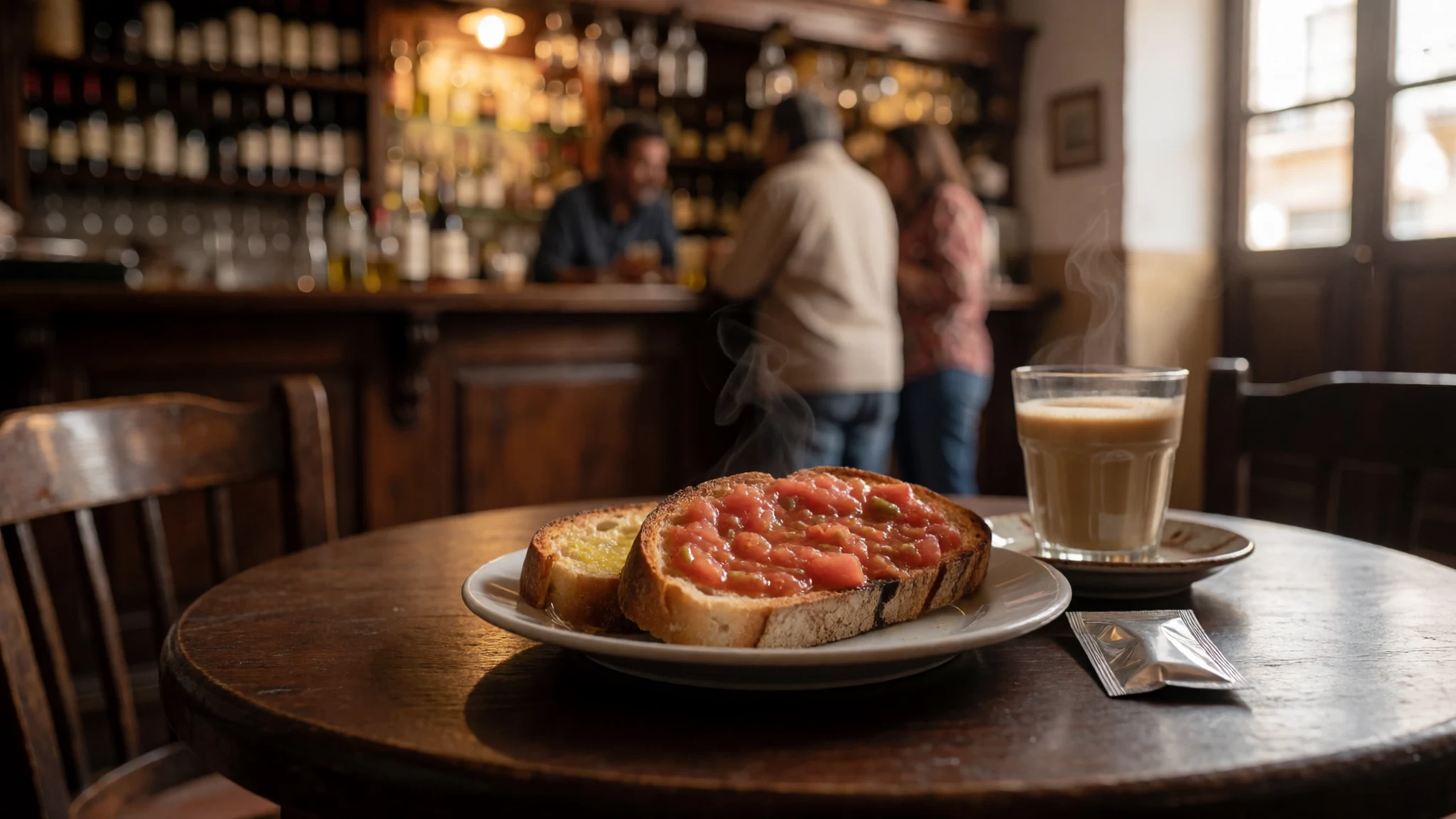
- Bocadillo — Any bar in the old town and the streets near the bridge
A short baguette sandwich filled with jamón serrano, manchego or fresh tomato, made to order at almost any bar. It makes a cheap, filling lunch on a day of walking, and you can eat it standing at the counter or take it to the bridge.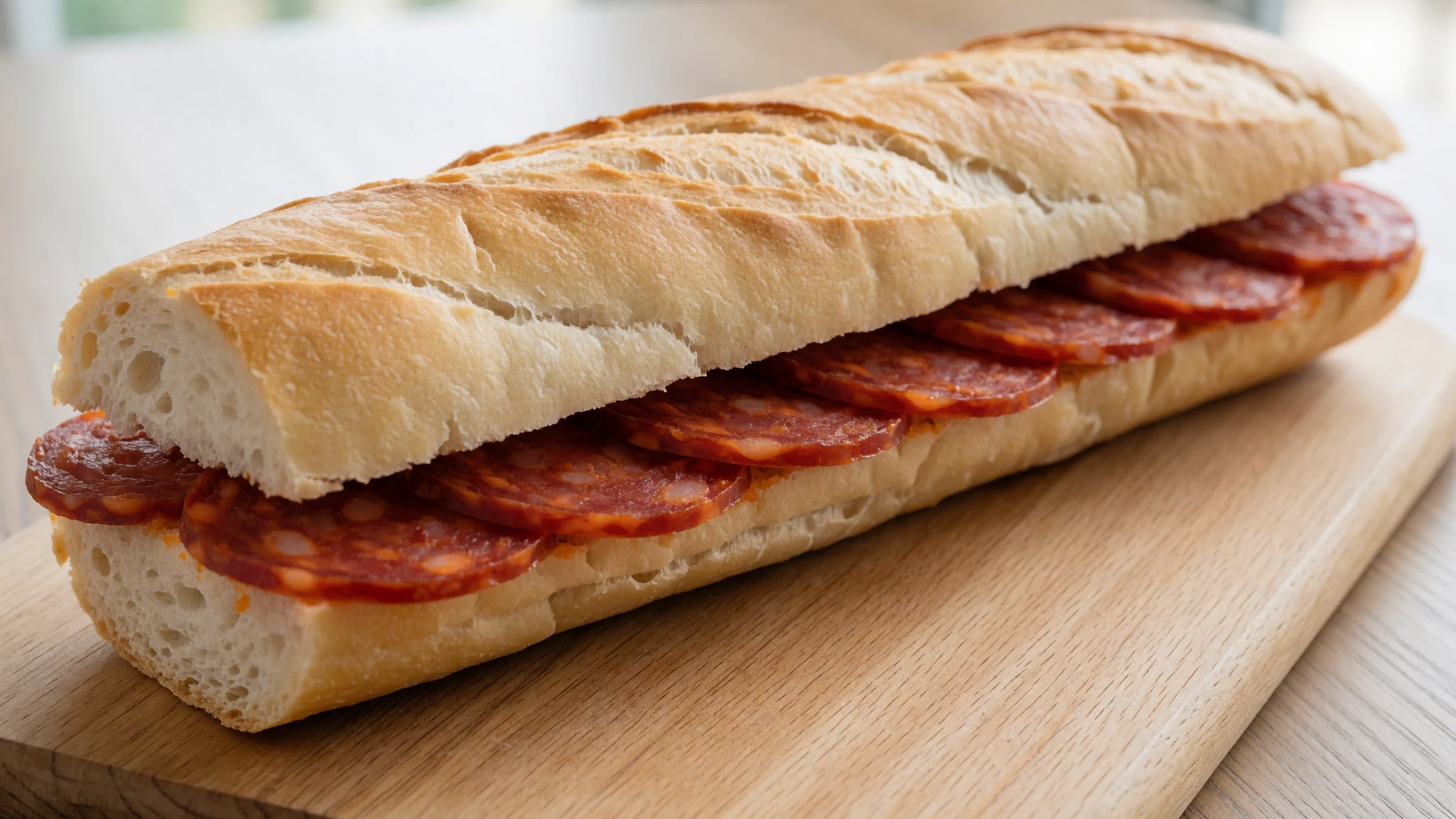
- Tapas with a drink — Smaller bars just outside the old walls, away from the main streets
Small plates served with a drink in many bars, such as salmorejo, fried aubergine or boquerones. Order one or two rounds rather than a full meal. The smaller bars just outside the old walls suit this best, while the bars on the main tourist streets often cost more.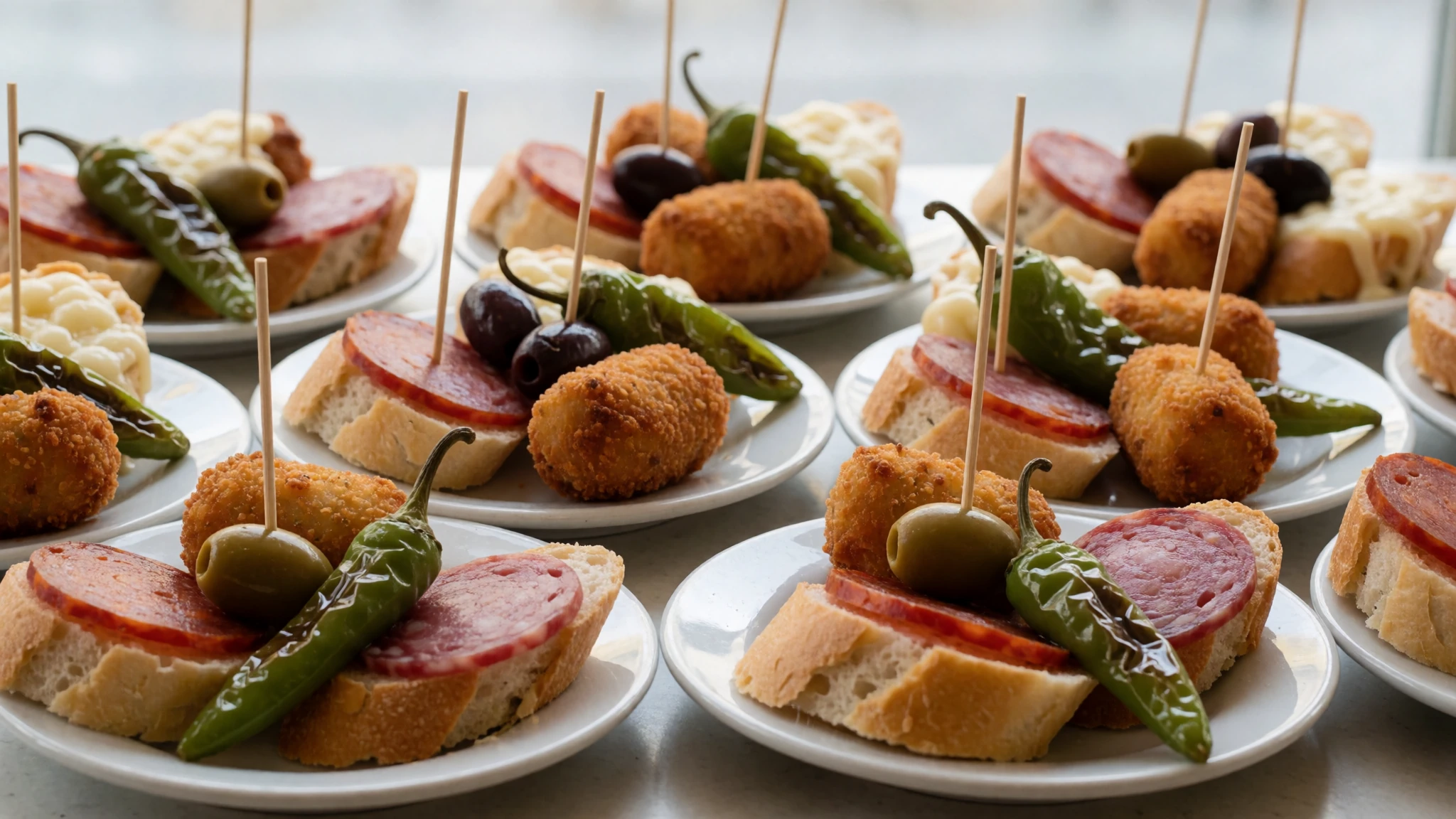
- Pastries from the pastelerías — Pastelerías in La Ciudad and near the main squares
Spanish pastry shops, or pastelerías, sell cakes, custards and sweet breads that are worth a morning stop. Choose something simple to eat with your coffee, and go early in the day, when the display is fullest. - Local wine and Anís del Tajo — Bars in the old town, and small wineries in the hills around the town
The countryside around Ronda has small wineries producing good-quality wines, and town bars pour regional bottles by the glass. Anís del Tajo, a local aniseed liqueur, is a traditional drink to finish a meal.
Plan it
Best time. March and April bring mild weather and spring colour, and November is comfortable once the summer heat has gone, though it is the wettest month. July and August are very hot and dry on the gorge, and winter can be cold and damp at this height.
How long. 2–3
Getting there. Fly into Málaga, then take a bus or hire a car for the scenic mountain road to Ronda. Trains reach the town from Algeciras and from inner Andalusia, and the station is about twenty minutes on foot from La Ciudad, or a short taxi ride.
Budget. mid
Tips
- Start at the Puente Nuevo before the day coaches arrive, when the light is soft and the viewing spots are empty.
- Book well ahead for Holy Week and the autumn fair, as rooms in the old town fill quickly.
- Carry cash for small bars and markets, and check whether a card is accepted before ordering.
- Drink water on hot days, and keep to shade between midday and late afternoon.
- Walk the gorge rim at dusk, but take a torch for the steep, unlit lanes back to the centre.
Etiquette
- Dress modestly and keep your voice low inside churches.
- Ask before photographing people at processions or in small shops.
- Respect the midday break, when many shops close and reopen in the evening.
Nearby
Sources
- Wikidata Q13153 (CC0)
- Wikipedia: Ronda (CC BY-SA 4.0)
- Wikivoyage: Ronda (CC BY-SA 4.0)
- Photo: Ronda aerial (kallerna) (CC BY-SA 4.0)
- Photo: Paseo de la Alameda del Tajo (JoseMSojo) (CC BY-SA 4.0)
- Photo: Panorama of Ronda (Tesla Delacroix) (CC BY-SA 4.0)
- Photo: Sunset in Ronda (Yeonu0407) (CC BY-SA 4.0)
- Photo: Ronda BullRing (MikatzuPerla) (CC BY-SA 4.0)
- Photo: Baños Árabe, Ronda (Geertchaos) (CC BY-SA 4.0)
- Photo: Plaza del Socorro, Ronda (Mihael Grmek) (CC BY 3.0)
- Photo: Palacio de los Marqueses de Salvatierra (Elisa.rolle) (CC BY-SA 3.0 es)


