rock drawings in Valcamonica
rock drawings in Valcamonica, Italy
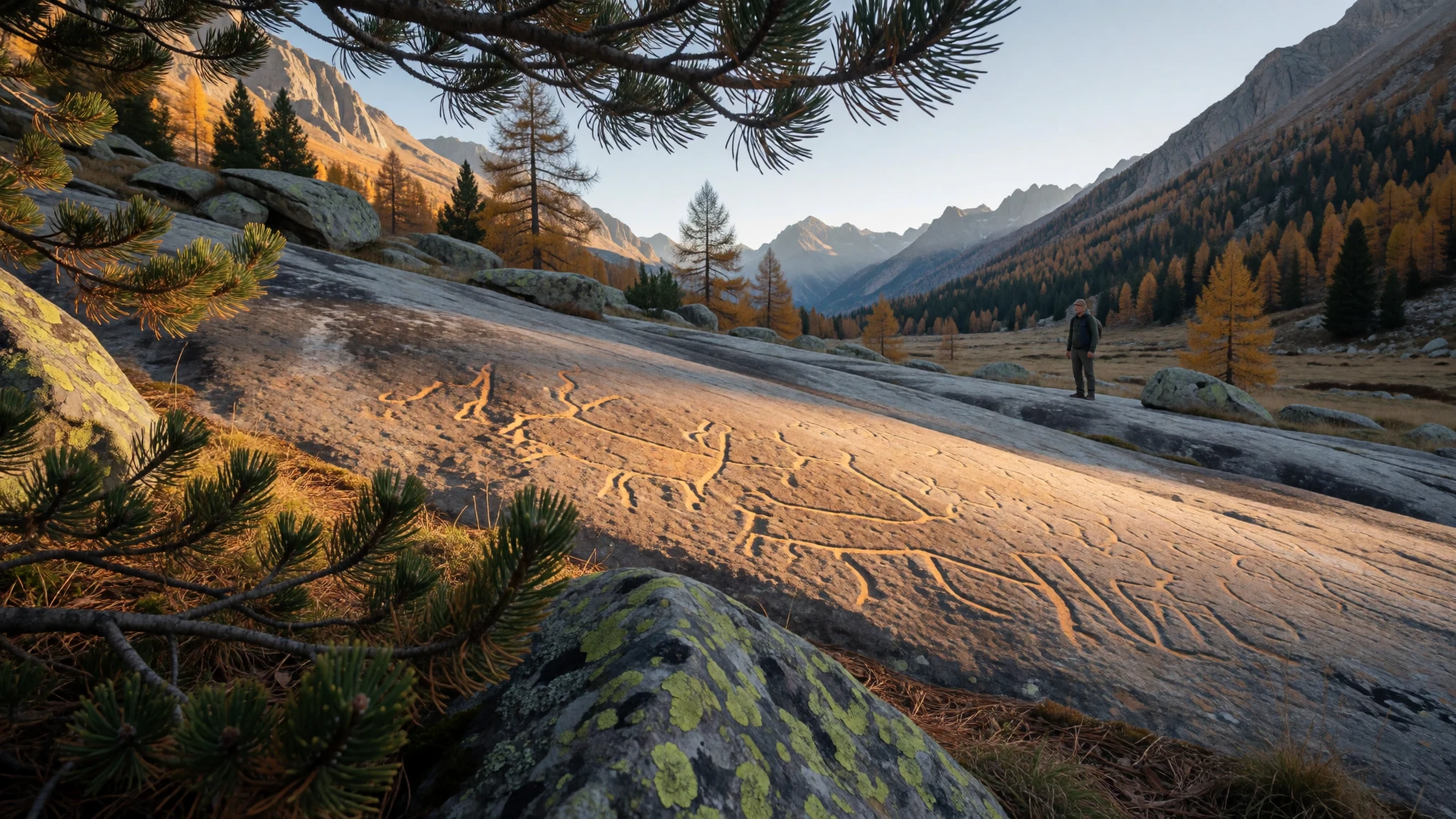
Go to rock drawings in Valcamonica for a walk through thousands of engraved stories spread across a whole alpine valley.
The place
Rock drawings in Valcamonica sit in Italy’s Province of Brescia within the Camonica Valley, a landscape where prehistoric life appears directly on the rock faces. This isn’t one museum piece behind glass: the petroglyphs are carved across the valley’s surfaces, with a denser feel in areas such as Darfo Boario Terme, Capo di Ponte, Nadro, Cimbergo and Paspardo. The result is unusual in scale and atmosphere—outdoors, exposed, and intimately tied to the valley’s terrain.
What makes the carvings especially compelling is how varied they look up close: figures and symbols, sometimes simple and sometimes packed with detail. Over time, scholars and new discoveries have pushed the number of recorded incisions well beyond early estimates, reaching a range of roughly 200,000 to 300,000 catalogued figures and symbols. That statistic matters because it helps explain why the sites feel less like a “single attraction” and more like an ongoing record of human presence.
If you’re used to art history being boxed into dates and timelines, Valcamonica is different. The valley’s cold seasons and bright clear days do something to perception: the engravings can look crisp and graphic in good light, and softened when the rock is damp. Expect a mix of quiet stretches and busy viewpoints—this is a popular World Heritage destination—so start early when the paths are calmer and the air is cooler.
The simplest way to understand the place is to treat it as a route: choose a few areas, walk slowly, and accept that the valley holds many “entries” into the same story.
Its story
Rock drawings in Valcamonica point to a long, patient way of looking at the world—one where people marked stone as a kind of communication. The carvings belong to prehistoric communities who left behind engraved figures and symbols across the Camonica Valley. Instead of a single site, the collection is scattered across many areas, which is why the experience feels like exploring chapters rather than visiting one headline monument.
A useful detail for context is that the valley later came under the Longobards’ control in the 6th century, and place names in the region reflect that legacy. That doesn’t mean the engravings were created then; it simply helps explain why today’s landscape layers history. You walk through a living region that has moved from prehistoric marking of the land to later settlement and administration.
Lombardy, where Valcamonica sits, is a temperate region with fertile lowlands and a dramatic northern edge defined by high mountains near the Swiss frontier. Those mountains matter because they frame the valley’s climate and seasonal rhythm: cooler, clearer periods tend to make walking more comfortable, while harsher conditions can make rocky paths feel more demanding. The Po Valley’s heavy industry is a different character of northern Italy, but it’s part of the wider backdrop.
So the “story” of the carvings isn’t just what’s engraved. It’s also how the valley has stayed meaningful over centuries—first through prehistoric symbols set into stone, later through the region’s name, and now through the way visitors encounter a whole landscape as a kind of open-air archive.
What to see
- Scena di duello (Foppe Area, R. 6) — Foppe area (Nadro/Capo di Ponte vicinity)
Rock drawings in Valcamonica include an engraved duel scene at the Foppe area. A couple-like confrontation is shown around a central symbol, with lines carved to keep action readable even from a short distance—great for studying how the figures interact.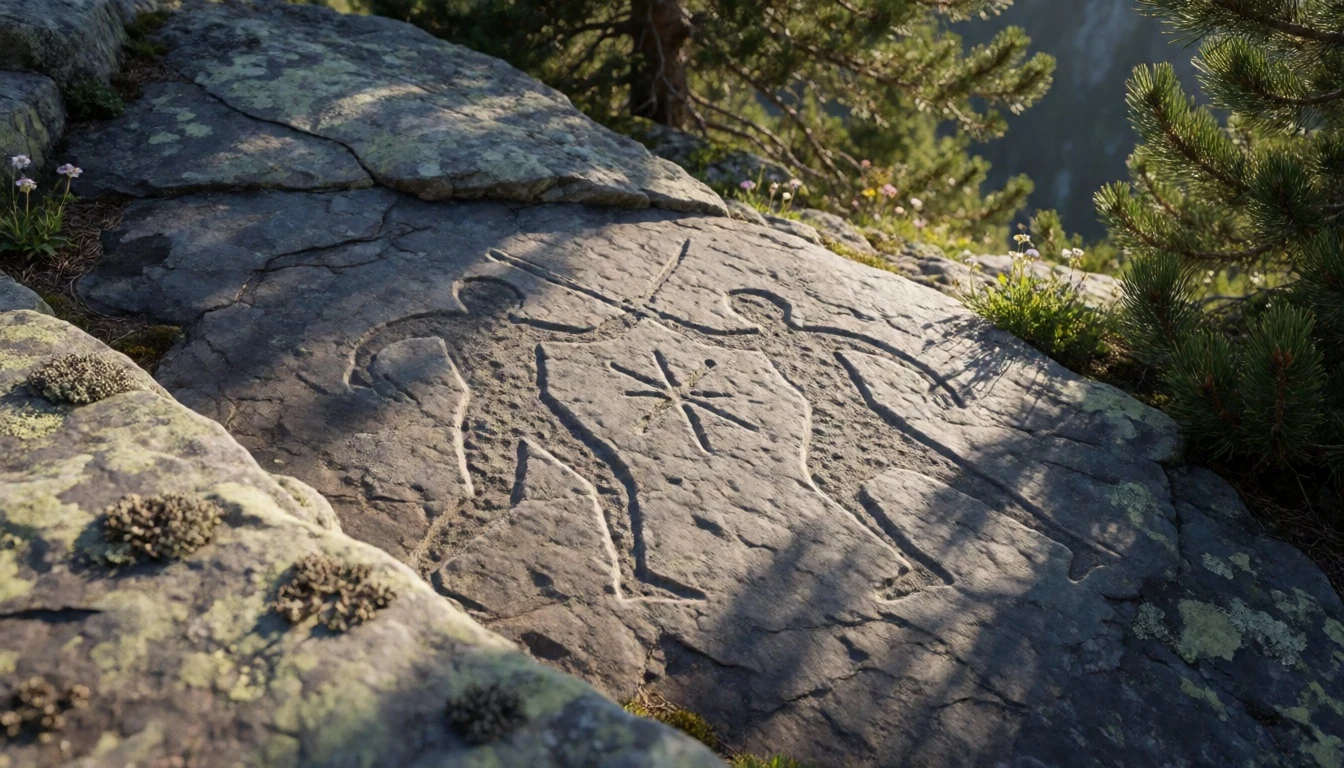
- Antropomorfi detti «astronauti» (R. 1, Zurla Area) — Zurla area (Nadro)
In the Zurla area (R. 1), rock drawings in Valcamonica show anthropomorphic figures often nicknamed «astronauti». The engravings use a clear body outline and oversized details that make the scene feel both stylised and strangely modern—best seen slowly, from multiple angles.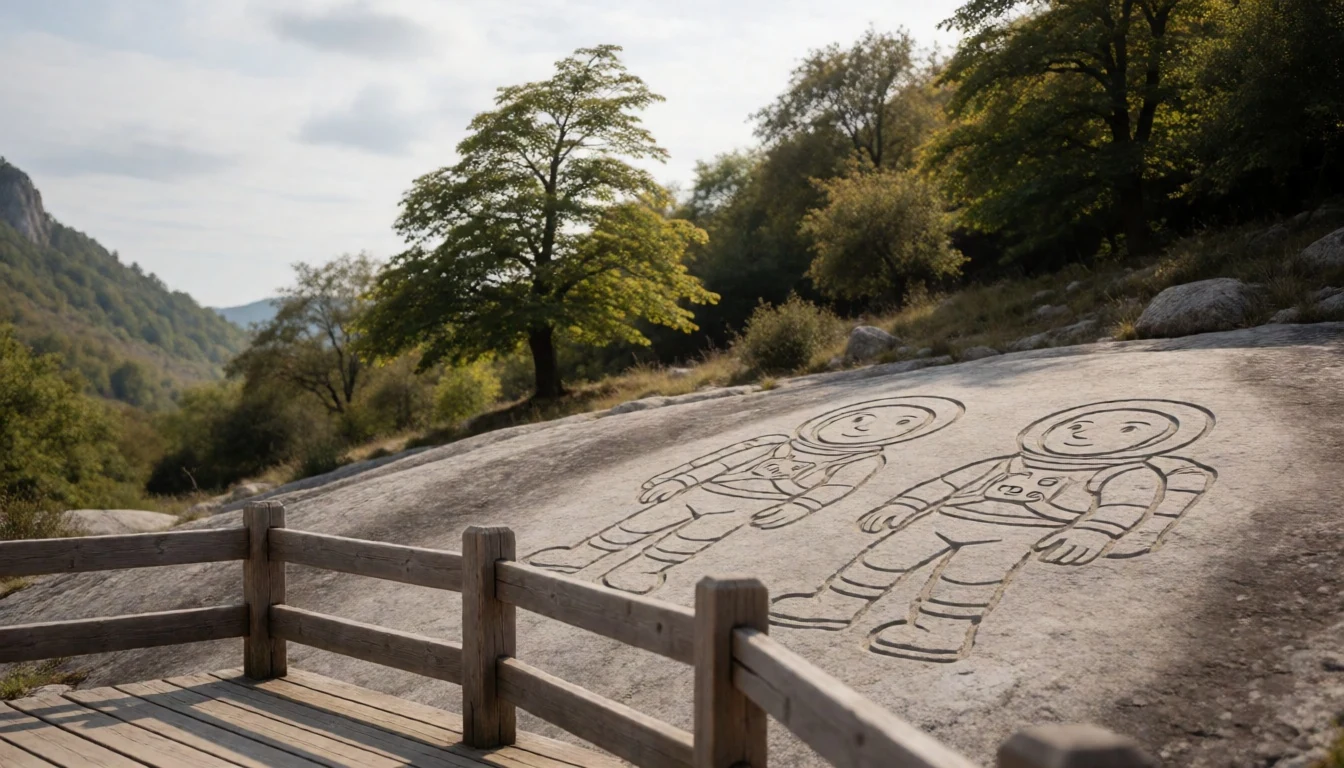
- Scene of hunting deer (Seradina–Bedolina, R. 12) — Seradina–Bedolina (Capo di Ponte)
At Seradina–Bedolina (R. 12) the rock shows a deer-hunting scene, with multiple engraved elements that suggest movement and pursuit. From a viewpoint at walking distance, the composition reads like a sequence rather than a single portrait—look for how the animals and hunters align.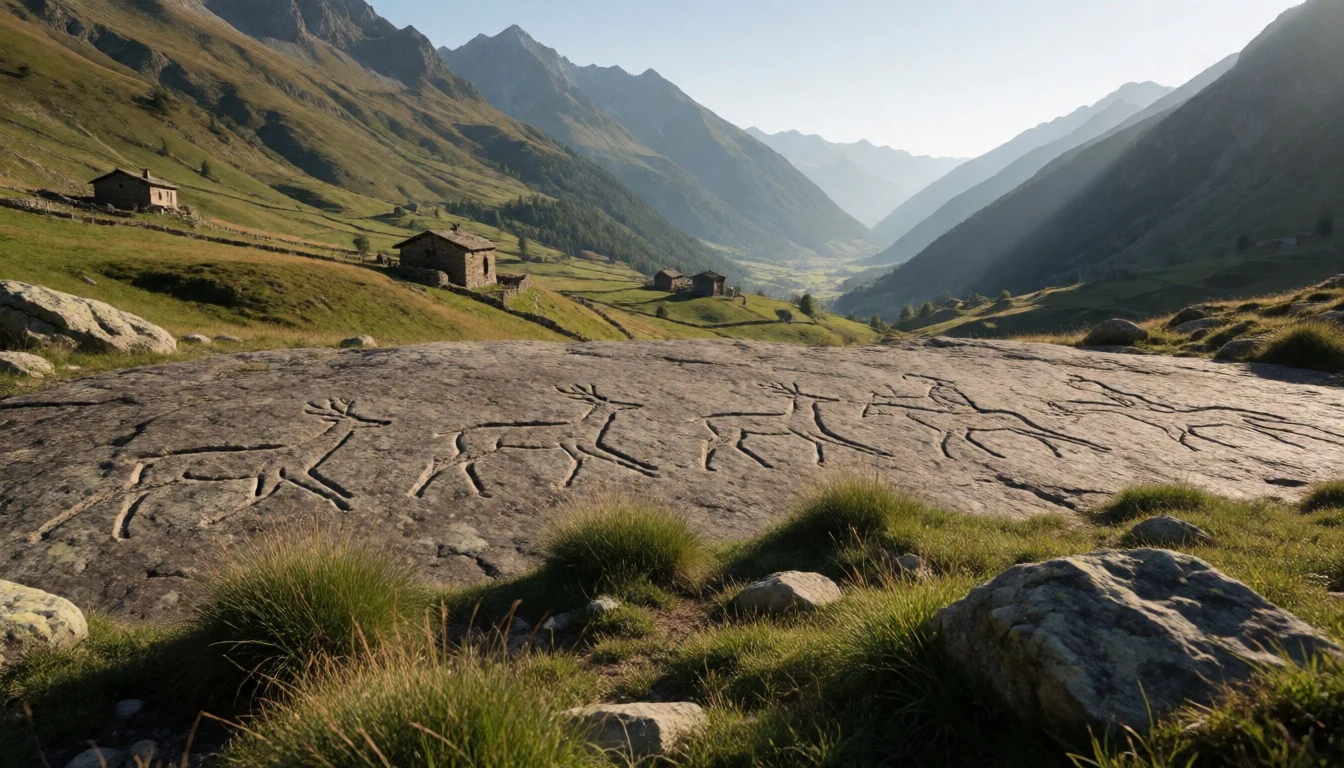
- Geometrical composition «mappa di Bedolina» (R. 1) — Bedolina area (Parco di Seradina e Bedolina)
The geometrical composition known as «mappa di Bedolina» is one of the more abstract experiences in Valcamonica. At R. 1, the engraved patterning feels like a plan or map, with repeated marks that invite you to interpret meaning beyond simple figures.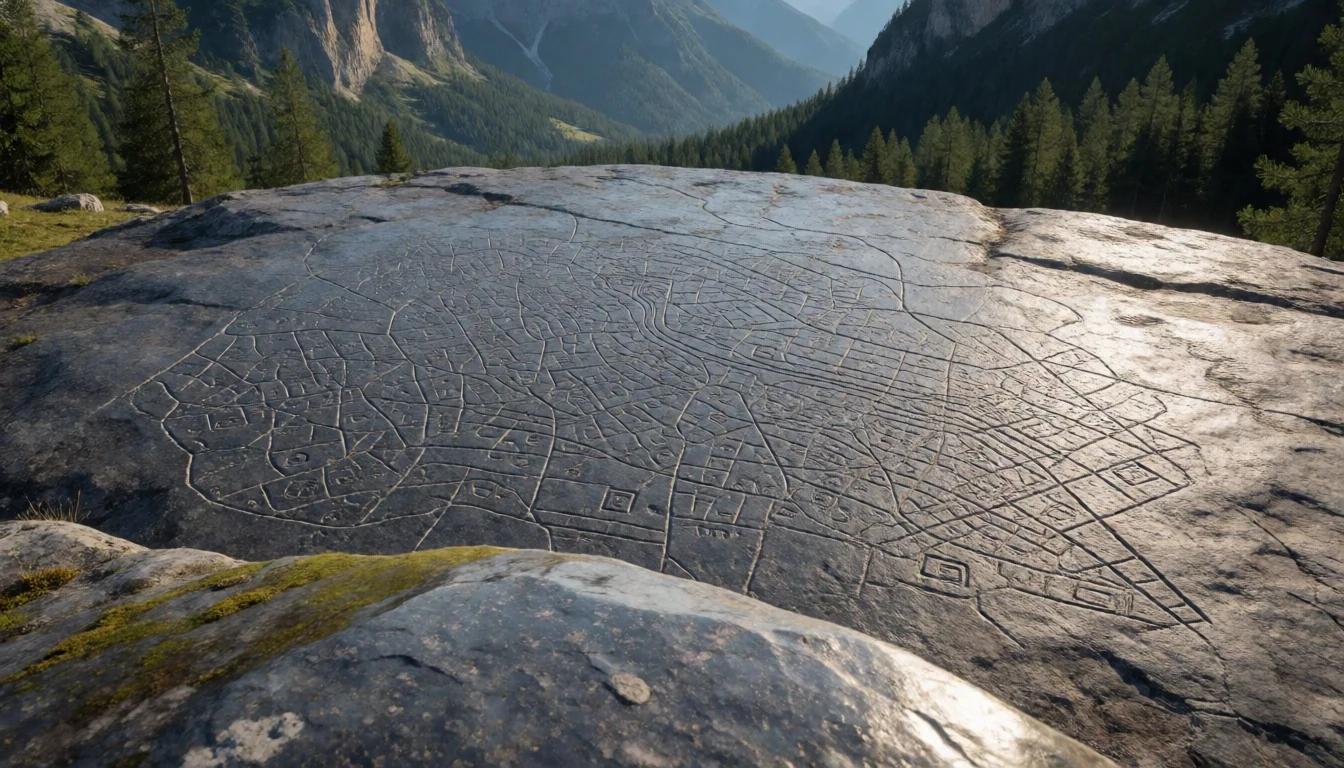
- Scene of the smith (Naquane, rock 35) — Naquane (Capo di Ponte)
Rock drawings in Valcamonica at Naquane include the “scene of the smith” at rock 35. The engraving gives a sense of craft and work through its arrangement of figures and tools—one of the better spots to notice how artisans used line and spacing to show roles.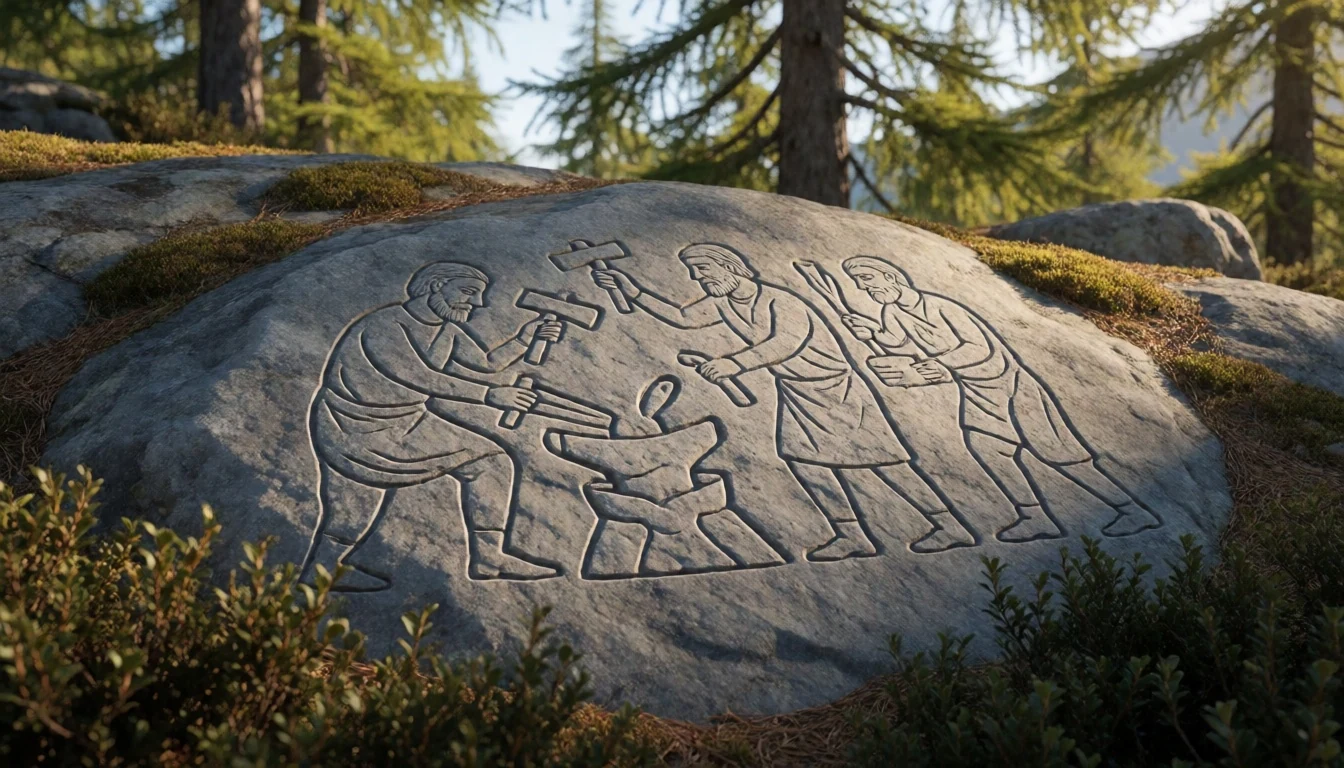
Culture
Rock drawings in Valcamonica are best approached like an outdoor gallery that happens to be carved into living stone. A common mistake is treating the engravings as “background” while passing quickly—slow down instead, because the marks can be clearer when light hits the stone at an angle, or harder when damp. Crowds can show up around the best-known areas, especially in popular holiday stretches, so being early helps a lot.
Because these are prehistoric works meant to endure, respect the physical space: stay on allowed paths and avoid touching surfaces. If you’re taking photos, don’t use tripods where they block foot traffic and be mindful of other visitors trying to read the carvings. The charm of Valcamonica is that you’re not only looking at art; you’re scanning a whole valley for meaning.
Visitor etiquette: stay on marked trails, keep voices low, and avoid touching or standing on the engraved rock faces so others can study them too.
What to wear
Rock drawings in Valcamonica are typically viewed outdoors on uneven ground, often with changes in temperature between sun and shade. Locally, you won’t need any special “traditional dress” to see the carvings, but you can still think about local clothing norms: in the wider Lombardy region, everyday wear is usually practical and weather-friendly, while festive occasions may feature more formal clothing and traditional textiles.
What visitors actually wear now is mostly comfortable walking layers—lightweight tops plus a warmer layer for early mornings, and a rain shell if the forecast is uncertain. In summer, the valley can feel hot in direct sun, while spring and autumn bring cooler air; comfortable footwear matters because paths can be rocky and sloped. For modesty and practical comfort, casual clothing works best: long trousers or breathable layers that protect legs, and a hat for bright conditions.
If visiting church-like spaces in nearby towns, a simple rule helps: cover shoulders where you can and avoid very revealing outfits. For the carvings themselves, priorities are grip, weather protection, and the ability to move quietly and slowly along signposted routes.
What to eat
- Minestrone soup — Trattorias and local eateries across Lombardy
Minestrone soup is a classic Lombardy comfort bowl. It tends to show up in local trattorias and family-run eateries, especially around market towns in the region, where hearty, seasonal vegetables do the heavy lifting.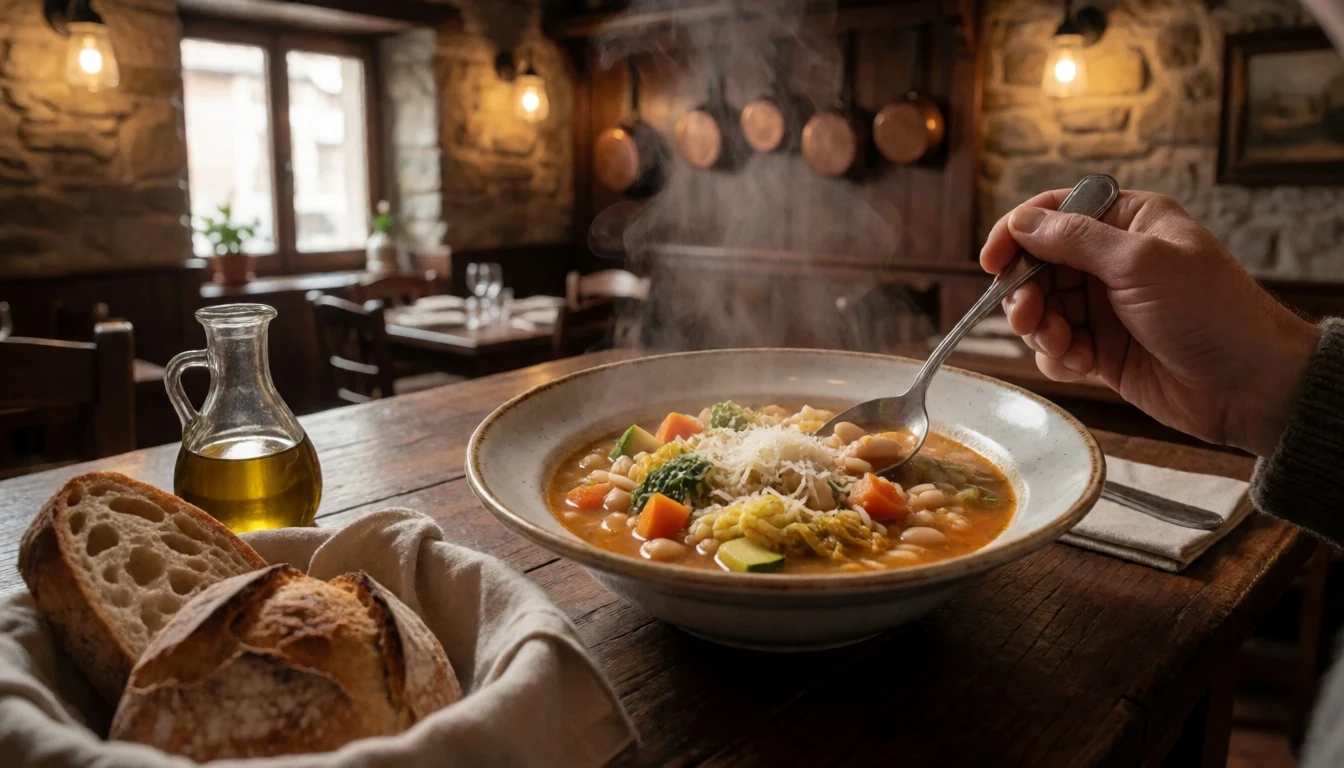
- Osso buco — Main-town restaurants in Lombardy
Osso buco (braised ox knuckle) is a signature northern Italian main, often paired with sides that can be rich and filling. It’s a common choice when you want something warming after a day of outdoor walking.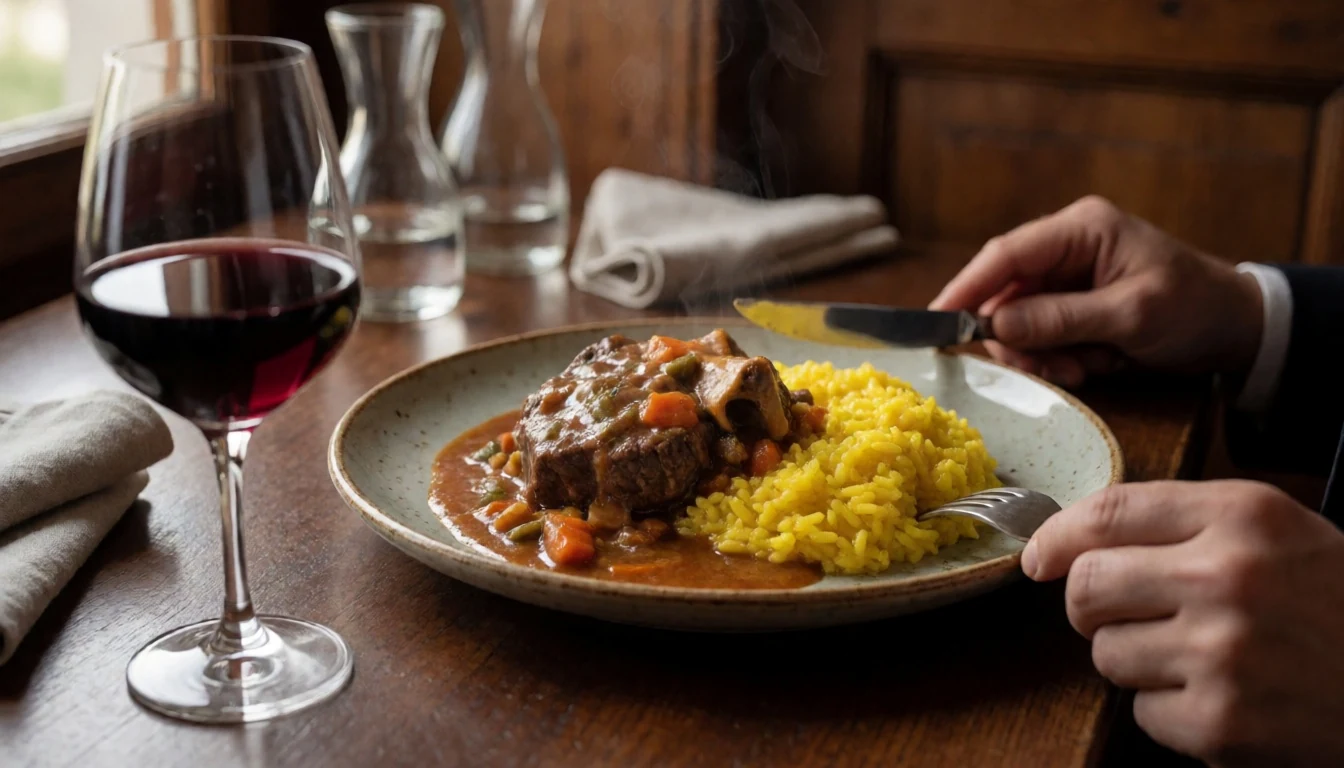
- Salumi — Local cafes and snack stops near town centres
Salumi—cold cuts—are widely available across northern Italy and appear on antipasti platters. Look for them in cafes and snack counters around town squares, where they’re ideal for a light lunch between walks. - Polenta — Seasonal menus at regional restaurants
Polenta is a staple in northern regions and works well when evenings cool down. You’ll often find it as a side with meat dishes in winterier menus, making it a good “recovery” meal after time on the valley paths. - Risotto alla milanese — Sit-down restaurants serving Lombardy specialities
Risotto alla milanese is strongly associated with Lombardy, and it’s typically the dish people order when they want something celebratory but still local. Find it in sit-down restaurants that focus on regional classics. - Aperitivo — Bars and aperitivo spots in local towns
Aperitivo is a popular pre-meal tradition, usually paired with appetisers. Even when you’re travelling, it’s an easy way to fit in a relaxed evening around the region’s towns—just check what’s included with the drink.
Plan it
Best time. April and October–November for clearer walking conditions and more comfortable outdoor temperatures; March–April can be pleasant, while June can be rainy and August can be hot and humid.
How long. 2–3
Getting there. For rock drawings in Valcamonica, fly into one of Lombardy’s main airports (Milano Malpensa, Milano Linate or Bergamo Orio al Serio) and then take regional transport onward to the valley; the exact last leg depends on where you start in the valley.
Budget. mid
Tips
- Pick 2–3 carving areas and plan a route so each stop has time for slow looking
- Start earlier in the day to reduce queues and to catch the carvings in better light
- Bring water and a light rain layer, even outside the rainy stretches
- Use a mix of cash and cards for small purchases in valley towns and markets
- Wear shoes with good grip for rocky, uneven ground
Etiquette
- Stay on marked paths and avoid stepping close enough to disturb rock faces
- Keep voices down in quieter sections so others can study the engravings
- If photographing, don’t block routes and be considerate when using a tripod
Nearby
Sources
- Wikidata Q945514 (CC0)
- Wikipedia — Rock Drawings in Valcamonica (CC BY-SA 4.0)
- Wikivoyage — Lombardy (CC BY-SA 4.0)
- Photo photos/01-scena-di-duello-r6-foppe-nadro-foto-luca-giarelli.jpg (CC BY 3.0)
- Photo photos/02-antropomorfi-detti-astronauti-a-r-1-area-di-zurla-nadro-ph-l.jpg (CC BY-SA 4.0)
- Photo photos/03-scena-di-caccia-al-cervo-seradina-r-12-capo-di-ponte-foto-lu.jpg (CC BY 3.0)
- Photo photos/05-scena-del-fabbro-parco-di-naquane-r-35-capo-di-ponte-foto-lu.jpg (CC BY 3.0)
- Photo photos/08-composizione-geometrica-chiamata-mappa-di-bedolina-bedolina-.jpg (CC BY 3.0)


