Ras al Jinz
Ras al Jinz, Oman
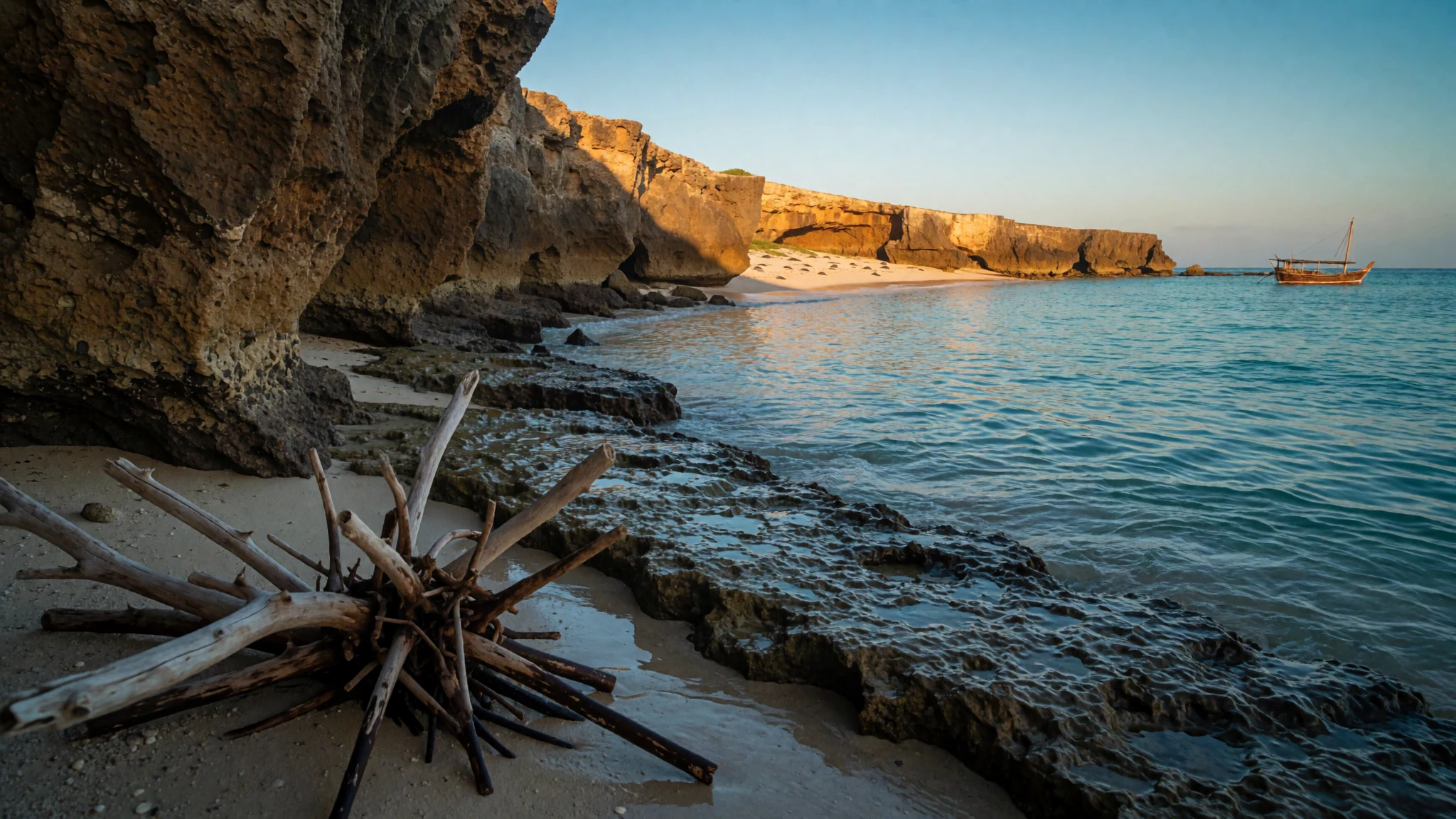
Come for the green turtles that nest on this sandy headland at the far south-eastern tip of Oman, then stay for the quiet coast around it.
The place
Ras al Jinz sits at the easternmost tip of the Arabian Peninsula, on a headland in Oman's Sharqiyah South governorate. The name is a worn form of the older Ras al Hadd, and the Portuguese once knew the cape as Cape Rosalgate. Today the headland is best known for its small village, a sandy bay and a turtle reserve that has grown up around the beach.
The reason most people come is the green turtle. Females haul themselves up the sand to lay their eggs here, and the beach at the neighbouring village of Ras al Hadd is also a nesting ground. Visitors watch from a managed viewing area under the reserve's rules rather than wandering the dunes at will. Nesting and hatching run through the warmer months, so the experience depends on the season rather than on a fixed date.
Beyond the turtles, the headland is quiet. Fishing boats work the water, the village keeps its own pace, and the coast road runs through rock and scrub before reaching the open sea. The area has also yielded important archaeological finds that point to contact with the Indus Valley in ancient times, so the settlement is older than its tourist reputation suggests.
Expect a simple setting. There is little around the reserve in the way of large resorts, so plan food and water in advance, and take the heat and the sea wind seriously.
Its story
Ras al Jinz has been a meeting point of land and sea for a long time. People living on this coast in ancient times left traces that link it to the Indus Valley, the river civilisation of what is now Pakistan and north-west India. The finds suggest that trade and travel moved along these shores well before the modern map was drawn, which makes the headland part of a wider network rather than a remote edge.
Later, European navigators arrived by sea. The Portuguese, moving through the Indian Ocean trade, recorded the cape under a name that sounded like Cape Rosalgate, while the Arabic name Ras al Hadd, meaning the cape of the limit, remained in use locally. The two names now sit side by side. Ras al Jinz is the name most visitors use for the turtle beach, while Ras al Hadd is the name of the nearby village and its own nesting beach.
The turtles give the place its modern story. Green turtles have come ashore here for generations, and people who fished this shore would have learnt the nesting season long before anyone set up a reserve. The reserve turned that knowledge into a visitor experience, so a shoreline that once meant food and sea work now asks visitors to keep their distance and avoid flash photography.
The story is still unfolding. Each season brings new hatchlings to the sea and fresh questions about how to manage the crowds who come to see them.
What to see
- Ras al Jinz turtle beach — the village beach at the cape
The sandy bay below the village is the reason most people make the drive out. Nesting females come up the beach in the warmer months, and the reserve controls how visitors approach. Arrive with a clear plan for the evening, because the beach is busiest once the light fades and the viewing groups gather. Walk slowly, stay quiet and follow the staff.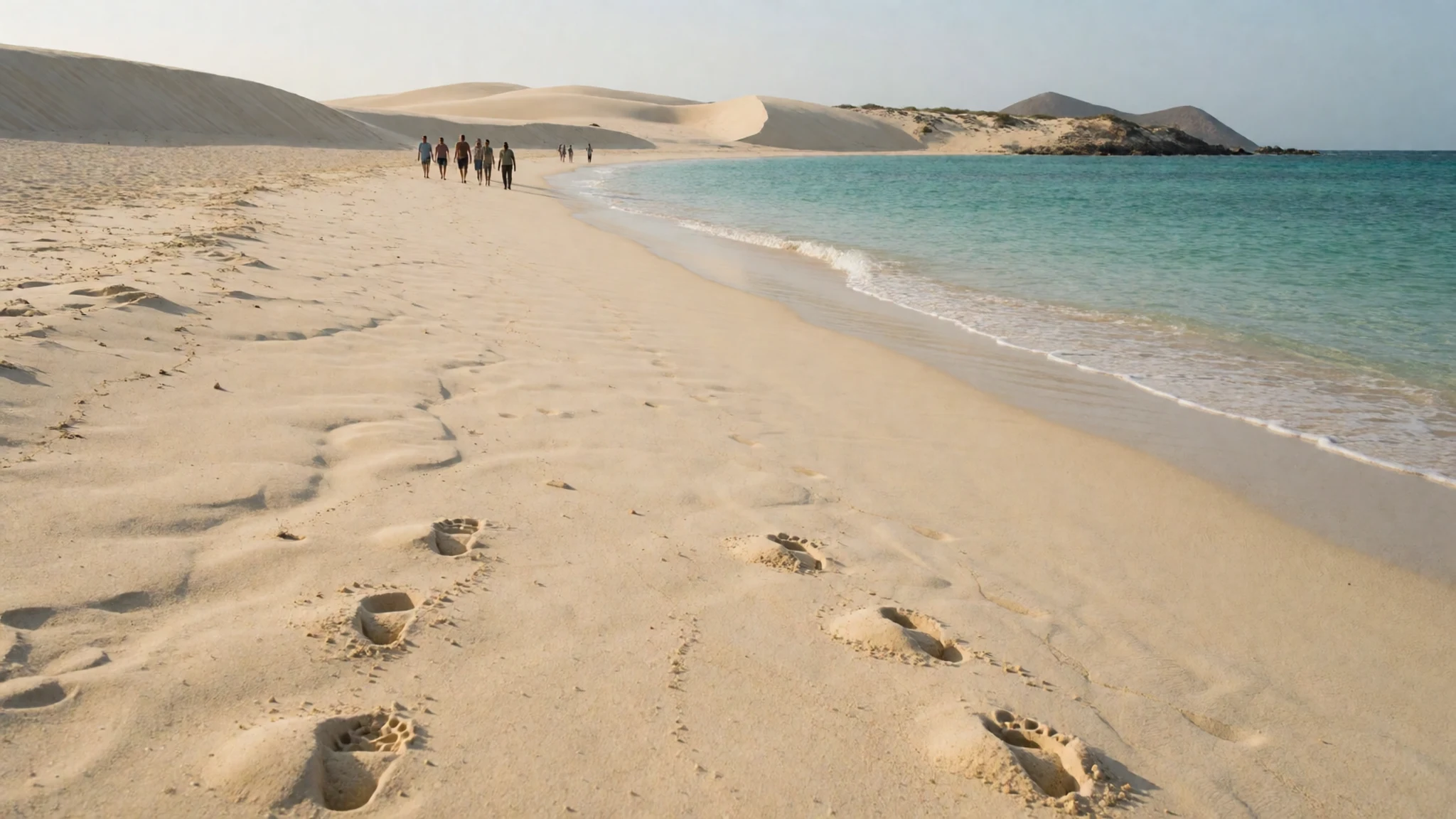
- Turtle reserve viewing area — the reserve grounds above the beach
The reserve manages the beach and the viewing routes, and it is the place to book and to learn how the season works. Staff explain the nesting cycle and set the rules for every group. Check the official turtle reserve site before you travel, because viewing arrangements and booking details can change from season to season.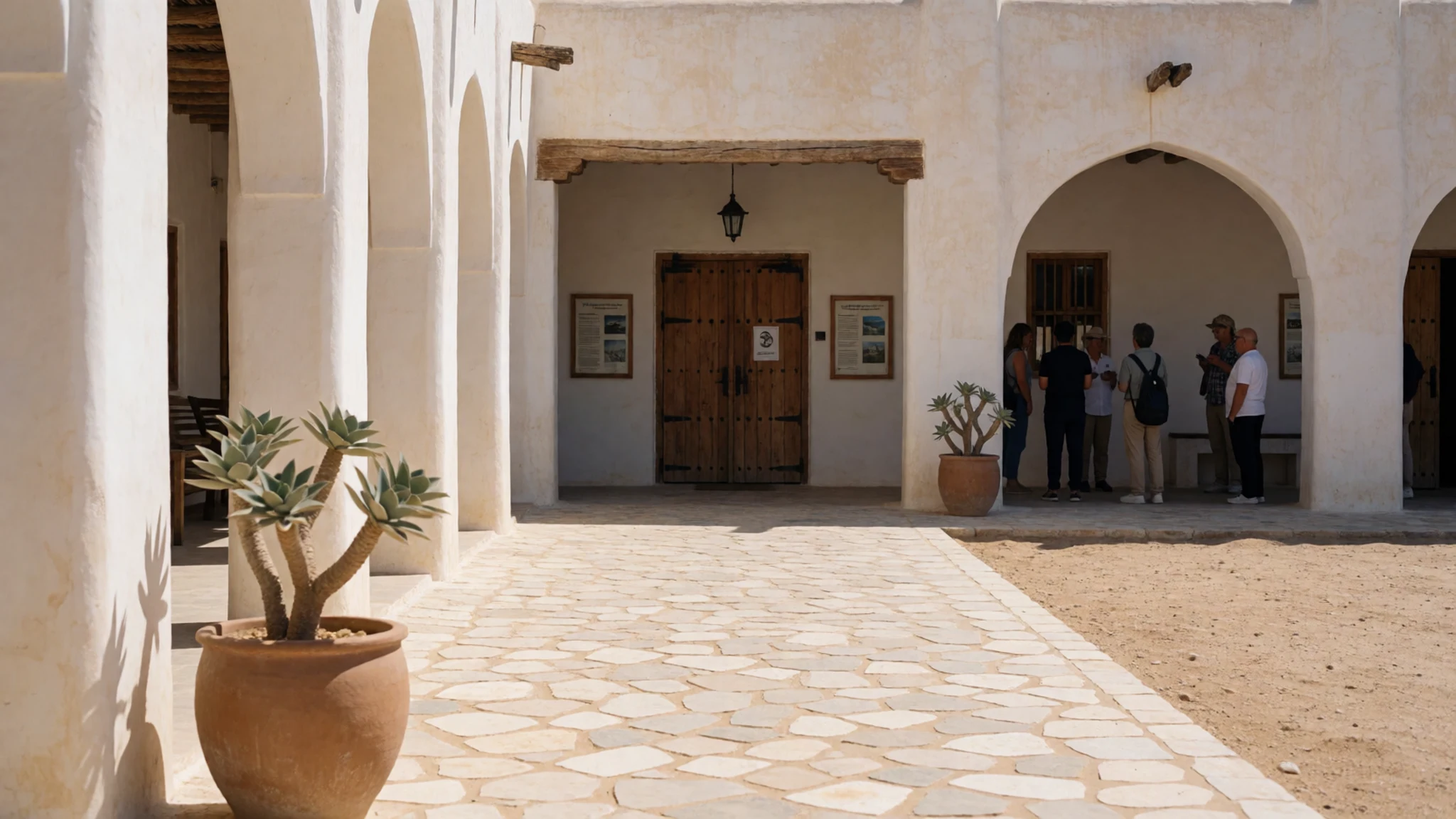
- Hatchling season on the sand — the nesting beach, during hatching
When hatchlings emerge, they make for the sea in a scramble that lasts only moments, guided by light on the water. Good reserve guides will explain how fragile this is and why the crowd is kept back. A close photograph of a young turtle on the sand shows just how small the animals are at the start of their long lives.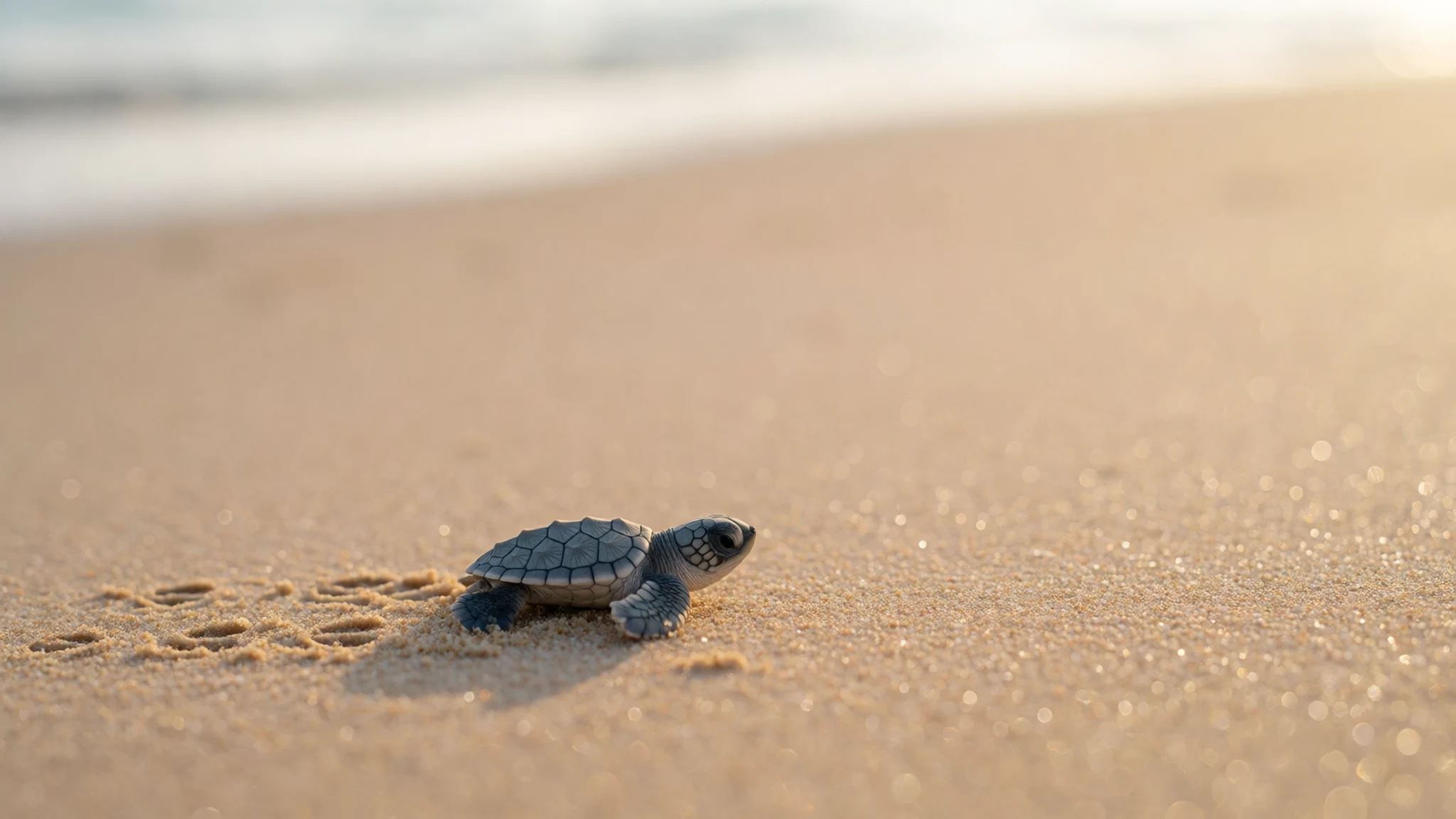
- The eastern headland cliffs — the cape, east of the village
Away from the beach, the coast falls in steep rock faces and ledges where the sea cuts into the cape. The walk is best in the cooler morning or late afternoon, when the rock is less hot and the light is softer. Wear closed shoes, carry water and keep clear of the edges, since the drops are real and the wind can be strong.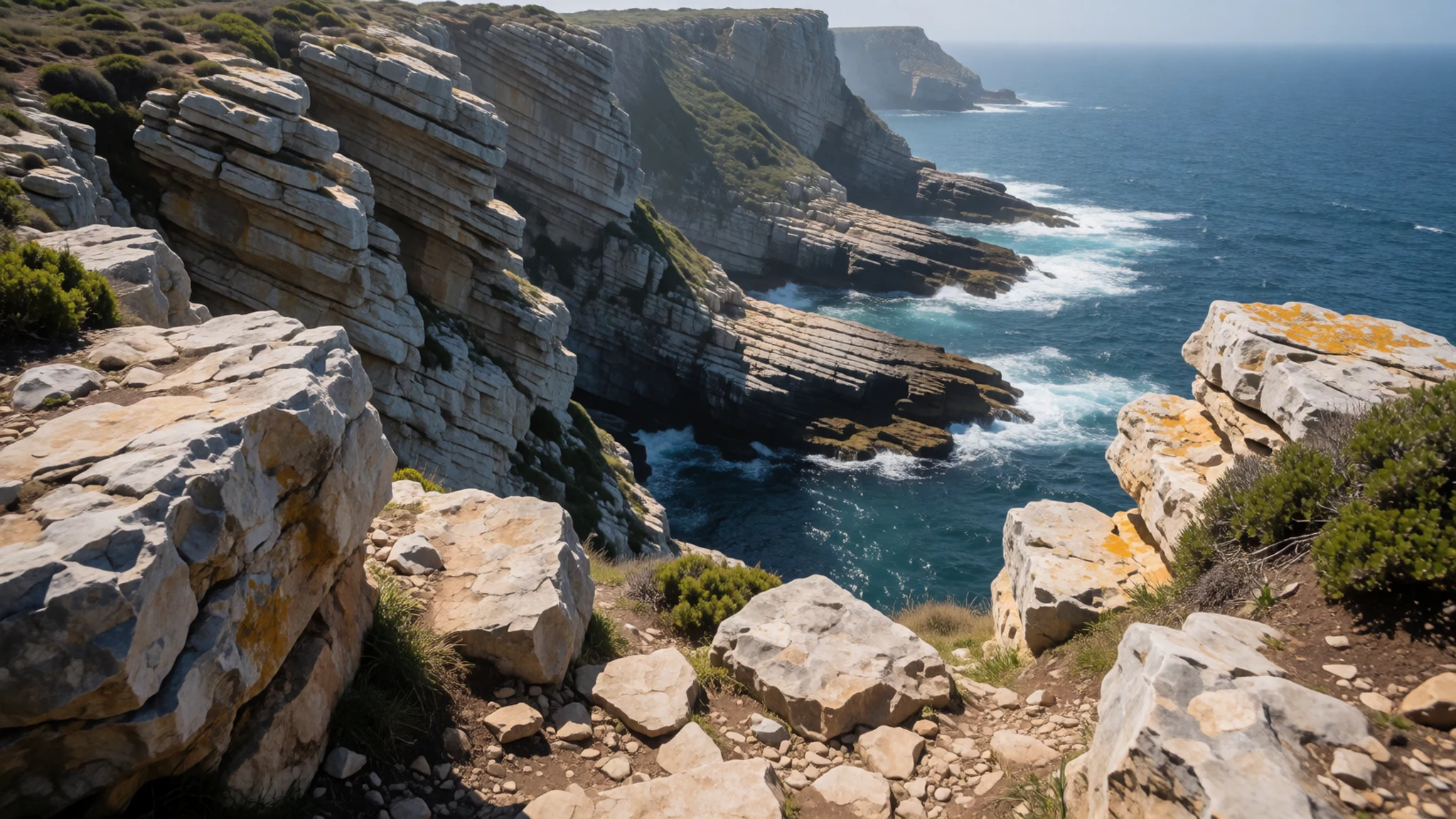
- Ras al Hadd village beach — the village of Ras al Hadd, a short drive away
The neighbouring village has its own beach, which also sees turtle nesting. It is a quieter stretch than the main reserve, with fishing boats drawn up and the feel of a working village rather than a visitor site. Ask locally before walking onto sand near houses, and keep to the paths.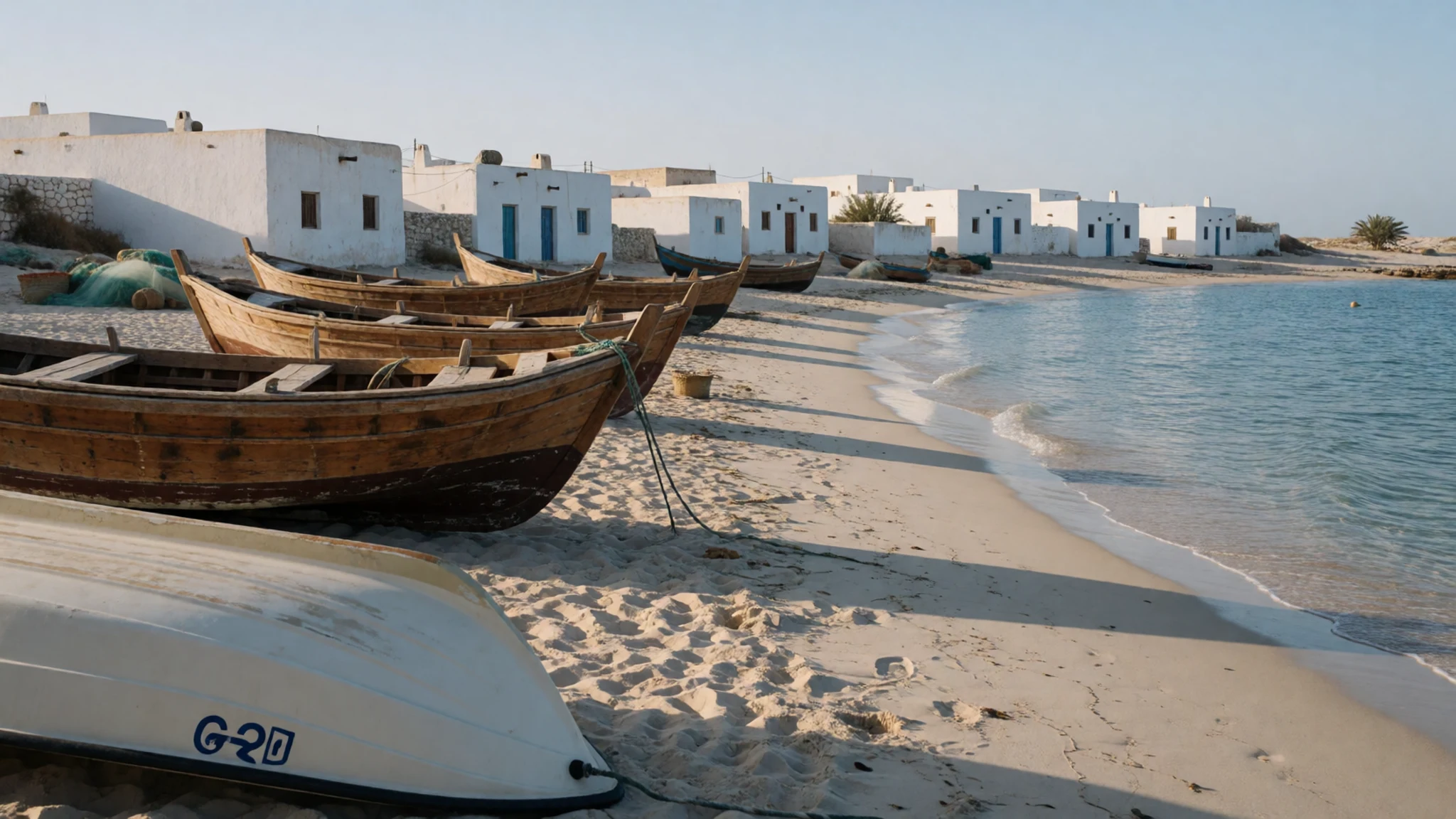
Culture
Ras al Jinz is a working village as much as a viewpoint, and the people here follow the customs of Oman's east coast. Hospitality matters: if you are offered coffee in a home or at a family majlis, accept a small cup and take it with your right hand. Omani families value privacy, so ask before photographing anyone, especially women and children; a smile and a gesture usually do the job. Fishing is still central to daily life, so the harbour and the boats are working spaces rather than backdrops. At the turtle beach the rules protect the animals and the people watching them. Staff set the pace, groups stay on the marked route, and the reserve asks for no flash, no torches pointed at the sand, and no touching of nesting turtles or hatchlings. Keep your voice low and stay on the marked path, because hatchlings find the sea by the darkness and quiet.
What to wear
Traditional dress on this coast follows the wider Omani style. Men wear the dishdasha, a long robe usually in white or pale cotton, often with a kummah, a rounded and embroidered cap, or a wrapped turban in some areas. Women wear the abaya, a loose dark over-dress, often over a brightly coloured dress with embroidered panels, and a light scarf for the head. Embroidery in gold or silver thread marks special occasions, and silver jewellery is common in families.
Day to day, many people still wear these garments, especially for prayer, family events and work in town. Younger people often wear shirts, jeans and trainers, and visitors fill the beach and café areas in everyday clothes. Men in the village often keep the robe and cap, while women may wear the abaya over trousers or a loose dress.
For a visitor, the simplest rule is to cover shoulders and knees in the village and near the reserve. Choose light, breathable fabric, since the heat and sea wind are strong. Loose linen or cotton works well. Carry a long scarf for women and a hat for everyone. Sandals are fine on the sand, but closed shoes help on rocky tracks and cliff paths. Swimwear belongs on the beach itself, not in the village streets.
What to eat
- Shuwa — a village eatery or a family event, ordered ahead
Shuwa is meat marinated in spices, wrapped in palm leaves and slow-cooked in an underground pit, so it comes out tender and smoky. It is a dish for family gatherings and weekend lunches rather than a quick snack. If you want it, ask at a local eatery a day ahead, since it takes many hours to prepare.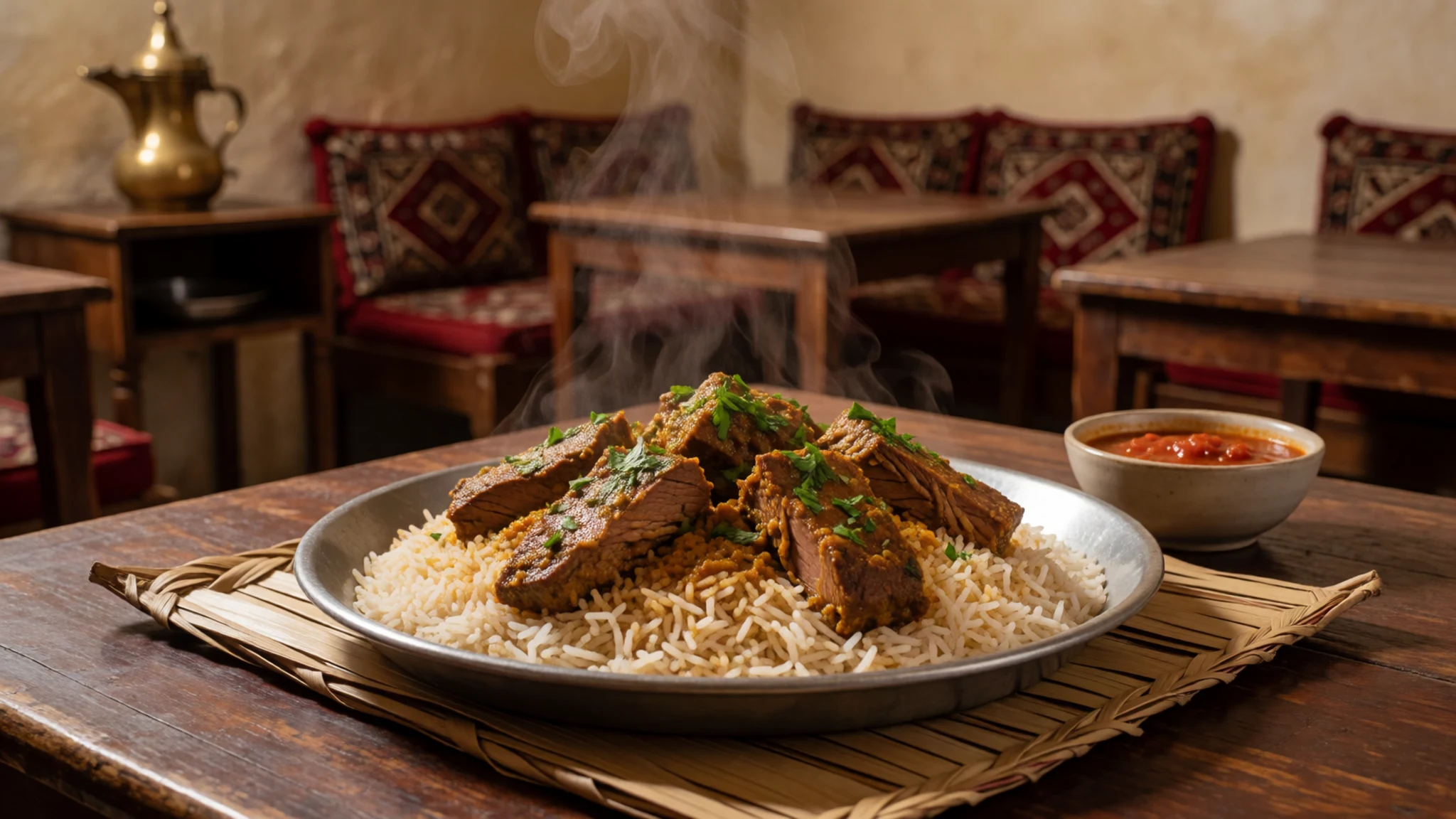
- Grilled fish — the fishing harbour and simple grill stalls nearby
Fish from the morning catch is grilled over charcoal with lime and spices and served with rice or bread. The freshest fish comes straight from the boats, so the harbour is the best place to see what is landed. Choose a fish you can see, and ask the price before the cooks start.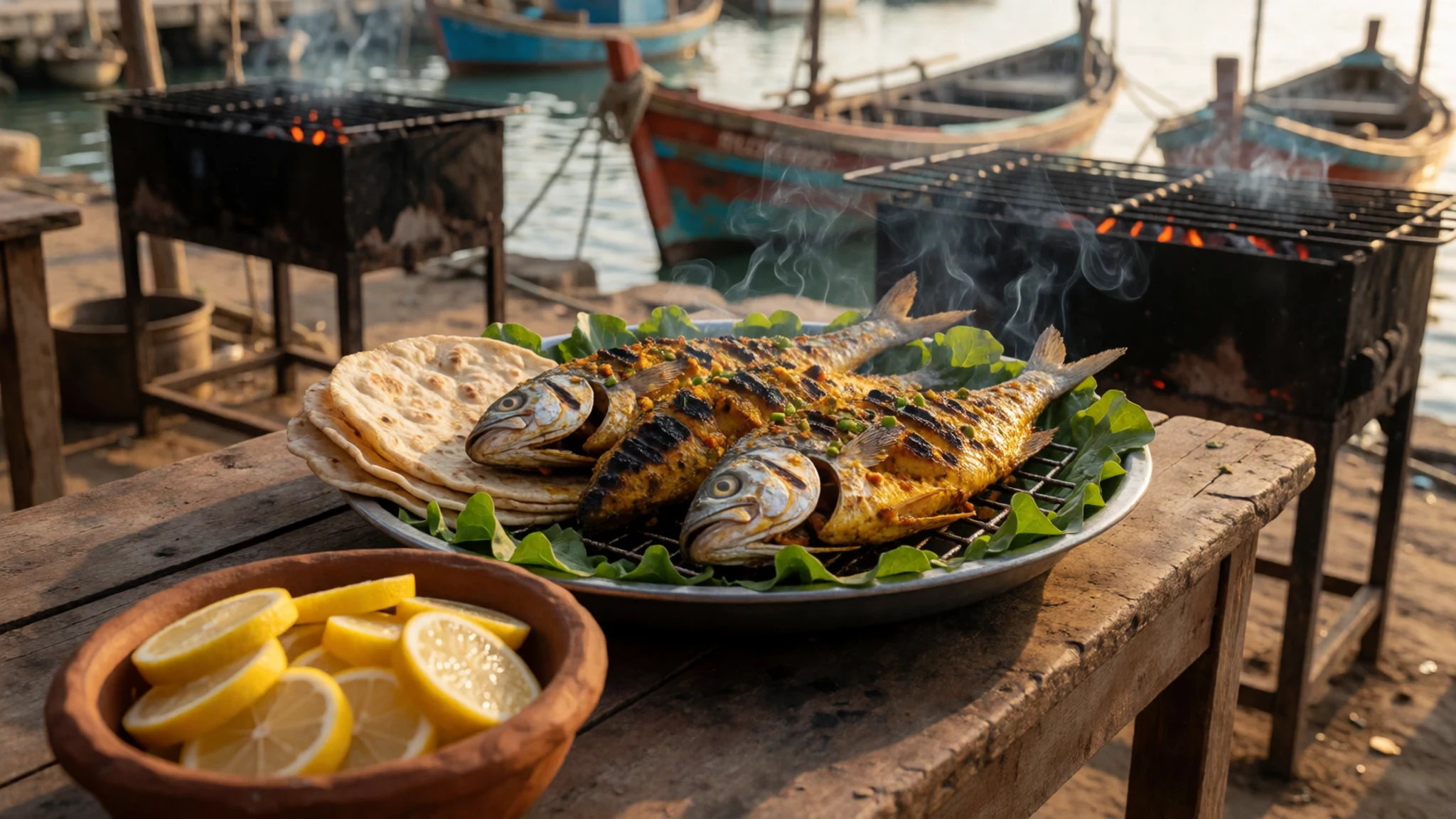
- Machboos — any local eatery serving Omani dishes
Machboos is spiced rice cooked with meat or fish, dried lime and saffron, served on a large shared plate. It is a staple of Omani home cooking and appears on most simple restaurant menus. Eat it with your right hand if you are at a family table, and accept the second helping that is offered. - Halwa — sweet shops in the nearest town
Omani halwa is a dense, sticky sweet made with sugar, rosewater, cardamom and nuts. It is offered with coffee at celebrations and is a good sweet to take away. Its texture is closer to fudge than to the crumbly halwa found elsewhere, so take a small piece first. - Arabic coffee with dates — a family majlis or a coffee house
Arabic coffee is lightly roasted and flavoured with cardamom, poured from a long-spouted pot into small cups and served with dates. It marks hospitality, so a small cup is the usual amount to accept. Coffee houses and family majlis rooms both serve it, and it is a good way to start a conversation.
Plan it
Best time. Cooler months from November to March suit walking, driving and the cliffs. Turtle nesting and hatching run through the warmer months, so choose summer if seeing turtles is the priority, and expect heat and humidity then.
How long. 2–3
Getting there. Fly into Muscat International Airport, then drive south-east along the coast road, either in a hire car or on an organised transfer. There is no rail link. Check the official turtle reserve site for current viewing arrangements before you set out.
Budget. mid
Tips
- Book the turtle viewing through the reserve's official site well ahead, especially in peak season
- Go in the evening or before dawn, when the beach is calmer and the light is softer
- Carry cash for small stalls and cards for larger places; reception can be patchy on the coast
- Bring water, a sun hat and sunscreen, because shade is limited on the beach and cliffs
- Fill up on fuel and food before the coast road, since services are sparse
Etiquette
- Stay behind the markers and follow reserve staff at all times
- No flash, no torches on the sand, and no touching turtles or hatchlings
- Dress modestly in the village and ask before photographing people
Nearby
Sources
- Wikidata Q1764671 (CC0)
- Wikipedia: Ras al-Jinz (rev 1379688590) (CC BY-SA 4.0)
- Ras Al Jinz beach, Oman Muscat (CC BY 2.5)
- Green turtle at Ras al Jinz, F igy (CC BY 3.0)
- Green turtle detail at Ras al Jinz, F igy (CC BY 3.0)
- Green turtle hatchling at Ras al Jinz, F igy (CC BY 3.0)
- Green Turtle (Chelonia mydas) just hatched, Emha (CC BY-SA 2.5)
- Östlichster Punkt Omans, Steilküste, Bernhard Dunst (CC BY-SA 4.0)
- Östlichster Punkt Omans, Morgenspaziergang, Bernhard Dunst (CC BY-SA 4.0)
- Östlichster Punkt Omans, Östliche Landzunge, Bernhard Dunst (CC BY-SA 4.0)
- Wikivoyage (CC BY-SA 4.0)


