Railay Beach
Railay Beach, Thailand
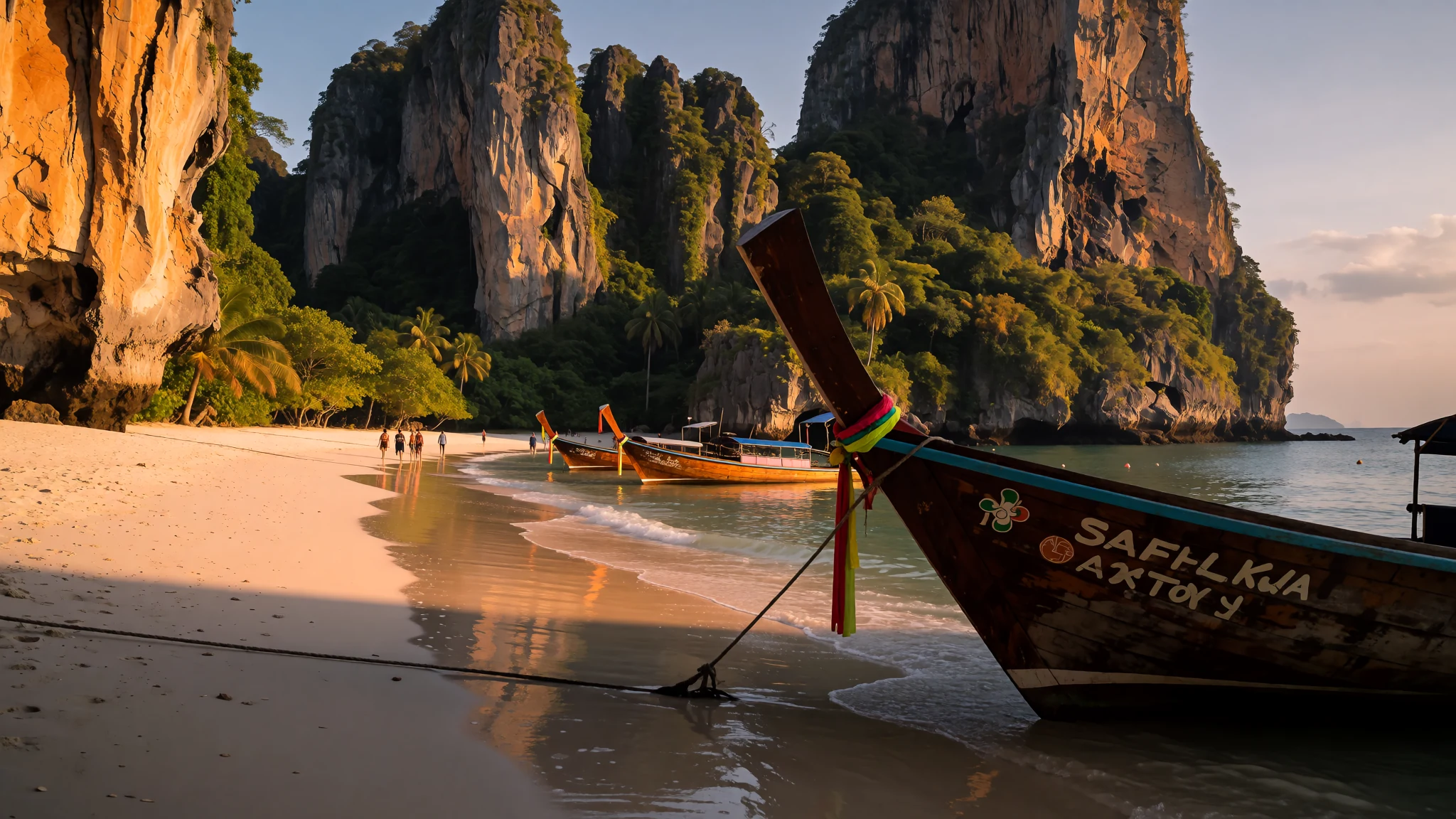
Railay Beach offers dramatic limestone karsts, world-class rock climbing, and fine sand accessible only by boat.
The place
Railay Beach occupies a small peninsula wedged between the city of Krabi and Ao Nang, isolated from the mainland by high limestone cliffs. Because roads cannot cross these vertical karst walls, the entire headland remains entirely free of cars, relying instead on footpaths, wooden boardwalks, and longtail boats for all transit. The landscape divides naturally into distinct zones. West Railay features a broad white-sand strand backed by luxury resorts and dramatic sunset views, while East Railay drops into mangrove swamps and boardwalks lined with budget-friendly eateries, low-key bars, and accommodation bungalows. Further around the headland, Phra Nang delivers one of the region's finest southern beaches, framed by towering orange-tinted rock faces where climbers pull themselves up overhanging routes right off the sand. Ton Sai sits tucked away on the western edge, maintaining a rugged, bohemian atmosphere that caters primarily to backpackers and serious climbers. Despite its popularity among international travellers seeking sun and vertical limestone, the peninsula keeps an intimate scale where wandering from one side to the other takes only minutes through jungle paths or shaded walkways.
Its story
Railay Beach began its modern journey as a quiet, remote coastal outpost frequented by adventurous backpackers and wandering hippies during the nineteen-seventies. Long before luxury resorts paved their pathways or climbing gear manufacturers mapped out bolted routes on the vertical karsts, travellers arrived on simple wooden boats to camp beneath the palms and swim in the warm Andaman waters. Over the following decades, word spread among international climbing communities about the exceptional quality of the limestone faces rising straight out of the sea. As bolts were drilled into the rock and small bamboo bungalows slowly gave way to more permanent structures, the peninsula transformed into a major global destination while retaining its distinct seafaring isolation. Throughout its development, the area has maintained its character as a haven for travellers willing to trade vehicle access and tarmac roads for sandy footpaths, tidal rhythms, and life lived entirely in the shadow of towering karst walls.
What to see
- Phra Nang Cave Beach — Southern tip
Phra Nang Cave Beach sits on the southern tip of the peninsula, delivering fine white sand and spectacular scenery framed by towering karst walls. Longtail boats line the shore during peak hours, while rock climbers scale the adjacent cliff faces directly above sunbathers.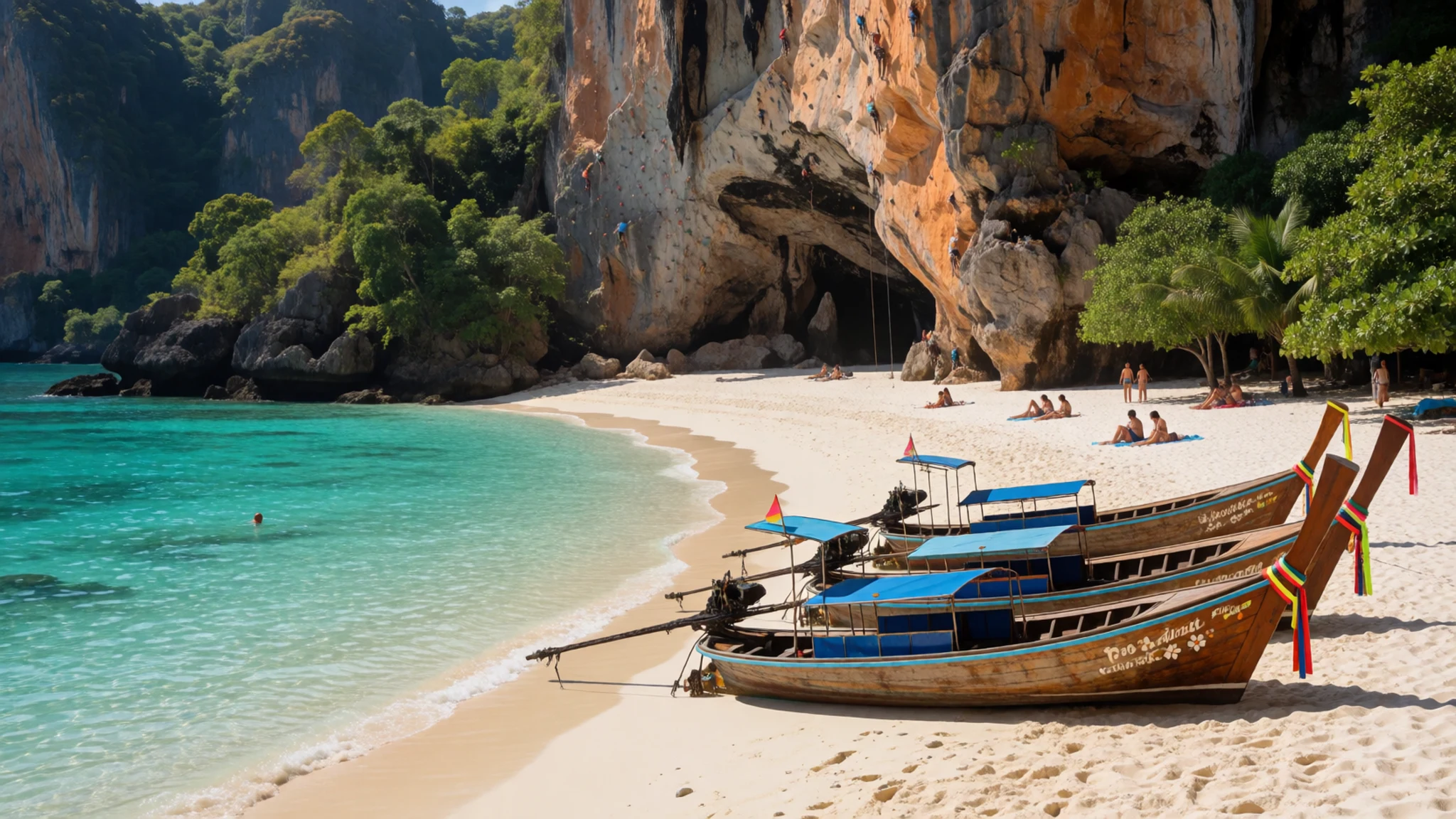
- Phra Nang Shrine — Phra Nang cave system
Phra Nang Shrine occupies a small seaside cave dedicated to the spirit of a drowned princess. Local fishermen and boat crews leave carved wooden phalluses decorated with red ribbons inside the grotto to secure safe voyages and prosperous catches along the coast.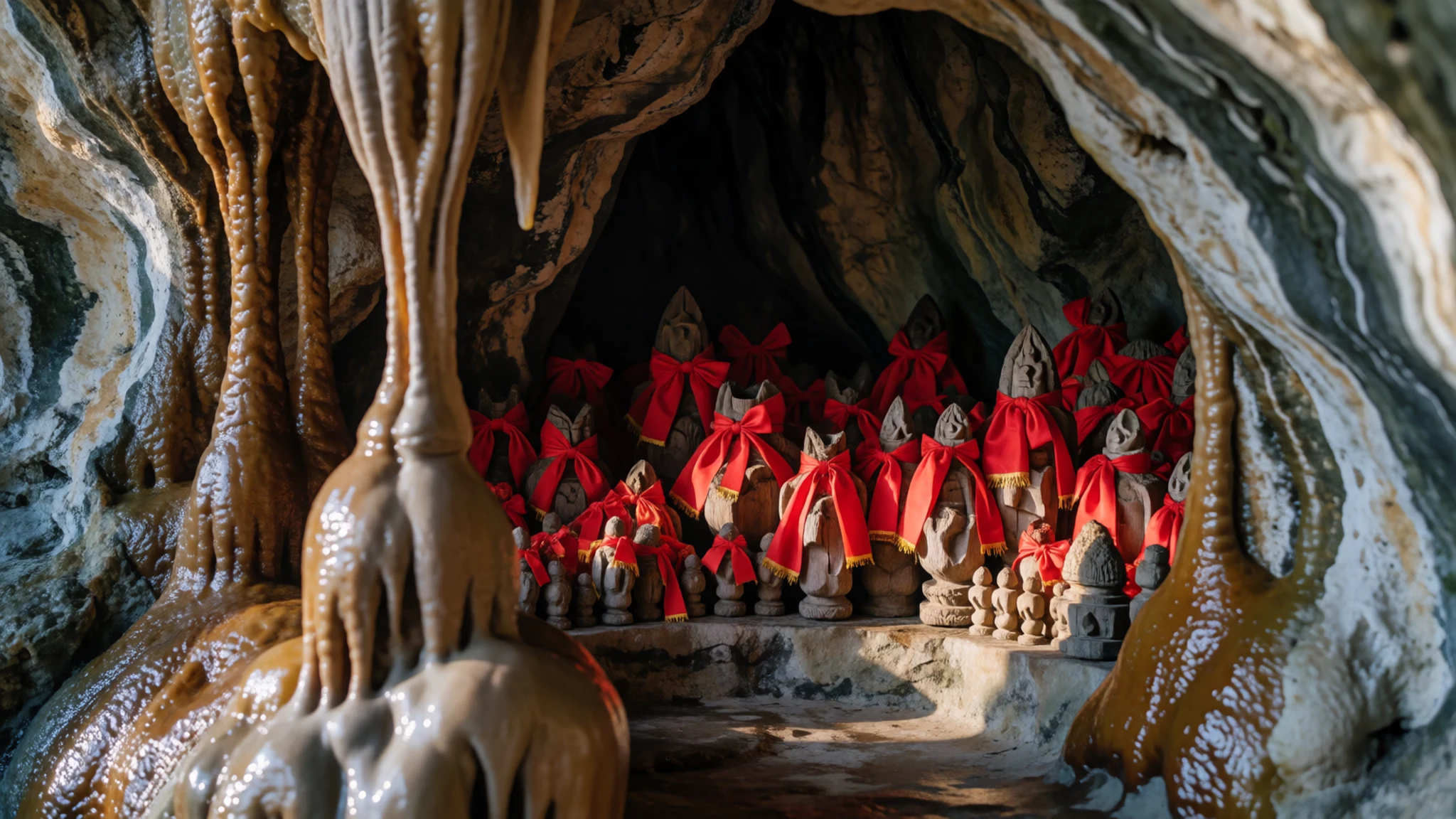
- Viewpoint and Lagoon Trail — Central peninsula ridge
The steep trail climbing up the limestone cliff leads to an elevated viewpoint overlooking both sides of the headland. A branching muddy path descends further down through jungle roots and rocks into a hidden tidal lagoon enclosed by vertical stone walls.
- Midnight Bioluminescence — Protected bays
Night swimming in the dark coastal waters reveals brilliant blue bioluminescence that lights up every movement in the sea. Disturbed water glows like neon light beneath the surface on moonless nights away from the resort lights.
- Limestone Climbing Routes — Cliffs across the peninsula
The towering karst formations provide hundreds of bolted routes up vertical and overhanging rock faces. Climbers from around the world tackle these seaside challenges using French grades while enjoying panoramic views across the Andaman Sea.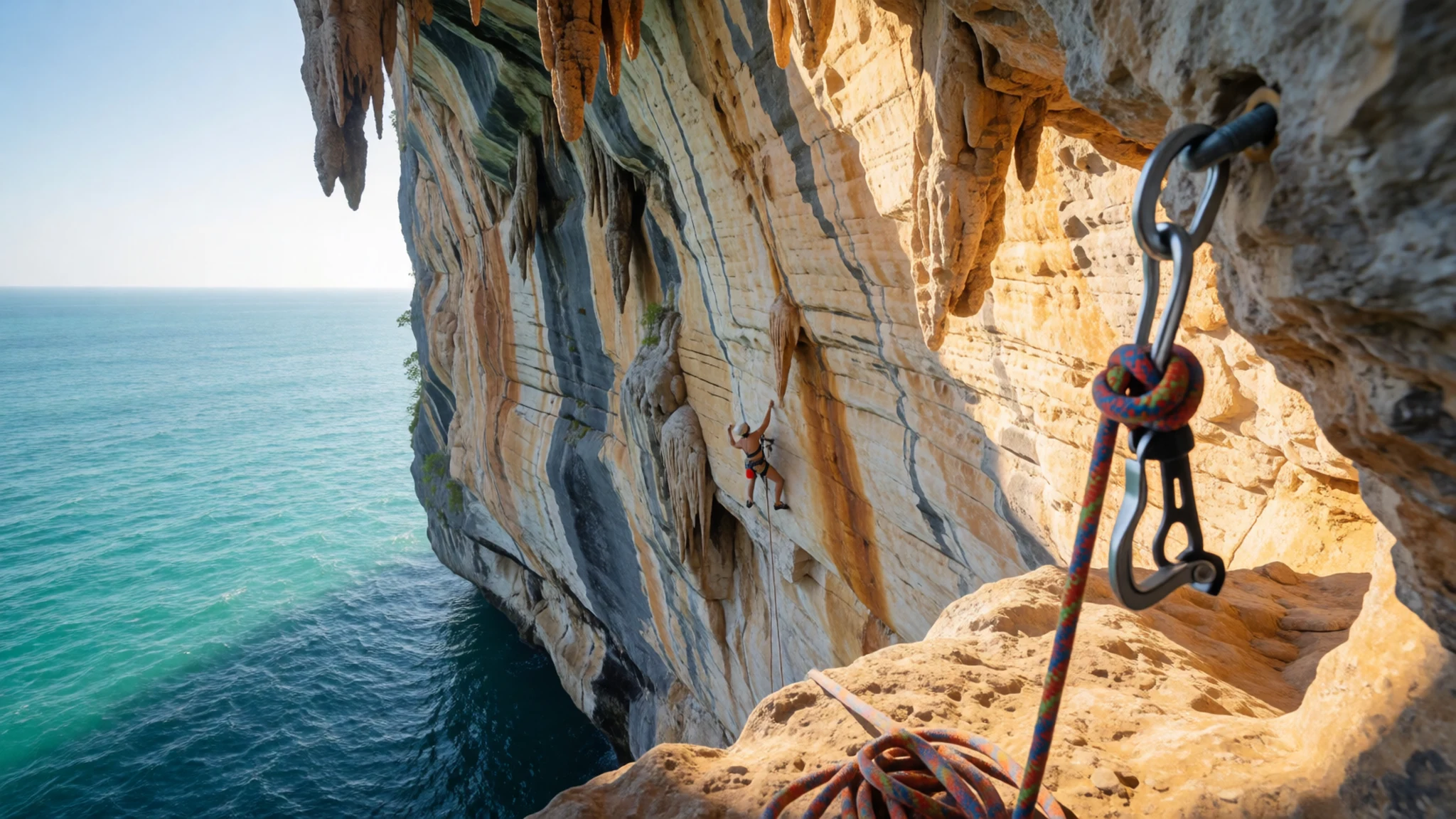
Culture
Railay Beach operates on island time, where daily life follows the movement of the tides and the arrival of wooden longtail boats from the mainland. The local community blends traditional southern Thai coastal customs with a relaxed international surf and climbing culture. Traditional beliefs remain strong, particularly around the sacred cave shrines where fishermen still offer respects to local spirits for safe sea passages. Respect for the natural environment is essential, as the fragile marine ecosystem and dramatic cliffs require careful preservation against the pressures of modern tourism. Visitors should cover up appropriately when walking away from the immediate beachfront areas into local pathways or village spaces. Always remove your footwear when entering traditional shops, local homes, or sacred spaces where shoes are prohibited.
What to wear
Railay Beach style reflects a relaxed tropical climate where comfort and practicality take priority over formal attire. Traditional southern Thai coastal dress historically favoured light cotton garments suited for high humidity and seafaring work, though today's peninsula fashion is shaped almost entirely by beach life and rock climbing culture. Locals and long-stay residents typically wear breathable fabrics, shorts, vests, and sarongs that transition easily from sand to shaded jungle paths. Travellers spend most of their time in swimwear, boardshorts, and sandals or climbing shoes. When leaving the immediate shoreline to visit local establishments or walking paths, visitors should pull on a light shirt or sarong rather than remaining in swimwear alone. Sturdy footwear is recommended if tackling the steep dirt trails leading up to the viewpoint and hidden lagoon.
What to eat
- Southern Thai Curries — East Railay boardwalk eateries
Rich coconut milk curries seasoned with fresh turmeric, lemongrass, and fiery local chillies provide the signature heat of the coastal region. You can find fragrant bowls served with steamed jasmine rice at casual open-air wooden eateries along the East Railay boardwalk.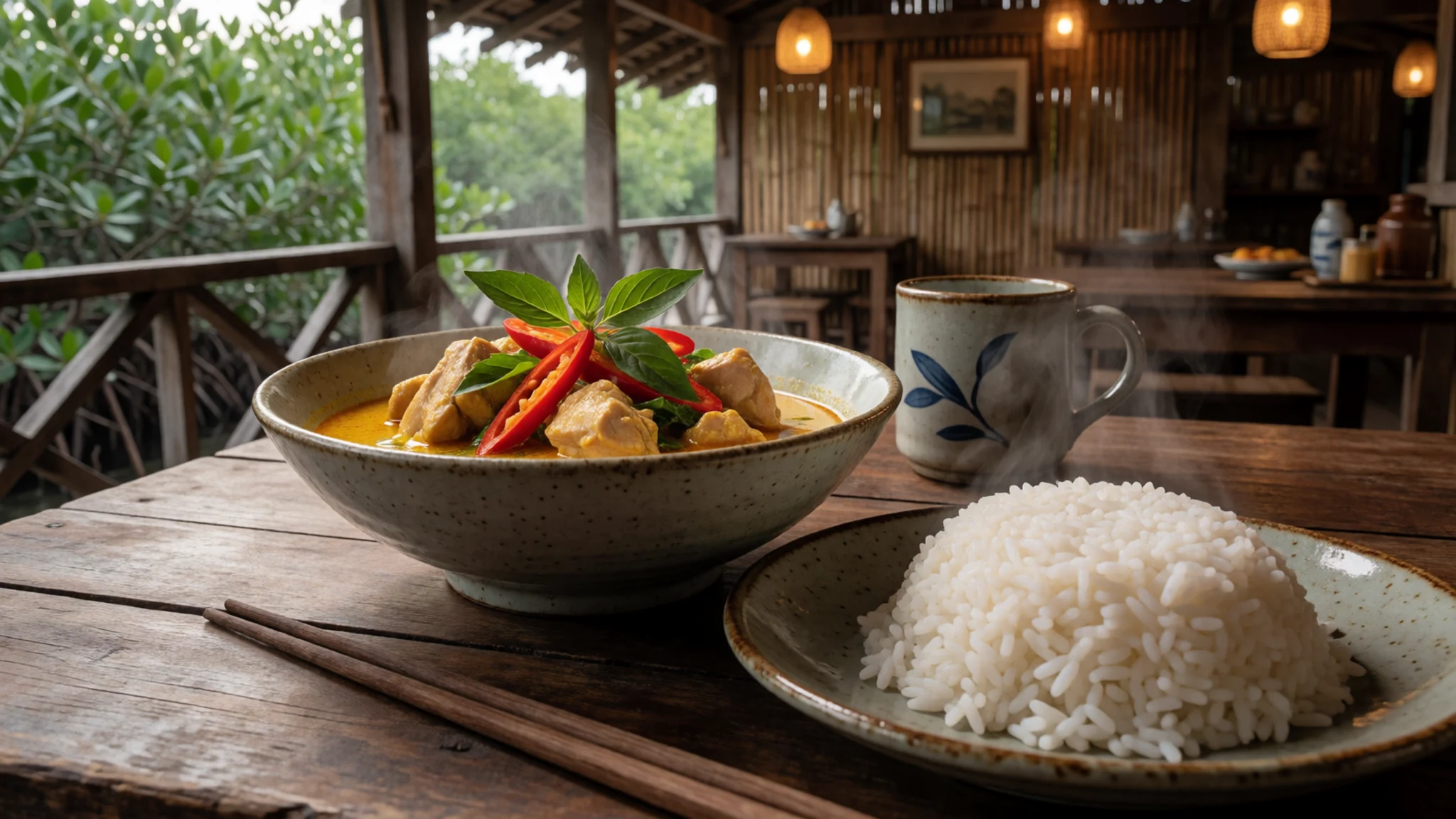
- Beachside Barbecue Fish — Beachfront food stalls
Fresh catch from local waters seasoned with salt, garlic, and lime is grilled over hot coals directly beside the sand. Simple open-air shacks along the western and southern waterfronts serve these whole fish alongside spicy dipping sauces every evening.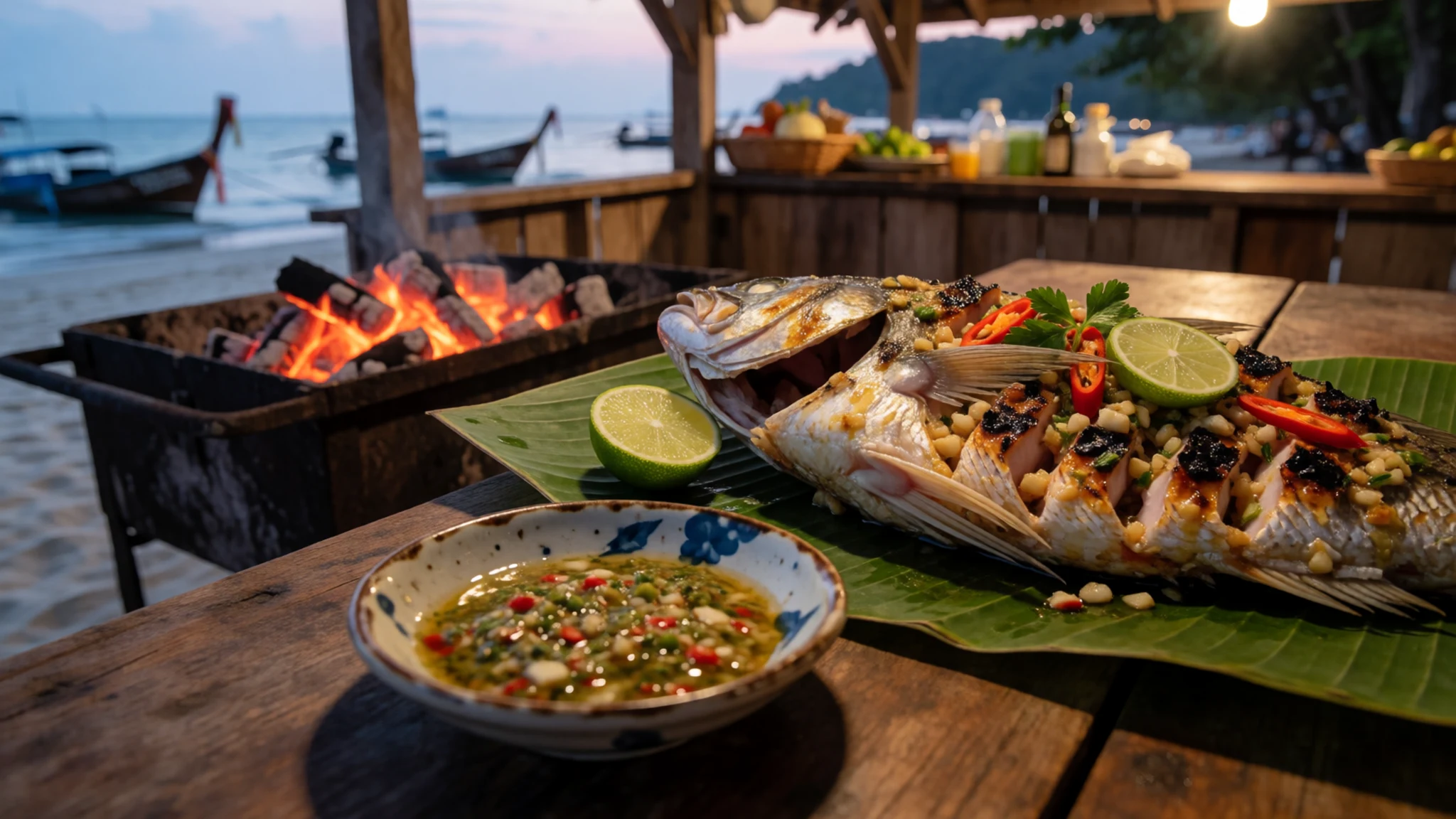
- Pad Thai and Stir-fries — Hidden village alleyways
Classic rice noodles tossed in tamarind sauce with peanuts, bean sprouts, and prawns remain a staple across every kitchen on the peninsula. Small family-run kitchens tucked away along walking paths serve these reliable dishes at friendly prices throughout the day.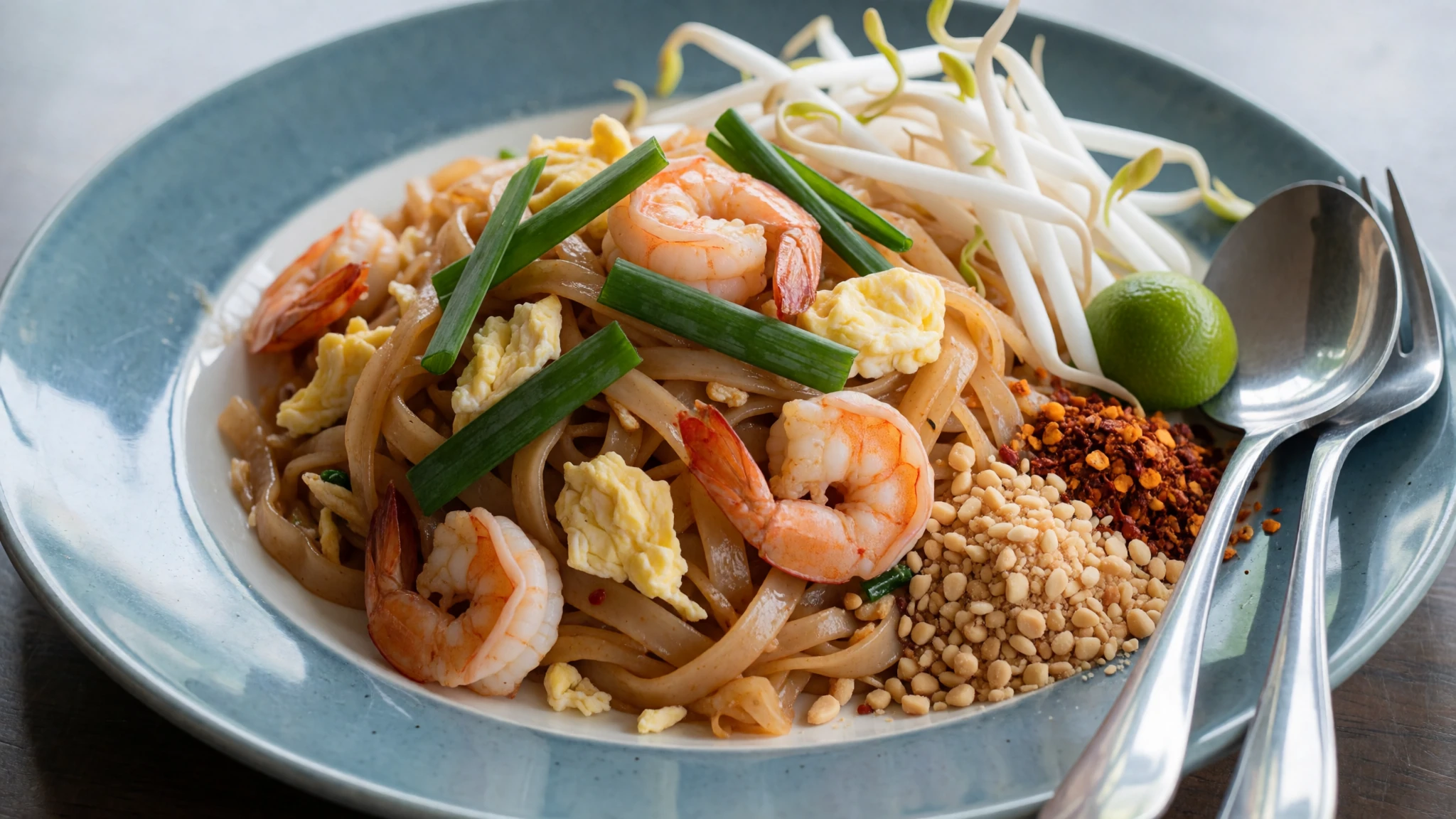
- Tropical Fruit Smoothies — Walking street juice stands
Cold blended drinks made from fresh mango, pineapple, dragon fruit, and banana provide instant relief from the tropical heat. Beachfront drink bars and small fruit stands along the central walking street prepare these refreshing refreshments on demand all afternoon long. - Spicy Green Papaya Salad — East Railay local kitchens
Crisp strips of raw green papaya pounded in a mortar with lime juice, fish sauce, palm sugar, chillies, and peanuts deliver a sharp, refreshing crunch. Local kitchens along the east coast serve this vibrant salad alongside grilled meats and sticky rice.
Plan it
Best time. December to April brings drier weather and calmer seas for boat arrivals, with April the hottest month, while the monsoon season from May to November brings heavy tropical downpours, peaking in September and October.
How long. 3–4
Getting there. Arrive by flight into the mainland gateway, then take a shared longtail boat from Ao Nang, Ao Nammao, or Krabi Town directly onto the sand.
Budget. mid
Tips
- Pack light luggage that you can carry through shallow surf when stepping off longtail boats
- Carry sufficient cash as ATMs on the peninsula can occasionally run out or fail
- Start early in the morning to tackle the steep viewpoint and lagoon trails before peak heat
- Protect against mosquitoes by using repellent, especially around shaded jungle paths
Etiquette
- Remove footwear when stepping inside local shops, guesthouses, or sacred cave shrines
- Cover up with a shirt or sarong when walking away from the immediate beach areas
- Refrain from purchasing or commissioning tattoos from unverified beach operators
Nearby
Sources
- Wikidata Q664877 (CC0)
- Wikipedia Railay Beach (CC BY-SA 4.0)
- Wikivoyage Rai Leh (CC BY-SA 4.0)