Querétaro
Querétaro, Mexico
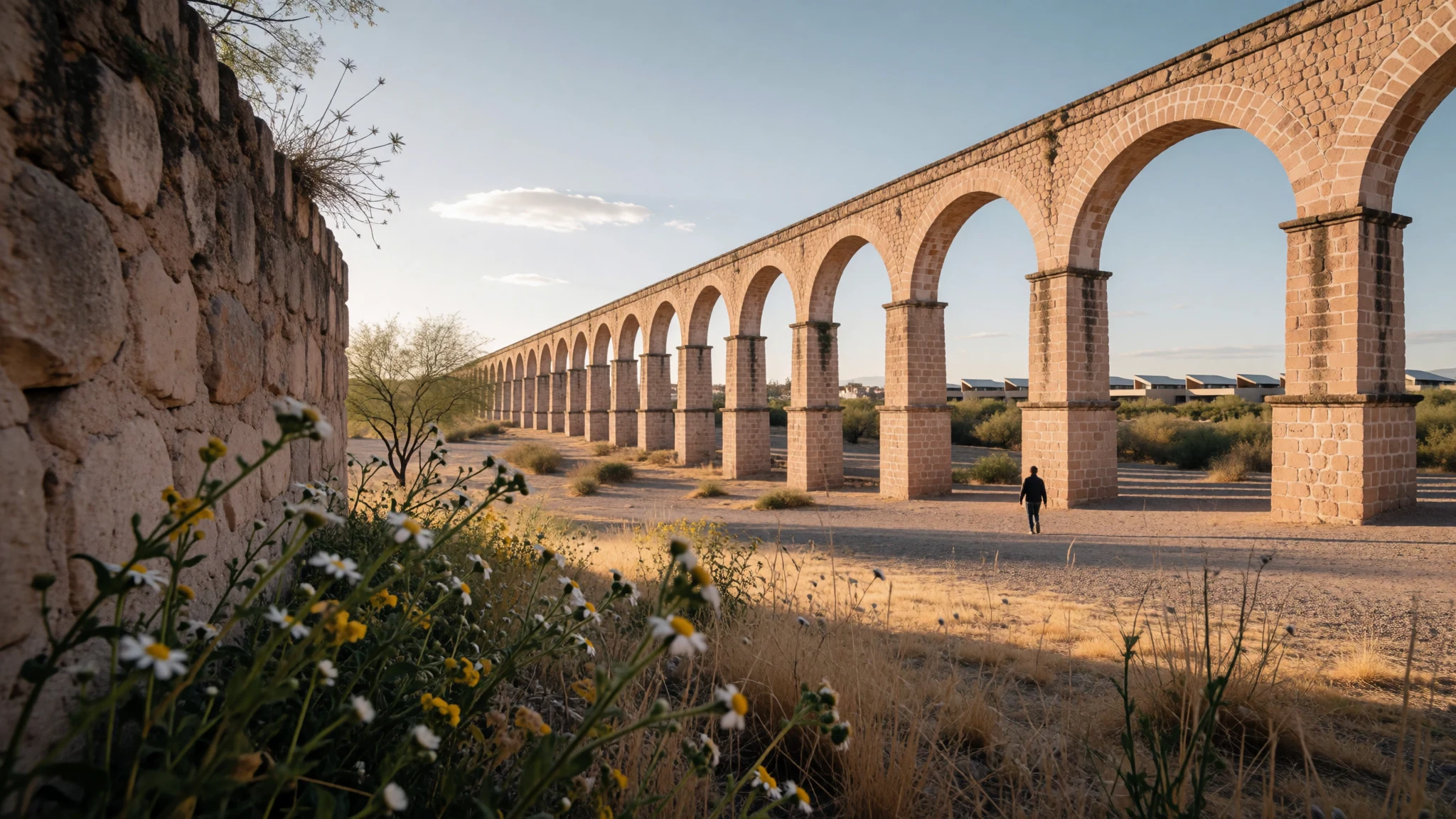
Querétaro is a walkable colonial centre on the central Mexican plateau, with baroque churches, convent museums and lively evening plazas, within reach of Mexico City.
The place
Querétaro sits on the high plateau of central Mexico, at 1,820 m above sea level, in the Bajío region, and is the capital of its state. About 795,000 people live in the city, and the number keeps climbing, pulled upward by jobs in data centres, logistics, aircraft maintenance, car and machinery plants and food production. Newcomers from elsewhere in Mexico have given the place a busy, settled, slightly corporate energy outside the old core.
The historic centre is what visitors come for. Baroque church fronts, former convents turned into museums and small plazas lie within an easy walk of one another, and the pace changes the moment the ring road is behind you. Evenings are the best hour: families fill the plazas, musicians set up, and café terraces spill onto pedestrian lanes. The altitude keeps nights cool even when afternoons are hot and bright.
Distance helps a short trip. The city is about 213 km from Mexico City, about 63 km from San Miguel de Allende and about 200 km from San Luis Potosí, so it works as a base or a stop on a longer loop through the colonial highlands.
There are honest caveats. The modern city sprawls, and its outskirts are mostly industrial parks and housing estates. The centre can feel crowded on holiday weekends. For current events and opening details, the official tourism page is https://queretaro.travel/lugares/santiago-de-queretaro/.
Its story
Querétaro's story begins long before the Spanish arrived. Around AD 200, groups moving north from central Mexico settled this valley, and finds at archaeological sites show contact with Teotihuacan. Two centres, Toluquilla and Las Ranas, grew up in the Classic period, while the hill known as El Cerrito served as a ceremonial site before being abandoned for reasons nobody has pinned down.
Later the Otomi came to dominate the area, living in clan-like groups with their own territories, in houses of stone, wood or adobe. In the 1440s the region fell under the Otomi lordship of Xilotepec, itself a tributary of the Aztec empire. By the late 15th century Aztec officials were running it directly, treating it as a buffer against the Chichimeca lands to the north. Otomi and Chichimeca communities are still found here.
The Spanish town dates from 1531. Its full name, Santiago de Querétaro, carries that colonial layer, while the Otomi name Dähnini Maxei survives beside it. Churches and convents followed, and many still anchor the centre today.
The city also turns up at several turning points in Mexican history. The Teatro de la República staged the trial of Emperor Maximilian I, the 1917 Constitution was drafted there, and the national anthem was first played in the same building. Maximilian spent his last night before execution at the Santa Cruz convent, which is why the place draws history-minded visitors as well as church-goers.
What to see
- Teatro de la República — Historic centre
A theatre with unusual weight in Mexican history: Emperor Maximilian I was tried here, the 1917 Constitution was written here, and the national anthem was first played in its hall. It stands on the edge of the old centre, an easy stop between plazas. Check the official site for visiting arrangements.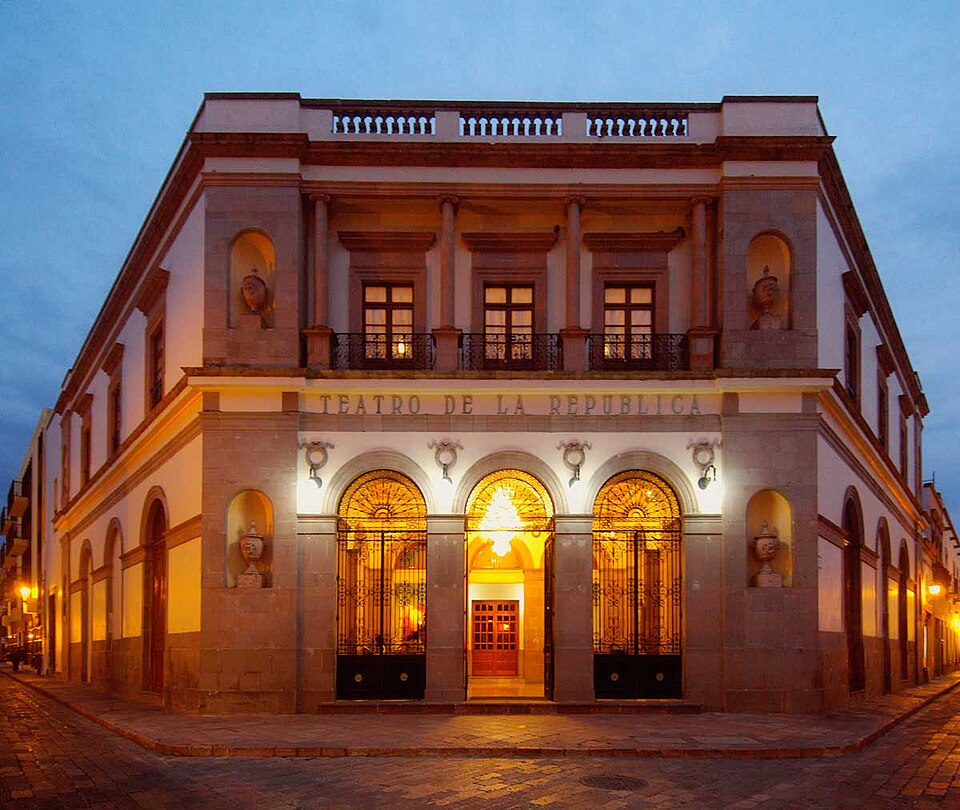
- Templo de Santa Clara — Historic centre
A baroque church whose interior glows with gilded altarpieces and carved detail. Allow time to let your eyes adjust and take in the layers of ornament, from side altars to ceiling. It is a working church, so Mass times affect when it is calm enough to look around. - Templo y Convento de la Santa Cruz — Santa Cruz hill, just south of the centre
A gilded baroque church and convent where Maximilian spent his last night before execution. Look for the pink stone cross in the grounds and the tree whose spines grow in the shape of crosses, which local tradition links to the convent's founding. A little uphill from the centre. - Templo y Exconvento de San Francisco de Asís — Historic centre
An old convent church that once served as the city's cathedral. Its cloister and museum rooms give a feel for how religious life shaped the colonial town. It faces the central plaza area, so it combines well with a coffee stop and a stroll along the pedestrian lanes. - The aqueduct — East of the centre
A long line of tall stone arches carrying the eye across the eastern side of the city, built to bring spring water to the colonial town. It looks best at golden hour from a nearby viewpoint, when the stone turns warm. It is a short taxi or bus ride from the centre.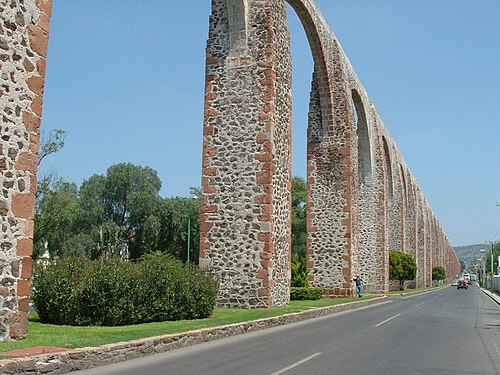
- Jardín Zenea and the central plazas — Historic centre
The plaza at the heart of the pedestrian centre, where the city comes out in the evening. Benches, bandstand music, balloon sellers and ice-cream carts surround a garden bordered by arcades and church fronts. It is the simplest place to watch local life and to get oriented.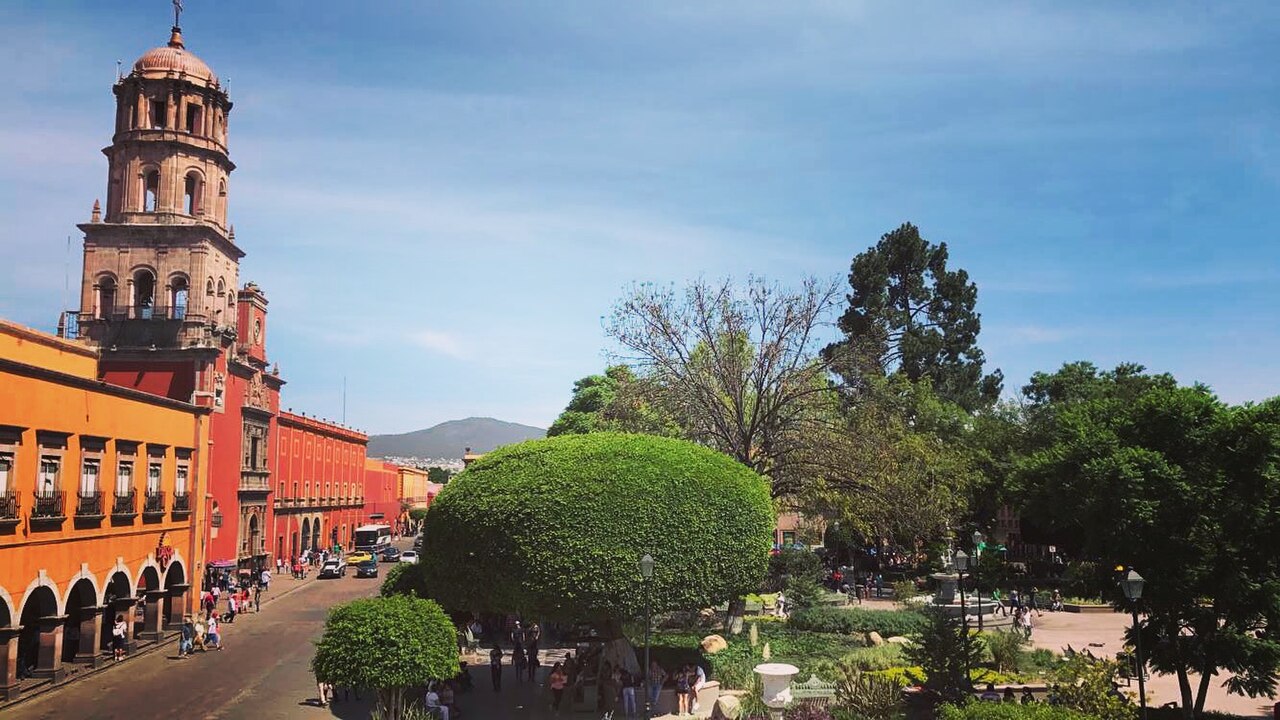
Culture
Querétaro's culture rests on several layers: Otomi and Chichimeca communities who remain part of the region, a Catholic colonial inheritance, and a newer professional class drawn by the city's industry. Religion shows in the daily rhythm. Churches in the centre are working parishes, and Mass, weddings and saints' day processions go on around visitors, with fireworks and brass bands often announcing a festival before anything is visible.
Public life happens outdoors. On weekend evenings families, couples and students share the plazas, bands play, and vendors sell snacks, balloons and sweets. The city takes pride in its place in national history, which is why the theatre, the convents tied to Maximilian and the republican story feature in school visits and civic ceremonies.
Spanish is the everyday language. Otomi survives mainly in rural communities and craft traditions, and its name for the city, Dähnini Maxei, turns up in some heritage material. The arts are well served, with museums in former convents, music in the plazas and a steady calendar of festivals; the official tourism page lists current dates.
People are polite and fairly formal in greetings. A friendly 'buenos días' or 'buenas tardes' on entering a shop, restaurant or lift is expected and appreciated, and a little Spanish goes a long way.
In working churches, step in quietly, keep your voice low and the flash off, and do not photograph worshippers at prayer without asking.
What to wear
In Querétaro, traditional dress belongs mostly to the Otomi communities of the state. Women's clothing there includes embroidered cotton blouses, wool or cotton shawls and the quechquémitl, a poncho-like shoulder garment, with bright thread patterns of flowers and animals. Such outfits are worn for festivals, on saints' days and at markets, and craft stalls sell embroidered cloth and handmade dolls dressed in the style.
On the city streets, daily dress is modern and fairly smart. Office workers in the industrial and technology sectors wear business casual, students favour jeans and trainers, and families dress up a little for church and Sunday evenings in the plaza. Young people follow national and international trends, and a neat, put-together look is the norm in the centre.
For visitors, the climate comes first. At 1,820 m the sun is strong and days can be hot, but evenings and winter mornings turn cool enough for a light jacket or cardigan. Layers work better than heavy clothing. Summer afternoons bring rain, so a small umbrella or light waterproof helps.
Churches are active places of worship, so shoulders and knees covered is a sensible rule when stepping inside. Leave very short shorts and sleeveless tops for the hotel. The old centre has uneven cobbles and stone pavements, so choose comfortable closed shoes or sturdy sandals with grip rather than thin soles or high heels.
What to eat
- Tamales and atole — Home-style tamale stalls and morning markets around the centre
Tamales from the Sierra Gorda area are steamed in corn husks and filled with red-sauce goat cheese, strips of chilli pepper (rajas) or pork. Eaten with warm atole, a thick corn drink, they make a classic breakfast or supper. - Enchiladas queretanas — Market food counters and family-run eateries in the centre
A local take on enchiladas, with tortillas dipped in a red chilli sauce, fried, then topped with potato, carrot, cheese and lettuce. The sauce is warming rather than fiery, and portions are generous enough to share. - Gorditas — Street stalls and small eateries near the plazas
Thick corn pockets cooked on a griddle and stuffed with stewed fillings such as chicharrón, beans or cheese. They are filling, cheap and quick, and best eaten hot, with salsa from the jars on the counter. - Tacos and roast chicken — Neighbourhood taquerías and roast-chicken shops
Everyday eating in the city includes tacos filled with grilled or stewed meats and roast chicken sold as a family meal with tortillas, salsa and sides. Casual and good value, it is the practical choice after a day of walking. - Regional wine and cheese — Vineyards outside the city; cheese and wine shops in the centre
The countryside around Querétaro has a growing wine industry, including a producer from Spain, and local cheeses sold alongside it. Many visitors take a half-day wine route outside the city, with tastings of red, white and sparkling wines.
Plan it
Best time. February–April and October–November, when days are sunny and dry and the highland nights are cool. May can be hot, and summer afternoons usually bring rain, though mornings are often clear.
How long. 2–3
Getting there. Fly to Querétaro airport, where Coordinados buses run to the city roughly every one to two hours, or arrive by long-distance bus from Mexico City, Guadalajara and other major cities. The bus station is on the edge of the city, with separate terminals for first-class and for local and regional second-class lines; a taxi or local bus covers the last leg to the centre.
Budget. mid
Tips
- Walk the historic centre in the morning and again after dark, when the plazas come alive
- Check the official site for festival dates, as hotels and restaurants fill up on holiday weekends
- Carry some cash for market stalls and small eateries, although larger places take cards
- Drink bottled or filtered water, and use sun protection, as the altitude makes the sun strong
- Book bus tickets online ahead for busy holiday periods
Etiquette
- Greet staff with a quick 'buenos días' or 'buenas tardes' when entering a shop or restaurant
- Dress modestly and keep quiet when entering a working church
- Ask before photographing people, especially at religious events
Nearby
Sources
- Wikidata Q173121 (CC0)
- Wikipedia: Querétaro (city) (CC BY-SA 4.0)
- Wikivoyage: Querétaro (CC BY-SA 4.0)
- Photo: Acueducto Qro (public domain) (Public domain)
- Photo: Santiago de Querétaro (Microstar) (CC BY-SA 4.0)
- Photo: Teatro de la Republica, Querétaro (Comisión Mexicana de Filmaciones) (CC BY-SA 2.0)
- Photo: Centro histórico de Santiago de Querétaro (Microstar) (CC BY-SA 4.0)
- Photo: Templo de Santa Rosa de Viterbo (Juan Carlos Fonseca Mata) (CC BY-SA 4.0)
- Photo: Statue of Conin (Xulio Sandoval) (CC BY 3.0)
- Photo: Museum of Art, Querétaro (Lovesussie) (CC BY-SA 1.0)
- Photo: Emperor Maximilian Chapel (Ruiz) (CC BY-SA 2.0)


