Pyrenees
Pyrenees, Spain
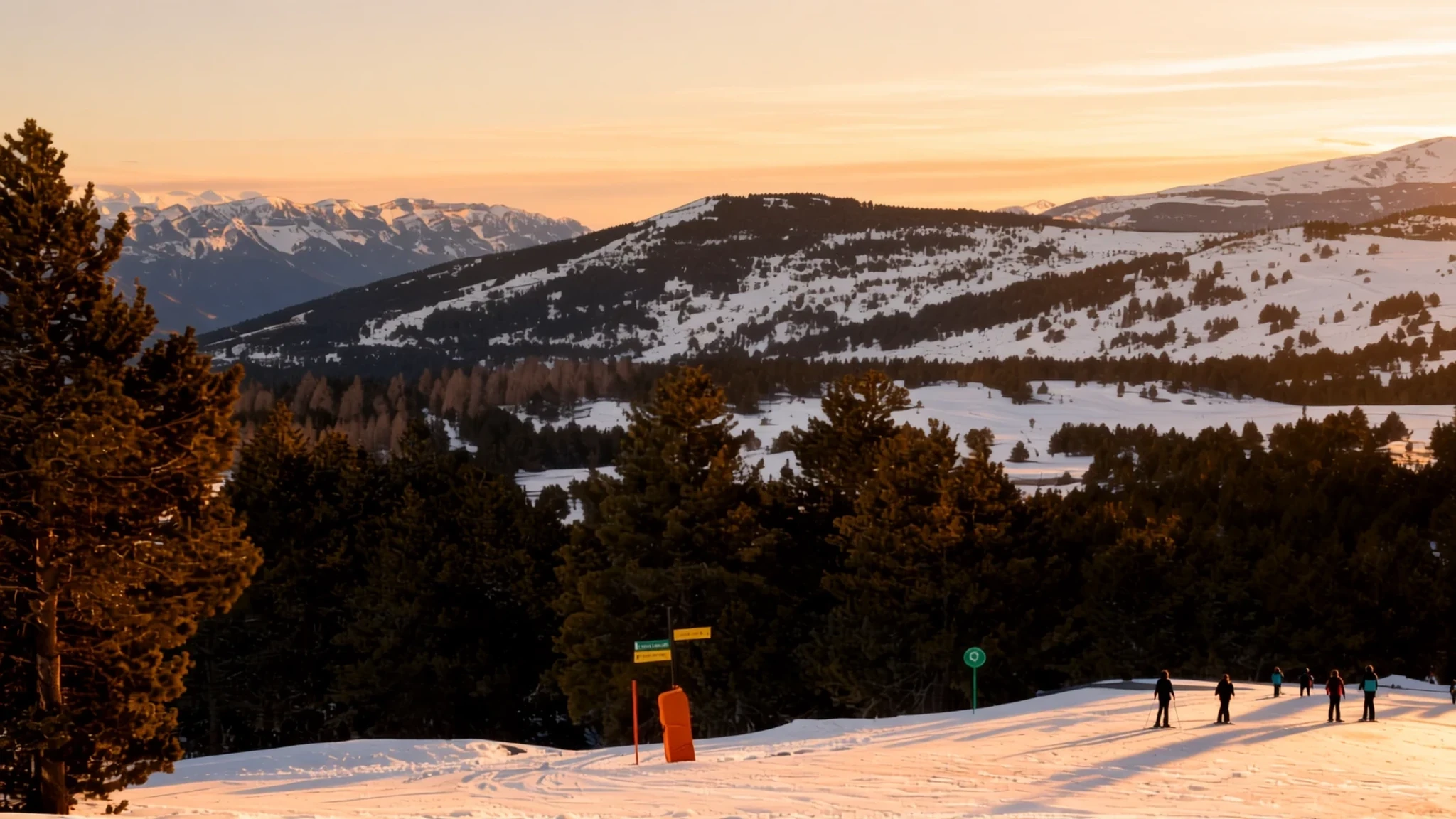
A long mountain wall between France and Spain, where valleys, passes and high pastures reward patient walkers in summer.
The place
The Pyrenees form a long wall of mountains between France and Spain, with the small principality of Andorra tucked into the middle. Crossing the range means moving between two countries, several languages and two very different climates. The western end catches wet Atlantic air and stays green, while the eastern end is drier and more open. The highest point is Aneto, at 3,404 metres, in the Maladeta massif on the Spanish side. Its neighbours Posets and Monte Perdido are only slightly lower, and the central section around them is the wildest part of the chain.
The range divides naturally into three stretches. The western Pyrenees rise gradually from the Basque hills towards the east. The central Pyrenees hold most of the big summits and the glaciers that linger on the northern slopes. The eastern Pyrenees end in the Albères, where the crest drops sharply towards the Mediterranean.
Most of the lower slopes are wooded, with beech and pine, and above the trees come high pastures where sheep and cattle graze in summer. Villages sit in valleys cut by fast rivers, and roads climb to passes and tunnels that link one side to the other. Winter brings reliable snow to the high resorts, while summer is the season for walking, when the mountain refuges fill up.
Its story
The Pyrenees have long been a border that people crossed as much as they guarded. Romans quarried the marble of the range, and for centuries its valleys carried trade, pilgrims and armies across the passes. Over time the crest became a political line, though never a simple one. The Crown of Aragon and the Kingdom of Navarre once spread across both slopes, so families and dynasties held land on either side. The modern borders, between Spain and France and around Andorra, are more recent than the routes that linked the valleys. Shepherds still move flocks between summer pastures and winter lowlands, and some of the old transhumance tracks are now walking paths.
Mountain life shaped a rough, self-reliant culture. Valley communities built stone houses and bridges, kept their own dialects and customs, and relied on seasonal grazing and small-scale farming. Industry came in patches: quarries, forestry and, later, hydroelectric schemes that changed the rivers. Tourism grew through the twentieth century, and spa towns and ski stations followed. Conservation came later, with national parks on both sides of the border protecting wild country and its wildlife, including the brown bear that survives in a few remote valleys. The story is less about one kingdom than about many people who used the same high ground, and who still do.
What to see
- Aneto and the Maladeta ridge — Huesca, Aragon, Spain
Aneto and the Maladeta ridge sit in the central Pyrenees on the Spanish side, and Aneto is the range's highest summit at 3,404 metres. The climb is a serious mountain day, not a stroll: expect scree, lingering snow into early summer, and weather that can turn quickly. Go with a guide, check conditions locally, and start before dawn.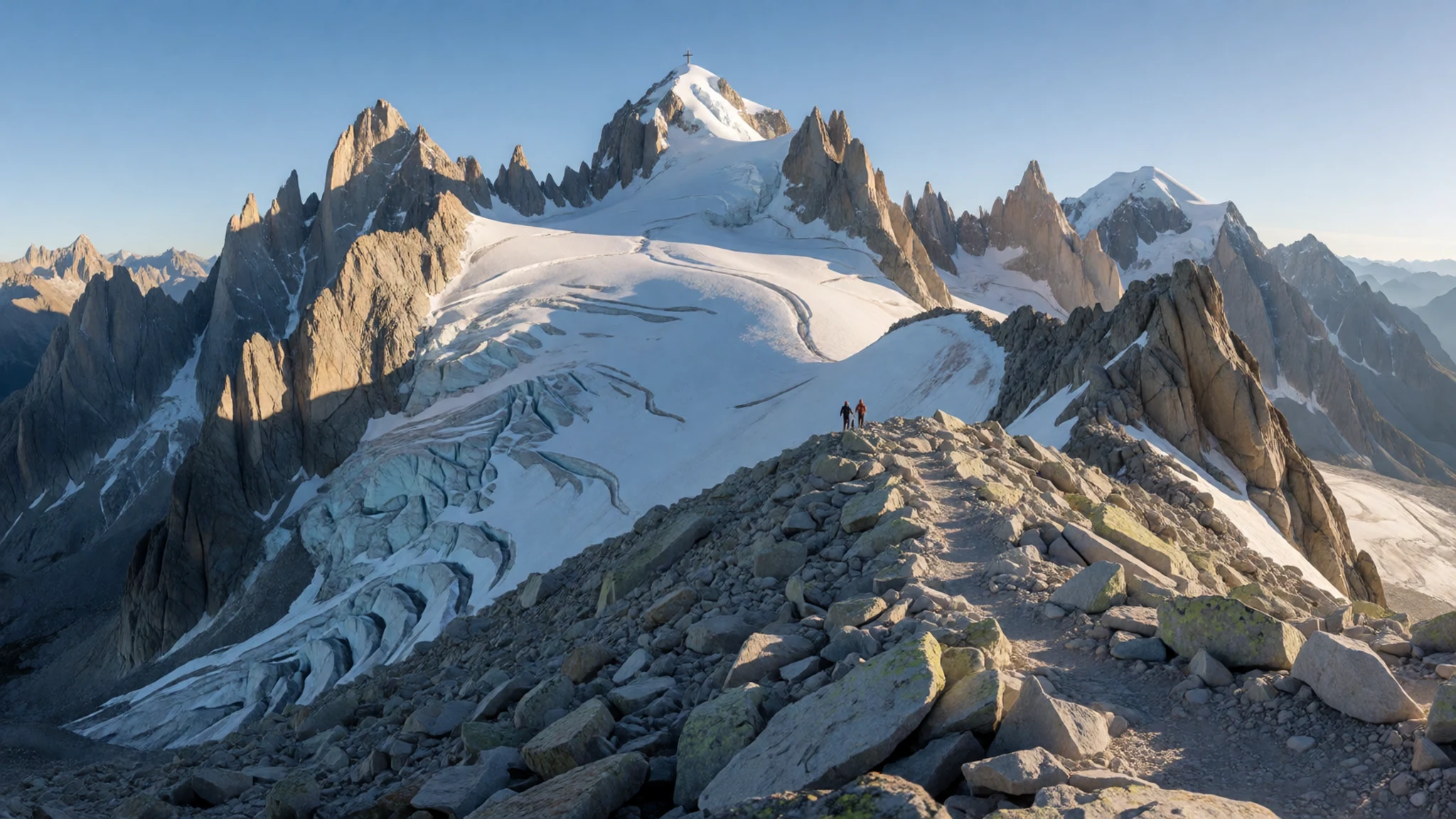
- Cirque de Gavarnie — Hautes-Pyrénées, France
The Cirque de Gavarnie on the French side, near the village of Gavarnie, is a great horseshoe of rock walls with waterfalls dropping from its rim in summer. A valley path leads up from the village, so the walk needs no technical climbing. Set off early for quieter paths and wear sturdy boots, since the final stretch is rough and wet.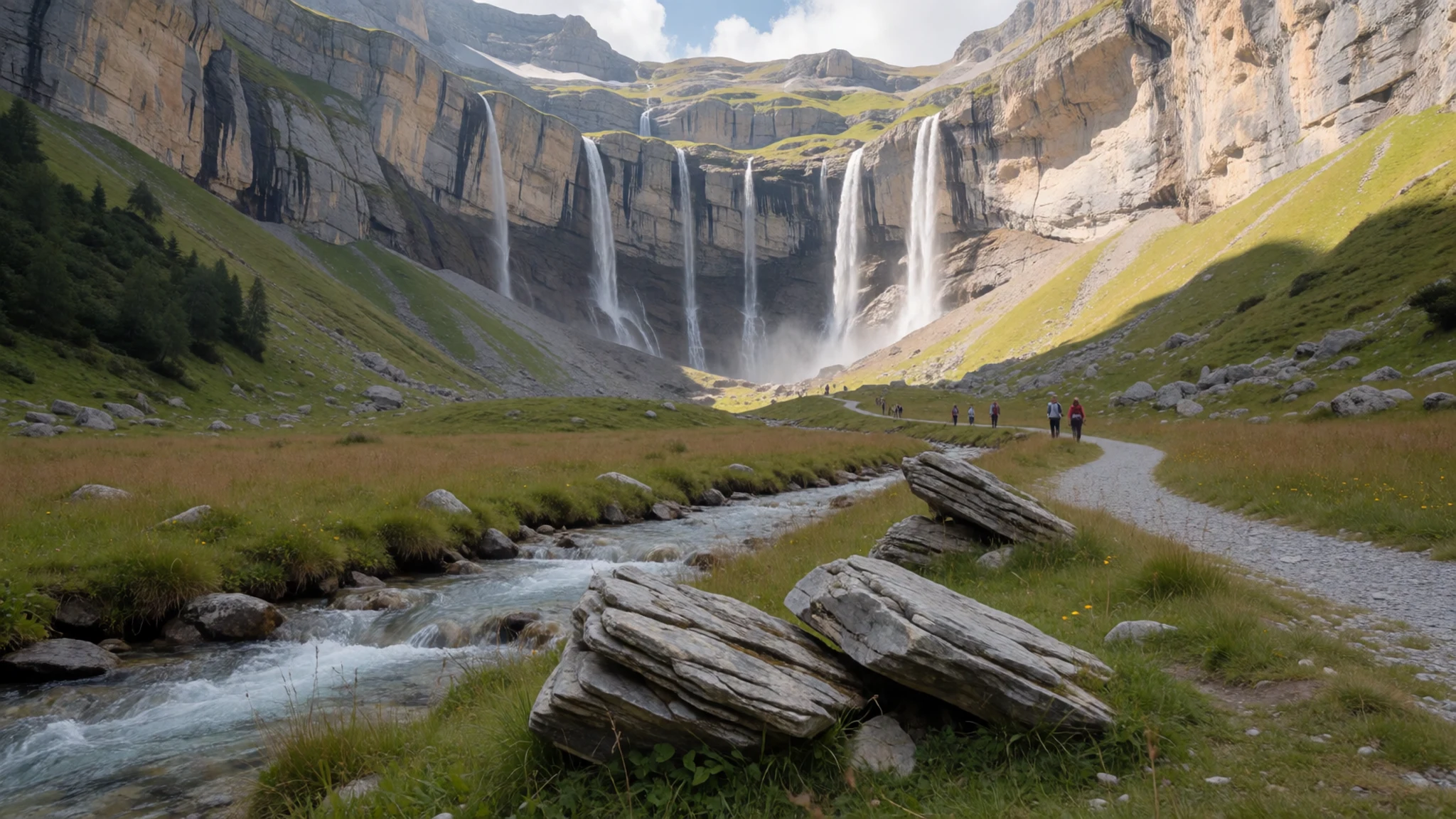
- Pedraforca — Berguedà, Catalonia, Spain
Pedraforca is the sharp, double-humped peak in the Catalan Pre-Pyrenees, the one you will recognise from photographs taken across the plains. Its rocky summit is a classic scramble with a famous ridge, so it suits experienced hikers. Most visitors admire it from valley roads and the refuge trails below. Bring a map, water and a warm layer, because the weather changes quickly up there.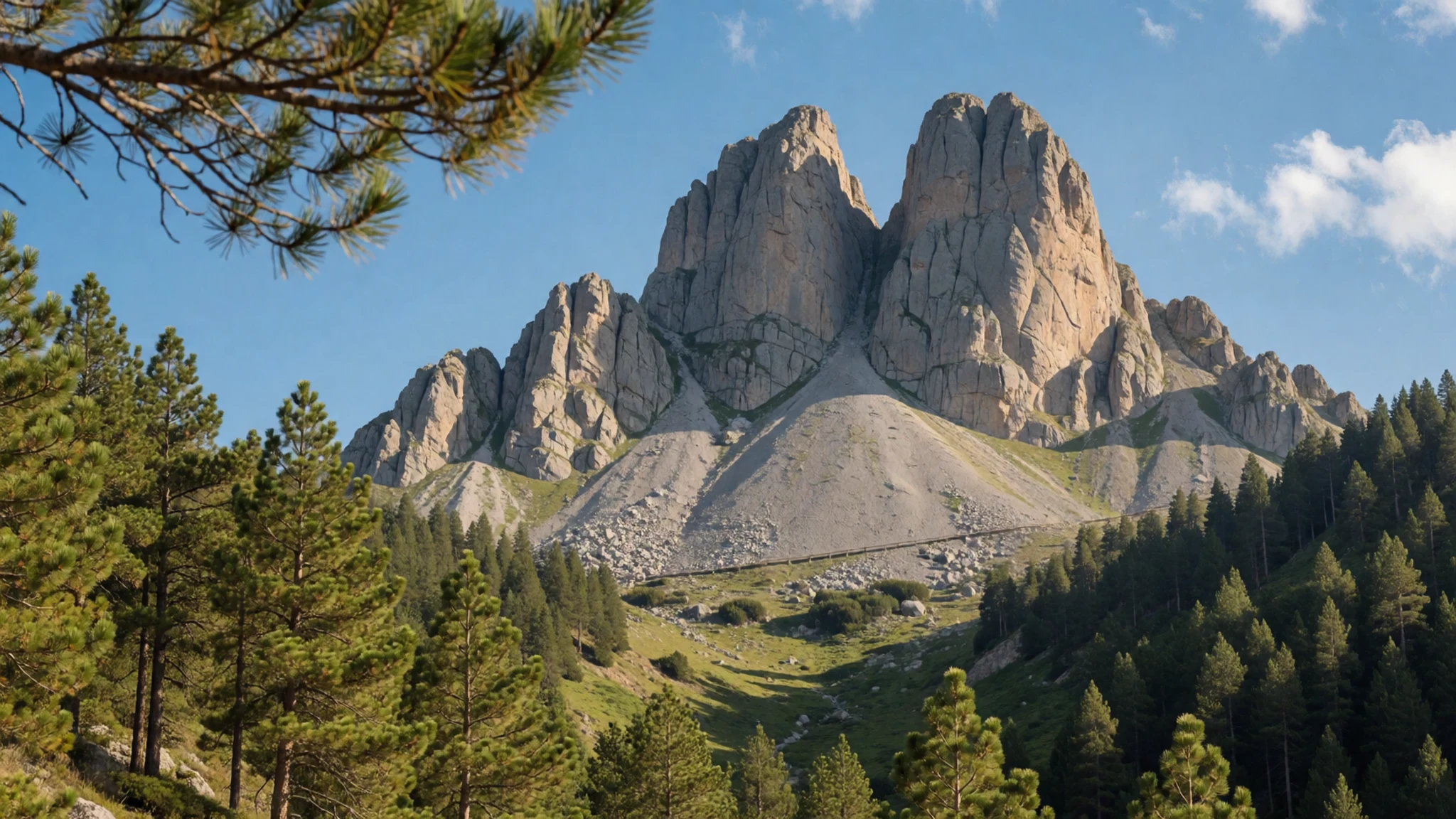
- Estany de Sant Maurici — Lleida, Catalonia, Spain
Estany de Sant Maurici lies inside Aigüestortes i Estany de Sant Maurici National Park on the Spanish side. The lake sits among pines and rock, with gentle paths around its shore. The park is busy in summer, so arrive early, especially at weekends, when parking near the lake fills up.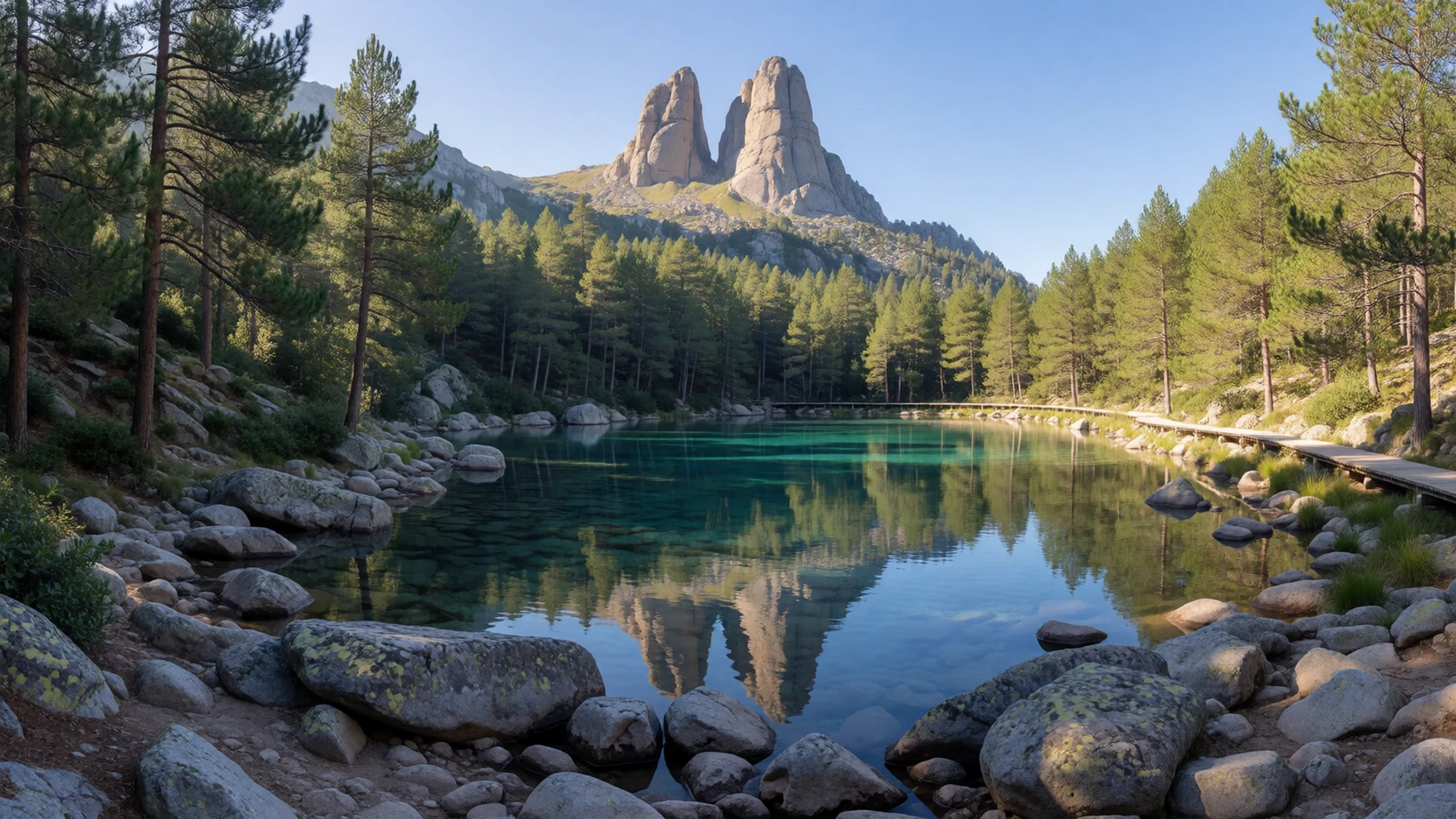
Culture
The Pyrenees are shared by several languages and traditions. In the Basque country at the western end, Euskara sits alongside French and Spanish, Catalan is spoken in the eastern valleys, and Occitan has a presence in the French valleys. Village life revolves around festivals, communal meals and the pastoral calendar, when flocks move up to high pasture in late spring and come back down in autumn. Mountain refuges, called refugis in Catalan and refuges in French, are run by guardians who expect hikers to be self-sufficient and considerate. Many valleys also remember the smugglers and border walkers who once crossed the passes on foot, and some villages still keep old dance and music traditions. Keep noise low in shared refuges after dark, and do not walk through fenced pastures where guardian dogs are working with sheep. Keep your distance from bears and livestock, and never leave food where an animal could reach it.
What to wear
Traditional dress in the Pyrenees varies from valley to valley, shaped by sheep farming and the cloth it produced. In the Basque hills, the black beret, the txapela, is still worn by older men and at festivals, and the red-and-white Basque textiles come from the same weaving heritage. Wool was the core material: thick woven cloth, knitted socks and capes that kept rain off shepherds on long days. Linen and hemp were common in farm households. In Béarn and parts of Gascony, the beret and wool jackets remain part of rural dress.
Today most people dress much like anyone in a European town, with jeans, jackets and walking boots, and in the mountains practical outdoor clothing is standard. Visitors should plan for big temperature shifts within a single day, so pack a waterproof shell, a fleece, a warm hat and gloves, even in summer. Wear boots with good grip for scree and wet grass, and bring a sun hat, because the sun is strong at altitude. In villages and churches, cover your shoulders, and keep swimwear for the lake shore.
What to eat
- Pyrenean lamb — village restaurants and Sunday markets in the valley towns
Lamb is the mountain meat, often roasted slowly over wood or cooked in stews with white beans and herbs. Pyrenean lamb grazes the summer pastures, so its flavour shifts with the season. Look for it on menus in village restaurants and at Sunday markets in the valley towns.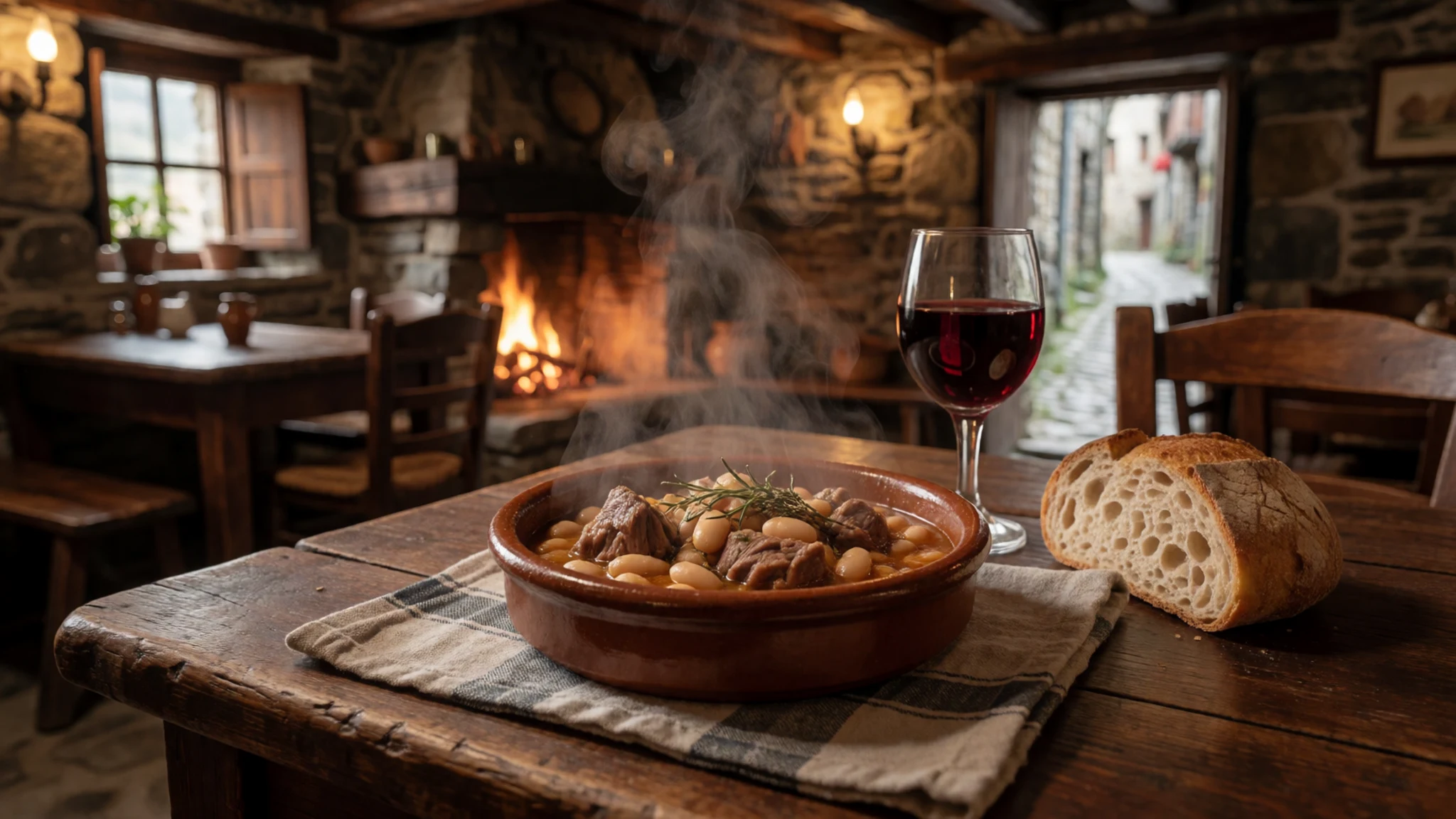
- Ossau-Iraty cheese — cheese shops and farm stalls in Béarn and the Basque villages
Ossau-Iraty is a firm cheese made from sheep's milk in the western Pyrenees, with a nutty, buttery taste that deepens with age. Ask for a tasting plate in cheese shops and farm stalls, where you can compare young and aged wheels before buying.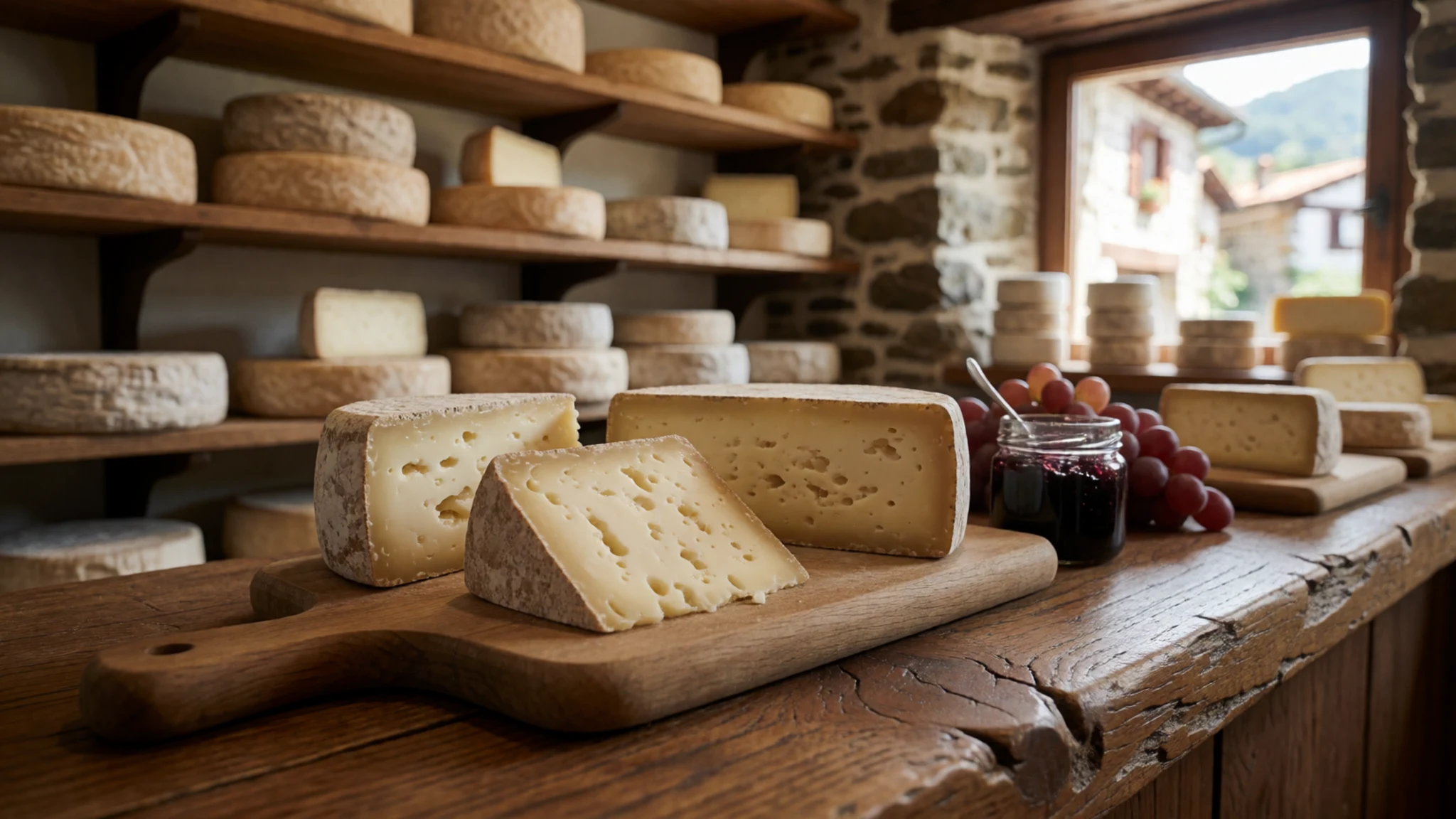
- Mountain trout — streamside eateries along valley roads
Trout from cold mountain streams is usually grilled or pan-fried with butter and herbs. The fish is simple and fresh, best eaten where the river runs past the dining room. Look for streamside eateries along the valley roads, especially in spring when the water runs high. - Cassoulet — traditional bistros in the French foothills, around Toulouse
Cassoulet is a slow-cooked casserole of white beans, sausage and duck or mutton, traditionally baked in a deep earthen pot. It is rich, so share a bowl in the cooler months. Find it in traditional Occitan bistros in the towns of the French foothills, especially around Toulouse. - Pacharán — village bars and family kitchens in Navarre and the western Pyrenees
Pacharán is a sloe-based liqueur, sweet and red, served as a digestif after meals. In Navarre and the western Pyrenees it turns up in village bars and family kitchens, often poured over ice. Sip it slowly, as the alcohol is stronger than its sweetness suggests.
Plan it
Best time. June to September for walking and high passes, when refuges are open and most snow has melted; late spring can still bring snow on the high ground. Winter suits skiing in the resorts, and the western end stays wet through much of the year.
How long. 5–7
Getting there. Toulouse (TLS) is the main hub for the central Pyrenees, with Pau (PUF) and Biarritz and Bayonne (BIQ) for the western end. From the airport, hire a car or take regional trains into the valleys, since many villages are reachable only by road.
Budget. mid
Tips
- Book mountain refuges well ahead for July and August
- Check weather and avalanche bulletins before any high route
- Carry cash for small refuges, village shops and markets
- Bring water and food on long walks, as shelters are few
- Start early in summer to avoid afternoon storms
Etiquette
- Keep dogs on a lead near livestock and guardian dogs
- Close gates behind you on farm tracks
- Carry all rubbish back down the mountain
Nearby
Sources
- Wikidata Q12431 (CC0)
- Wikipedia: Pyrenees (rev 1382052068) (CC BY-SA 4.0)
- Wikivoyage: Pyrenees (rev 5069414) (CC BY-SA 4.0)
- Pedraforca, Eduard Maluquer (CC BY-SA 2.0)
- El Turbó, Carolina Latorre Canet (CC BY 3.0)
- Baretous piémont pyrénéen, Nicolas Guionnet (CC BY 3.0)
- Cirque de Gavarnie, Jean-Christophe Benoist (CC BY 3.0)
- San Mauricio lake, Alcoron (CC BY 3.0)
- Basa de la mora (Alto Cinca), FranchoBeltrán (CC BY-SA 3.0 es)
- Estany de Llauset, Carolina Latorre Canet (CC BY 3.0)
- Marbres des Pyrénées, Frédéric Neupont (CC BY 4.0)


