Pura Besakih
Pura Besakih, Indonesia
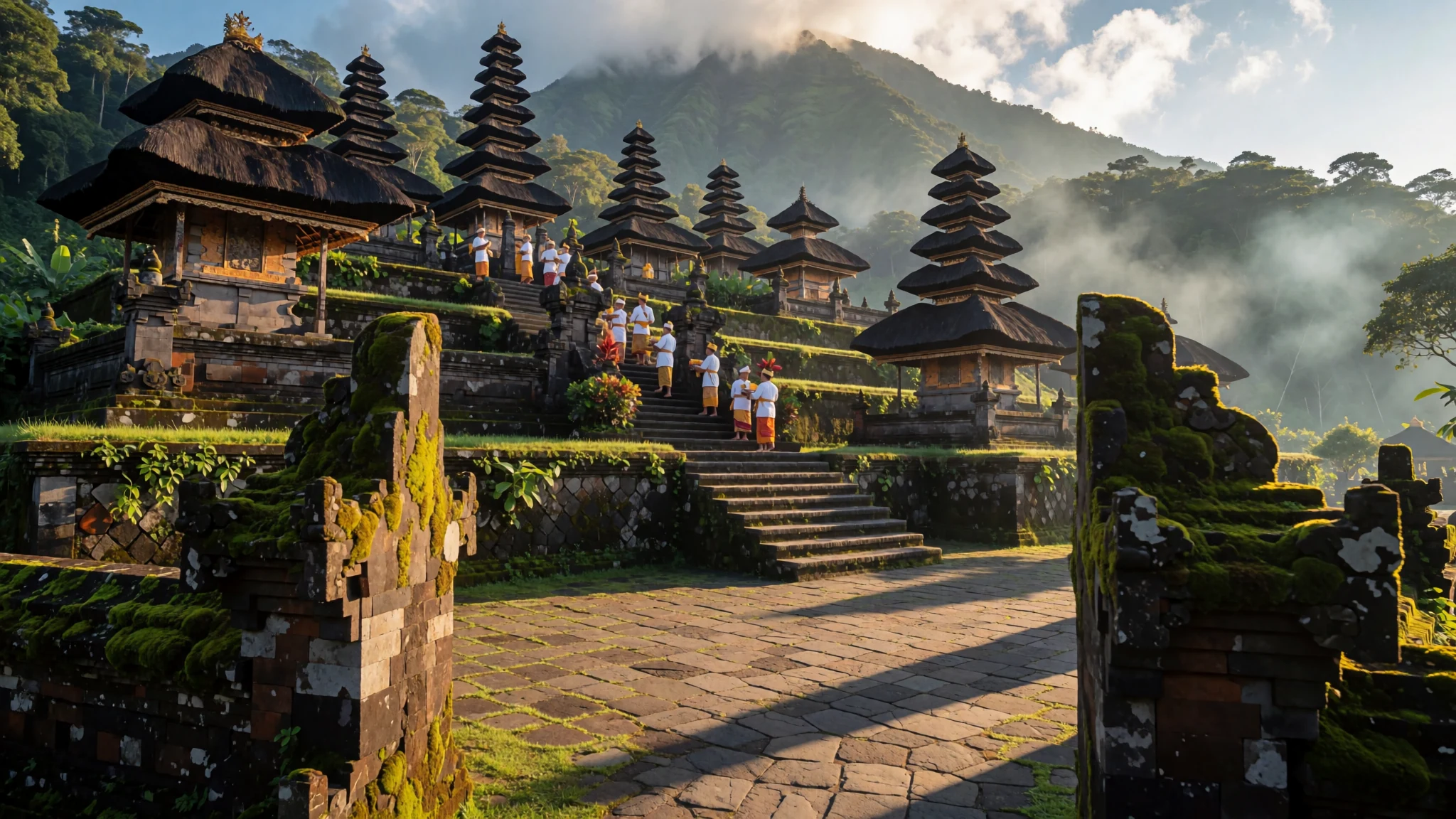
Bali's holiest temple sits on the flank of a volcano, a terraced complex of shrines that rewards an early start and a respectful pace.
The place
Pura Besakih, usually called the Mother Temple, stands in the village of Besakih on the southern slopes of Mount Agung, the principal volcano of Bali. Its ground sits at about 1,160 metres above sea level, and the air is noticeably cooler than on the coast. Rather than a single building, it is a complex of 23 related temples climbing six terraced levels up the hillside. The largest is Pura Penataran Agung, and its name carries the word for greatest. The first threshold is a split gate known as a candi bentar; past it, the Kori Agung opens into the next courtyard. Mount Agung rises above the complex to 3,142 metres, and its summit is often wrapped in cloud. Reaching the site from Klungkung means a winding road through forest, villages and fields, with the mountain growing larger at every bend. Visitors usually spend most of a morning moving between the terraces and stopping to watch prayers, since the climb between levels is steep in places. Ceremonies bring families in bright dress to the courtyards, so the complex is at its busiest on festival mornings. Clothing that covers shoulders and knees, plus a light layer for the cool, will serve a visit well.
Its story
The exact origins of Pura Besakih are unclear, but the site was almost certainly holy long before any temple stood there. Stone foundations beneath several shrines take the form of stepped megalithic platforms, some at least 2,000 years old, which points to worship on this slope well before the present architecture. Records place Hindu worship at the site from 1284, after Javanese settlers arrived in Bali. By the 15th century the temple had become a state temple of the Gelgel dynasty, which gave it political weight alongside its religious role. Local tradition explains the mountain through a legend in which the god Pasupati breaks a fragment from Mount Meru, the cosmic peak, and the piece falls to earth as Agung. Geology tells a more physical story. Agung is an active volcano, and its 1963 eruption was among the largest of the twentieth century. Ash, lava and the constant risk of renewed activity have shaped life on the slopes ever since, and the mountain has stirred again in more recent years. The temple has outlasted these events, and many Balinese read each eruption as a sign of the mountain's power over the island.
What to see
- Besakih Temple complex — Besakih village, eastern Bali
Besakih is the holiest temple in Bali, a complex of 23 shrines rising across six terraces on Mount Agung's southern slopes. The largest, Pura Penataran Agung, carries the word agung, meaning greatest, in its name. Allow a long time to walk the levels, and go early, when the courtyards are quieter and the morning light falls across the spires.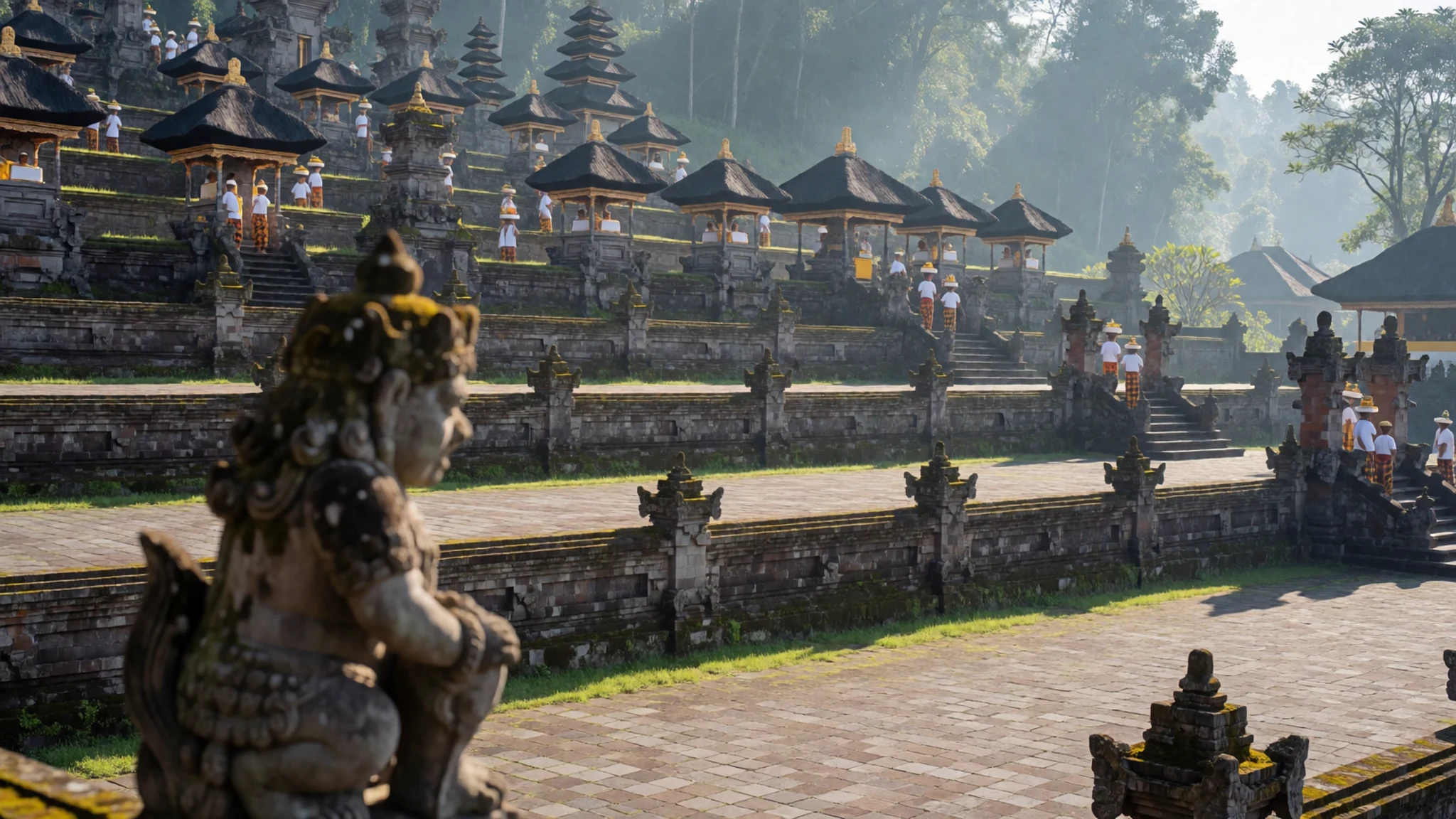
- Kori Agung gateway — Second courtyard, Besakih complex
Past the split gate known as the candi bentar, the Kori Agung is the gateway into the second courtyard. It is a good place to pause and watch worshippers pass through, and to see how the complex steps up the hillside. Dress properly before you reach it, because the gateway marks the start of the sacred space.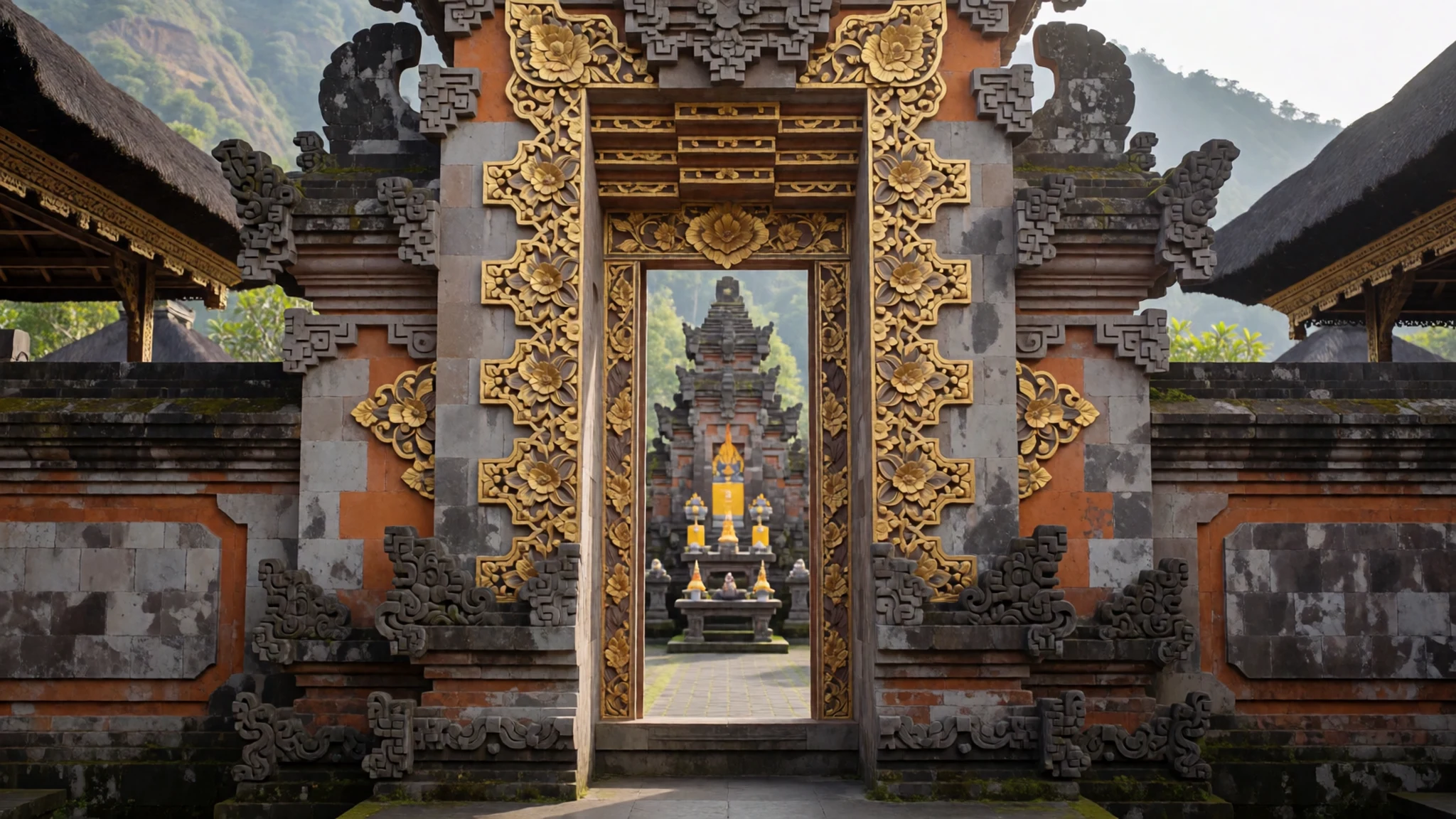
- Pura Pasar Agung — Near Selat, on the Rendang to Karangasem road
This directional temple, one of Bali's nine, is located by Selat village along the road connecting Rendang and Karangasem. It also marks the starting point of one of the routes up Mount Agung. Stop here to ask about guides before any climb, and to see a smaller shrine away from the crowds of the main complex.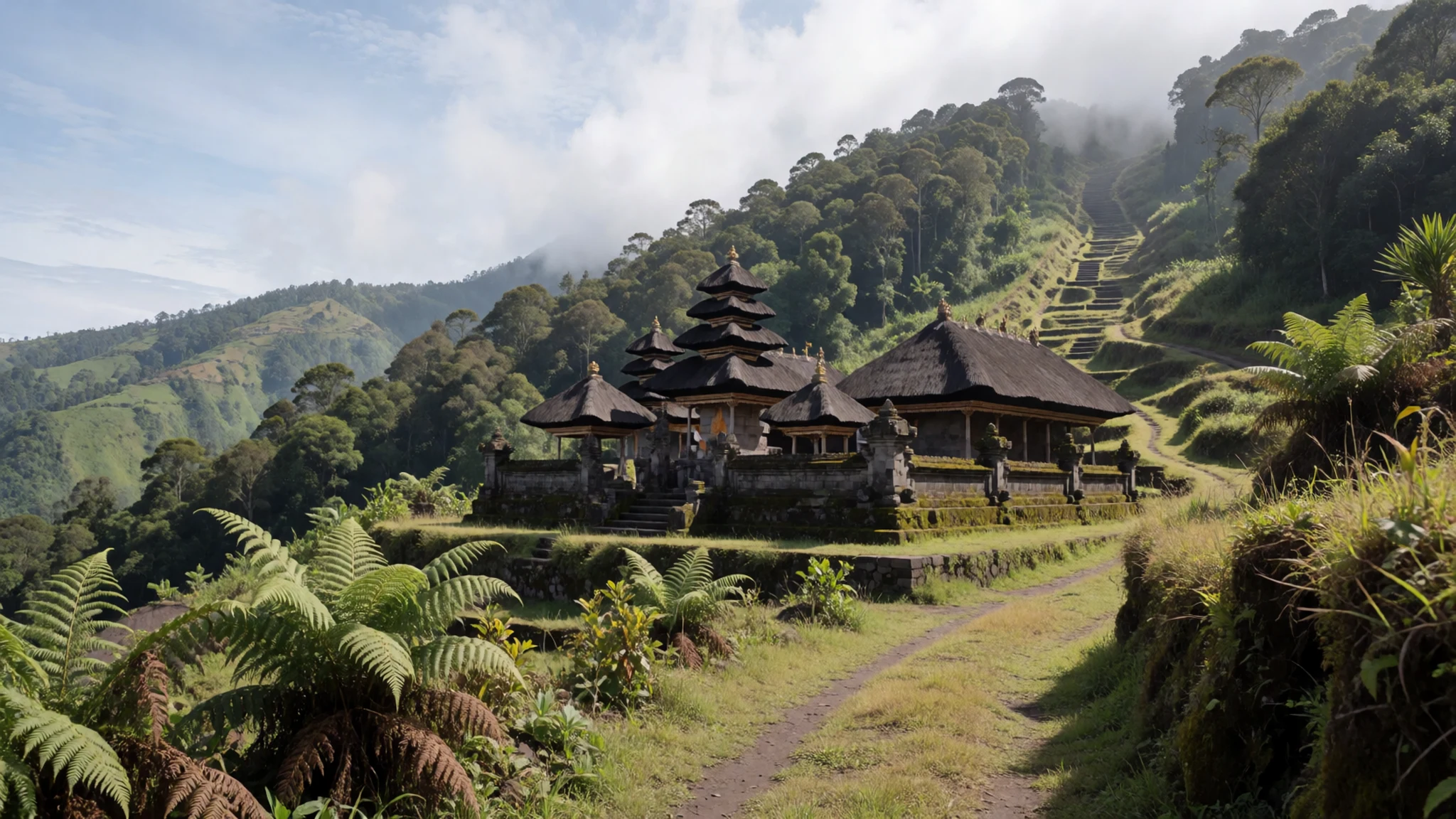
- Sidemen and Selat valleys — Foothills between Karangasem and Rendang
The drive through the foothills between Karangasem and Rendang crosses several valleys, with stepped rice terraces, forested hillsides and the mountain looming above. Stop in Selat to find local guides for short, undemanding walks. It is among the most scenic drives on the island, and it is worth taking slowly.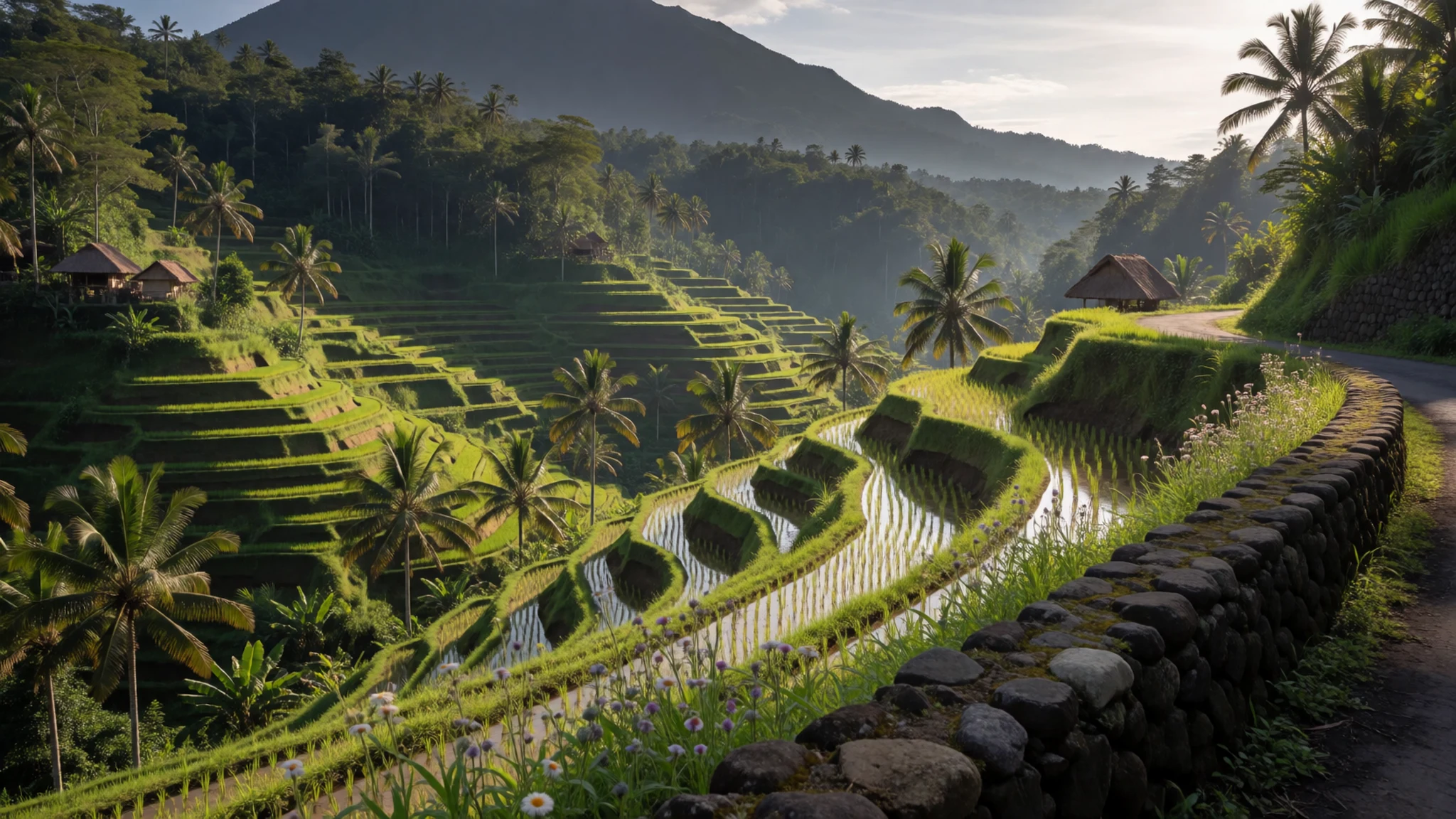
- Mount Agung summit route — Routes from Besakih, Selat and Tirta Gangga
Mount Agung, at 3,142 metres the highest point on Bali, can be climbed from the south, west or east. Do not attempt it without a guide, because the paths are hard to follow and it is easy to get lost. Start in the dark for sunrise, carry water and a flask of hot coffee, and expect cold and wind near the top.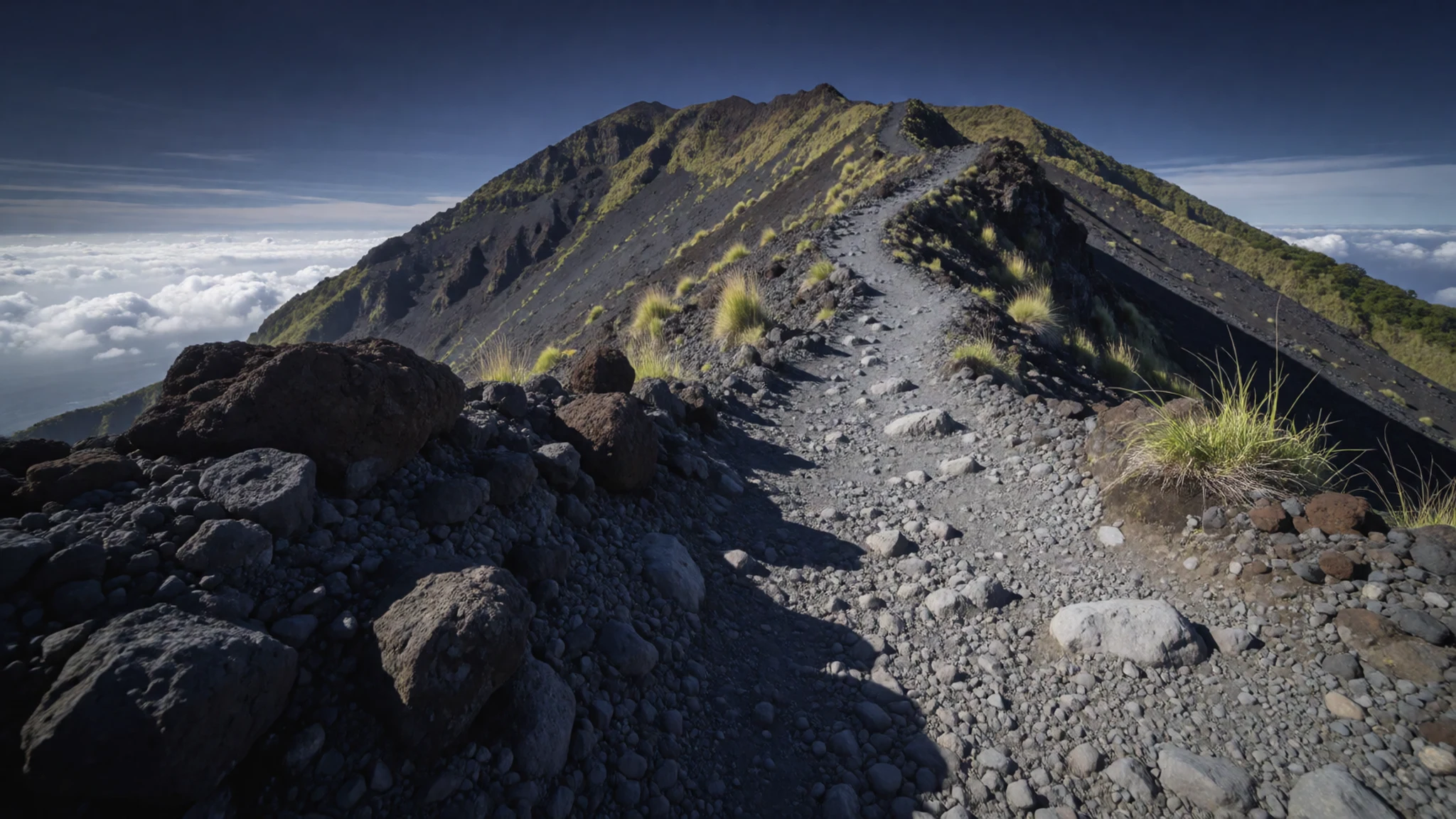
Culture
Pura Besakih is treated as the spiritual centre of Balinese Hinduism, and the complex keeps a busy ceremonial calendar. Each shrine marks its own anniversary, so ceremonies take place across much of the year, with the largest gatherings drawing whole families and village groups from around the island. The calendar follows the Balinese Pawukon cycle rather than ordinary Western months, so festival dates can be hard to predict from a standard calendar. Worshippers arrive carrying offerings of flowers, rice and fruit arranged on woven palm trays, and they move slowly between the courtyards. The temple was put forward for World Heritage listing in 1995, and the nomination was withdrawn in 2015, a reminder that the site is valued as a living place of worship rather than a museum piece. Local custom asks visitors to respect the rhythm of prayer, keeping conversation quiet near shrines and staying out of the path of people carrying offerings. Wear a sash, keep your voice low in the courtyards, and ask before photographing anyone at prayer.
What to wear
Dress at Pura Besakih follows the temple's ceremonial role. Traditional clothing for women is a kebaya blouse with a kamben, a wrapped cloth that reaches to the ankle, often in batik or songket, the weave with gold thread that marks a special occasion. Men wear a kamben too, with a headcloth called udeng and a sash, the selendang, tied at the waist. Songket and batik are the textiles to look for in village shops and at ceremonies, where families in pale and bright colours carry offerings. Day to day, people in the villages around the temple wear ordinary shirts, shorts and sarongs, changing into ceremonial dress only for prayer. Visitors should wear a sarong and a sash, and keep shoulders and knees covered inside the complex. The high slopes are cooler and windier than the coast, so a light layer is sensible for the summit trail. Closed shoes with grip suit the uneven stone steps and the muddy paths on Mount Agung, and a light waterproof helps in the wetter months.
What to eat
- Babi guling — Roadside warung stalls on the Klungkung road and morning markets
Roast suckling pig, spiced with turmeric and local herbs and cooked whole over a slow fire, is the classic Balinese feast dish. Find it at roadside warung stalls on the Klungkung road and in the morning markets, where it is sliced to order with crisp skin, rice and sausage.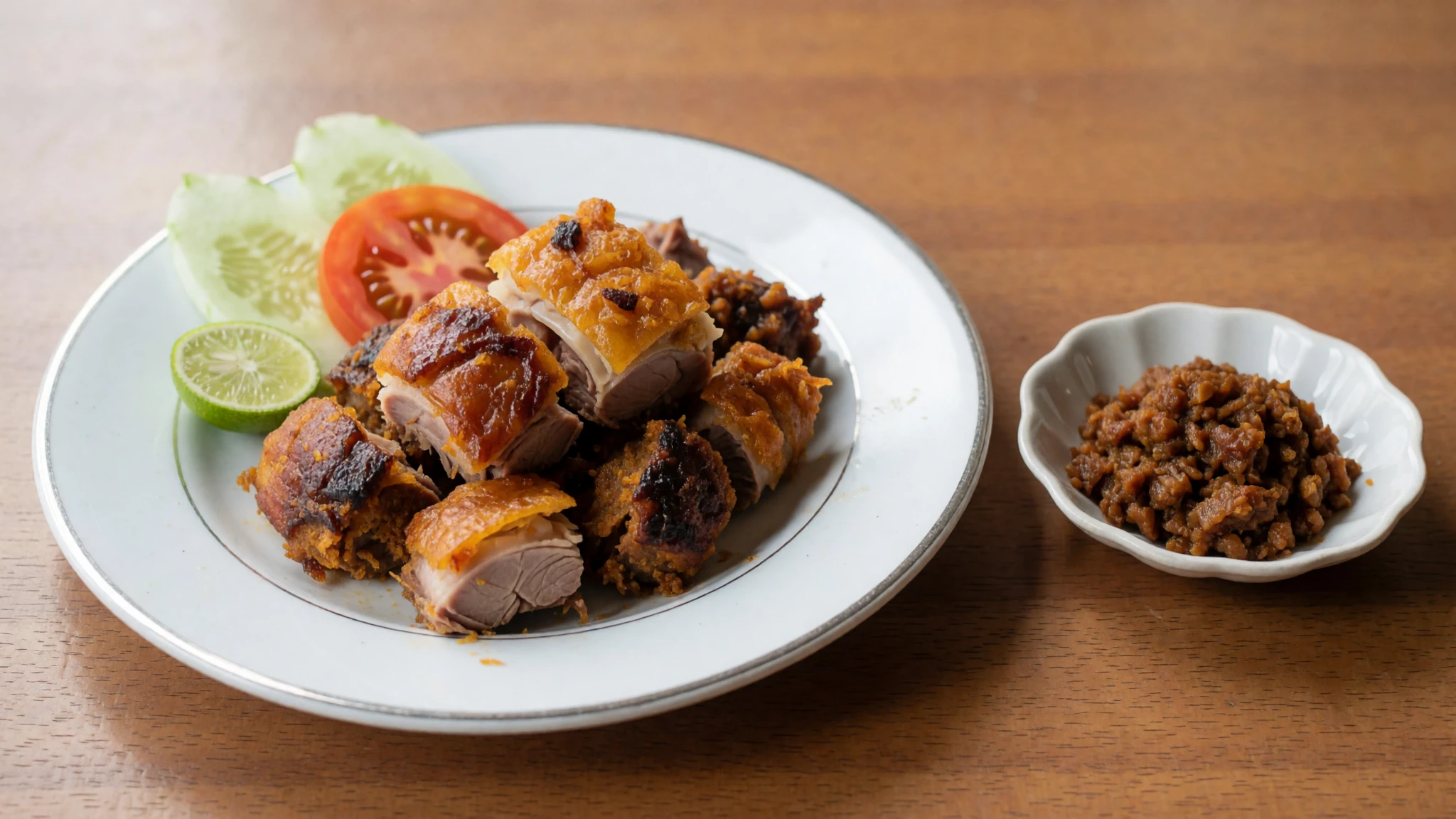
- Nasi campur — Morning food stalls in Klungkung and along the temple road
A plate of rice with small portions of vegetables, egg, tempeh, sambal and sometimes fried fish or chicken. Morning food stalls in Klungkung and along the road up to the temple are the easiest place to try it, and it makes a steady breakfast before a climb.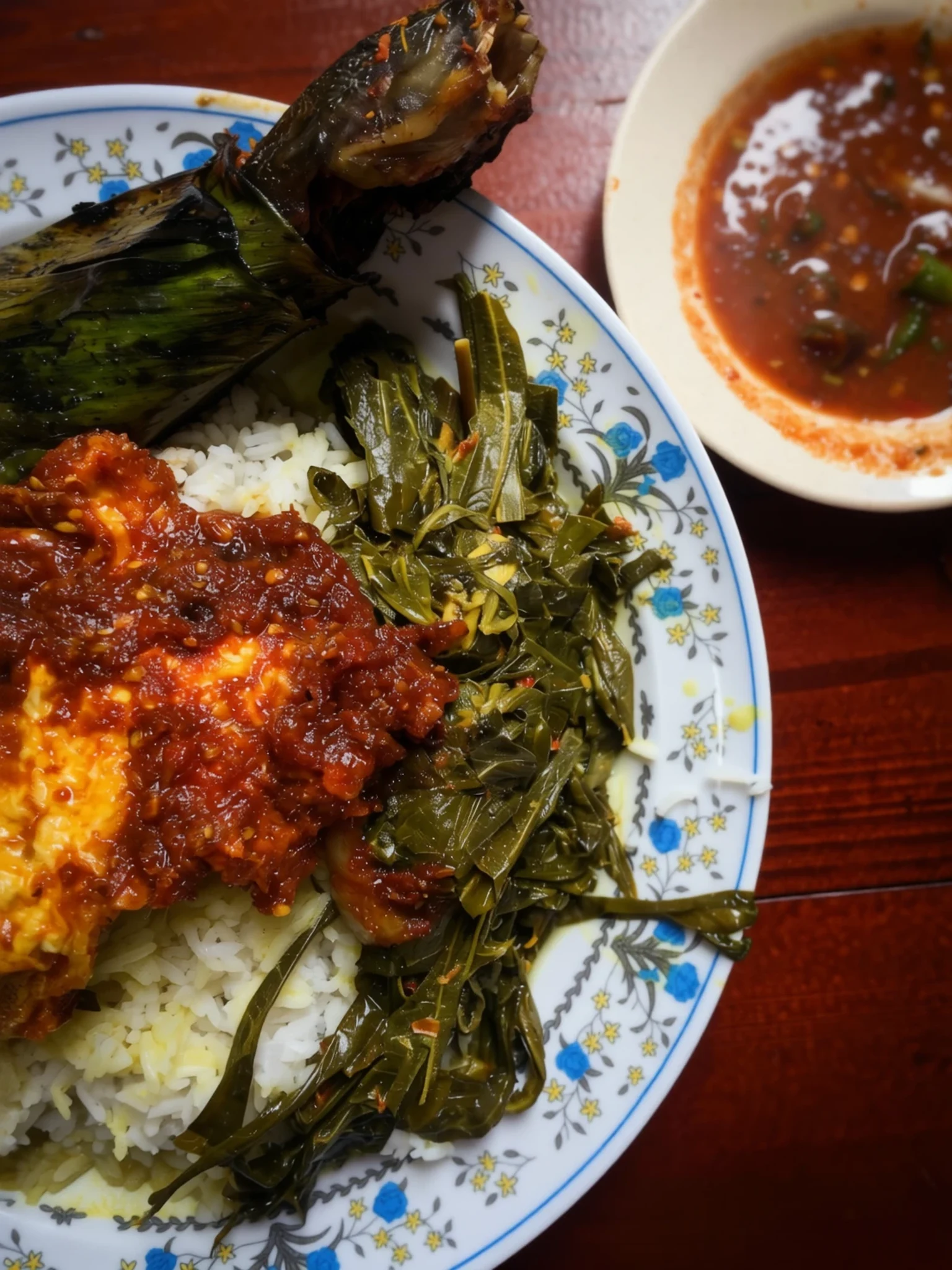
- Bubur injin — Early morning market stalls in Klungkung
Sweet black rice porridge cooked with coconut milk and palm sugar, usually served warm in a bowl. Sellers set up with pots in the early morning near the market in Klungkung, a good option before the cold of the mountain road.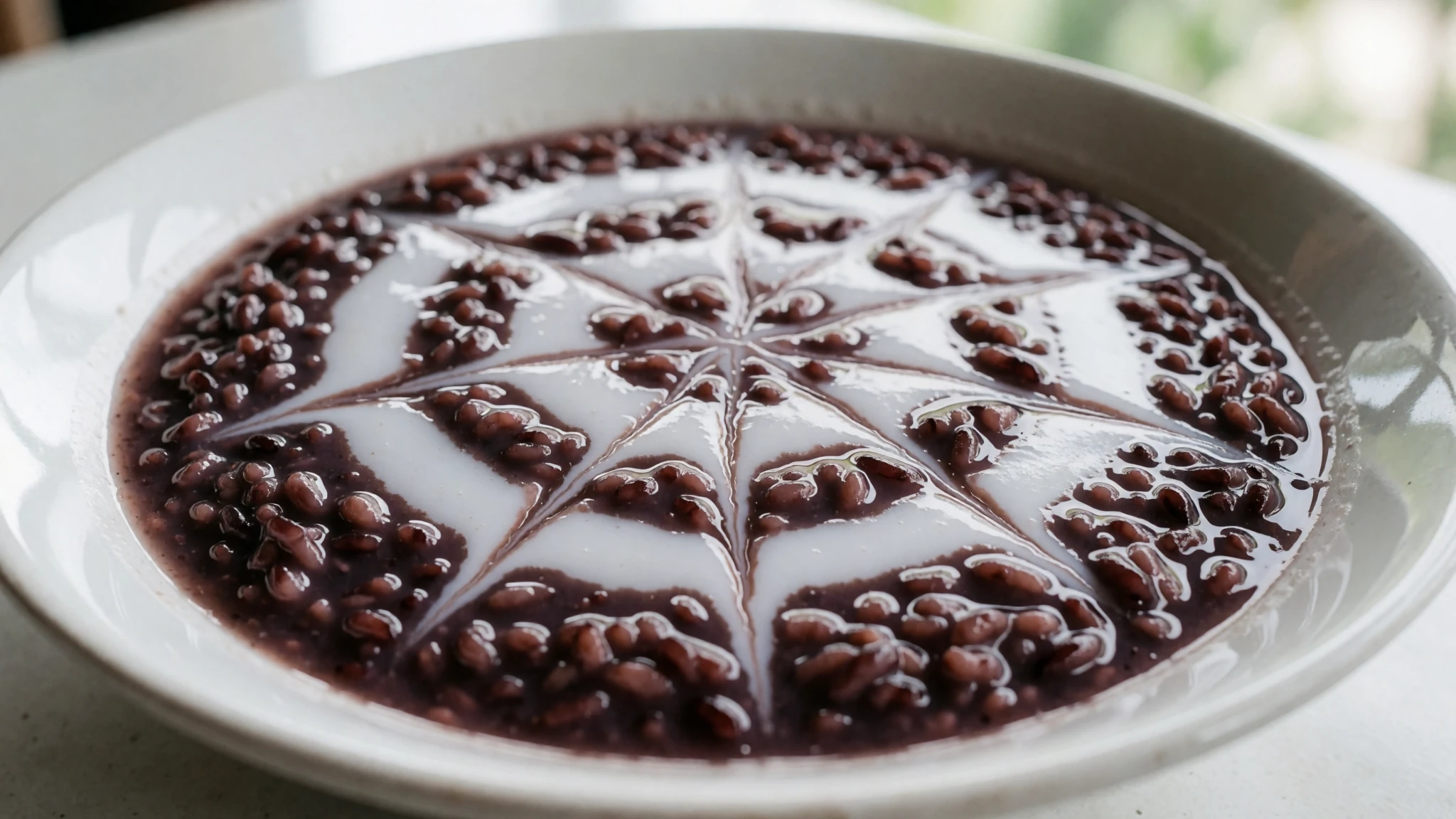
- Sate lilit — Beachside warung in Candidasa and roadside stalls near Amed
Minced fish or pork mixed with grated coconut, chilli and spices, wrapped around lemongrass sticks and grilled. It is a dish of the coast and the east, so look for it at beachside warung in Candidasa and at stalls on the road between Amed and Karangasem. - Trek supplies — Shops and markets in Klungkung or Candidasa before the trail
Fresh fruit and pastries bought in Candidasa or Klungkung before the climb, plus a flask of hot coffee or tea. Once the trail starts there is no food or water for sale, so these are things to pack rather than dishes to find.
Plan it
Best time. Avoid the wet season, especially January and February, when the paths are slippery and climbing is not advised. The drier months are the more comfortable window for both the temple and the mountain. Near the summit it stays cold and windy whatever the month, and cloud often gathers by mid-morning, so early starts matter.
How long. 1–2
Getting there. Fly into Denpasar's Ngurah Rai airport, then take a road transfer east across the island. The usual last leg is the road from Klungkung, about 20 km north of the town centre, where bemos run most frequently in the morning.
Budget. mid
Tips
- Arrive early in the morning, before cloud builds over the slopes
- Hire a guide for any climb on Mount Agung, since the routes are hard to follow
- Carry water and a flask of hot drink, because nothing is sold once the trail starts
- Drink plenty of water and avoid alcohol and caffeine for 24 hours before a climb to reduce altitude symptoms
- Carry cash for parking and small purchases on the road
Etiquette
- Dress with a sarong and sash, and keep shoulders and knees covered inside the complex
- Ask before photographing people at prayer or during ceremonies
- Do not climb Mount Agung without a guide, and check that no religious restriction applies that day
Nearby
Sources
- Wikidata Q829418 (CC0)
- Wikipedia: Besakih Temple (CC BY-SA 4.0)
- Wikivoyage: Besakih (CC BY-SA 4.0)
- The early morning sun hits the spires of Pura Besakih, Bali — Flying Pharmacist (CC BY-SA 2.5)
- Besakih, Bali, Indonesia: The Mother Temple of Besakih — Uwe Aranas (CC BY 3.0)
- Portal of the main temple of the Besakih temple complex on Bali — Karsten Aßmann (CC BY 3.0)
- Mother Temple of Besakih — Xeviro (CC BY 3.0)
- Besakih, Bali, Indonesia: The Mother Temple of Besakih (second image) — Uwe Aranas (CC BY 3.0)
- Pura Besakih.JPG — Unknown author (Public domain)
- Die Tempelanlage Besakih — Stephanie Biechele (CC BY 3.0)
- A Hindu pooja ceremony at the Besakih Temple, Bali — Paco Pater (CC BY-SA 4.0)


