Port Arthur Historic Site
Port Arthur Historic Site, Australia
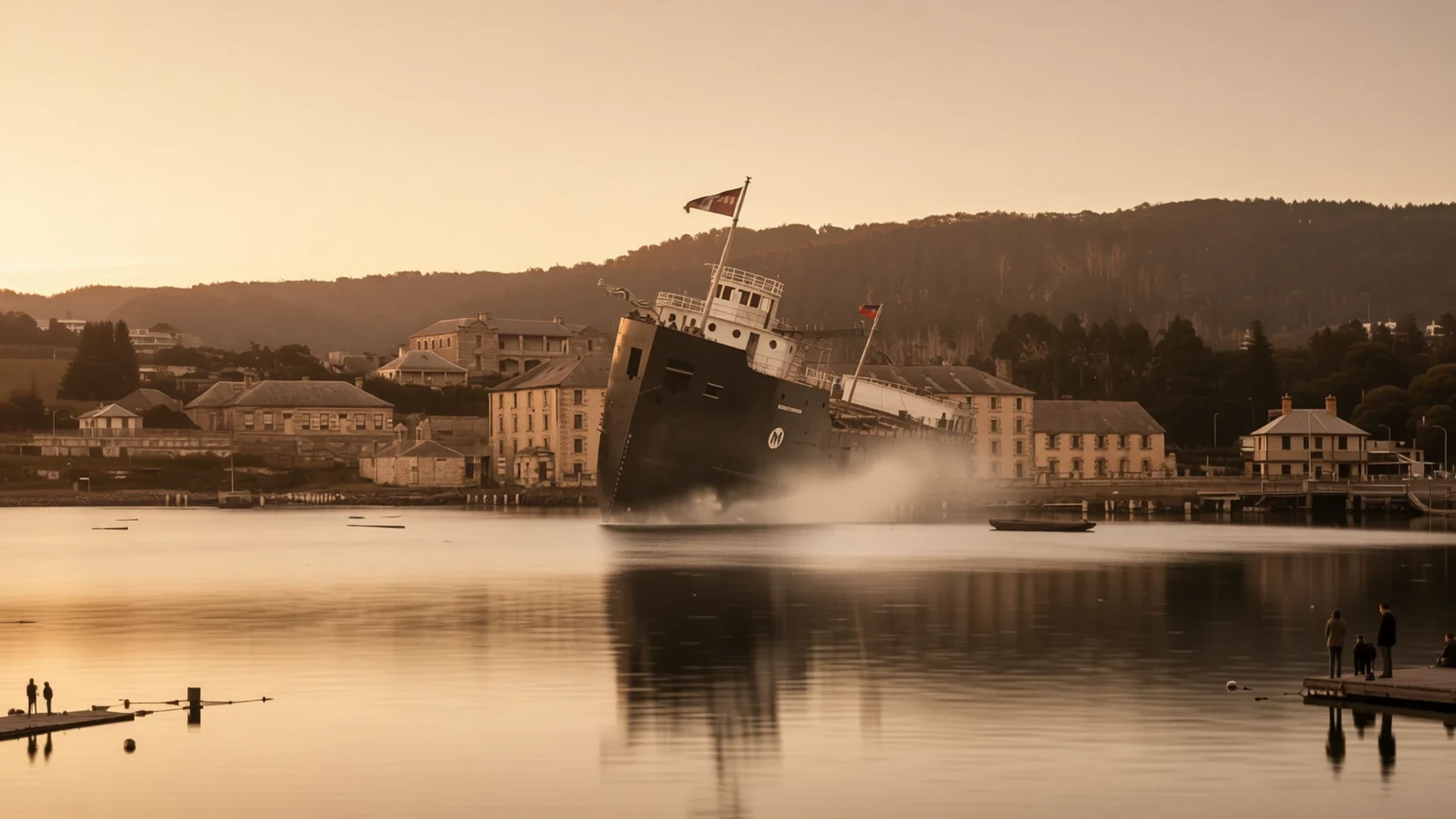
The Tasman Peninsula's convict ruins make a sobering, beautifully sited day out from Hobart.
The place
Port Arthur is a small town on the Tasman Peninsula, in south-eastern Tasmania, and its historic site is the preserved heart of a former convict settlement. Water surrounds the peninsula on most sides, which made it a natural place to hold prisoners. The one land link to the mainland was a narrow neck of ground at Eaglehawk Neck, and it was fenced and watched by soldiers, dogs and traps. Escape by sea was attempted often, and some attempts worked, so boats were kept under close control. Whaling was banned in the district for the same reason, because whaleboats could carry men away.
Today the site is a scatter of stone and brick buildings along the shore of the bay, with lawns, mature trees and paths between them. Several structures are roofless or partly ruined, which makes the place feel more like an archaeological site than a museum. Radcliffe Creek drains the immediate area into Carnarvon Bay, and the water is never far from view. Visitors tend to spend a long morning here, moving slowly between the buildings and reading the interpretation panels.
The site forms part of the Australian Convict Sites, a group of surviving penal places across the country that together show how convict transportation and colonial expansion worked. Port Arthur is also remembered as the birthplace of rail transport in Australia. The town lies about 100 kilometres south-east of Hobart, the state capital, so most visitors come as a day trip.
Its story
Port Arthur started in 1830 as a sawmill camp, where workers felled timber for government construction. The settlement took its name from George Arthur, who served as lieutenant governor of Van Diemen's Land. The settlement only became notorious once it took on a harder role. From 1833 until 1877 it received men classed as the most persistent re-offenders among the convicts transported to Australia. These so-called secondary offenders had broken the rules again and again after arrival, so the place was built with some of the strictest security in the British penal system. The authorities still held that prisoners could be reformed while they were being punished, which sat uneasily with the rest of the regime.
The Separate Prison was the most striking part of this thinking. Its design drew on Jeremy Bentham's panopticon idea of a building watched from a single centre. It was finished in 1853 and extended in 1855, and its plan was a cross with exercise yards at each corner. Each prisoner wing connected to a central surveillance hub, and from there the wings could be seen as a whole, though individual cells could not. The chapel stood in the middle hall. Port Arthur's version departed from Bentham's theory in that detail.
The prison also marked a shift in how discipline worked. Whipping was thought to harden men rather than correct them, so officials leaned on food and routine instead. Good conduct earned better rations, and poor behaviour cost them. The change did not make the regime gentle, but it moved punishment from the body towards the daily timetable of the men inside.
What to see
- The Separate Prison — Central site, Port Arthur
The Separate Prison is the building most visitors plan around. Its cross-shaped plan, exercise yards and central surveillance hub are easy to trace on foot, and the interpretation panels explain how a guard could watch every wing from one point. Allow time to walk the outer walls slowly and look at the cell scale from the doorways. It is the clearest expression of the site's ideas about watching and reform.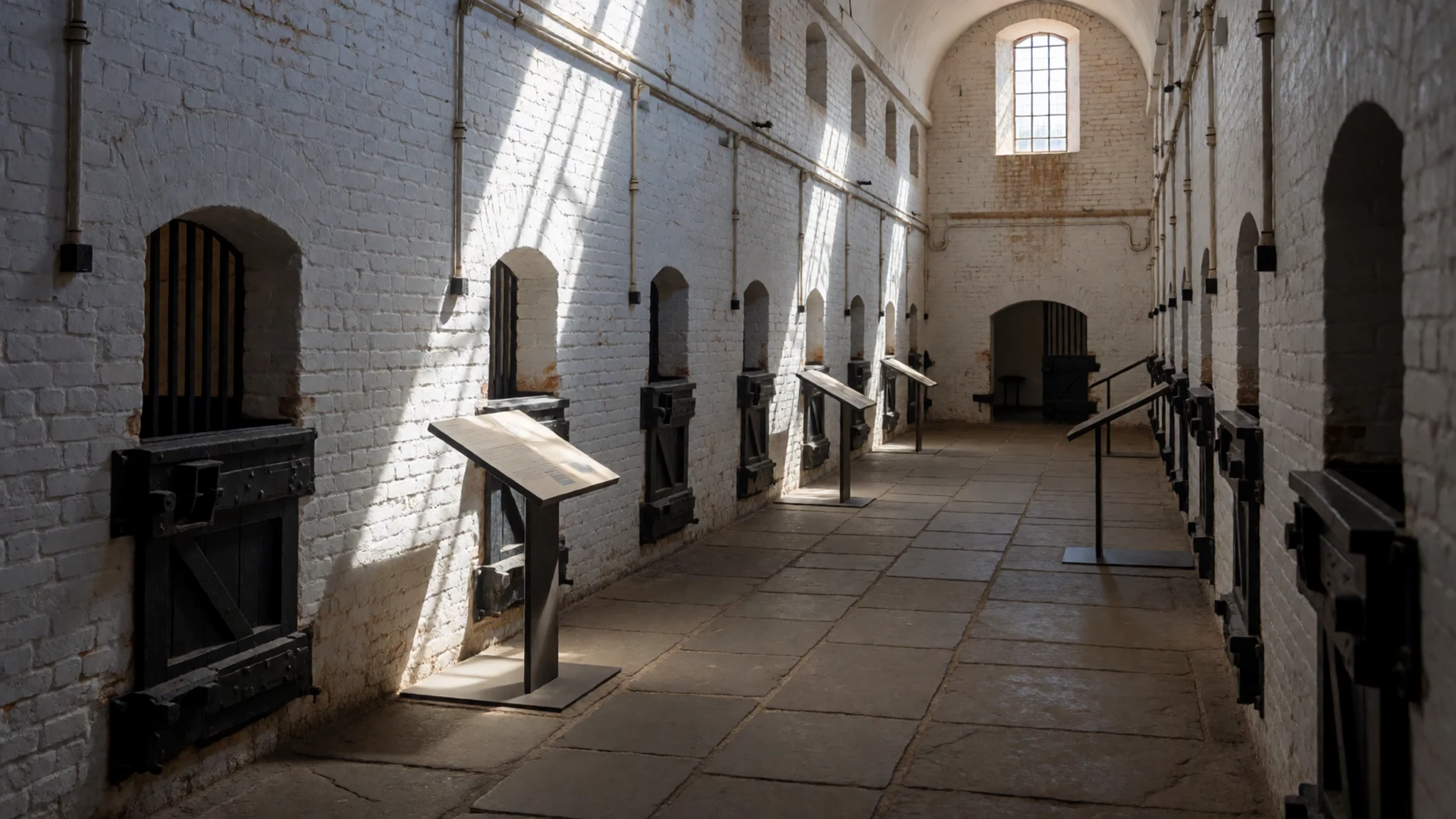
- Old Convict Church — Waterfront grounds, Port Arthur
The Old Convict Church is one of the site's most photographed ruins, a sandstone building with a pitched roof standing on open lawn by the water. Prisoners and free settlers both attended services here, which is part of its interest. Walk around it to see how the stonework and window openings survive. Early or late in the day the light on the walls is kindest for photographs.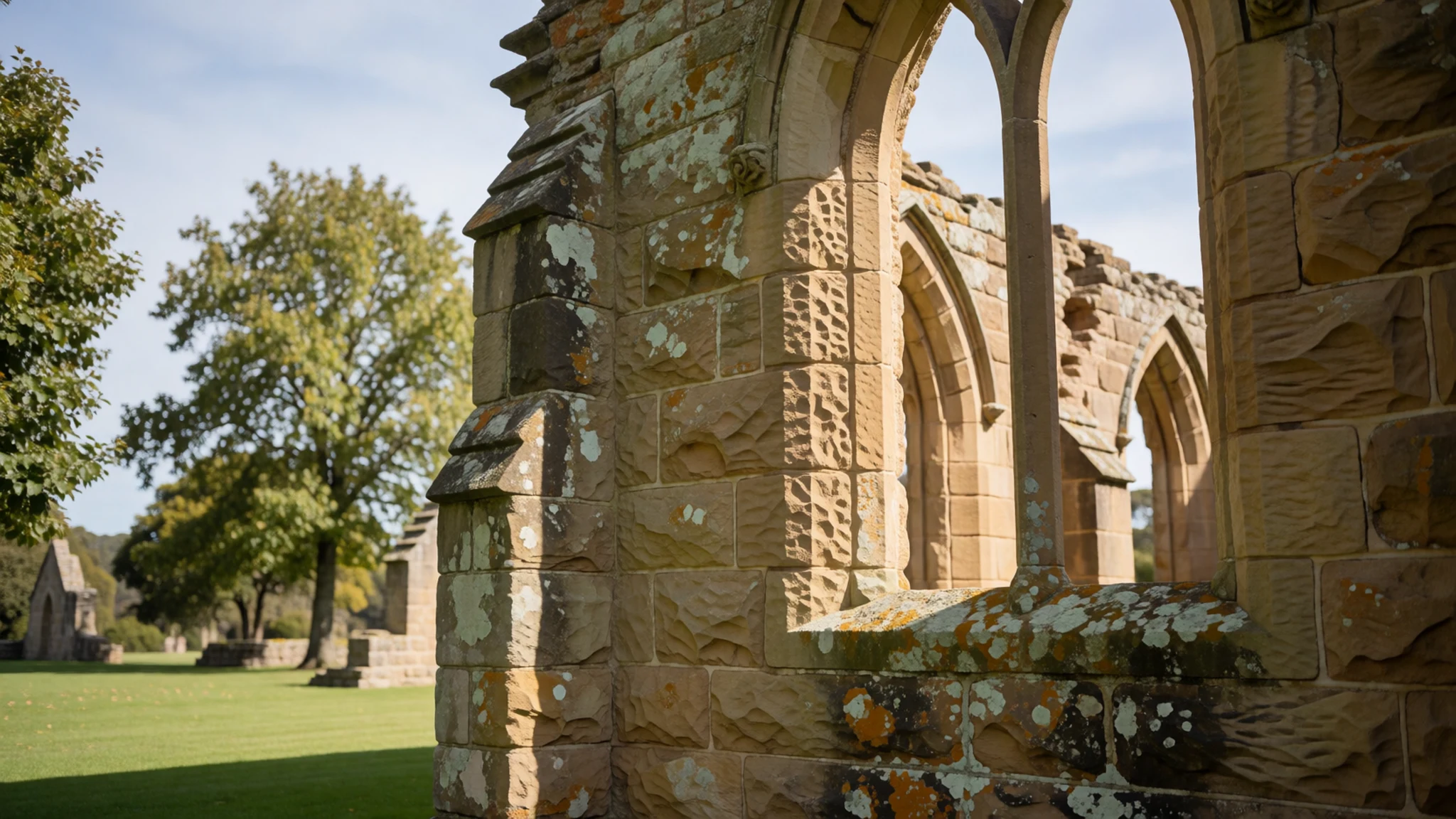
- Eaglehawk Neck — Tasman Peninsula, north of the settlement
Eaglehawk Neck is the narrow isthmus that once formed the only land route off the peninsula. It was the point where soldiers, dogs and traps made escape hardest, and the isthmus is still easy to picture from the road. The stretch is about a short drive north of the settlement, so it works well as a stop on the way back to Hobart. Pull over only where there is a proper parking area.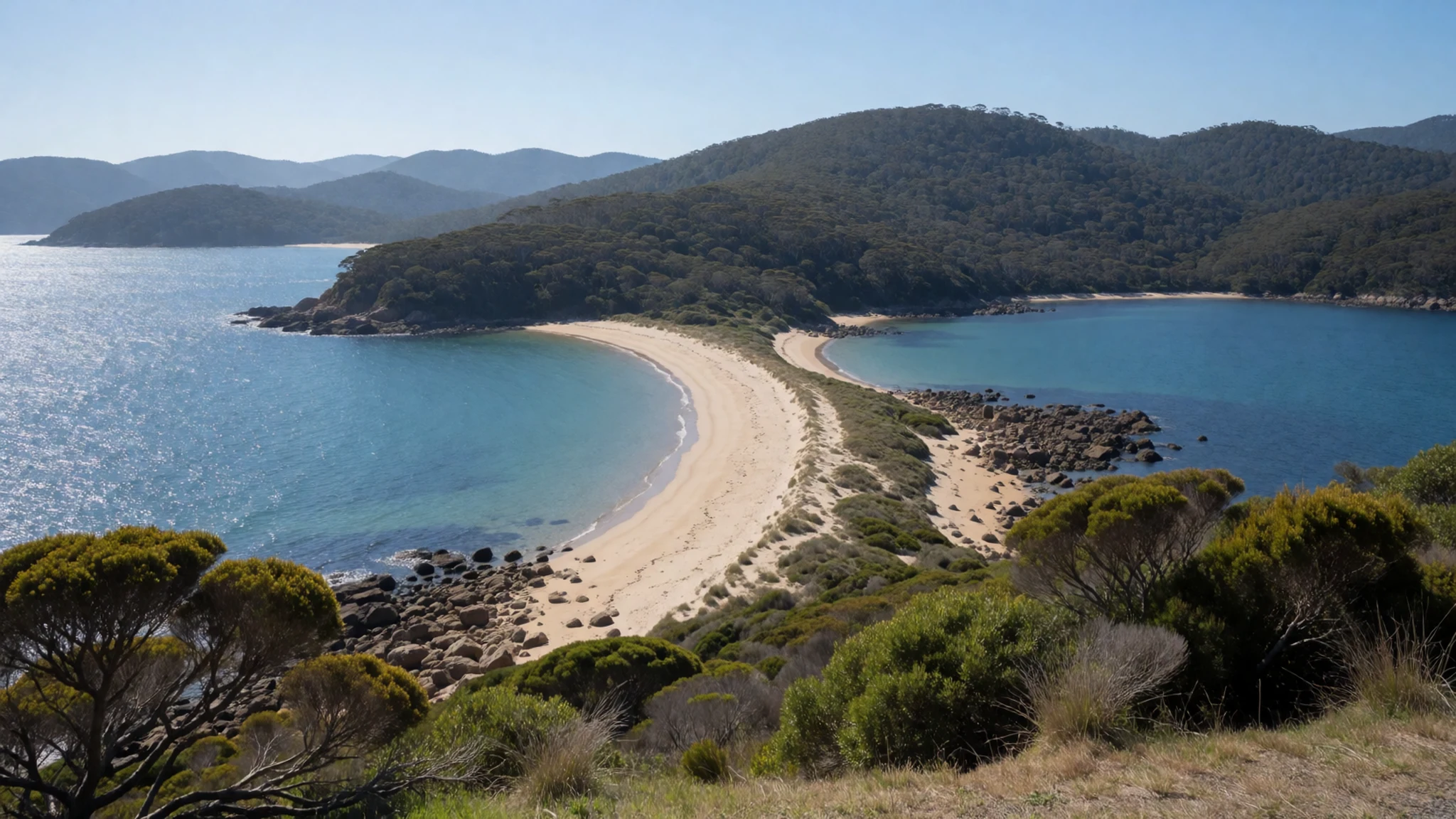
- kunanyi / Mount Wellington — Above Hobart
kunanyi, also called Mount Wellington, rises above Hobart and gives wide views over the city and the Derwent estuary. A road reaches a lookout near the top, and walking tracks start in the foothills for those who prefer to climb. You can find a coffee van at the Springs picnic area part way up. Weather changes quickly on the summit, so carry warm layers even on a clear morning.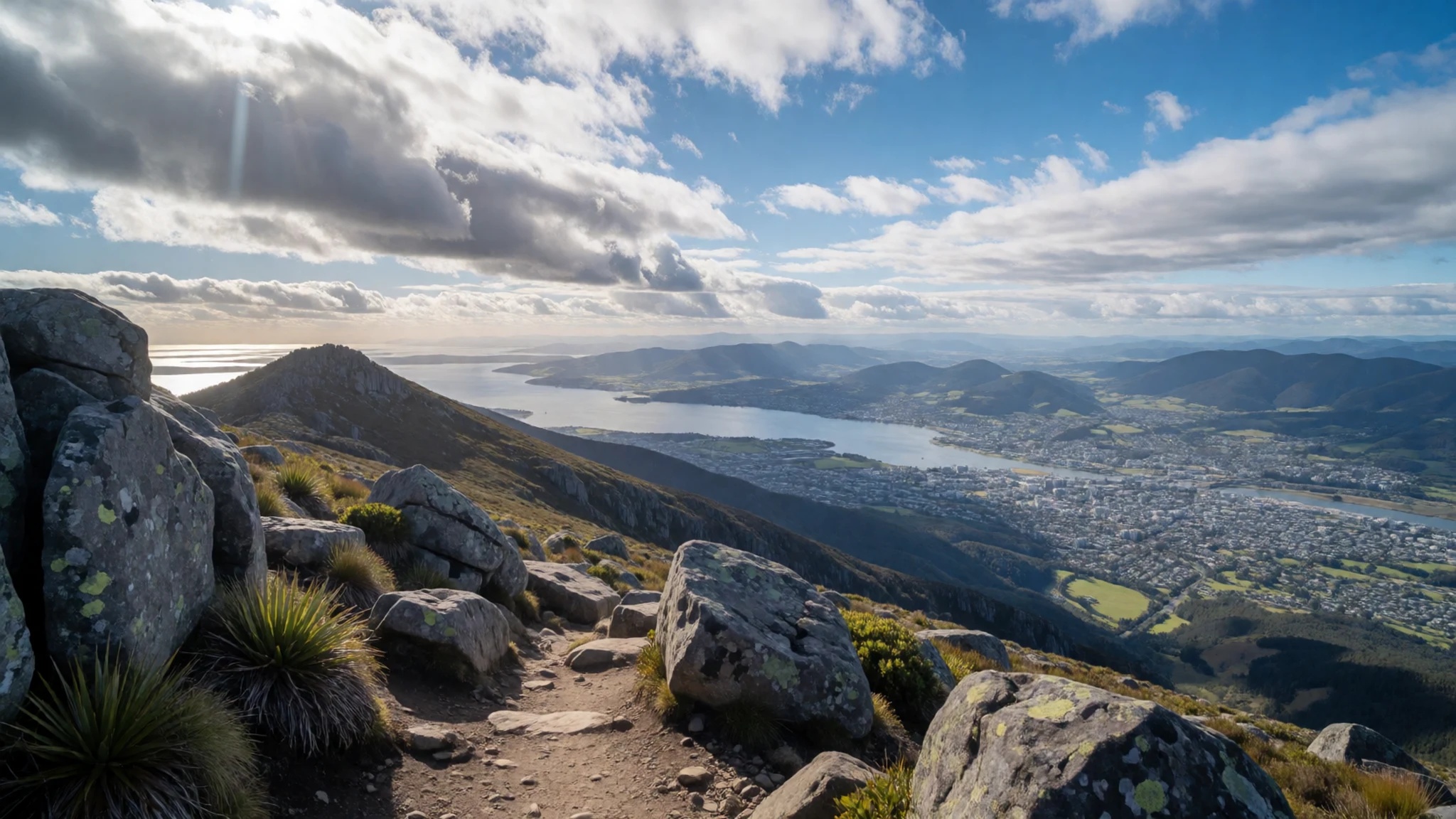
- Cataract Gorge — Launceston, northern Tasmania
Cataract Gorge is a natural formation a short drive from central Launceston, known locally as The Gorge. It has walking paths, a chairlift in some seasons and easy picnic spots beside the water. It makes a calm change of pace after the heavier history of the convict sites. Launceston is a good base for the north of the island, and the gorge is close to the town centre.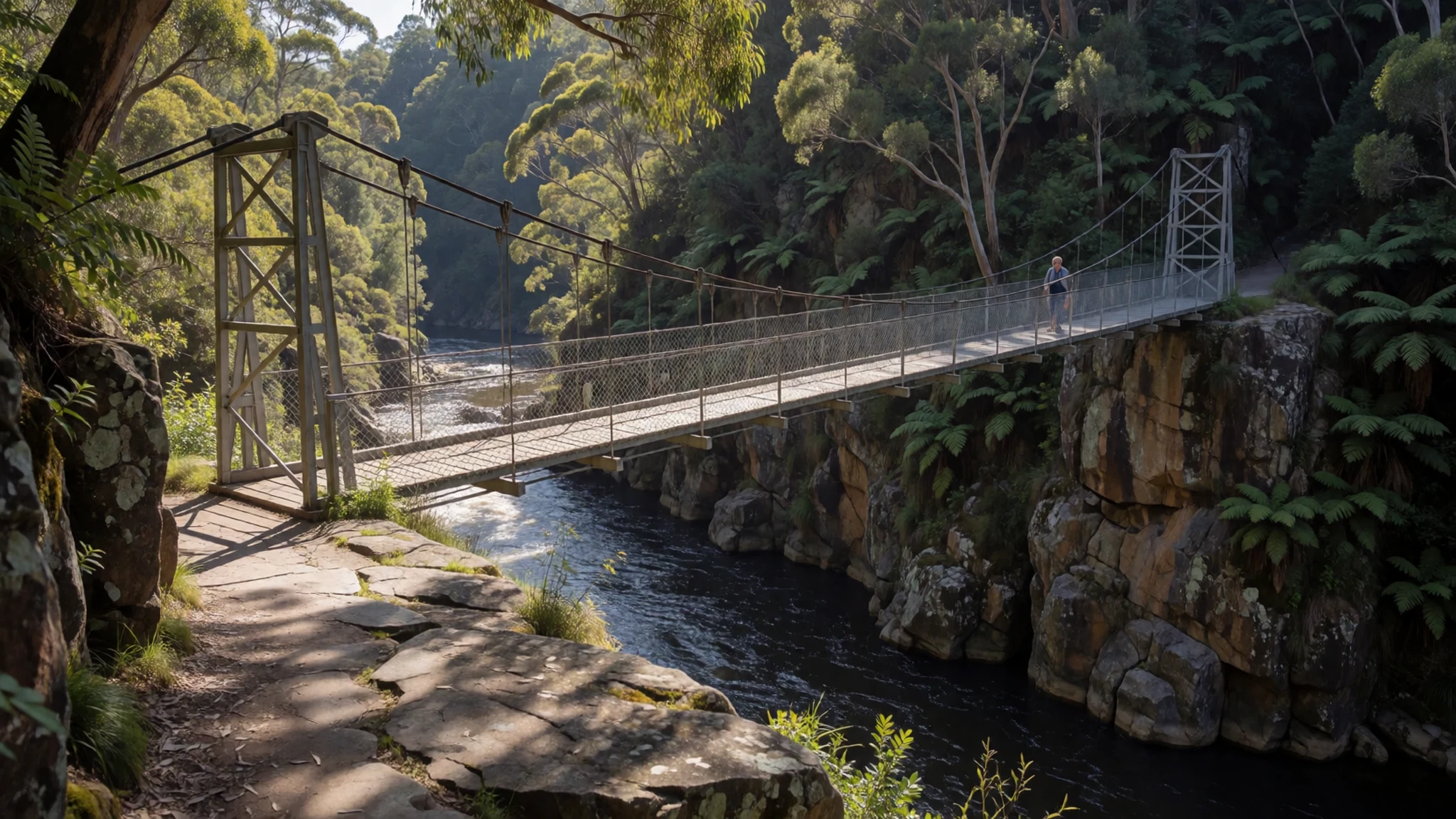
Culture
Port Arthur is a place where the convict past is open for discussion, and locals are relaxed about it. Tasmanians as a whole are easygoing and tend to be happy to point visitors in the right direction or offer advice when asked. The one subject people handle with care is the mass shooting at the site in 1996, which remains painful for many, including people who were nowhere near the scene. Ask about the convicts, the buildings and the bush, and you will get open and often good-humoured answers. Raise the 1996 shooting only if a local brings it up first, and then let them set the tone. Keep your voice down in the chapel and near the ruins where other visitors are reading the panels, and do not climb on the walls or step past the ropes.
What to wear
The traditional dress tied to Port Arthur is the convict clothing of the 1800s. Prisoners were issued coarse wool and cotton garments, often in drab greys and browns, and the cloth was rough, hard-wearing and cheap to make. Men wore plain shirts, trousers and jackets, while some garments carried marks to identify the wearer as a prisoner. Tasmania's Aboriginal communities have their own living traditions of dress and design, which are best learned about directly from local Aboriginal organisations rather than from a costume display. Today Tasmanians dress casually: jeans, jumpers, fleece and waterproof jackets are common in town and on the trails. Visitors should bring a waterproof jacket and warm layers, because the weather can change within an hour. Wear sturdy closed shoes with good grip for gravel, grass and uneven stone. A hat and sunscreen help on sunny days, and a light scarf or thermal layer is useful in the wind off the water. Modest, practical clothing suits the site best.
What to eat
- Curried scallop pie — Bakeries and pie shops in towns on the Tasman Peninsula road
Curried scallop pie is the Tasmanian dish most people ask about. It is a pastry pie filled with scallop and a mild curry sauce, a reflection of the island's cooking shaped by many immigrant communities. Look for it in bakeries and pie shops in the small towns on the way in from Hobart.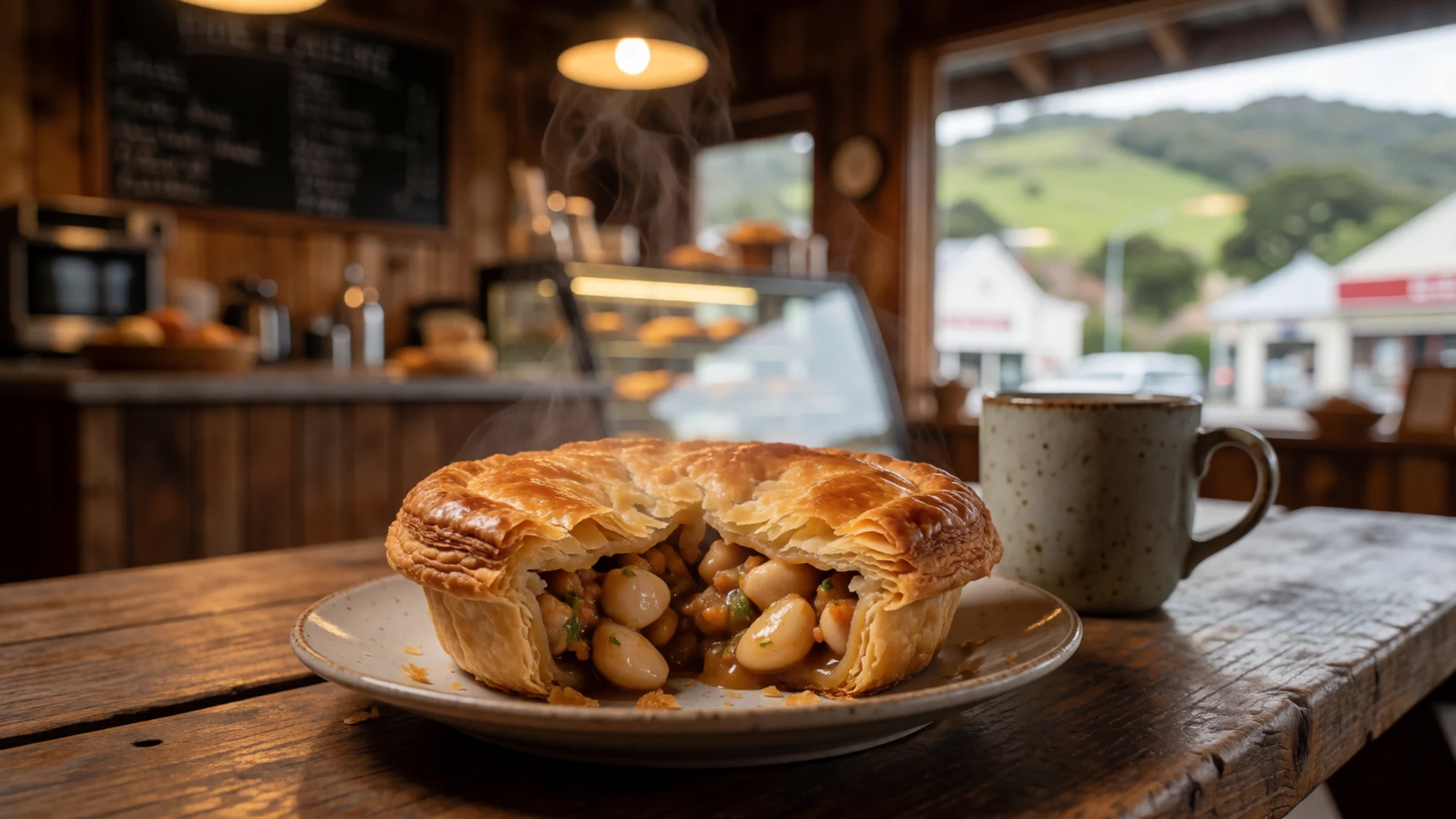
- Oysters and mussels — Waterfront seafood eateries in Hobart and along the east coast
The island's seafood culture is strong, with salmon, abalone, scallops, oysters, mussels and crayfish all on menus. Shellfish eaten fresh from the water is the simplest way to taste that coast. Look for them at a waterfront seafood eatery in Hobart or a harbour-side shack near the coast.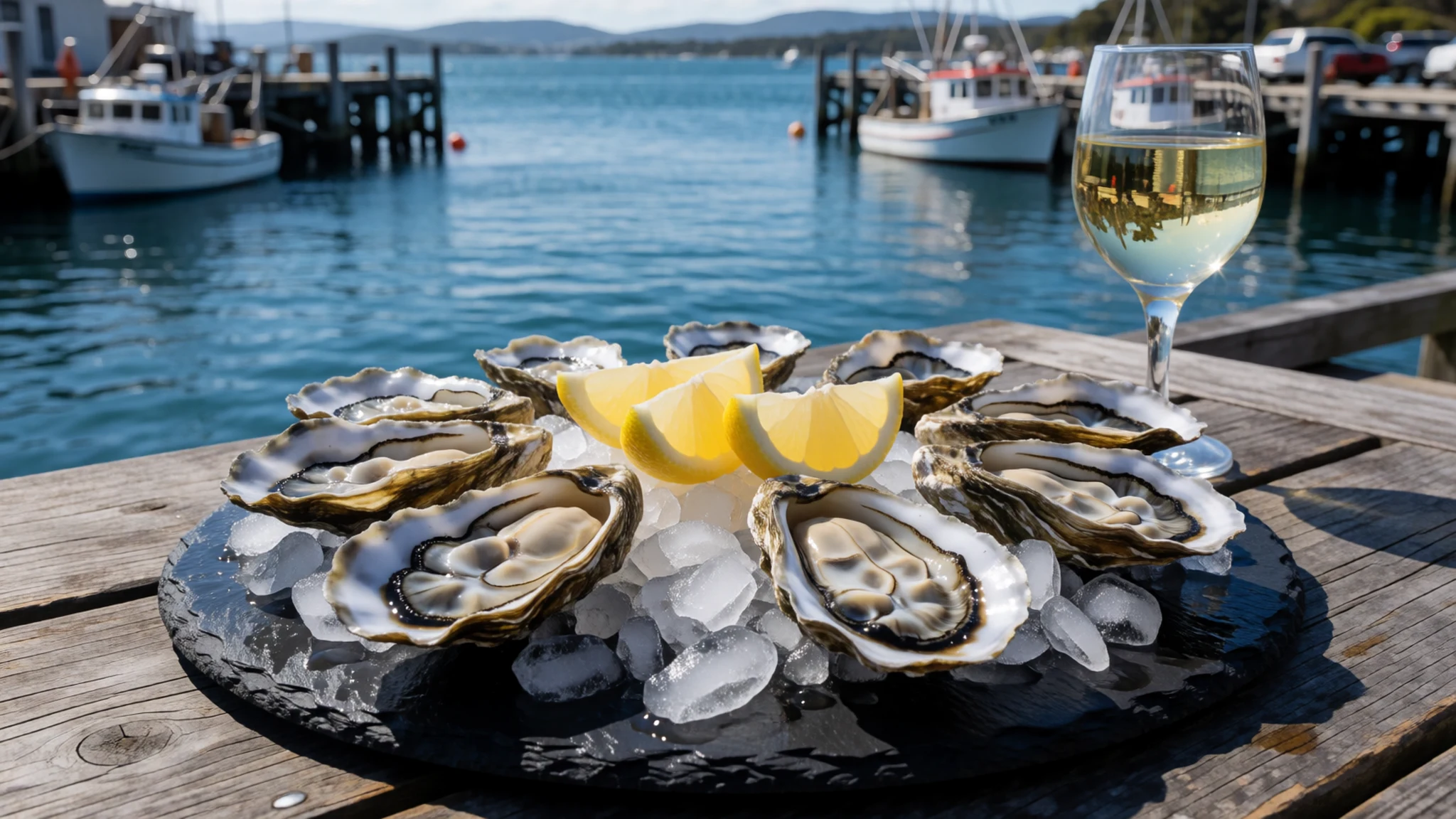
- Huon Valley apples — Farm gate stalls and markets in the Huon Valley, south of Hobart
The Huon Valley is well known for its apples, and they turn up fresh, pressed into juice and baked into desserts. Farm gate stalls and local markets are the best places to buy them in season. Ask the stallholder which varieties are ripe that week. - Island cheese and beef — Specialty grocers and farmers markets in Hobart and Launceston
Several Tasmanian regions have their own specialities, and the cheeses and beef from the islands are well regarded. Tasting boards of local cheese with bread and pickles are a relaxed way to try them. Specialty grocers and farmers markets in Hobart and Launceston usually stock a good range. - Local wasabi and saffron — Farmers markets and specialty shops around Hobart
Tasmania grows crops visitors do not expect, including wasabi, saffron, tea and truffles. Small producers sell them at farm stalls and specialty shops, and they make an unusual gift to take home. Look for them at farmers markets around the state.
Plan it
Best time. December to March suits a visit best, when the days are longest, though the weather is hot, with highs near 28 °C, and the site is busy in the summer months. Tasmania's weather is changeable all year, so check conditions before you travel. Shoulder seasons in autumn and spring can be quieter.
How long. 1–2
Getting there. Fly into Hobart Airport, which has flights from Melbourne, Sydney, Brisbane, the Gold Coast and Auckland, then drive south-east to the peninsula, about 100 kilometres. Hire a car in Hobart, or join an organised tour from the city.
Budget. mid
Tips
- Check opening times and tour bookings on the official site, portarthur.org.au, before you set out
- Allow at least half a day for the ruins and the Separate Prison walk
- Bring a raincoat and warm layers even on a sunny morning
- Carry water and sun protection, as much of the site is open ground
Etiquette
- Stay on marked paths and respect the ruins by not climbing on walls
- Keep your voice low near the church and the prison buildings
- Do not raise the 1996 shooting unless a local brings it up first
Nearby
Sources
- Wikidata Q38167031 (CC0)
- Port Arthur Historic Site, official website (Website)
- Wikipedia: Port Arthur Historic Site (CC BY-SA 4.0)
- Wikivoyage: Tasmania (CC BY-SA 4.0)
- Old Convict Church at Port Arthur, Karen Bevis (CC BY-SA 4.0)
