Pori
Pori, Finland
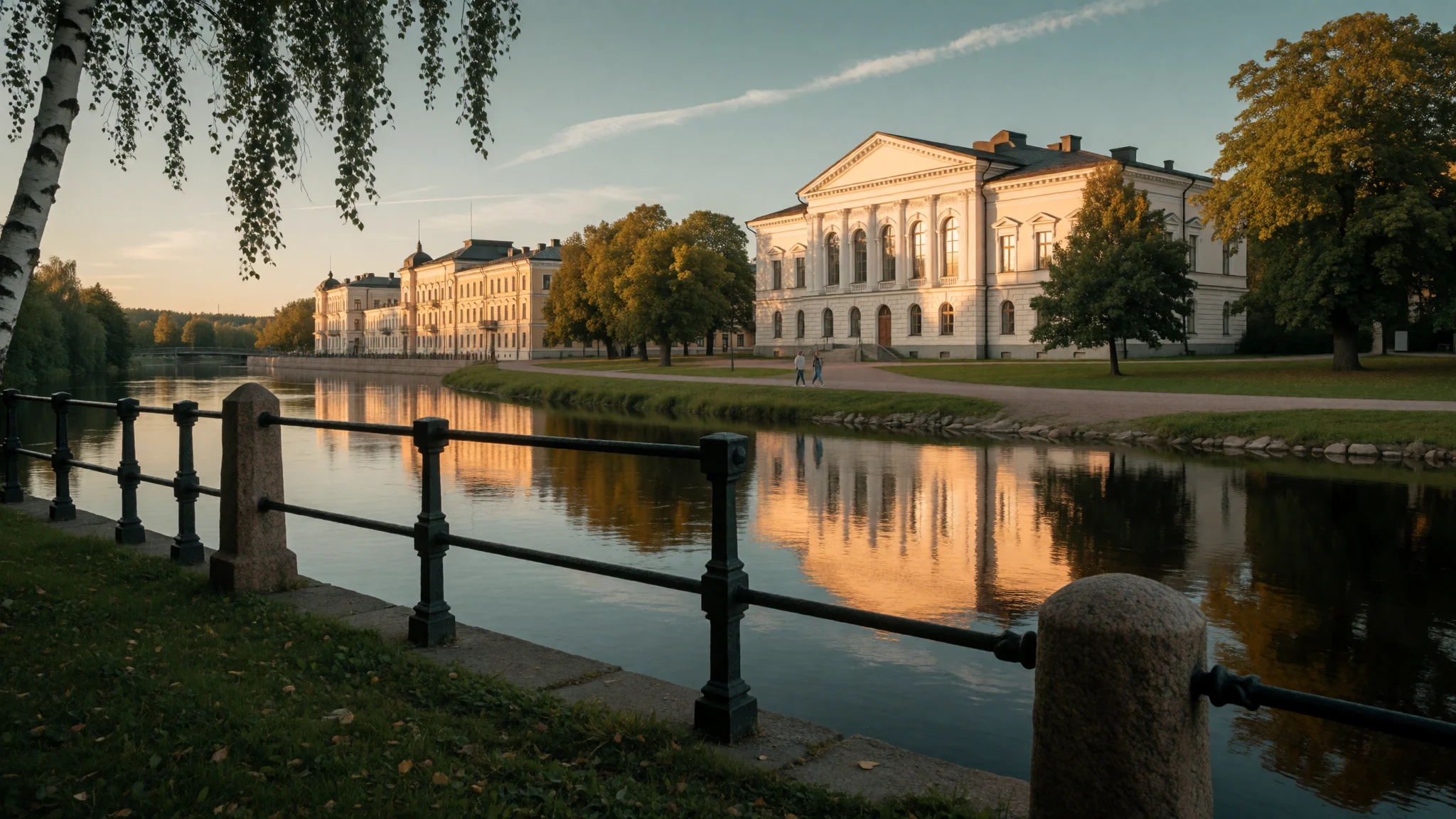
Pori is a river-mouth city on Finland's west coast, where July jazz, long sandy beaches and Neo-Renaissance streets sit within a short ride of each other.
The place
Pori sits on Finland's west coast, on the estuary of the Kokemäki River, a short distance inland from the Gulf of Bothnia. It is the regional capital of Satakunta and has 83,010 people, which makes it a mid-sized Finnish city with the calm, flat feel of a river town. The open sea is about ten kilometres away, and the sandy shore and dunes of Yyteri are where the city heads on warm days. Helsinki is a long half-day away by road or rail, with Tampere and Turku much closer, so Pori is a place people choose rather than pass through. The centre follows a tidy street grid, with a market square and a line of Neo-Renaissance buildings facing the river. Water shapes the whole municipality: a large share of its area is river, lake and sea, and its borders reach far inland to neighbours such as Ulvila and Nakkila. The city is unilingually Finnish, though English works comfortably in cafés, shops and around the festival. Pori's reputation rests on a handful of things: the jazz festival in July, the beaches, the Ässät ice hockey club, the open-air park at Kirjurinluoto, and a theatre tradition that mattered to Finnish-language drama. Winters are cold and dark, summers are bright and mild, and the town's mood follows the light.
Its story
Pori was founded in 1558 by Duke John, who later became King John III of Sweden, and its origin is a story of a river losing its depth. Land around the Gulf of Bothnia has been rising since the last ice age, and from the fourteenth century the Kokemäki River grew harder for ships to use. The older market towns upstream, Ulvila and Teljä in Kokemäki, slowly lost their trade as hulls could no longer reach them. By the sixteenth century the problem was serious enough that the duke chose a fresh site nearer the sea. His charter explained the thinking plainly: a strong market town was best built by the water, and Ulvila offered nowhere suitable to fortify. Townspeople from Ulvila were ordered to move, and the first population of a few hundred did not come willingly. They soon saw the advantages of the position, however, since the harbour opened up profitable trade. Shipbuilding began beside the river within a few decades and carried on until the early twentieth century, so the town's early life was tied to timber, tar and sail. The same pattern of moving with the water explains why Pori stands where it does today. The Latin name Arctopolis and the Swedish name Björneborg both survive in old maps and prints, which are worth a look in local museums for anyone curious about how the grid plan took shape.
What to see
- City Hall — Riverfront, city centre
Pori's City Hall was designed by Carl Ludvig Engel and stands in its own small park beside the river. It belongs to a row of Neo-Renaissance buildings along the waterfront, and the simplest plan is to stroll the whole stretch slowly, looking at façades rather than going inside. - Keski-Porin kirkko — Central Pori
This large Gothic Revival church in Pori was built in the mid-nineteenth century and has a well-regarded organ. It also serves as a concert venue, and the jazz festival uses it too. Free guided visits can be requested, so ask ahead if the interior interests you. - Porin Teatteri — Central Pori, near the river
Porin Teatteri is a Neo-Renaissance theatre building from the late nineteenth century. It matters in the story of Finnish-language stage drama, which had early performances in Pori during years of tension over language. Check the theatre's own programme for performances, since the season varies. - Reposaari — Coast, north-west of the centre
Reposaari is a seaside fishing village outside Pori, filled with painted wooden houses and small harbour scenes. It is best in summer, when the light is long and the place feels open. Plan on a half-day trip with a walk and a coffee. - Sigrid Jusélius Mausoleum — Western edge of Pori
The Sigrid Jusélius Mausoleum holds paintings by the Finnish artist Akseli Gallen-Kallela, who is listed in the brief as Axel Gallén-Kallela. It is a quiet, reflective stop, a short trip from the centre. Check the official site before going, as opening arrangements change by season. - Viikkari — Fifth district, east of the centre
Viikkari, known as the fifth district, is made up entirely of old wooden buildings. It is a residential area rather than a sight with gates, so the pleasure is in wandering the lanes, noticing the colours, and keeping voices low out of respect for people who live there.
Culture
Pori's cultural life is built around music, theatre and the outdoors. The best-known event is the Pori Jazz Festival, held every July over nine days, which has brought many famous international names to the town over the decades. The main venue is Kirjurinluoto Arena, an open-air park by the river with room for a very large audience, and concerts are also scattered around the city, including in the Gothic Revival church. Beyond jazz, Pori has a long theatre tradition, and the Porin Teatteri building is a reminder that Finnish-language drama found an early home here. An artists' association, NYTE, was founded in the late twentieth century and still anchors a local art scene. Day to day, the town is Finnish in manner: reserved, polite, fond of saunas and swimming, and at ease with silence. People often meet outdoors in summer, at the beach, on river paths or at festival lawns, and in winter retreat to cafés and ice hockey halls. Small talk is brief and sincere, and personal space is respected on buses and in queues. Visitors who arrive in festival week should expect crowded accommodation and busy evenings, while the rest of the year is far quieter. At concerts, churches and in queues, keep your voice low, wait your turn without pushing, and switch your phone to silent before the music begins.
What to wear
Fashion in Pori follows Finnish habits: practical first, then neat. Traditional dress in Finland is regional, and Satakunta has its own folk costumes, made mainly from wool and linen with embroidered or woven trim, and worn today for weddings, folk dance, national holidays and heritage events rather than daily life. Everyday clothing in Pori is plain and layered, in dark, grey and muted colours, with good boots and waterproof jackets for the long damp seasons. Students mark celebrations with coloured boiler suits covered in patches, a distinctive sight in spring. At the jazz festival, people dress for being outdoors all day: trainers, light rain jackets, sunglasses and the occasional sharp shirt for evening gigs. Visitors should plan for weather first. In summer, light layers, a warm top for evenings and a rain shell are enough, with sandals or sturdy trainers for the sandy paths at Yyteri. Winter needs a proper coat, hat, gloves and boots with grip for ice. Churches do not impose strict dress rules, but covering bare shoulders and removing hats when inside is polite, particularly during services. Beaches and saunas are relaxed, though swimwear is expected outside the sauna cabin unless a sign says otherwise. Mosquito repellent is a useful addition in summer, especially near the river and on coastal walks.
What to eat
- Lohikeitto (salmon soup) — Cafés and lunch restaurants in the centre
A creamy soup of salmon, potato and dill that is common across Finland and easy to find in Pori at lunchtime. It suits the cooler months and is filling without being heavy. Ask for it at a café or lunch counter. - Silakka (Baltic herring) — The market square and market hall area
Baltic herring is a staple of Finnish coastal cooking, served fried, pickled or baked. In Pori, look for it near the market square and in small eateries serving traditional plates, often with potatoes and rye bread. - Smoked and grilled meats — Barbecue restaurants in the city centre
Pori has barbecue restaurants specialising in smoked and charcoal-grilled meat, a heartier take on Finnish tastes. Expect generous plates and sides. Check menus and opening times online, as they change between seasons. - Pasta and pizza, Italian-style — Italian restaurants near the river
Several Italian-inspired restaurants in central Pori serve pizza, fresh pasta and risotto, often with a weekday lunch offer. It is a dependable choice after a long day of walking or a festival evening. - Korvapuusti (cinnamon bun) — Bakeries and cafés across town
A soft cardamom and cinnamon bun, traditionally enjoyed with coffee in the middle of the day. Bakeries in Pori sell them fresh in the morning. Take one to the riverside or a park bench.
Plan it
Best time. June to August for long bright days, beach weather and the July jazz festival; winters are cold and dark, though quiet and good for a slower visit.
How long. 2–3
Getting there. Most visitors from abroad land at Helsinki Airport, then take a coach (about three to four hours) or a train via Tampere (all passenger trains go through Tampere; about three and a half hours in total from Helsinki). Turku and Tampere airports also have some international flights. From Tampere, the coach or train to Pori takes roughly an hour and a half, and drivers can use the roads from Helsinki, Turku or Tampere.
Budget. mid
Tips
- Book accommodation well ahead if you plan to visit during the July jazz festival.
- Bring a light rain jacket in any season, plus mosquito repellent for summer evenings by the river and coast.
- Check opening hours for the mausoleum, theatre and church on their official pages before travelling, and see the city website at https://www.pori.fi/.
- Cards and contactless payments are widely used, but carry a little cash for small stalls and local events.
- Tap water is safe to drink, so bring a refillable bottle for days at the beach.
Etiquette
- Queue calmly and keep a polite distance from others on buses and in shops.
- Keep voices low in churches, concert halls and residential wooden-house districts such as Viikkari.
- Take rubbish away from beaches and dunes, and stay on marked paths.
Nearby
Sources
- Wikidata Q180233 (CC0)
- Wikipedia: Pori (CC BY-SA 4.0)
- Wikivoyage: Pori (CC BY-SA 4.0)
- Taavisilta bridge, Pori (kallerna) (CC BY 3.0)
- Montage of Pori (Marjastaja, kallerna, Joe K., J Hokkanen) (CC BY 3.0)
- The Great Square of Pori in 1852 (Johan Isak Sillström) (Public domain)
- 1799 map of Pori (Isaac Tillberg) (Public domain)
- Town plan of Pori, 1852 (G. Th. Chiewitz) (Public domain)
- Björneborg (Johan Knutson) (CC0 1.0)
- Porin Linjat bus 25 at Kauppatori (Santtu37) (CC BY-SA 4.0)
- IsoKarhu shopping centre, Pori (Santtu37) (CC BY-SA 4.0)


