Poenari Castle
Poenari Castle, Romania
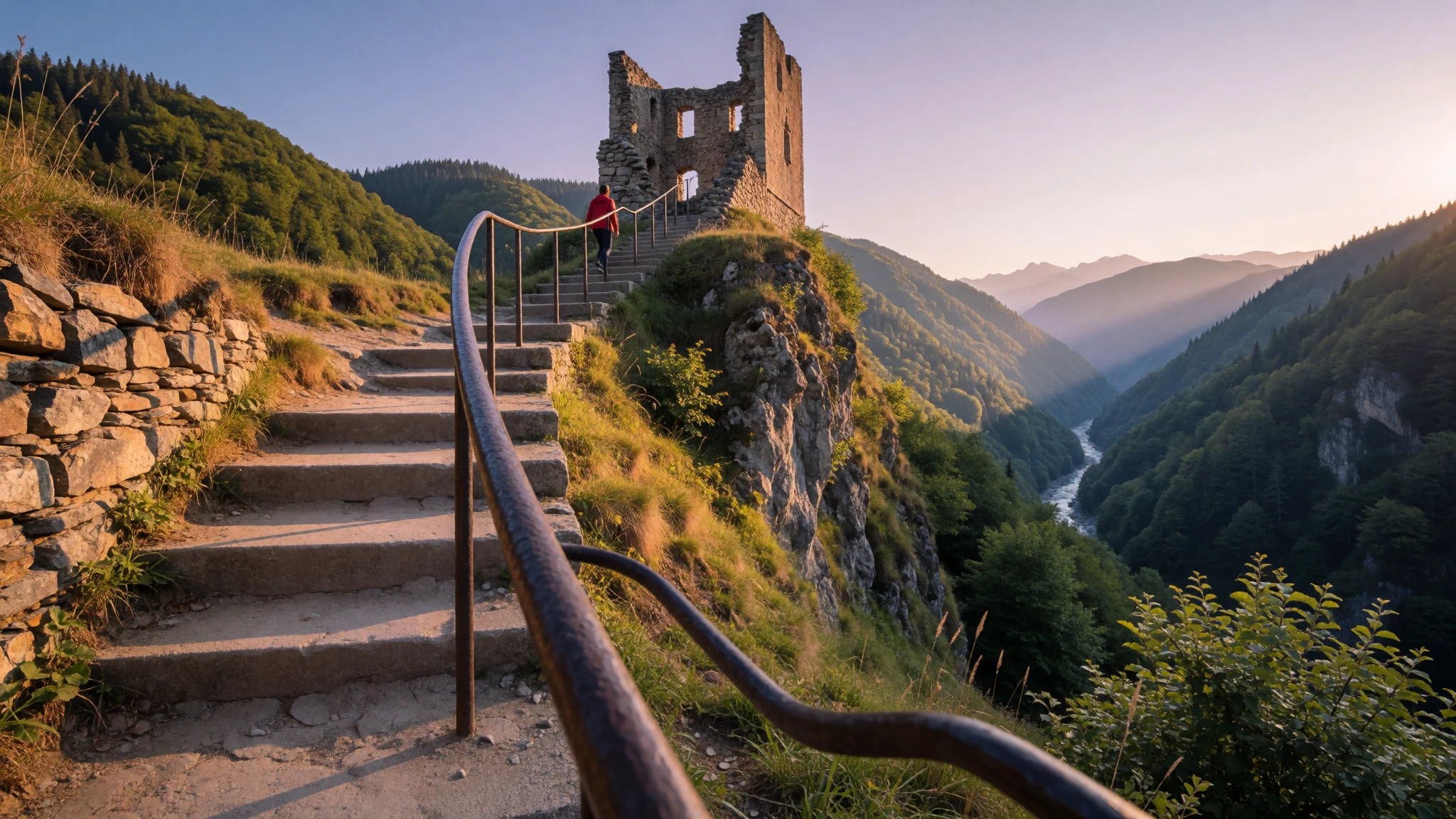
Poenari Castle is a ruined mountain fortress linked to Vlad the Impaler, reached by a long staircase through forest and rewarded with canyon views.
The place
Poenari Castle is a ruined fortress in Romania's Argeș County, perched on the plateau of Mount Cetatea above a canyon cut by the Argeș River. The Făgăraș Mountains stand close by, and the ruin looks across the valley toward the western approach of the Transfăgărășan, the high road that brings most travellers to this part of the country. It is a small site. What survives is a ring of broken walls and a few towers on a rock ledge, so the pull is as much the setting as the masonry. The only way up is a concrete staircase of 1,480 steps that climbs through forest and is steep enough that almost everyone stops to rest. Cloud often fills the valley below, and on clear days the view takes in green ridges folding away toward the Vidraru reservoir. Popular memory ties the castle to Vlad the Impaler, who made it one of his strongholds, and that link brings a steady summer crowd, though the numbers are smaller than at better-known castles in Transylvania. The town of Curtea de Argeș, first capital of Wallachia, lies down the valley and keeps the medieval churches of the old principality; it is the sensible base for a visit. Expect a half-day outing, with the climb taking most of the effort and the ruins only a short wander once at the top. The site is exposed, so weather can turn quickly, and the stone steps are slick after rain.
Its story
Poenari Castle has two layers of history, and the older one is hazier. Around the start of the 13th century the Wallachians built a fortress nearby known as Castle Argeș, which by the mid-14th century was the main stronghold of the Basarab dynasty. Over the following decades its name and occupants shifted, and then it was left to decay. The ruin that people climb to today dates from 1459, when Vlad the Impaler recognised the value of a sheer rock spur and rebuilt the place, arresting rival nobles in the process. He took stone from an older, lower fort on the opposite bank of the river. Because of its position and size, the castle was hard to attack, which suited a ruler with many enemies at home. Vlad died in 1476, but garrisons stayed on for years afterwards. Within a couple of generations the fortress was given up for a second time, and it fell into ruin soon after. Nature then finished what neglect began. On 13 January 1913 an earthquake-triggered landslide tore away a section of the walls and dropped it into the river gorge. Further tremors in 1940 and 1977 did more harm. Modest repairs after the later shocks left enough masonry upright to visit. The county museum in Argeș has managed the ruin since 2009.
What to see
- Poenari Castle ruins — Mount Cetatea, above the Argeș valley
The ruins sit at the top of the concrete staircase and are modest: curtain walls, the stump of a tower and the rock ledge they cling to. The point is the position. The spur drops away on several sides, which explains why the site was so hard to attack, and the canyon view is the reward.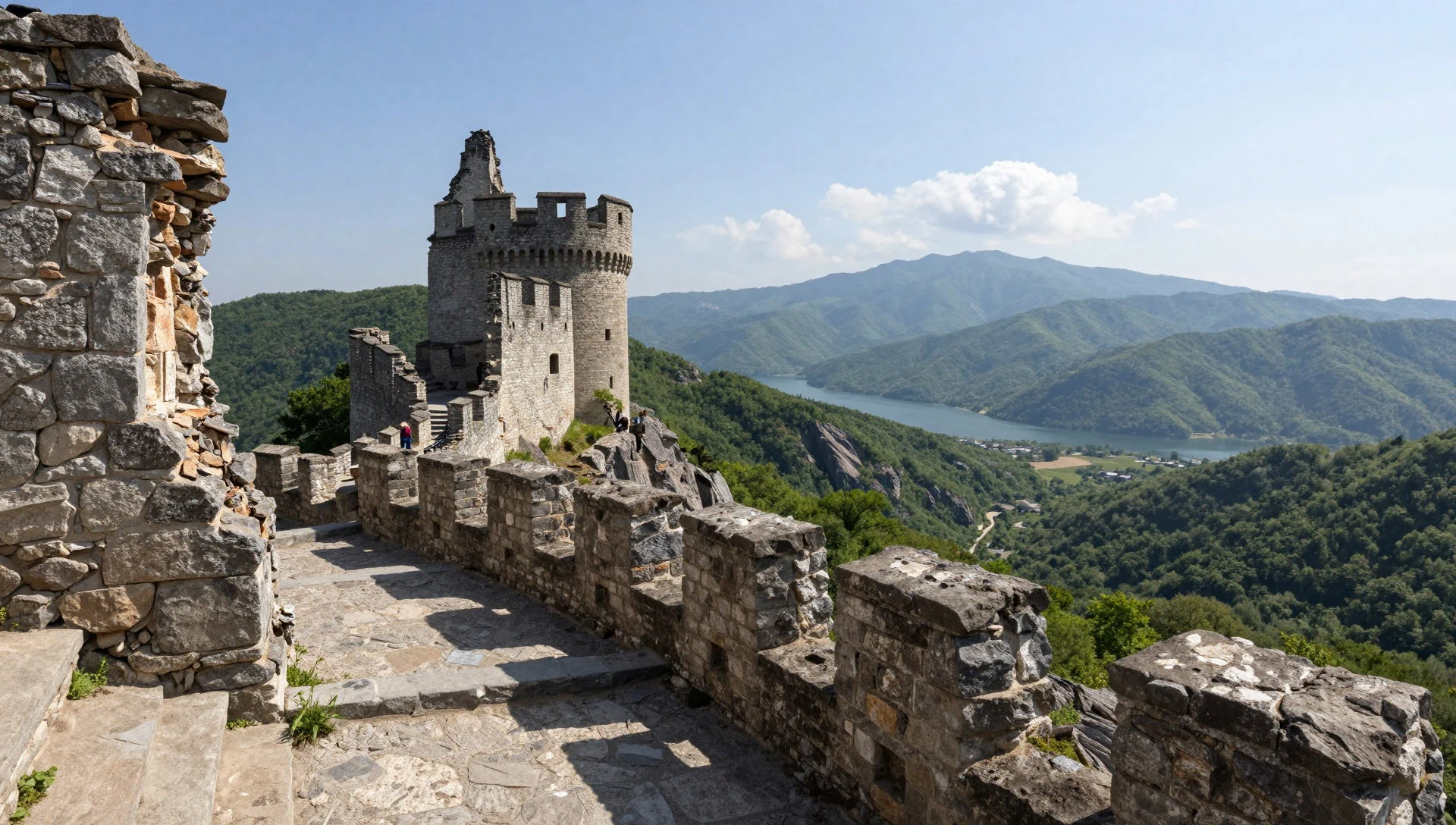
- Curtea de Argeș Monastery — Curtea de Argeș
Founded by Prince Neagoe Basarab, this is a famous medieval monument of Wallachia, and its cathedral was later designated a royal burial place by Carol I. It makes a calm stop after the castle climb. A well-known legend about the craftsmen who raised its walls is attached to the site.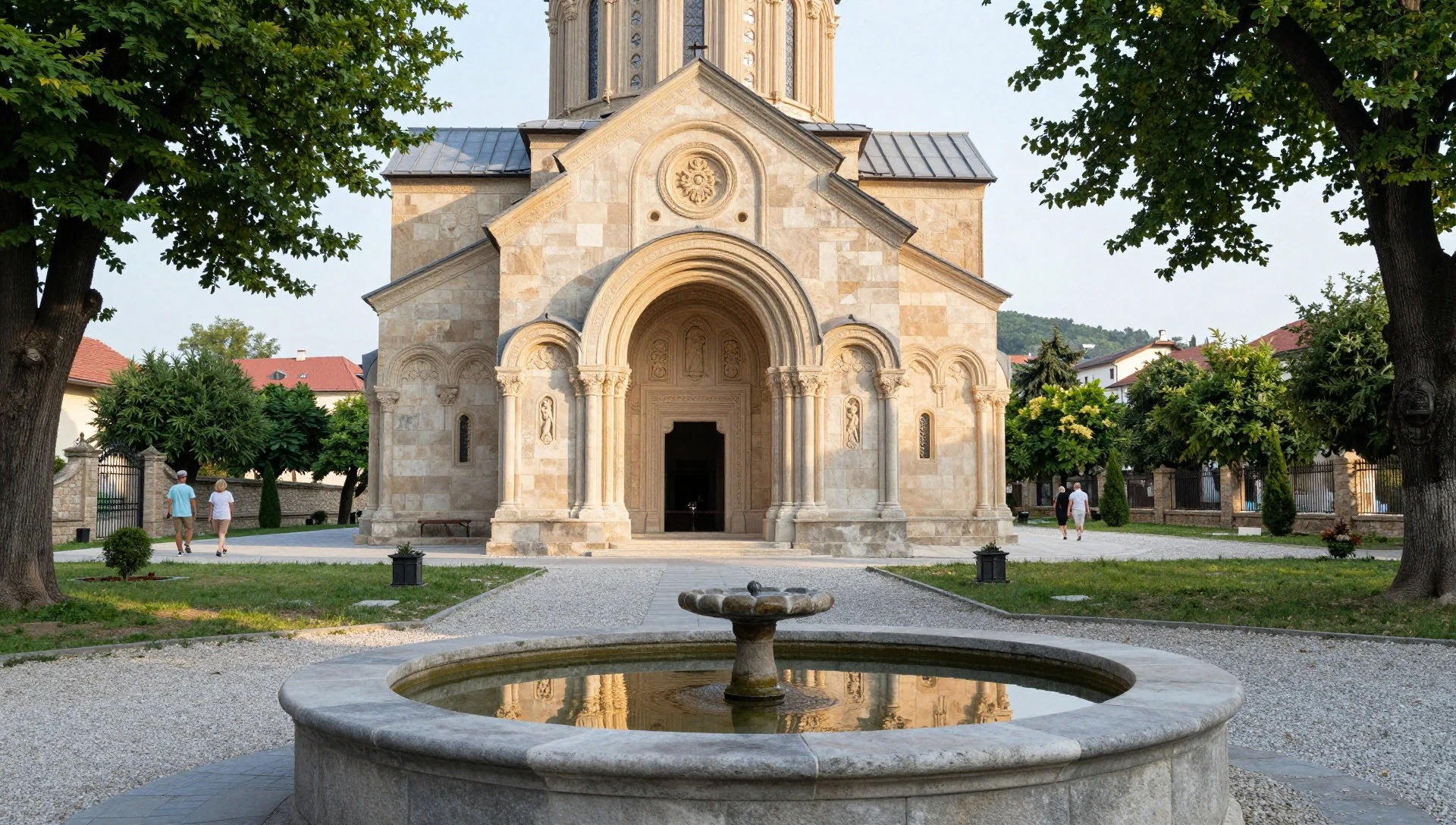
- Princely Church of Saint Nicholas — Old town, Curtea de Argeș
Set within the old princely residence in Curtea de Argeș, this church was built in the time of Prince Basarab I and follows a Greek-cross plan. The painter Dumitru Norocea worked on restoring its frescoes. It is a quiet, atmospheric place to understand the medieval state that Poenari once defended.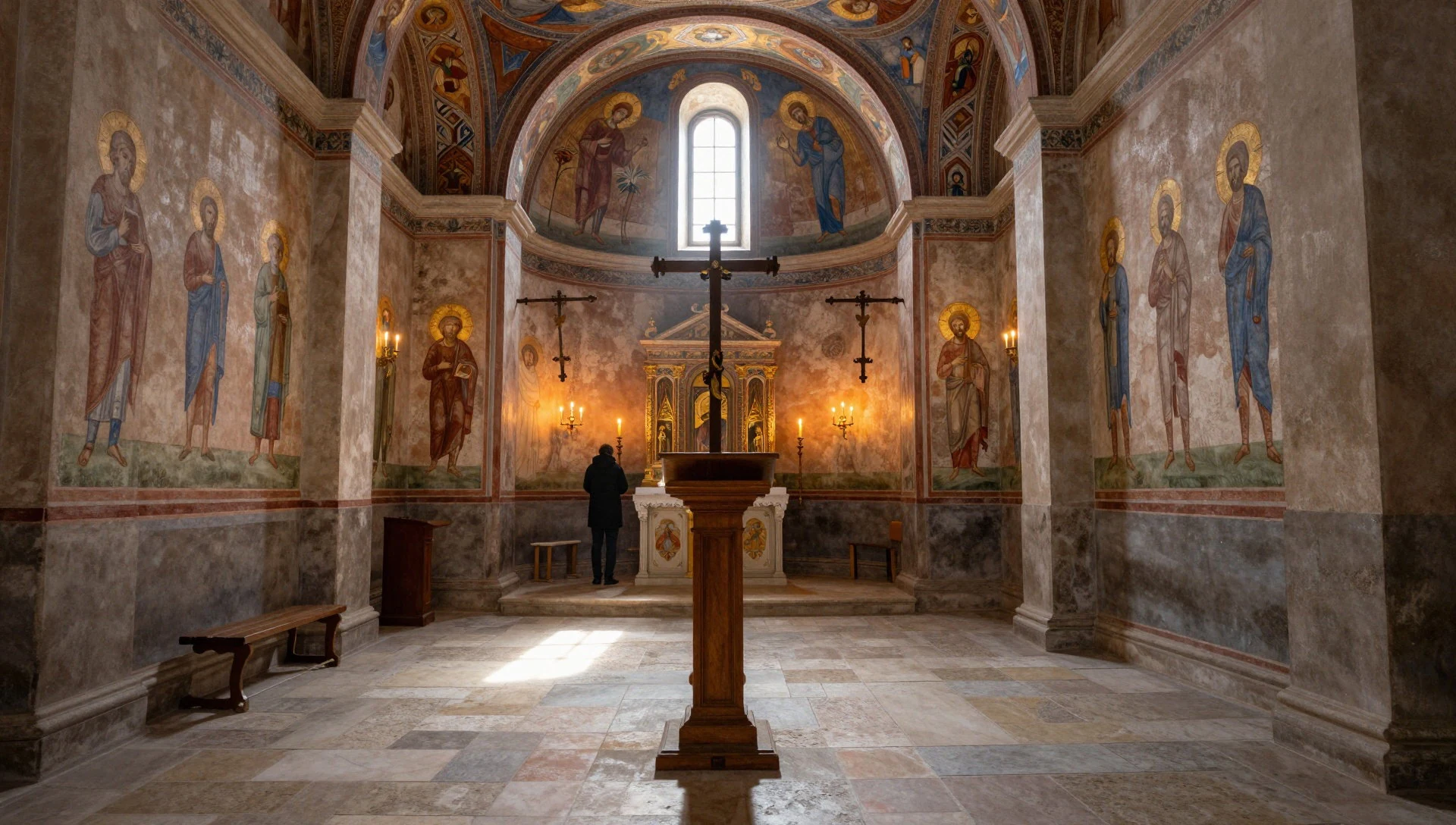
- Manole's Well — Beside the monastery, Curtea de Argeș
A small monument near the monastery, tied to the folk legend of the craftsmen who built it, in which a ruler asks whether they could raise something finer still. Romanian versions of the tale, centred on the master builder Manole, are darker than the pretty setting suggests. Worth a short stop.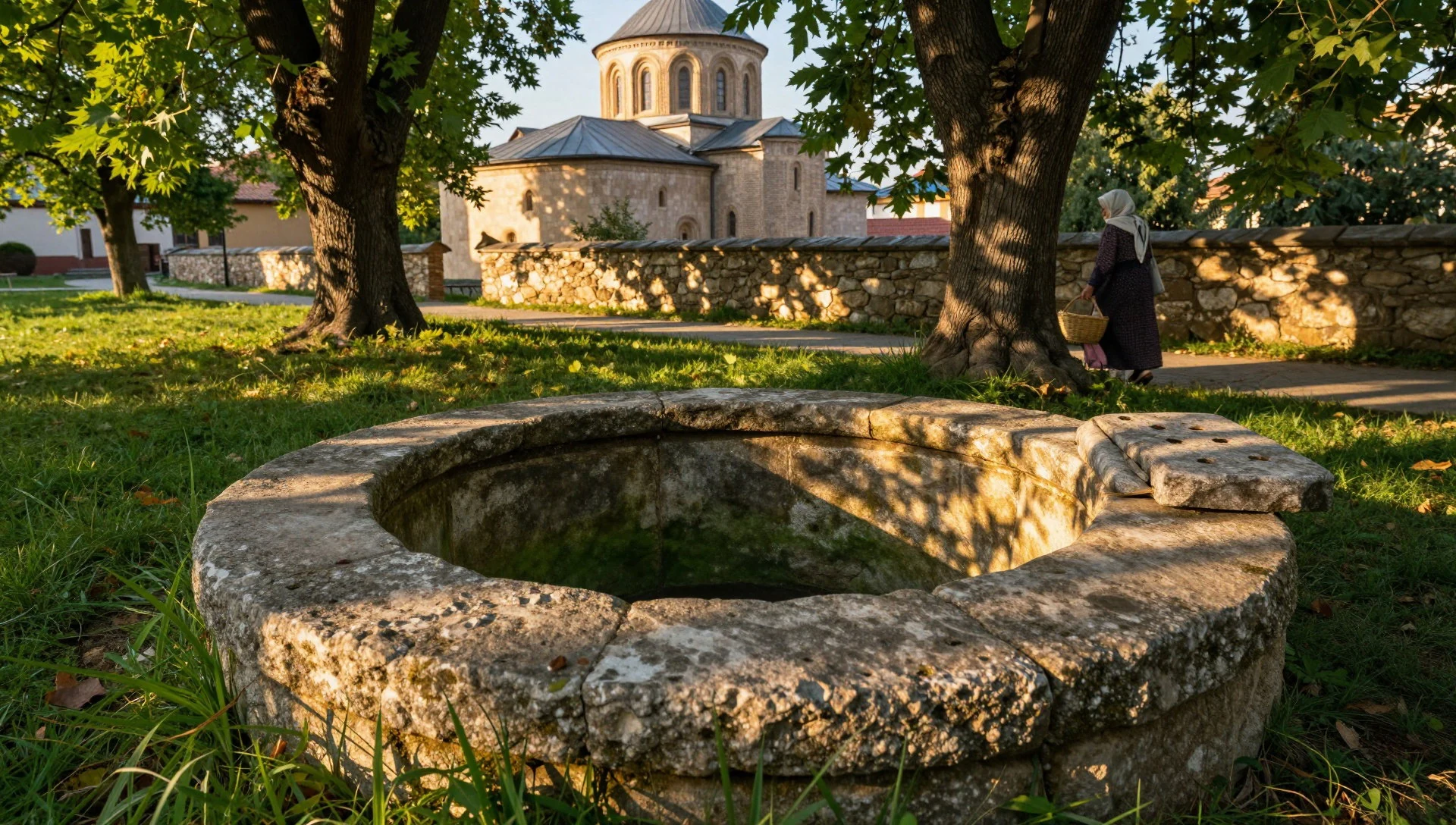
- Curtea de Argeș City Museum — Town centre, Curtea de Argeș
The museum covers local history and ethnography, with a separate folk art department in a nearby building. It is a useful wet-weather stop for understanding the region's embroidery, household objects and everyday life, and it gives context to the castle that the ruin itself cannot. Check current opening arrangements locally.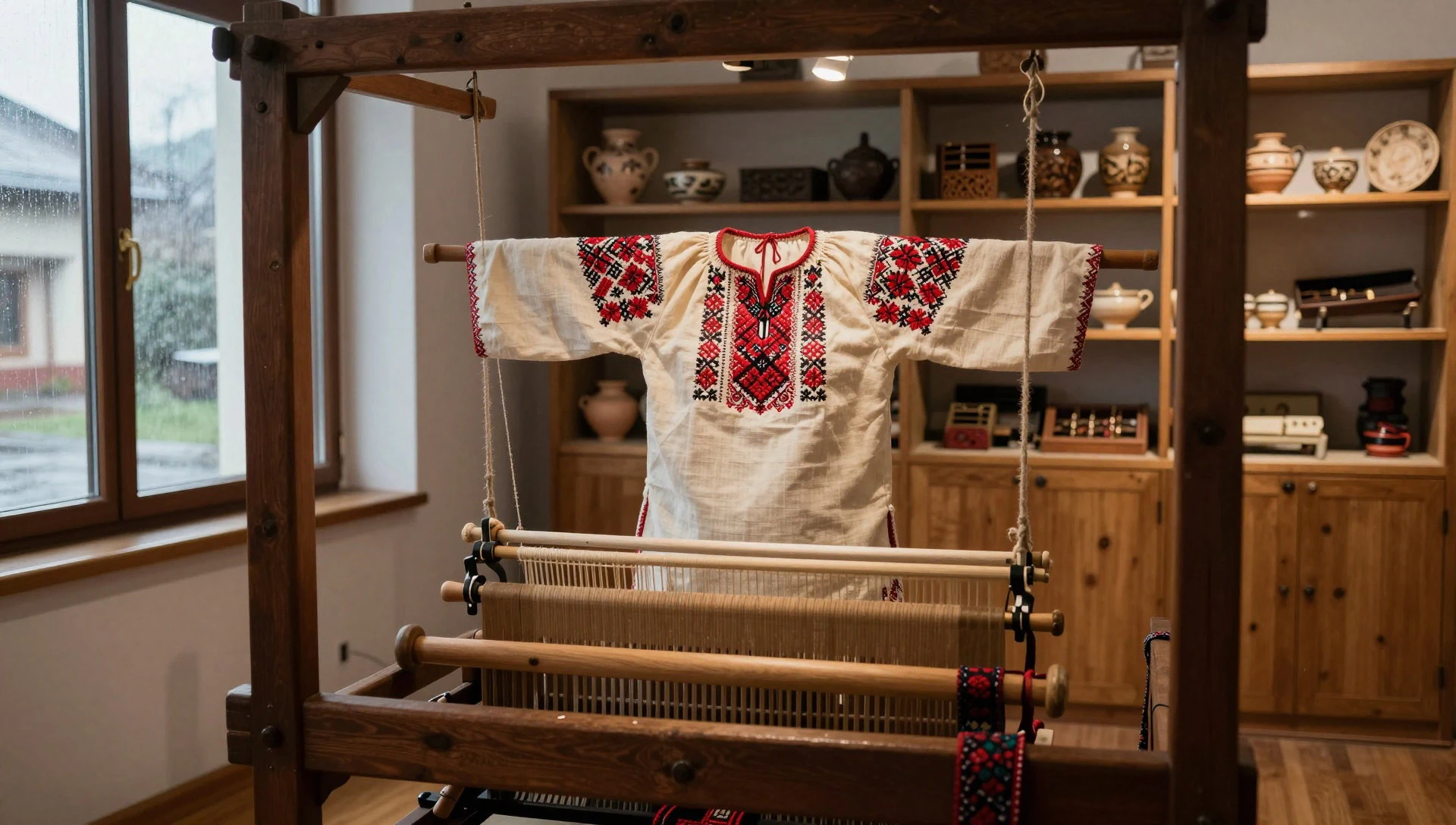
Culture
Poenari Castle sits at the centre of an argument about reputation. Outside Romania, Vlad the Impaler is mostly known through vampire fiction. Inside the country, many people see him as a harsh but effective prince who defended Wallachia and imposed order on a quarrelsome nobility, and local guides tend to steer visitors away from the Dracula costume-party version of the story. Expect folklore to be mixed freely with history, and expect the castle to be treated as a historical site rather than a horror attraction. The surrounding valley is largely Romanian Orthodox, and churches and monasteries such as those at Curtea de Argeș are active places of worship, not just monuments. Worshippers cross themselves, light candles and kiss icons, and services run on their own schedule. Rural hospitality is generous: guesthouse hosts often press second helpings and a glass of home-made plum brandy (țuică) on guests, and refusing politely but warmly is fine. Mountain communities also have a long relationship with bears and forest, and locals take a practical view of both. Hikers and drivers on the Transfăgărășan are part of daily life here, and people are friendly to visitors who show interest in the region beyond the castle. At churches and monasteries, cover shoulders and knees, men should take off hats, and ask before photographing inside or pointing a camera at worshippers.
What to wear
Around Poenari Castle, traditional dress means the costume of the Argeș and Muscel foothills, where women's outfits are built on the ie, a loose blouse of linen, cotton or hemp embroidered at the neck, sleeves and chest. It is worn with a wrapped or pleated skirt in wool or cotton and a woven belt. Men traditionally wore a white shirt, narrow woollen trousers, a sheepskin waistcoat and leather opinci, a simple moccasin-style shoe. These outfits now appear mainly at weddings, church festivals, folk performances and national days, and the ie has also become a fashionable item in towns. Day to day, people in Curtea de Argeș and the villages dress like most of Europe: jeans, practical jackets, fleeces in the hills, and smarter clothes for church on Sundays. A visitor should dress for a mountain walk, not a castle tour. Wear sturdy shoes with good grip, since the 1,480 steps are concrete and can be wet or mossy. Bring layers, because the valley can be cool and cloudy even in summer, and carry a light rain jacket. A hat and sun cream help on clear days. For monasteries and churches in town, pack a scarf or light shawl and trousers or a long skirt, as covered shoulders and knees are expected.
What to eat
- Sarmale — Family guesthouses and village eateries
Cabbage rolls stuffed with minced pork and rice, simmered slowly and served with sour cream and polenta. A staple of Romanian celebrations that is also eaten year-round. Look for it on menus at family guesthouses (pensiuni) and village eateries in the Argeș valley.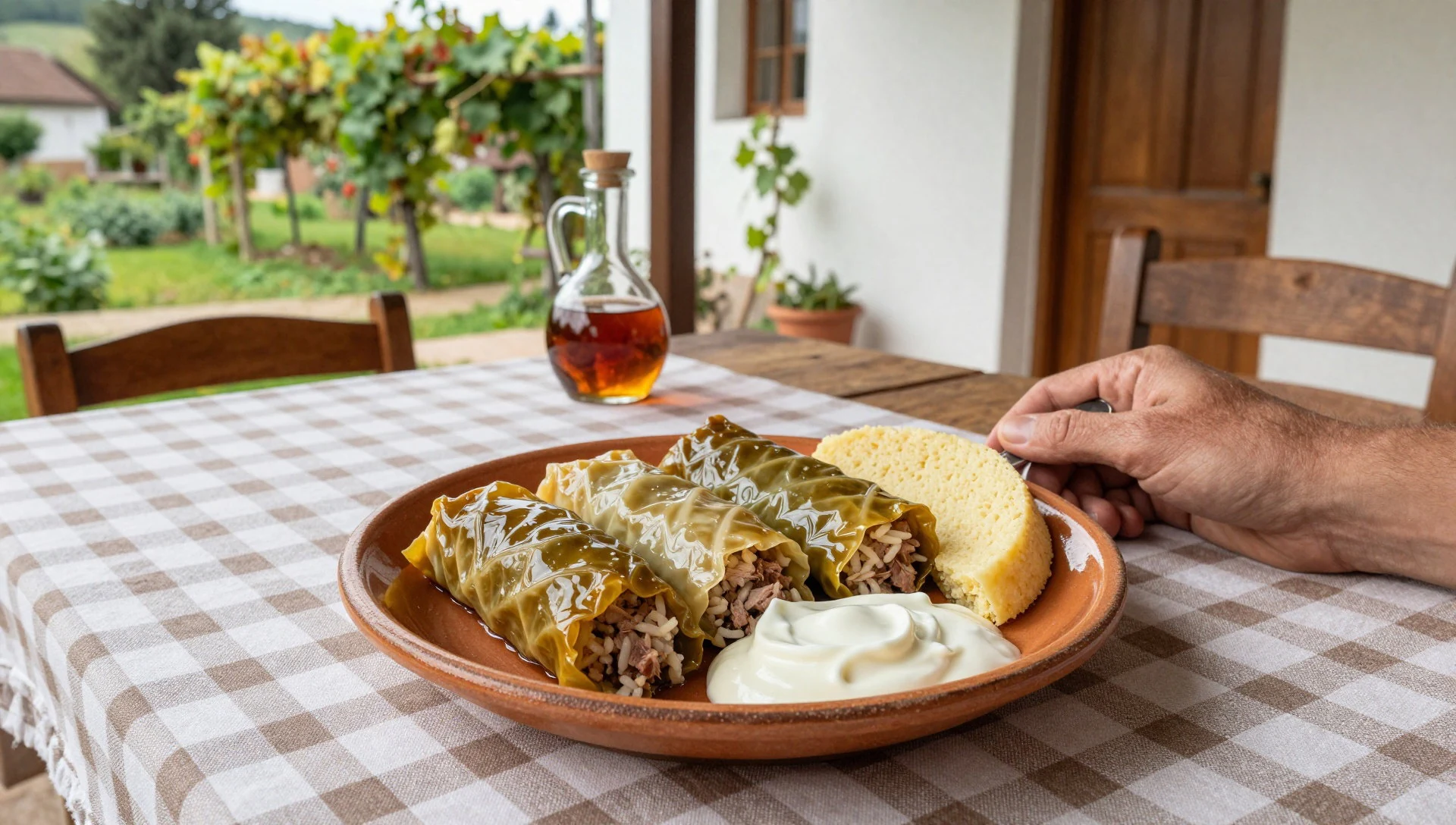
- Mămăligă with brânză and smântână — Roadside restaurants along the Transfăgărășan
Polenta served with salty cow's or sheep's cheese and thick sour cream. It is plain, filling food that suits a day of climbing. Often it comes alongside meat dishes as the bread-like side, and mountain cooks do it well.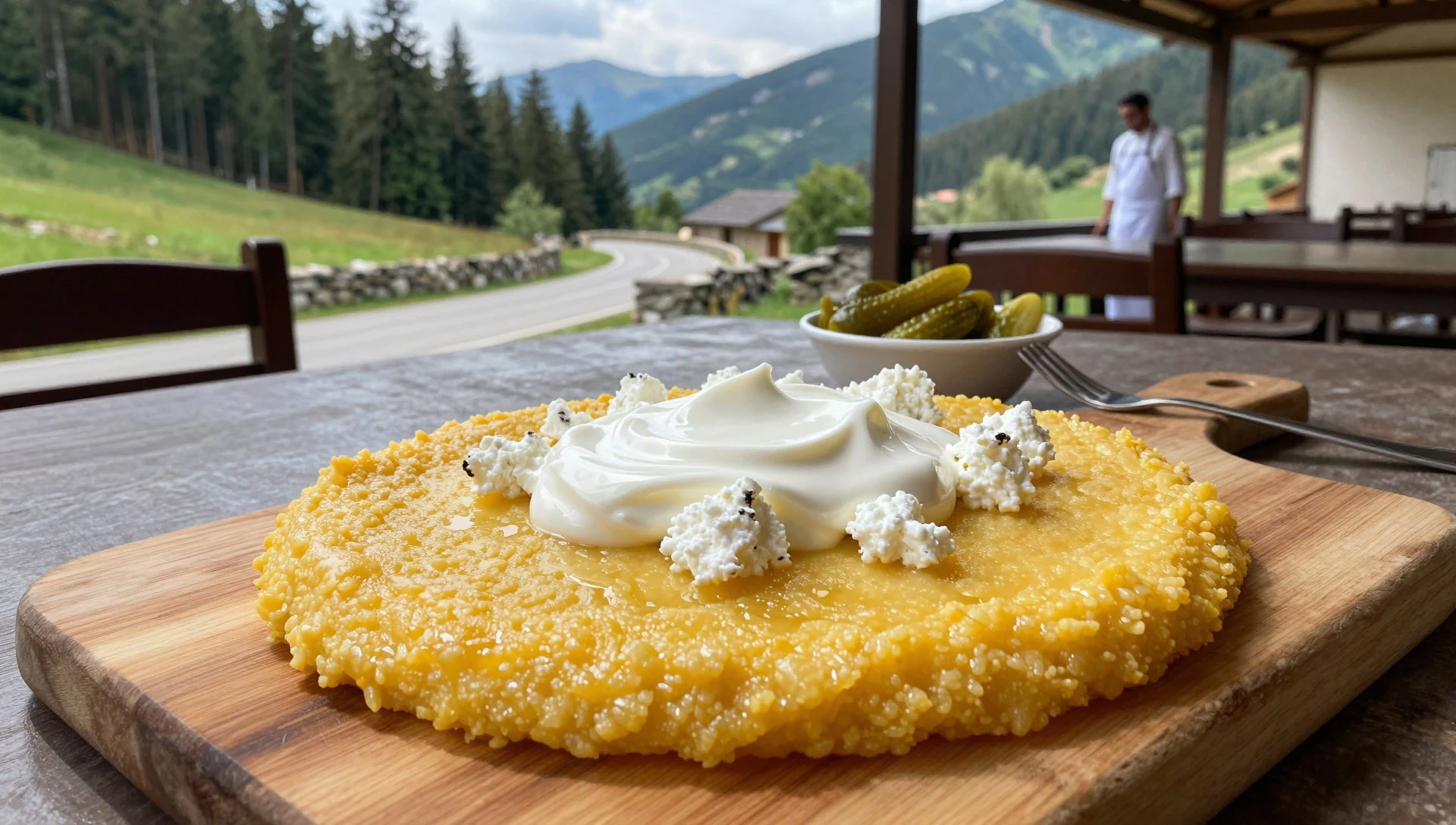
- Mici — Market stalls and grill places in Curtea de Argeș and Pitești
Grilled, skinless sausages of mixed minced meat, seasoned with garlic and spices and eaten hot with mustard and bread. They are simple, smoky and cheap by the standards of sit-down food. A cold beer is the usual partner. - Ciorbă — Restaurants in Curtea de Argeș town centre
A sour soup, often soured with fermented bran or lemon, built around meatballs, vegetables or tripe. Ask what is on that day. It is the usual opener to a meal, and a warming one after a cool, cloudy morning on the mountain. - Papanași — Restaurants and guesthouses in the valley towns
Fried or boiled cheese doughnuts topped with sour cream and sour cherry or other fruit jam. Heavy and sweet, they are the classic Romanian dessert and are best shared. A reasonable reward after the descent.
Plan it
Best time. April and October usually give the mildest days for the climb, while June is the wettest month. July and August are warmest and busiest. The steps are slippery in rain, and the high mountain road is closed by snow in winter, so check conditions before travelling.
How long. 1–2
Getting there. The nearest airports are Bucharest Otopeni, Sibiu and Craiova; hiring a car from any of them is the easiest option. By public transport, take a train from Pitești or a bus from Bucharest, Brașov or Râmnicu Vâlcea to Curtea de Argeș, then a taxi or car up the valley to the foot of the stairs. Bus times can be erratic.
Budget. low
Tips
- Start early to beat both the crowds and the afternoon cloud
- Wear shoes with grip and bring water, as there is nothing to buy on the stairs
- Check the Argeș County Museum or local sources for current opening arrangements before you set out
- Carry some cash for roadside stalls and small guesthouses
- Never leave food or rubbish on the route: bears use the area, and the steps have been closed because of them
Etiquette
- Do not feed or approach wildlife, and keep all food packed away
- Stay on the marked stairs and behind barriers, as parts of the walls are unstable
- Dress modestly and ask before photographing inside churches and monasteries
Nearby
Sources
- Wikidata Q1013551 (CC0)
- Wikipedia: Poenari Castle (rev 1378502772) (CC BY-SA 4.0)
- Wikivoyage: Poienari Castle (rev 5400696) (CC BY-SA 4.0)
- Photo: BurgPoenari.JPG, L.Kenzel (CC BY 3.0)
- Photo: PoienariCastle1.jpg, Manu25 (CC BY 3.0)
- Photo: BurgPoenari1.JPG, L.Kenzel (CC BY-SA 1.0)
- Photo: Schita Cetatii Poenari.jpg, Andrea stoica (CC BY-SA 3.0 ro)
- Photo: Cetatea Poenari by Gheorghe Tatarescu (1860) (Public domain)
- Photo: Cetatea Poienari.jpg, Elena Avram (CC BY-SA 3.0 ro)
- Photo: Cetatea Poenari 2.jpg, Diana Popescu (CC BY-SA 3.0 ro)
- Photo: Poenari 01.jpg, Nicubunu (CC BY-SA 3.0 ro)


