Pitcairn Island
Pitcairn Island, United Kingdom
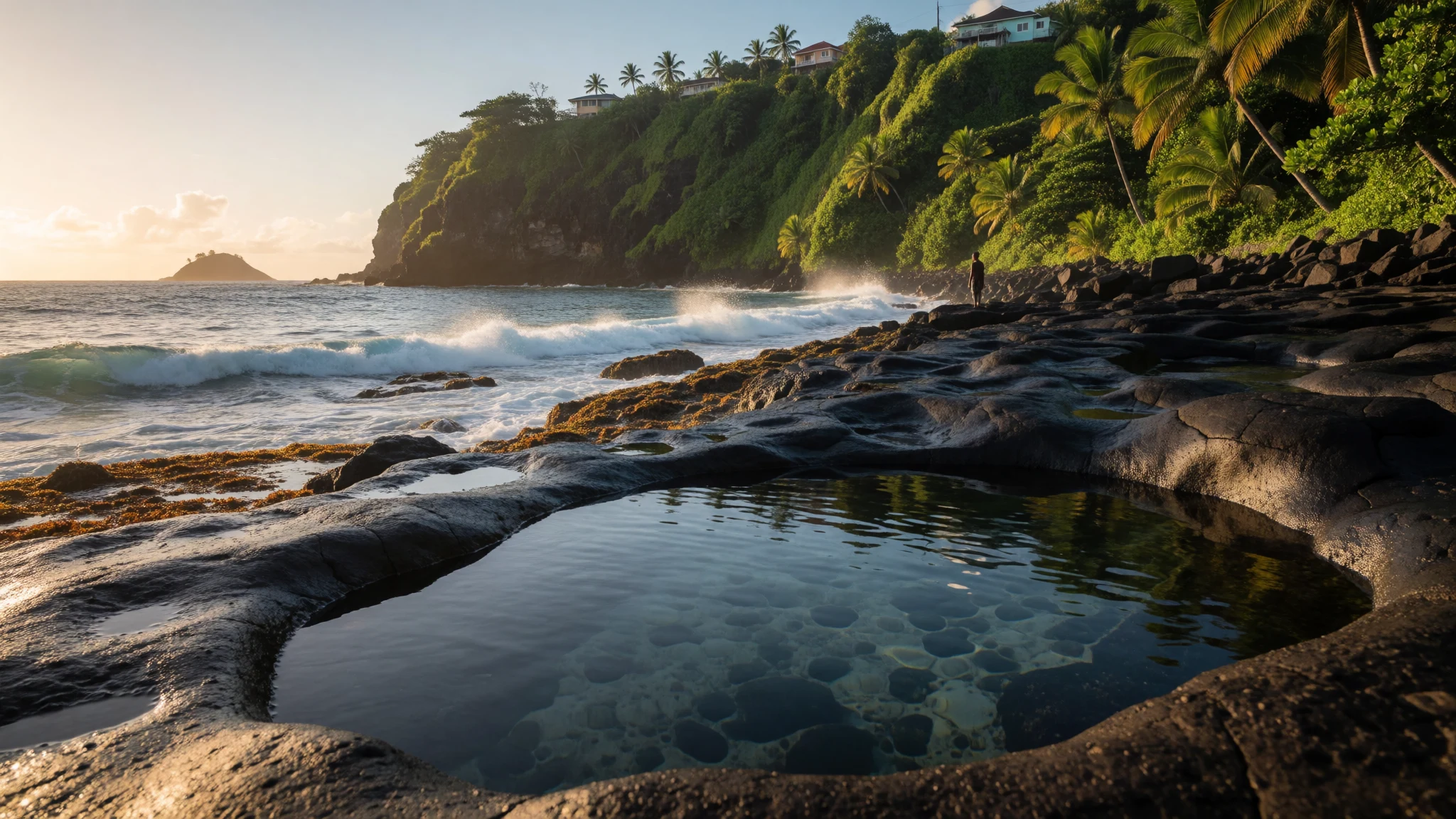
Pitcairn Island is a tiny Pacific outpost, home to the mutineers' descendants, reached only by sea and shaped by a ship's arrival.
The place
Pitcairn Island is the only inhabited member of a four-island group in the southern Pacific that forms Britain's sole overseas territory in that ocean. The other islands—Henderson, Ducie, and Oeno—are spread across hundreds of kilometres of ocean and have no permanent residents. Henderson holds most of the group's land, yet nobody lives there. Pitcairn itself is volcanic, steep and small, with one settlement, Adamstown, set above a rocky landing at Bounty Bay. The facts block gives a population of 47, and the community descends mostly from British mutineers and Tahitian women, which is why English and the local language, Pitkern, are heard side by side. The remoteness is the whole point. The nearest inhabited island, Mangareva in French Polynesia, lies 688 km to the west, and Easter Island is farther still to the east. There is no airstrip, because the island has no flat ground long enough for one, so every arrival is by sea. Paid islanders keep the roads and paths in order, and a visit tends to revolve around the supply ship, the swell at the landing and the goodwill of a very small community. Crowds are never the problem here. Availability, cost and sea conditions are.
Its story
Pitcairn Island was lived on long before any European chart showed it. Polynesian settlers stayed on Pitcairn and neighbouring Henderson for several centuries, then left; Henderson was probably empty well before Pitcairn, and the island was deserted by the time Europeans came upon it. A Spanish-crown navigator, Queirós, passed through these waters in the early seventeenth century, though historians still argue about which islands he actually named. Pitcairn itself was recorded by the crew of HMS Swallow under Captain Philip Carteret, and it carries the name of the youngest officer aboard, a teenage midshipman called Robert Pitcairn, who spotted it first. Its fame, however, comes from HMS Bounty. Nine British mutineers from that ship, together with twelve Tahitian women, made the island their refuge, and the vessel was destroyed by its own men off the landing now known as Bounty Bay. The tale made the names of Captain Bligh and the Bounty familiar far beyond the Pacific, and it remains the reason most visitors make the journey. Descendants of that group still form the core of the community, and the facts block dates the territory's founding to 1838. Pitcairn's past is less a tidy colonial story than a run of arrivals and disappearances: Polynesian voyagers first, then a ship's company on the run, and now a few dozen residents whose calendar bends around the boats.
What to see
- Bounty Bay — Below Adamstown
Bounty Bay is the rocky landing below Adamstown, and boat arrivals here are the island's main event. Remains of the Bounty lie in the shallows, though divers have picked the site over for years and little is left. Even so, standing at the water's edge gives the mutiny story a physical setting. Swell can delay landings, so treat timing as flexible.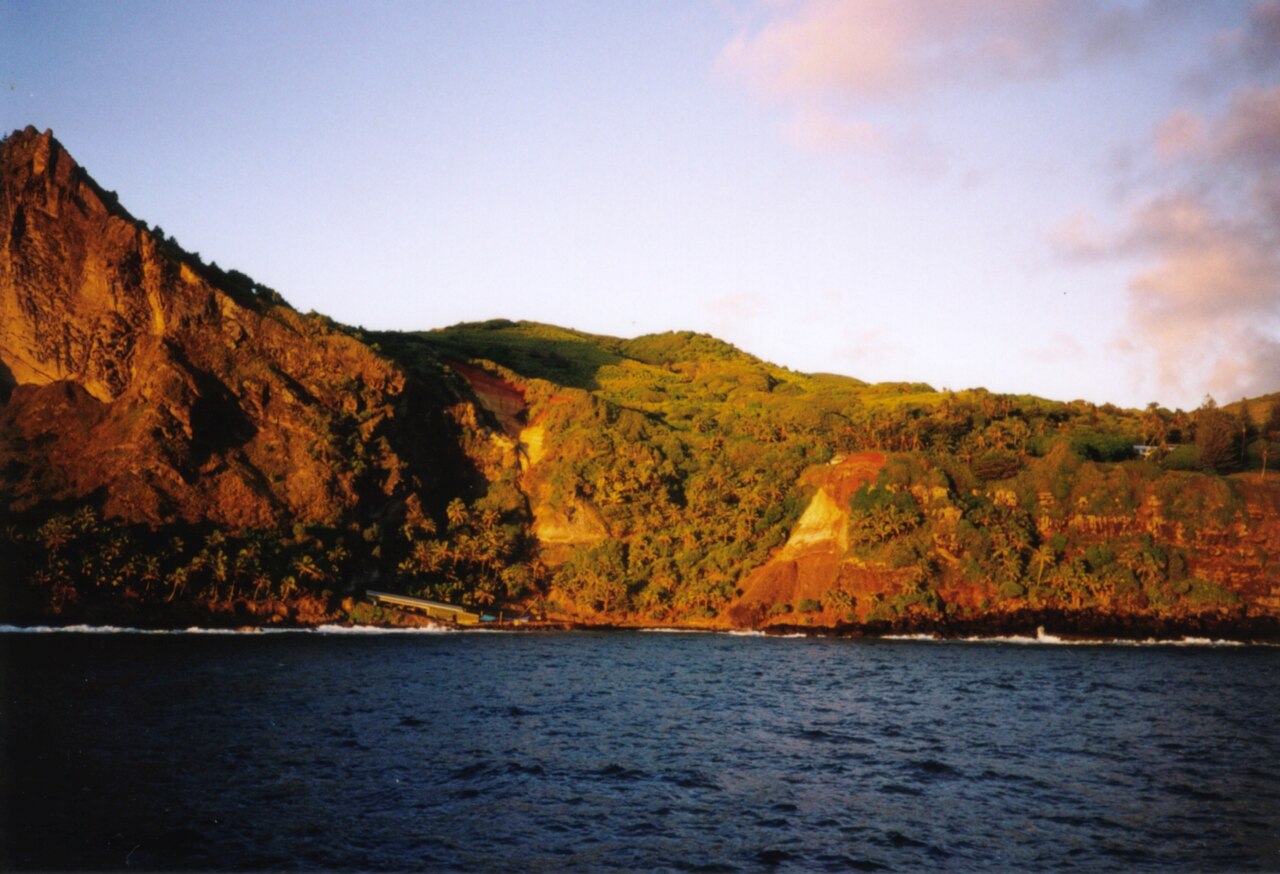
- Adamstown town square — Adamstown
Adamstown is the island's only village, and its square is where public life gathers. The Bounty's anchor is displayed in front of the Public Hall, close to the library and post office building and the Adventist church. Shared dinners for birthdays and visiting ships are held here, so it is worth lingering and noticing who comes and goes.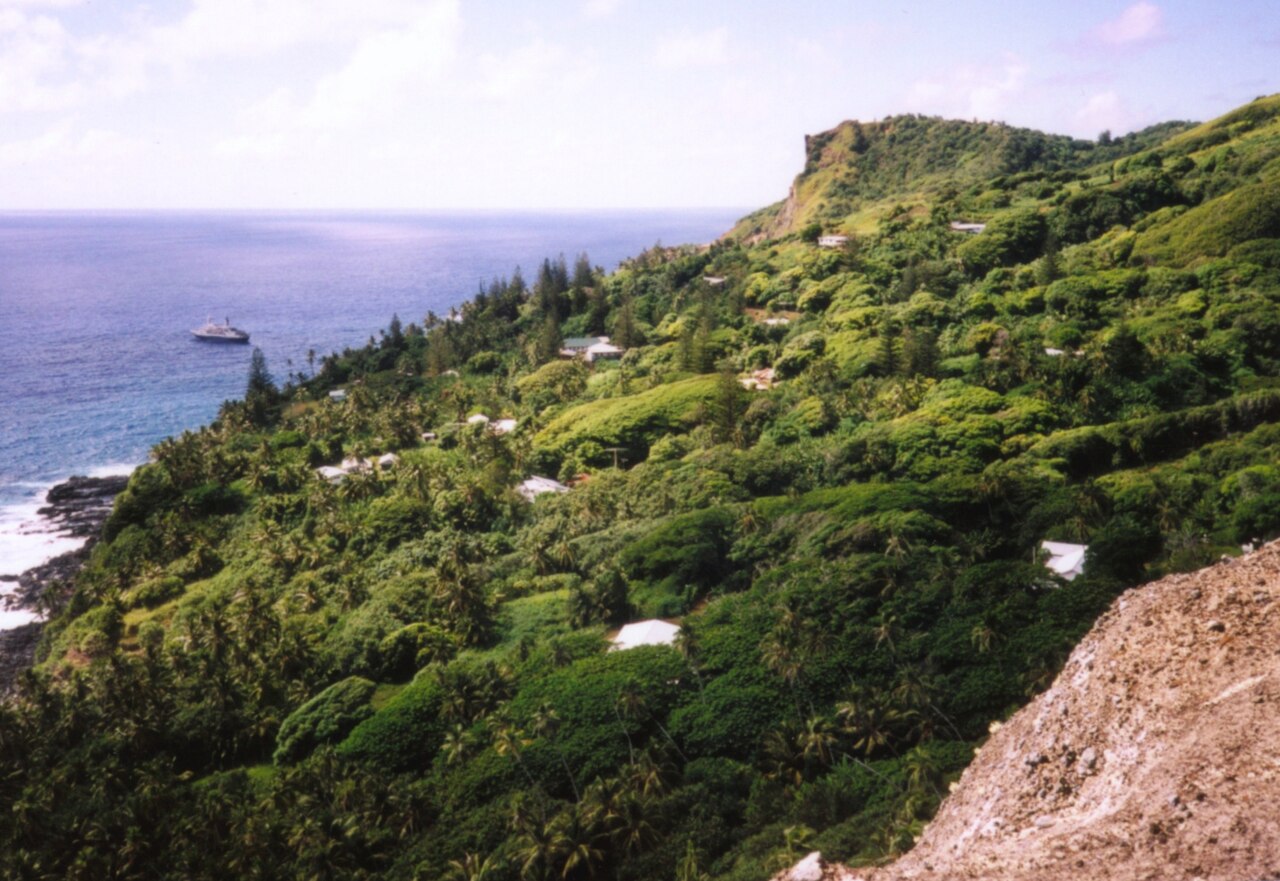
- Pitcairn Island Museum — Adamstown
The museum in Adamstown is small but gathers the island's story in one room. Items relating to the Bounty include Fletcher Christian's Bible, alongside island stamps, magazine features about Pitcairn and other local curiosities. Opening is by arrangement on an island this size, so ask on arrival rather than planning a fixed slot. - St Pauls Point — Coast of Pitcairn
St Pauls Point is a coastal rock formation on the island's shore, best seen from the sea or from a clifftop path when conditions allow. Its dark, weathered stone shows how abruptly Pitcairn rises from the ocean. Photography is the draw here, and sturdy shoes are essential because the ground is steep and uneven.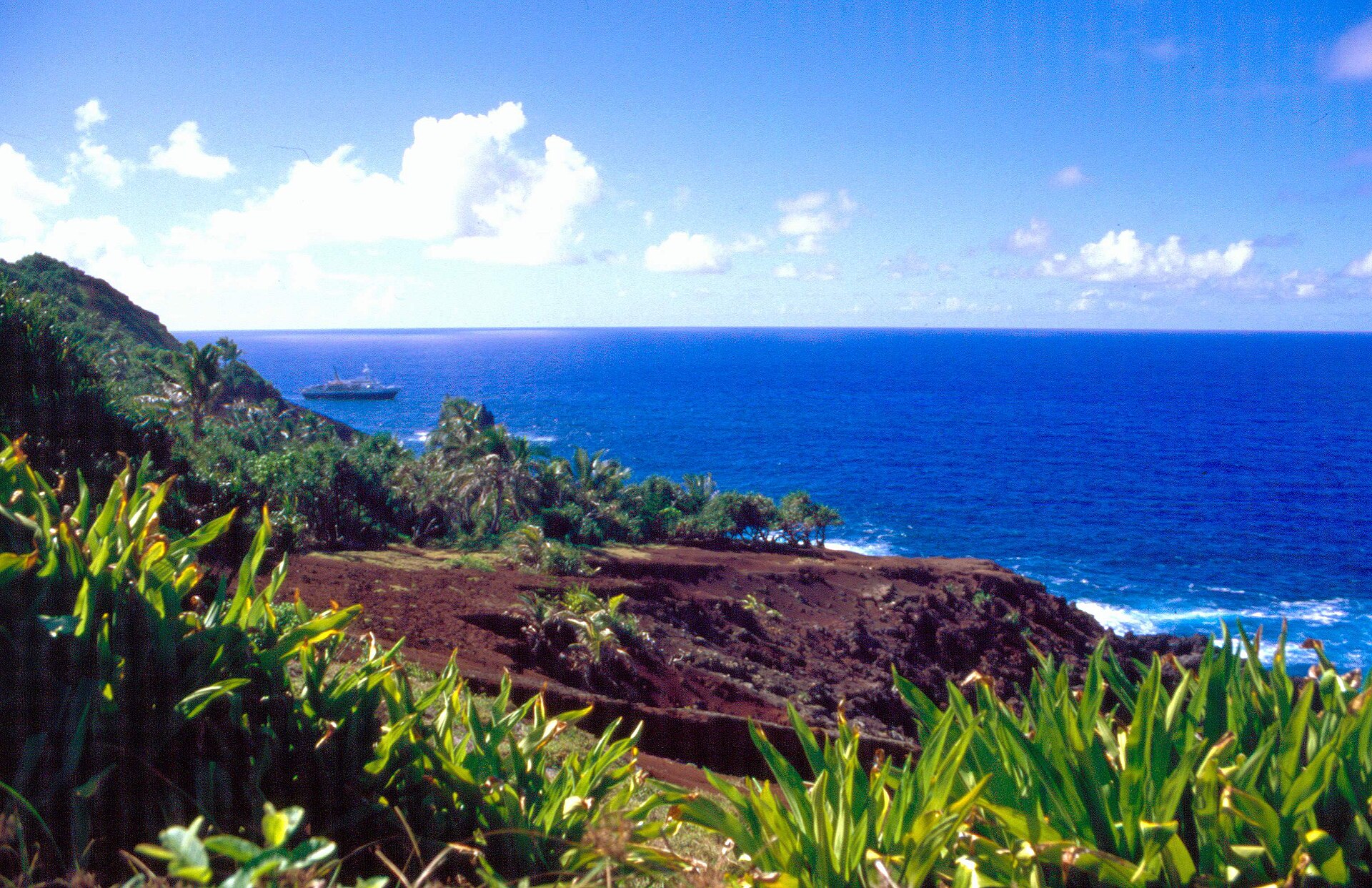
- Pitcairn from the sea — Offshore approach
Approaching Pitcairn Island by ship gives the clearest sense of scale, a small green peak with no neighbours in sight. Paintings and photographs from earlier centuries show much the same silhouette. Keep a camera ready on deck at first light, when the island appears from the horizon haze and Adamstown's roofs become visible above the cliffs.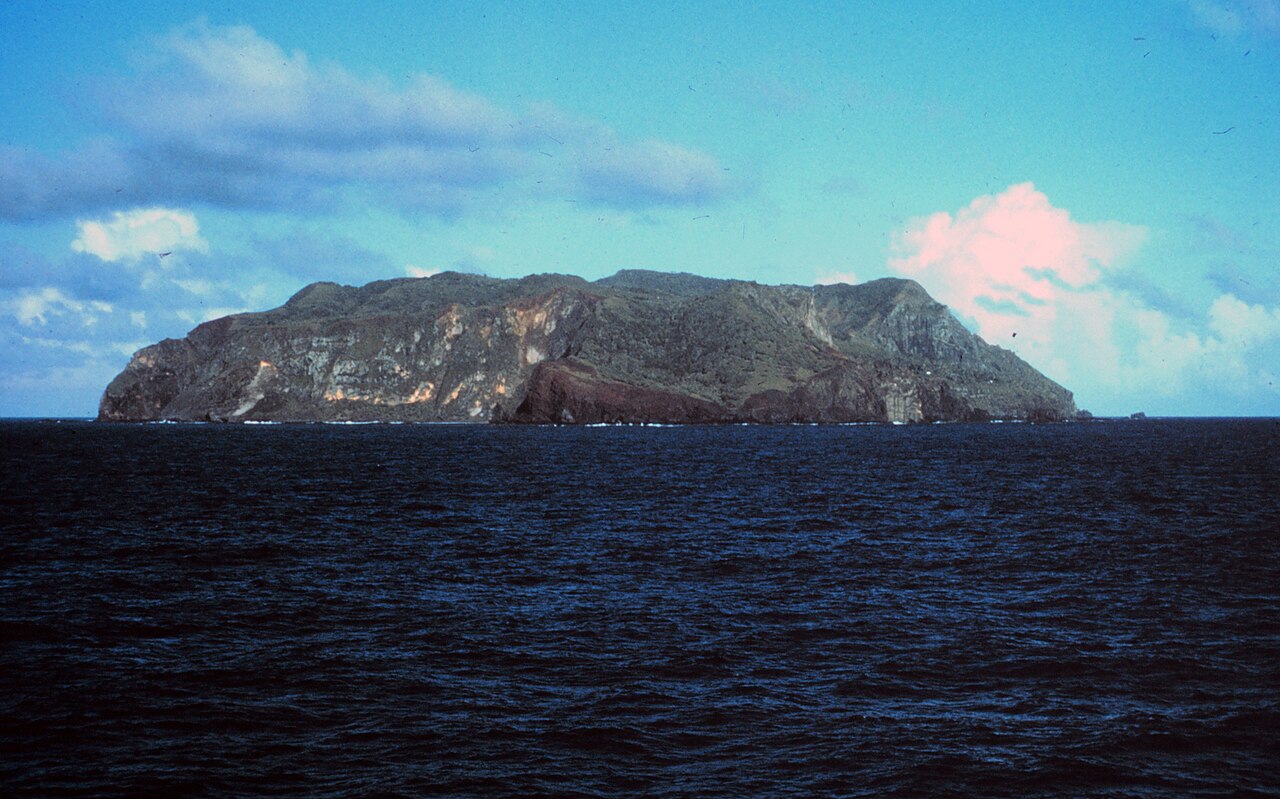
Culture
Pitcairn Island's customs grew out of a small, devout and isolated community. Strict moral rules once banned dancing, open affection, smoking and drinking; these have eased, and the island now has a licensed café and bar, while the government store sells alcohol and cigarettes. Church life, with an Adventist church beside the town square, is still part of the weekly rhythm. Community meals matter most. A birthday, or the arrival of a ship or yacht, can bring everyone to a shared dinner in the Square at Adamstown, with tables of fish, meat, baked rice, breadfruit, banana, pies and fruit. Fishing and swimming are the everyday pastimes. Language is a blend too: Pitkern, a mix of English and Tahitian, is spoken alongside English. Islanders are hosts to very few outsiders, so ordinary courtesy counts for a great deal: be where you said you would be, help carry and clear up, and treat the roads and paths, which paid workers maintain, as shared property. If invited to a public dinner in the Square, accept a plate, thank the hosts in person and ask before photographing individual islanders.
What to wear
Pitcairn Island has no everyday national costume that a visitor can point to, and it would be wrong to invent one. The heritage is mixed, British on one side and Tahitian on the other, and anything formal or festive is best asked about locally rather than assumed. What people wear now is practical: shorts, T-shirts, hats, sturdy sandals or boots, and waterproofs or swimwear around the landing, because boat work and fishing are part of ordinary life. Dress is relaxed but not skimpy, and with a church-going culture, modest clothes are the sensible choice on Sundays and at services. Visitors should pack for a subtropical ocean island: light quick-drying layers, a rain jacket, a sun hat and high-factor sun cream. Footwear matters most. Paths are steep and the landing is rocky and wet, so closed shoes with good grip suit the climb, with water shoes or sandals for boat transfers. Bring a swimsuit by all means, but cover up in Adamstown and at the church, and carry a dry bag for cameras and phones when stepping from boat to shore.
What to eat
- Deep-fried nanwi — Community dinners and home-style meals; ask what has been caught
Nanwi, the local bluefish, is fried whole or in pieces and is a firm island favourite. It tastes of the day's catch, simply cooked, and suits a plate of root vegetables or rice alongside. - Snapper, tuna, wahoo and grouper — Shared dinners in the Square, Adamstown
Seafood carries Pitcairn's cooking. Red snapper, tuna, whitefish, grouper and wahoo all turn up depending on the boats and the weather. Expect fish grilled, fried or baked rather than elaborate sauces. - Breadfruit and boiled plun — Community dinners in the Square
Breadfruit and plun, the island word for banana, are the starchy sides at celebratory tables. Boiled and plain, they soak up fish juices and give the meal its Polynesian accent. - Baked rice and island pies — Public dinners in the Square, Adamstown
Baked rice, assorted pies and breads fill out the long tables laid for birthdays and ship arrivals. They are hearty, homely dishes made in volume, meant for sharing rather than for ordering one at a time. - Fresh-baked goods — The square and island bakeries; ask on arrival
Small bakeries on the island sell bread, buns and sweet things, some made to order and some sold in the square on set days. Ask early, since supplies depend on flour and the ship. - Café lunches and takeaway burgers — Adamstown cafés and takeaways
The island's licensed café, the lunch spots and a weekly takeaway offer coffee, snacks and big burgers. Opening days are limited, so find out the week's pattern when landing and book meals in advance.
Plan it
Best time. The calendar is set by the supply ship rather than the weather, so choose your sailing first. As a subtropical southern-hemisphere island, the warmer, calmer months (roughly November to April) are usually kinder for landing and swimming, but check sea conditions with the official site.
How long. Set by the ship's call; up to 14 days if staying visa-free
Getting there. No flights reach Pitcairn Island. The nearest airport is on Mangareva (GMR) in the Gambier Islands, from where a vessel makes the crossing; the last leg is a small-boat landing at Bounty Bay. Official information is at https://www.government.pn/.
Budget. high
Tips
- Book the vessel and accommodation well ahead, because places are very limited and sailings are infrequent
- Bring cash and everyday supplies; the co-operative store opens only a few mornings a week and stocks mostly pre-ordered imports
- Pack waterproof bags and motion-sickness remedies for the boat transfer
- Check the official site for entry rules before booking, as stays beyond a short visit need advance permission
Etiquette
- Ask before photographing islanders or private homes
- Join in shared meals and thank the hosts, and avoid leaving litter on paths or at the landing
- Follow boat crews' instructions at Bounty Bay, as landings depend on the swell
Nearby
Sources
- Wikidata Q35672 (CC0)
- Wikipedia — Pitcairn Islands (rev 1381045534) (CC BY-SA 4.0)
- Wikivoyage — Pitcairn Islands (rev 5402886) (CC BY-SA 4.0)
- St. Pauls Point, Pitcairn Island — Makemake at German Wikipedia (CC BY 3.0)
- IMG_3884 — wileypics (CC BY 2.5)
- Mutiny HMS Bounty — Robert Dodd (Public domain)
- Adamstown on Pitcairn Island — Makemake at de.wikipedia (CC BY 3.0)
- A view of Pitcairn's Island, South Seas, 1814 — J. Shillibeer (Public domain)
- View of Pitcairn Island — NOAA (Public domain)
- Bounty Bay, Pitcairn Island, at dawn — Makemake at German Wikipedia (CC BY 3.0)
- Landing on Pitcairn Island — NOAA (Public domain)


