Pidhirtsi Castle
Pidhirtsi Castle, Ukraine
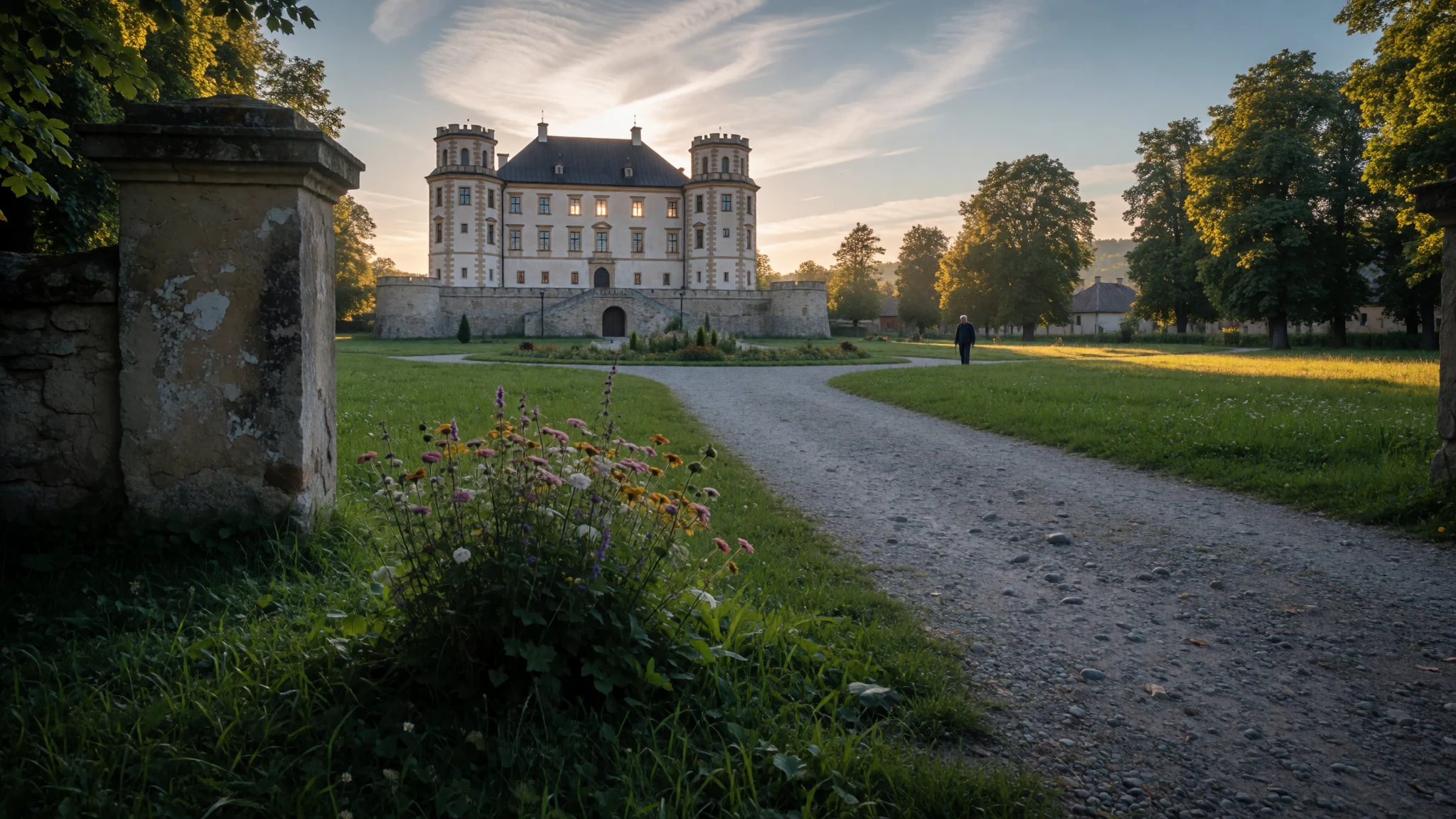
Pidhirtsi Castle is a seventeenth-century palace-fortress in the Lviv countryside, an unhurried day trip into the shared Polish and Ukrainian past of Galicia.
The place
Pidhirtsi Castle stands in the village of Pidhirtsi, in the green, gently rolling country of Lviv Oblast in western Ukraine, about eighty kilometres east of the city of Lviv. Polish sources call the place Podhorce, and the Ukrainian name is Підгорецький замок. It was designed to be both a noble residence and a stronghold, so it combines defensive walls with the formal rooms and gardens of a country palace.
Its patron was Stanisław Koniecpolski, a senior military commander of the Polish–Lithuanian Commonwealth. The French engineer Guillaume Le Vasseur de Beauplan is credited with building it between 1635 and 1640, on the site of an older fortress. In its day it belonged to a chain of palace-and-garden estates across the Commonwealth's eastern borderlands, and Polish tradition ranks it among the finest of them.
Today the castle is run as part of the Lviv National Art Gallery, so it is a museum site rather than a ruin left to the weeds. Around it lies a landscape park and a small village, with a Catholic church close by. Services are limited, and the visit is usually paired with Lviv or with nearby castles at Olesko and Brody.
The wider region is part of historic Galicia and of the Carpathian Euroregion, with the Dniester and the Western Bug among its main rivers. The landscape is mostly meadow, farmland and woodland, and it is quietest outside the summer holidays. Which rooms and grounds are open varies, so check with the gallery before setting out.
Its story
Pidhirtsi Castle began as a soldier's idea of a retreat. Stanisław Koniecpolski, a leading commander of the Polish–Lithuanian Commonwealth, had it raised on the site of an older fortress, with building running from 1635 to 1640. Nobody has firmly established the designer. Beauplan's name is the one usually attached to the work, while the Italian architect Andrea del Aqua, who planned the fortress at Brody for the same patron, is suggested as the probable planner. Koniecpolski wrote that he wanted a place to rest, yet a site on a turbulent frontier made rest almost impossible.
The defences were tested early. Cossack forces attacked during the Khmelnytskyi Uprising in 1648 and came back in 1651, and both times the walls held. Aleksander, the founder's son, repaired the damage and strengthened the fortifications, and the castle is credited with surviving later Tatar and Turkish raids in the second half of the century.
Then ownership passed through famous hands. In 1682 the founder's grandson left the castle and its estates to Jakub Ludwik Sobieski, son of King Jan III Sobieski, and in 1687 Jakub hosted his royal parents here after a campaign against the Ottomans. In 1725 it was sold to Stanisław Rzewuski, another Grand Crown Hetman, and later passed to his son Wacław.
Wacław Rzewuski made Pidhirtsi his permanent home. He added a third floor and a church and opened a theatre. He also collected Sobieski relics, among them a sword used at the Battle of Vienna and a marble table on which, by legend, Sobieski was baptised. In 1767 he went to Warsaw for the Sejm, was arrested by the Russians and sent to Kaluga, and never came back.
What to see
- The castle façade and courtyard — Pidhirtsi village
Pidhirtsi Castle itself is the reason to come: a broad, symmetrical palace-fortress with corner bastions that reads as both home and stronghold. Walk the outer approach first for the full profile, then go in through the gate and look at how the later floors sit above the earlier defensive core.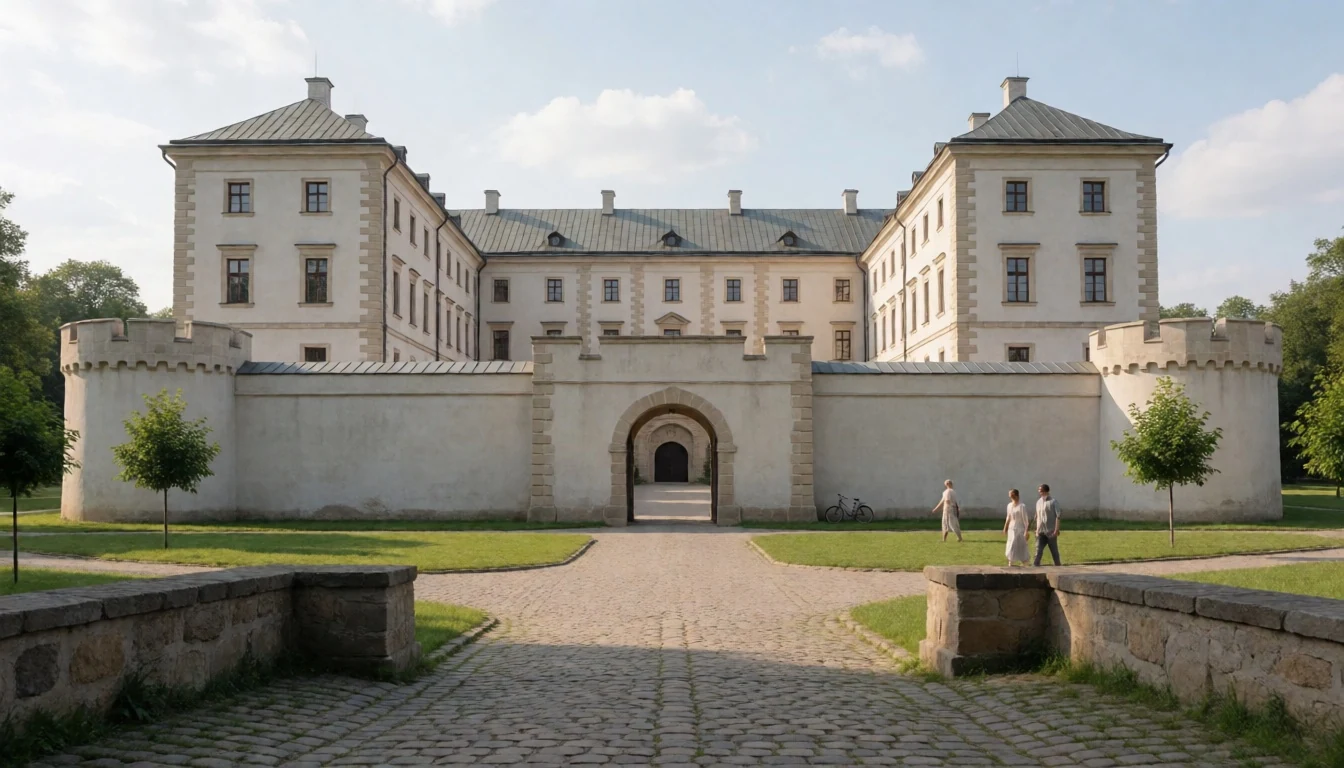
- The view from above and the old lithograph — Pidhirtsi village
The best way to grasp the plan of Pidhirtsi Castle is from the air, where its geometry and its garden setting stand out. Look at the aerial photograph and the nineteenth-century lithograph of Podhorce side by side, and compare them with what is standing today.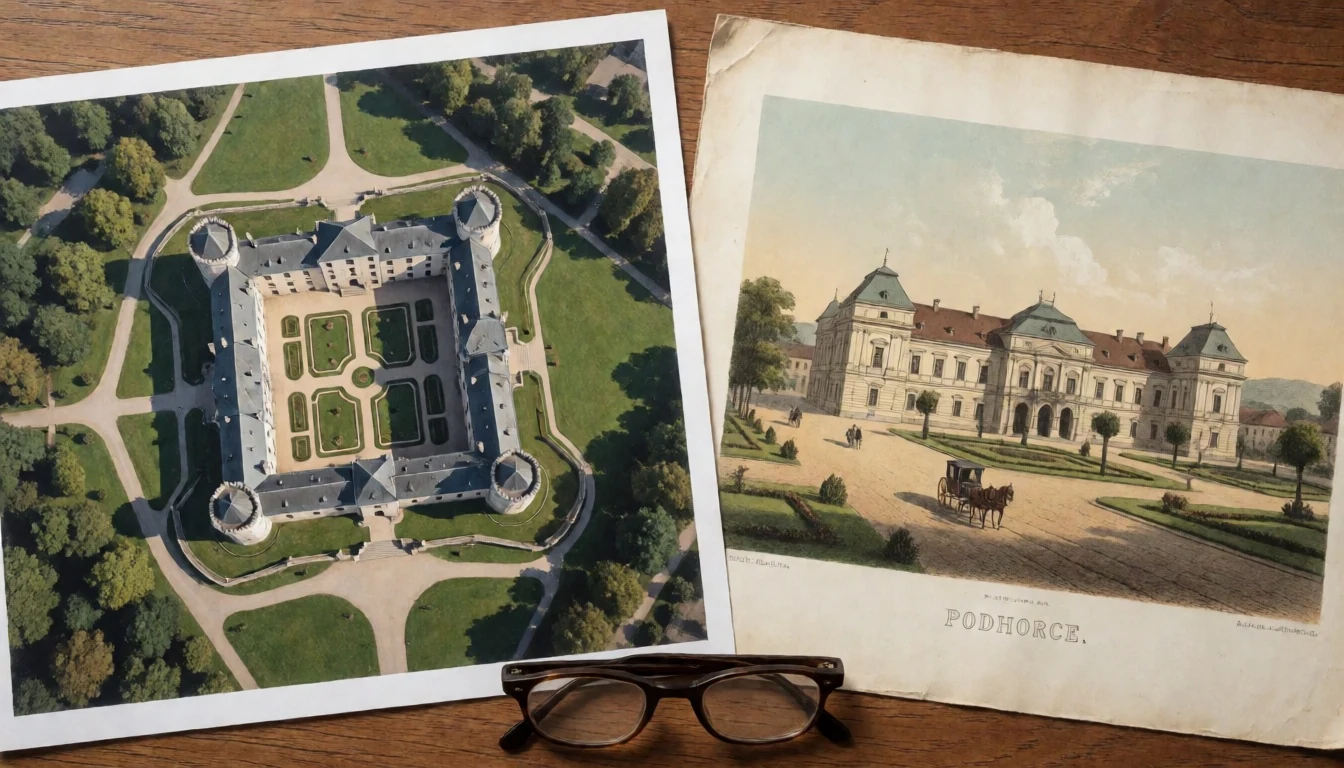
- Pidhoretskyi Landscape Park — Beside the castle, Pidhirtsi
Pidhirtsi Castle is surrounded by a landscape park of about 17 hectares. It suits a slow loop at the start or end of the visit, with views back to the walls. Paths can be muddy after rain, and in summer the shade is welcome.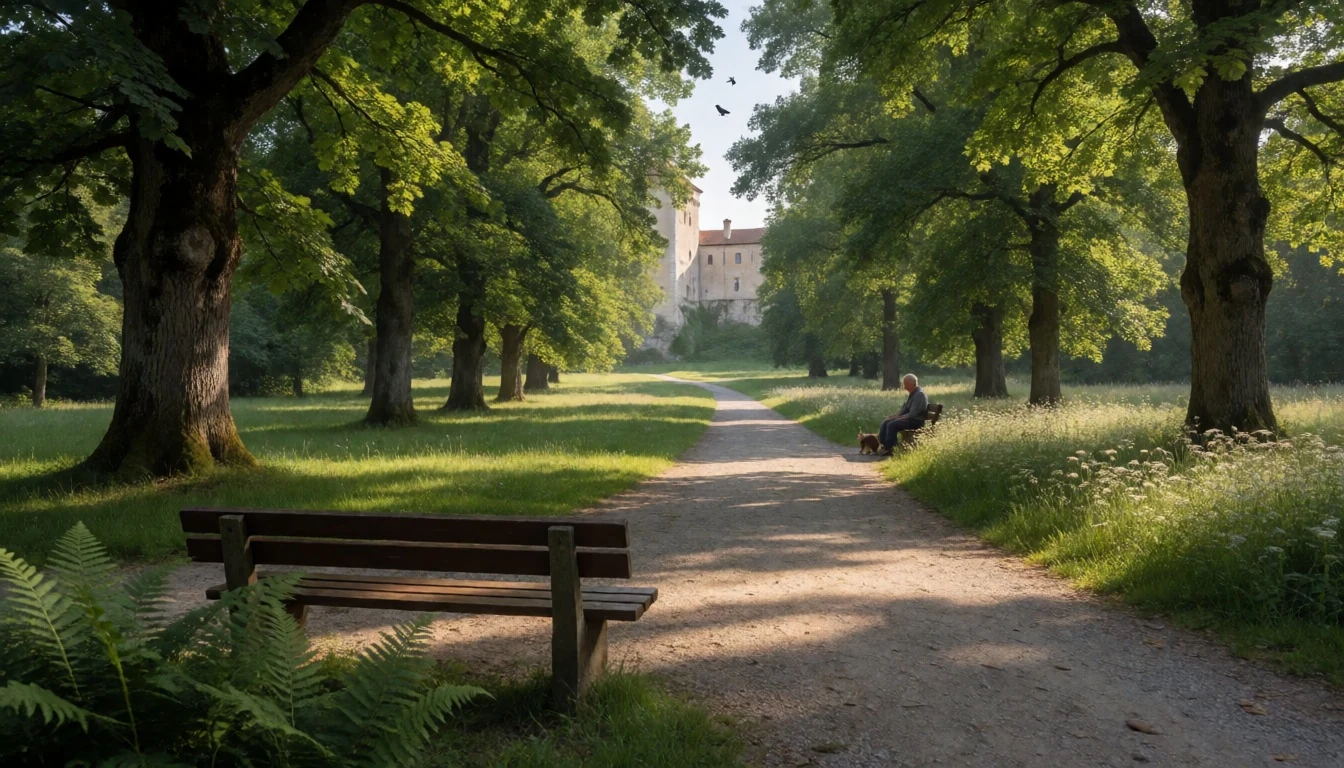
- St Joseph Catholic Church — Pidhirtsi village
Close to Pidhirtsi Castle stands the Catholic church of St Joseph, a reminder that this was long a Polish noble estate. Rzewuski's patronage is part of its story. Visit when it is open for worship or visitors, and treat it as a working place of prayer.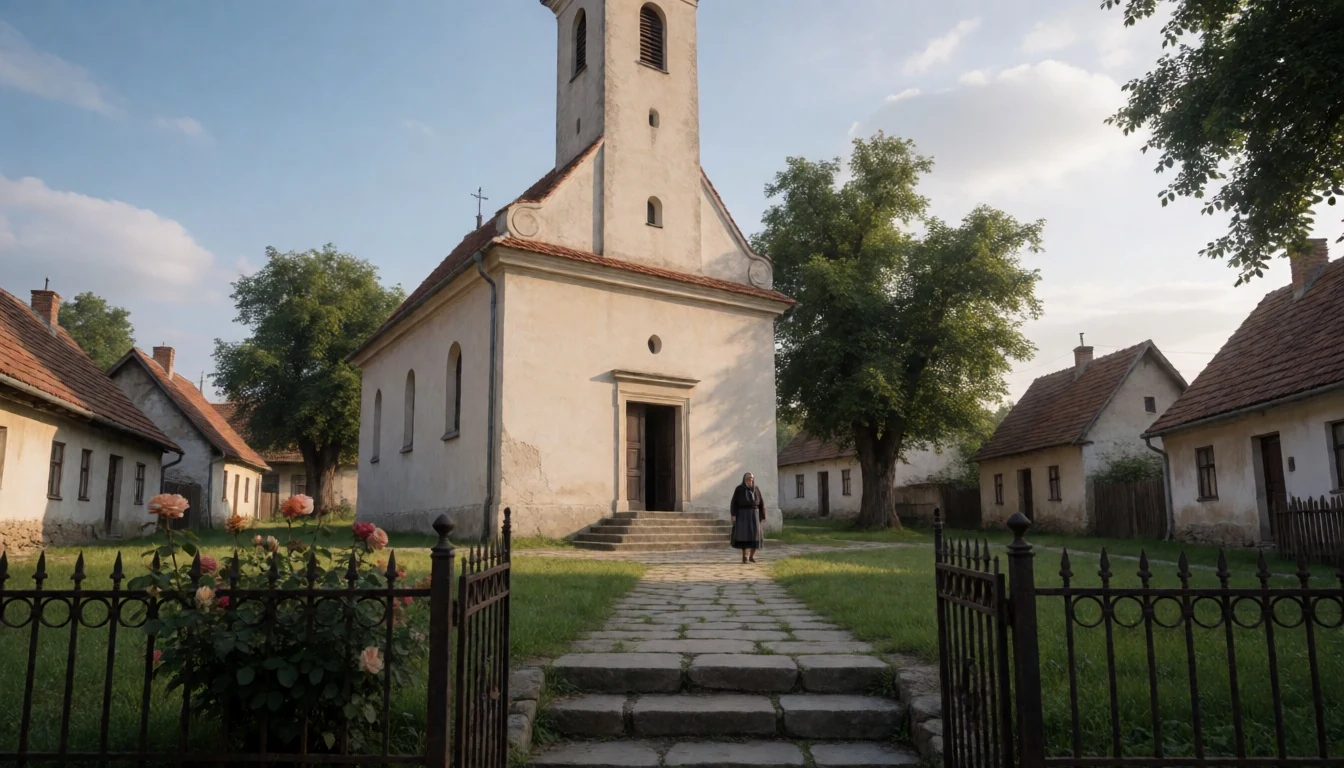
- Olesko Castle — Olesko
A short drive from Pidhirtsi Castle, Olesko Castle dates from the medieval centuries and was altered later, and Wacław Rzewuski also owned it. Seeing the two on one trip shows how differently a hilltop stronghold and a planned palace-fortress were built. A park surrounds it.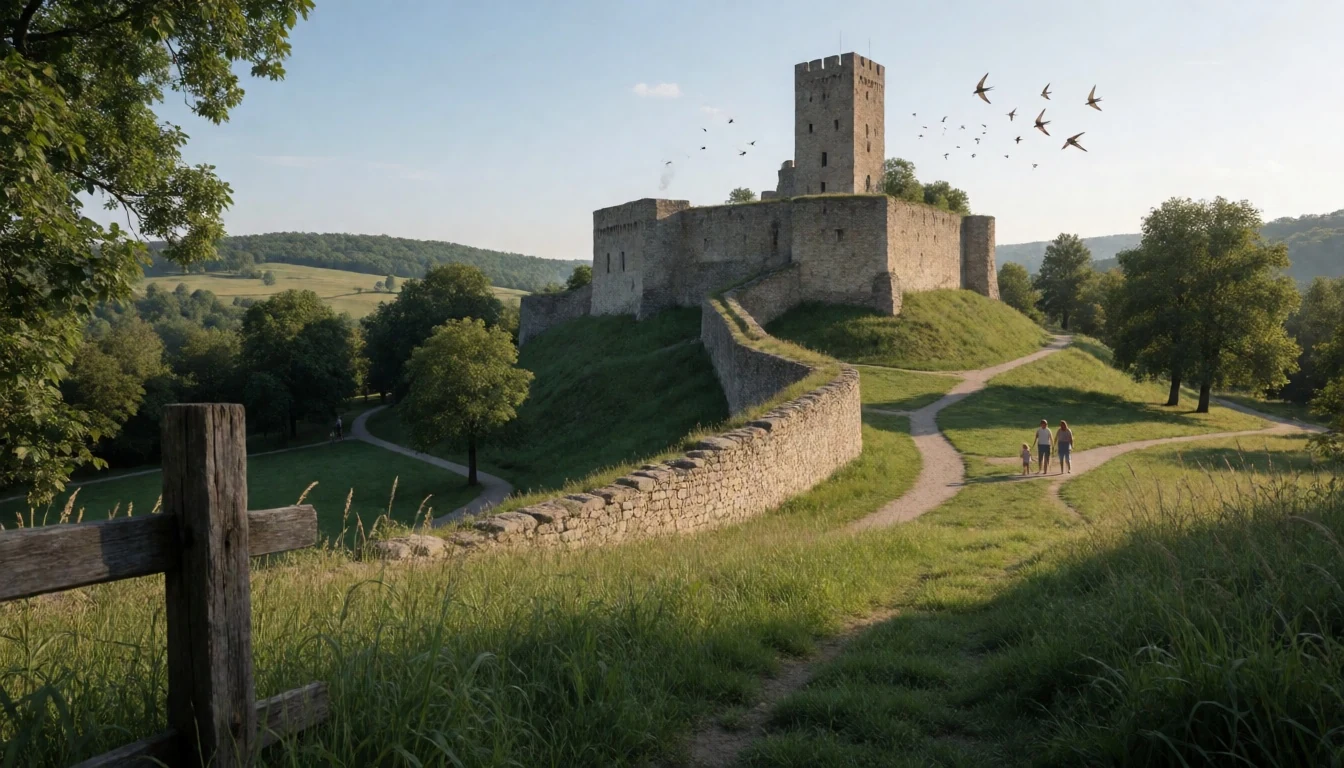
- Brody — Brody
Brody is a town to the north-east that makes a worthwhile extension to a day around Pidhirtsi Castle. Its sights include the palace built for Koniecpolski, a history museum, an old church and the ruined Great Synagogue. Allow time for walking and check what is open.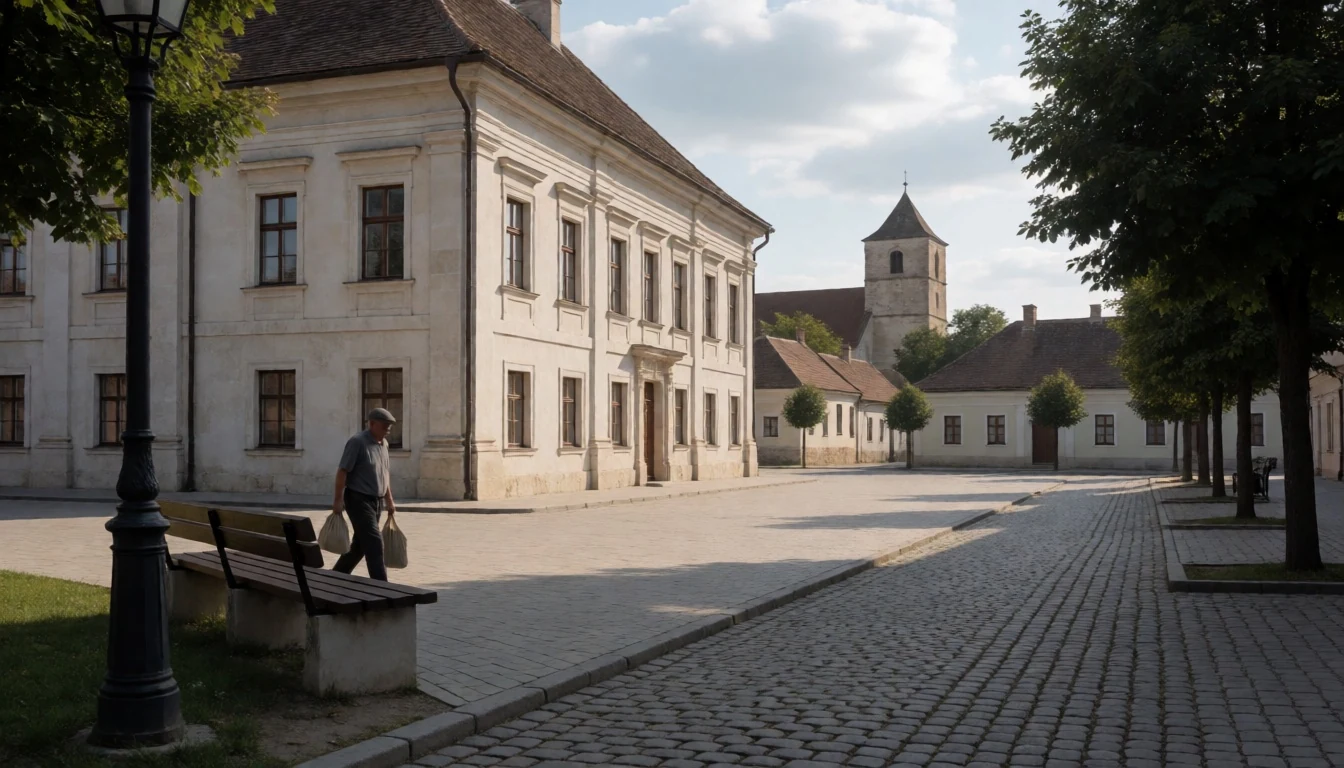
Culture
Pidhirtsi Castle sits where several histories overlap. It was built for a Polish-Lithuanian magnate, it stands in a Ukrainian village, and it has been Habsburg, Polish and Soviet territory in turn. That layering is visible in the names: Pidhirtsi in Ukrainian, Podhorce in Polish, and an English-language literature that uses both. Visitors do best to use whichever the local guides use and to listen to how they tell it.
The castle also carries a strong Sobieski memory. Jan III Sobieski, the king famed for the Battle of Vienna, is part of its legend, and the later owner Wacław Rzewuski collected objects linked to him. Rzewuski's theatre shows a more cultural side of life here, as the estate was a place for music, drama and display as well as defence.
Today the building belongs to the Lviv National Art Gallery, and its role as a museum fits a region proud of its churches, collections and libraries. Lviv Oblast is also living through wartime, and many local people are carrying heavy burdens. Visitors can expect courtesy, and a conversation about heritage often leads to one about the present. Listen more than you opine, and do not assume how anyone feels about history.
Before entering the village church or any museum room, note any signs about photography and behaviour, keep your voice low, and ask permission before photographing people, especially anyone at prayer.
What to wear
Around Pidhirtsi Castle the traditional dress is the Ukrainian embroidered shirt, the vyshyvanka, made of linen or cotton and stitched at collar, cuffs and chest with red and black thread or with more colourful patterns. Patterns differ from region to region. Women also wear a patterned wrap skirt and a beaded necklace, and men a woven belt. These are worn for weddings, church festivals and national days, and many people wear a vyshyvanka under a jacket on Vyshyvanka Day.
The castle's old owners dressed differently. Polish nobles of the Rzewuski era wore the long żupan and a belted outer robe, the kontusz, with a silk sash and a sabre. Both were made of wool and silk, and they are the clothes you see in portraits of the period.
Todayʼs dress is plain and practical: jeans, trainers, rainproof jackets, and shirts or dresses in cooler colours. In Lviv, people dress a little smarter for dinner and the theatre. Young people mix embroidered details into everyday outfits.
For a visit, dress for weather and for walking. Pack layers, because the countryside can be cool even in summer, and a light rain jacket. Wear sturdy, comfortable shoes for cobbles, castle floors and park paths that turn muddy after rain. For a church visit, cover shoulders and knees, and carry a scarf for women who wish to cover their heads. Winter needs a proper coat, hat and gloves.
What to eat
- Varenyky — Village cafes and family-run eateries around Pidhirtsi and Lviv
Boiled dumplings filled with potato, cheese, cabbage, cherries or other fruit, and served with sour cream or fried onion. They are the standard dish of a village or small-town cafe, and on a day trip from Lviv they make a filling lunch.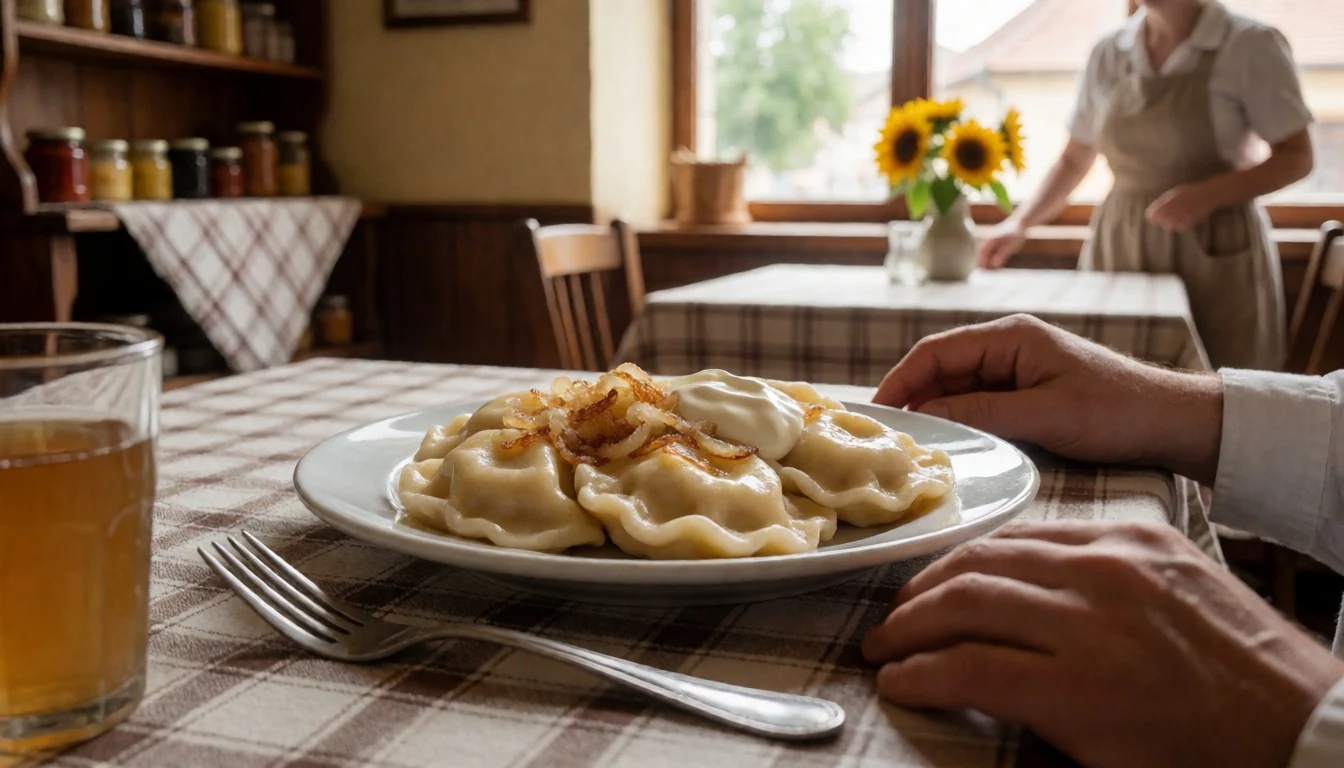
- Borshch — Almost any traditional restaurant or canteen-style eatery
A beetroot soup, usually with cabbage and potato, often with meat and served with sour cream and garlic bread rolls called pampushky. Recipes vary from house to house, and a bowl is hearty enough to count as a meal.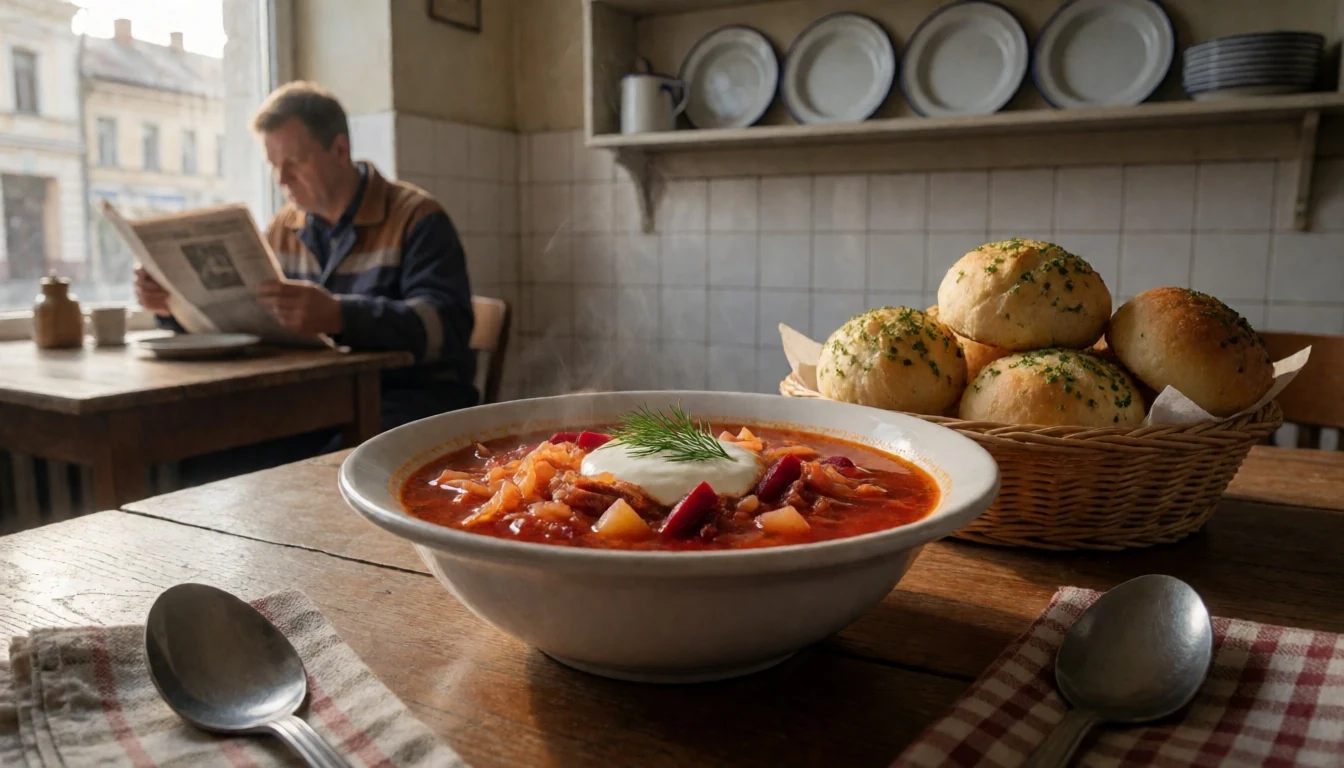
- Banosh — Restaurants serving Carpathian or Hutsul dishes, mostly in Lviv
A Carpathian dish of cornmeal cooked thick and creamy, topped with soft cheese, crisp bacon bits and sometimes mushrooms. It comes from the mountains to the south-west but turns up on menus across western Ukraine. - Deruny — Village cafes, market stalls and Lviv eateries
Potato pancakes fried until crisp at the edges, served hot with sour cream, mushrooms or meat sauce. They are simple and filling, and they go well with a cold afternoon after a long walk through the castle park. - Holubtsi — Traditional restaurants and home-style canteens
Cabbage leaves wrapped around rice and minced meat or mushrooms, then baked or simmered in tomato sauce. It is the kind of home cooking that travellers remember, and it tastes best in a quiet family-run place.
Plan it
Best time. May–June and September, when the weather is usually mild and the park is green or turning gold; July and August are warm and busier; winter is cold, grey and shorter in daylight, and paths can be icy.
How long. 1–2
Getting there. Fly to Lviv or arrive by train, then travel about eighty kilometres east by road to Pidhirtsi. Check current bus and train options locally, or hire a driver for a day that can include Olesko and Brody. Check the Lviv National Art Gallery for opening arrangements.
Budget. low
Tips
- Check the official gallery page or call ahead for opening and ticket arrangements, since they can change
- Check your government's current travel advice for Ukraine before booking, and keep flexible arrangements
- Combine Pidhirtsi, Olesko and Brody in a single day with a driver, as public transport links are limited
- Carry some cash and water, because the village has few services
- Wear shoes for uneven paths and bring a rain layer
Etiquette
- Dress modestly and speak softly in the village church
- Ask before photographing people, especially anyone at prayer
- Follow museum signs about photography, bags and touching objects
Nearby
Sources
- Wikidata Q943794 (CC0)
- Wikipedia: Pidhirtsi Castle (rev 1383524729) (CC BY-SA 4.0)
- Wikivoyage: Lviv Oblast (rev 5384923) (CC BY-SA 4.0)
- Photo: The castle in Podhorce (Lestat) (CC BY-SA 2.5)
- Photo: Pidhirtsi Castle, Lviv Oblast (Haidamac) (CC BY-SA 4.0)
- Photo: Podhorce (Galicya) 1880 lithograph (Alojzy Misierowicz) (Public domain)
- Photo: Pidhirtsi Castle of XVII century (Rbrechko) (CC BY-SA 4.0)
- Photo: Birds-eye view of Pidhirtsi Castle (Roman Bekas) (CC BY-SA 4.0)
- Photo: Замок Конецпольських, Підгірці (Богдан Голотко) (CC BY-SA 4.0)
- Photo: Pidhirtsi Castle of XVII century (Богдан Голотко) (CC BY-SA 4.0)
- Photo: Zamek w Podhorcach (Voky89) (CC BY-SA 4.0)


