Petäjävesi Old Church
Petäjävesi Old Church, Finland
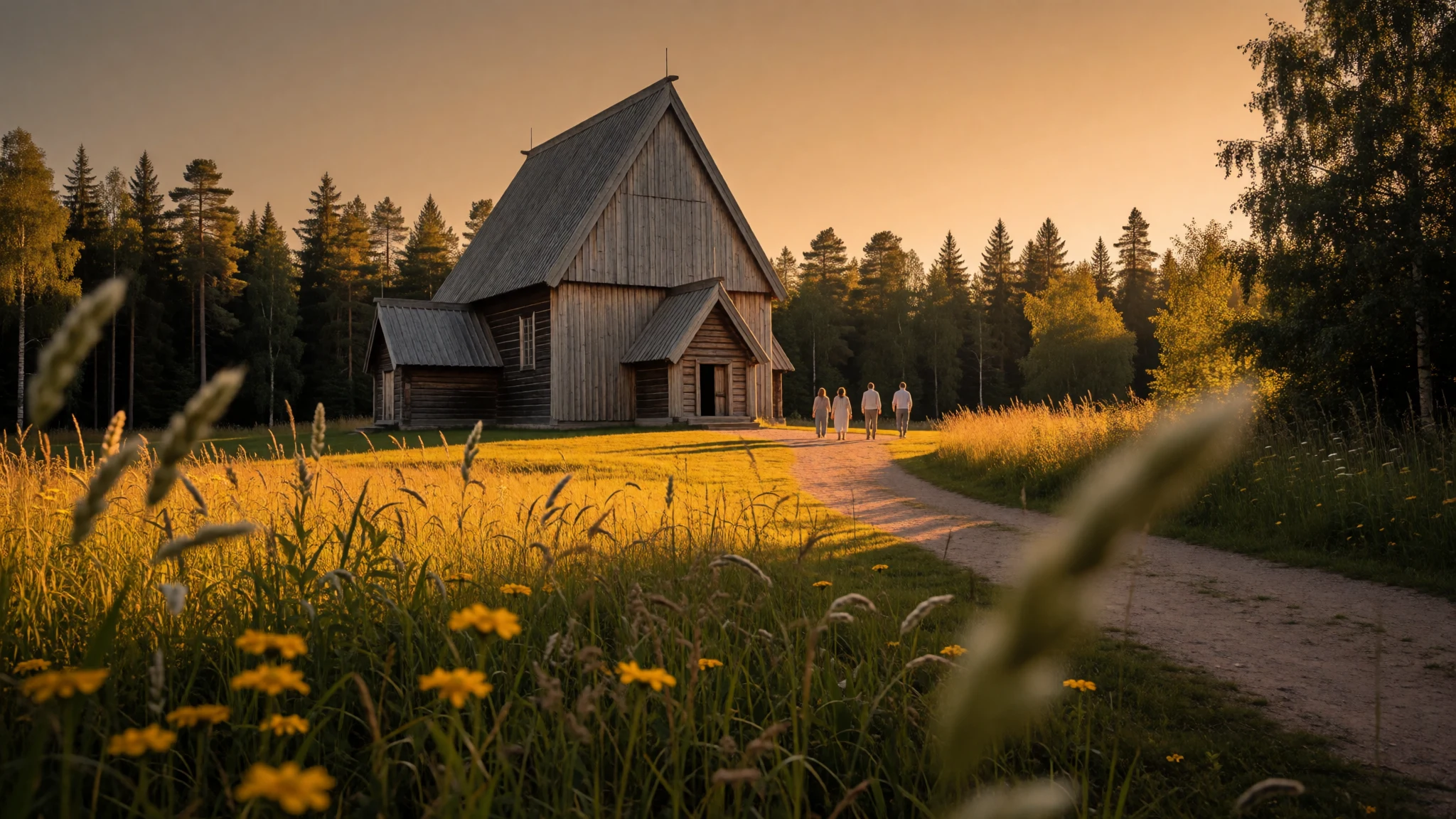
Petäjävesi Old Church is a beautifully intact wooden church from 1763–1765, shaped by Nordic building traditions and recognised by UNESCO.
The place
Petäjävesi Old Church (Petäjäveden vanha kirkko) is a working-feeling wooden church in Petäjävesi, a small Finnish settlement where the landscape stays calm and the architecture does the talking. The church sits about 1 kilometre west of the centre of Petäjävesi, so even a short visit has a proper sense of getting out of town and into the countryside.
Built between 1763 and 1765, the church is the kind of structure you notice from a distance: the form is clear, the materials are honest, and the bell tower makes it unmistakable. Indoors, the focus shifts from exterior lines to the interior space, which reads as carefully planned rather than “rustic”. The building is especially valued for its wooden church architecture in the Nordic tradition, and it carries UNESCO status (inscribed in 1994) for that testimony.
Practical reality check: this is not a place you casually pop into whenever you like. The main viewing opportunity is during the open summer period—June through August—so spring and autumn can mean quieter grounds but fewer guaranteed access moments. Weddings happen here in summer, and there is usually a church service on most Sundays, which changes the atmosphere from sightseeing to something more communal.
Bring a warm layer even on sunny days; Finnish weather can turn quickly, and wooden interiors can feel cool. If you’re trying to avoid crowds, aim for weekdays and early in the open season—summer brings visitors who want the same calm photo angles and the same architectural details.
Its story
Petäjävesi Old Church began with a practical problem: getting to worship in Jämsä was a long trip. As early as 1728, the crown permitted the locals in Petäjävesi to set up a cemetery and construct a small village church using their own funds. That permission matters in the church’s story, because it explains the long “lead time” before anything resembling construction started.
In the end Jaakko Klemetinpoika Leppänen, a master church builder from Vesanka, designed and raised it. The intention wasn’t to create a grand statement for a distant audience—it was to provide something local people could use regularly, with the right facilities for their community.
Like many buildings that serve real lives, it also evolved. Work in 1821 gave it larger windows and shifted the sacristy from the north side to the east end. That same year, a bell tower was added by Erkki Leppänen, the grandson of the original builder—an example of how building knowledge and craftsmanship stayed in the family line.
The church’s working era was not endless. It went out of use in 1879 when a new church was built, leaving Petäjävesi Old Church with a different role: a preserved heritage building. Today, the same timber structure that once served everyday worship has become a “time capsule” of Nordic wooden church design, with UNESCO recognition for its testimony to that tradition.
What to see
- Old Church of Petäjävesi (Petäjäveden vanha kirkko) — Petäjävesi village area
The main draw is the wooden church itself, originally built between 1763 and 1765, with the bell tower added later. Open June–August only unless you’ve arranged access in advance. Look closely at how the tower and roofline sit together, then shift to the interior for the shaped space. - Church interior details (pulpit, choir, ceiling dome) — Inside Petäjävesi Old Church
When Petäjävesi Old Church is open, the interior rewards patient looking: the pulpit area and choir space feel designed as a single composition rather than scattered fittings. If you can get inside, take time for the ceiling/dome views—this is where the craftsmanship shows most clearly. - Sculpted light across timber — Around the nave and entry areas
Wood changes the way light behaves. Even if you’re not a “church person”, the interplay of daylight on pale timber surfaces makes the structure feel warmer and more intimate than stone churches nearby. It’s one reason people linger during opening hours. - Quiet churchyard atmosphere — Petäjävesi Old Church grounds
The grounds are part of the experience, especially outside the peak months. Strolling slowly helps you understand the church’s siting—how it relates to Petäjävesi and the surrounding countryside. It’s also a good place to reset between any interior visits and photo stops.
Culture
Petäjävesi Old Church is a wooden church that has both heritage value and a living-community feel. It’s used for worship—there’s a church service on most Sundays—and summer is also wedding season. That mix is why etiquette matters: your visit isn’t only about photographing an old building, it’s about sharing a place that still has meaning locally.
Expect the church to be busiest in summer, particularly during the June–August opening window. Even then, it’s not the frantic “tour-bus” style crowds you might find at major city landmarks, but you can still run into queues for entry and for the best viewing angles inside. A calm, low-volume approach makes the experience better for everyone.
Dress for a Finnish summer or shoulder-season day, but keep it modest once inside—think of it as a place of worship as well as an architectural stop. If you’re taking photos, be mindful that weddings and services take priority over visitors’ cameras. Walk slowly around the interior, and avoid blocking others’ sightlines.
Visitor etiquette: dress modestly, keep noise low, and do not photograph during services or weddings without permission.
What to wear
In and around Petäjävesi Old Church, the clothing story is simple: Finland outdoors first, then modesty once you’re inside. The church is a heritage wooden building, so you’ll want layers that cope with changeable weather—cool mornings, warmer afternoons, and the possibility of rain even in summer.
Traditional dress here isn’t something visitors are expected to wear day-to-day, but Finland’s cultural textiles are often worn during festivals and local celebrations rather than for everyday visiting. If you do see regional costumes, they’ll be for events and are typically characterised by coordinated garments and decorative details made for ceremonial use.
What people wear now for a church visit is practical: lightweight tops or layers, long trousers or skirts that sit comfortably for walking, and weather-appropriate outerwear. Footwear matters because church sites can be uneven and the ground around buildings isn’t always perfectly level.
What to wear as a visitor: closed-toe shoes or sturdy trainers for walking, a light jacket or sweater for indoor coolness, and clothing that covers shoulders and knees enough for a place of worship.
What to eat
- Finnish coffee and sweet pastries — Local cafés in and around Petäjävesi
A simple, local classic: coffee with a sweet baked item is the easiest “sit-down” meal in a small town. Look for it at cafés around Petäjävesi and nearby settlements during open hours, especially in summer when travellers filter through. - Karjalanpiirakka (Karelian pasty-style pastries) — Bakeries and markets in central Finland
These small pastries—often served warm—are a comfort-food staple in Finland. Find them in bakeries and supermarkets around central Finland, or at regional markets where snacks are part of the day-trip rhythm. - Salmon or other fish portions — Restaurants/eatery menus around Jyväskylä and Petäjävesi region
In Finland, fish is a reliable meal choice. You’ll generally find salmon or other fish dishes as the “easy order” at local eateries, particularly in summer menus when fresh options are common. - Rye bread with spreads — Supermarkets and cafés in town centres
Rye bread plus toppings is a fast lunch option that works well during sightseeing days. It’s typically easy to pick up from supermarkets and cafés—grab-and-go helps when the church opening window is limited. - Seasonal berries with dessert — Cafés in the Petäjävesi–Jyväskylä area
When the season is right, Finnish berries show up in desserts and simple bowls. In summer, it’s a good light option after walking around the church area—search for berry desserts at cafés and small restaurants.
Plan it
Best time. June–August for open access to Petäjävesi Old Church; late spring and early autumn can be calmer but may reduce guaranteed visiting opportunities because the church is primarily open June–August.
How long. 2–3
Getting there. Fly to or rail into a major Finnish hub first, then continue to the Petäjävesi area. Petäjävesi sits on the Haapamäki–Jyväskylä railway line with direct trains from Seinäjoki and Tampere, and buses serve the route from Jyväskylä via Matkahuolto. From there, use local transport or a short onward leg into Petäjävesi.
Budget. mid
Tips
- Plan around the church’s June–August opening window; outside that period, access may depend on prior arrangements made at least two days earlier.
- Check Sunday plans if you want the church service atmosphere—your visit may be quieter but also more participatory.
- Stay near or base yourself in the Jyväskylä area and do Petäjävesi as a focused day trip if you prefer easier logistics.
- Bring cash for small purchases and consider carrying a light layer for indoor coolness in wooden churches.
Etiquette
- Follow any instructions on entry and where to stand inside, especially during services or wedding periods.
- Keep voices low inside the church and avoid blocking doorways while others are moving through.
- If you’re taking photos, be respectful of worshippers and any scheduled moments.
Nearby
Sources
- Wikidata Q435829 (CC0)
- Wikipedia (rev 1365738886) (CC BY-SA 4.0)
- Wikivoyage (rev 5422494) (CC BY-SA 4.0)
- Photo photos/01-pet-j-vesi-old-church-2018.jpg (CC BY-SA 4.0)
- Photo photos/02-pet-j-vesi-old-church-interior-pulpit-choir.jpg (CC BY-SA 2.5)
- Photo photos/03-pet-j-vesi-old-church-interior-ceiling-dome.jpg (CC BY 3.0)
- Photo photos/04-die-kunst-in-finnland-1933-125416038.jpg (Public domain)
- Photo photos/05-fi-petajavesi-0709-10-17217003025.jpg (CC BY-SA 2.0)
- Photo photos/06-fi-petajavesi-0709-41-17009570647.jpg (CC BY-SA 2.0)
- Photo photos/07-fi-petajavesi-0709-49-17009568507.jpg (CC BY-SA 2.0)
- Photo photos/08-fi-petajavesi-0709-51-17029471940.jpg (CC BY-SA 2.0)


