Peshkopi
Peshkopi, Albania
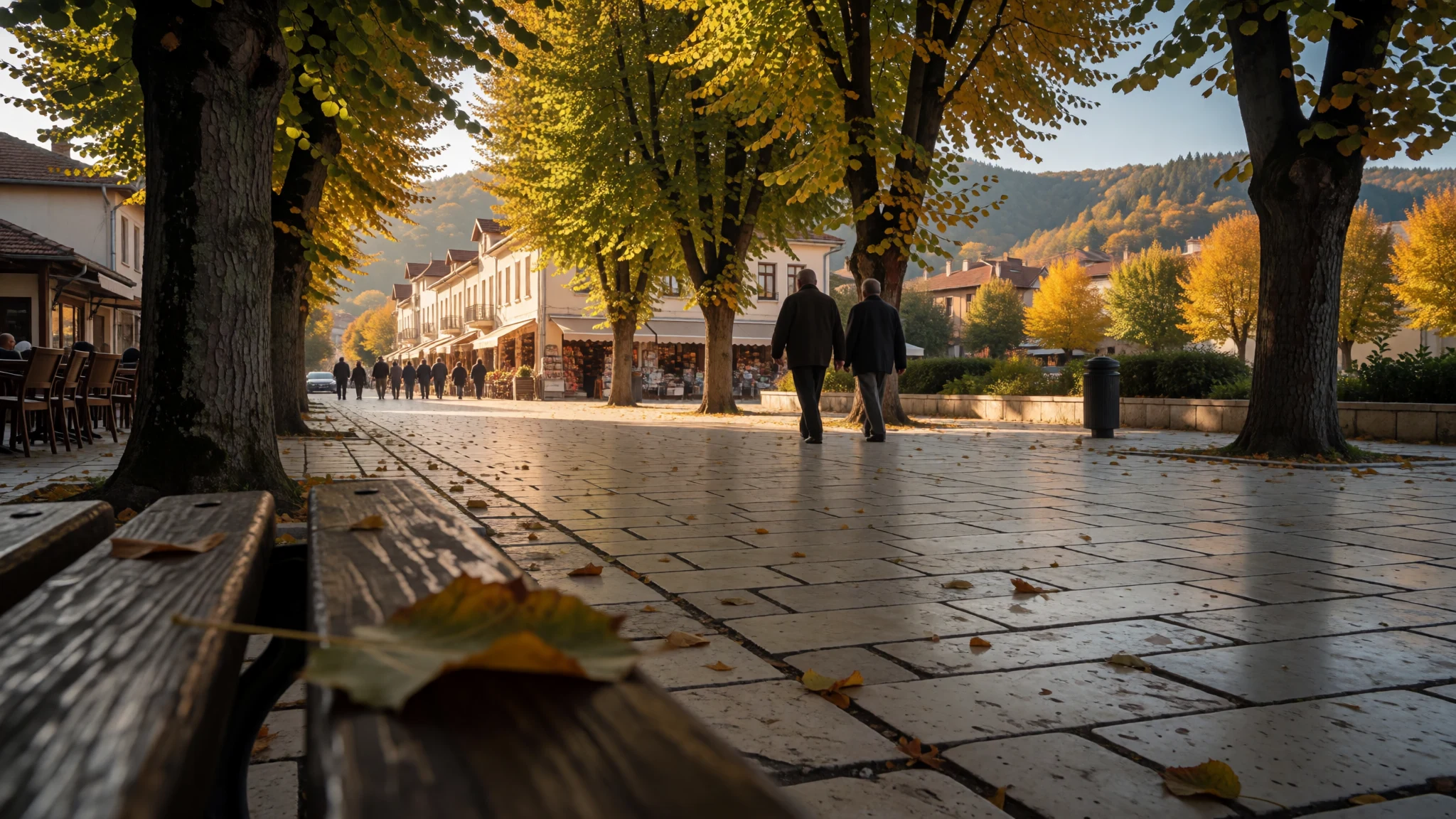
Peshkopi is an unhurried mountain market town with sulphur baths, a linden-lined bazaar street and the lakes and peaks of Dibër on its doorstep.
The place
Peshkopi is a mountain town in north-eastern Albania, set 651 m above sea level on the east side of the Black Drin. About 14,710 people live here, and it is the administrative centre of Dibër county and district. Unusually for Albania, the county carries the name Dibër while its capital does not. The town fills a valley below the Korab range, and the border with North Macedonia is about 20 km away.
Peshkopi earns its living quietly. Farming carries on through the year, the wider district holds chromium, sulphur and marble, and the surrounding villages treat the town as the place to shop, bank and see a doctor. Its best-known natural asset is hot mineral water, which rises in springs a short way outside the centre and has drawn bathers for generations.
More recently, hikers, campers, mountain bikers and climbers have begun to arrive. Mount Korabi stands nearby, the lakes of Lurë lie in the hills, and the district is also linked with the birthplace of Skanderbeg, Albania's national hero.
The honest picture is a modest town, not a polished resort. There is a pedestrian street shaded by lindens, a bazaar, cafés that fill in the evening, and a scattering of guesthouses. Winters at this altitude can be hard, and tourist services thin out quickly once the road leaves town. Peshkopi suits people who like to arrive somewhere real and use it as a base for the hills.
Its story
Peshkopi takes its name from the Albanian word peshkop, meaning bishop, which in turn echoes the Greek episkopē. The link is literal. In 1019 the Dibër region was placed under the Archbishopric of Ohrid, and within a year it had its own bishopric, based in the Bulke ward of what is now the Dobrovë neighbourhood. Its main church was dedicated to St Stephen. The bishop's seat later moved elsewhere, but the town kept the name it had given. Written records call it Peskopia by the fifteenth century.
The land is much older than the name. Before Christianity, the Illyrian people the Romans called the Penestae lived in the Dibër area.
By the early sixteenth century the Ottomans had taken all of Albania. Under their rule Peshkopi was known as Debre-i Zir, roughly 'Lower Debre', and was a small market settlement living in the shadow of Debar, the grander town now just over the Macedonian border. By 1583 its population was almost entirely Muslim. In 1873 the Ottomans built a barracks in the town that could hold as many as 8,000 soldiers, which says much about how strategic this upland corner was to them.
People from Dibër, Peshkopi included, joined the revolts against Ottoman authority that spread across Albania in the early 1910s. Much of the town's character today, from its mosque and bazaar to its bishop's name, grows out of these overlapping layers.
What to see
- Thermal springs and sulphur baths — East of the town centre, along the creek
Peshkopi's mineral springs lie a short distance east of the centre, upstream along the creek that runs through town. Locals have long used the sulphur-rich water for aches and skin complaints, though the health claims are reputation rather than proof. Expect a plain, practical bathing place. Check locally on opening arrangements before going. - Elez Isufi Boulevard and the bazaar — Town centre
The centre of Peshkopi is built around a pedestrian street lined with linden trees and paved in stone brought from Berat. It is the town's evening promenade, with cafés on either side, and the bazaar and an old minaret sit close by. An hour here shows how the town lives.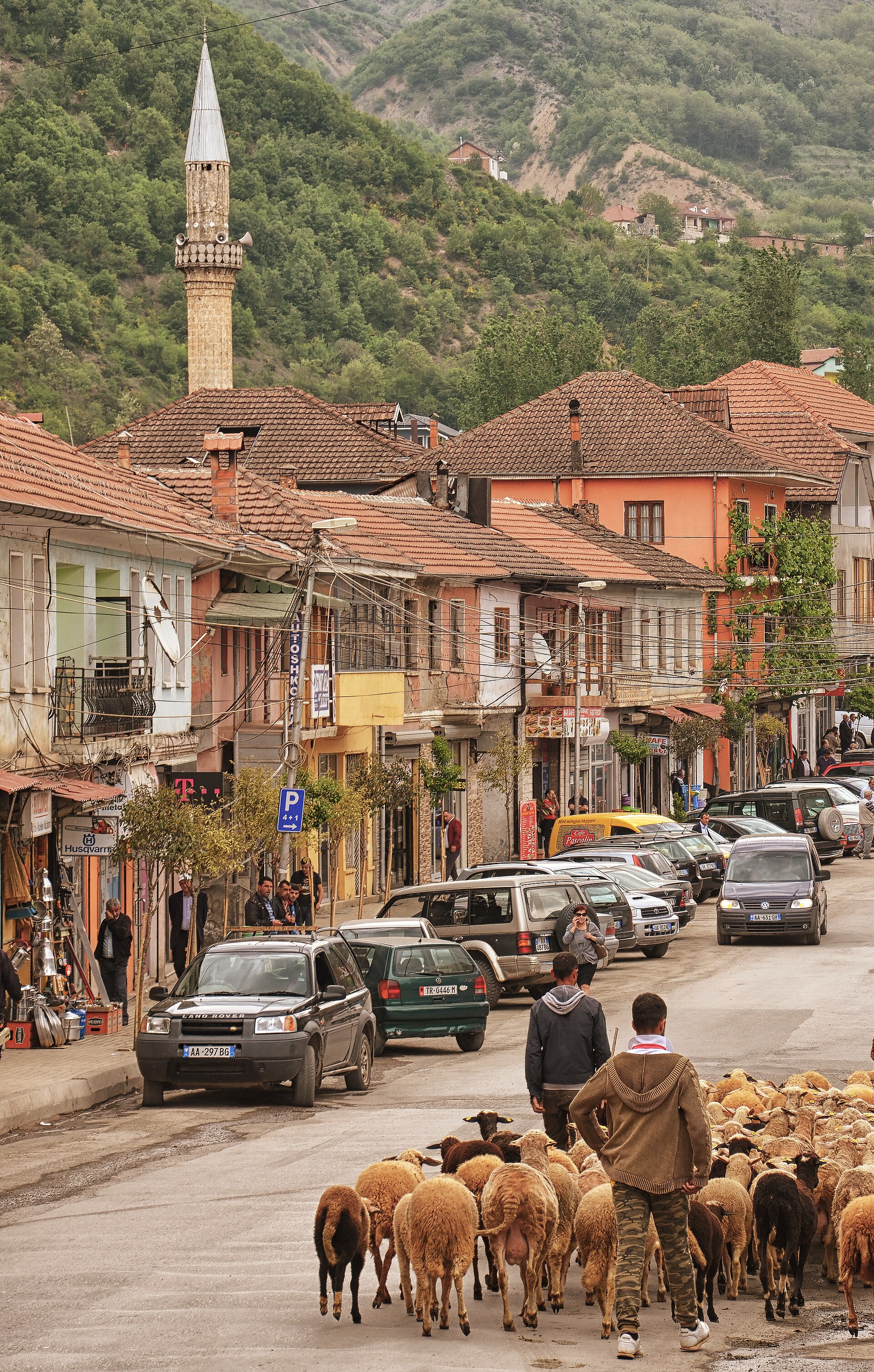
- Dibra Museum — Town centre
This small museum gathers local costumes, carpets, kitchen equipment and filigree jewellery, along with models of traditional Dibër houses. It is a useful first stop before heading into the villages, because it explains the textiles, tools and building styles that visitors will otherwise only glimpse from a car window. - Lura lakes — Lurë-Dejë Mountain National Park, Dibër
In Lurë-Dejë Mountain National Park, about seven small lakes sit among forest and meadow in the hills above the valley. Liqeni i Lulëve is among those photographed most. Reaching them takes a vehicle and some local advice on road conditions. Allow a full day and bring layers, since the weather turns quickly.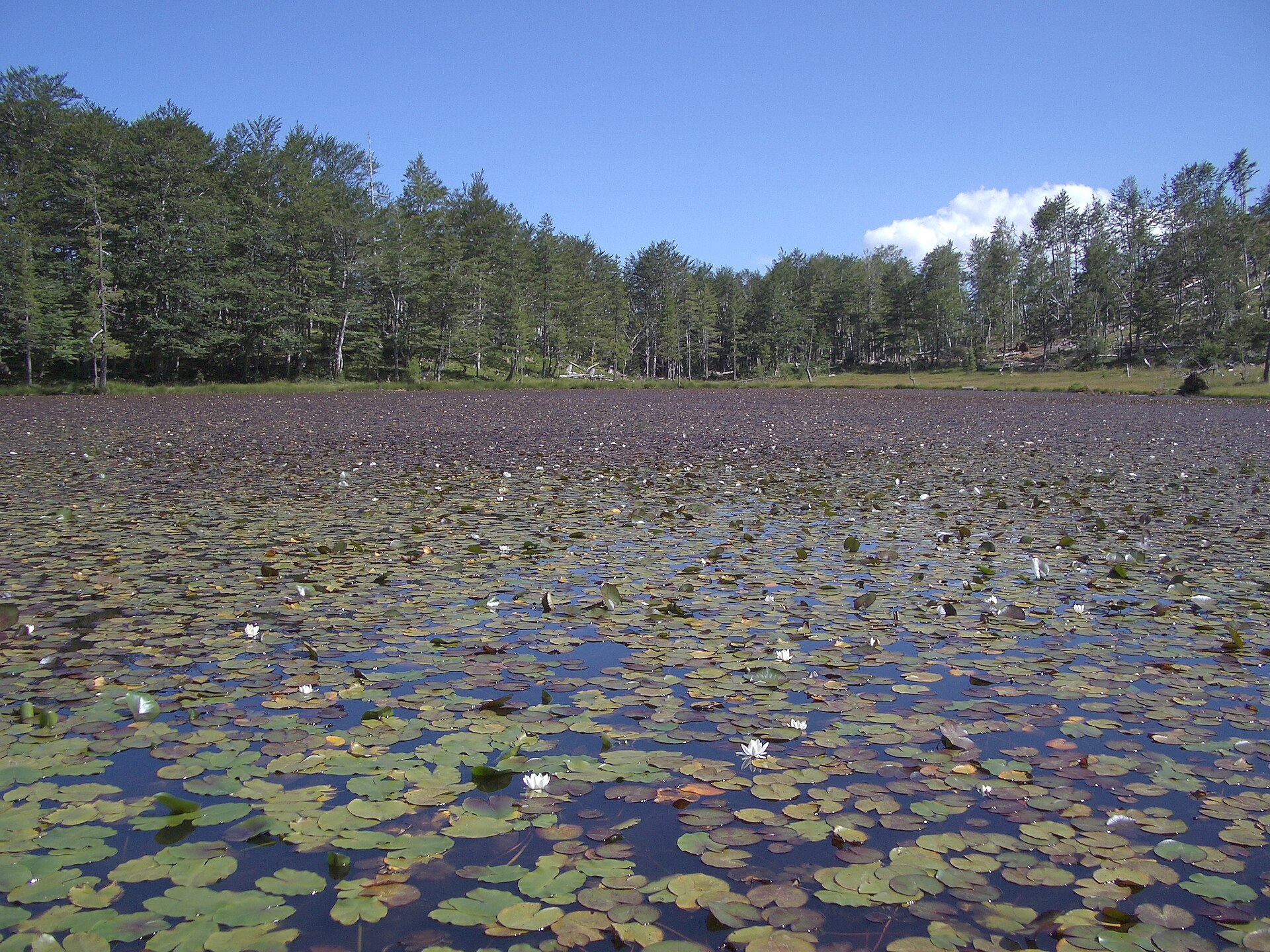
- Rabdisht stone village — Hills above Peshkopi, Dibër
Rabdisht is a village of old stone houses above the valley that locals call the Healing Valley. It is promoted as an authentic rural stop, and it is best treated as a slow walk and a coffee rather than a checklist sight. Ask in Peshkopi about the current state of the road.
Culture
Peshkopi carries the habits of a northern Albanian market town, where hospitality is a matter of pride. The traditional guest room, the oda dibrane, reflects an older idea that a visitor is received, fed and talked to at length before anything else is discussed. Even in a town with cafés and bars, coffee tends to be served slowly and refused only with an apology.
The town's religious history is layered. A bishopric gave Peshkopi its name, the Ottoman centuries left a mostly Muslim population, a minaret still stands near the bazaar, and a church dedicated to the Transfiguration survives in the village of Herbel. Communities here have lived beside one another for a long time, and few people make a fuss about it.
Public life runs on the pedestrian boulevard. In the evening families, teenagers and older men stroll up and down under the lindens, stopping to chat. In October the Harvest Festival, Festa e të Vjelave, fills the town with stalls of cheese, honey, brandy, sweets, fruit and regional dishes, and draws visitors from across the district and beyond. Dibër is also known for its crafts, from carpets to filigree jewellery, which can be seen in the museum.
If invited into a home, remove your shoes when your hosts do, accept the coffee or sweet you are offered, and ask before photographing anyone, especially older people and women.
What to wear
Dress in Peshkopi sits in two worlds: the heritage costume of the Dibër hills, and ordinary modern clothes. The Dibra Museum displays the older tradition, with local costumes, woven carpets and filigree jewellery. Across northern Albania, traditional clothing was made largely from wool and felt, with embroidered waistcoats, sashes and white felt caps for men, and layered, embroidered garments for women. Today these outfits come out for weddings, festivals and folk performances rather than for daily life.
On an ordinary day people wear what they would in most of the Balkans: jeans, shirts, jackets, trainers and smart-casual outfits for the evening promenade. Younger people dress fashionably, and older men may still wear a wool cap in cold weather. Clothes are generally neat, and people notice effort.
For a visitor, the main considerations are terrain, weather and respect. Sturdy, grippy shoes matter for the lakes and village paths, which can be muddy or rocky. Bring layers, since mornings and evenings in the mountains are cool even when afternoons are warm, and pack a waterproof for sudden showers. Winters call for proper warm clothing.
In town, shorts and sleeveless tops will not raise eyebrows, but covered shoulders and knees are polite at a mosque or church, and a light scarf is useful. For the baths, bring a towel and sandals, and ask locally what is expected.
What to eat
- Jufka — Family-run eateries and the October Harvest Festival
Jufka is Dibër's handmade pasta, rolled and cut in the home kitchen and dried or cooked fresh. It usually turns up in simple, filling dishes with butter, cheese or broth. Look for it in family-run eateries and at the harvest fair, where regional producers show off their work. - Fli me saç — Traditional eateries; ask ahead
Fli is a northern Albanian dish of thin pancake-like layers, cooked slowly under a metal saç lid with heat above and below. It is typically eaten hot with melted butter, sometimes poured over as it cooks. It takes time, so ordering ahead at a traditional eatery is wise. - Petulla dibrane — Bakeries and home-style eateries around the bazaar
Petulla are fried dough rounds, and the Dibër version is made with milk before frying in oil. They are eaten warm, at breakfast or as a snack, often with cheese, honey or jam. Bakeries and home kitchens are the best bet, especially in the morning. - Speca me gjizë — Home-style restaurants and eateries in town
Green peppers stuffed with gjizë, a soft cottage-style cheese, make a light, tangy dish that suits summer and early autumn when peppers are in season. It is often served as a starter or alongside bread and pickled vegetables such as turshi. - Fasule me pastërma — Local lunch eateries
This hearty bean dish is cooked with pastërma, dried and salted meat, and suits cold mountain weather. It is simple, salty and filling, usually eaten with bread. Look for it on lunch menus at unfussy local eateries rather than in cafés. - Sheqerpare and bakllava — Pastry shops and cafés along the main street
Sheqerpare, a soft syrup-soaked sweet, is the treat most tied to Dibër. Bakllava, hallva and revani are also common, often with a Dibër twist on the Ottoman-era recipe. Buy them from pastry shops and have them with Turkish-style coffee.
Plan it
Best time. May–June and September–October. Spring and early autumn are comfortable for walking in the hills, and October brings the Harvest Festival. Winters at this altitude are cold, and snow can complicate mountain roads.
How long. 2–3
Getting there. Fly to Tirana International Airport, then take a bus or minibus to Peshkopi, or drive on the Arbër road, which takes roughly two and a half hours. Local taxis or a hired car are needed for the Lura lakes and the villages.
Budget. low
Tips
- Check minibus and bus times at the Tirana terminal or locally, as schedules change and services thin out later in the day
- Carry cash, as smaller eateries, shops and rural guesthouses may not take cards
- Ask locally about road conditions before heading to the Lura lakes or Rabdisht, especially after rain or snow
- Bring layers and a waterproof, as mountain weather shifts quickly
- Visit the official town website, http://www.peshkopia.com/, for event dates and local information
Etiquette
- Remove your shoes in a home when your hosts do
- Ask before photographing people, especially older residents
- Cover shoulders and knees when entering a mosque or church
Nearby
Sources
- Wikidata Q223154 (CC0)
- Wikipedia: Peshkopi (rev 1374423427) (CC BY-SA 4.0)
- Wikivoyage: Peshkopi (rev 5397833) (CC BY-SA 4.0)
- Photo: Pasztilla aka Attila Terbócs, Peshkopi centre (CC BY-SA 4.0)
- Photo: Kenji Yamada, Peshkopi from the road into Dobrovë (Public domain)
- Photo: Albinfo, Church of the Holy Transfiguration, Herbel (CC BY-SA 4.0)
- Photo: Albinfo, Dibra in autumn fog (CC BY 3.0)
- Photo: Markussep, Liqeni i Lulëve, Lura lakes (CC BY 3.0)
- Photo: Wildnlifedocumentaries, copy by Kevin Kamberi of a painting (CC BY-SA 4.0)
- Photo: Klein Muçi, Graffiti in Peshkopia (CC BY 4.0)
- Photo: Kevin Kamberi 1, Mulliri, Begjunec Park (CC BY-SA 4.0)


