Peshawar
Peshawar, Pakistan
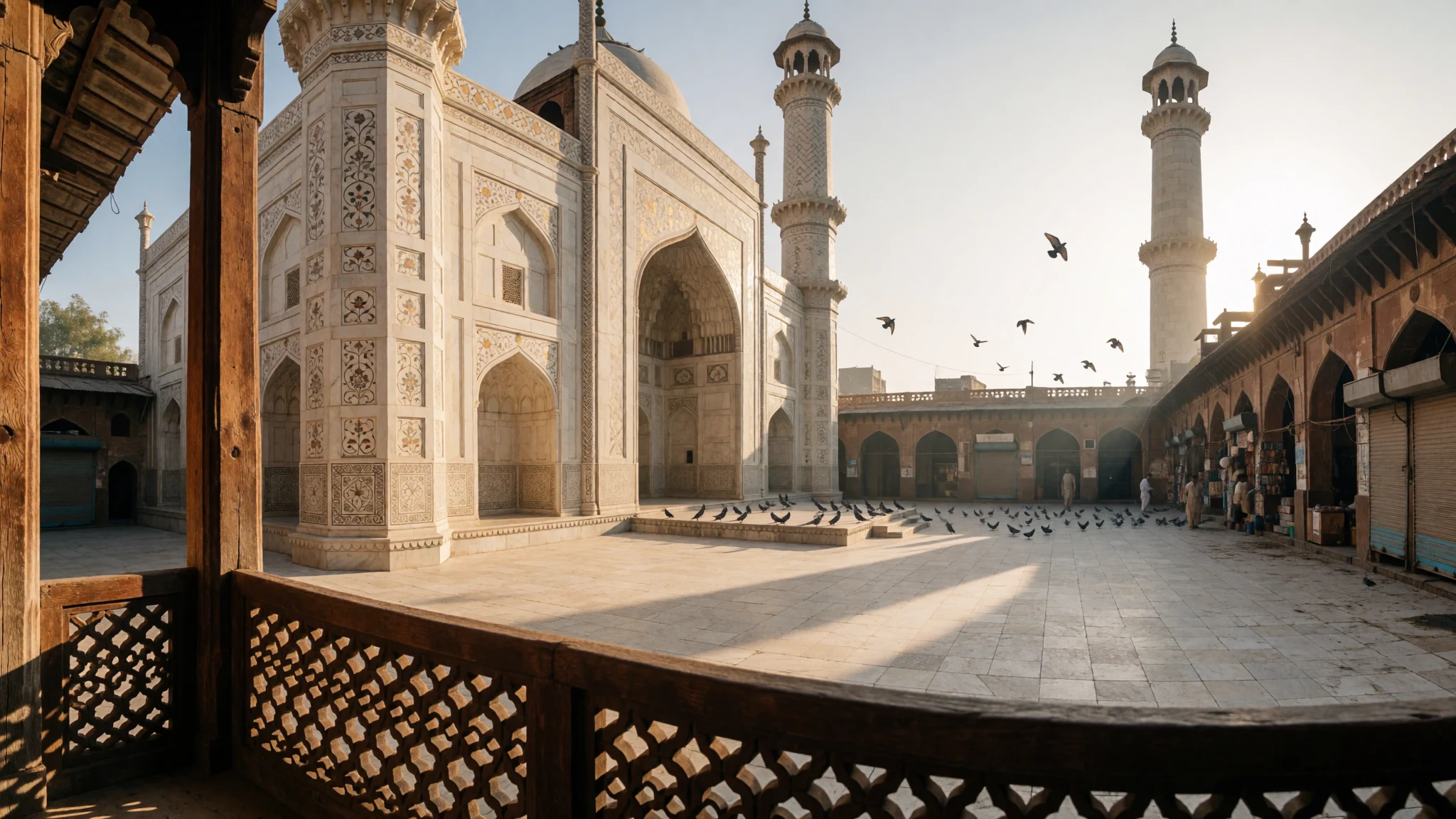
Peshawar offers an authentic gateway into ancient Silk Road heritage, vibrant bazaars, rich Pashtun traditions, and unpretentious, flame-grilled culinary culture.
The place
Peshawar sits in the north-west of Pakistan, nestled within a broad valley east of the historic mountain pass connecting South Asia to Central Asia. Serving as the capital of Khyber Pakhtunkhwa province, the sprawling urban settlement lies at an elevation of 359 metres and accommodates a population of nearly two million people. The geographic position has long made the city a vital crossroads for commerce, culture, and military movements across the region.
The urban landscape presents a striking contrast between the dense, walled inner city and the wider avenues established during later administrative expansions. In the historic quarters, narrow lanes wind past multi-storey wooden townhouses, busy spice markets, and ancient caravanserais that once sheltered merchants travelling along international trade routes. Sprawling markets dominate everyday life, where artisans craft copperware, leather sandals, and traditional textiles amidst the constant hum of street vendors and morning tea stalls.
Surrounding the central core are open lawns, historical academic institutions, and fortified structures that mark successive eras of governance. High battlements overlook the valley floor, while expansive university campuses showcase ornate arches and terracotta brickwork. Despite modern administrative developments and urban growth, the city retains its distinct frontier atmosphere, characterized by rugged mountain backdrops, busy streetscapes, and a deep-seated tradition of hospitality rooted in regional heritage.
Its story
Peshawar ranks among the oldest continuously inhabited urban centres in South Asia, with settlement records stretching back deep into antiquity. Initially known as Purushapura, the locality flourished as a major capital under the Kushan Empire during ancient times. Trade routes linking South Asia with Persia and Central Asia funnelled merchants, pilgrims, and scholars through the valley, nurturing a prosperous center of Buddhist art, philosophy, and architectural innovation.
Over subsequent centuries, control of the valley shifted between numerous ruling dynasties. Following early regional kingdoms, Turkic conquerors incorporated the area into expanding Islamic realms around the start of the second millennium. The settlement later developed into an essential commercial post under Mughal rule, serving as a vital node along imperial routes. In the eighteenth century, the city assumed even greater prominence when it functioned as the winter capital for the Durrani Empire, reinforcing its role as an administrative anchor in the borderlands.
The nineteenth century ushered in further political shifts as Sikh forces established authority over the region, followed by British territorial expansion across northern South Asia in the mid-nineteenth century. Under British administration, the city became a crucial strategic garrison and eventually the administrative center for the newly formed frontier province. When Partition established independent Pakistan in 1947, the city naturally became the regional capital, carrying forward millennia of layered imperial legacies, architectural influences, and frontier history into the modern state.
What to see
- Mahabat Khan Mosque — Old City
Mahabat Khan Mosque stands in the old bazaar district as a landmark of Mughal architecture. Built with white marble facades, slender minarets, and an expansive courtyard, the structure features intricate floral frescoes and decorative tilework inside its main prayer hall. Visitors can observe classical design details while exploring the quiet interior away from the surrounding market streets.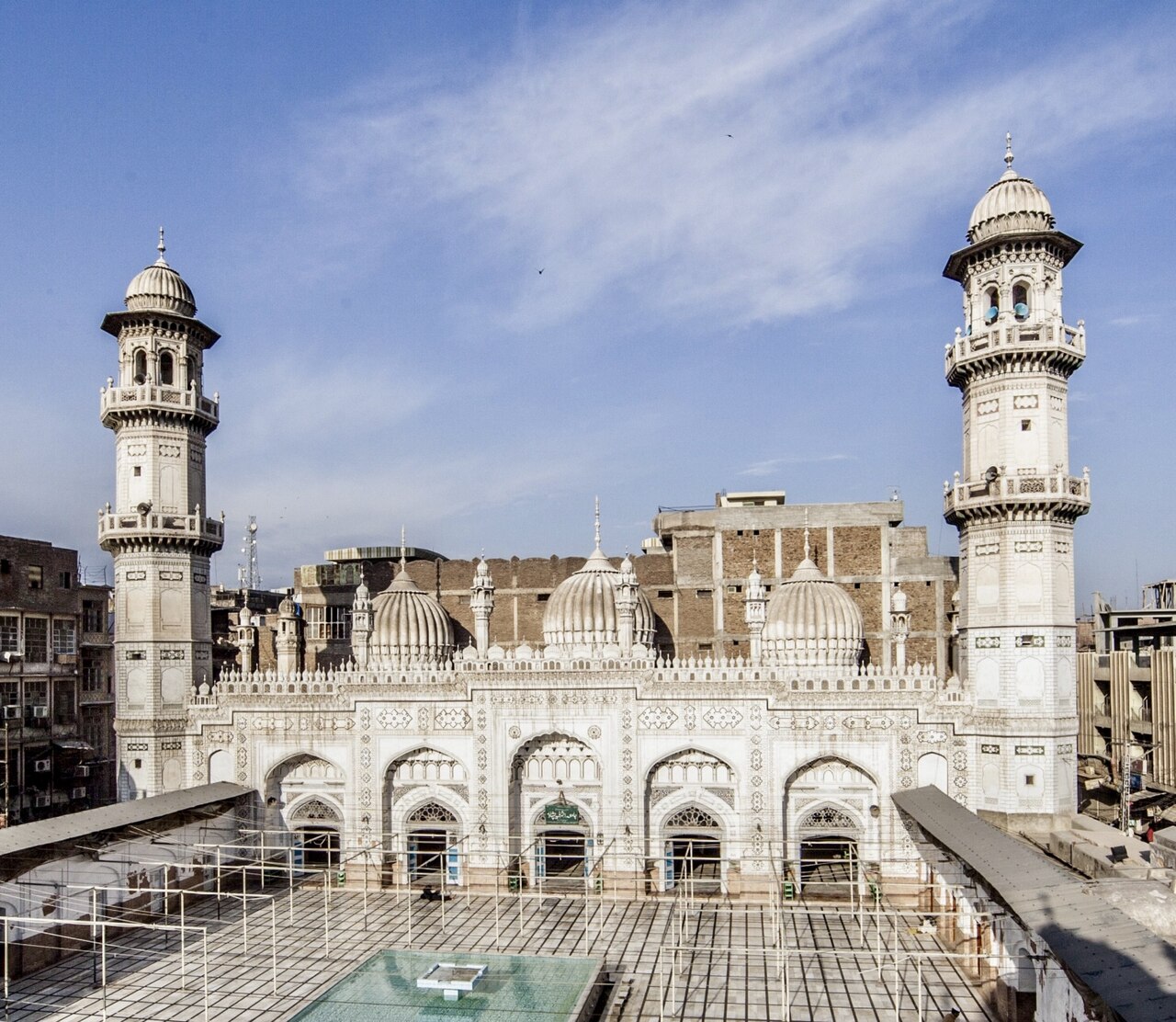
- Bala Hisar Fort — Eastern entrance to the old city
Bala Hisar Fort rises on a prominent high mound near the old town, offering commanding views across the surrounding valley. Named after the Persian phrase for high fort, the fortress has served as a defensive stronghold for successive empires and military garrisons over centuries. Thick brick walls and elevated ramparts surround the historic military complex.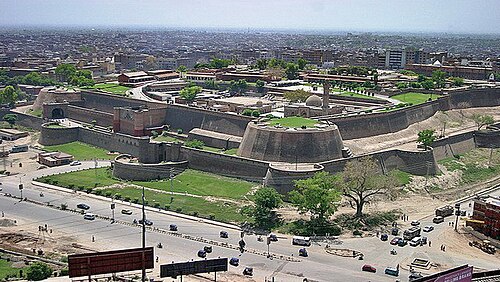
- Sethi Mohallah — Old City
Sethi Mohallah is a historic neighbourhood famous for its cluster of grand wooden mansions built by wealthy merchant families. The residences showcase intricate wood carvings, stained glass windows, central courtyards, and ventilated subterranean rooms designed to stay cool during hot summer months. Walking through the quiet alleyways reveals rich nineteenth-century architectural craftsmanship.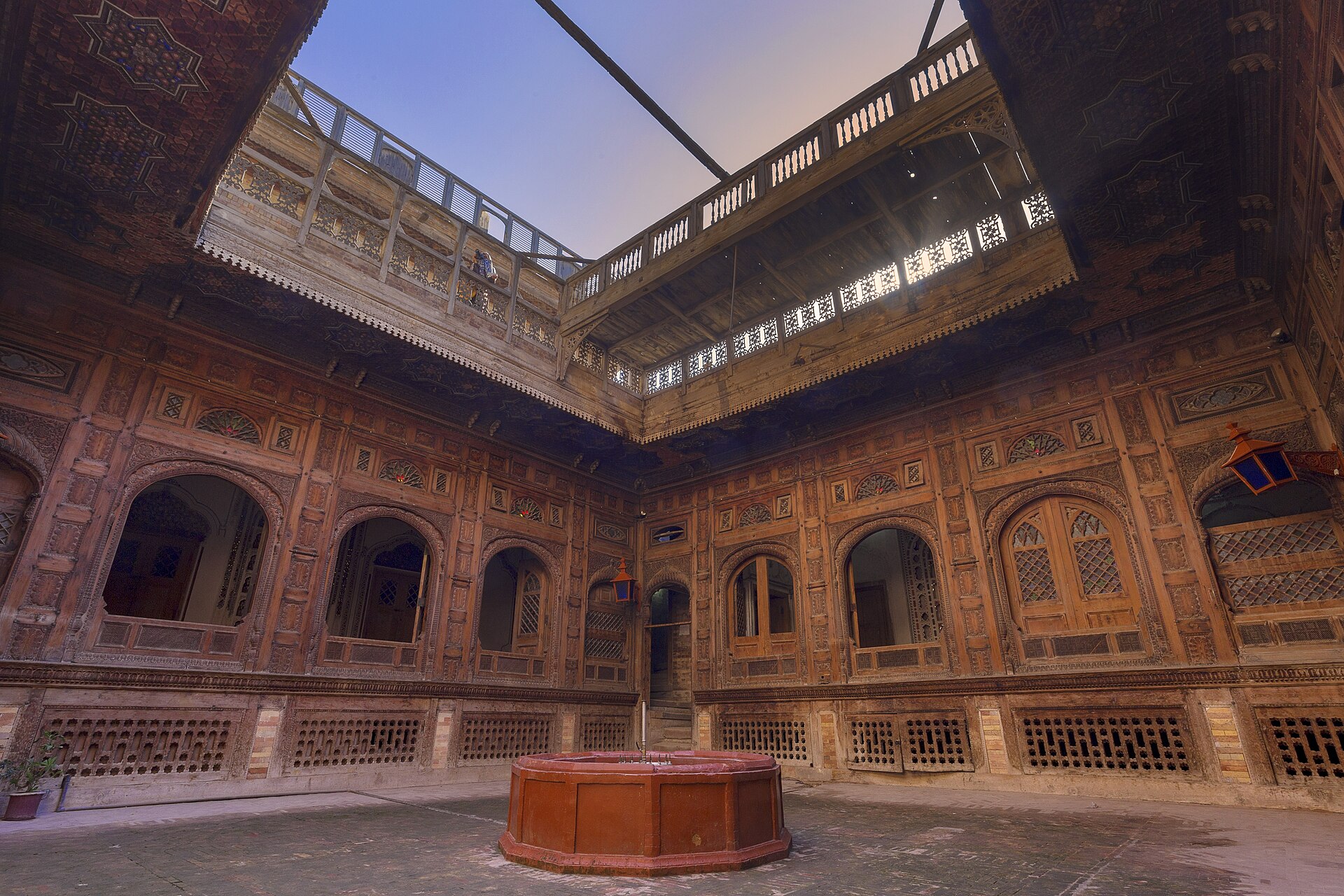
- Islamia College — University Road
Islamia College is an iconic educational campus celebrated for its elegant Mughal-revival architecture, brick red facades, and manicured grounds. Built around large central lawns, the historic university buildings feature sweeping arches, tall domes, and detailed masonry work. The quiet campus offers a serene environment contrasting with the energetic atmosphere of the outer city roads.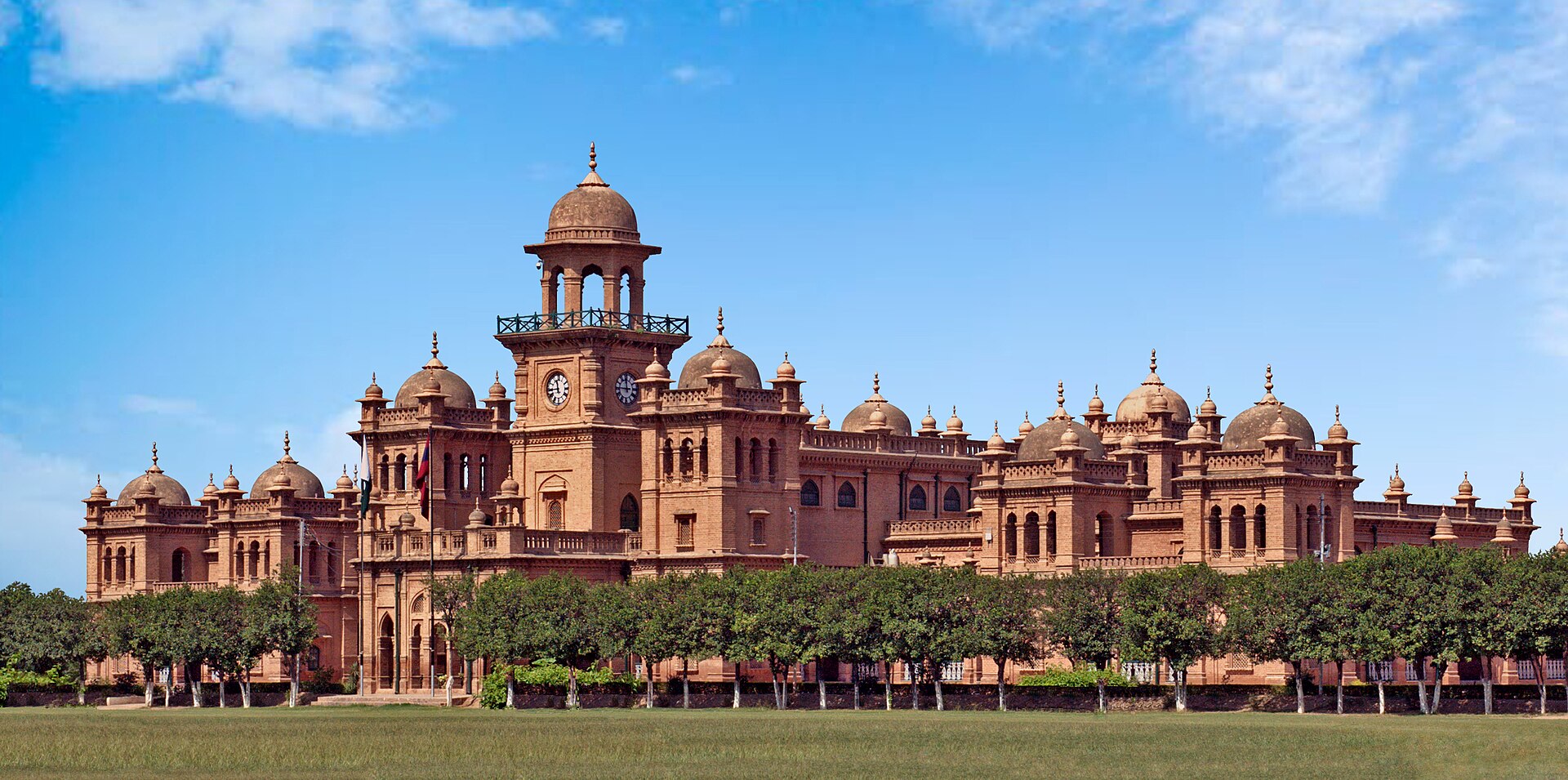
- Cunningham Clock Tower — Old City
Cunningham Clock Tower stands at a bustling intersection within the old town bazaar. Erected around the start of the twentieth century, the square brick tower combines Victorian design elements with local decorative accents. Positioned near active market stalls, the landmark serves as a familiar orientation point for visitors navigating the labyrinthine commercial streets.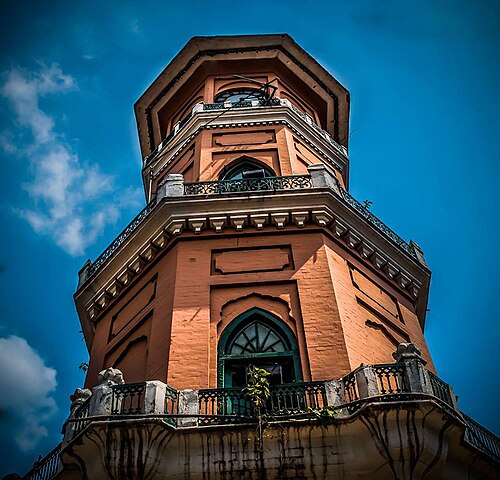
Culture
Peshawar possesses a rich cultural identity shaped by centuries of Pashtun heritage, Silk Road trade, and deep community traditions. Hospitality is a cornerstone of daily life, where visitors are frequently greeted with warm generosity and offered cups of green tea in shops and homes alike. Social gatherings often revolve around communal tea houses, traditional music, and poetry recitals, reflecting a resilient artistic tradition that persists alongside historic merchant customs.
Community life in the city remains tightly woven around neighbourhood quarters, active bazaars, and religious institutions. Elders play a respected role in local decision-making and social harmony, while shared customs dictate modest behaviour and respectful social interactions across public spaces. Religious festivals and seasonal gatherings fill the streets with vibrant energy, bringing together families and trade guilds.
Despite period safety challenges and political transitions, the city maintains an inviting atmosphere grounded in honour, courtesy, and shared civic pride. Artisans in old city workshops continue centuries-old crafts, passing skills down through generations of metalworkers, carpet weavers, and woodcarvers. When exploring public places or market streets, ask permission before taking photographs of local residents, especially women and elders.
What to wear
Fashion in Peshawar centres on practical, loose-fitting attire tailored for regional weather and cultural modesty norms. The traditional outfit for both men and women is the shalwar kameez, consisting of a long tunic paired with loose trousers. Men frequently craft their tunics from durable cotton or wool fabrics, pairing them with heavy leather sandals known as Peshawari chappals. Traditional headwear includes the pakol, a rounded soft wool cap, or folded turbans worn during formal gatherings and cultural occasions.
Women typically wear brightly coloured shalwar kameez embroidered with intricate silk threadwork, geometric patterns, or mirror embellishments around the neckline and cuffs. In public spaces, women generally drape large shawls or light veils called dupattas over their shoulders and head for modesty and sun protection. High-quality woollen shawls are prized craft items during cooler seasons.
For visitors, dressing modestly is essential throughout the city. Both men and women should choose loose, full-length clothing covering shoulders and knees; lightweight cotton trousers and long-sleeved shirts work best in hot weather. Women should carry a light scarf to cover their head when entering religious sites or traditional neighbourhoods. Sturdy, breathable footwear is recommended for navigating uneven cobblestones and dusty market alleys.
What to eat
- Chapli Kabab — Old city kabab stalls and meat markets
Chapli kababs are spiced minced beef or mutton patties mixed with crushed pomegranate seeds, coriander, and fresh herbs, cooked on large flat iron griddles. Crispy on the edges and soft inside, they are served hot with flatbread and mint yogurt chutney. - Namak Mandi Mutton Karahi — Traditional meat markets and open-air eateries
This iconic dish features tender mutton cooked in its own fat with salt, fresh tomatoes, green chillies, and ginger in a heavy iron wok. The simple seasoning highlights the rich natural flavor of the meat, served alongside hot tandoori flatbreads. - Dum Pukht — Traditional dining halls and feast houses
Dum pukht is a slow-cooked meat dish prepared by sealing mutton, potatoes, and subtle aromatic spices inside a heavy pot over low embers. The meat cooks gently in its own juices until tender enough to pull apart easily by hand. - Peshawari Green Tea (Kahwa) — Bazaar tea houses and street kiosks
Kahwa is a fragrant green tea brewed with cardamom pods, saffron strands, and occasionally crushed almonds or sugar. Served piping hot in small glass cups throughout the day, it acts as a traditional digestive after heavy meat meals. - Peshawari Naan — Neighbourhood tandoor bakeries
Peshawari naan is a thick, leavened flatbread baked against the clay walls of fiery tandoor ovens. Stuffed occasionally with minced meat, nuts, or seeds, the soft bread serves as the essential companion to rich meat gravies and grilled kebabs.
Plan it
Best time. October to April brings mild daytime temperatures and cool evenings; May to August can be intensely hot, while July and August also see summer rains.
How long. 2–3
Getting there. Fly into Peshawar International Airport, or take a two-hour drive along the M-1 Motorway from Islamabad; long-distance buses and express trains also connect from major Pakistani cities.
Budget. low
Tips
- Check updated travel advisories from your government website before arranging visits
- Carry local currency cash for market shopping and small eateries as cards are rarely accepted
- Drink bottled or purified water and stick to fresh, cooked foods in busy bazaars
- Hire a reputable local guide to navigate the labyrinthine old town alleys safely
Etiquette
- Dress conservatively covering arms and legs in all public spaces
- Always ask permission before photographing individuals, particularly women and elders
- Accept offered green tea (kahwa) politely as a traditional gesture of local hospitality
Nearby
Sources
- Wikidata Q1113311 (CC0)
- Wikipedia (Peshawar) (CC BY-SA 4.0)
- Wikivoyage (Peshawar) (CC BY-SA 4.0)
- Photo photos/01-city-center-peshawar-city.jpg (CC BY-SA 4.0)
- Photo photos/02-islamia-college-peshawar-public-sector-university-khyber-pak.jpg (CC BY-SA 4.0)
- Photo photos/03-scenery-of-peshawar.jpg (CC BY-SA 4.0)
- Photo photos/04-bala-hisar-fort.jpg (CC BY-SA 4.0)
- Photo photos/05-mkmosque.jpg (Public domain)
- Photo photos/06-sethi-house-peshawar.jpg (CC BY-SA 4.0)
- Photo photos/07-ghanta-ghar-peshawar.jpg (CC BY-SA 4.0)
- Photo photos/08-university-of-peshawar.jpg (CC BY 3.0)


