Panticapaeum
Panticapaeum, Ukraine
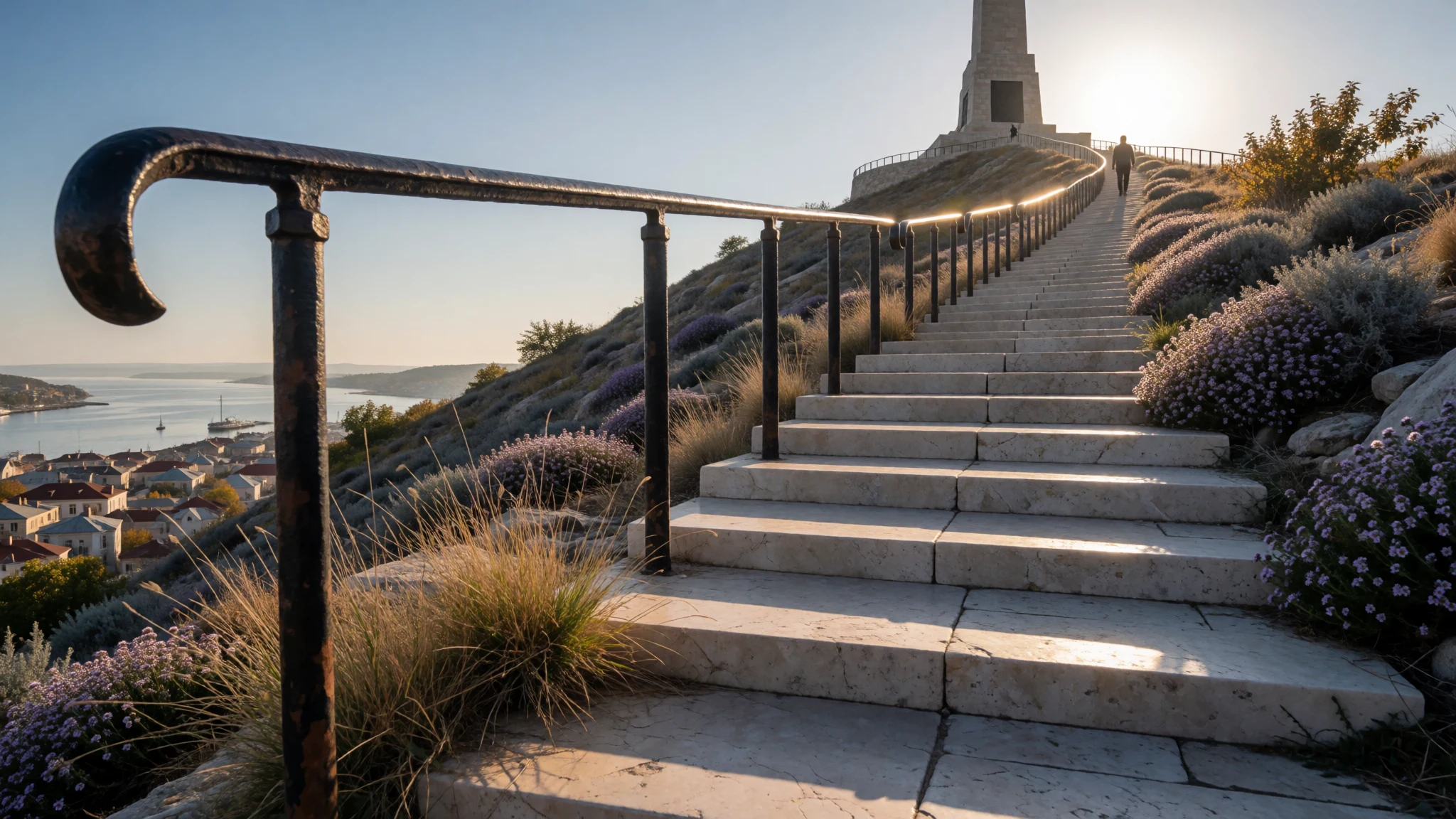
Panticapaeum is a Greek colonial capital on a hill above the Kerch Strait, where Greek, Scythian and later rulers each left a layer.
The place
Panticapaeum was a Greek trading city on the western shore of the Cimmerian Bosporus, the narrow strait joining the Black Sea to the Sea of Azov. Its remains sit on and around a steep hill in the modern town of Kerch, at the eastern tip of Crimea. Settlers from Miletus founded it around 600 BCE, and the hill later took the name Mount Mithridates after a king who ruled from here. What survives is not a tidy ruin field. Terraced foundations, cut rock, stretches of wall and the outlines of streets climb the slope, with the town and harbour spread below and the strait glinting beyond. The name is not Greek in origin: it comes from a Scythian phrase usually translated as 'fish-path', a hint that this was always a meeting point of peoples. A small river once ran beside the hill, deep enough for galleys to enter, though today it is shallow and easy to miss. Kerch itself is a working port, with Soviet-era apartment blocks, a fishing harbour and a long seafront, so the ancient site feels woven into daily life rather than fenced off as a park. Much of what was found here was carried off long ago to museums in other countries, so the hill rewards people who like landscape and imagination as much as visible stonework. Visitors should also know that Kerch lies in Crimea, which has been under Russian control since an annexation that Ukraine and most governments do not recognise. The UK and Indian governments publish travel advice that is worth reading before any plan is made.
Its story
Panticapaeum's story starts before the Greeks. Digs show people living on the hill in the Bronze Age, long before colonists from Miletus founded the city around 600 BCE. The new settlement grew fast because of where it stood. Grain from the steppe, salted fish and wine went out through its harbour, and the city struck its own coins, some stamped with a lion's head. It absorbed neighbouring towns and became the capital of the Bosporan Kingdom, a state whose elite mixed Greek and local families. Later, under Mithridates VI Eupator, the city served briefly as capital of the far larger Kingdom of Pontus, and his name is the one the hill still carries. Decline came through raids. Ostrogoths struck the kingdom in the first century AD, and the Huns devastated the city in the late fourth century. Byzantium then took control and, on the emperor Justinian's orders, built a citadel called Bospor. The settlement became a church centre and grew under Greek Christianity. Turkic Khazars took it next and renamed it Karcha, from a word meaning 'opposite' or 'facing', which is the root of the name Kerch. When Khazaria fell, the town passed to Kievan Rus' and became the centre of a successor state. Ottoman and Russian fortresses followed along the strait. Few places pack so many rulers into one hill, and the layers are easier to read here than the thin surface ruins suggest.
What to see
- Mount Mithridates and its staircase — Central Kerch
The hill above Kerch is the natural starting point for Panticapaeum. A long stone staircase of more than four hundred steps leads to the summit, where a Second World War memorial stands. The reward is a wide view over the town, the harbour and the strait. Go in the cooler part of the day.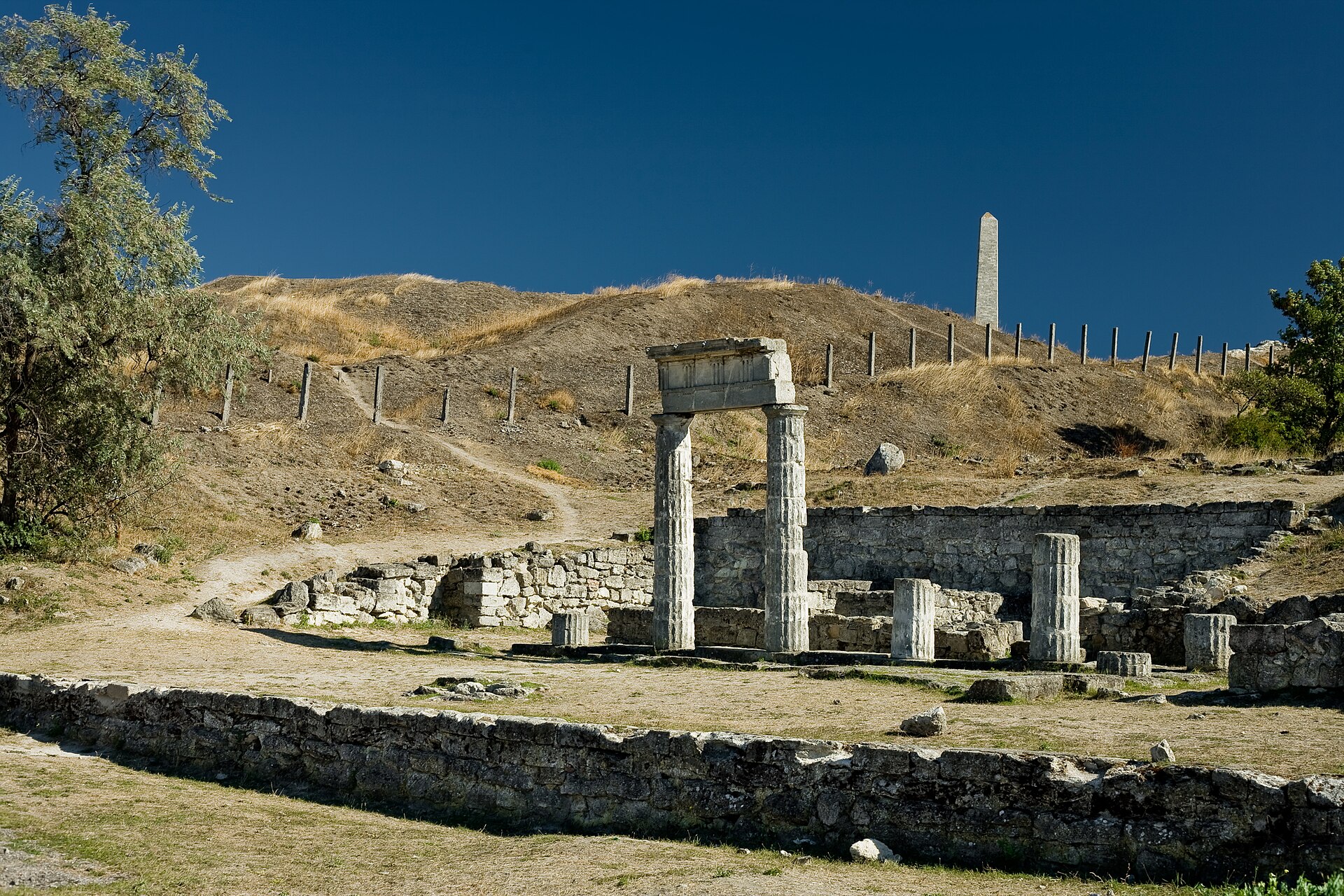
- Ruins of the ancient city — Slopes of Mount Mithridates
On the slopes below the summit lie the excavated terraces and foundations of the Greek city, which continued to be inhabited for several centuries. The condition is modest, because most notable finds went to museums elsewhere. It is best seen as a landscape walk, with imagination filling in streets and harbour views.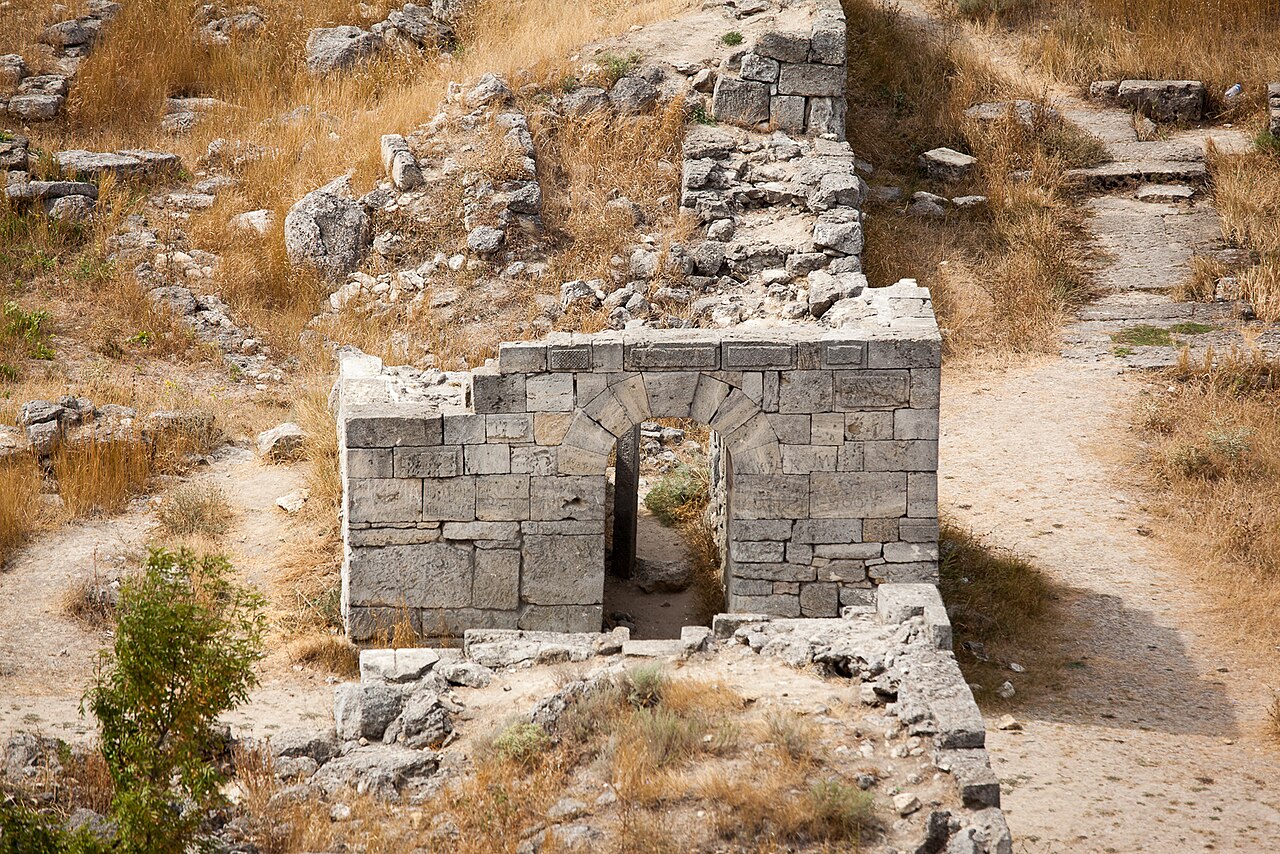
- Royal burial mound (Tsarskiy Kurgan) — Outskirts of Kerch
This large burial mound, dating to the fourth century BCE, is associated with a Bosporan king. It lies outside the old city centre and takes a short taxi or local bus ride. The approach is the point: a chamber built of stone beneath an earth mound, showing how rulers wished to be remembered. - Ancient History Museum of Kerch — Kerch town centre
Founded in the early nineteenth century, the museum is where much of the local ancient material is kept, including a section of gold and other treasures from the area. Opening arrangements change, so check the official site or ask locally before going. It adds context that the bare hillside cannot.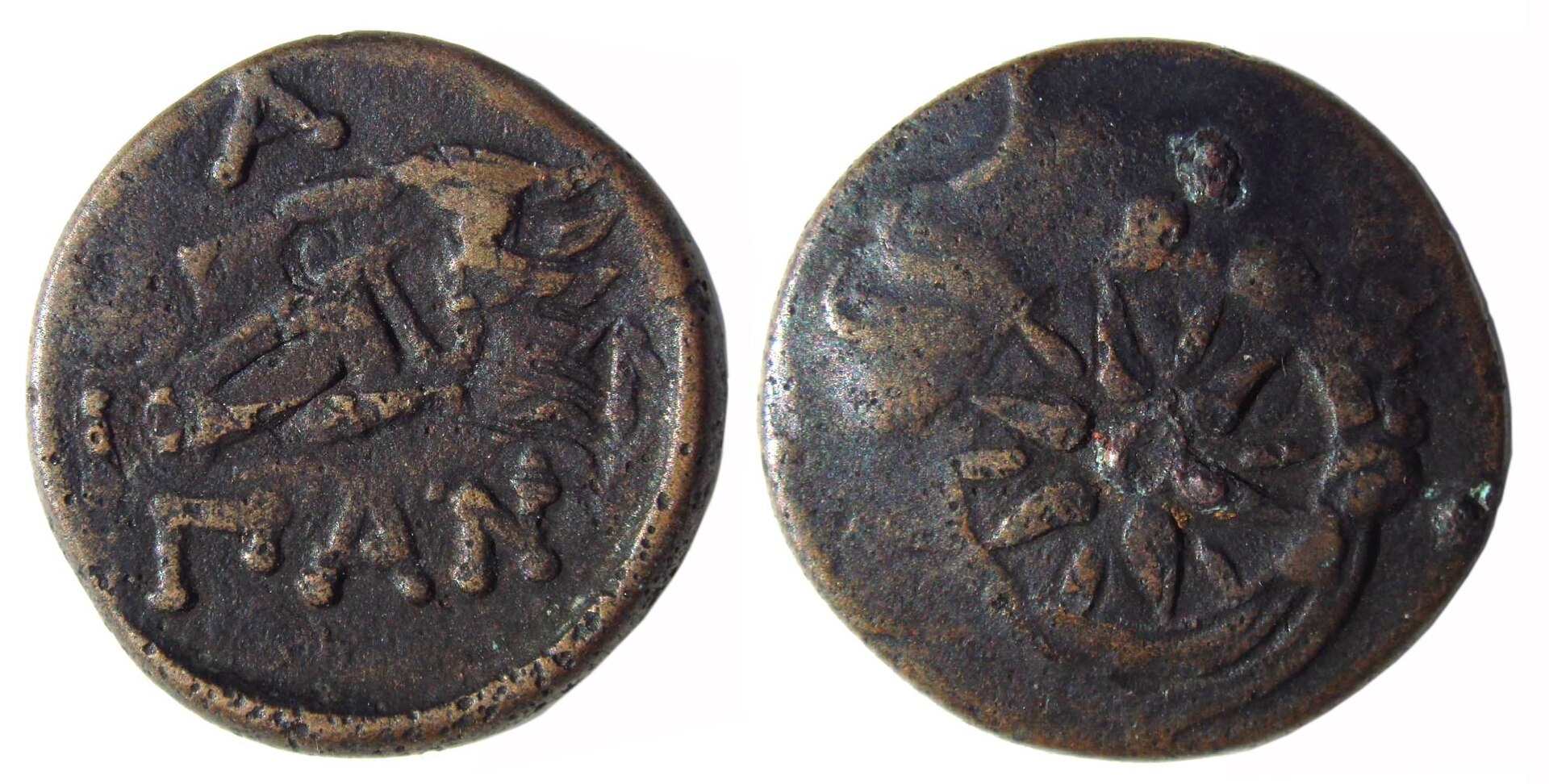
- Church of St John the Baptist — Old town, Kerch
This small Byzantine-era church dates to the early eighth century and gives a sense of how Greek Christianity took root after the old city declined. It is compact and quiet, worth a short stop on a walk through the old town. Dress modestly and keep voices low inside. - Fortress of Yenikale — Eastern outskirts of Kerch
Ottoman builders raised this fortress on the shore of the strait at the eastern edge of Kerch, near the ferry line. It is mostly ruined, so it suits people with a spare half day who want to see how later powers also controlled the narrow crossing.
Culture
Panticapaeum has always been a mixed place, and Kerch still is. Greek settlers lived beside Scythians and other local peoples, and the Bosporan Kingdom's art and coinage show that blend. Later layers added Byzantine Christianity, Turkic Khazar rule, Kievan Rus', Ottoman fortresses and Russian imperial building. Today most people in Kerch speak Russian, and the town's memories are dominated by the Second World War, when the area saw bitter fighting. The Adzhimushkay quarry tunnels outside town are remembered as a place of guerrilla resistance, and memorials appear on hilltops and in squares. Fishing, the port and the sea shape daily rhythms: smoked fish sells at stalls, and people stroll the seafront in the evenings. The Orthodox church is a living presence, with small churches open for prayer rather than only for visitors. The wider political situation affects how locals speak about the past, and many prefer to keep talk of present-day affairs light. Visitors do best by listening, showing interest in local history, and avoiding arguments about borders or flags. In churches and at memorials, step quietly, keep phones silent, and ask before photographing people, especially at services or at war memorials where families may be present.
What to wear
In ancient Panticapaeum, Greek residents wore the chiton, a tunic of wool or linen pinned at the shoulders, with the himation, a wrapped cloak, over it for cooler days or formal occasions. Scythian and other steppe neighbours wore trousers, belted tunics and pointed felt caps, often decorated with gold ornaments and sewn plaques, which suited riding. Gold jewellery found in local burials shows how much display mattered. There is no single traditional costume in Kerch today, and nothing is worn as daily dress from those eras. People dress in ordinary European style: jeans, shirts and light dresses in summer, coats and boots in winter, and good swimwear on the beaches. Older women may wear a headscarf into church. Visitors should plan for sun and wind on the open hill. Summer can be hot, so bring a hat, sunglasses, light cotton or linen clothes and plenty of water. Sturdy, flat shoes with grip are essential, because the slope, steps and ancient paths are uneven and dusty. Bring a layer for the evening breeze off the strait and a windproof jacket for spring and autumn. For churches and memorials, cover shoulders and knees; women may be glad of a light scarf in case a headcovering is expected. Beachwear belongs at the beach rather than in the town.
What to eat
- Smoked goby (bychki vyalenye) — Kerch market and seafront stalls
Small smoked gobies are among the most popular local snacks, eaten whole and often paired with beer. They are salty, oily and best eaten fresh. Look for them at market stalls and small seafront kiosks where smoked fish is sold by weight. - Salted anchovy — The central market, in the cooler months
In autumn and winter the market sells salted anchovy, a preserved fish that is eaten with bread, onions or boiled potatoes. It is strongly flavoured, a taste of the sea in the cold months. Ask to sample before buying a quantity. - Fresh fish from the strait — Harbour-side cafes and the high street
A wide range of fresh fish comes in through the harbour, and local cafes grill or fry it simply with lemon and herbs. Choices depend on the day's catch and the season, so ask what came in that morning rather than ordering by name. - Crimean wine — Local wine shops around the town centre
Crimea is known for its wine, and local wine shops stock a wide range, including long-established brands such as Massandra, Inkerman, Magarach, Novy Svet and Koktebel. Sweet fortified styles are a regional speciality. Ask the shop staff to suggest a bottle to match your meal. - Chebureki — Street stalls and small snack bars
This fried pasty of thin dough filled with minced meat and onion is a Crimean Tatar speciality and a standard quick lunch across the peninsula. It is greasy in the right way, best eaten hot with a sharp pickle or a cup of tea.
Plan it
Best time. May–June and September–October are the most comfortable for walking the hill, with warm days and lighter heat. July and August are hot and good for the beaches, but exposed slopes get little shade. Winters are cold, windy and quiet.
How long. 1–2
Getting there. Check current government travel advice and the status of transport before planning, since Crimea is in a disputed and sensitive situation. Historically, travellers reach Kerch through Simferopol airport, about 220 km to the west, then by bus from the intercity bus station; long-distance trains also run from Russia. In Kerch, the hill is reachable on foot from the town centre.
Budget. low
Tips
- Read UK or Indian government travel advice first, and check insurance cover for Crimea
- Climb Mount Mithridates early or late in the day to avoid the midday sun
- Agree a taxi fare before getting in, and make sure it is for the whole journey
- Check the official site or ask locally for museum opening arrangements
- Carry some cash, since card use at small stalls and markets can be patchy
Etiquette
- Dress modestly and stay quiet in churches
- Do not photograph people or military sites without asking
- Avoid raising political topics about borders or the conflict with strangers
Nearby
Sources
- Wikidata Q906661 (CC0)
- Wikipedia: Pantikapaion (rev 1372020190) (CC BY-SA 4.0)
- Wikivoyage: Kerch (rev 5407008) (CC BY-SA 4.0)
- Photo 01: Derevyagin Igor, Mount Mithridates slopes (CC BY 3.0)
- Photo 02: Thracian coin from Panticapaeum (Public domain)
- Photo 03: Scythians shooting with bows, Kertch (CC BY 3.0)
- Photo 04: Klymenkoy, ancient city of Panticapaeum (CC BY 3.0)
- Photo 05: Investigatio, archaeological site (CC BY 3.0)
- Photo 06: Alexxx1979, Kerch Panticapaeum (CC BY 3.0)
- Photo 07: Alexxx1979, Kerch Panticapaeum (CC BY 3.0)
- Photo 08: Nikolei Klein, Panticapaeum complex (CC BY-SA 4.0)


