Panevėžys
Panevėžys, Lithuania
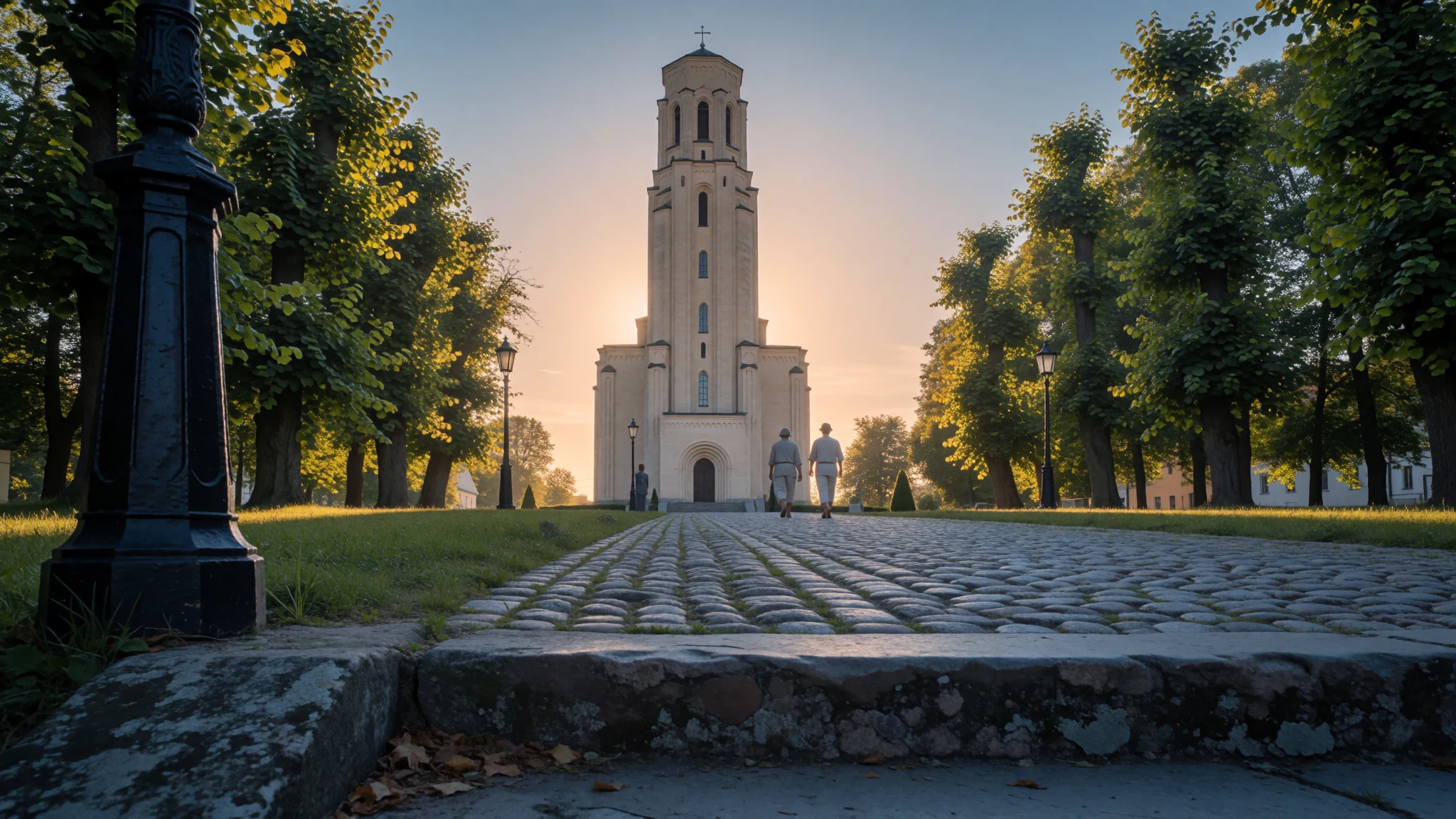
Panevėžys is a working Lithuanian city on the Nevėžis, halfway between Vilnius and Riga, with interwar churches, ceramics galleries and quiet river parks.
The place
Panevėžys sits in the middle of Lithuania, on the banks of the Nevėžis river, roughly halfway between Vilnius and Riga. About 87,913 people live here, at an elevation of 61 m, on a flat river plain rather than among hills. The name means something like 'along the Nevėžis', and the water still shapes the city: an old river channel, the Senvagė, has become ponds and parkland where locals walk, jog and fish. Several smaller streams join the river within the city limits. This is a working town more than a postcard one. Industry gave it a living for generations, and Soviet-era blocks, older churches and interwar buildings sit side by side without much polish. That honesty is part of the appeal. The city also has a name as a creative place, because painters and sculptors from here helped form Lithuania's national art, and its galleries and theatre still reflect that. Panevėžys works well as a gateway to Aukštaitija, the north-eastern region, and as a pause on the Via Baltica road between the Baltic capitals. Anyone expecting crowds will not find them; the city is quiet, especially on weekday evenings and in winter, when it turns properly cold and dark early. Summer is gentler, with long light evenings and café terraces filling up. The city's official site, https://panevezys.lt, carries events and local notices.
Its story
Panevėžys enters the written record in 1503, when Grand Duke Alexander Jagiellon signed documents allowing a church and other buildings to be raised here. He is regarded as the city's founder. An older legend says that Grand Duke Vytautas, travelling back to Vilnius in 1414, came across a pagan sacred site nearby, but no document backs this up, so it remains a tale. Through the sixteenth century the settlement held the status of a royal town. A flat-topped earthwork once stood where the Nevėžis meets a stream called the Sirupis; it was levelled during the nineteenth and twentieth centuries, and nothing marks the spot today. Karaites, a community with its own faith and a Turkic-language heritage, had settled in the area as early as the fourteenth century. The city later became known across the Jewish world through the Ponevezh Yeshiva, which carried the town's name in its older spelling. In the early twentieth century Panevėžys grew as a town of an independent Lithuania, and its cathedral was finally consecrated in 1933 after decades of delay caused by war and obstruction from the authorities. In 2003 the city marked five centuries since its founding charter and commissioned new monuments, among them a statue of Alexander Jagiellon by the sculptor Stanislovas Kuzma. Much of the older fabric has been lost, so the story is read more in street names, churches and old photographs than in ruins.
What to see
- Regional History Museum — City centre
The Regional History Museum fills a manor house, the Moigių mansion, close to the centre, and covers natural history alongside the story of the city and its culture. It is a sensible first stop for getting oriented, particularly on a wet day. Opening hours and ticket prices change, so check the city website before going. - Civic Art Gallery — City centre
The Civic Art Gallery shows modern art and ceramics, with a few pieces placed outdoors and photography displayed in a separate annex on Vasario 16-osios gatvė. It suits the city's habit of seeing itself as a place of artists, and it is small enough to see in an hour. Exhibitions rotate, so check the schedule first. - Holy Trinity Church — City centre
Holy Trinity Church is a Roman Catholic church built by the Piarist order in 1803, a teaching order known for running schools. It stands a short walk from the cathedral and gives a sense of the older, pre-industrial town. Visitors are welcome outside services; quiet is expected, and Mass times are posted at the door. - Panevėžys Cathedral — City centre
Panevėžys Cathedral was planned from 1860 but held up by war and unfriendly authorities, and was finally consecrated in 1933. Its Christ the King dedication belongs to interwar Lithuania, when the city was growing; an old photograph shows soldiers parading in front of it in 1930. Services run regularly, so go outside Mass to look inside.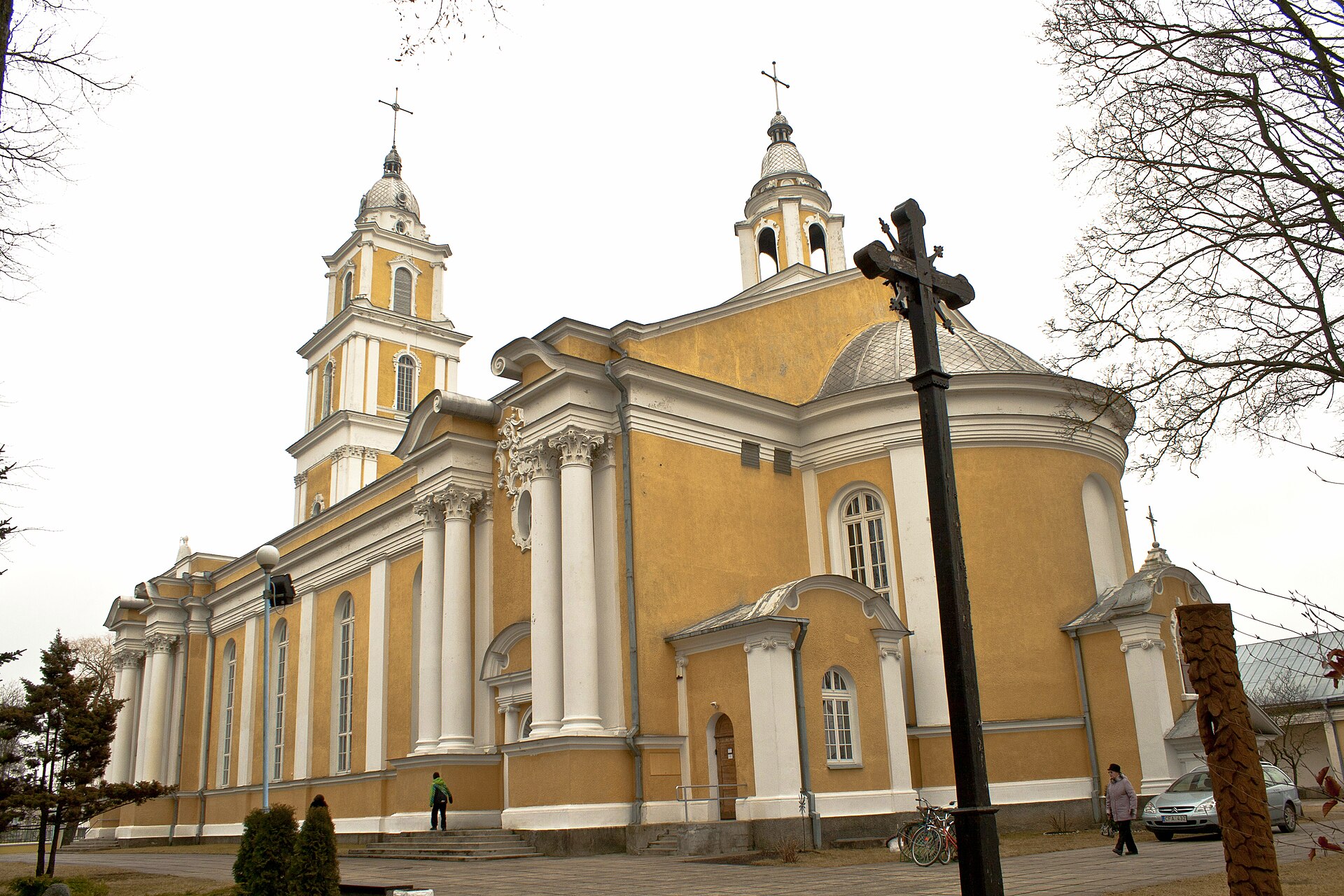
- Senvagė ponds and the Nevėžis paths — Riverside, near the centre
The Senvagė ponds and the riverside paths along the Nevėžis form the city's green spine. Locals use them for evening walks, cycling and fishing, and benches look out over the water. It is a good place to slow down after the museums, free to enter, and best in late spring and summer when the trees are in leaf.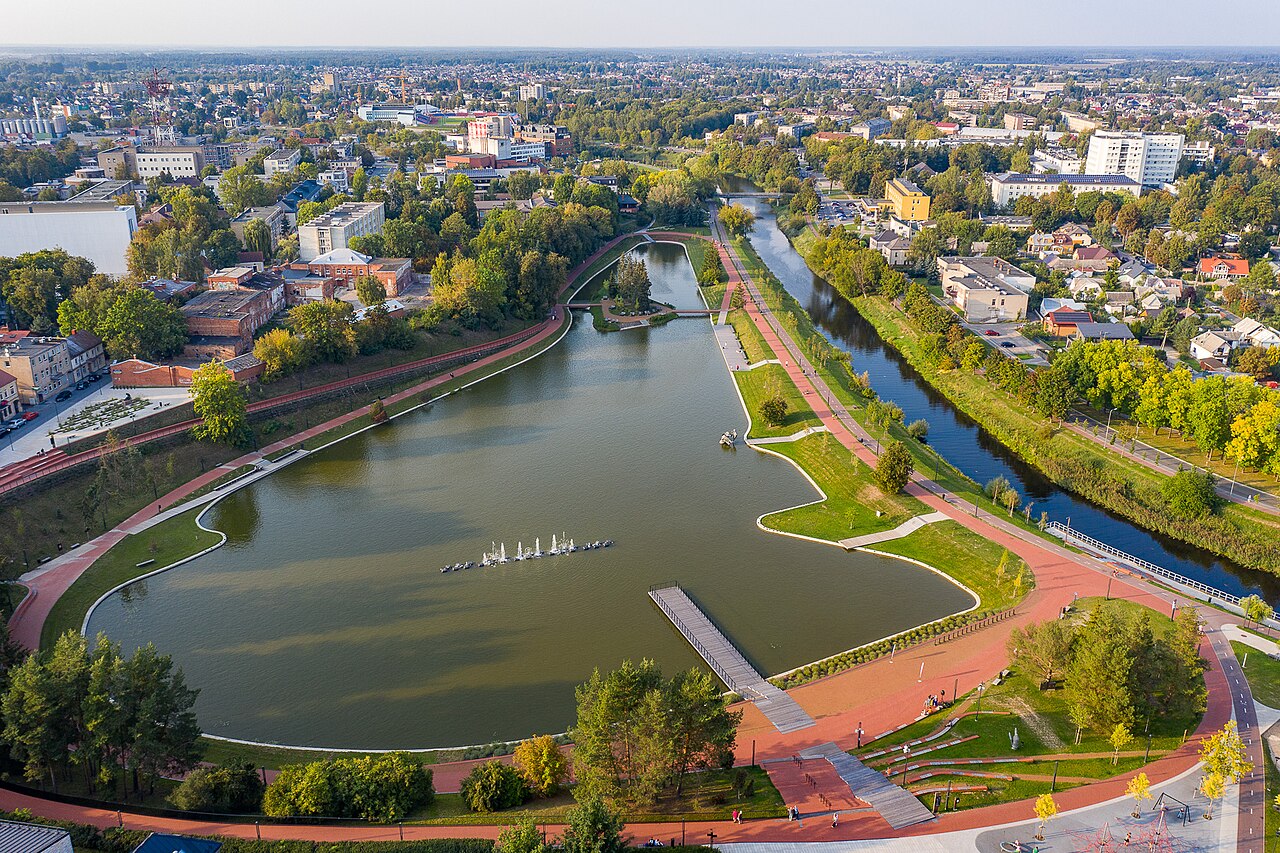
Culture
Panevėžys has long thought of itself as a city of makers, and its culture leans towards the visual arts. Painters and sculptors working here helped shape a national Lithuanian artistic identity, so the city is known for more than factories. The best-known figure is Juozas Zikaras, a sculptor born in a village near the city and trained in Saint Petersburg, who settled in Panevėžys after 1918 and taught at the state gymnasium for about a decade. He designed state symbols and coins for interwar Lithuania, as well as the Freedom Monument in Kaunas. Religion has marked the town in layers: Catholic churches dominate the skyline, the Karaite community left an early trace, and the Jewish yeshiva made the city's name familiar far beyond Lithuania. Daily manners are reserved and polite. Lithuanians tend to be quiet in public, to greet shopkeepers, and to take their time getting to know strangers; humour is dry. The language is Lithuanian, with Russian understood by many older people and English common among the young. Theatre and gallery events cluster around the centre, and local festivals fill the summer calendar; the city website lists them. When entering a Catholic church in Panevėžys, keep your voice low, cover bare shoulders if you can, and do not take photographs during Mass.
What to wear
Panevėžys has no single city costume; the traditional dress belongs to Aukštaitija, the wider north-eastern region. Women's folk outfits combine a linen blouse, a striped woollen or linen skirt and a bodice or waistcoat, finished with a woven sash (juosta) and amber beads. Men wear linen shirts, waistcoats and trousers in natural or dark tones. Linen and wool were grown and woven at home, and patterns vary by district. These outfits appear at folk ensembles, school events, weddings and song festivals rather than on ordinary days. Everyday dress in the city is plain and practical: dark coats and jackets, jeans, trainers or boots, with people dressing up a little for the theatre, Sunday church or an evening out. Locals notice neatness more than labels. A visitor should plan for the season. Winters are cold, so bring layers, a warm hat, gloves and waterproof boots with grip for snow and ice. Summers are mild and can turn showery, so a light rain jacket is useful. For churches, covered shoulders and knees are polite, and a scarf is handy. Pavements are flat, but park paths can be muddy after rain, so comfortable shoes matter more than smart ones.
What to eat
- Cepelinai — Any traditional Lithuanian restaurant in the centre
Potato dumplings stuffed with minced meat, curd cheese or mushrooms, served with sour cream and fried bacon bits. Heavy and filling, they are a staple of Lithuanian home cooking. One portion is usually plenty. - Šaltibarščiai — Everyday eateries and restaurants in the centre, mainly in warm months
A cold pink soup of beetroot and kefir with cucumber, dill and spring onion, usually served with hot boiled potatoes on the side. It is refreshing in summer and surprisingly filling; vegetarian by default in most places, though it is worth asking. - Kepta duona — Pubs and bars near the museum in the centre
Rye bread cut into sticks, fried until crisp and rubbed with garlic, often served with a cheese sauce or sour cream dip. It is the usual accompaniment to a beer, so expect it in pubs and bars near the centre in the evening. - Kugelis — Traditional restaurants and lunch eateries in the centre
A baked potato pudding made from grated potatoes, bacon and onion, with a crisp brown top, usually eaten with sour cream. It is filling, plain and best on a cold day. Portions are generous, so sharing is no shame. - Balandėliai — Budget lunch eateries around Laisvės aikštė
Cabbage rolls stuffed with minced meat and rice, simmered in a tomato or sour cream sauce. Called 'little pigeons' in Lithuanian, they are a home-style dish found on lunch menus at everyday eateries and canteen-style places in town.
Plan it
Best time. June to August for long light evenings and mild weather, with late May and September quieter and still pleasant. Winters are cold and dark, and snow is normal, so visit then only for a quiet city break.
How long. 1–2
Getting there. Vilnius Airport (VNO) is the usual gateway, about 145 km away on a good highway; Kaunas and Riga airports also have budget flights. Buses from Vilnius and Kaunas run hourly and take about two hours. Trains from Šiauliai take about 90 minutes; check LTG Link for times. The bus station is a plain open square, but it is central.
Budget. low
Tips
- Use the city as a stop between Vilnius and Riga rather than a long stay; a day or two covers the sights
- Check museum and gallery hours on the official site, https://panevezys.lt, before setting out
- Cards are widely accepted, but carry a little cash for small cafés and bus tickets
- Pack for the season: layers and waterproof footwear in winter, a light rain jacket in summer
- Book accommodation ahead in July and August and during local festivals
Etiquette
- Keep your voice low in churches and avoid photographing worshippers during Mass
- Greet shopkeepers and staff with a quiet hello; loud behaviour in public is frowned on
Nearby
Sources
- Wikidata Q1719466 (CC0)
- Wikipedia: Panevėžys (rev 1372458747) (CC BY-SA 4.0)
- Wikivoyage: Panevėžys (rev 5420400) (CC BY-SA 4.0)
- Photo: Panevėžys, Augustas Didžgalvis (CC BY-SA 4.0)
- Photo: Recreational area near Senvagė Pond and Nevėžis, Modris Putns (CC BY 3.0)
- Photo: Church of St. Peter and St. Paul, user:CD (CC BY-SA 4.0)
- Photo: Panevėžio Kristaus Karaliaus katedra, Laima Gūtmane (CC BY 3.0)
- Photo: Senvagė (Panevėžys), Augustas Didžgalvis (CC BY-SA 4.0)
- Photo: Vilkmergės (now Ukmergės) Street, early 20th century, Leiba Slonimskis (Public domain)
- Photo: Parade of the Lithuanian Army in front of the cathedral, 1930, Antanas Patamsis (CC0 1.0)
- Photo: Panevėžys, Freedom square, 1920s, Antanas Patamsis (Public domain)


